

 Calculate Revenue
 Research Markets
 Find For Sale Properties
 Compare My Listing
 STR Revenue Calculator
 Custom Comp Sets
 Submarket Insights
 Custom Search Filters
 Rate Recommendations
 Performance Benchmarking
 Competitor Comparison
 Owner Contact Details
 Property-level performance data
 Tourism Insights
 Real Estate Investment Analytics
 About Us
 Sales
Sales Support
 Press
PressUS Ski Season 2024: How Will Your Winter Vacation Rentals Perform?
Published: December 15, 2023
Last updated: August 30, 2026

Dillon DuBois
Snow-covered slopes and après drinks (hot cocoa, anyone?) are hallmarks of the ski season. For short-term rental (STR) hosts across the U.S., so is a level of uncertainty.
Many hosts count on a wave of holiday travel, like this year’s 37% increase year-over-year (YOY) in demand for New Year’s Eve stays at mountainous STRs. However, whether that demand continues depends on how snowy ski season turns out to be.
While the story of ski season 2024 is still unwritten, there are already some demand patterns in the works. Here’s how hosts can use them to prepare and attract the demand their ski resort area may draw through the winter.
The Two Factors That Influence Ski Season Performance
Many different metrics can predict performance year-round, and there are just as many ways to use that data to improve your rental income. Come ski season, though, two main factors matter most: snowfall and regulations.
1. Snowfall
The more snow that falls, the better mountainous STRs perform. Here at AirDNA, we analyze the impact of snow on STR performance by looking at same-month bookings: meaning the percentage of bookings made in the same month those guests come to stay. Winter sports enthusiasts will often make last-minute bookings to chase fresh powder, translating a high snow month into a surge of same-month bookings.
The 2022-23 ski season, for example, was a particularly good snow year. Average snowfall at ski areas nationally totaled 224 inches, a 30% increase over the ten-year average of 173 inches. In contrast, only 145 inches of snow fell during the prior ski season.
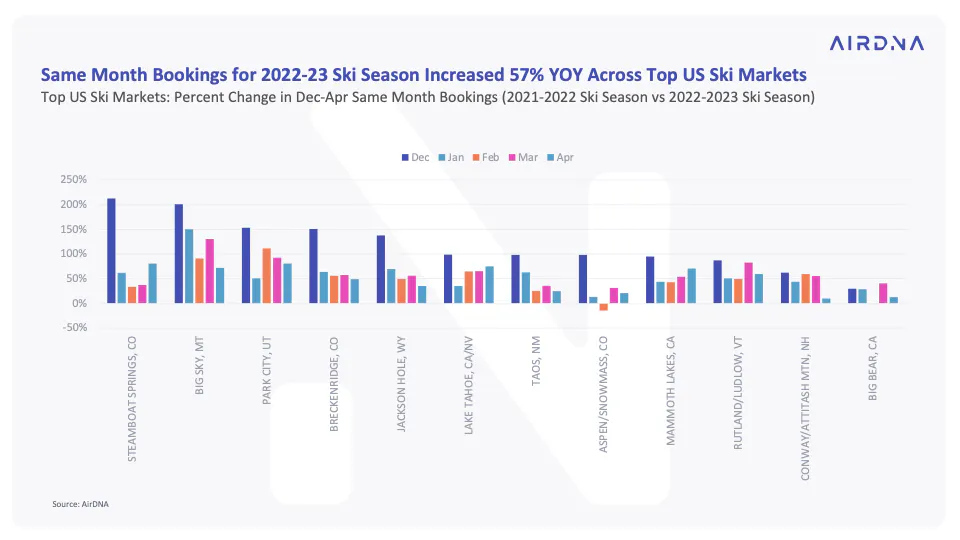
As the snow piled up last year, so did same-month bookings. Compared to the 2021-22 ski season, same-month bookings for December through April of the 2022-23 ski season increased 57% across our top 12 ski markets.
Keep in mind that the quantity of same-month bookings also varies depending on when in the season the most snow falls.
Early Season Snowfall
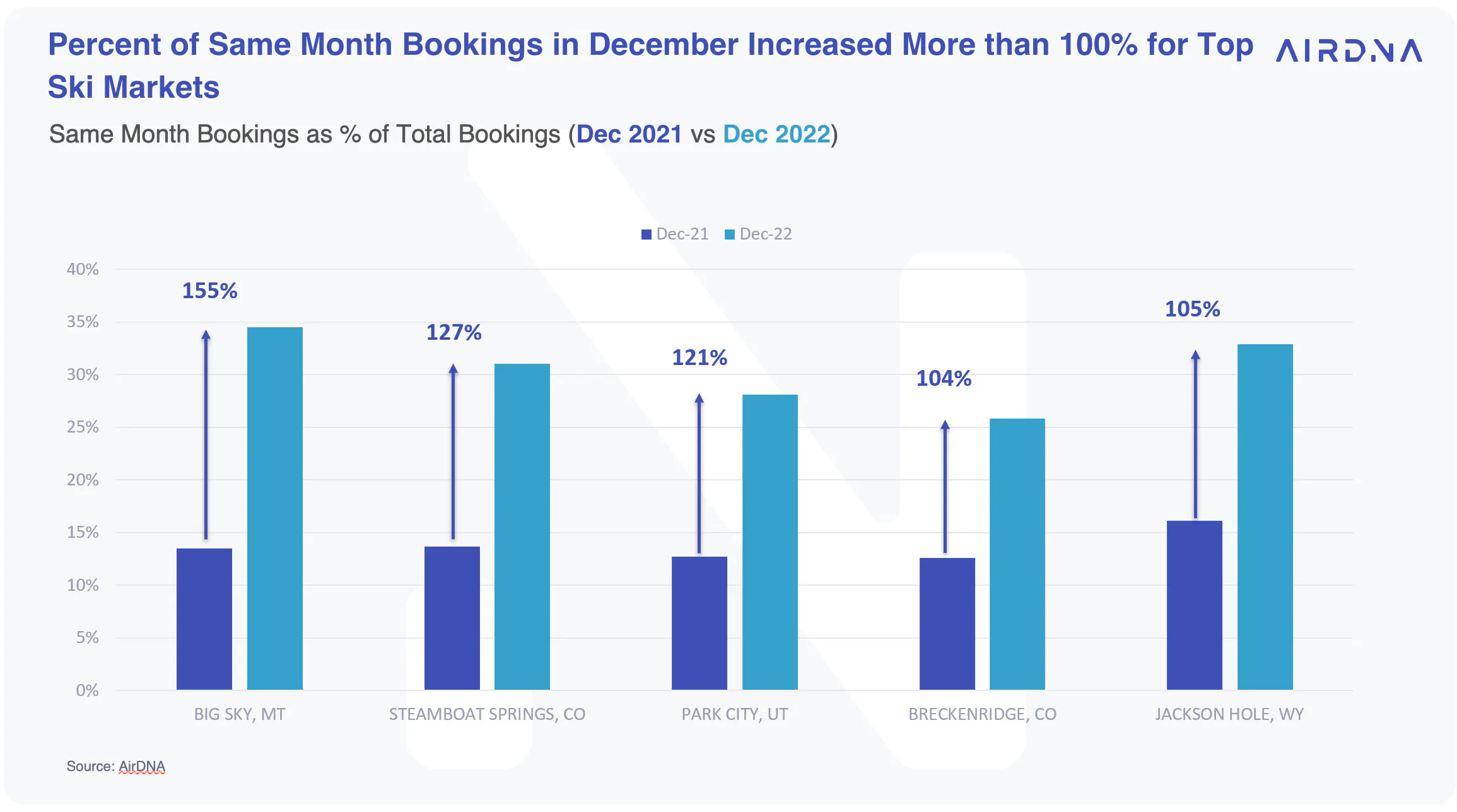
Snow in the early season can drive skiers to the slopes, leading to surges in same-month bookings in December and January.
In Big Sky, Montana, and Jackson Hole, Wyoming, for example, early ski season 2022-23 saw generous snowfall, leading to a 155% year-over-year (YOY) increase in the percent of same-month bookings in Big Sky and a 104% YOY increase in Jackson Hole.
STRs in Steamboat Springs, Colorado, had a similar early-season experience. Five feet of pre-season snowfall and below-average temperatures triggered a 127% YOY increase in the percentage of same-month bookings.
Late-Season Snowfall
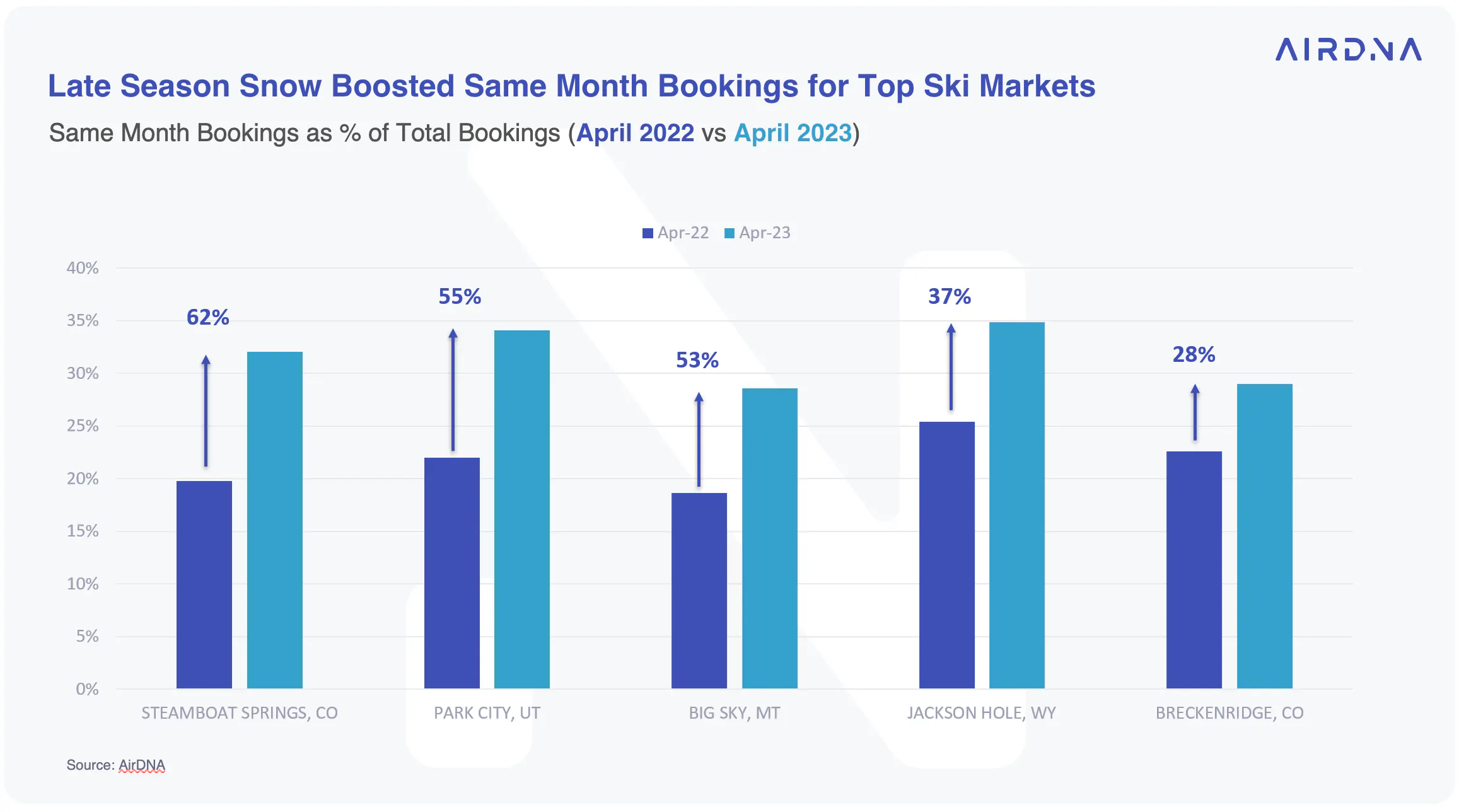
Some years, snowfall can even extend the ski season and drive up STR demand through April.
For example, ski season 2022-23 became the snowiest on record in Steamboat Springs, extending the ski season until April 16. Same-month bookings for April then jumped 62% YOY. Nearby Breckenridge, Colorado, also benefited from the snowfall, with STRs in the area marking a 28% YOY increase in the percent of same month bookings.
Park City, Utah, also benefited from a 45-year high snowfall of 450 inches, lengthening the ski season and leading to a 55% YOY increase in same-month bookings for April.
2. Regulations
STR performance in major ski destinations also depends on how regulated the area is. Strict regulations that cap STR operations or create additional tax liabilities can stifle growth and suppress demand.
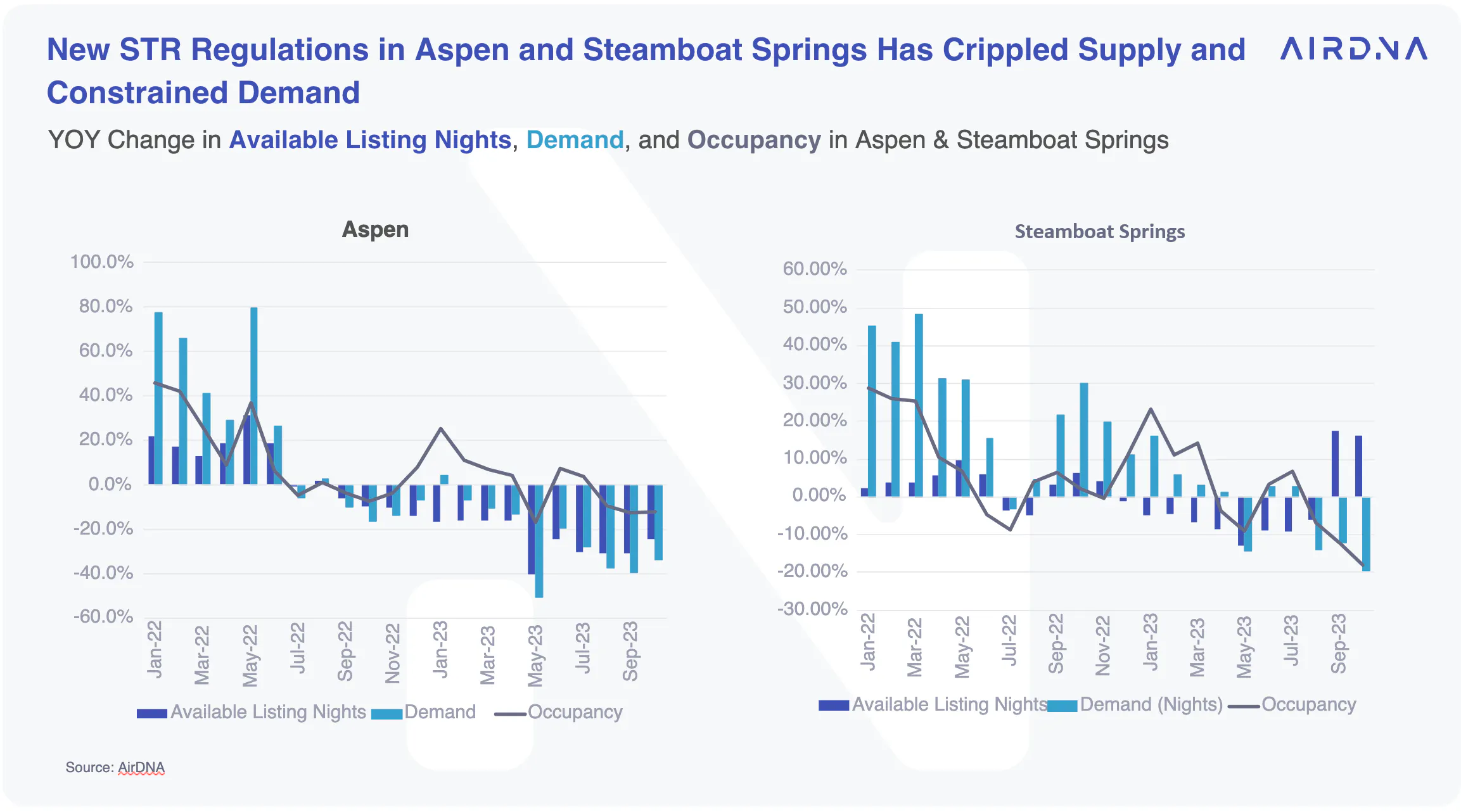
In Colorado, for example, many major ski areas have enacted new regulations that limit the growth of STRs. Two major ski areas grappling with this effect are Aspen and Steamboat Springs.
Aspen, Colorado
New regulations went into effect in July of 2022 limiting the number of STR permits in residential zoning areas. Only 75% of the estimated number of STRs before the regulation can continue to operate. STR supply began to decline immediately after the city adopted the new regulations. As of October 2023, available listings nights were down 24.8% YOY, while demand decreased 34%.
Steamboat Springs
New regulations enacted in June 2022 didn’t cap the number of available licenses for existing properties, but did limit the number of new licenses available in different zoning areas. This limited the number of available listings, but it so far hasn’t impacted demand; occupancy increased 14-23% YOY from January through March last ski season , as demand far exceeded supply.
Winter 2023-24 Forecast
Knowing the significance of snowfall, you’re probably wondering just how much snow your STR can expect. It’s important to remember that long-term forecasts aren’t always accurate, but they can still help you make more informed decisions for your properties.
The National Oceanic and Atmospheric Administration (NOAA) reports that this will be an El Nino winter, so many parts of the country will have a warmer and drier than average winter, while others may experience winter as usual. That means a busy winter for some STRs and a potentially quieter ski season for others.
Expected Temperatures in Ski Areas
- Pacific Northwest, California, Utah, and Maine: Warmer than normal
- Nevada, the Mountain West, the Midwest, and the Northeast: Likely warmer than normal
- Colorado: Winter as usual
Expected Snowfall in Ski Areas
- Pacific Northwest, Northern Idaho, Montana, and the Upper Midwest: Below normal
- California, Utah, Colorado, New Mexico: Above average
Top Ski Resorts for Airbnb This Winter
Many of the most in-demand ski destinations for winter 2023-24 are those with strong snow forecasts.
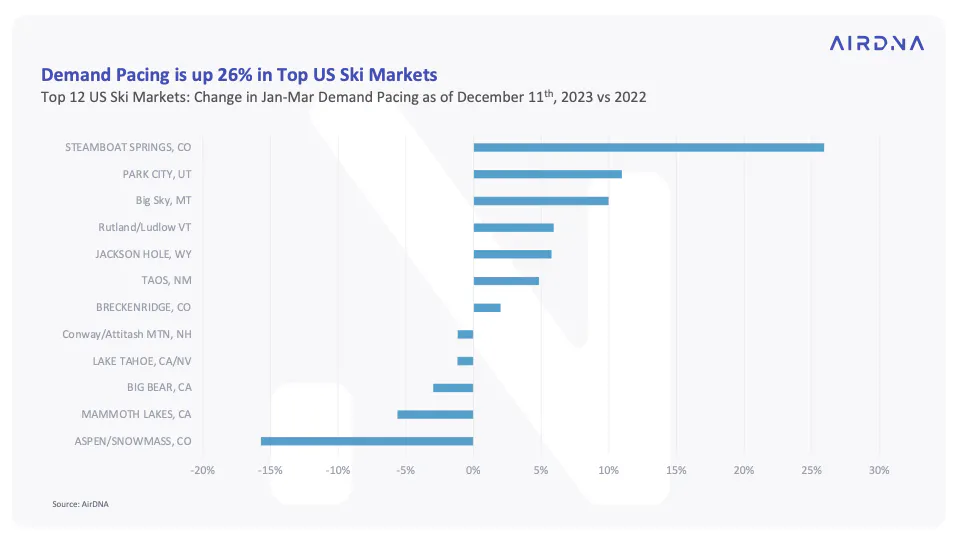
- Steamboat Springs: There are currently 26% more nights on the books for December through March than there were last year.
- Park City: Bookings for ski season have already increased 11% YOY.
- Big Sky: Travelers have already booked 10% more stays YOY.
- Jackson Hole: Demand is strong, with 6% more nights on the books YOY.
Ski Resorts With Less Demand Forecasted
Two ski areas are in significantly less demand this winter than last, though demand could rise if and when more snow falls.
- Aspen: Regulations continue to suppress demand, leading to a 16% decrease in demand YOY.
- Mammoth Lakes, California: New zoning rules prohibit short-term rentals in some parts of the city and limit the number of available STR licenses. Demand is currently down 6% compared to last winter.
How To Capture Ski Season Demand
While it’s true that ski season is at the mercy of Mother Nature, your STR performance doesn’t have to be. Whether your ski area is in higher demand than last winter or not, there are likely still travelers visiting the area—and steps you can take to increase the chances they’ll choose your listing.
Consider the following:
- Adopting Dynamic Pricing: Dynamic pricing is critical for mountainous STRs. Dropping your average daily rate (ADR) to cope with low demand may attract more guests, but it might also plummet your income. Instead, a dynamic pricing tool can strike the right balance between offering an attractive rate and contributing to your revenue goals.
- Upgrading Amenities: Analyze competing listings to see the amenities they’re winning out on; fireplaces and hot tubs are particularly popular in the winter. While adding a fireplace could be understandably out of budget, simple, ski-specific touches like boot warmers and dryers can help your listing stand out.
- Optimizing Your Listing: Update your Airbnb photography and descriptions to hit on your guests’ ski season dreams. Play up details like how close you are to the slopes, the wintry experiences they can enjoy, and the snowy views your STR offers.
Be Strategic This Ski Season
The winter season can be full of highs and lows for STR hosts. While some hosts are buckling in for a busy hosting season, others are looking for ways to withstand the chill. Although snow reports can sometimes feel like a rollercoaster for your nerves, there are ways to be more strategic using the data available to you.
ARTICLE SUMMARY
Get ready for Ski Season 2024! Discover how snowfall and new regulations might affect your STR performance and explore savvy tips on dynamic pricing, upgrading amenities, and optimizing listings to turn this winter's challenges into opportunities.
Dillon DuBois
AirDNA Senior Product Manager
Dillon DuBois is a seasoned expert in the short-term rental space, having worn many hats at AirDNA since joining in 2019. From driving B2B marketing initiatives to shaping product strategy, Dillon’s deep understanding of both the company and the industry makes him a key player in delivering innovative solutions. Now a Senior Product Manager, he leverages his experience to bridge the gap between data and user needs. He manages his own short-term rental in Medellín, Colombia, and enjoys all things outdoor adventure, travel, cooking, & surfing.
