How to Become an Airbnb Superhost in 2025 🏆
Published: August 1, 2025
Last updated: August 27, 2025

Camilo Schmid Rivas
Key Takeaways
- Airbnb Superhost status is meted out quarterly by Airbnb to recognize consistently exceptional hosts.
- According to AirDNA data, Superhosts have a 28% higher annual revenue potential than non-Superhosts, driven by stronger occupancy and increased guest trust.
- Ratings alone aren’t enough to maintain superhost status. Many non-Superhosts have 4.9-star averages. The key is consistency across all of Airbnb’s criteria quarter after quarter.
If becoming a Superhost feels like a mystery, you’re not alone.
Plenty of hosts hit all the right notes—strong reviews, solid communication, reliable check-ins—yet still fall short of Airbnb’s most coveted badge. So what’s the missing piece? And more importantly, is the reward worth the extra effort?
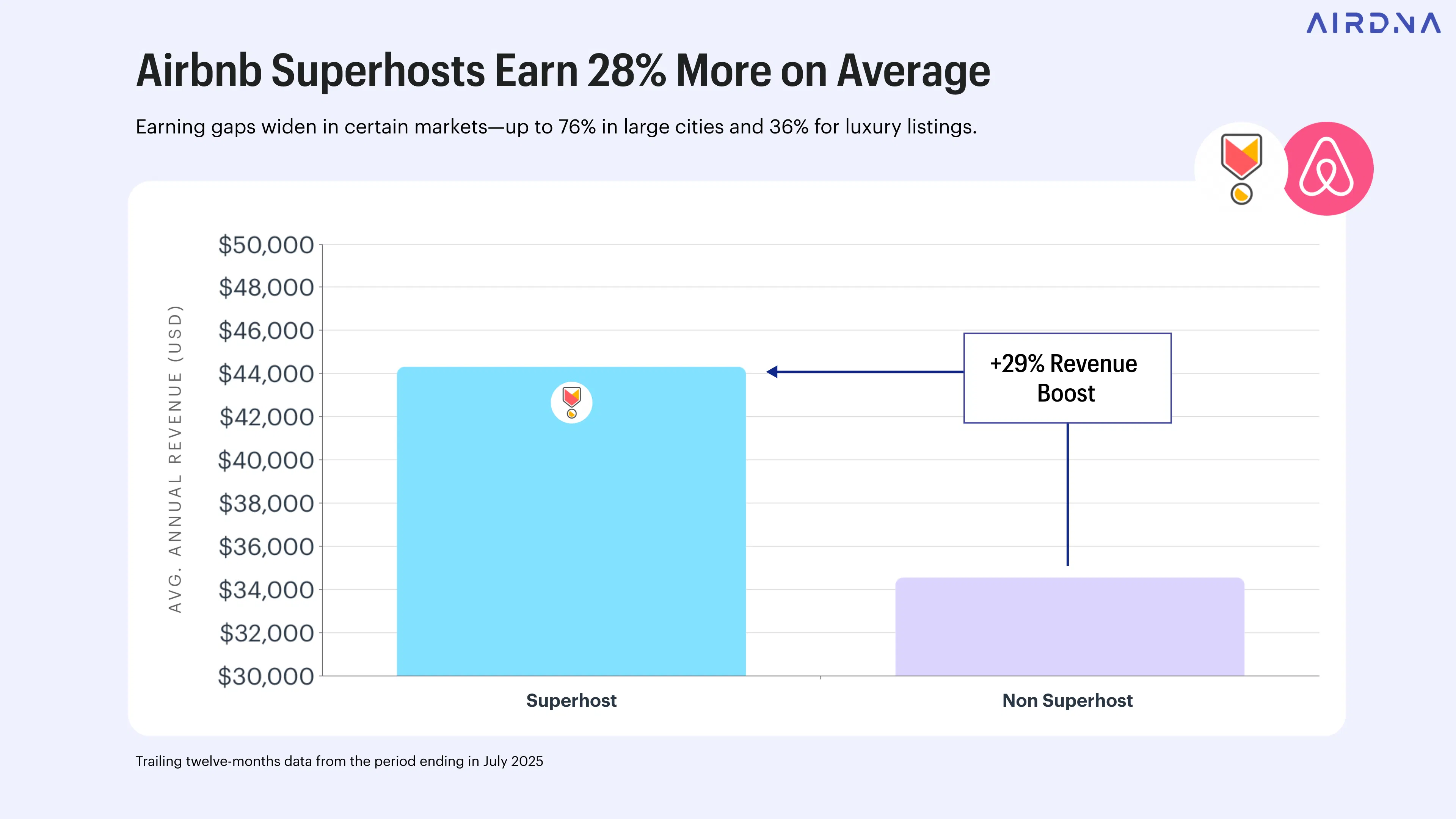
According to AirDNA data, Airbnb Superhost status is worth its weight in gold. Hosts with Superhost status earn up to 28% more in annual revenue than those without it, driven by higher occupancy and guest trust.
In this guide, we’ll unpack what Superhost status means, break down the criteria, and share the steps you can take to help you earn and keep that badge in 2025.
What Is an Airbnb Superhost?
An Airbnb Superhost is a title awarded to hosts who consistently deliver outstanding hospitality across their short-term rental listings. It’s one of the most recognizable trust signals on the platform, helping travelers quickly identify reliable and experienced hosts.
The Airbnb Superhost program launched in 2016 as a response to one big challenge: with nearly every listing boasting a high star rating, guests struggled to tell which hosts would truly deliver a top-tier stay. The Superhost badge solves that by highlighting those who go above and beyond not just once, but over time. In 2023, Airbnb celebrated one million hosts reaching Airbnb Superhost status.
Unlike a single property rating, an Airbnb Superhost badge reflects a host’s overall performance, offering a clearer picture of how they communicate, manage bookings, and handle guest experiences. It’s a program designed to promote consistency, reward professionalism, and make booking decisions easier for guests.
Airbnb automatically evaluates host performance every quarter—in January, April, July, and October—to determine who earns or maintains Superhost status. That regular review process helps keep the badge meaningful and current.
Airbnb Superhost Criteria
Airbnb awards Superhost status to hosts who consistently meet four key benchmarks each quarter:
- Host at least 10 stays per year (or 3 stays totaling 100+ nights)
- Respond to 90% of new guest messages within 24 hours
- Maintain an overall rating of 4.8 or higher
- Have a cancellation rate under 1% (excluding extenuating circumstances)
While these metrics seem clear-cut, the bar for quality is high, especially when it comes to ratings.
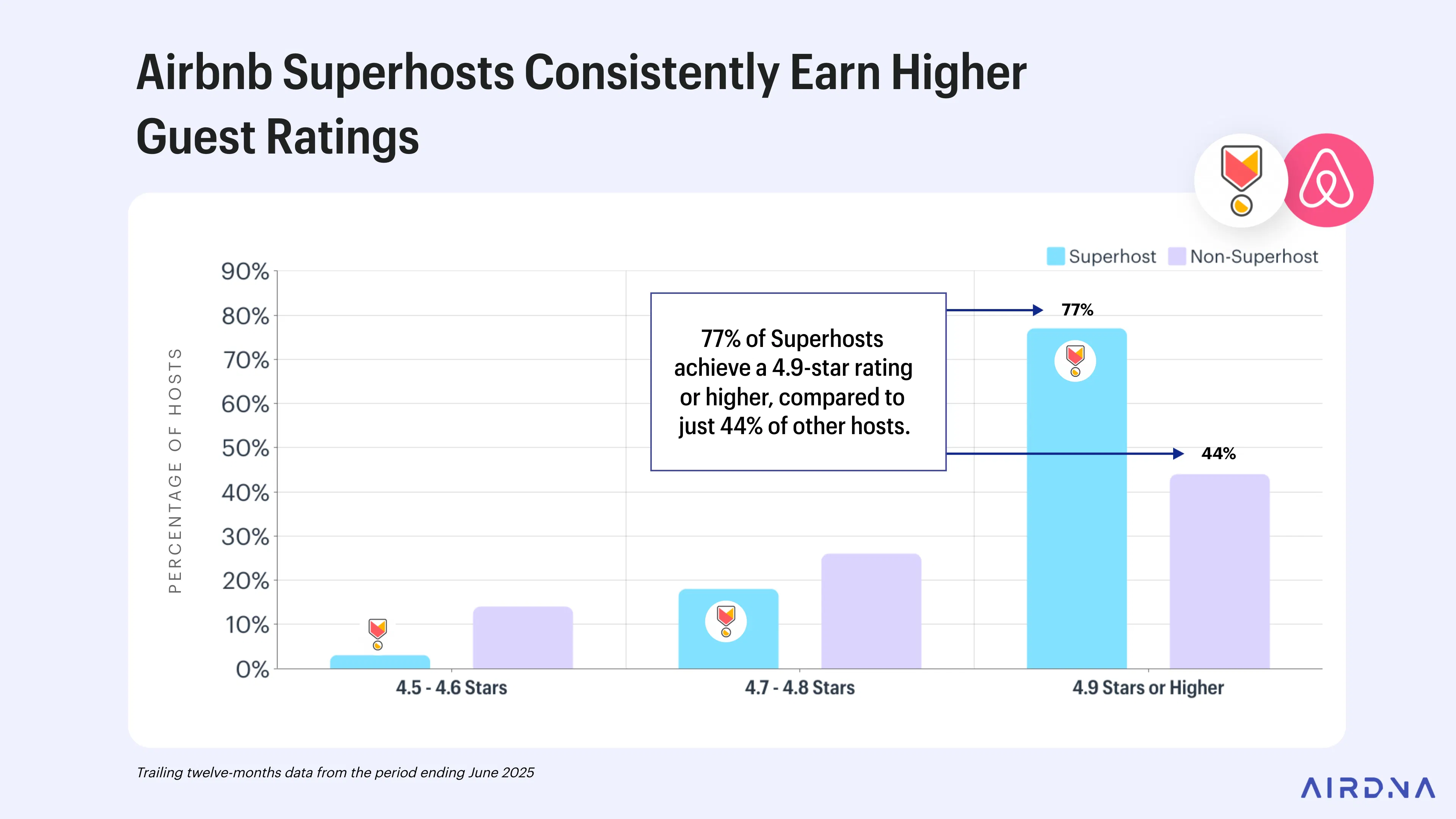
According to AirDNA data analysis, 77% of Superhosts maintain a 4.9-star rating or higher, compared to just 44% of non-Superhosts. That means even small missteps (like a late reply or an unmet expectation) can keep otherwise great hosts from earning the badge.
Benefits of Becoming an Airbnb Superhost
Superhost status doesn’t just make your profile look polished. It can also lead to stronger performance and more income. Hosts who consistently provide great guest experiences unlock several meaningful advantages:
- Higher occupancy rates: Superhosts tend to book more nights and have fewer calendar gaps.
- More annual revenue: Thanks to more consistent bookings, Superhosts often earn significantly more over the course of a year.
- Improved visibility in search: Superhost listings get a boost in Airbnb’s search results, helping more potential guests find and book your place.
- Stronger guest trust: That little badge signals reliability. Many guests filter for Superhosts when booking, especially if they’re new to Airbnb or traveling somewhere unfamiliar.
How Much Do Airbnb Superhosts Make in 2025?
According to AirDNA data, Superhosts in the U.S. earn an average annual revenue of $54,687 per year, compared to $42,595 for non-Superhosts. That means Superhosts earn 28% more, but it’s not because they charge higher rates.
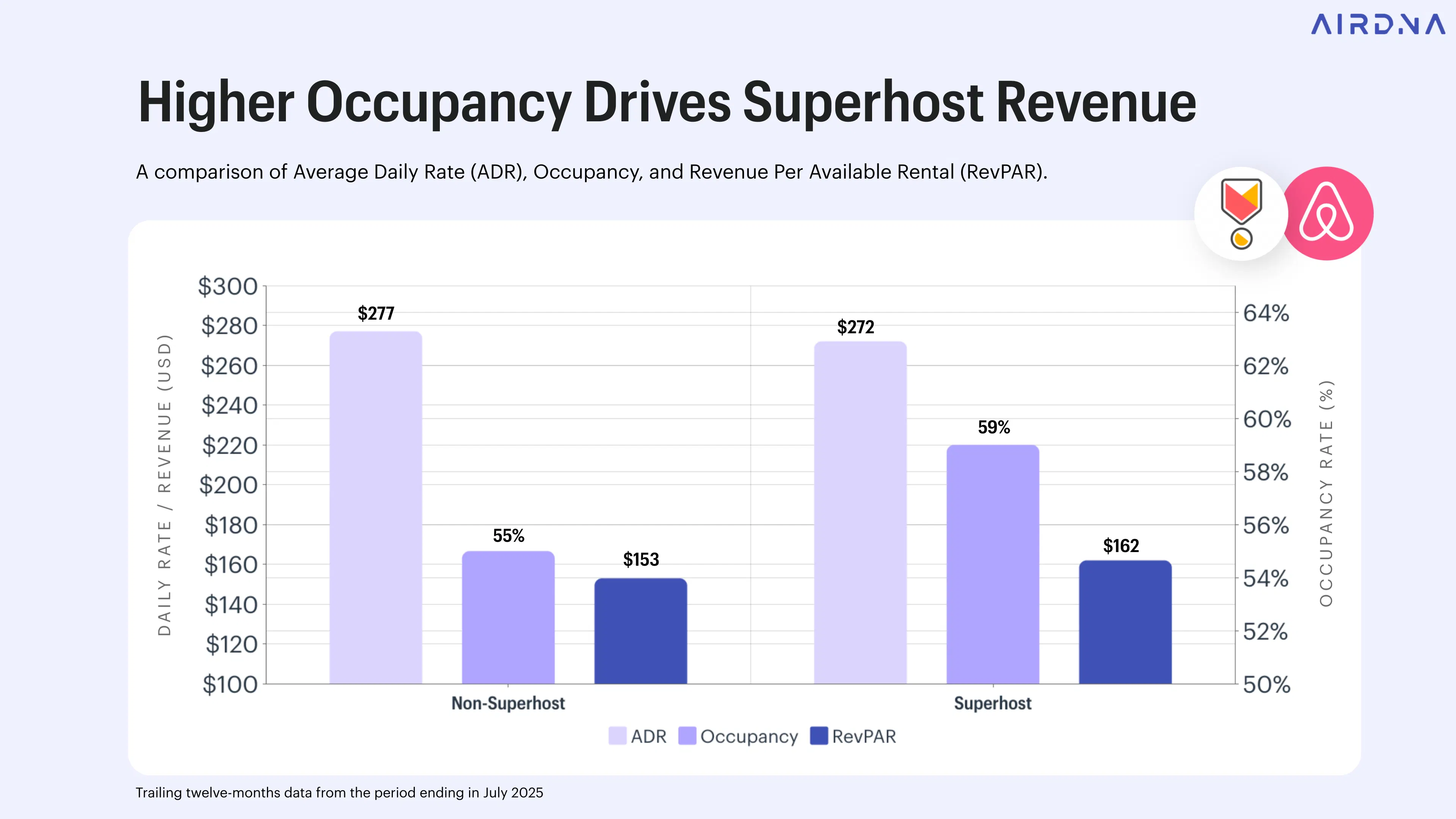
In fact, Superhosts tend to have slightly lower nightly rates than non-Superhosts ($272 vs. $277). However, they more than make up for it by booking more nights. On average, Superhosts have a 4% higher occupancy rate (59% vs. 55%). That difference may seem small, but it adds up over time to the tune of thousands of dollars per year.
The ability of Superhosts to attract more bookings is exactly what drives their higher revenue per available rental (RevPAR). RevPAR is just a way of measuring how much revenue a listing makes for each night it’s available, combining both price and occupancy into one number.
On average, Superhosts earn $162 in RevPAR, compared to $153 for non-Superhosts, a nearly 6% increase. In other words, even with slightly lower nightly rates, Superhosts come out ahead because they keep their calendars filled.
They are probably also pricing strategically: lowering rates when demand dips, staying competitive in crowded markets, and avoiding long gaps on the calendar.
On top of that, Superhosts tend to run more reliable operations. Their listings show up more often in search, they respond quickly, avoid cancellations, and consistently deliver great guest experiences. That kind of consistency builds trust, and trust leads to more bookings.
Superhosts in Large City Urban markets make more
A lot of factors influence how much more you can earn as a Superhost, but where you host and what kind of property you manage make some of the biggest differences. In some cases, the income gap is small. In others, becoming a Superhost can significantly increase what you bring in each year.
To get a clearer picture, we looked at revenue potential, which is an estimate of what a listing could earn annually if it were available every day. It’s not actual income, but it offers a helpful way to compare performance across different types of markets while controlling for the number of available days.
The differences are hard to ignore.
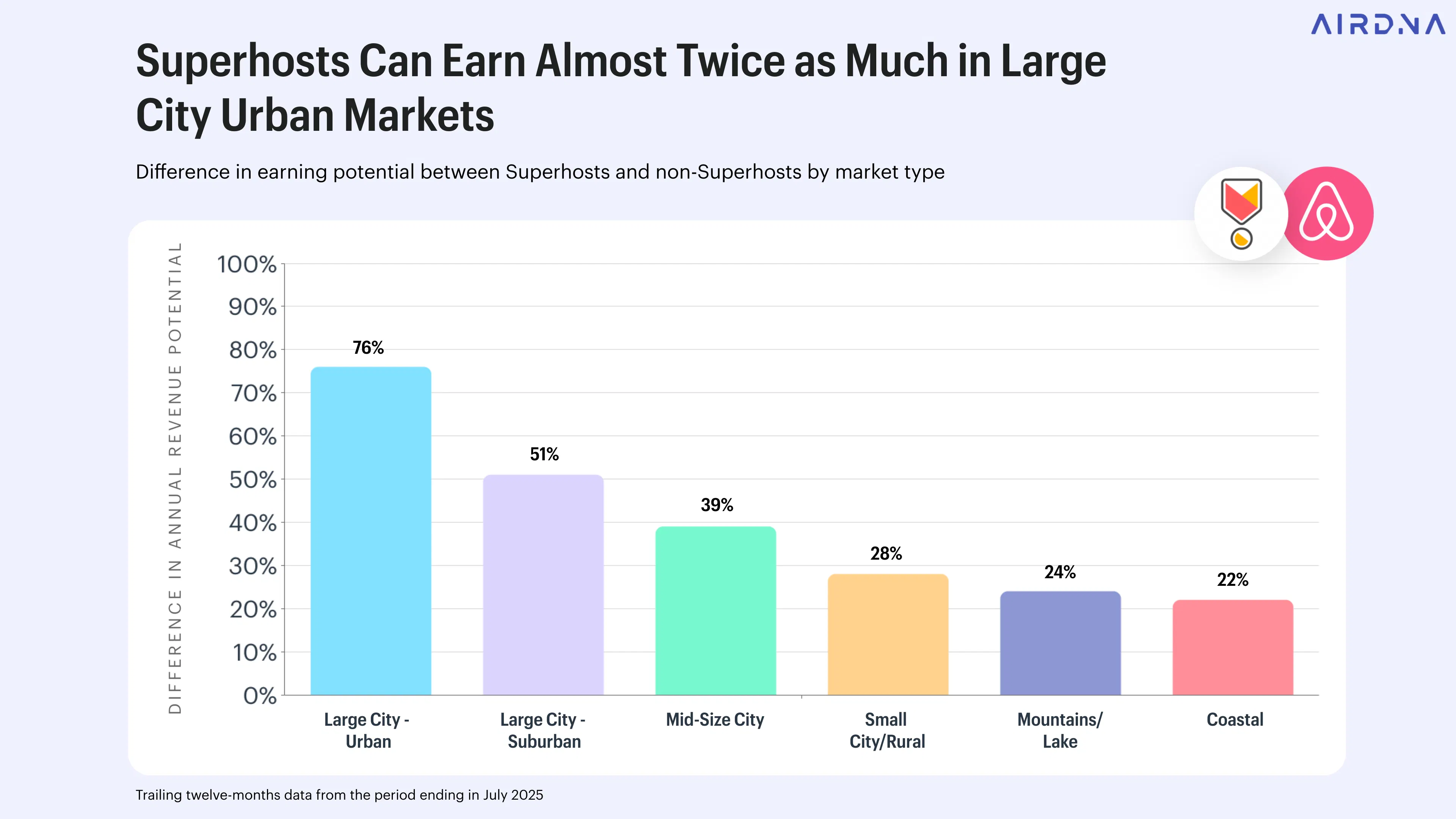
Large City Urban markets show the biggest upside, with Superhosts earning up to 76% more than non-Superhosts. That makes sense: in busy, competitive areas, guests rely more on trust signals like the Superhost badge to help them choose between similar listings.
But the advantage isn’t just for big-city hosts. In smaller towns, rural areas, and vacation spots, Superhost status still helps listings stand out and get booked more often. Even in places with fewer options, guests still want reliable experiences—and they’re more likely to book with someone who’s earned Airbnb’s top badge.
Curious how we define our market types? Learn more.
Luxury properties operated by Superhosts can earn substantially more
Location isn’t the only factor that can influence how much you can earn as a Superhost. Price type plays a big role too.
According to AirDNA’s revenue potential data, listings with Superhost status consistently outperform their non-Superhost counterparts across every price tier.
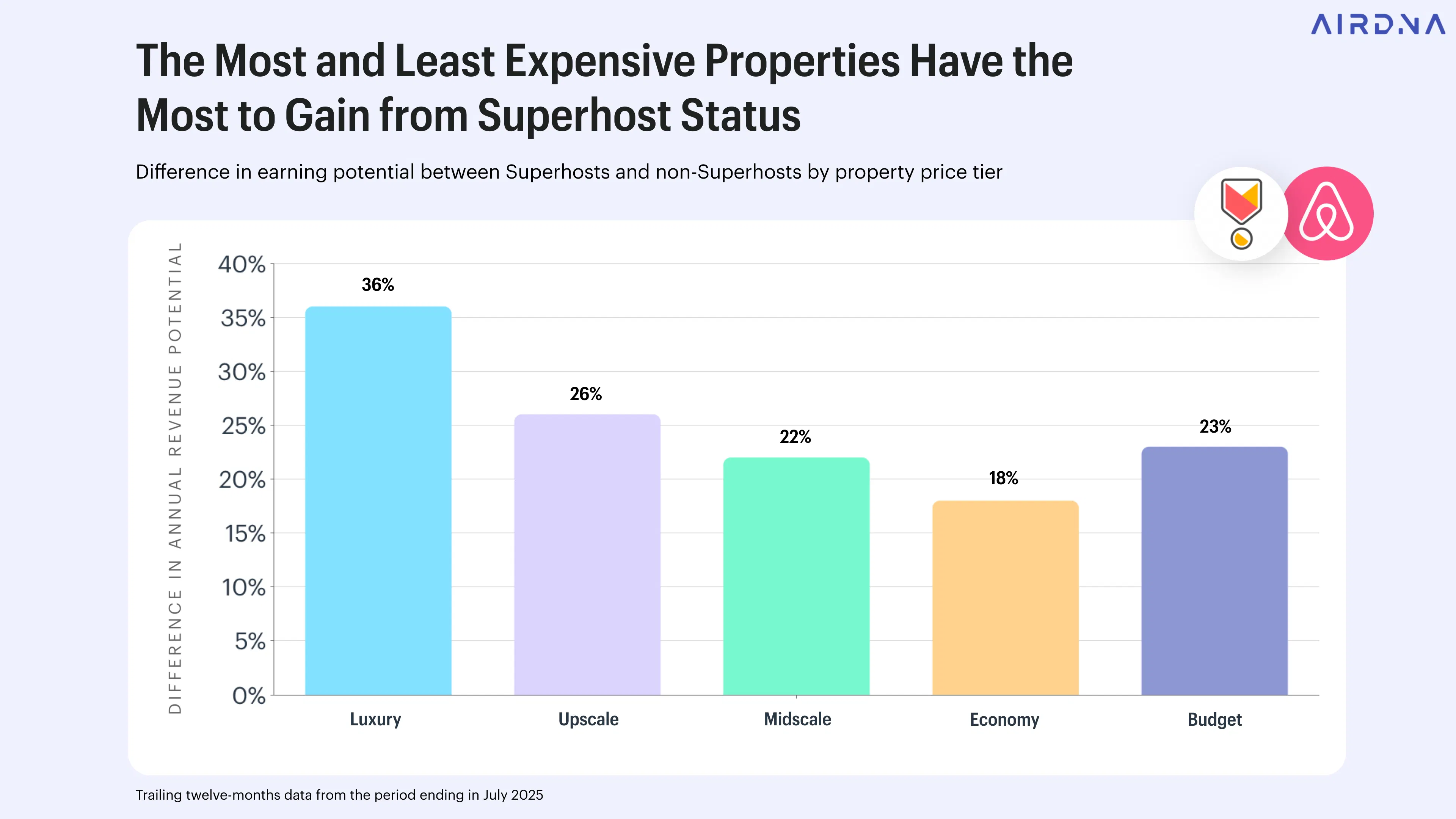
While luxury listings see the biggest percentage gain, the real takeaway is how consistent the Superhost advantage is across every price tier. Even budget and economy listings earn significantly more when they carry the badge—likely because guests are more cautious at lower price points and turn to trust signals when making booking decisions.
All of this is proof that Superhost status isn’t just for luxury listings in major markets. You can compete (and win) no matter where you’re hosting.
How to Become an Airbnb Superhost
Airbnb outlines exactly what it takes to become a Superhost, but meeting those standards consistently is more difficult than checking off a few boxes. It requires thoughtful planning, strong systems, and a guest-first mindset that shows up in every stay. Whether you're building momentum as a new host or fine-tuning your approach, the steps below can help you deliver the kind of experience that earns (and keeps) that coveted badge.
1. Provide a clean, comfortable guest experience
Cleanliness is one of the first things guests notice. If your space isn’t up to par, they won’t hesitate to leave a lower rating. However, comfort and convenience matter just as much. Guests expect everything to work, beds to be cozy, and check-in to be simple. Basic amenities like towels, soap, and Wi-Fi are a given, but adding a few thoughtful extras—like a coffee bar, quality toiletries, or even small luxury amenities—can really help you stand out and earn better reviews.
2. Maintain a low cancellation rate
Hosts who have a cancellation rate of more than 1% are disqualified from Airbnb Superhost status. Cancellations are commonly caused when a property is inadvertently double-booked, so keeping an effective calendar is key to keeping host cancellations at a minimum.
3. Respond quickly to guest communications
Good communication makes a big difference, and it starts before your guest even books. Sending a prebooking message builds trust and can improve your chances of securing the reservation. Once a guest books, keep the momentum going with clear, timely messages before check-in and during their stay. If they reach out with a question or issue, respond as quickly as possible. It also helps to send a quick note after check-in to make sure everything’s going smoothly, and again before checkout. These small touches show guests that you’re attentive and help prevent small issues from turning into lower ratings. With a property management system (PMS) like Uplisting, you can automate this messaging sequence so that guests receive the right communication at the right time, every time.
4. Offer excellent value for money
Guests are more likely to leave a five-star review when they feel the experience matched or exceeded what they paid. This is about more than price. It's about how well the space, amenities, and service deliver against expectations.
If your occupancy is lagging, consider adjusting your rates to better match guest demand. A small pricing shift can boost bookings, generate more positive reviews, and build momentum. Over time, that cycle of strong value perception and social proof can help you raise rates sustainably without sacrificing guest satisfaction.
5. Build up your reviews
One of the best ways you can become an Airbnb Superhost is by getting more glowing reviews. According to AirDNA data, 66% of Superhosts have at least 20 reviews, compared to just 38% of non-Superhosts. Reaching that 20-review mark is often a turning point. You’re about twice as likely to earn the badge once you hit it. From there, the gap only widens. Nearly a quarter of Superhosts have 100 or more reviews, while very few non-Superhosts ever reach that level.
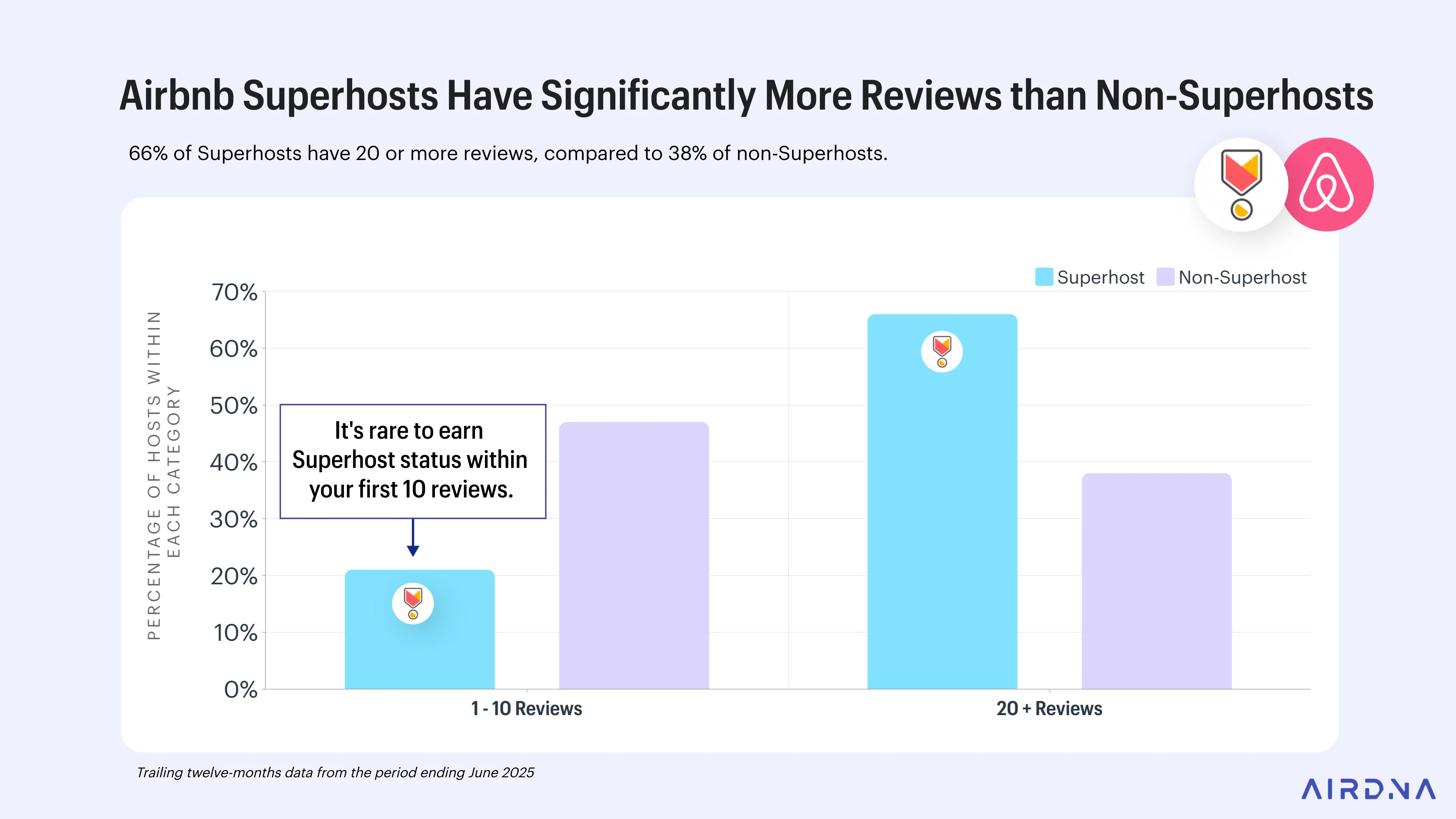
For newer hosts, this means every review carries extra weight. With fewer than 10, even a single low score can make qualifying difficult. Once you build a larger base of reviews, individual ratings matter less and maintaining a 4.8 average becomes easier.
The best way to build review volume is by delivering an excellent guest experience and asking for feedback consistently. Leaving a review for your guests also helps (we even have some Airbnb guest review templates you can use). Airbnb prompts them to write one in return, which often increases response rates and the number of reviews you get.
How to Maintain Your Airbnb Superhost Status
Earning Superhost status is a win, but keeping it is where the real consistency pays off. Since Airbnb reassesses your performance every quarter, it’s important to stay on top of the little things that make a big difference to guests.
That means answering messages quickly, keeping your space spotless, and making sure everything runs smoothly from check-in to checkout. Even small issues—like a late reply or a lightbulb that’s gone out—can snowball into lower ratings if they’re not addressed early.
Staying proactive is key. Regular property check-ins, routine maintenance, and quick guest follow-ups help prevent problems before they start. Many experienced hosts rely on smart tools and habits to stay organized without burning out.
Here are a few strategies that can help you hold onto your Superhost badge:
- Use automated messaging to reply quickly and consistently, even when you're offline.
- Create a cleaning checklist for yourself or your team to ensure nothing gets missed between guests.
- Track your core metrics like average rating, occupancy, and cancellations to spot issues early.
- Inspect your property regularly to catch maintenance problems before guests do.
- Follow up with guests after check-in and before check-out to show you care and resolve small issues quickly.
- Keep a calendar system in place to avoid double bookings or preventable cancellations.
- Offer a digital guidebook to reduce repetitive questions and improve the guest experience.
With solid systems and attention to detail, maintaining Superhost status becomes less of a scramble and more of a steady rhythm in how you run your short-term rental business.
Is Airbnb Superhost Worth It?
We’ve already covered the revenue benefits: Superhosts can earn 28% higher annual revenue than non-Superhosts thanks to higher occupancy and stronger guest trust. The value of Superhost status goes beyond income, though.
Earning the badge signals that you’re running a reliable, guest-first operation, and that builds momentum over time. It boosts your credibility not just with guests, but with potential partners, cleaning teams, and even lenders or investors if you’re looking to scale your portfolio. Superhost status also supports your reputation if you’re exploring direct bookings or cross-listing on other platforms.
For many hosts, achieving Superhost is a turning point. It often reflects a shift in mindset from casual hosting to a more professional, strategic approach. That shift tends to pay off well beyond the Airbnb algorithm.

FAQs
What's the difference between an Airbnb Superhost and a regular host?
To earn—and keep—Superhost status, hosts need to meet Airbnb’s performance standards consistently. That means completing at least 10 stays in the past year (or at least 3 stays totaling 100 nights), responding to 90% of new guest messages within 24 hours, keeping your cancellation rate at or below 1% (except for extenuating circumstances), and maintaining an overall guest rating of 4.8 or higher.
Airbnb reviews these metrics every quarter. If you fall short during one of those evaluations, you’ll lose your Superhost status until you qualify again.
How do I check my Airbnb Superhost status?
To check if you're a Superhost on Airbnb, log in to your hosting account and navigate to the ‘Menu’ option on the upper navigation bar. Select ‘Insights’ from the drop-down options. You’ll land on the ‘Opportunities’ tab of that homepage. Navigate to the ‘Superhost’ tab. Here, you'll find your Superhost status displayed prominently, along with a summary of where you stand for each qualifying criterion. Airbnb also sends Superhosts a congratulatory email when they achieve or renew their Superhost status every quarter during the assessment periods in January, April, July, and October.
How many 5-star reviews do I need for Superhost status?
There’s no fixed number of five-star reviews required to become a Superhost, but consistency matters more than volume. Airbnb looks at your overall rating, not just how many five-star reviews you’ve received.
According to our data:
- Superhosts with fewer than 10 reviews typically have about six five-star reviews
- For Superhosts with 20 to 100 reviews, around half of those tend to be five-star ratings
The takeaway? A strong ratio of positive reviews to total stays is key, especially if you’re early in your hosting journey. The fewer reviews you have, the more weight each one carries, so focusing on quality guest experiences from the start can make a big impact.
What is the difference between Guest favorite and Superhost on Airbnb?
Airbnb Superhost is an official quarterly program that measures consistent excellence in hosting and awards a badge to qualifying hosts. In contrast, Guest Favorite applies to properties, referring to particularly memorable or popular stays. There is overlap between the two designations, but you’re not guaranteed both. 72% of Guest Favorite listings are run by Superhosts, proving that better hospitality leads to better ratings and more badges. That being said, 28% of Guest Favorite listings aren’t managed by Superhosts, so it’s possible to earn the badge without Superhost status.
Is it hard to be a Superhost on Airbnb?
Achieving Superhost status takes consistency, but it’s absolutely within reach with the right strategy. Airbnb reviews host performance every quarter, and you’ll need to meet a few key benchmarks: host at least 10 short stays (or three longer ones), maintain an overall rating of 4.8 or higher, respond to 90% of guest messages within 24 hours, and keep your cancellation rate under 1%.
These expectations are manageable, especially for hosts who treat their rental like a professional operation. From clean, well-prepared spaces to thoughtful guest communication, the details matter. With the help of smart tools and a few repeatable and scalable systems, many hosts find that earning—and keeping—Superhost status is both doable and worth the effort.
ARTICLE SUMMARY
Airbnb Superhost status represents more than great reviews. This guide breaks down how to become an Airbnb Superhost and why it’s worth the effort, according to AirDNA data.
Camilo Schmid Rivas
Senior Research Analyst
Camilo Schmid Rivas is a Senior Research Analyst at AirDNA who brings a uniquely well-rounded perspective to short-term rental analytics. With a background that spans investment, real estate, and business analysis—including roles at Stayery and Sollers Consulting—Camilo has worn many analyst hats, each sharpening his ability to turn complex data into clear, actionable insights. A graduate of École hôtelière de Lausanne, he now channels his multidisciplinary expertise into uncovering trends that drive smarter STR decisions. In his free time, he enjoys playing tennis or scuba diving in or around Barcelona.