


European Monthly Review September 2024: Steady Demand, Rising Rates, and Holiday Travel Surge
Published: October 21, 2024
Last updated: November 13, 2026

Linda Rollins

Key Takeaways
- Despite a 30% drop in demand from August to September, total demand nights rose 17.3% year-over-year (YOY).
- ADR growth has slowed since its peak in July 2023, aligning with Europe’s declining inflation rates.
- Demand pacing for December and early January is up 27% YOY, with key holiday destinations like Rovaniemi, Krakow, and Basel leading the charge.
With school back in session, European short term rental (STR) demand slowed in September. Total demand nights across the European continent was 45 million. This figure is down 30% from the highs of August, but up 17.3% from last September. Despite the drop-off in demand that comes with the end of summer, many hosts tend to keep their listings available into September. Available listings last month totaled 3.9 million, down just 3% from August and up 12.2% year-over-year (YOY).
Relatively strong demand in September helped to keep occupancy growth positive. Average occupancy reached 55%, up 1.5% YOY. ADR also showed renewed strength, rising 9% YOY to an average of €164. As a result, European hosts earned an average of €90 per available rental night in September, a notable 10.7% increase YOY.

At a Glance: September STR Performance in Europe
- Available listings totaled 3.9M, up 12.2% year-over-year (YOY)
- Demand reached 45M, an increase of 17.3% YOY
- Average daily rates (ADR) averaged €164, up 9% YOY
- Average occupancy was 55%, up 1.5% YOY and down 4% compared to 2019
- Revenue per Available Rental (RevPAR) increased 10.7% YOY to €90
- Booked nights increased 19.2% YOY
The State of the European Economy
The European economy showed signs of recovery in the first half of 2024, bouncing back from sluggish growth in 2023. GDP grew by 0.3% quarter-on-quarter in Q1 2024 and by 0.2% in Q2.
In its September macroeconomic projections report, the European Central Bank (ECB) lowered its GDP forecasts from its June outlook, while still expressing optimism for continued growth in the coming year. Weaker manufacturing and lower-than-expected private consumption prompted the ECB to reduce its GDP growth projections for Q3 and Q4 2024 by 0.2 percentage points. The September forecast now anticipates 0.2% GDP growth for the last two quarters of 2024 and 1.3% growth in 2025 for the euro area.
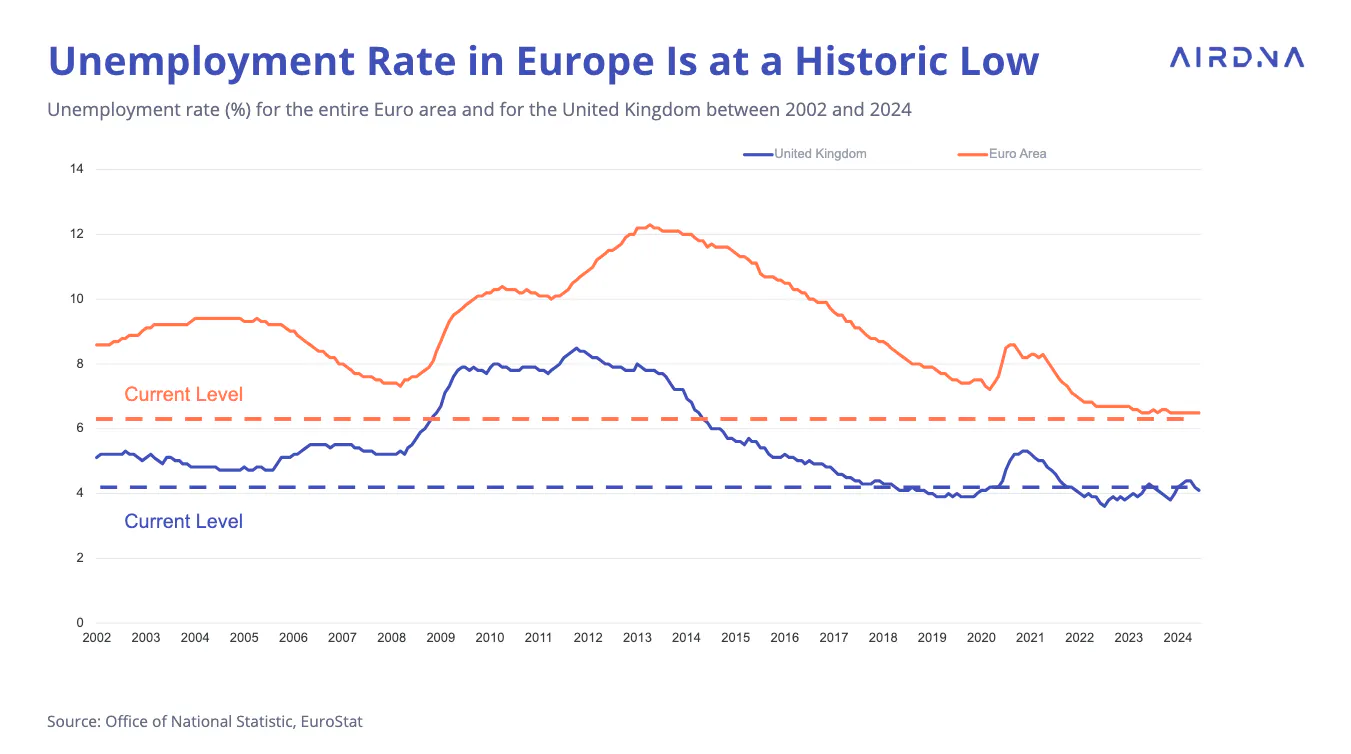
The ECB maintains that a resilient labor market, wage growth, and declining inflation will drive household disposable income and private consumption in the coming year. Unemployment in the euro area has been at historic lows for over a year, sitting at 6.4% as of August 2024, with projections showing it will remain at these levels through 2025. Employment growth is expected to persist, with the ECB predicting 0.8% annual growth in 2024 and 0.4% in 2025. Wage growth is also forecasted to rise at an annual rate of 4.5% in 2024 before easing to 3.6% in 2025.
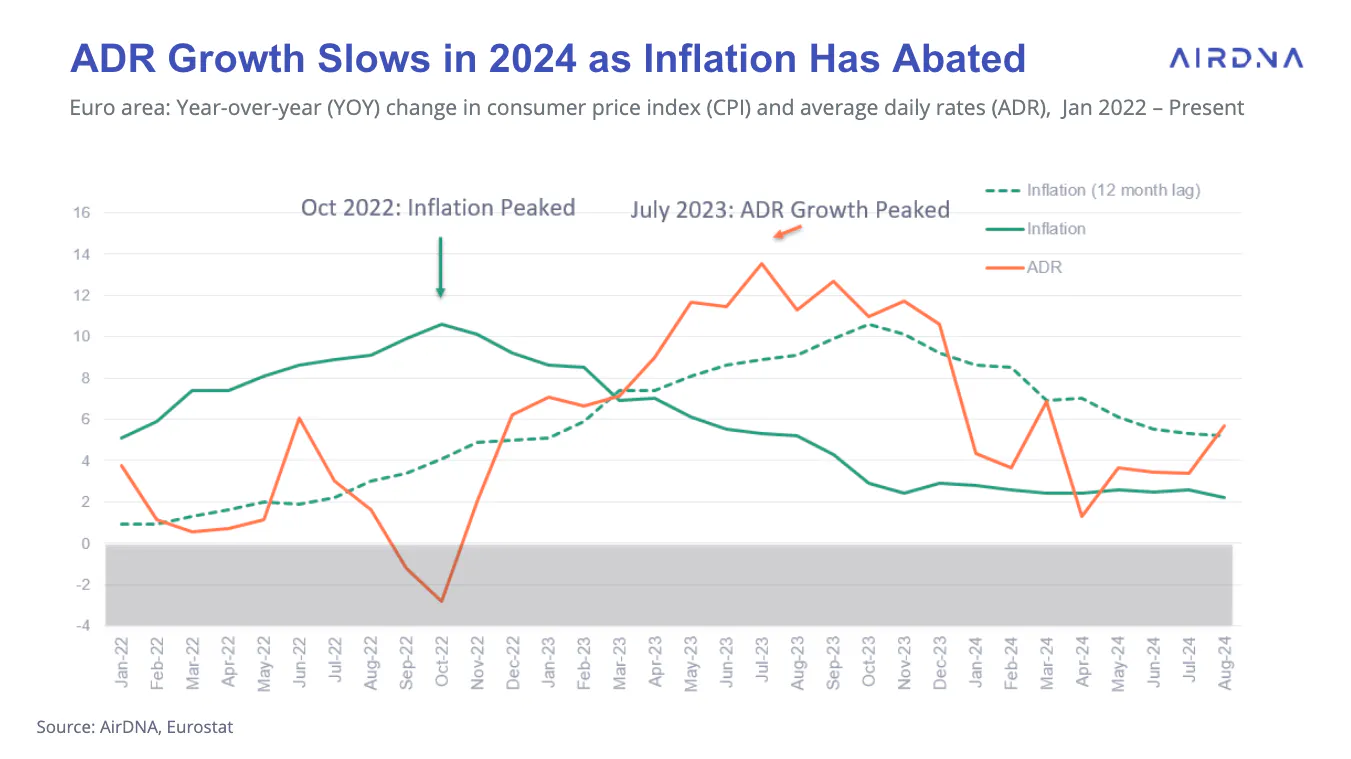
Inflation in the euro area has been on a steady decline. As of August 2024, inflation stood at 2.2%, down from 2.6% in July. Growth in the cost of energy, food, goods, and services has slowed significantly over the last two years, and we’ve seen it reflected in the cost of short term rentals as well.
Inflation’s Impact on ADR
Year-over-year (YOY) growth in average nightly rates for short term rentals stood at 13.5% at its peak in July 2023 and has since fallen as low as 3% in recent months. Given that inflation impacts can be delayed, looking at euro area inflation on a 12-month lag shows a clear connection between declining inflation and slower ADR growth in the STR market. As inflation stabilizes across Europe, we’re seeing rate growth in the STR market follow suit.
Demand Across Europe Dropped Off 30% from August to September
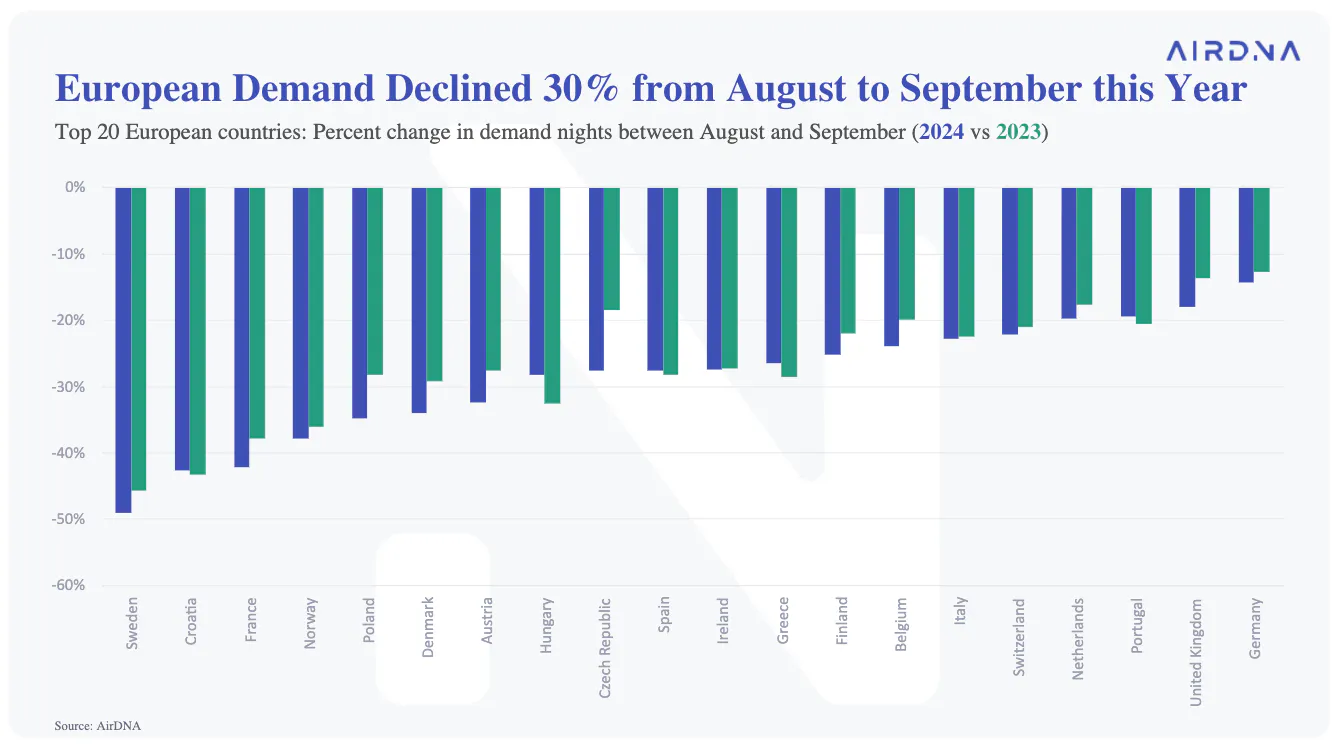
This year, European demand fell 30% from August to September, a larger drop off than last year when demand fell 28% during the same period
The countries that led with the biggest drop-off in demand from August to September this year were:
- Sweden
- Croatia
- France
- Norway
- Poland
Countries that saw the smallest drop-off in demand from August to September were:
- Switzerland
- The Netherlands
- Portugal
- United Kingdom
- Germany
Compared to 2023, most of the top 20 countries experienced a larger drop in demand this year. However, strong September demand meant that five countries—Croatia, Hungary, Spain, Greece, and Portugal—saw a smaller drop-off in demand this year than last.
Countries that experienced a significantly greater drop in demand this year compared to last include:
- Czech Republic
- Denmark
- Austria.
How is your STR performing?
Your vacation rental may be amazing, but is it better than your competition? Connect your Airbnb listing to AirDNA to see its Booking Performance Score.
See your scoreCountries with Strong Shoulder Season Demand See Biggest Occupancy Gains
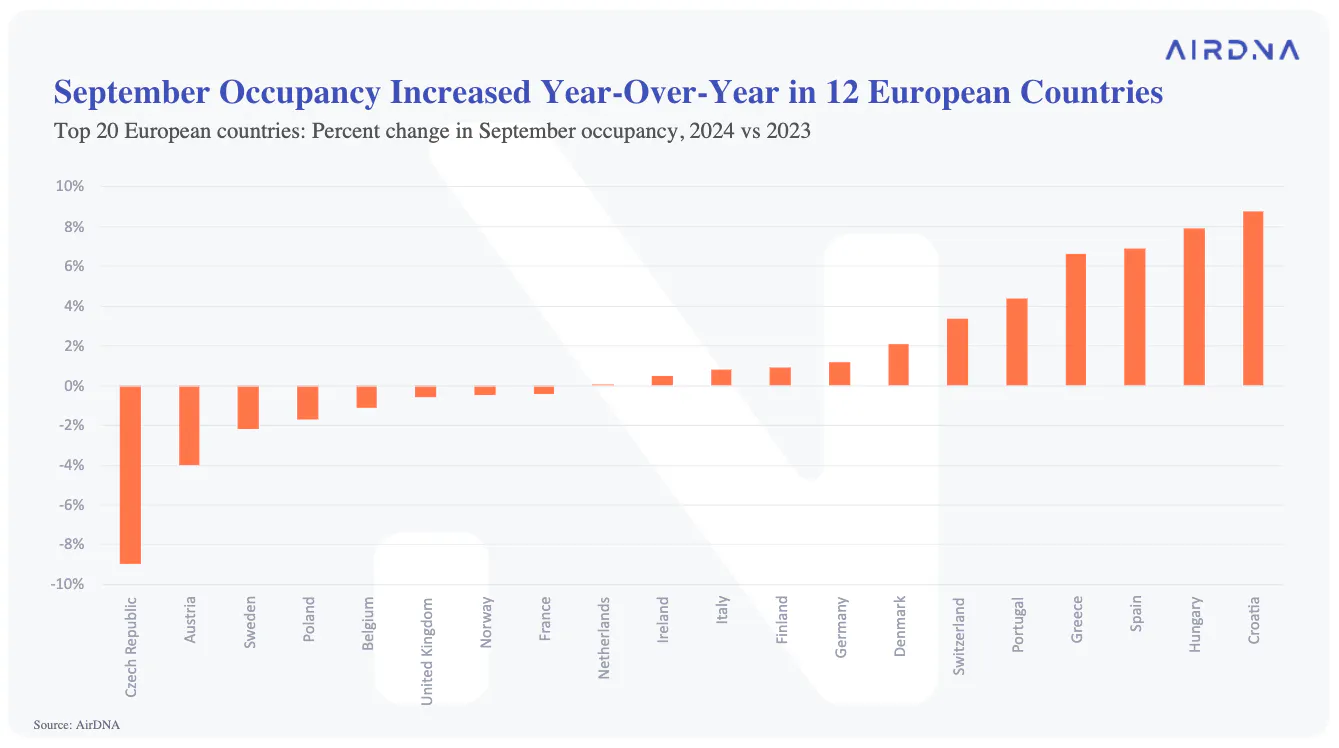
September occupancy also highlights the varying demand performance of the top 20 countries during the shoulder season.
Countries that experienced a smaller drop in demand from August to September compared to last year led the way in occupancy growth for September. In the countries below, increased travel demand during the shoulder season resulted in year-over-year (YOY) occupancy growth exceeding 4%:
- Croatia (+8.8%)
- Hungary (+7.9%)
- Spain (+6.9%)
- Greece (+6.6%)
- Portugal (+4.3%)
Countries that saw a significant drop in demand from August to September, while supply growth remained strong, experienced YOY declines in occupancy last month.
- Czech Republic (-9%)
- Austria (-4%)
- Sweden (-2.2%)
- Poland (-1.7%)
- Norway (-0.5%)
In some countries, the drop-off in demand from August to September was more modest. However, greater supply growth compared to demand growth in September still led to YOY occupancy declines:
- United Kingdom (-0.6%)
- Belgium (-1.1%)
Foreign Travel Share in Europe Is Still Below Pre-Pandemic Levels
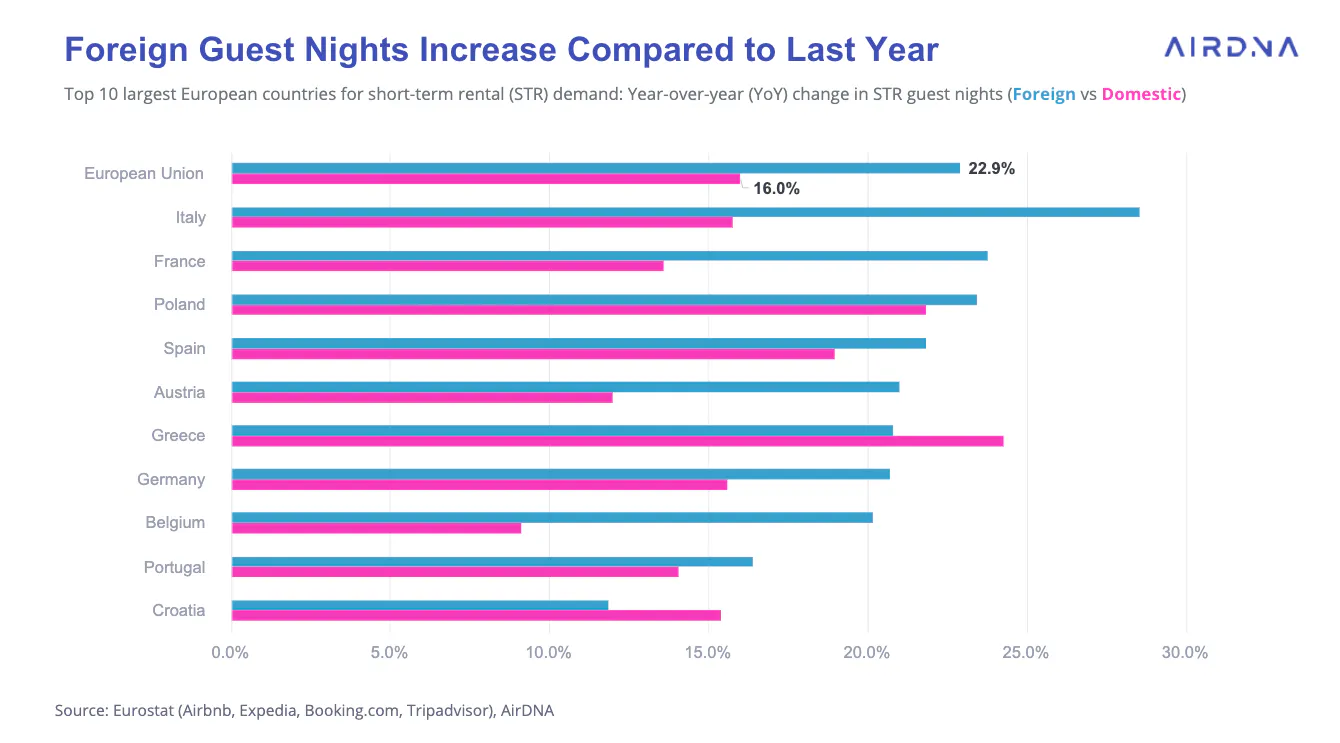
According to Eurostat data, foreign travel has seen significant growth over the past year. Since 2020, Eurostat has been collecting data on short-term rental guest nights through a data-sharing agreement with platforms like Airbnb, Booking, Expedia Group, and Tripadvisor. This data, broken down by locality, accommodation type, and guest origin, is published in monthly, quarterly, and annual reports. As of March 2024, Eurostat data shows that guest nights by foreign travelers (travelers to a country from outside of that country) have grown at a faster rate than those by domestic travelers over the past year.
Across European Union countries, guest nights by foreign travelers increased by 23% over the past year, while domestic guest nights grew by 16%. This stronger growth in foreign guest stays is evident in the largest countries for STR demand. In some countries, such as Italy, Belgium, and France, the growth in foreign guest nights has far outpaced that of domestic guest nights.
Despite making a strong comeback over the past year, the share of foreign guest nights compared to total guest nights has yet to return to pre-pandemic levels. As of March 2024, foreign travelers accounted for 59% of all guest nights in the EU, compared to 65% in March 2019.
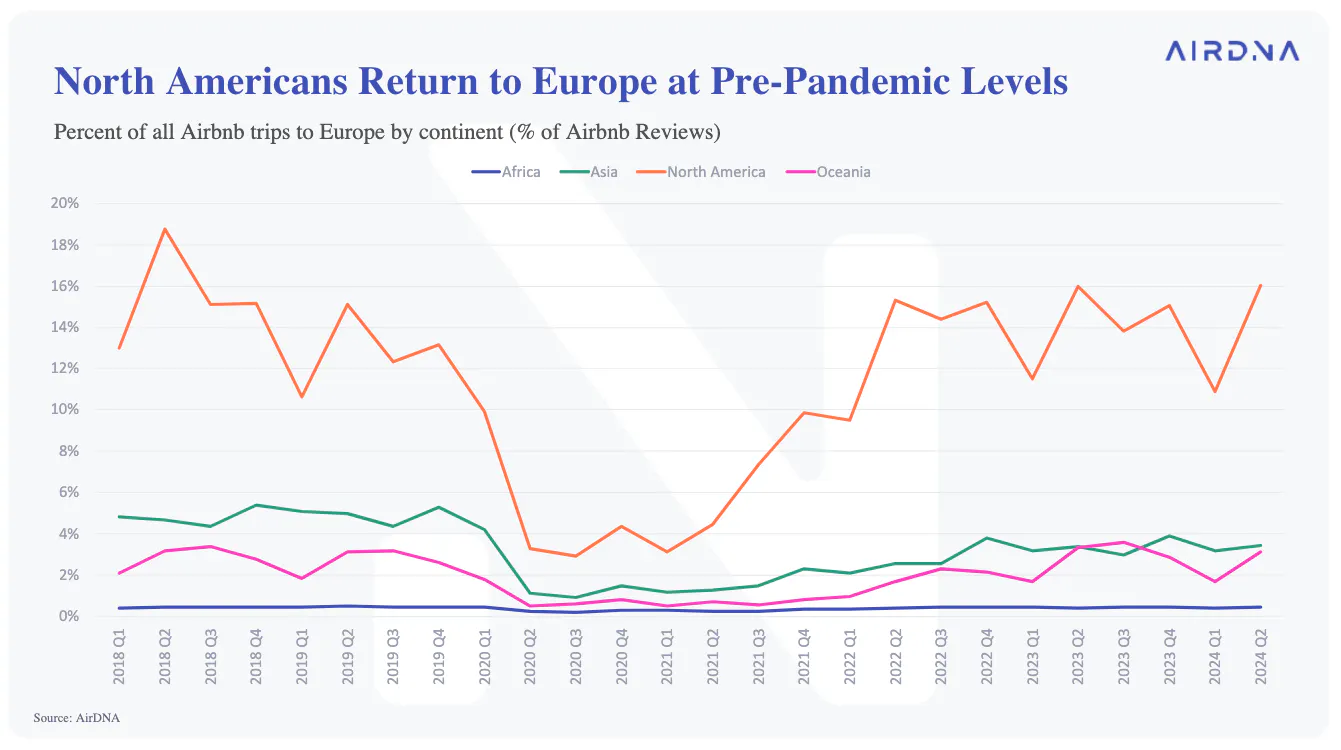
Our Airbnb review data on the share of trips to Europe by continent offers some insight into the slower return of foreign travelers to Europe since the pandemic. North American travelers have fully returned, making up 16% of all Airbnb trips to Europe in Q2 this year, compared to 15% in Q2 of 2019.
Travelers from Asia, who represent the second-largest group of foreign visitors to Europe, have not fully returned since the pandemic. In Q2 2019, travelers from Asia accounted for 5% of all Airbnb stays in Europe, but this dropped to just 3.4% in Q2 of this year.
Europe Demand Pacing Is Up 15% through April
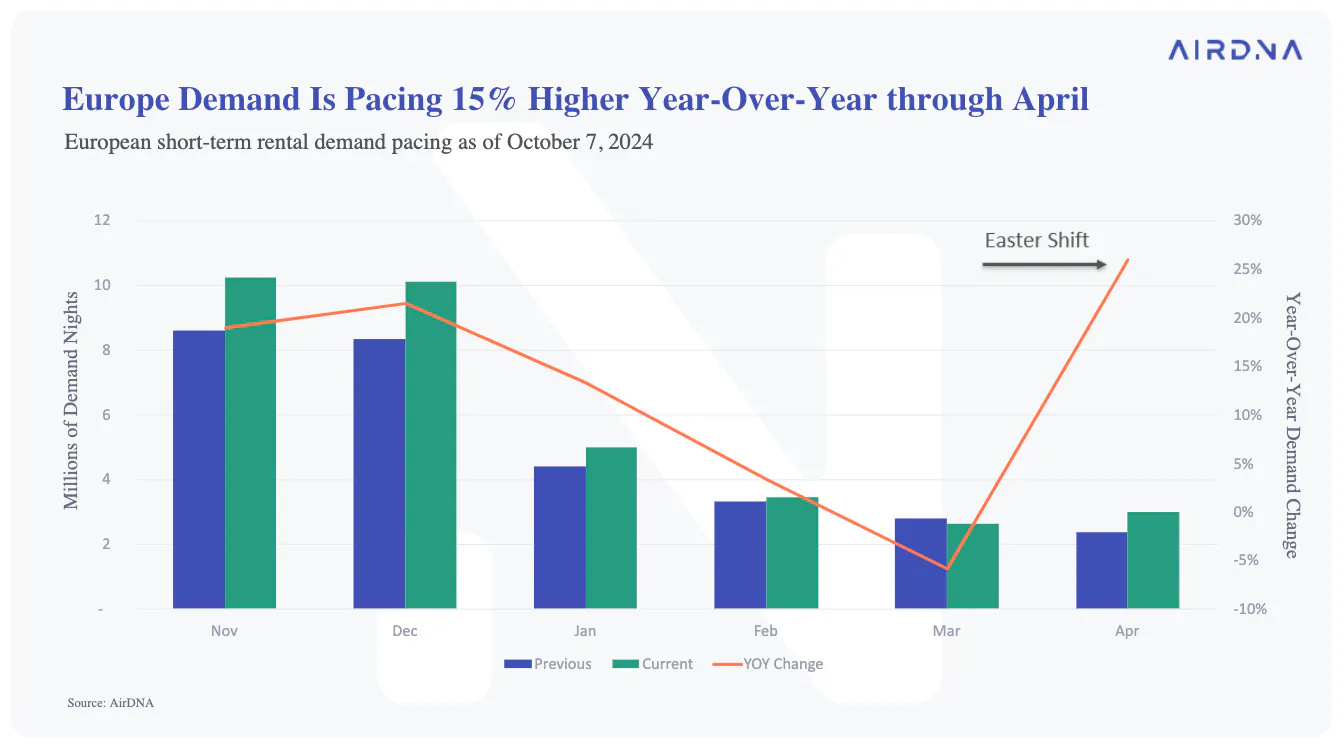
Looking ahead at demand pacing in Europe, we see continued booking momentum going into the new year. Current demand on the books is up 15% through April. Demand is especially strong for November and December, with bookings up 20%, while January and February are seeing a 9% year-over-year (YOY) increase. Easter is shifting back to April this year, after falling in March last year. As a result, demand pacing is down 6% YOY in March, but April is pacing 26% higher.
As the holidays approach, it’s important for hosts to keep an eye on demand trends. Understanding when demand peaks around Christmas and New Years can help operators optimize their pricing strategy.
Last year, demand started to see an uptick on the weekend prior to Christmas. Demand continued to increase before reaching a peak on New Year’s Eve, which landed on a Sunday. Demand started to decline after New Year’s Eve but stayed elevated through January 4th.
This year, despite Christmas falling on a Wednesday instead of Monday, current demand on the books picks up the weekend prior to Christmas. Similar to last year, demand escalates between the weekend before Christmas and New Year’s Eve. It remains elevated until a few days after New Year’s Eve.
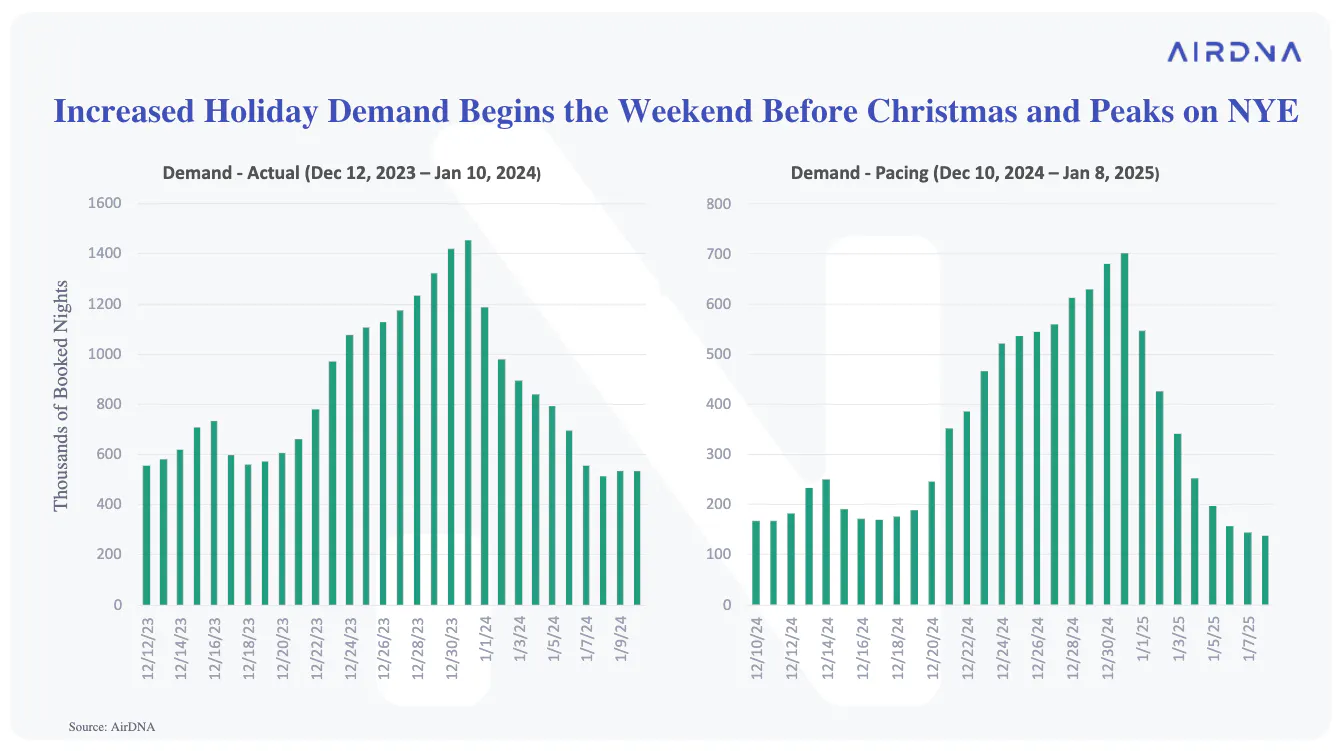
Overall, hosts should be in good spirits this holiday season. Current demand pacing for the 2 weeks around Christmas and New Year’s, December 20th to January 2nd, is up 27% year-over-year (YOY).
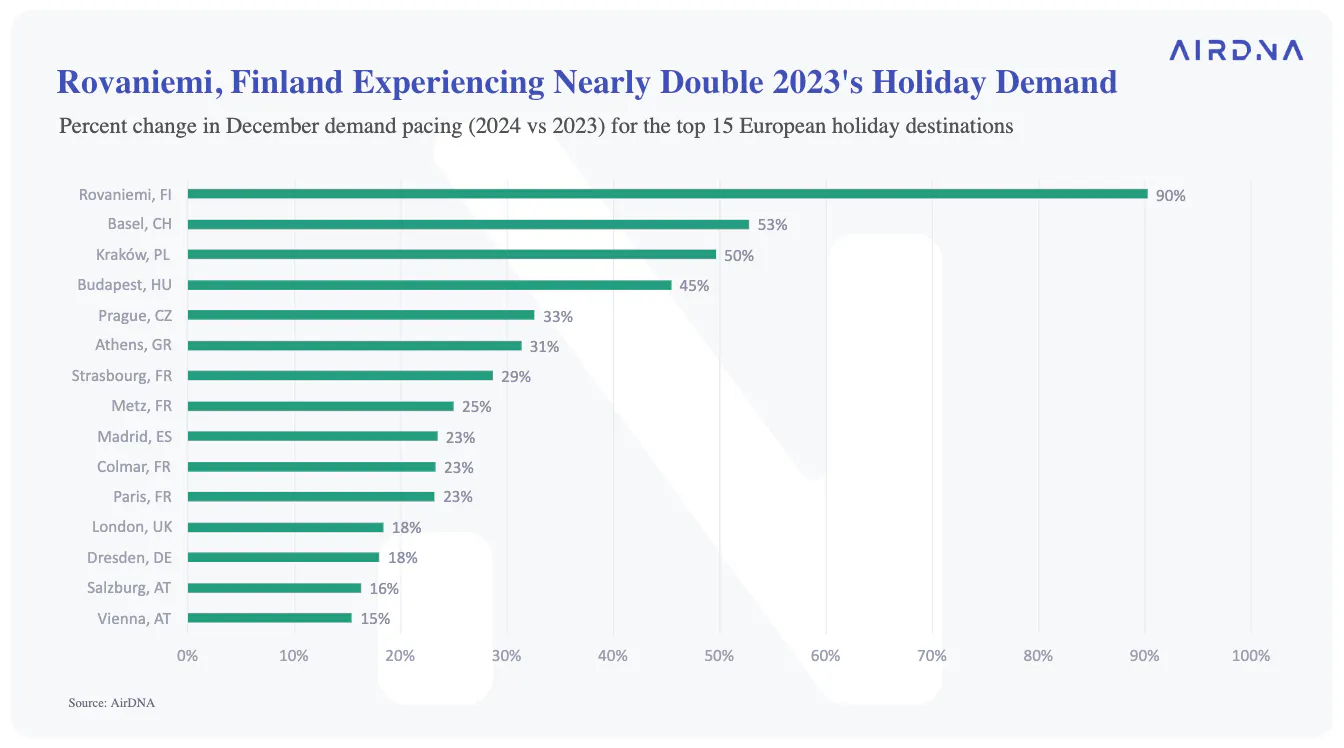
If you’re curious which festive cities are drawing the most traveler attention this holiday season, we’ve compiled a list of the top cities leading YOY demand growth this December. These destinations are known for their holiday markets and festivities.
- Rovaniemi, Finland (+90%)
- Basel, Switzerland (53%)
- Krakow, Poland (+50%)
- Budapest, Hungary (+45%)
- Prague, Czech Republic (+33%)
- Athens, Greece (+31%)
- Strasbourg, France (+29%)
- Metz, France (+25%)
- Madrid, Spain (+23%)
- Colmar, France (+23%)
- Paris, France (+23%)
- London, United Kingdom (+18%)
- Dresden, Denmark (+18%)
- Salzburg, Austria (+16%)
- Vienna, Austria (+15%)
You’re in great company
Some of the largest short-term rental operators (with 250+ properties) rely on Uplisting's software to scale their businesses.
Sign upARTICLE SUMMARY
September saw strong demand growth across Europe’s short-term rental markets, supported by steady occupancy and pricing improvements. As inflation stabilizes, ADRs have followed suit. Foreign travel is on the rise but has yet to fully recover to pre-pandemic levels. Heading into the fall and winter, European bookings are pacing well ahead of last year, indicating a strong holiday season.
Linda Rollins
Senior Research Analyst
Linda Rollins is a Senior Research Analyst at AirDNA and a self-managing short-term rental host, which means she understands the market as both an analyst and an operator. She writes research and blogs for AirDNA and for Adapt, its revenue management tool, making her work a go-to resource for investors trying to find and size up the right opportunities, and for operators looking to understand changing market dynamics and find concrete ways to improve occupancy, rates, and guest experience. Her data is regularly cited in major news outlets, and she has a knack for bringing both the numbers and the story behind them. In her free time, Linda enjoys spending time with her family, traveling, and looking for good eats.
Related


Get started with AirDNA today.
Powerful, easy-to-use tools that help hosts and investors succeed in the short-term rental market.
Try for free