

 Calculate Revenue
 Research Markets
 Find For Sale Properties
 Compare My Listing
 STR Revenue Calculator
 Custom Comp Sets
 Submarket Insights
 Custom Search Filters
 Rate Recommendations
 Performance Benchmarking
 Competitor Comparison
 Owner Contact Details
 Property-level performance data
 Tourism Insights
 Real Estate Investment Analytics
 About Us
 Sales
Sales Support
 Press
PressHow to Set the Right Short-Term Rental Rates
Published: December 1, 2025
Last updated: September 25, 2026

Bram Gallagher
Key Takeaways
- Pricing your short-term rental requires finding that sweet spot between covering costs, making a profit, and staying attractive to guests.
- Looking at vacation rental pricing trends and similar properties in your area can help you set competitive rates.
- Tools like AirDNA that track occupancy and average daily rate (ADR) can help you fine-tune your short-term rental rates, so you're not just pulling numbers out of thin air.
What should I charge for my short-term rental? Setting the right short-term rental rates can feel like a guessing game, especially for new hosts and investors.
Set the rate too high, and you risk an empty calendar. Too low, and you're leaving money on the table. Unlike long-term rentals with steady monthly rates, short-term rental pricing needs to flex with demand, seasonality, and what guests expect from a stay.
That’s why it’s so important to understand how short-term rental pricing works and to have the right tools to help you make informed decisions.
A short-term rental pricing calculator can give you a revenue and average daily rate (ADR) estimate, but knowing how those projections are built is just as important as the results. The more you understand the why behind the numbers, the more confident you’ll be in setting your pricing.
7 Key Short-Term Rental Pricing Factors
Pricing your short-term rental isn’t just about following your gut or copying what the place down the street is charging. It’s about knowing what really moves the needle.
The most successful hosts use vacation rental pricing strategies that reflect market trends, guest behavior, and what makes their property stand out. When you understand what actually drives nightly rates, you can make smarter decisions that fill your calendar and grow your revenue.
Here are the seven core factors that shape how much you can (and should) charge.
1. Market trends
Short-term rental pricing doesn’t happen in a vacuum. Local events, global travel shifts, and even economic news can all influence what guests are willing to pay and what you can reasonably charge.
Hosting the only available listing during a major festival? That’s an opportunity to raise your nightly rate. If bookings slow down during a travel dip or economic downturn, competitive pricing becomes even more important to stay booked.
That’s why it’s so important to stay plugged into what’s happening in your market, and not just broadly. Guest behavior and short-term rental performance can vary at the local level.
AirDNA’s Overview tab in Market Insights is a great place to start. It gives you a Market Score (from 40 to 100) that reflects the overall health of short-term rentals in your area. You’ll also see key performance metrics like annual revenue, occupancy rate, average daily rate (ADR), and RevPAR, each with mini trendlines showing how those numbers change throughout the year.
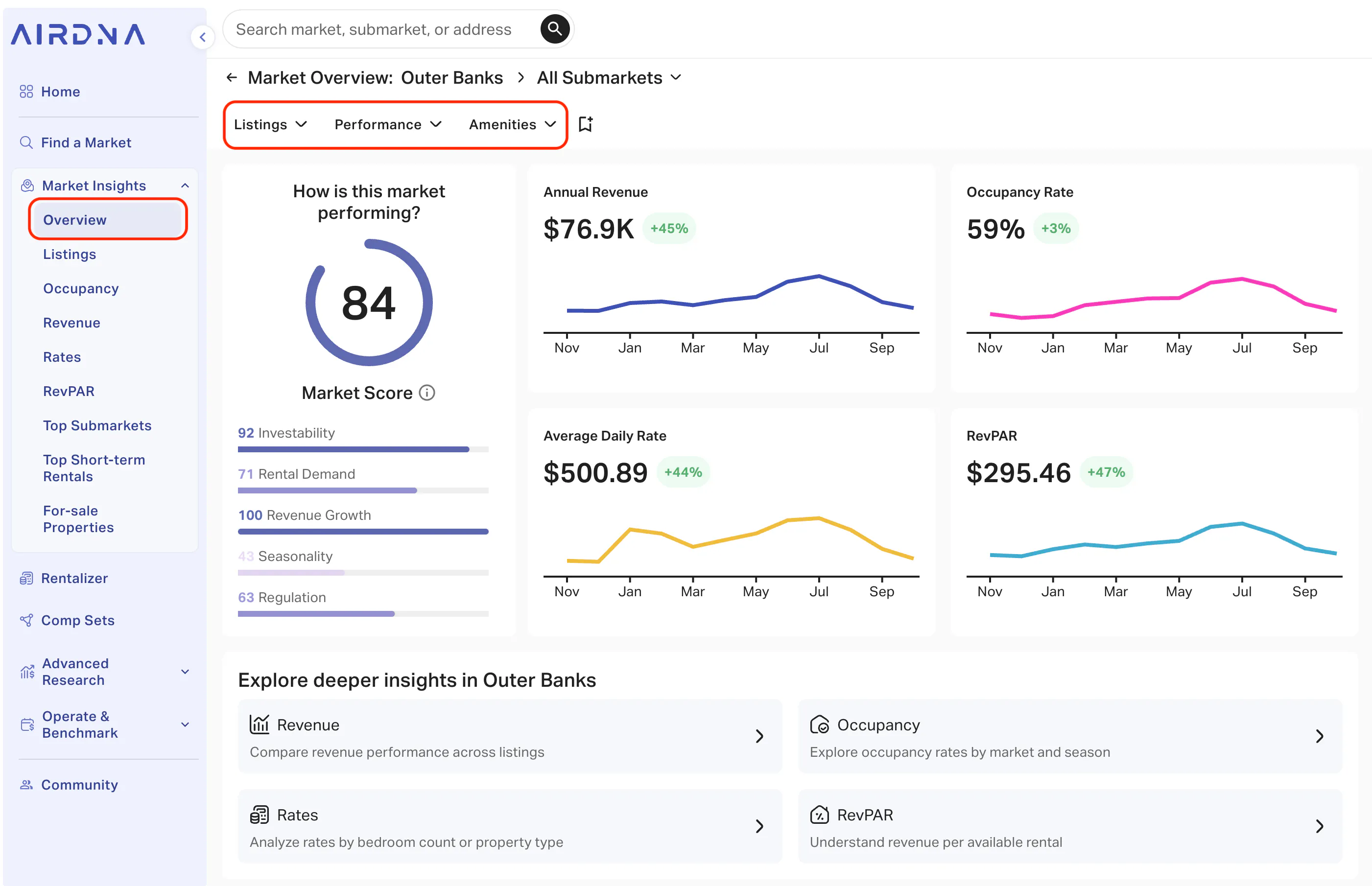
From there, you can dig deeper. Explore subtabs for each metric or apply filters to see how performance shifts based on listing type, price tier, guest ratings, or even amenities. The more you understand your local market, the better you can position yourself.
To stay ahead of broader trends, AirDNA also offers recurring insights through our Monthly Market Reviews, Yearly Outlook Reports, and our Best Places to Invest report—so your pricing decisions are always backed by real data, not just gut instinct.
2. Comparable property rates
When guests browse short-term rentals, they’re comparing your listing to those similar in size, style, and features. What nearby, comparable properties charge plays a big role in how you should price yours.
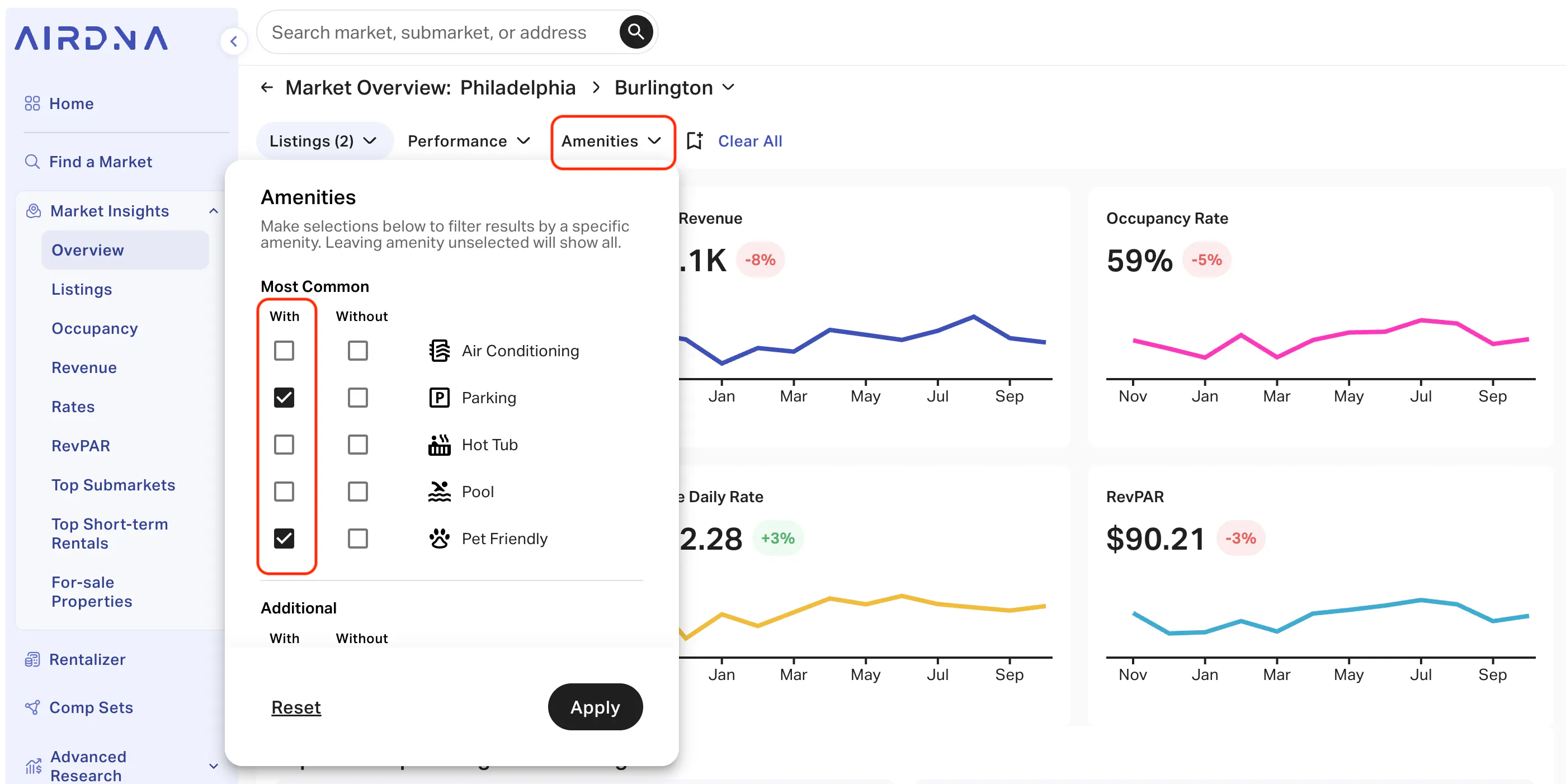
In the AirDNA app, you can do exactly that using Market Insights. For example, in Philadelphia, you can filter down to specific submarkets (in this case, Burlington) and then apply filters to match your property: a two-bedroom home with parking, pet-friendly, mid-tier pricing.
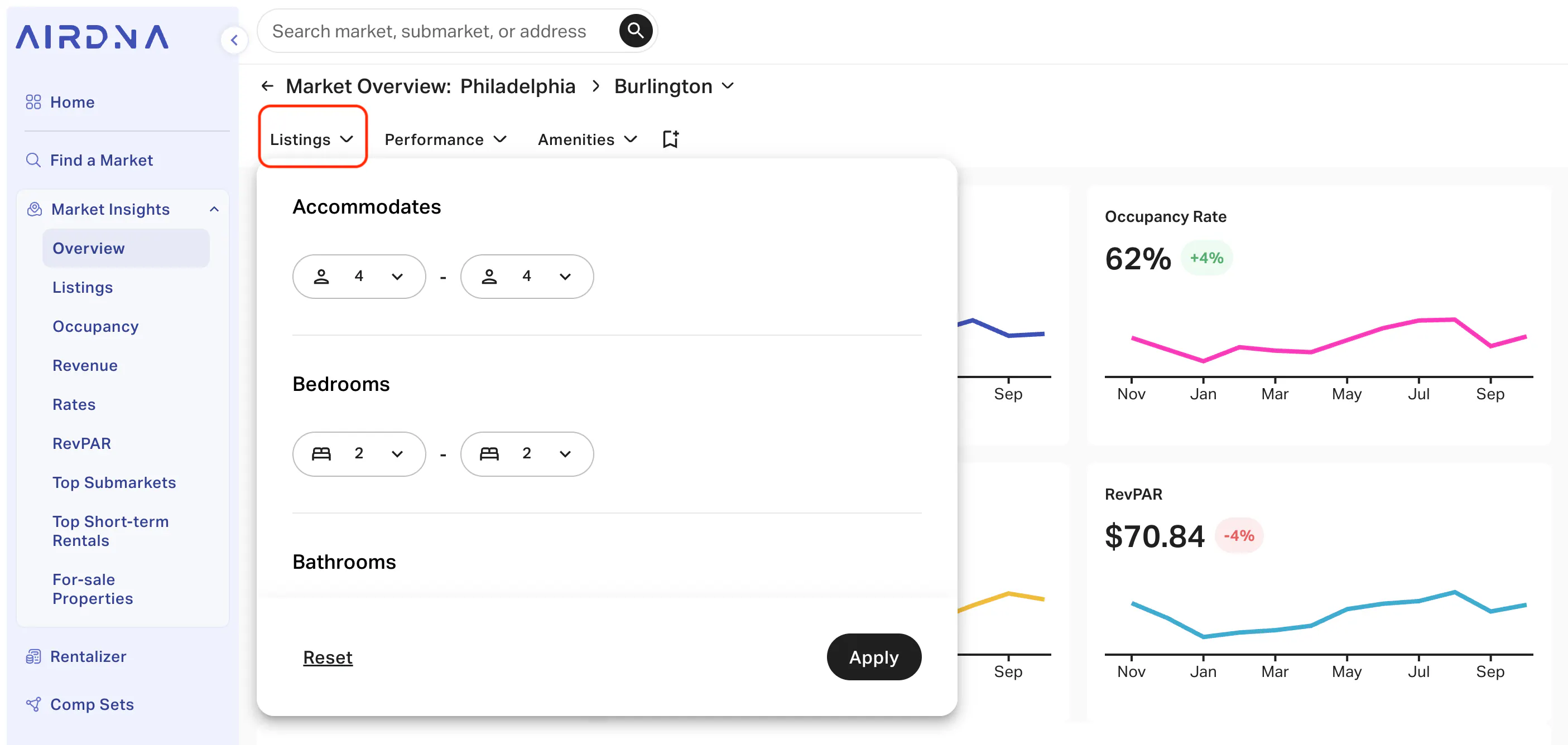
In this case, you'd find just a couple of truly comparable listings.
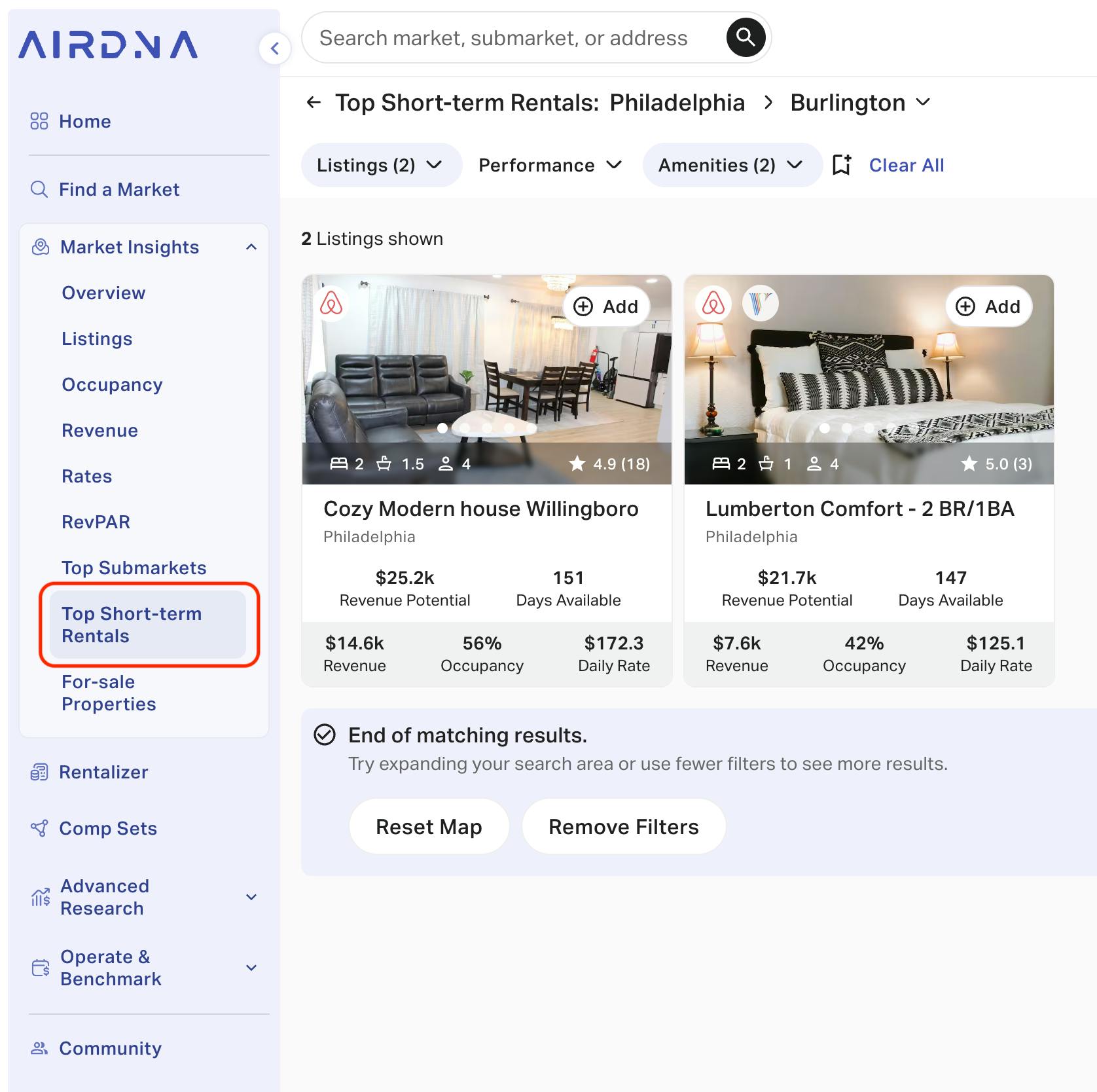
One example, the “Cozy Modern house Willingboro,” averaged $172.30 per night. You can also click into a short-term rental listing to access information on how the property has performed historically. In the case of the Willingboro listing, their rates peak in summer and dip in late August.
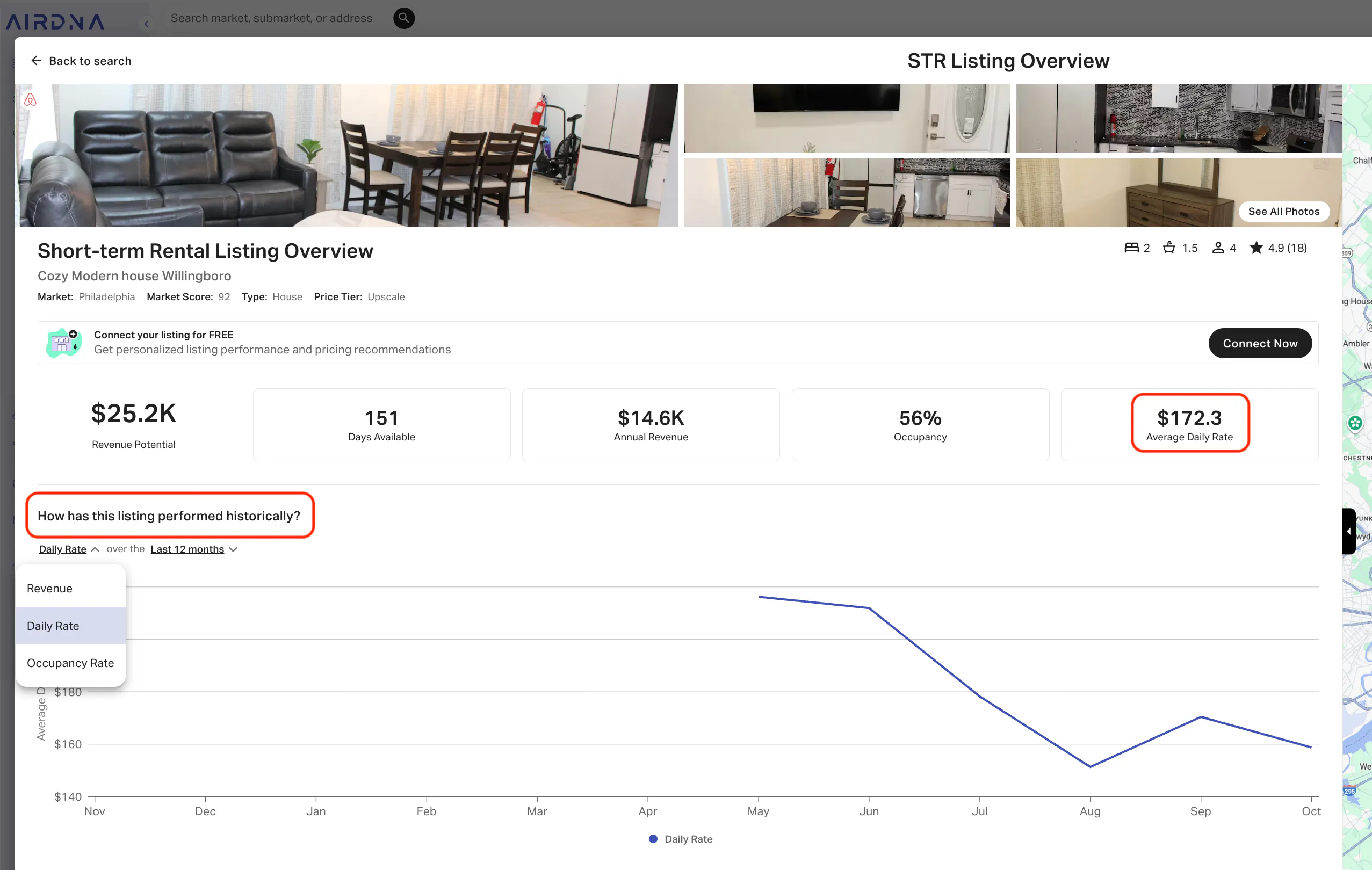
These insights help you see how your competition adjusts prices over time and where you might have room to earn more.
To dive deeper into this concept and learn how to effectively analyze comparable properties in your market, explore AirDNA's guide to custom comps.
Learn from your competitors
Without reliable rental comps, you're making pricing decisions in the dark. Use real data to compare your listing performance to similar properties and discover your true market position.
3. Property features and characteristics
Not all listings are created equal and your property's physical features can have a major impact on what guests are willing to pay.
Design-forward touches like a recent renovation, quality finishes, or even a themed property can justify higher short-term rental rates. In-demand features like smart home tech, a private entrance, or a hot tub can also boost perceived value.
Thoughtful, guest-focused details like a curated welcome basket, cohesive interior design, or high-quality bedding can also elevate the experience and make your listing stand out in search results.
Location-based features can make an even bigger difference. Lake access, beach proximity, or a scenic view can be major pricing power plays, especially in seasonal or travel-driven markets.
4. Amenities
Amenities can be considered vacation rental pricing tools. Adding value to your property through an amenity is one way to justify higher pricing. What your property offers can influence how much guests are willing to pay and how often your listing gets booked.
In-demand amenities like hot tubs, parking, or pet-friendly amenities often help listings show up in filtered searches and can increase both occupancy rate and ADR. Not every amenity delivers the same return, though, and that’s where data makes a difference.
With AirDNA’s Market Insights, you can filter performance by specific amenities to see what actually moves the needle.
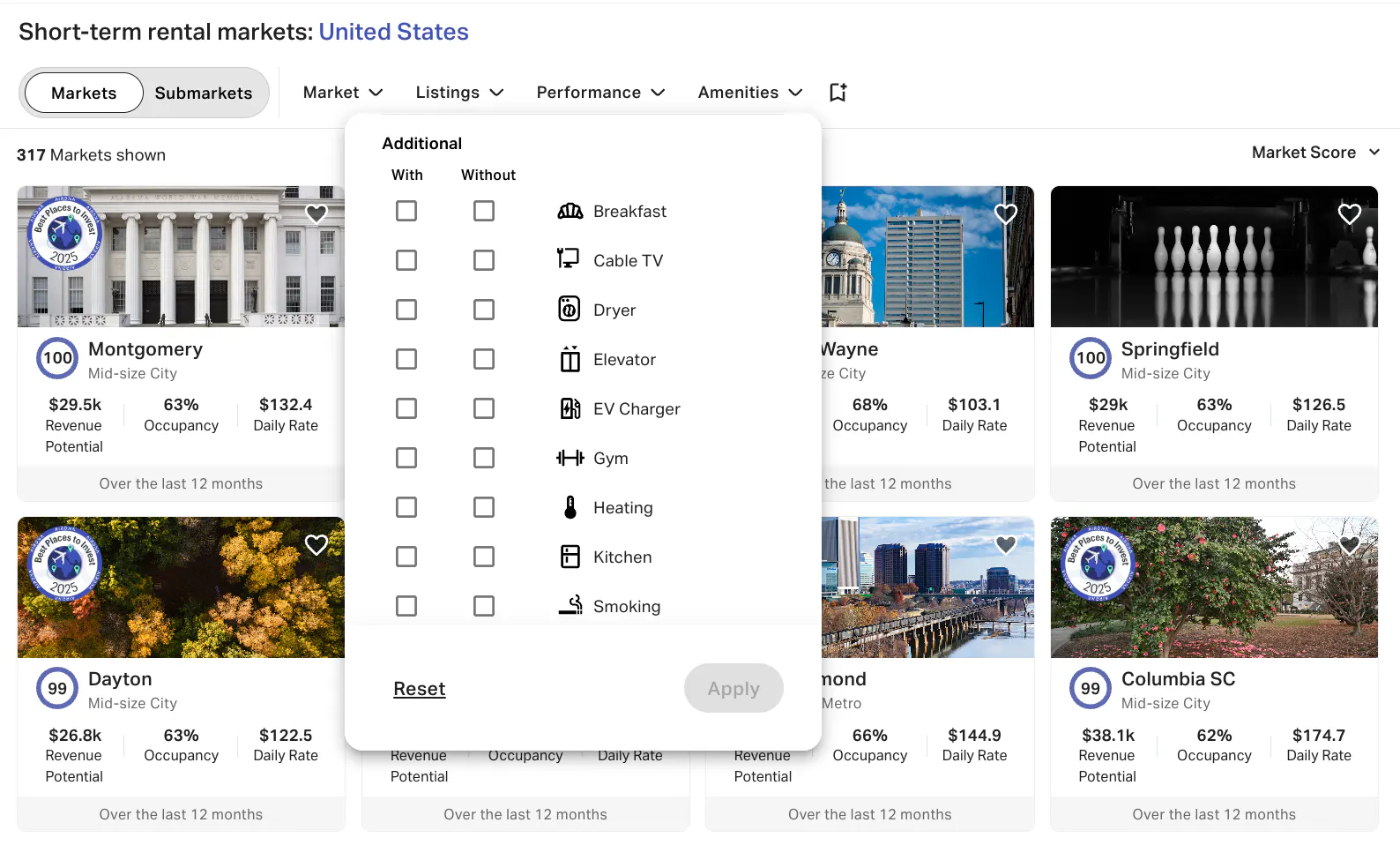
Take our example in Burlington, Philadelphia: two-bedroom properties that are not pet-friendly had an ADR of $152.22. When we filtered for pet-friendly listings, the rate barely changed.
This is an example where data proves that an amenity may not be worth it. You might’ve thought that welcoming pets could justify hire prices, but real-life performance suggests otherwise. Given the greater wear and tear and higher cleaning costs that pets introduce to operations, you could make an informed decision to prohibit pets and remain confident that your earnings won’t take a hit.
At the end of the day, it’s important to think of amenities through the lens of your pricing strategy.
What amenities really move the needle?
AirDNA’s amenity filters help you compare earnings, occupancy, and RevPAR across listings with and without your upgrade of choice.
5. Seasonality
When it comes to short-term rental pricing, timing is everything. Some weeks, your listing could easily book at a premium. At other times, you'll need to adjust rates just to stay competitive.
Looking at daily demand across the U.S. in 2024, here’s what we have found.
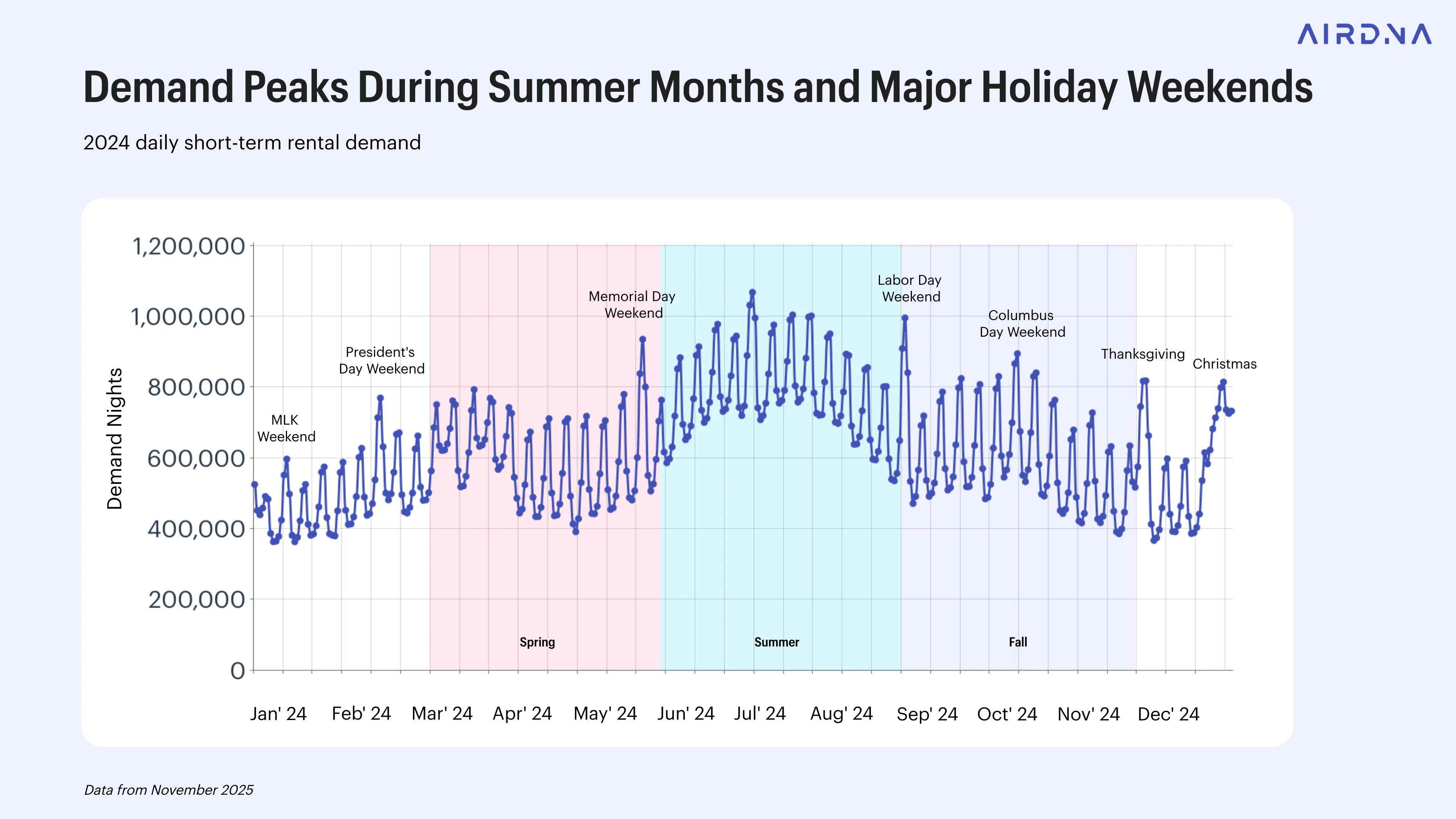
Summer is the busiest season
From mid-June through early August, short-term rental demand consistently pushes above 1 million stays per day—making this the most lucrative time to raise your average daily rate (ADR) in most markets. If you’re not adjusting pricing during this stretch, you’re likely undercharging.
Keep in mind that peak seasons can differ based on the market, with ski destinations seeing higher nightly rates in the wintertime and desert markets like Phoenix/Scottsdale maximizing revenue in the spring and fall months. Our guide to seasonality can help you understand different seasonal patterns and where they occur.
Holidays bring spikes in bookings
Memorial Day, Labor Day, and Christmas all show sharp demand increases (up to 900,000 stays per day), with Christmas week approaching summer peak levels. Even mid-tier holidays like Presidents’ Day and Columbus Day show notable bumps. These are great opportunities to increase your short-term rental rates by 10–20%.
Early December and January tend to be the slowest periods.
Demand dips between Thanksgiving and Christmas, and again after New Year’s.During these stretches, lowering rates can help keep your calendar filled.
Weekends are typically stronger than weekdays
Even during off-peak seasons, you can see a repeating weekly spike. Saturdays consistently outperform weekdays. In 2024, Saturdays average 20–25% higher demand than Mondays. Use weekend pricing to your advantage.
If you’re using the same vacation rental pricing all year-round you’re likely leaving money on the table during high-demand periods and missing bookings during slower ones.
Need help preparing for peak season? Check out AirDNA's guide to getting your Airbnb ready for high-demand periods.
6. Your costs
Your pricing should cover all costs associated with running your STR. This includes not only obvious costs like mortgage or rent payments, maintenance, and utilities but also less apparent ones like insurance, marketing expenses, and any applicable service and cleaning fees. Set a price that covers these expenses and allows you to make a profit.
7. Local regulations
Understanding how regulations can impact your STR helps you make more informed pricing decisions.
Local laws and regulations can determine whether you can rent your property short-term and they can indirectly affect your rental prices by controlling supply in your area. Some areas have regulations regarding the number of days a property can be rented out, or specific tax implications for STRs, which can affect your overall pricing strategy.
Even standard rent control laws can shape the rental landscape. While these laws are typically more relevant to long-term rentals, they can indirectly affect the STR market. In areas with stringent rent control laws, there may be less long-term rentals available. This potentially increases the property value and demand for short-term accommodations.
Find markets that match your strategy
Looking for an up-and-coming mountain town? Or a high-performing coastal city? Filter by market type, score, and listing count to discover the markets that meet your goals.
Why Short-Term Rental Pricing Works Differently Than Long-Term
If you’re coming from the world of long-term rentals, short-term rental pricing is a completely different ballgame.
Long-term rentals are usually locked into a fixed monthly rate, shaped by steady trends like housing demand or average local income. It’s predictable and great for stability, but opportunities to adjust your rental rates based on real-time demand are limited.
Short-term rentals work differently. You charge per night, and your rates can change based on what’s happening in your market, everything from the time of year to local events to even which day of the week it is. That flexibility is what allows short-term rentals to often earn more than long-term leases. In fact, on average, vacation rentals earn 61% more per year than traditional rentals.
Want to see what we mean? Let’s look at the Outer Banks in North Carolina using AirDNA’s Market Insights.
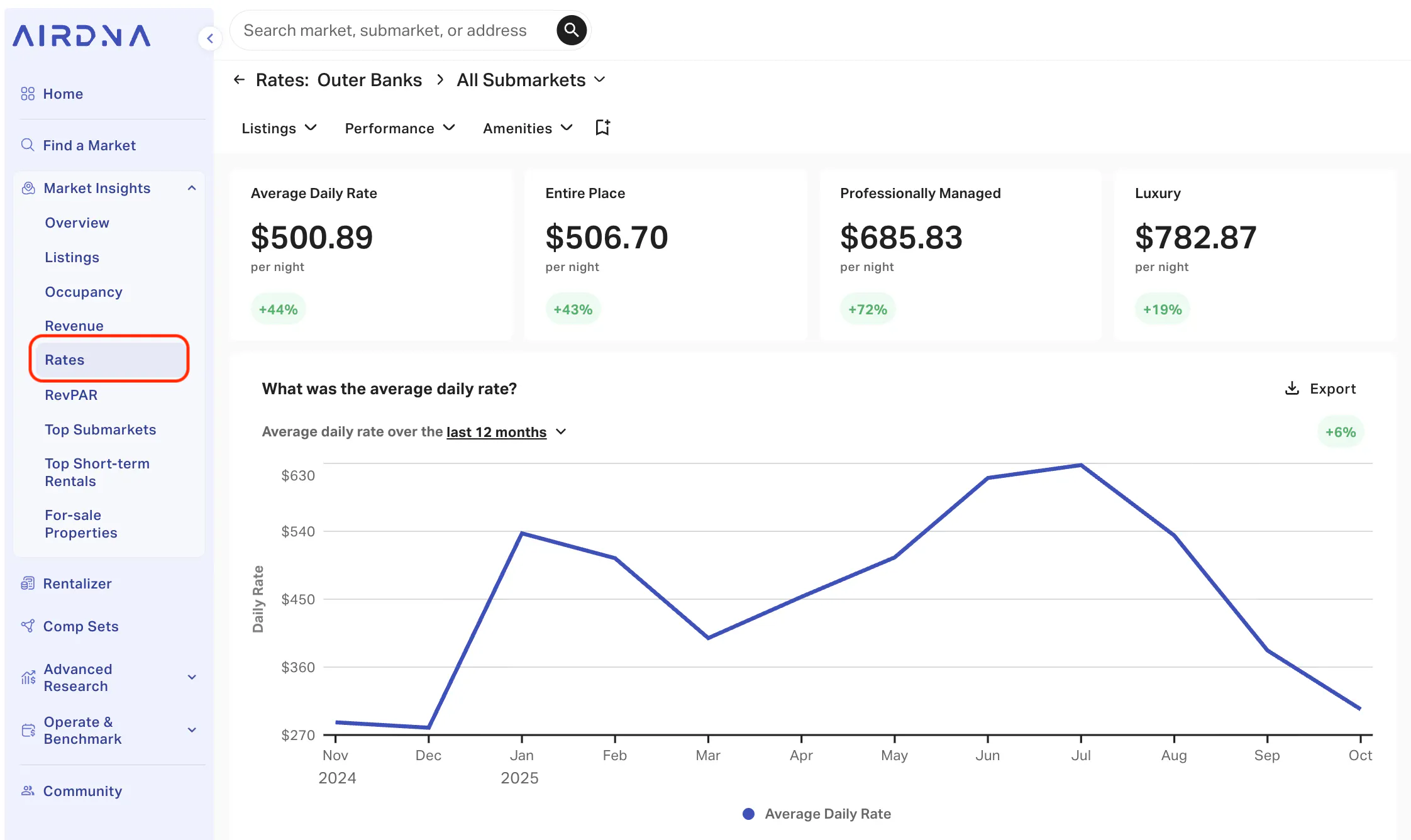
Head to the Rates tab, and you’ll see that nightly prices peak around $630 in June and July, then dip to about $280 from October through December.
Scroll down, and it gets even more detailed. You can break rates out by bedroom count or price tier, and spot patterns like higher prices on weekends or unexpected spikes in January and February.
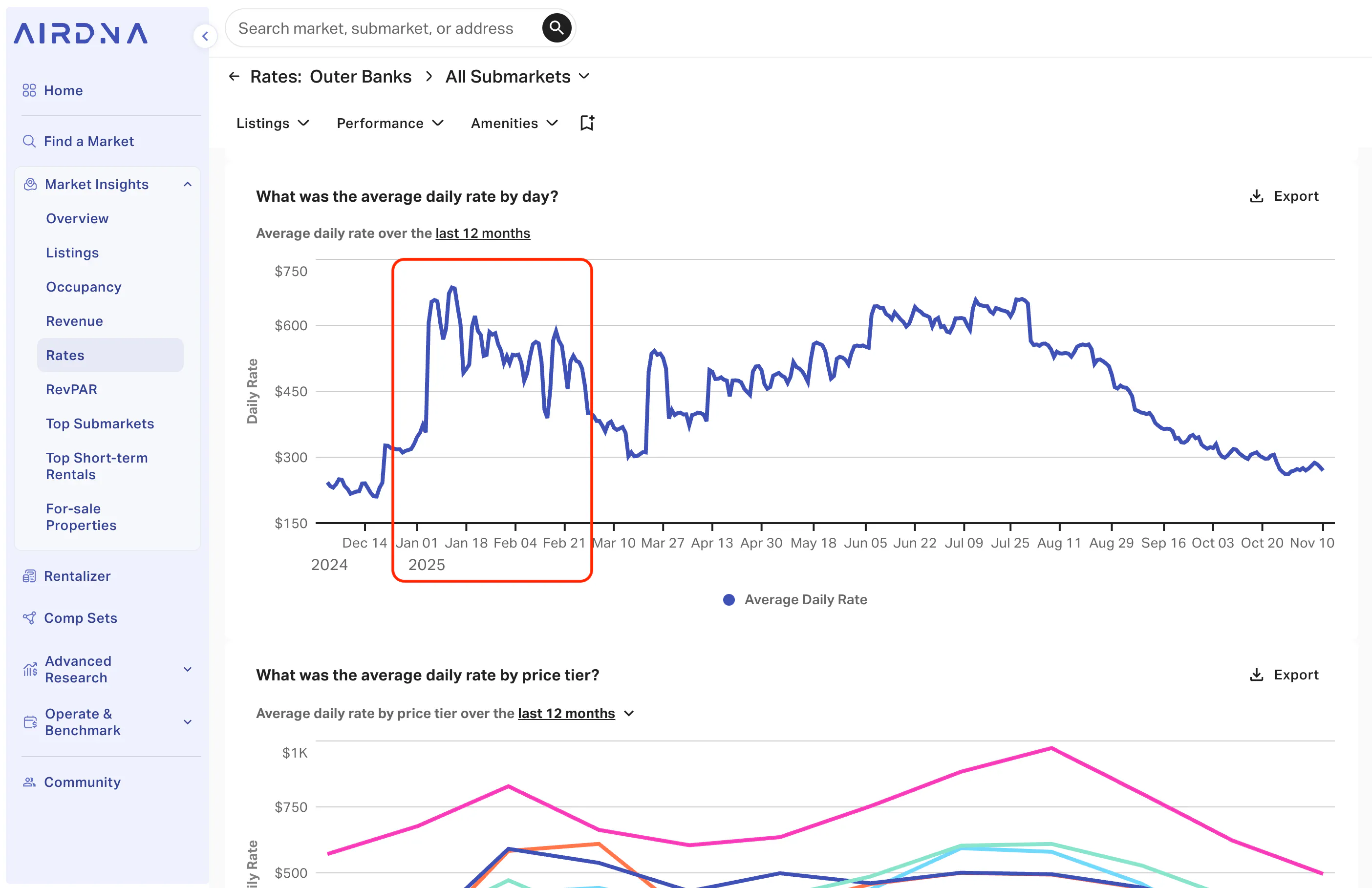
Those peaks could be tied to local events, and knowing when they happen gives you the edge to charge more when demand is high.
That’s the real advantage of short-term rental pricing. The market moves constantly and when you understand why, you can move with it. It takes more effort than locking in a monthly rate, but it also gives you more control. With the right tools and insights, you can blow long term rental revenue numbers out of the water.
Calculate potential earnings
Understand the investment potential of any address in the world.
How ADR and Occupancy Rates Determine Your Short-Term Rental Rates
If you’re wondering how much to charge for your short-term rental, two numbers can tell you a lot: average daily rate (ADR) and occupancy rate.
The occupancy rate, the ratio of booked nights to the total available nights, is a key indicator of demand for your property.
ADR is the total revenue divided by the number of booked nights. The resulting number gives you the average revenue earned for each night that a property is rented. This metric captures the typical income per booking and it reflects your property's positioning in the market in terms of pricing.
Looking at U.S. data from 2024, one trend is crystal clear: weekends are the golden days for short-term rental demand.
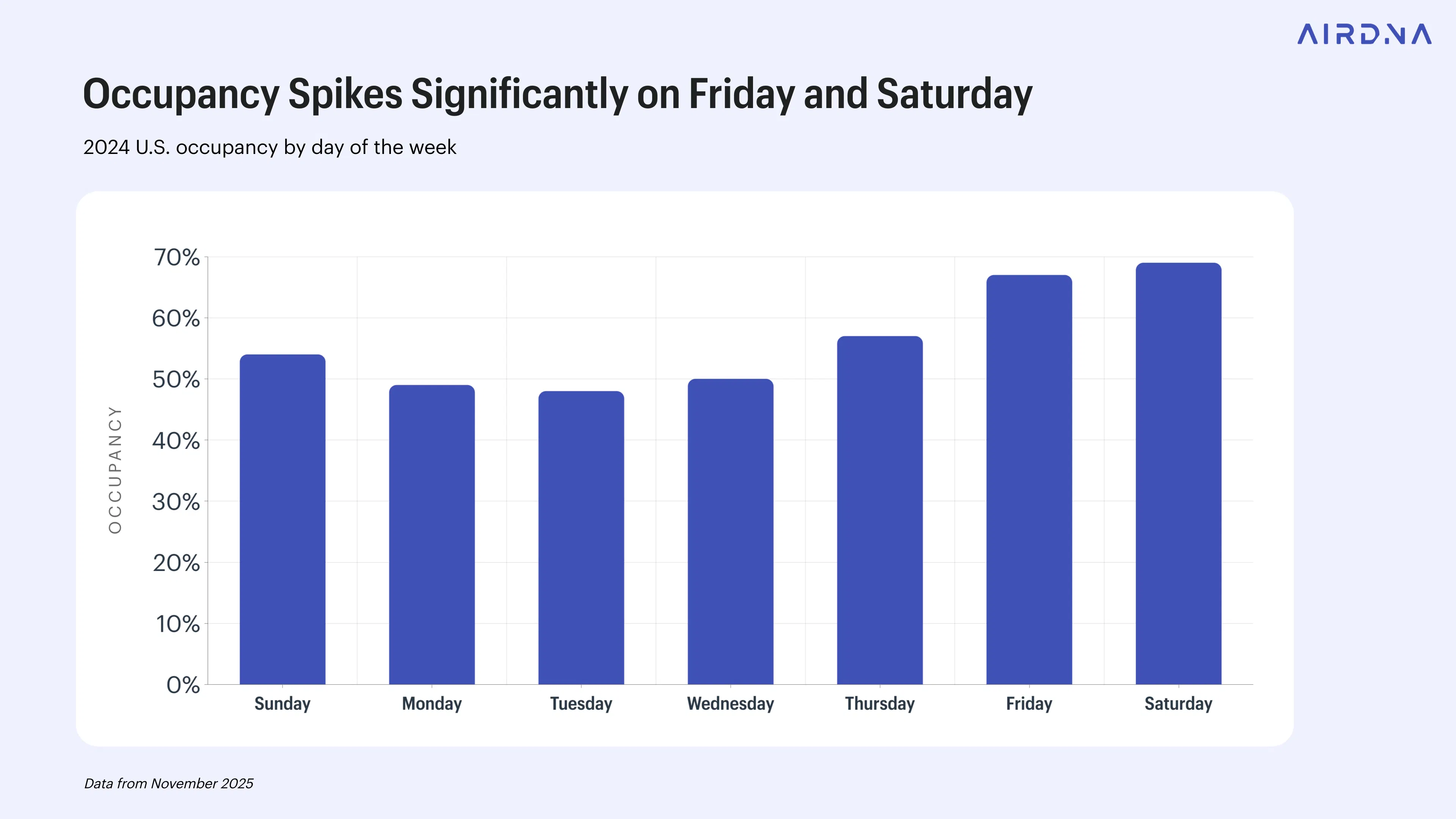
Occupancy jumps to 67% on Fridays and peaks at 69% on Saturdays, compared to just 48–50% during the week. That means guests are more likely to book for a weekend getaway, so pricing higher on those nights just makes sense. During slower midweek periods, you might consider slightly lowering rates to stay competitive and fill more nights.
Another powerful insight comes from how pricing changes with bedroom count. The more rooms your property has, the higher your earning potential.
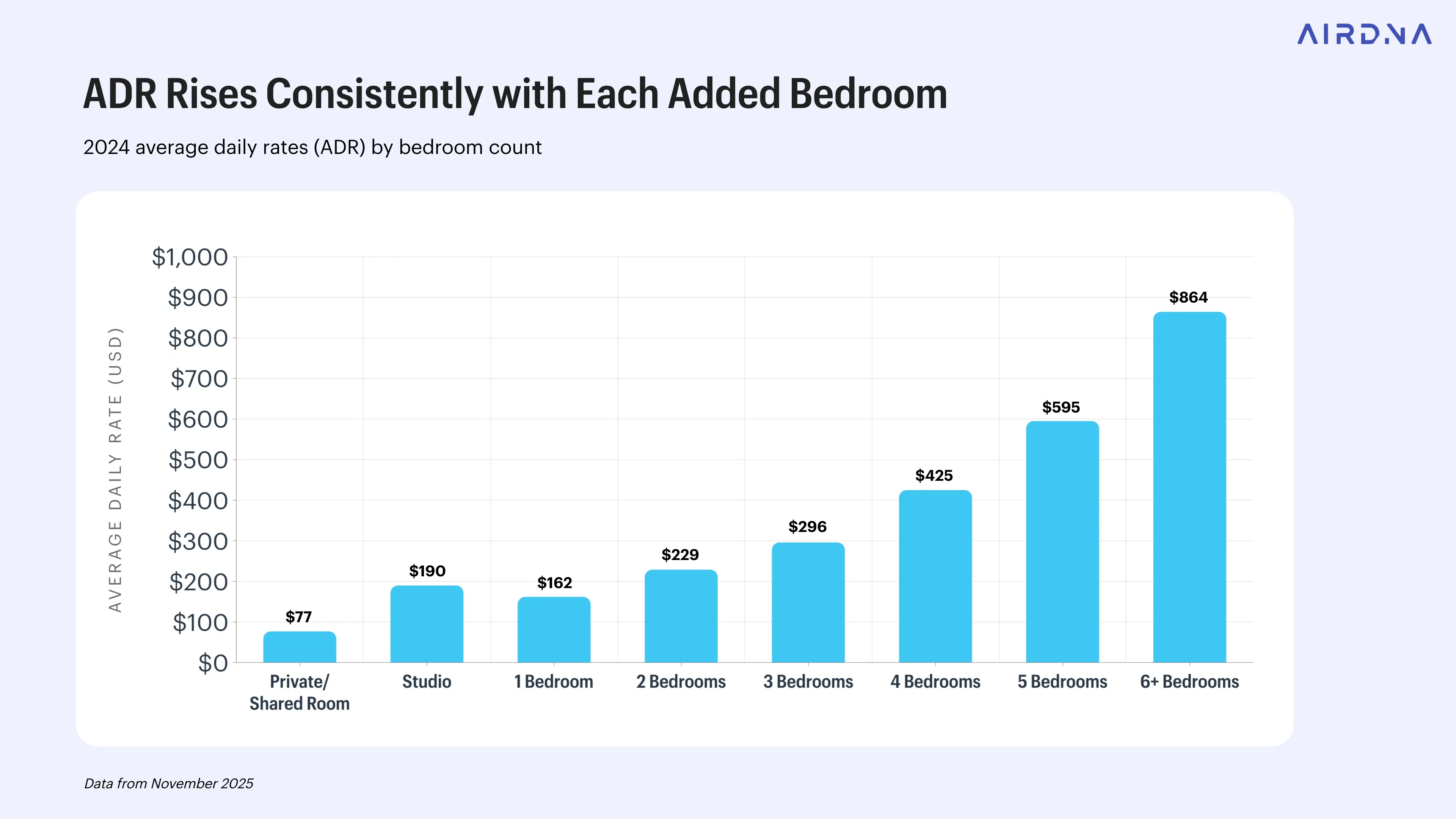
A studio or shared room averages around $190 per night, while a two-bedroom brings in $229, and a four-bedroom averages $425.
Of course, not every host can add a bedroom. If you're investing in a new property, though, this kind of data can help you understand where the real revenue potential lies.
Whether you're adjusting for weekends, planning a midweek deal, or evaluating your next investment, keeping tabs on ADR and occupancy helps you price smarter and earn more.
Research Airbnb Markets
Gain insights into the revenue and occupancy trends in your market.
Which Short-Term Rental Pricing Strategy Should You Use?
By now, it’s clear that picking a number and hoping for the best doesn’t cut it. On one end of the spectrum, you could be charging too much for your short-term rental and your calendar is left empty. On the other hand, you might be booked solid but undercharging and leaving money on the table. In both cases, the key to better performance is having a pricing strategy that fits your goals and adjusts as the market shifts.
When you first listed your rental, you may have set a flat rate and called it a day. As your experience grows (and so does your competition), your strategy should evolve too. T
he key is to stop guessing and start pricing with purpose. Instead of asking “How much can I charge?”, ask “What am I trying to achieve?”
Here are three proven pricing strategies to consider:
- Profit maximization: Focus on high rates during peak seasons, local events, and weekends. This works well in high-demand markets with strong tourism cycles. Use tools like AirDNA to identify when to raise rates and maximize earnings.
- Occupancy optimization: Set competitive rates to boost booking volume, especially during slower seasons or if you're new and building up reviews. This can increase your property’s visibility and long-term performance.
- Steady cash flow: Set rates that consistently cover your costs with a healthy margin. Ideal if you prioritize financial predictability or are managing multiple listings.
Most successful hosts don’t pick just one; they adapt. Dynamic pricing tools can automate daily rate changes based on market demand, competition, and seasonality.
Want to explore pricing approaches in more depth? Check out our guide to short-term rental pricing models to learn the five most popular strategies and how to combine them for smarter, more flexible pricing.

FAQs
How do I price my short-term rental or Airbnb?
Check out what similar listings in your area (your “comp set”) are charging. See how their prices shift depending on the season, local events, or weekend demand. With tools like AirDNA’s Market Insights and Custom Comp Sets, you can zero in on the listings that match yours and price in a way that’s both competitive and profitable.
How do I calculate nightly rates for a vacation rental?
Start with the basics. Add up your monthly costs (things like your mortgage, cleaning fees, supplies, utilities, and platform fees), then divide by the number of nights you expect to book. That gives you a ballpark rate, but it’s just a starting point. Next, take a look at what similar Airbnb listings in your area are charging and how often they’re getting booked. With AirDNA’s Rate tabs and performance filters, you can dig into details like bedroom count, pet-friendliness, or price tier to see what property attributes and amenities are driving pricing in your market and adjust your own host offerings and rates to match.
What’s a good ROI for a short-term rental?
A good ROI for short-term rentals typically lands around 10%, depending on your market and property. Unlike long-term rentals, STRs offer the potential for higher returns, especially when you optimize for high-demand weekends, events, or seasonal travel patterns. Use AirDNA’s Rentalizer to get an ROI projection based on real-time, local performance data.
What is a vacation rental pricing strategy?
A vacation rental pricing strategy is your game plan for setting rates that attract bookings without undercutting your revenue. Some hosts prioritize filling the calendar, others want to maximize earnings per night even if it means higher vacancy at times. A good strategy balances occupancy and nightly rates and adapts with the market, adjusting for holidays, local demand surges, or off-season slowdowns.
Do I need a pricing tool to set the right rate?
Not necessarily. Some hosts prefer to price manually, others lean on tools. Either way, it helps to understand why prices move the way they do.
AirDNA gives you the data to make informed decisions yourself. You can explore how similar listings are priced, how demand shifts through the year, and where your property stands in the local market. It’s about turning guesswork into strategy, whether you’re adjusting prices on your own or building toward more advanced short-term rental revenue management.
Customize Your Experience
Your pricing strategy should be as unique as your rental property.
ARTICLE SUMMARY
Pricing your short-term rental doesn’t have to be a shot in the dark. This guide walks you through how to set rates that work with the market, your goals, and your property’s value.
Bram Gallagher
AirDNA Director of Economics and Forecasting
Bram Gallagher is an Economist at AirDNA, specializing in uncovering insights that drive smarter short-term rental decisions. He put his Ph.D. in Economics from the University of Georgia to work researching and forecasting hotel data with CBRE prior to joining AirDNA, as well as teaching economics at a number of universities. In his spare time, Bram enjoys making wooden furniture with hand tools.
