17 Data-Driven Steps to Increase Occupancy Rate on Airbnb
Published: April 3, 2024
Last updated: October 30, 2026

Bram Gallagher
Key Takeaways
- Vacation rental hosts and owners only make money when guests stay at their properties, so it’s understandable that how to increase occupancy rate on Airbnb has become a hot topic.
- The occupancy rate only offers a partial picture of performance, so increasing occupancy rate should be a data-driven decision.
- Learning how to increase occupancy rate on Airbnb comes down to a strategic mix of pricing, listing performance, guest experience, marketing, and more.
Increasing occupancy rates on Airbnb has become the ultimate goal for many short-term rental (STR) hosts over the years. It’s understandable, right? Hosts want their STR properties fully booked because more bookings bring in more revenue — well, sometimes.
Of course, property owners and managers don’t want their spaces sitting vacant. But while properties that are fully booked three, six, or even nine months in advance reveal a high occupancy rate, they don’t necessarily indicate an optimized occupancy rate.
Here, we’ll dispel some myths about what a “good” occupancy is and walk you through how to increase occupancy rate on Airbnb according to the data for your area.
What is a good occupancy rate?
The honest—albeit frustrating—truth is that there is no one good occupancy rate. What’s good for one host in Las Vegas may not deliver the same results for another in Gatlinburg, Tennessee or Destin, Florida, despite all three being STR-friendly markets.
A good occupancy rate depends on your market and your specific property type. Your goal is to determine the average occupancy rate across properties that directly compete with yours, then learn how to increase your occupancy rate on Airbnb so it meets or exceeds theirs.
Your ideal occupancy rate also depends on you and your goals. Optimizing your occupancy rate translates into more guests in and out of your property. Hosts that want to reduce foot traffic in their home without jeopardizing their profits may instead focus their efforts on achieving higher ADRs.
Read More: The AirDNA Guide to Airbnb Occupancy Rate
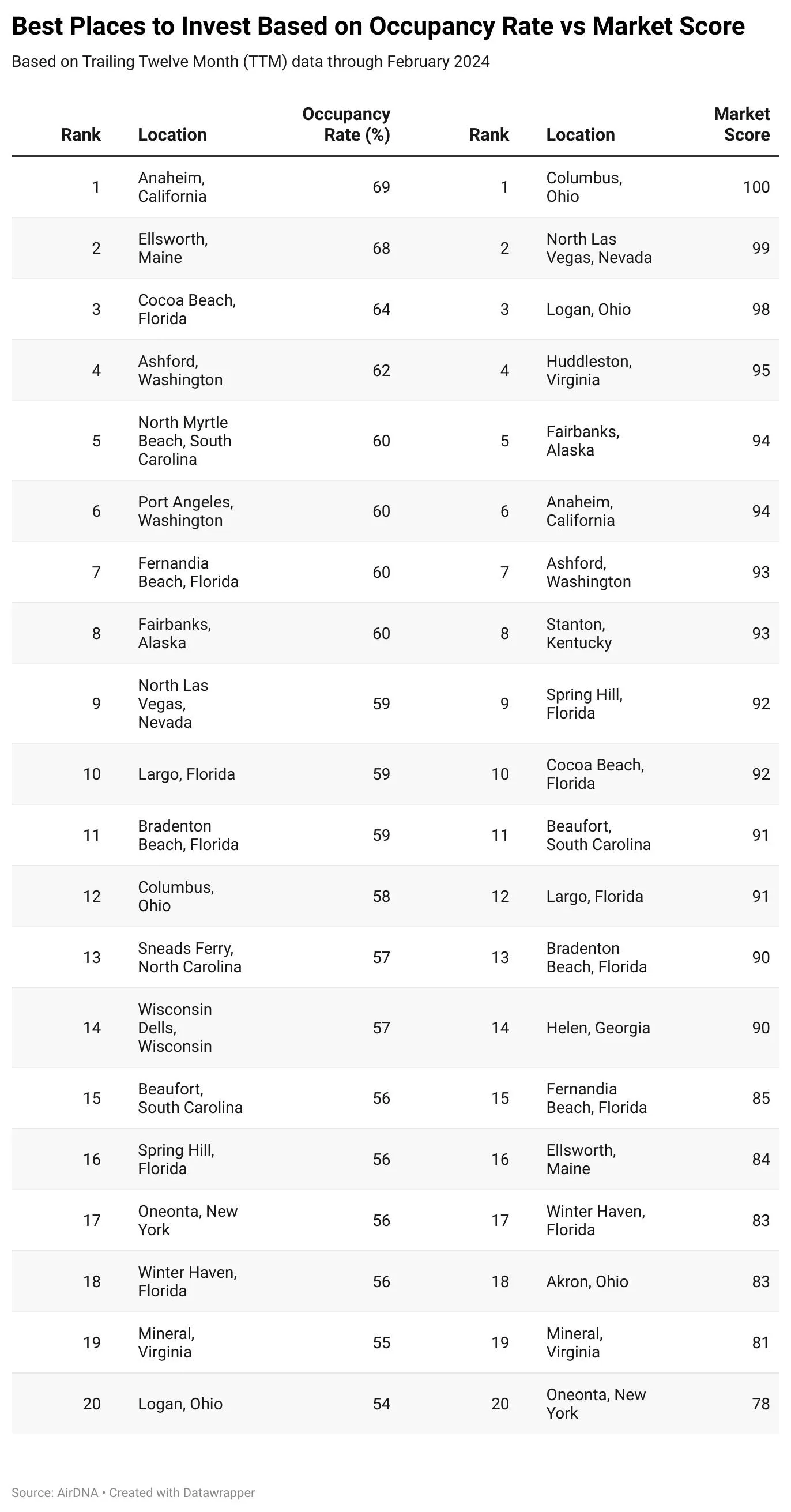
The occupancy rate alone is also an incomplete picture. For example, AirDNA’s Best Places to Invest ranks locations based on their investment potential, but occupancy rate isn’t always the best predictor of investability.
For example, at 69% occupancy, Anaheim, California ranks number one by occupancy rate alone. However, the city drops to number six if you consider its overall market score, which accounts for occupancy and investability, rental demand, revenue growth, seasonality, and regulations.
How to Increase Occupancy Rate on Airbnb
Just because the occupancy rate isn’t the whole picture doesn’t mean you should stop trying to optimize it. If your occupancy isn’t meeting your expectations or it’s falling short compared to similar listings in your area, here are practical ways you can boost your occupancy rate:
1. Benchmark the Occupancy Rate for Your Area
Before you can increase your occupancy rate, you have to know what rate you’re targeting. That all comes down to the average occupancy rates not only in your market, but also in your specific neighborhood and price tier.
For example, a 54% occupancy rate in Vail, Colorado, may sound low. However, properties in the area still yield $401.20 in Revenue Per Available Listing (RevPar) and an average annual revenue of $156,700. Hop across the country, and a much higher 69% occupancy rate in Bradenton Beach, Florida yields only $271.50 in RevPar and $100,900 in average annual revenue.
Once you’ve got your comps nailed down, filter occupancy rates by season. Hosts in ski areas can’t realistically increase Airbnb occupancy rates so they’re the same in shoulder season as they are during a peak snow month. In the graph below, for example, you can see Vail’s annual occupancy rates are a bit of a rollercoaster, but that’s appropriate for the seasonality of the area.
With the right comps and a picture of seasonality in your area, you’ll have a more complete picture of what occupancy rates you should aim for throughout the year. Those become the targets you’re benchmarking against for.


2. Optimize Your Pricing
You also have to get your pricing just right if you’re to increase your occupancy rate. Use our pricing tool to align your rates with the local average for properties in your price tier.
Are you booked solid three or more months out? Consider upping your price to strike a better balance between occupancy and revenue. You can also analyze whether your offerings justify higher charges and consider adjusting prices accordingly.
AirDNA’s amenities filter allows you to filter listings by property size, amenities, location and reviews so that you can assess how your pricing stacks up against similar listings.

On the other hand, overpricing your rental compared to similar properties might discourage potential guests from booking with you, so don’t rush to be the highest-priced property in your market.
Be sure to also factor in seasonality. If you know your market sees more tourists during the summer, increase prices during the warmer months to capitalize on increased bookings.
3. Adjust Your Minimum Stay Requirements
Adapting your minimum stay requirements according to seasonal demand and prevailing industry trends is an underutilized tool to increase your Airbnb occupancy rate.
During peak seasons or high-demand periods, such as holidays or local events, consider reducing your minimum stay duration to attract more guests. This flexibility allows you to accommodate travelers seeking shorter stays, thereby maximizing your property's occupancy potential.
Additionally, strategically enabling single-night stays on specific dates can help fill gaps between bookings. Single-night stays can ensure that your property remains occupied and generates consistent revenue throughout the year.
4. Strive for Superhost Status
Superhost status demonstrates your dedication to providing exceptional hospitality and outstanding guest experiences. It also significantly enhances your visibility within Airbnb's search algorithm. As a result, your property is more likely to appear higher in search results, attracting more attention from travelers and ultimately leading to an uptick in bookings.
By consistently delivering top-notch service, maintaining high ratings, and meeting the criteria set by Airbnb, you can position yourself as a reputable host. Reap the rewards of increased visibility and guest trust, ultimately driving higher occupancy rates for your vacation rental property.
5. Enable Instant Book
Enabling Instant Book is a strategic move to streamline the booking process and attract more guests to your vacation rental property. By allowing guests to book without waiting for approval, you remove potential barriers and capture bookings from travelers who prefer instant confirmation.
However, to mitigate risks associated with Instant Book, it's essential to implement safeguards. Safeguards include prohibiting same-day bookings or implementing advanced notice requirements. Configuring Instant Book settings to suit your property management strategy lets you enjoy its benefits while minimizing risk.
6. Offer Flexible Cancellation Policies
Offering flexible cancellation policies can help alleviate concerns for potential guests and encourage them to proceed with their reservations.Demonstrate your commitment to accommodating guests' needs and preferences by providing options such as moderate or flexible cancellation terms.
This flexibility can be particularly appealing to travelers who may be unsure about their plans or hesitant to commit to a booking without the assurance of being able to cancel or modify it if necessary. Additionally, transparent and accommodating cancellation policies can improve guest satisfaction and contribute to positive reviews, further boosting your property's reputation and attracting future bookings.
7. Elevate Amenities
Elevating amenities is crucial in a competitive short-term rental market where travelers have abundant choices. If your property's amenities lack the comfort and functionality that guests expect, it's time to enhance your offerings to differentiate your space.
Consider adding new amenities that not only meet but exceed guest expectations, such as high-speed internet, smart home features, premium bedding, or unique experiences like guided tours or complimentary services. Read about which amenities make the most impact on your bottom line in our article on The Best Airbnb Amenities Proven to Increase Revenue.
Check Out Our Amenities Dashboard
See how common 16 different short-term rental amenities are across 3-bedroom listings in the U.S. and how each contributes to performance.
8. Consider Business Travelers
Considering business travelers can be a strategic way to boost mid-week occupancy rates. Outfit your Airbnb as a corporate rental, offering hotel-like amenities such as dedicated workspaces, ergonomic furniture, and reliable high-speed internet connectivity.
Providing these amenities not only enhances the appeal of your property to business travelers but also increases the likelihood of securing bookings during weekdays, ultimately maximizing your occupancy potential and revenue streams.

9. Expand Sleeping Areas
Expanding the sleeping options in your property can make it a more attractive booking choice to a wider range of guests, particularly larger groups or families. Consider incorporating sofa beds or pull-out mattresses to increase the sleeping capacity, allowing you to accommodate more guests per booking. Don’t cheap out on the bedding, either—high-quality bedding can make or break the difference between a four or five star review.
By catering to larger groups, you improve the overall guest experience and also have the potential to increase your revenue per booking. Guests are willing to pay more for accommodations that comfortably accommodate their entire party.
10. Refine Your Pictures and Presentation
Investing in high-quality photos can make a significant difference in increasing occupancy rate on Airbnb. Professional, well-lit photographs showcase your space in the best possible way, enticing guests to click "reserve."
Ensure that your photos accurately represent the unique features and amenities of your property, highlighting its most appealing aspects. Compare your photos to those of top properties in your market to identify areas for improvement and to make sure that your listing stands out. Remember, first impressions matter, and striking visuals can greatly influence a guest's decision to book your property over others.
11. Leverage Positive Reviews
Leveraging positive reviews is crucial for boosting your property's reputation and attracting more guests. Encourage guests to leave positive reviews, which enhance your listing's credibility, by providing exceptional hospitality and personalized experiences.
Potential guests are more likely to trust and choose accommodations with a track record of satisfied guests. Responding promptly and graciously to reviews, whether positive or negative, also demonstrates your commitment to guest satisfaction and can further improve your property's reputation.

12. Hire a Property Manager
Hiring a top-tier property manager can boost your Airbnb rental's success. The best property management companies handle marketing your listing, communicating with guests, and managing maintenance, repairs, and cleaning.
Property managers use their expertise to ensure smooth operations and offer guests exceptional experiences, increasing the likelihood of positive reviews. Additionally, property managers with local knowledge can provide guests with valuable insights and recommendations. This is especially beneficial for Airbnb hosts that don’t live in the area.
13. Start Marketing Your Properties
Utilize targeted marketing strategies to maximize the visibility of your Airbnb listing. Cross-listing your property on multiple platforms, such as Airbnb and Vrbo, can improve occupancy rates.
Highlight your property's unique features and any special offers to attract potential guests. Leverage various marketing channels, including social media, email campaigns, and online advertising, to reach a wider audience.
14. Offer Booking Incentives
Offer special deals and discounts to entice guests and increase occupancy rates. You can attract guests seeking flexibility and spontaneity by providing discounts for extended stays and last-minute booking.
Implementing promotions during off-peak periods helps maintain steady occupancy throughout the year, while dynamically adjusting prices optimizes revenue. These strategies can effectively stimulate bookings, fill vacancies, and maximize occupancy potential.
15. Try New Distribution Channels
Expand your distribution channels to broaden your property's reach and attract diverse guests. Collaborating with local businesses, tourism agencies, and corporate clients can give you more exposure and generate new booking leads. Consider leveraging online travel agencies, vacation rental platforms, and niche booking sites to tap into broader audiences.
16. Enhance the Guest Experience
Better guest experiences drive repeat visits and garner positive reviews. When you personalize interactions, promptly address guest needs, and exceed expectations, you create memorable stays that encourage guests to return to and recommend your property.
Add thoughtful touches and amenities to increase comfort and convenience, further solidifying guest satisfaction and loyalty.
17. Understand Your Target Guest
Design your property specifically to accommodate the types of travelers most likely to visit your market. Business travelers are just one demographic that appreciate specific features like a workspace.
Vacation rentals located in areas with family-friendly attractions should consider providing extra bedding, board games, and kid’s activities. If your STR is located in a hub for outdoor activity, making your STR pet-friendly could appeal to guests that plan on recreating with their animals.

Should You Increase Your Occupancy Rate?
We’ve said it before and we’ll say it again: focusing on a high occupancy rate isn’t the same as an optimized occupancy rate. Though you now have the tools to increase your occupancy rate, that doesn’t mean you should.
3 Reasons to Increase Your Occupancy Rate on Airbnb
- Your Occupancy Rate is Lower Than Your Comps: If your occupancy rate is lower than your comps, it suggests that your property is not performing as well as similar listings in terms of attracting guests and generating bookings. In that case, taking the above steps to boost the occupancy rate could be well worth it.
- Your Listing Isn’t Visible Enough: Airbnb's search algorithm often prioritizes listings with higher occupancy rates, leading to increased visibility and exposure to potential guests. A higher occupancy rate signals to Airbnb that your property is in demand, resulting in better placement in search results and a better chance of bookings.
- You Aren’t Meeting Your Revenue Goals: Increasing your occupancy rate on Airbnb can lead to higher earnings as more bookings mean more income generated from your rental property. Hosts can capitalize on their investment and make more money by consistently maintaining a high occupancy rate.
4 Misconceptions About High Occupancy Rates
- High Occupancy Doesn’t Automatically Equal High Revenue: High occupancy rates are important, but a high occupancy rate based on months-out bookings probably indicates that there’s more money to be earned. If a property is more than 50% booked three months out, it’s usually a clear sign that nightly rates are too low — and that hosts are missing out on more revenue.
- Each Property Needs a Unique Pricing Approach: Hosts should expect a period of trial and error before dialing in the price and occupancy rate that works for them. If a host has more than one property — even multiple properties in the same town or city — they should anticipate and explore a different pricing-and-occupancy approach for each.
- Occupancy Naturally Fluctuates in Seasonal Markets: Hosts in seasonal markets should consider occupancy peaks and troughs when evaluating their pricing strategy. It doesn’t make much sense to list an exceptionally high price in the slow season. Conversely, needlessly low prices in the high season lead to missed revenue opportunities.
- There Are Benefits to Lower Occupancy Rates: Lower occupancy rates may offer benefits such as reduced wear and tear on the property, increased availability for owner use, and potentially higher rental rates due to scarcity, depending on the property owner's goals and preferences.
Broaden the Picture of Your Property’s Performance
While occupancy rates are a key indicator of a vacation rental's success, they only scratch the surface of its overall performance. It's essential to consider a broader range of metrics to truly optimize your property's potential. Average daily rates (ADR), revenue per available room (RevPAR), booking lead times, and seasonal demand patterns all play crucial roles in determining profitability and success.
Platforms like AirDNA offer a comprehensive suite of vacation rental data, enabling property owners to delve deeper into their property's performance. By analyzing a diverse set of metrics, property managers can gain valuable insights, identify trends, and make informed decisions about whether it’s truly necessary to increase your occupancy rate on Airbnb. Property owners can unlock new opportunities and thrive in the competitive vacation rental market by adopting a holistic approach to data analysis.
ARTICLE SUMMARY
In this article, we talk about what defines a good or bad occupancy rate (it depends), how to decide if improving your occupancy rate is the right strategic move for you, and how to do it.
Bram Gallagher
AirDNA Director of Economics and Forecasting
Bram Gallagher is an Economist at AirDNA, specializing in uncovering insights that drive smarter short-term rental decisions. He put his Ph.D. in Economics from the University of Georgia to work researching and forecasting hotel data with CBRE prior to joining AirDNA, as well as teaching economics at a number of universities. In his spare time, Bram enjoys making wooden furniture with hand tools.