

 Calculate Revenue
 Research Markets
 Find For Sale Properties
 Compare My Listing
 STR Revenue Calculator
 Custom Comp Sets
 Submarket Insights
 Custom Search Filters
 Rate Recommendations
 Performance Benchmarking
 Competitor Comparison
 Owner Contact Details
 Property-level performance data
 Tourism Insights
 Real Estate Investment Analytics
 About Us
 Sales
Sales Support
 Press
PressTracking the Growth of STRs: Joint Report with CBRE
Published: January 29, 2020
Last updated: February 11, 2025

Dillon DuBois
As we cross the decade’s finish line, arguably the most profound theme in travel over the last 10 years has been the evolution of the accommodations industry. Vacation rentals have taken the world by storm, plain and simple.
In order to gauge the current state of the industry, we teamed up with CBRE using data from MarketMinder to produce a thorough deep dive into some of the most interesting trends and insights. Scroll down and download the report for actionable insights and tips on the future makeup of short-term accommodations.
Key Findings
Increasing Market Share at a Decreasing Rate
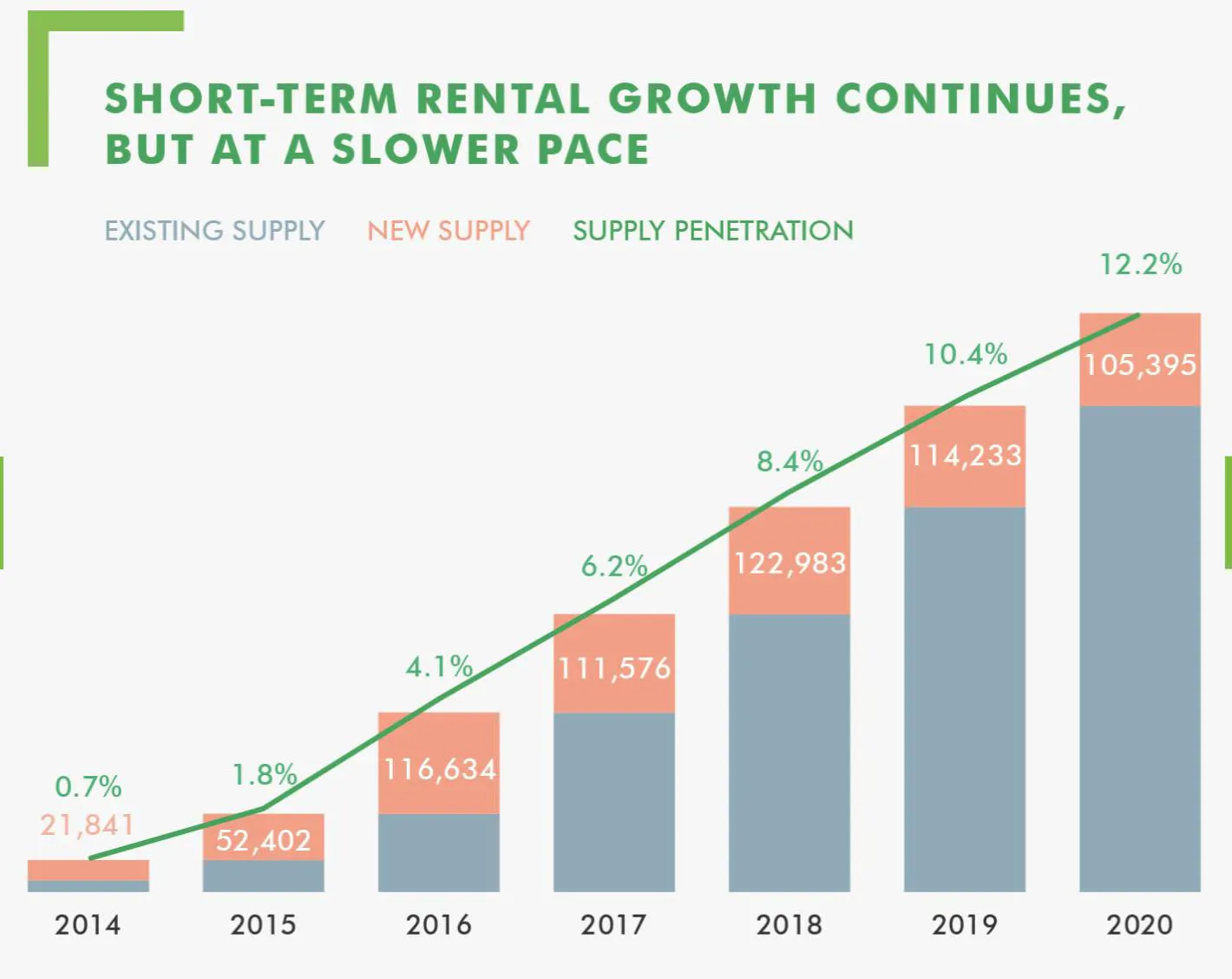
By now, most industry professionals are well aware that vacation rentals have been a disrupting force for a good chunk of time. That said, the rate at which short-term rentals are growing is clearly slowing.
In fact, short-term rental supply grew by just 26% in 2019 compared to 39% in 2018 -- and in 2020 that trend is likely to continue.
Suburban Hotspots and Resorts Responsible for Most Growth
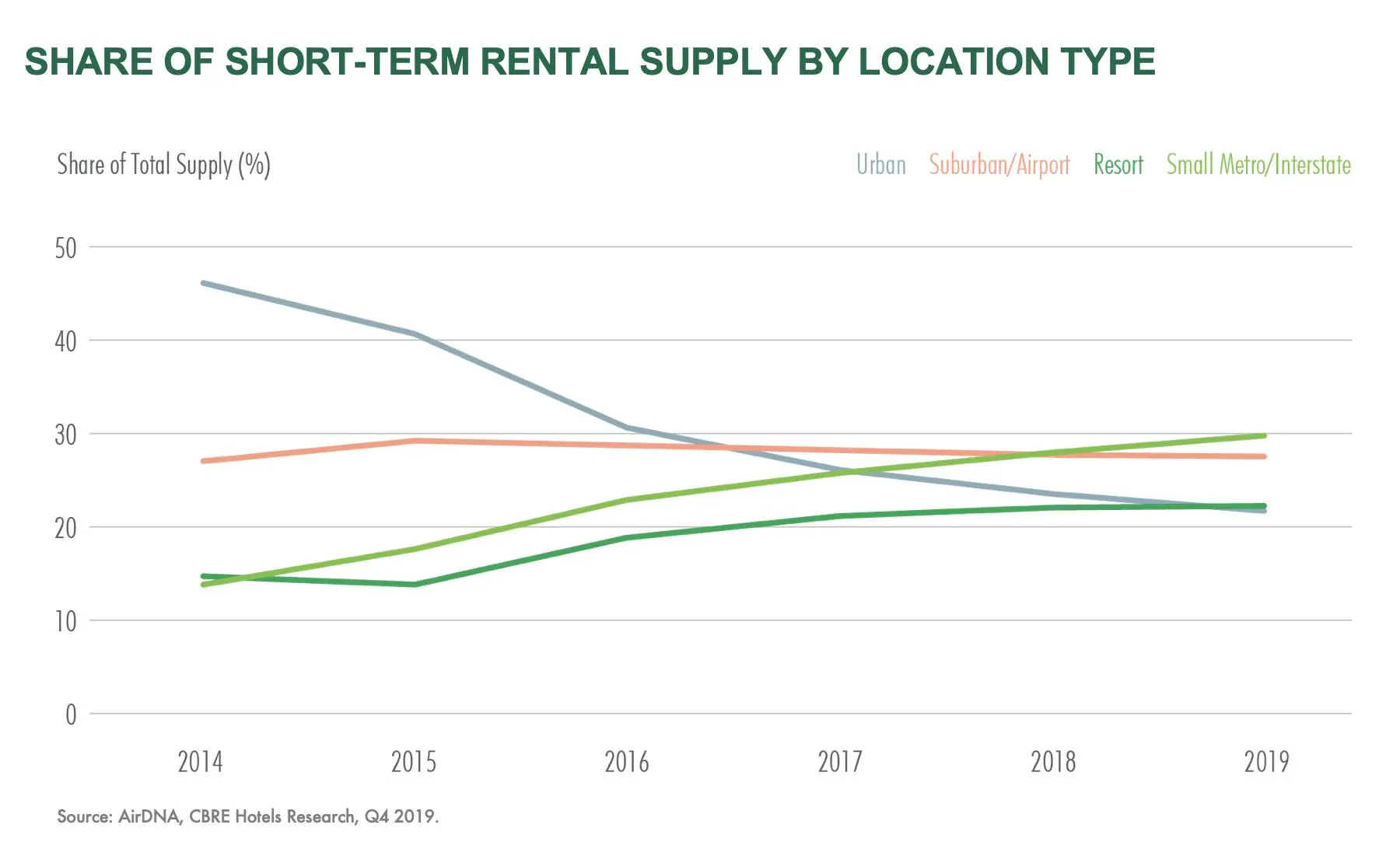
Over the last few years, there’s a reason we’ve made the nominal transition from “vacation rentals” to “short-term rentals” -- the industry has effectively outgrown the term. In 2014, nearly 50% of vacation rentals were located in urban areas -- places that don’t exactly put the vacation in vacation rental.
Since 2014, however, that trend has slipped. Urban listings lost a significant chunk of the total market share, and most growth is now more evenly distributed between rural, suburban, resort, small metro, and interstate regions.
The Hotel Industry Hasn't Experienced Positive ADR Growth Since 2016
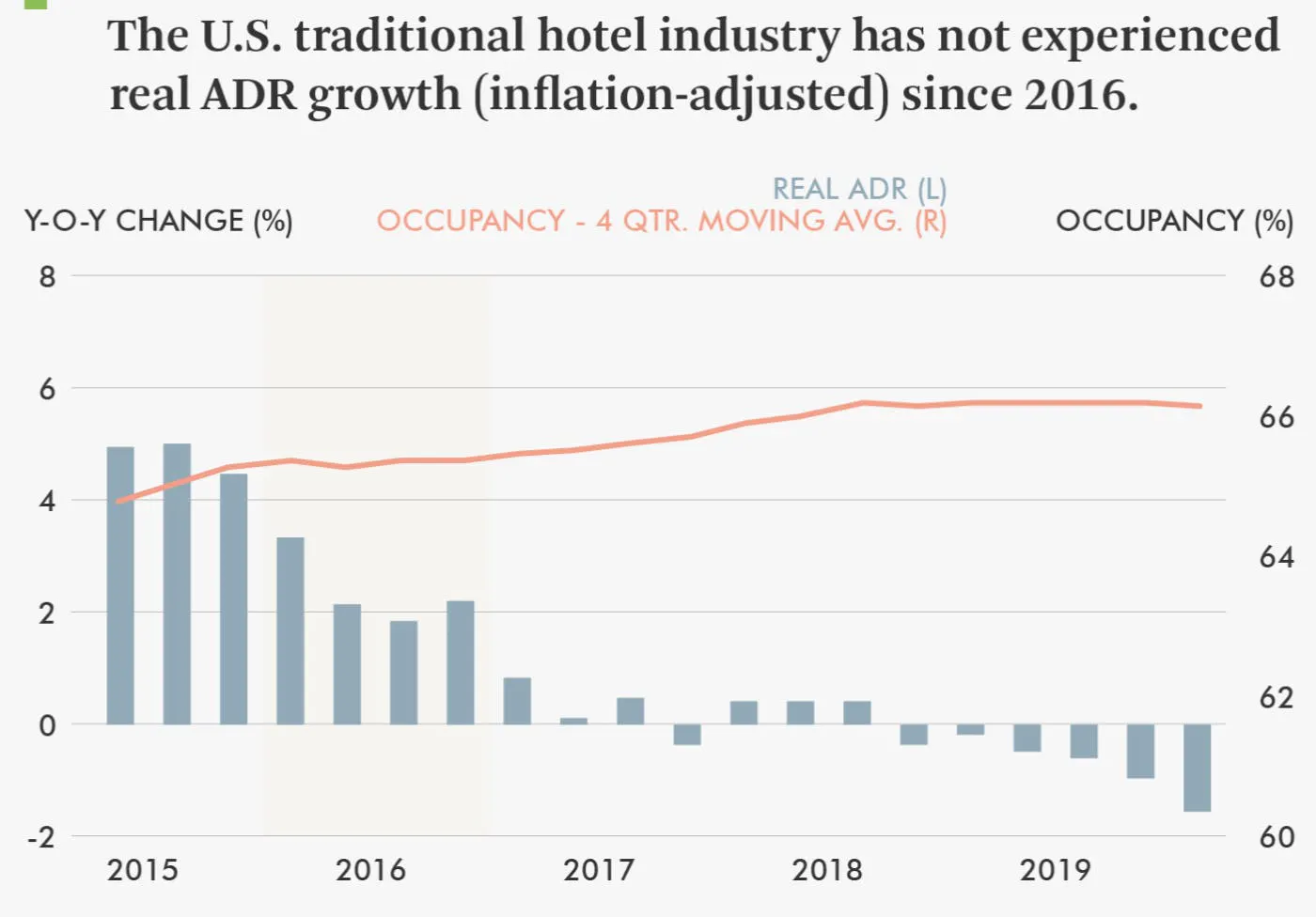
When we talk about disrupting the accommodations market, perhaps the clearest example lies in the data for average daily rates.
Since 2016, the U.S. hotel industry has not experienced any significant boost in inflation-adjusted average daily rates. Since mid-2018, the hotel industry has steadily lost ADR growth quarter after quarter. Over that same time period, occupancy rates have plateaued at about 66%.
Regulations With Mixed-Bag Results
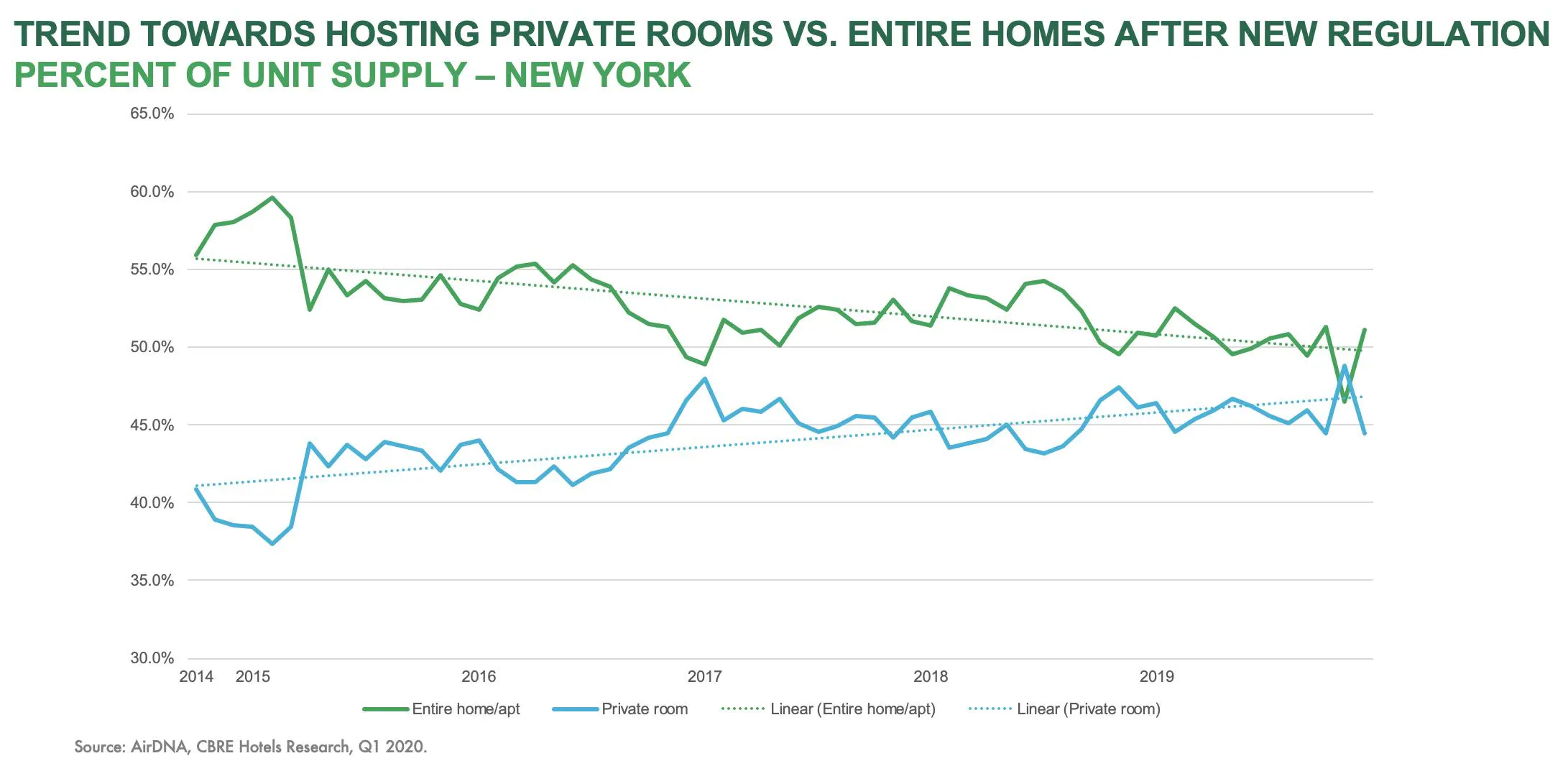
The recent growth of short-term rentals has been matched with a huge wave of regulatory policies. As seen in the report, however, it’s still tough to see the regulations’ clear-cut impact. In some locations, short-term supply has taken a significant hit but eventually recovers in the long run.
One clear theme seems to be the regulations’ influence on the market share between private rooms and entire home listings. In New York, private rooms have been gaining significant ground on entire home listings over the last few years.
Dillon DuBois
AirDNA Senior Product Manager
Dillon DuBois is a seasoned expert in the short-term rental space, having worn many hats at AirDNA since joining in 2019. From driving B2B marketing initiatives to shaping product strategy, Dillon’s deep understanding of both the company and the industry makes him a key player in delivering innovative solutions. Now a Senior Product Manager, he leverages his experience to bridge the gap between data and user needs. He manages his own short-term rental in Medellín, Colombia, and enjoys all things outdoor adventure, travel, cooking, & surfing.
