The Aftermath of NYC's Short-Term Rental Crackdown: One Year Later
Published: August 22, 2024
Last updated: September 25, 2024

Scott Sage
In September 2023, New York City started cracking down on short-term rentals, enforcing policies rooted in Local Law 18 and requiring host registration.
The crackdown was aimed at curbing the proliferation of illegal short-term rentals and combating what city officials see as the negative impacts of STRs, namely growing rental costs and housing shortages for local New Yorkers.
New STR requirements implemented by the crackdown included:
- Short-term rental hosts must be present during the stay.
- Rentals may only host a maximum of two guests.
- Guests must have full access to the unit.
- Hosts must provide documentation to prove they live on-site.
At the time of its implementation, there were widespread concerns about how this law would reshape the short-term rental market in one of the world's most popular cities for tourists and business travelers alike.
Let’s take a look at how Local Law 18 has impacted New York City’s STR market one year later:
Major Changes in the NYC Market
One year on, the effects of Local Law 18 have been dramatic.
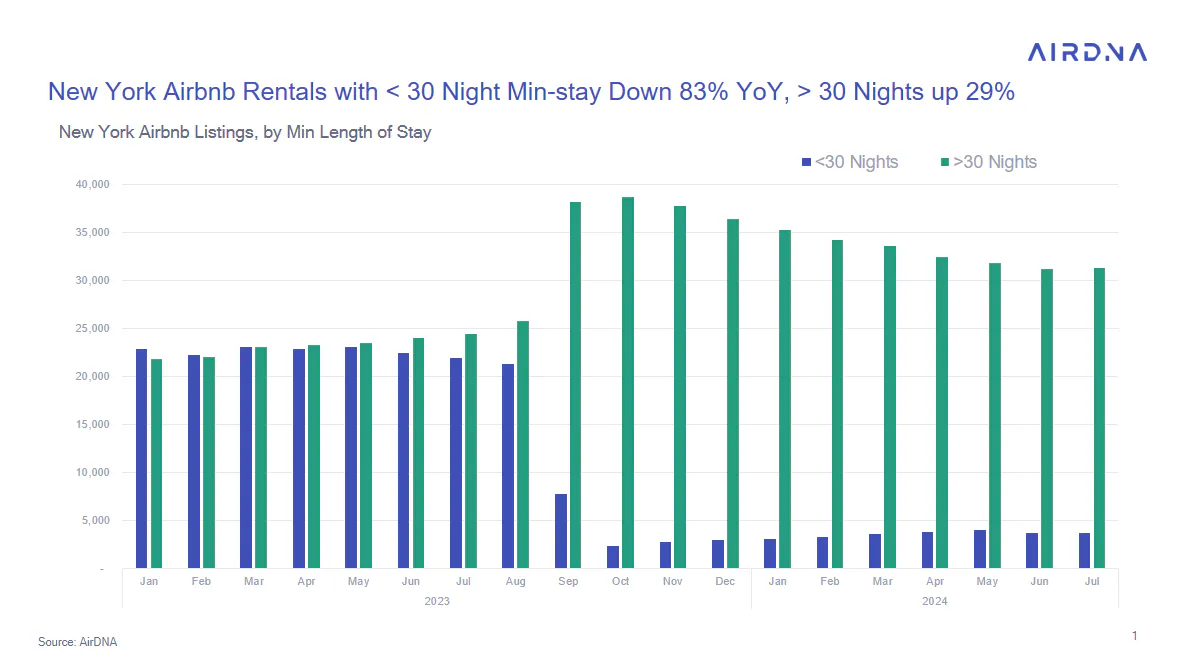
Most notably, there are fewer short-term rental listings available in NYC. The number of Airbnb listings allowing stays under 30 nights has plummeted by 83%, dropping from 21,900 in July 2023 to just 3,700 in July 2024.
This massive reduction reflects the immediate impact of the law, as many hosts either pulled their listings from the platform or adapted by shifting to longer stays. As a result, listings for stays of 30 nights or more have seen a 29% increase over the past year. This shift underscores how hosts have adjusted their offerings to comply with the new regulations, pivoting to a market segment that remains within legal boundaries.
Listings for Short-Term Stays Are Slowly Rebounding
Despite the initial decline, there has been a slow but steady rise in short-term listings for stays less than 30 nights following the initial enforcement period.
From October 2023 to July 2024, the number of Airbnb listings for stays under 30 nights has increased by 62%, rising from 2,300 to 3,700. This mild resurgence likely reflects that more registration applications have been processed as hosts navigate the complex compliance landscape.
While rentals offering stays less than 30 nights have started bouncing back, we’ve seen a 19% decline over the same period (October 2023 to July 2024) in listings for stays of more than 30 nights.
An Uneven Impact Across Boroughs
Local Law 18’s impact has not been uniform across New York City. The boroughs of the Bronx, Brooklyn, and Queens have experienced the most significant declines in short-term rentals offering stays of less than 30 nights. Some submarkets have seen year-over-year drops of more than 90%.
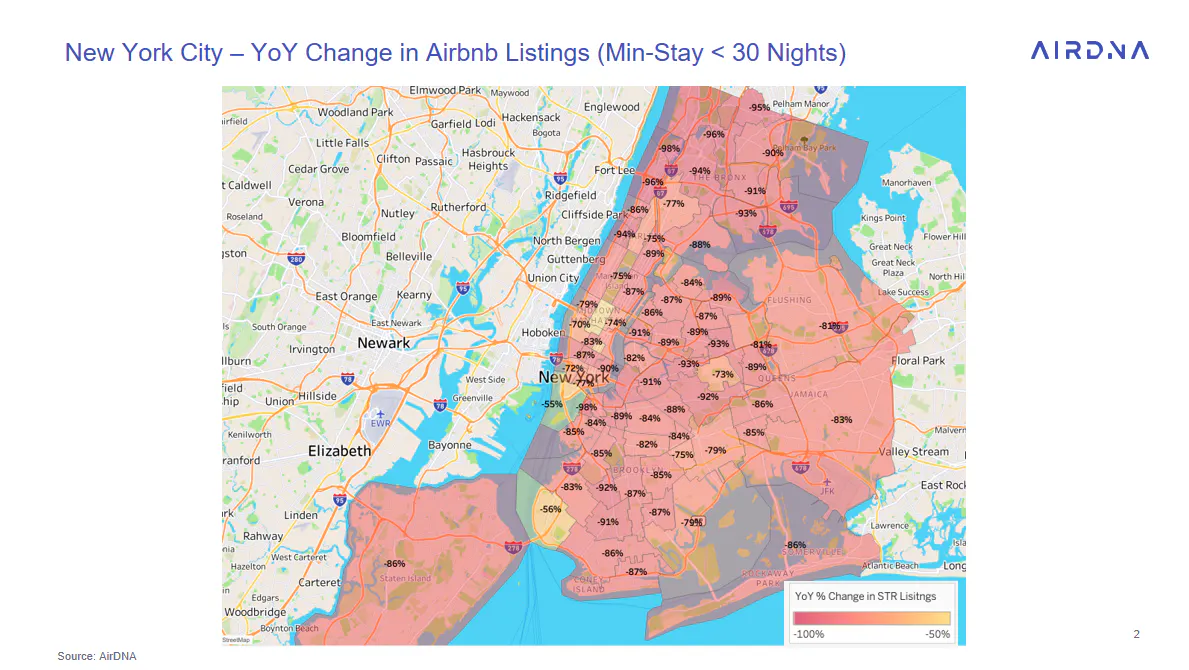
These declines highlight the varying degrees to which different parts of the city depended on short-term rentals. While some neighborhoods have almost completely exited the short-term rental market, others have managed to retain a portion of their listings, albeit at reduced levels.
When assessing year-over-year changes in all Airbnb listings, it’s clear that certain boroughs have fared far better than others:
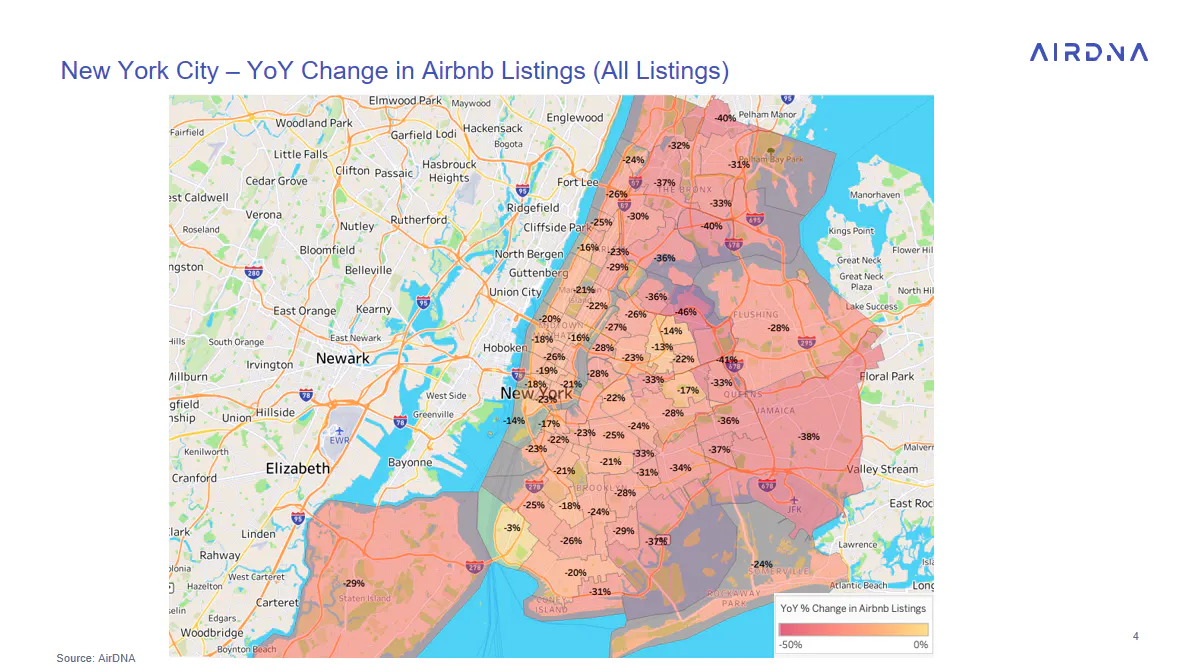
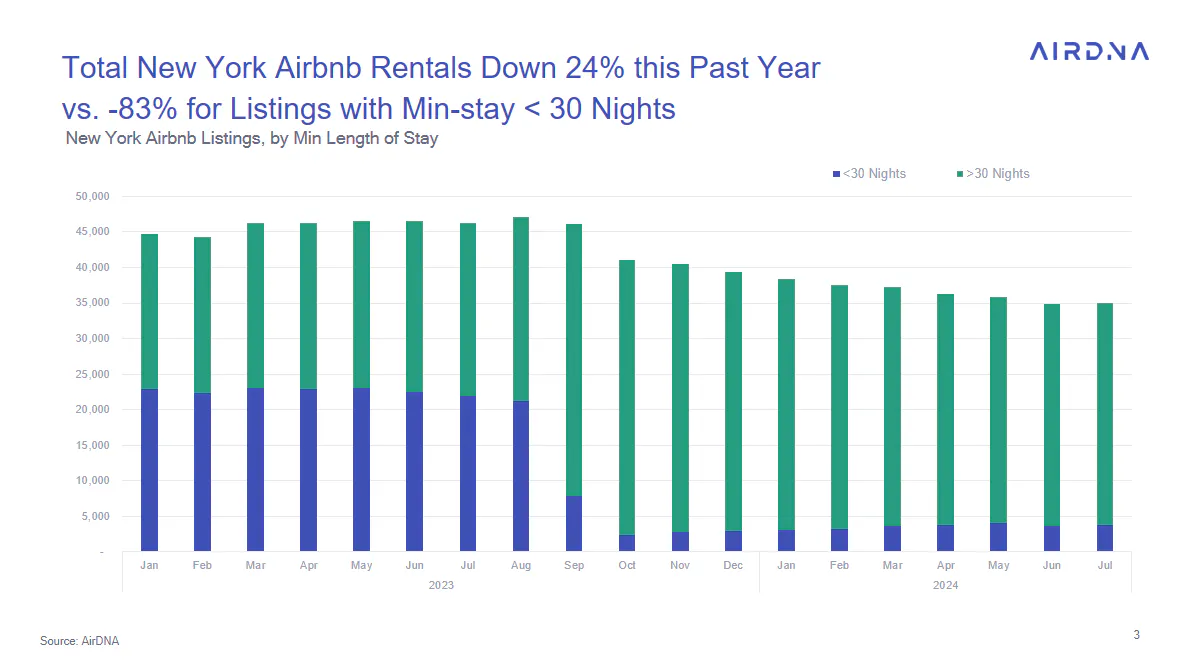
Overall, the total number of Airbnb listings in New York City is down just 24% over the past year, largely due to the increase in longer-stay listings. This relatively modest overall decline masks significant shifts within the market, particularly the steep drop in true short-term rentals offering stays of less than 30 nights.
Looking Ahead
As we reflect on the first year of New York's Local Law 18, it's clear that the regulation has profoundly impacted the city's short-term rental market. The significant reduction in listings for stays under 30 nights, coupled with the growth in longer-term rentals, illustrates how both the market and individual hosts have adapted to the new legal landscape.
Moving forward, we’ll keep a pulse on how these trends evolve, especially as more applications are processed and the city continues to enforce the law.
ARTICLE SUMMARY
One year after New York City's crackdown on short-term rentals, Local Law 18 has caused an 83% drop in short-term listings, a 29% rise in long-term rentals, and a complex, uneven impact across the city's boroughs.
Scott Sage
Senior Vice President, Marketing & Customer Experience
Scott is an Airbnb Superhost and industry pro, having founded Home Base BnBs—a short term rental management company that scaled to 200+ units. Scott combines his experience and passion for hosting to empower AirDNA customers' success. When he's not thinking about STRs, he is hiking, playing basketball, or playing pickleball.