


Top Countries for Traveling World Cup Fans, According to STR Data
Published: December 2, 2025

Jamie Lane

Key Takeaways
- Expect short-term rental (STR) demand to spike after the World Cup draw set for December 5, 2025 as fans rush to book near match cities.
- Home teams lead by share of STR demand, but Argentina, Colombia, and Europe’s biggest fanbases consistently travel the distance.
- Immigrant communities in the U.S. could drive unexpected surges in cities like Boston, Miami, and Los Angeles.
When it comes to world cup fans, passion travels. It crosses oceans, fills stadiums, and books out short-term rentals in every host city. With the 2026 FIFA World Cup heading to North America and the official draw set for December 5, excitement is mounting and so is the demand for accommodations.
At AirDNA, we dug into historical short-term rental (STR) data from past tournaments to uncover a fascinating question: Which fan bases really travel for the World Cup?
Using guest review data as a proxy for STR stays, we identified which countries consistently send fans to support their teams. Whether it’s Messi devotees from Argentina or dedicated super fans from Colombia, the patterns we uncovered say a lot about how global fandom moves. And with the U.S., Canada, and Mexico all co-hosting in 2026, we’re expecting some busy booking calendars.
Let’s dive into what the data tells us and which fanbases you’ll want to keep your eyes (and listing prices) on as an Airbnb host.
The Top 10 Traveling Fan Bases (Based on STR Stays)
Who has the most fans in the World Cup? To find out, we looked at guest review data from previous tournaments, using reviews as a proxy for STR demand. These are the world cup fans who booked Airbnbs and vacation rentals in host cities around the globe.
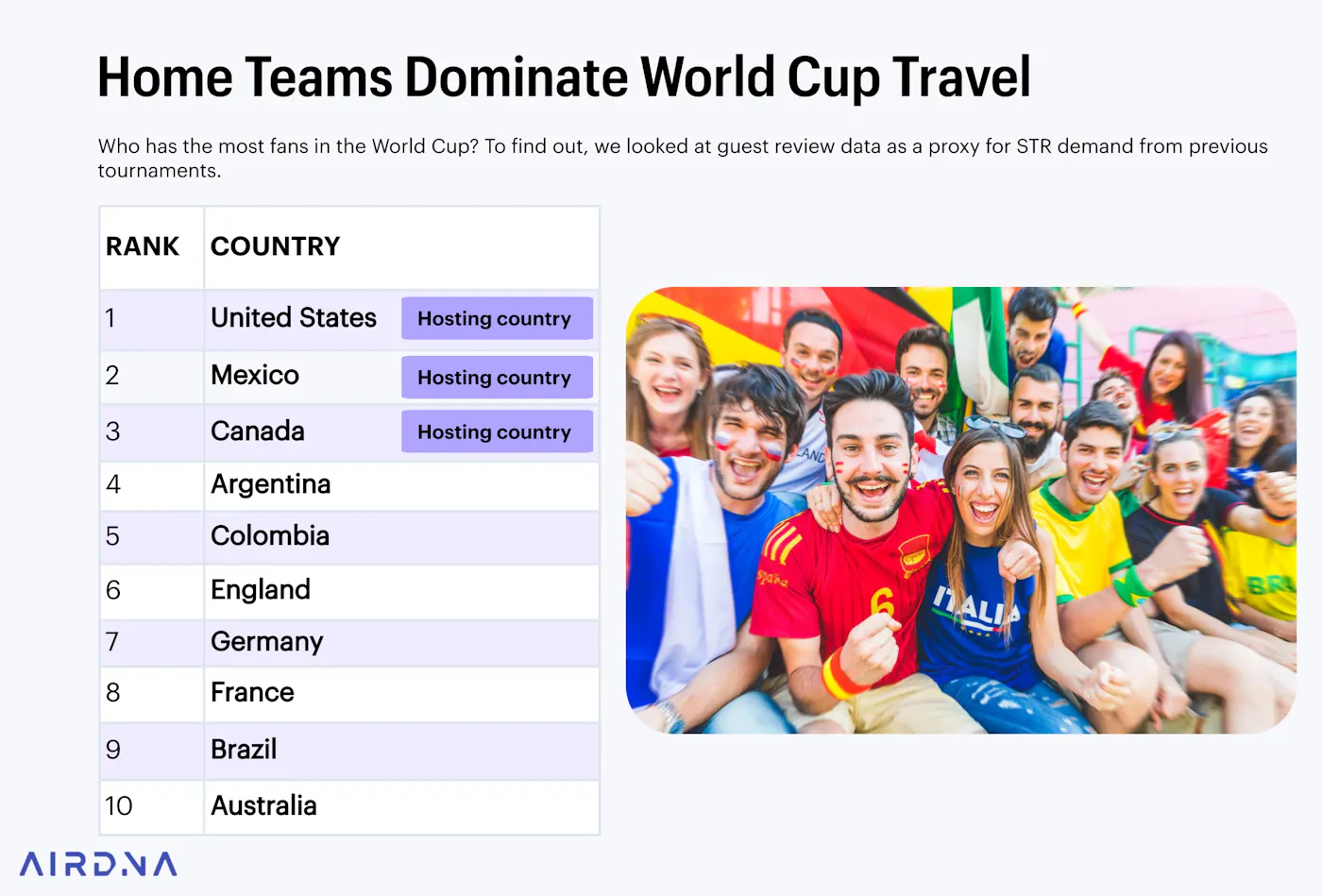
Historically, home teams dominate. Fans from the host nation always turn up in force in the cities where matches are being held. With three host nations in 2026—the U.S., Mexico, and Canada—we expect that effect to be even stronger. This could reshape which cities become the fan capitals of the tournament, especially as more soccer enthusiasts opt for STRs over hotels.
Some countries have long been STR powerhouses when it comes to the World Cup. Argentina, for example, always travels well. Now that they’re the defending champions, we expect 2026 to bring an even larger wave of Messi-motivated travel.
Similarly, Colombian fans have built a reputation as some of the most loyal and energetic World Cup soccer fans in the world. Known for their "super fans," Colombia regularly punches above its weight when it comes to STR stays during the tournament.
Europe's traditional powers also hold their own. England, Germany, and France continue to show strong travel patterns, despite the long-haul flights.
Next up: the unexpected “sleeper” fanbases we expect to drive short-term rental bookings for the 2026 world cup.
Sleeper Fan Bases to Watch in 2026
Not all fandom is measured in miles traveled. Sometimes, the most powerful fan surges come from within the host country’s borders and from communities that treat the World Cup like a homecoming.
As the FIFA World Cup draw approaches on December 5, one thing is clear: immigrant communities across the United States could play a major role in shaping which cities become the heartbeats of the tournament.
This sleeper segment includes nations like Haiti, Iran, Cape Verde, Scotland, and Morocco, which all have significant diasporas in cities like Boston, Los Angeles, New York, and Miami. If any of these teams get a favorable World Cup 2026 draw date and location, STR demand could surge in very specific pockets of the country.
Take Cape Verde, for example. While it’s a small nation, Cape Verdean communities in Boston, Massachusetts are deeply rooted and fiercely proud. A match played nearby could trigger a hyperlocal travel spike that mirrors the impact of much larger fanbases. The same goes for Moroccan fans in New York, Haitians in Florida, or Iranians in California. These communities are all capable of turning a group stage draw into a full-on cultural celebration.
Why Anticipating World Cup Fan Travel Matters
Understanding which World Cup fans travel—and where they go—gives short-term rental hosts and investors a data-backed advantage. With demand set to spike after the World Cup 2026 draw date on December 5, being ahead of the curve means knowing who will show up and where they’re likely to book.
Whether you’re adjusting pricing, prepping listings in high-interest cities, or considering your next investment move, historical World Cup travel patterns should inform your strategy for 2026 matches.
FAQ
How many fans go to the World Cup?
Attendance varies by year, but the 2018 FIFA World Cup in Russia welcomed over 3 million fans across all matches. With the 2026 tournament expanding to 48 teams and being hosted across the U.S., Canada, and Mexico, fan turnout is expected to exceed all previous records—especially when you factor in local travel within North America.
Who has the most fans in the World Cup?
Host countries usually lead in raw fan numbers due to accessibility and national pride. Beyond that, data from short-term rental stays shows that Argentina, Colombia, and the U.S. consistently rank among the best World Cup fans when it comes to showing up in person. Argentina’s global fanbase and Colombia’s "super fans" make them STR power players.
Will the World Cup 2026 increase short-term rental demand?
Absolutely. Large international events like the World Cup create concentrated spikes in STR demand, especially in host cities. Demand typically jumps following the FIFA World Cup draw, as fans book early to secure lodging close to match venues.
How can STR hosts prepare for World Cup fan travel?
Know your market, watch the draw closely, and optimize your pricing strategy. AirDNA’s tools help you monitor demand trends and stay ahead of booking surges. Check out our World Cup 2026 dashboard to track demand and nightly rate information in host cities.
ARTICLE SUMMARY
AirDNA analyzed guest reviews for STR stays from past tournaments to reveal which World Cup fans travel the most. With the 2026 draw approaching, here’s who hosts should watch.
Jamie Lane
AirDNA Chief Economist
He is responsible for data analysis, thought leadership, and leveraging advanced analytical techniques to provide new insights into short-term rental market trends. Native to Atlanta and an Airbnb host himself, Jamie enjoys cycling, mountain biking, backpacking, running, and playing in a dart league in his free time.



Get started with AirDNA today.
Powerful, easy-to-use tools that help hosts and investors succeed in the short-term rental market.
Try for free