How to Set Airbnb Event Pricing For Maximum Profit
Published: March 10, 2025
Last updated: August 30, 2026

Scott Sage
Key Takeaways:
- Event pricing is about timing. Demand moves in waves, and knowing when to adjust prices is key to maximizing revenue without losing bookings.
- Booking trends reveal when to raise or hold rates. Tracking pacing data and demand lift helps hosts adjust pricing at the right moments instead of reacting too late.
- Dynamic pricing tools often miss event-driven demand surges, but applying AirDNA’s rate recommendations ensures you price optimally.
A major event can turn your Airbnb into a weekend cash machine, but many hosts leave money on the table without realizing it.
Some set rates too high too soon, scaring off early bookers who are ready to commit. Others panic and drop prices too early, just as last-minute travelers—willing to pay premium rates—start searching. The result? Missed opportunities, underpriced nights, and revenue that falls short of its potential.
So, how do you get it right? Knowing when guests book, how demand builds, and when to adjust your rates can make the difference between maximizing revenue and missing out. In this blog, we’re breaking it all down using real booking data to show you how to track demand, time your price adjustments, and avoid the common Airbnb event pricing mistakes that could be costing you money.
Why Event Pricing for Airbnb Matters and How to Get It Right
When demand surges for a major event, pricing isn’t just about charging more—it’s about knowing when to adjust rates to capture the highest earnings. Travelers book in waves, and failing to recognize these patterns can mean missing out on revenue at every stage.
The key to maximizing earnings is understanding when guests book, how demand builds, and when to adjust pricing to stay ahead of the market. Event pricing strategies should be part of a broader approach that includes seasonal pricing adjustments to account for shifts in demand throughout the year.
To show you how this works in real-time, we’re breaking down booking data from the Sturgis Motorcycle Rally in South Dakota, a well-established annual event that’s been running since 1938. We analyze demand patterns from the 2024 rally and compare them to the upcoming 2025 event, pinpointing when demand surges, when rates should increase, and how to make data-driven adjustments for maximum profit—so you can apply these insights to any major event in your market.

How to Analyze Airbnb Demand Trends for an Upcoming Event
You first need to understand how demand is building to price your listing right. Events completely change booking behavior, with some travelers securing stays months in advance while others wait until the last minute.
If you don’t track these shifts, you risk raising your vacation rental rates too early and missing early bookings or waiting too long and underpricing when demand peaks. That’s why analyzing demand is the first step. By looking at past event data and real-time booking trends, you can pinpoint when demand surges, when to adjust rates, and when to hold firm.
1. Look at Pacing Data: How Fast are Bookings Being Made?
Before adjusting your pricing for a major event, the smartest thing you can do is check pacing data—a snapshot of how many nights are already booked for an upcoming event compared to the same time last year. Pacing data helps hosts measure the local event impact on rates, showing whether demand is ahead or behind past years and helping them set prices accordingly.
Why does this matter? Because event demand moves in patterns. There are always some guests who book early. If bookings are ahead of last year, it’s a sign that demand is stronger. That represents an opportunity to increase rates or hold firm. If demand is slower, it doesn’t mean that pricing is too high—bookings for events almost always surge later as the event draws near.
You don’t have to figure this out on your own. AirDNA tracks pacing data for both individual markets and your own Airbnb, making it easy to compare upcoming event bookings with past years. You can stay ahead of Airbnb price fluctuation by spotting trends early and making pricing decisions based on real demand—not guesswork.
Let’s take a closer look at the pacing data for the 2025 Sturgis Motorcycle Rally to see how this plays out in real-time:
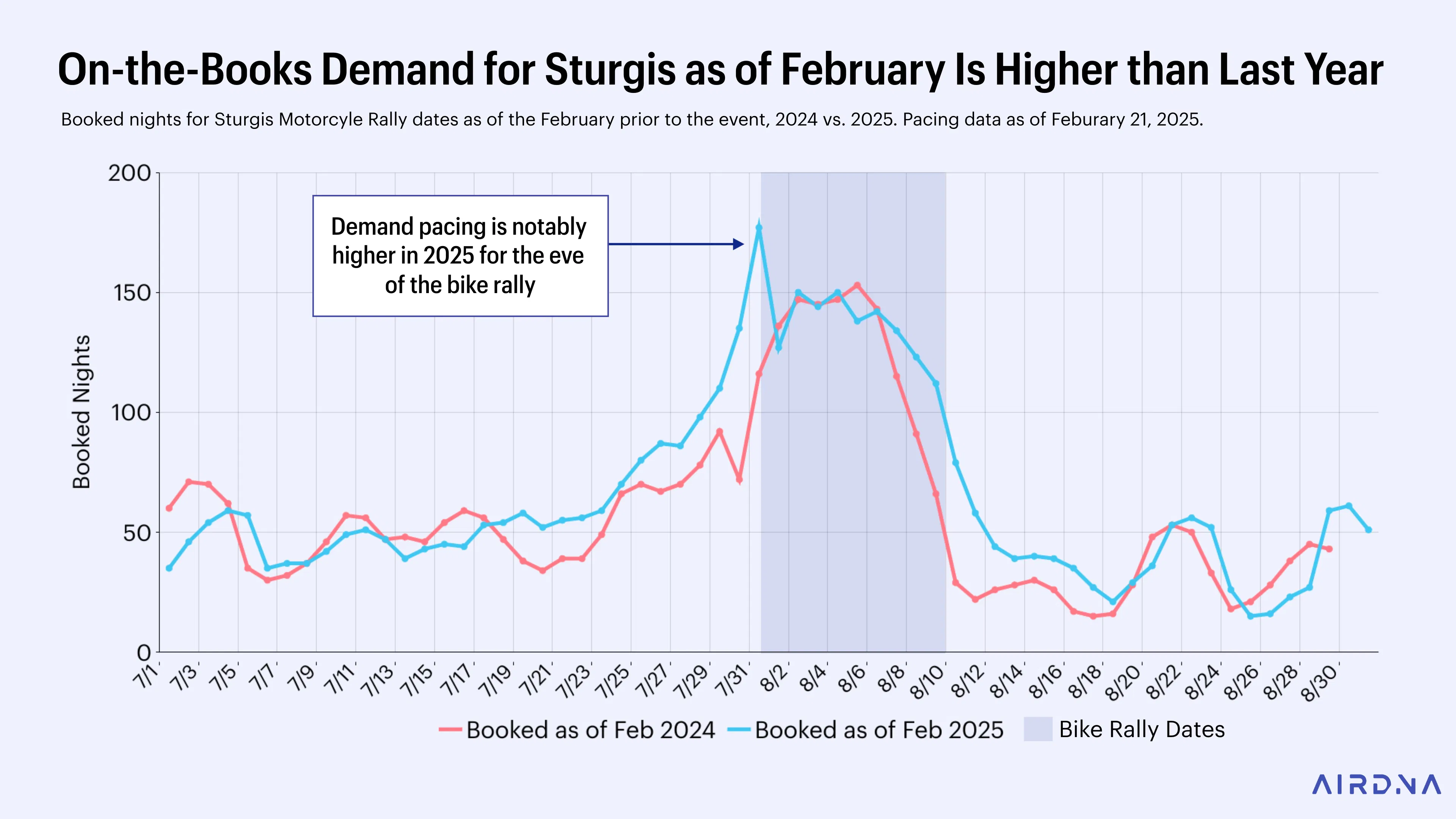
Here’s what the data tells us:
- Higher bookings in 2025 compared to 2024 indicate that demand is slightly stronger this year.
- A major spike in bookings appears on July 31, 2025 (the night before the rally). This suggests that travelers are locking in stays earlier than last year for this date, making it a high-demand night for pricing adjustments.
- Booking activity builds gradually, then surges in the final two weeks before the event. This follows a common event pattern where early planners secure accommodations months in advance, while another large wave books closer to the event.
- Demand remains elevated after the rally starts. Instead of an immediate drop-off, bookings taper down gradually, meaning some visitors stay beyond opening weekend.
Key takeaway for Airbnb event pricing
If bookings are ahead of last year’s pace, there’s no reason to lower prices early. Demand is strong, and travelers are securing stays sooner. High-demand nights, like the eve of the event, should be priced accordingly, as early bookings signal guests are willing to pay premium rates.
The biggest booking surge often happens in the final weeks before the event, so if things look slow months in advance, don’t panic—many guests book late. Since demand often stays elevated after an event, holding firm on pricing for post-event stays can help capture additional revenue from travelers extending their trips.
The key takeaway? Let demand trends, not early booking lulls, guide your pricing strategy. If history shows a last-minute surge, trust the data and hold your rates—those final bookings will come in at a higher price.
2. Look for Patterns in Demand Lift
When a major event comes to town, it drives demand well above normal levels. This extra demand, known as event demand lift, helps hosts understand how much more interest an event generates compared to regular travel periods.
Hosts use pacing data to measure demand lift, which tracks how bookings compare to previous years. This answers key questions like:
- How many extra booked nights does the event generate?
- Does demand build gradually or spike at certain moments?
- How does this year compare to past events?
If demand lift is strong early, there’s an opportunity to raise rates ahead of time. If demand remains high, holding firm on pricing ensures maximum revenue. However, if demand lags behind previous years, slight price adjustments may be needed to stay competitive.
Now let’s look at when and how much demand lift occurs for the Sturgis Motorcycle Rally.
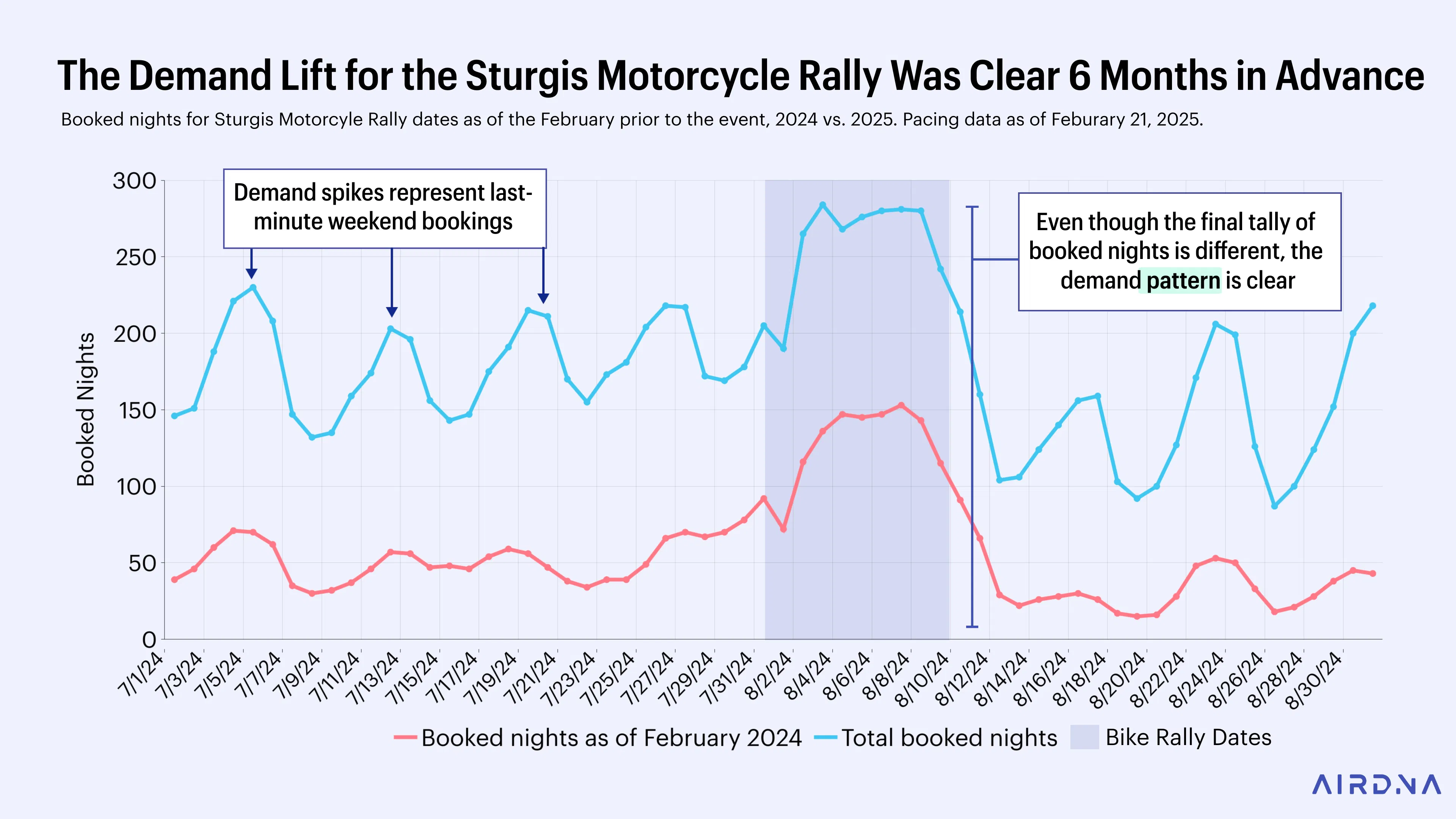
The graph above compares early bookings vs. final total bookings for Sturgis 2024, showing when demand started, how it grew, and whether there was a last-minute rush.
- Guests booked early. By February 2024 (six months out), event nights were already well ahead of regular nights in terms of the number of short-term rental reservations. This confirms that Sturgis attendees plan ahead rather than waiting until the last minute.
- Demand remained steady. Bookings grew to 275 per night, but the gap between event and non-event nights stayed the same—meaning demand for Sturgis was strong but predictable.
- Last-minute bookings were mostly for non-event weekends. The final booking numbers (blue line) show late spikes for regular weekends, suggesting that travelers visiting for reasons other than Sturgis booked much later.
This data helps hosts anticipate when demand will peak and price strategically, ensuring they capture the highest revenue without underpricing early or discounting too soon.

What this means for Airbnb event pricing
Demand lift shows when to adjust prices based on real booking trends.
If event nights are booking faster than past years, raising rates early helps capture high-paying guests. If demand stays steady, holding firm ensures maximum revenue. If demand is weaker than previous years, small price adjustments may help attract more bookings. For non-event weekends, lowering rates too soon can backfire if past data shows last-minute bookings.
Tracking demand lift over time helps hosts to raise rates when early demand is strong and to make calculated adjustments if they’re needed to stay competitive.
3. Identify and Anticipate Booking Waves
Once you know how much demand an event brings, the next step is tracking when guests book. Event bookings happen in three waves, each offering a pricing opportunity:
- Early birds (12+ months out): A small group books early to lock in stays. Set a strong base rate to capture this demand.
- Planning spikes: Bookings surge around key moments like ticket sales or price hikes—a chance to raise rates as demand accelerates.
- Final surge (1 month out): Last-minute travelers scramble to book, often paying a premium. Holding firm on pricing here maximizes revenue.
Hosts can adjust prices ahead of demand surges by recognizing these patterns, staying competitive without reacting too late.
Here’s how the tides typically roll in for the Sturgis Bike Rally:
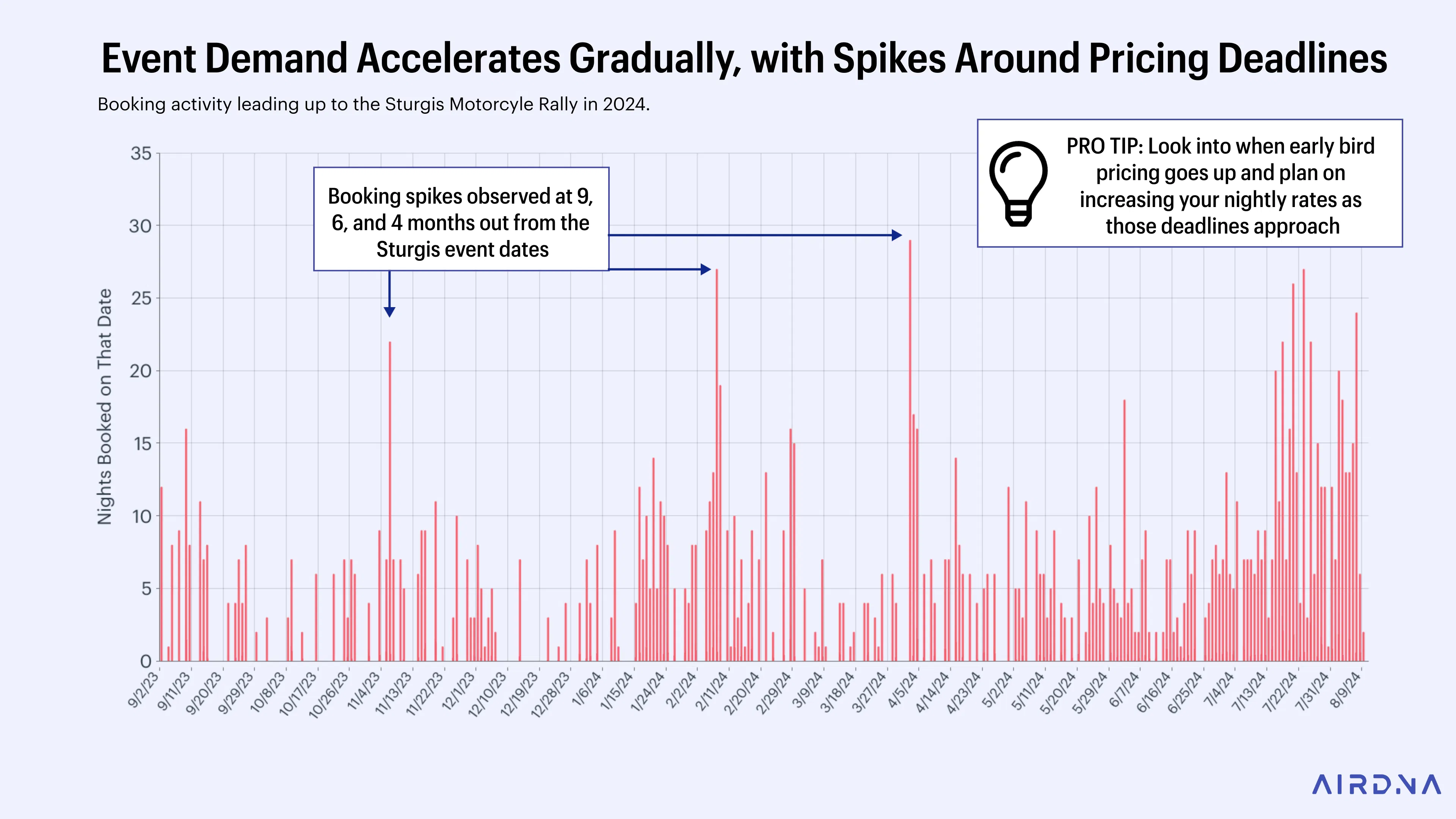
Noticeable booking spikes happened 9, 6, and 4 months before the event. These surges suggest that major planning milestones—like ticket sales, schedule announcements, or price increases—triggered bursts of demand. Hosts who raised rates around these spikes likely captured higher revenue.
The biggest acceleration happened in the final month. The tallest purple bars (nights booked per day) show that last-minute travelers made a rush for available listings, confirming that demand surges just before the event.
What this means for Airbnb event pricing
For any host pricing for an event, the key takeaway is to watch for local booking trends. Many events follow a similar pattern, where early birds book far ahead, then demand spikes around key planning deadlines, followed by a last-minute rush. If you can identify when demand for Airbnb historically jumps in your area, you can raise rates ahead of these spikes instead of reacting too late—ensuring you maximize revenue at the right moments.
4. Look at Lead Time: How Far Ahead Do Guests Book?
Booking lead time refers to how far in advance guests book their stays before an event. Understanding this helps hosts predict demand patterns and set pricing at the right time. Some travelers plan far ahead, while others wait until the last minute. If you don’t track lead time, you might drop prices too soon out of fear that bookings aren’t coming in fast enough—when in reality, many guests simply book closer to the event.
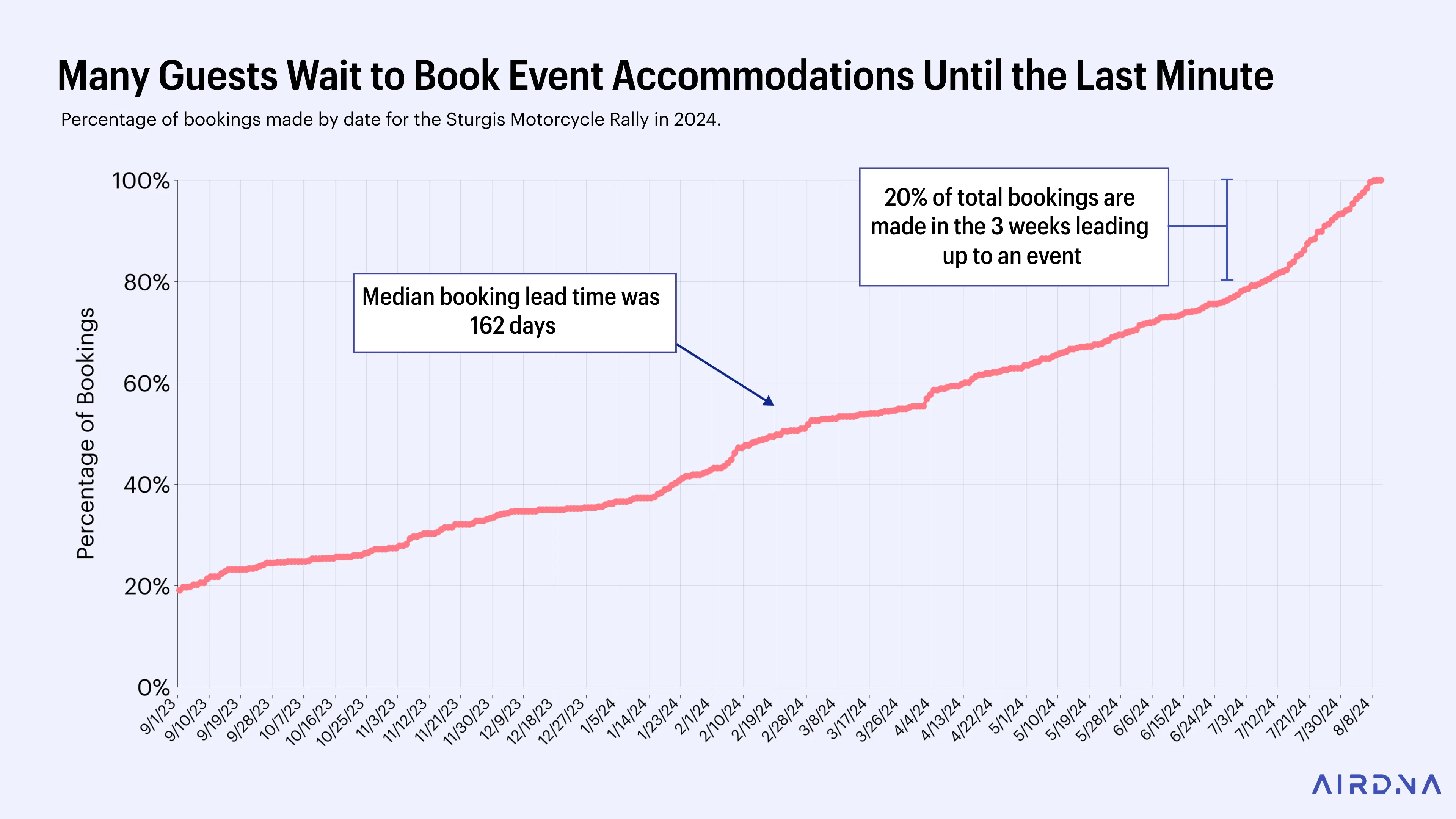
Looking at Sturgis 2024 booking trends, we see clear lead time patterns:
- 20% of bookings were made nearly a year in advance. These early planners secure their stays long before prices rise.
- The median booking lead time was 162 days (~March 1st). By early spring, at least half of all event travelers had already booked.
- Another 20% of bookings happened in the last three weeks before the event. Despite strong early demand, a large number of travelers booked at the last minute, creating a final surge.
What this means for Airbnb event pricing
The data shows that a significant number of guests book late, often paying premium rates. A lull in bookings months before the event doesn’t mean demand is weak—it simply means many travelers haven’t booked yet. Instead of reacting too early, hosts should hold firm on pricing and track booking trends closer to the event to capture those higher-value, last-minute reservations.

Common Airbnb Event Pricing Mistakes to Avoid
Even in high-demand markets, pricing missteps can cost hosts valuable revenue. Many of these mistakes come from misreading demand signals or reacting too soon. Here’s what to watch out for—and how to avoid these common pitfalls.
Lowering prices too soon
A temporary slowdown in bookings doesn’t mean demand has disappeared. Many hosts panic mid-year and start dropping rates too early, fearing they won’t fill their calendar. But event demand moves in waves—early bookers secure stays months ahead, but another surge comes closer to the event. Cutting prices too soon means undervaluing nights that would have been booked at higher rates later. Instead of reacting emotionally, watch pacing data to see how bookings are tracking against previous years before making adjustments.
Looking at pricing data instead of demand trends
Many hosts look at the wrong data when making pricing decisions. Instead of tracking event demand, they focus too much on Average Daily Rate (ADR)—which can fluctuate for reasons unrelated to demand. As seen in Sturgis 2024, ADR peaked in the spring but then dropped as hosts started undercutting each other—even though demand was still rising. The mistake? Letting price movements from other hosts dictate decisions, rather than following real booking data.
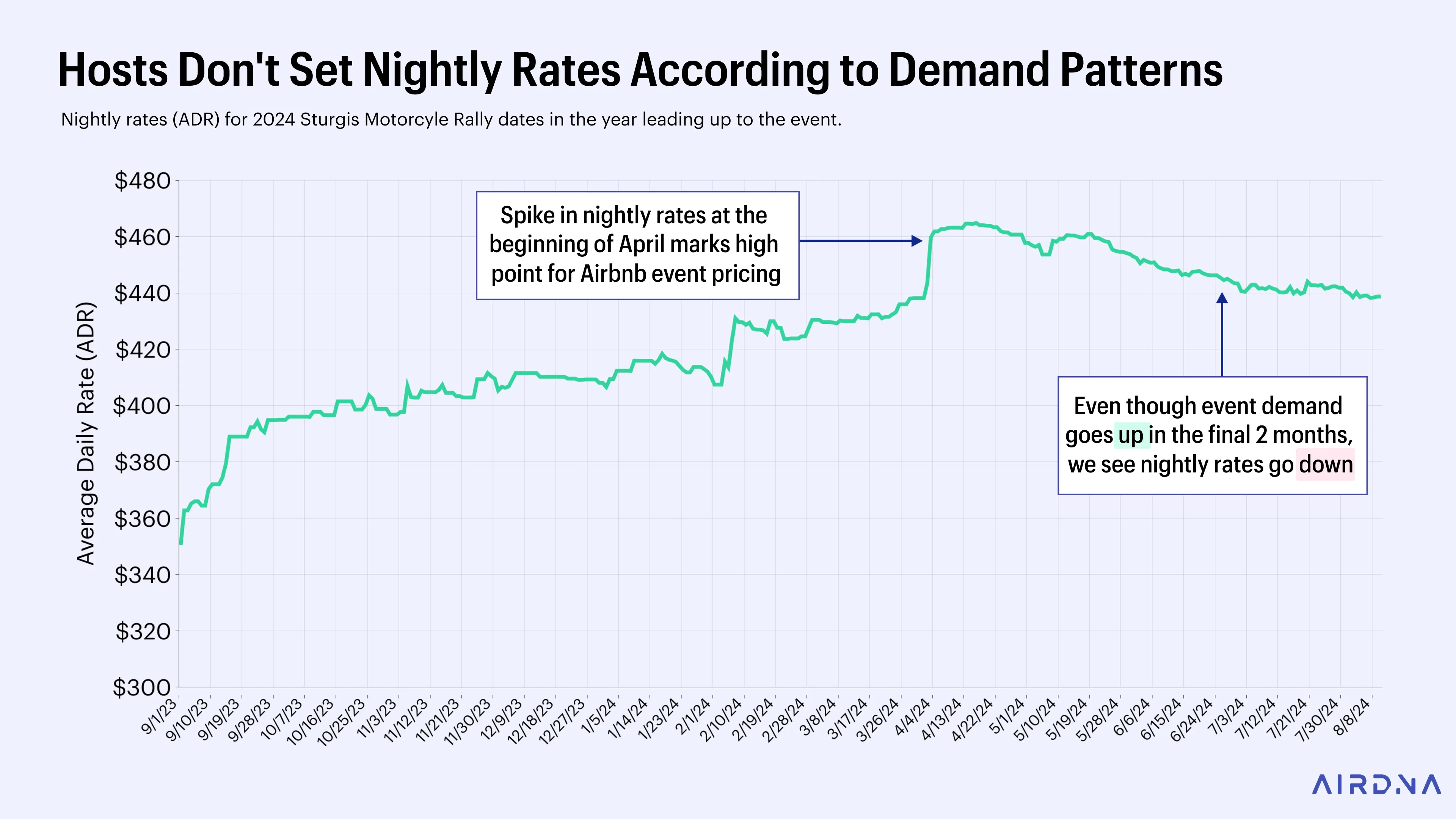
The smarter approach is to watch demand lift and pacing trends—if bookings are coming in at a strong rate, ADR should rise, not fall, as the event approaches. Pricing based on how many guests are booking, not what other hosts are doing, helps avoid unnecessary price cuts.
Ignoring past booking patterns
Event pricing isn’t a guessing game—booking trends tend to repeat. Some events see early-booking surges, while others see a rush of last-minute travelers. Hosts who ignore historical pacing data risk mispricing their listings. Checking how demand accelerated in previous years can help pinpoint when to raise or hold firm on rates instead of reacting too soon.
Underpricing high-demand nights
Not all event nights see the same level of demand, yet many hosts price all nights the same. Key dates—like the night before the event begins—often see significantly higher demand, and pricing should reflect that. Reviewing historical demand spikes and pacing trends ensures rates match demand, so hosts aren’t leaving money on the table by undervaluing peak nights.
Overpricing too late
While it’s smart to hold firm on rates, setting prices too high too close to the event can lead to last-minute vacancies. If pacing data shows bookings are lagging behind previous years, small, data-driven price adjustments can help secure final bookings without deep discounts. The key is monitoring demand in real-time rather than waiting too long and having to cut prices drastically at the last minute.
By avoiding these common pricing mistakes and focusing on demand trends instead of guesswork, hosts can price with confidence, capturing the highest possible revenue for event-driven bookings.
Airbnb Pricing Strategies That Work for Big Events
A successful Airbnb pricing strategy model works by timing price adjustments strategically to capture demand at different stages. Here’s how to do it:
- Step 1: Start at a competitive base price for early bookers. Some guests book more than a year in advance. Setting a strong but competitive base price ensures you capture these early bookings without undervaluing your listing.
- Step 2: Increase rates before key booking milestones. Events often have trigger points that drive demand spikes, such as ticket price increases, schedule announcements, or travel deadlines. Raising rates ahead of these milestones helps you maximize revenue from guests booking in response to these changes.
- Step 3: Hold firm or raise prices during last-minute booking surges. The final weeks before an event often bring a rush of last-minute travelers willing to pay premium rates. Instead of discounting out of fear, use trends to adjust rates upward when demand surges.
By following data-backed Airbnb pricing strategies, hosts can capture bookings at every stage of demand—instead of reacting too late and underpricing event nights.

Should You Use Dynamic Pricing Tools for Event Pricing?
Dynamic pricing tools can be useful for day-to-day pricing adjustments, helping hosts respond to seasonal trends, weekday vs. weekend demand, and general market shifts. These tools automatically adjust rates based on real-time demand, competitor pricing, and local market conditions, making them helpful for regular fluctuations in booking activity.
However, for major events, automated pricing tools often fall short. Many rely on standard pricing models that don’t always recognize the full demand surge that high-impact events create. As a result, they may undervalue event nights, failing to raise prices aggressively enough when demand peaks. This can cause hosts to miss out on revenue by relying too much on automation instead of event-specific data.
Why manual price adjustments lead to better Airbnb event pricing
Big events don’t follow normal booking patterns—demand builds in waves, spikes at key moments, and shifts based on ticket sales, travel deadlines, and market trends. Automated pricing tools often don’t adjust quickly enough, leading to undervalued event nights or missed revenue opportunities when demand surges.
Unlike automated pricing tools, AirDNA’s rate recommendations help hosts take full control of their short-term rental pricing, ensuring they don’t undervalue event nights. Instead of relying on an algorithm that may not fully recognize event-driven demand, you get market-based insights that help you price competitively while staying in control.
How to use AirDNA’s rate recommendations for event pricing
- Check AirDNA’s daily rate recommendations to track market trends. Get data-backed pricing suggestions so you can adjust rates confidently as demand shifts.
- Use pacing data to time price changes. AirDNA shows when bookings are coming in compared to past years, so you know when to raise rates ahead of demand spikes or hold firm if bookings are strong.
- Manually apply pricing adjustments for key event dates. Unlike automated tools that may undervalue high-demand nights, AirDNA’s insights help you price your property competitively when demand is peaking.
- Compare AirDNA’s data with Airbnb’s Smart Pricing or other tools. Many hosts use AirDNA to validate pricing recommendations, ensuring they’re not relying solely on platform-driven algorithms that may suggest lower rates.
With AirDNA’s recommended rates, you can stay ahead of demand, make strategic pricing moves, and ensure you’re maximizing revenue for every event booking.
FAQs
How should I adjust my pricing for large gatherings and major events?
Pricing for events and gatherings isn’t just about charging more—it’s about timing your price changes strategically. Start with competitive rates to attract early bookers, then increase prices as demand builds. Use pacing data to compare current bookings to past events, so you know when to raise rates or hold steady. Avoid lowering prices too early—many last-minute travelers are willing to pay premium overnight stay pricing, especially as availability tightens.
What are the best Airbnb host tips for preparing for an event?
Leading up to an event, small adjustments can make a big impact on your earnings. Airbnb event hosting isn’t just about setting the right price—it’s about making sure your listing is positioned to attract event travelers. Keep an eye on how quickly bookings are coming in—if demand is strong, consider raising rates gradually. Optimize your listing with event-specific keywords so guests searching for stays near the venue can find you. Adjust your minimum stay requirements if multi-night bookings make more sense for the event crowd. And don’t forget competitor research—if similar properties are filling up faster, you may have room to increase rates without losing bookings.
How does property rental pricing change for major events?
During large events, demand spikes for Airbnbs for events, often driving up rates. However, pricing for large gatherings isn’t just about increasing rates—it’s about tracking demand patterns. If bookings are coming in earlier than usual, it’s a sign to raise prices sooner. If demand slows, adjust pricing gradually to attract last-minute bookings.
Should I charge different rates for event nights vs. regular travel dates?
Yes! Pricing for events and gatherings should reflect higher demand and limited availability. Event nights typically book earlier and at higher rates, while non-event weekends may fill up later. Using Airbnb pricing strategies that work, you can ensure your property remains competitive while maximizing revenue.
How can I make sure my rates stay competitive?
Use AirDNA’s rate recommendations to compare property rental pricing trends and see how your rates compare to the market. This ensures your listing stays competitive without underpricing high-demand nights or overpricing slower periods. Regularly updating overnight stay pricing based on real-time market trends will help you optimize earnings.
ARTICLE SUMMARY
Pricing for major events is all about getting the timing right. See how real booking data from the Sturgis Motorcycle Rally reveals the smartest Airbnb event pricing strategies to maximize revenue.
Scott Sage
Senior Vice President, Marketing & Customer Experience
Scott is an Airbnb Superhost and industry pro, having founded Home Base BnBs—a short term rental management company that scaled to 200+ units. Scott combines his experience and passion for hosting to empower AirDNA customers' success. When he's not thinking about STRs, he is hiking, playing basketball, or playing pickleball.