Top 17 Airbnb Markets in Maryland
Published: July 2, 2025
Maryland may be small in size, but its diversity—ranging from Chesapeake Bay fishing villages and beach towns to historic cities and mountain getaways—creates a wide spectrum of opportunity for short-term rental (STR) investors. Whether you’re angling for year-round, business-driven bookings near Washington, D.C., or summer-only waterfront cash flow, these are the top-ranked Maryland markets according to AirDNA’s proprietary data.
What Is AirDNA’s Market Score?
Market Score is a proprietary metric that ranks how attractive a location is for short-term rental investment. Each score is calculated based on the following five metrics:
- Investability
- Rental Demand
- Revenue Growth
- Seasonality
- Regulation
Scores range from 0 to 100, with higher scores indicating stronger overall market health. In addition to an overall Market Score, each of the five metrics gets its own score on the same scale within the AirDNA app. This level of granularity is useful for Airbnb stakeholders interested in a particular aspect of market behavior.
Understanding Markets vs. Submarkets
This list includes a mix of the largest markets and submarkets, which are defined as:
- Markets refer to well-defined, often larger geographic areas like cities or metro regions.
- Submarkets are more granular locations, such as smaller towns, neighborhoods, or bayside communities within those larger regions.
Including both allows investors to spot opportunities that may be overlooked when focusing solely on large-scale market data. A market with a mediocre score might contain submarkets with excellent performance.
Airbnb Market Overview in Maryland
From ocean-side retreats in the east to mountain adventures in the west, Maryland’s STR landscape remains robust. Coastal enclaves like Kent Island and the Delaware/Maryland Beaches continue to draw vacationers in droves, while inland hubs such as Frederick and Sykesville benefit from steady government, tech, and medical travel. With a balanced mix of leisure and business demand—and relatively friendly regulations compared with neighboring jurisdictions—the Old Line State offers compelling options for a variety of investment strategies.
This is sample data – view real-time data in the AirDNA platform.
AirDNA's Market Score is updated on a monthly basis to reflect the previous month's data. This ranked list is updated annually. Explore the app to get the most current data.
Top 17 Airbnb Markets in Maryland (Ranked by Market Score)
17. Chesapeake Beach
Market Score: 12.08
Average Annual Revenue: $43,776
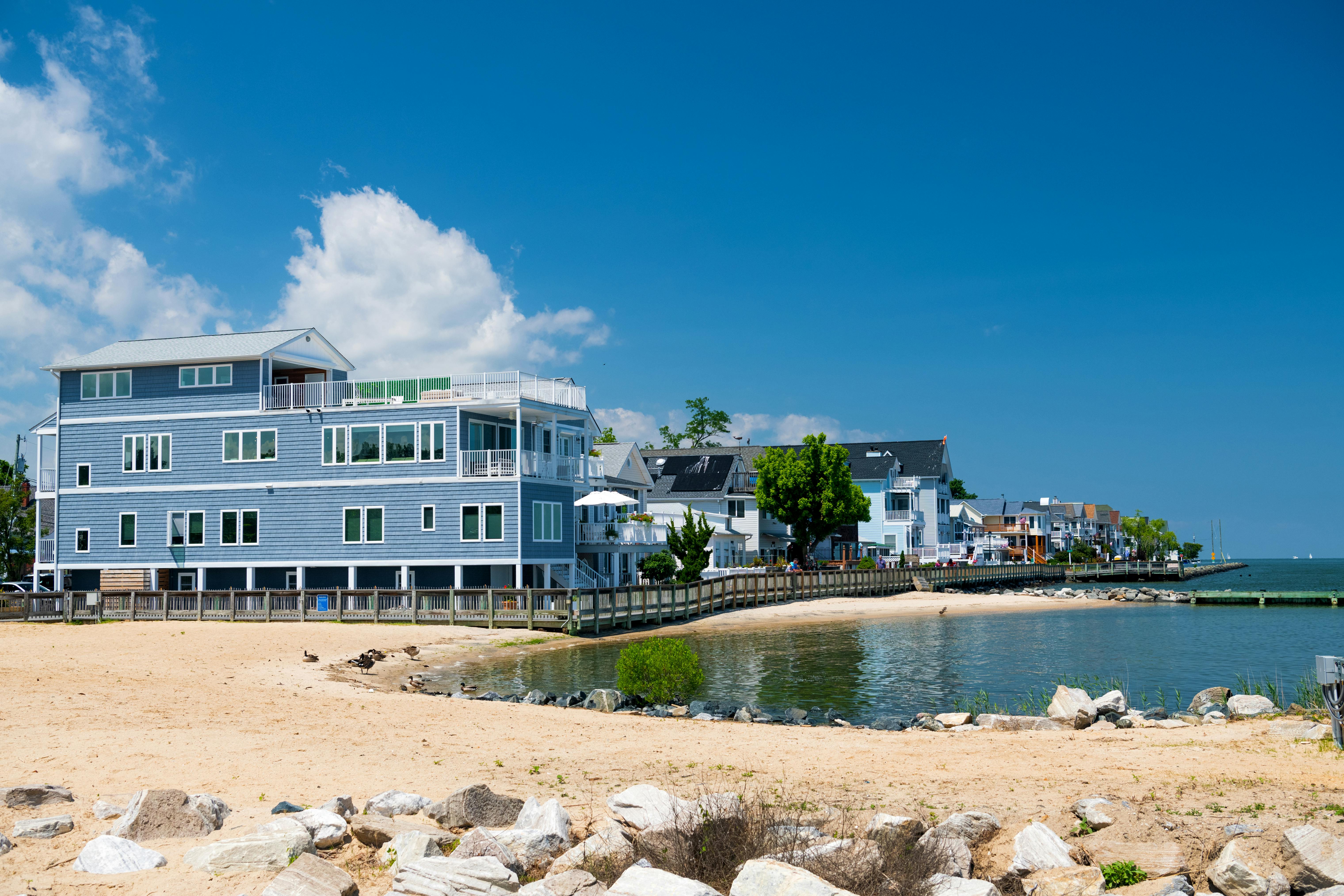
Situated on the western shore of the Chesapeake Bay, Chesapeake Beach lures anglers and families with marinas, waterfront dining, and easy access to Washington, D.C. Despite lower scores driven by seasonality and regulatory pressures, its waterfront charm maintains solid ADR potential.
16. Delaware/Maryland Beaches
Market Score: 13.99
Average Annual Revenue: $45,659
This cross-state coastline—home to Ocean City, Fenwick Island, and neighboring beach towns—thrives on summer crowds and boardwalk culture. High competition and pronounced seasonality keep the Market Score modest, but peak-season nightly rates can be lucrative.
15. Chestertown / Rock Hall
Market Score: 30.57
Average Annual Revenue: $42,657
Historic Chestertown and nautical Rock Hall anchor Kent County’s tourism, attracting sailors, college visitors, and heritage travelers. Lower STR saturation and steady weekend traffic create pockets of opportunity for investors.
14. La Plata
Market Score: 32.14
Average Annual Revenue: $25,313
Located in Charles County, La Plata benefits from a commuting workforce tied to Washington, D.C., and the nearby Naval Support Facility in Indian Head. Affordable property prices and growing local amenities make it a low-entry-cost play.

13. Queenstown Maryland
Market Score: 34.24
Average Annual Revenue: $52,962
Queenstown sits just across the Chesapeake Bay Bridge and is known for its outlet shopping and waterfront golf. Limited STR supply combined with upscale bayfront homes results in solid ADRs, albeit with fluctuating demand.
12. Sharpsburg
Market Score: 43.09
Average Annual Revenue: $35,415
Sharpsburg’s proximity to Antietam National Battlefield draws a steady stream of history buffs. Modest home prices, weekend battlefield tourism, and nearby outdoor recreation contribute to a balanced but under-the-radar STR market.
11. Kent Island
Market Score: 45.83
Average Annual Revenue: $73,705
As the Chesapeake Bay’s largest island—and the first stop after crossing the Bay Bridge—Kent Island is a perennial favorite for boaters, anglers, and wedding parties. High waterfront ADRs offset moderate occupancy swings.

10. Baltimore
Market Score: 47.70
Average Annual Revenue: $29,137
Maryland’s largest city offers diverse demand drivers: Johns Hopkins medical travel, cruise-port passengers, conferences, and Orioles/Ravens sports tourism. STR regulations require diligence, but year-round bookings and competitive ADRs support consistent cash flow.
9. Waldorf
Market Score: 51.99
Average Annual Revenue: $12,666
Waldorf serves as a commuter hub for the Washington, D.C., metro area. Lower nightly rates but strong weekday occupancy from business travelers and government contractors create reliable, if modest, revenue streams.
8. Easton / Saint Michaels
Market Score: 53.36
Average Annual Revenue: $79,323
These Eastern Shore gems feature luxury inns, top-tier dining, and boutique shopping, attracting affluent travelers and wedding parties. High ADRs and consistent weekend demand drive standout revenue despite average occupancy rates.
7. Hagerstown
Market Score: 53.44
Average Annual Revenue: $20,619
Sitting at the crossroads of I-70 and I-81, Hagerstown captures highway travelers, business stays, and youth sports tournaments. Affordable housing and year-round demand offer solid fundamentals for budget-conscious investors.
6. Cumberland
Market Score: 54.20
Average Annual Revenue: $16,601
Tucked into the Appalachian Mountains, Cumberland is a gateway to outdoor adventure—think hiking, cycling, and scenic rail tours. Lower purchase prices and growing eco-tourism underpin its STR potential.
5. Bel Air
Market Score: 55.10
Average Annual Revenue: $21,841
Bel Air’s walkable downtown, proximity to Aberdeen Proving Ground, and calendar of local festivals drive steady weekend demand. Investors benefit from relative scarcity of STR supply in Harford County.
4. Lusby
Market Score: 57.05
Average Annual Revenue: $43,439
Located near Solomons Island and the Calvert Cliffs, Lusby offers waterfront getaways plus demand from the nearby Patuxent River Naval Air Station. Mid-priced homes and healthy weekend occupancy give it an attractive risk-reward profile.

3. Frederick
Market Score: 62.57
Average Annual Revenue: $29,402
Frederick’s revitalized downtown, biotech corridor, and wine trails generate a balanced mix of business and leisure guests. Its strategic location between Baltimore and Washington boosts mid-week bookings and keeps occupancy strong year-round.
2. Ridge
Market Score: 63.57
Average Annual Revenue: $57,083
At the southern tip of St. Mary’s County, Ridge offers secluded waterfront homes, seafood shacks, and access to St. Mary’s College. Low STR saturation and premium bayfront ADRs compensate for its remote location.
1. Sykesville
Market Score: 83.32
Average Annual Revenue: $33,962
Consistently ranked among “America’s Coolest Small Towns,” Sykesville blends historic Main Street charm with proximity to both Baltimore and the growing I-270 tech corridor. Limited competition, steady year-round demand, and favorable regulations push its Market Score to the top of Maryland’s list.
Should You Invest in Maryland?
With a strategic Mid-Atlantic location, business-friendly environment, and diverse tourism offerings, Maryland checks many boxes for STR investors. Coastal communities such as Kent Island and Easton/St. Michaels command premium nightly rates during peak season, while inland towns like Sykesville, Frederick, and Bel Air provide steadier, year-round cash flow with lower volatility.
Regulatory conditions vary by county and municipality, so due diligence is essential—especially in larger jurisdictions like Baltimore. Yet for those willing to navigate local ordinances, the Old Line State presents a balanced portfolio of high-yield waterfront locales and dependable commuter-centric submarkets.
Bottom line: whether your strategy prioritizes summer ADR spikes or consistent mid-week business stays, Maryland offers a market to match.