Top 14 Airbnb Markets in Missouri
Published: July 9, 2025
From fast-growing metros to tucked-away wine towns, Missouri delivers a surprisingly diverse landscape for short-term rental (STR) investors. Whether you’re focused on low acquisition costs, strong military-driven demand, or year-round city bookings, the Show-Me State has a market that fits the bill. Below are the top-ranked Missouri markets based on AirDNA’s proprietary data.
What Is AirDNA’s Market Score?
Market Score is a proprietary metric that ranks how attractive a location is for short-term rental investment. Each score is calculated based on the following five metrics:
- Investability
- Rental Demand
- Revenue Growth
- Seasonality
- Regulation
Scores range from 0 to 100, with higher scores indicating stronger overall market health. In addition to an overall Market Score, each of the five metrics gets its own score on the same scale within the AirDNA app. This level of granularity is useful for Airbnb stakeholders interested in a particular aspect of market behavior.
Understanding Markets vs. Submarkets
This list includes a mix of the largest markets and submarkets, which are defined as:
- Markets refer to well-defined, often larger geographic areas like cities or metro regions.
- Submarkets are more granular locations, such as smaller towns, neighborhoods, or lake-area communities within those larger regions.
Including both allows investors to spot opportunities that may be overlooked when focusing solely on large-scale market data. A market with a mediocre score might contain submarkets with excellent performance.
Airbnb Market Overview in Missouri
Missouri’s STR landscape spans bustling urban hubs like Kansas City and St. Louis, military-anchored towns near Fort Leonard Wood, and scenic escapes in the Ozark Mountains and wine country. Investors benefit from the state’s relatively low property prices, a diverse demand mix (leisure, corporate, government, and medical), and an evolving tourism scene that extends well beyond summer lake trips. With highway-centric travel and a central U.S. location, Missouri enjoys steady, drive-to demand throughout the year.
This is sample data – view real-time data in the AirDNA platform.
AirDNA's Market Score is updated on a monthly basis to reflect the previous month's data. This ranked list is updated annually. Explore the app to get the most current data.
Top 14 Airbnb Markets in Missouri (Ranked by Market Score)

14. Lebanon
Market Score: 44.43
Average Annual Revenue: $17,474
Set along historic Route 66 and within a short drive of Bennett Spring State Park, Lebanon attracts anglers, campers, and mid-route road-trippers. Low acquisition costs keep margins attractive despite the market’s modest overall score.
13. Rolla
Market Score: 60.43
Average Annual Revenue: $21,750
Home to Missouri University of Science & Technology, Rolla benefits from a steady flow of university-related travel, sporting events, and regional business trips. Investors enjoy consistent weekday occupancy and limited STR competition.
12. Jefferson City
Market Score: 60.59
Average Annual Revenue: $23,183
Missouri’s capital city draws lobbyists, contractors, and tourists interested in Capitol tours. Government-driven demand creates midweek stability, while weekend leisure bookings round out the calendar.

11. The Ozark Mtns
Market Score: 63.95
Average Annual Revenue: $43,970
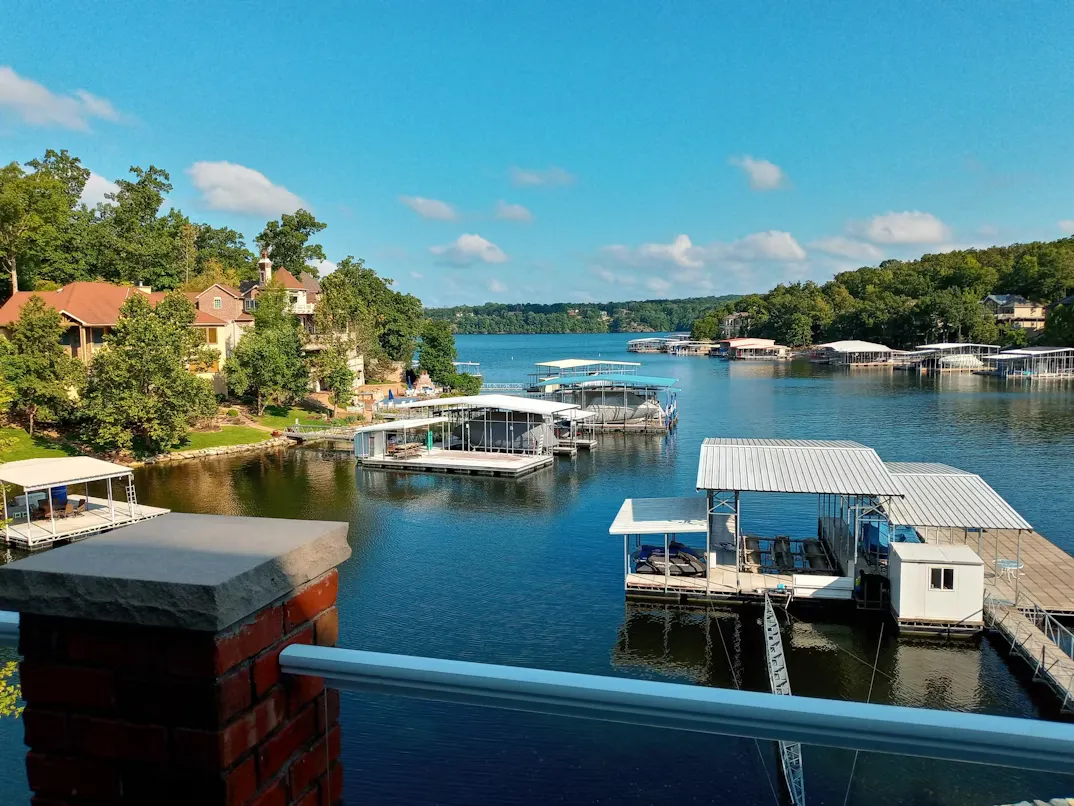
Spanning lakes, forests, and mountain vistas, the Ozark region continues to thrive as a four-season playground. Cabins and lake houses command premium ADRs, especially during summer and fall foliage seasons.
10. Hermann
Market Score: 65.68
Average Annual Revenue: $35,256
Famous for its German heritage and award-winning wineries, Hermann sees strong weekend demand from St. Louis and Kansas City residents. High ADRs during wine-trail events boost annual revenue.
9. Cape Girardeau
Market Score: 73.33
Average Annual Revenue: $22,163
Positioned on the Mississippi River and home to Southeast Missouri State University, Cape Girardeau combines college-town steadiness with regional medical and corporate travel, keeping occupancy rates resilient.
8. Bonne Terre
Market Score: 75.16
Average Annual Revenue: $23,620
Adventure divers flock to the world-famous Bonne Terre Mine, while hikers explore surrounding state parks. As an emerging submarket, it offers favorable regulation and limited competition.
7. Saint Joseph
Market Score: 76.18
Average Annual Revenue: $22,592
Known for its Pony Express history and proximity to Kansas City, Saint Joseph benefits from heritage tourism, hospital-related stays, and regional sporting events, delivering balanced year-round demand.

6. St. Louis
Market Score: 80.46
Average Annual Revenue: $27,583
The Gateway City blends business, sports, and cultural tourism. While regulations vary by neighborhood, STR supply remains manageable, and world-class attractions sustain occupancy beyond peak summer months.
5. Wright City
Market Score: 86.36
Average Annual Revenue: $60,534
Part of Missouri’s wine corridor and an easy drive from St. Louis, Wright City sees outsized ADRs for luxury vineyard properties and group-friendly lodges—hence its standout revenue potential.
4. Springfield
Market Score: 86.76
Average Annual Revenue: $24,274
Missouri’s third-largest city serves as a gateway to Branson and the Ozarks, while universities and corporate headquarters anchor demand. Investors benefit from affordable housing stock and consistent bookings.
3. Joplin
Market Score: 87.42
Average Annual Revenue: $22,548
Sitting on historic Route 66, Joplin captures cross-country road-trip traffic and regional business travel. Limited STR saturation and a revitalized downtown enhance its investment appeal.
2. Saint Robert
Market Score: 97.71
Average Annual Revenue: $24,630
Adjacent to Fort Leonard Wood, Saint Robert thrives on military graduations, contractor stays, and visiting families. Stable, government-backed demand underpins high occupancy and market resilience.

1. Kansas City
Market Score: 98.39
Average Annual Revenue: $18,558
With major league sports, a booming tech scene, and a celebrated food and arts culture, Kansas City remains Missouri’s top STR market. Year-round events and business travel keep calendars full despite rising supply.
Should You Invest in Missouri?
Missouri stands out for its blend of affordability, diversified demand drivers, and generally favorable regulation. Urban centers like Kansas City and St. Louis offer steady, year-round bookings bolstered by conventions, sports, and cultural tourism. Meanwhile, military-anchored Saint Robert and college-centric markets such as Rolla and Springfield provide occupancy stability that insulates investors from seasonality.
If you’re looking for premium nightly rates, wine-country favorites like Hermann and Wright City—as well as lake and mountain retreats in the Ozarks—deliver strong ADRs with relatively low competition. Paired with Missouri’s central U.S. location and drivable appeal, the state presents a compelling case for both first-time and seasoned STR operators.
As always, confirm local regulations, analyze neighborhood-level data in the AirDNA platform, and align purchase price with projected cash flow before jumping in.