

 Calculate Revenue
 Research Markets
 Find For Sale Properties
 Compare My Listing
 STR Revenue Calculator
 Custom Comp Sets
 Submarket Insights
 Custom Search Filters
 Rate Recommendations
 Performance Benchmarking
 Competitor Comparison
 Owner Contact Details
 Property-level performance data
 Tourism Insights
 Real Estate Investment Analytics
 About Us
 Sales
Sales Support
 Press
PressBest Places to Buy a Lake House for Rentals
Published: November 22, 2024
Last updated: April 9, 2025

Jamie Lane
Key Takeaways:
- Lake houses offer high revenue potential in the STR market, especially in top locations with strong seasonal or year-round demand.
- Factors like property location on the lake, seasonality, and amenities significantly impact profitability for lakefront rentals.
- AirDNA can help investors analyze lake submarkets in detail, comparing revenue, occupancy, and home values to make data-driven investment decisions.
With scenic views, exclusive privacy, and growing demand from travelers, lake houses have become one of the hottest investments in the short-term rental (STR) market. Whether nestled in a tranquil state park, perched near the water’s edge, or tucked in a bustling small town, lakefront homes offer travelers an ideal escape and investors high returns.
If you’re looking for the best places to buy a lake house that attracts a high number of bookings while delivering strong revenue and occupancy rates, we’ve got you covered.
Keep scrolling for a list of the top 10 lakefront markets for STRs, as well as what to consider when investing in lake house rentals.
Research Airbnb Markets
Gain insights into the revenue and occupancy trends in your market.
Best Places to Buy a Lake House
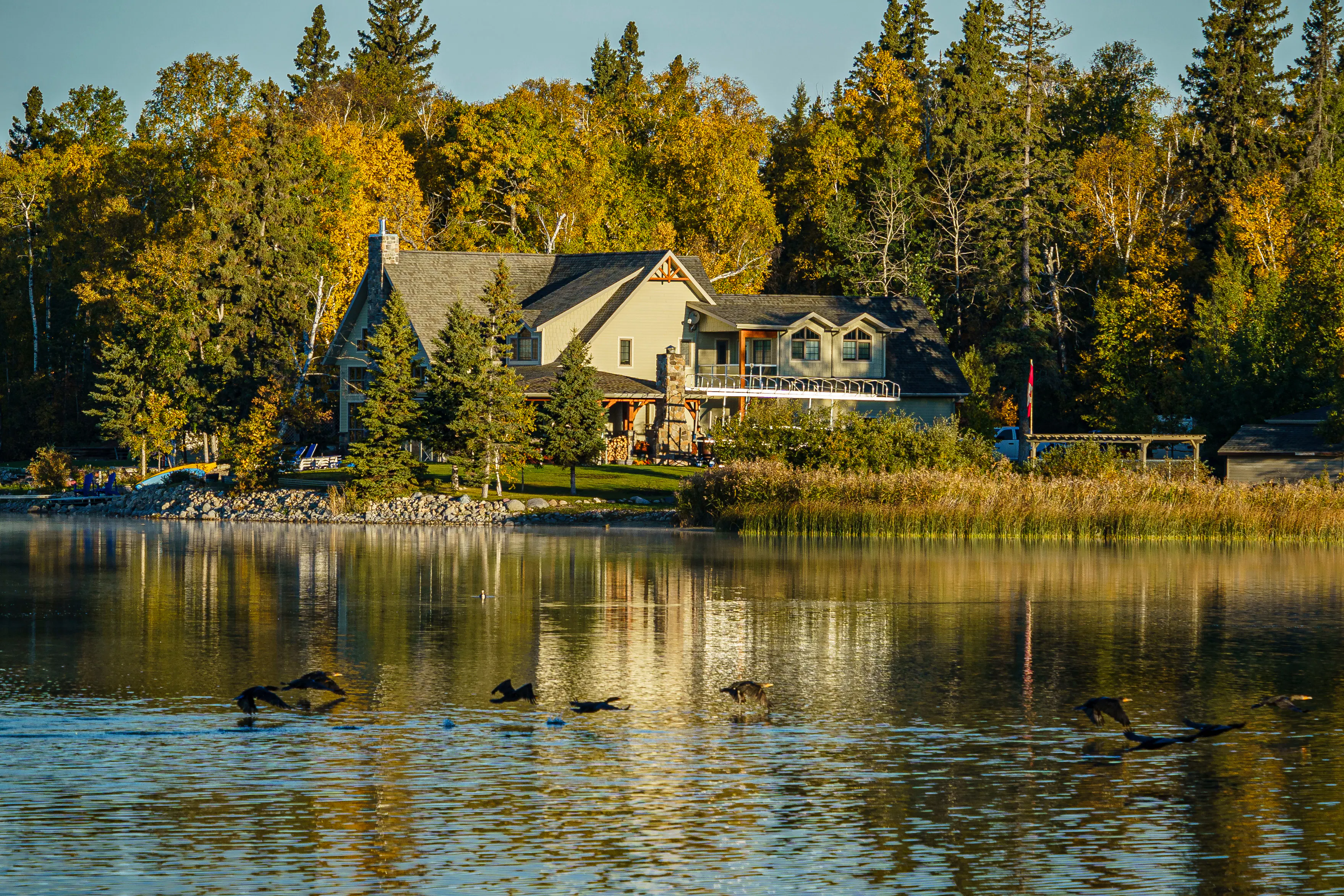
For investors looking to make waves in the short-term rental market, lake houses are a hot ticket for 2024. Lakeside properties are the perfect combination of scenic views, peaceful privacy, and guest demand—and they’re proving to be some of the best STR investments around.
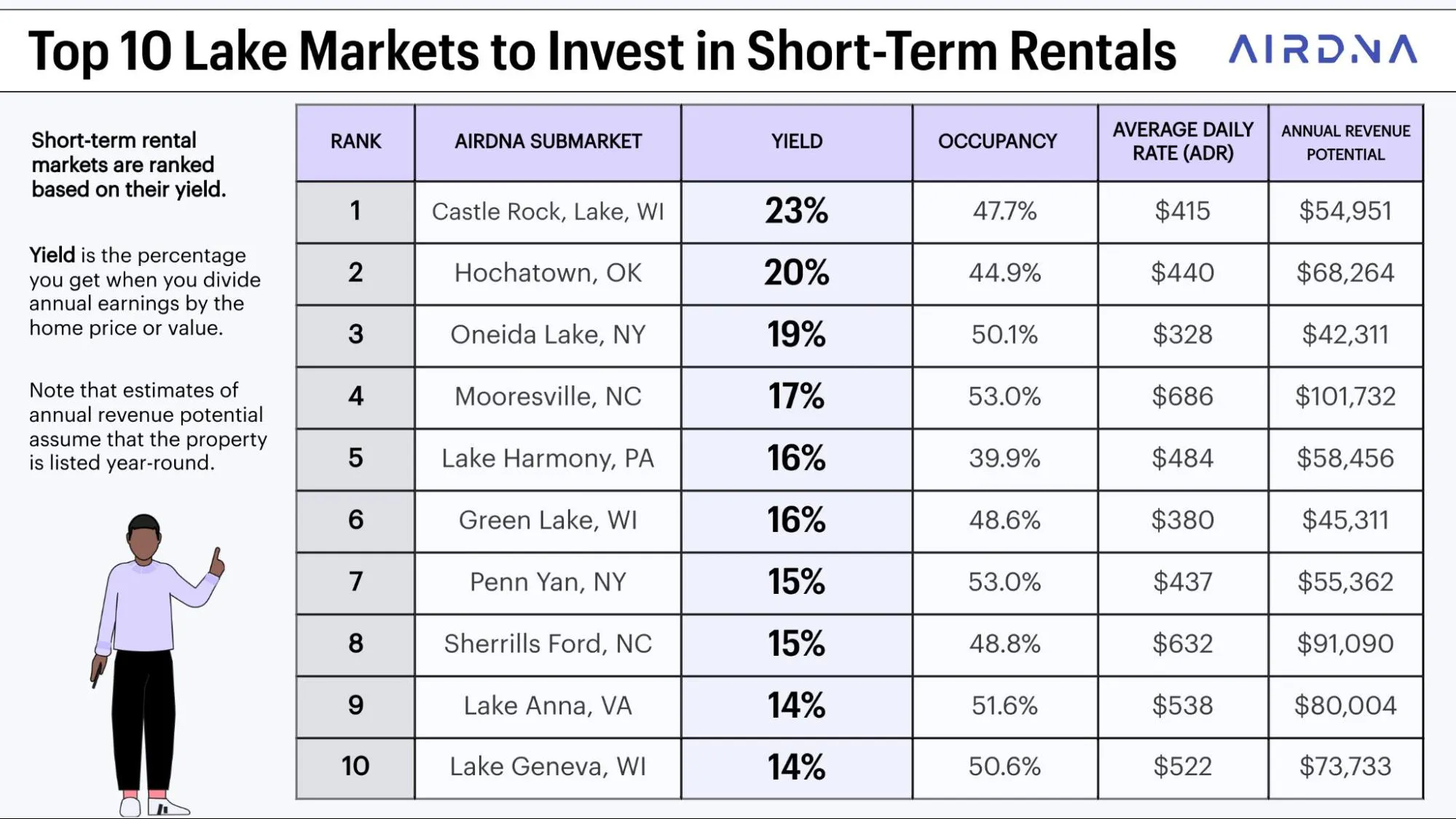
Using AirDNA’s market data, we’ve ranked the best places to own a lake house as a short-term rental investor. In this list, we take into account everything an investor needs to know—from revenue potential and occupancy rates to seasonality scores and annual RevPAR. The markets that made the cut offer year-round or seasonal popularity, stable returns, and opportunities for solid growth.
We’ll go over our methodology in more depth later, but for now, let’s dive into the best lake house locations for STRs:
1. Castle Rock Lake, Wisconsin
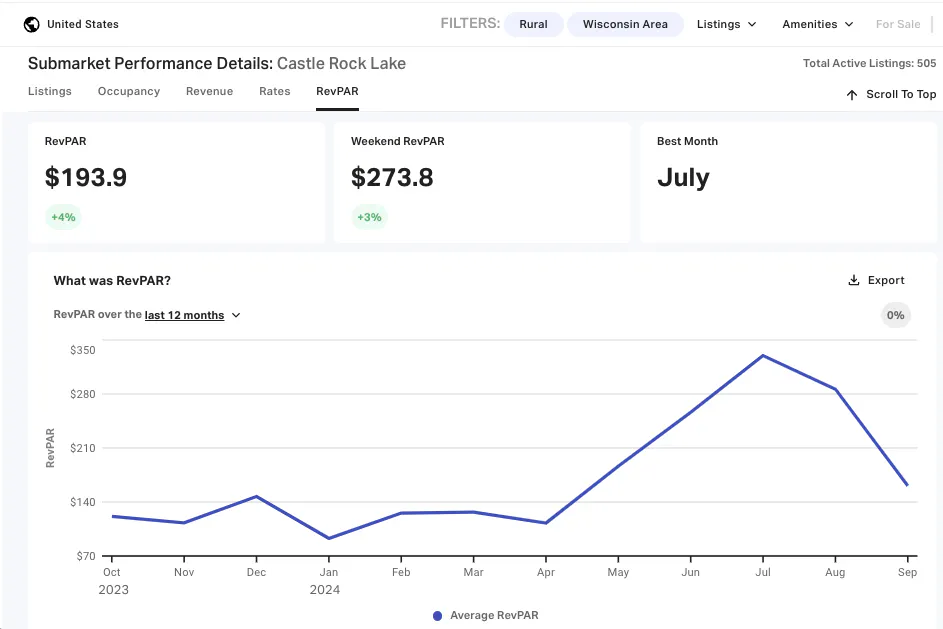
Castle Rock Lake is a serene Midwestern gem that’s attracting attention from STR investors. With about 500 listings available each month, this Wisconsin lake town offers a seasonality score of 22, meaning it experiences a fairly pronounced seasonal demand, with peak booking periods in summer and fall. With an average home value of $242,448, Castle Rock Lake is also a relatively affordable lake town.
Known for its calm waters and sprawling 13,000 acres, Castle Rock Lake draws travelers for fishing, boating, and quiet getaways. The seasonal appeal combined with relatively low competition provides investors with strong revenue potential in a peaceful yet popular destination.
- Revenue Potential: $54,951
- Occupancy Rate: 47.7%
- Average Daily Rate: $415
- Yield: 23%
- Annual RevPAR: $198
2. Hochatown, Oklahoma
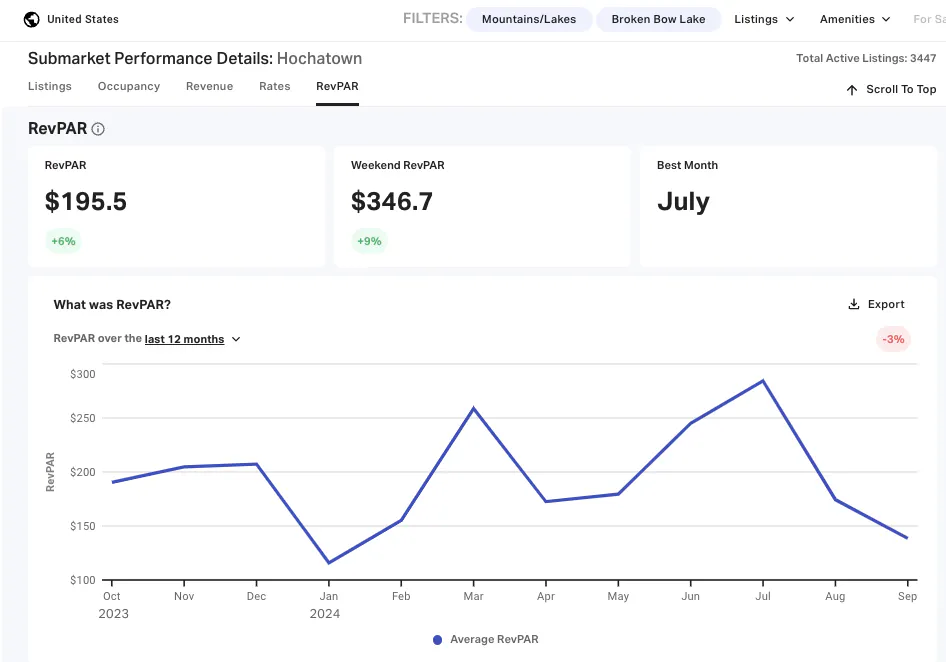
Hochatown, Oklahoma, near the picturesque Broken Bow Lake and Beavers Bend State Park, has become one of the hottest markets for lake house rentals, with over 3,200 active listings each month. With a seasonality score of 53, this area enjoys relatively consistent demand throughout the year, although summer remains a peak period for bookings.
Adventure seekers and families flock here for hiking, fishing, and even golf, turning Hochatown into a year-round vacation hub. For investors, this relatively high seasonality score means steady revenue potential across multiple seasons, making it an excellent choice for reliable occupancy.
- Revenue Potential: $68,264
- Occupancy Rate: 44.9%
- Average Daily Rate: $440
- Yield: 23%
- Annual RevPAR: $197

3. Oneida Lake, New York
Nestled in upstate New York, Oneida Lake stands out as a year-round destination, supported by its moderate seasonality score of 36, which indicates some seasonal demand fluctuation without extreme peaks and valleys. This market averages about 350 active listings each month, providing investors with steady competition balanced by solid demand.
Located within reach of Syracuse and Rochester, Oneida Lake appeals to both winter sports enthusiasts and summer vacationers. For investors seeking consistent occupancy across the seasons, investing in a lake cabin or lakefront cottage on Oneida Lake offers a promising opportunity with broad appeal. Plus, the average home value in the region is only $220,711, meaning Lake Oneida may offer the most affordable lake homes on this list.
- Revenue Potential: $42,311
- Occupancy Rate: 50.1%
- Average Daily Rate: $328
- Yield: 19%
- Annual RevPAR: $164
4. Mooresville, North Carolina
Set along Lake Norman, Mooresville combines lakeside charm with a touch of urban convenience. Known as “Race City USA” for its motorsports history, Mooresville sees about 556 active listings monthly and has a low seasonality score of 9, indicating high demand fluctuation across the year.
For investors who don’t mind renting out a lake house in a very seasonal location, Mooresville offers excellent revenue potential.
- Revenue Potential: $101,732
- Occupancy Rate: 53%
- Average Daily Rate: $686
- Yield: 17%
- Annual RevPAR: $364
5. Lake Harmony, Pennsylvania
Tucked in the Pocono Mountains, Lake Harmony is a year-round getaway that combines mountain beauty with lakeside charm. This popular vacation spot averages 1,686 listings monthly and has a seasonality score of 46, meaning it enjoys relatively steady demand across the seasons, with a peak during summer and a healthy flow of bookings throughout fall and winter.
With its proximity to hiking trails, ski resorts, and scenic views, Lake Harmony attracts outdoor enthusiasts year-round. For investors, this balance of high demand and seasonal appeal makes Lake Harmony a promising market for consistent STR revenue.
- Revenue Potential: $58,456
- Occupancy Rate: 39.9%
- Average Daily Rate: $484
- Yield: 16%
- Annual RevPAR: $193
6. Green Lake, Wisconsin
Green Lake in central Wisconsin is a tranquil market that attracts travelers looking for relaxation and lake activities. With approximately 335 active listings each month, Green Lake has a moderate seasonality score of 29. The majority of Green Lake’s demand is in the summer months, with lows in the winter and slight peaks in the fall and late spring.
Known as the deepest natural inland lake in Wisconsin, Green Lake draws visitors for fishing, boating, and scenic lakefront relaxation. For investors, Green Lake provides solid seasonal revenue potential in a competitive yet manageable STR market.
- Revenue Potential: $45,311
- Occupancy Rate: 48.6%
- Average Daily Rate: $380
- Yield: 16%
- Annual RevPAR: $185
7. Penn Yan, New York
Penn Yan, located in New York’s Finger Lakes region along Keuka Lake, is a charming town with steady tourism thanks to its wineries, scenic landscapes, and year-round festivals. This area sees about 333 active listings per month and has a seasonality score of 24, with a more pronounced peak during the summer and fall when demand for wine tourism and lakeside relaxation is highest.
Penn Yan’s well-rounded appeal as a destination for both leisure and cultural experiences makes it an attractive spot for investors seeking seasonal revenue potential with dedicated tourist interest.
- Revenue Potential: $55,362
- Occupancy Rate: 53%
- Average Daily Rate: $437
- Yield: 15%
- Annual RevPAR: $232
8. Sherrills Ford, North Carolina
Sherrills Ford, another gem on Lake Norman, offers a quieter lakeside experience with easy access to Charlotte. With about 263 listings each month, this market has a seasonality score of 5, which indicates high demand fluctuation between peak and off-peak seasons. Summer brings the busiest travel periods, making Sherrills Ford ideal for investors looking to capitalize on strong seasonal demand.
Although the average home value in Sherrills Ford is $617,603—meaning you’ll probably be hardpressed to find cheap lake homes—the region presents a unique investment opportunity for those interested in an STR property with high summer revenue and a serene setting.
- Revenue Potential: $91,090
- Occupancy Rate: 48.8%
- Average Daily Rate: $632
- Yield: 15%
- Annual RevPAR: $309
9. Lake Anna, Virginia
Lake Anna, nestled between Richmond and Washington, D.C., is one of Virginia’s largest freshwater lakes and a popular choice for lake house investments. With approximately 751 active listings per month, Lake Anna has a seasonality score of 22, pointing to strong summer and fall demand with quieter winters.
The lake’s extensive recreational offerings, from boating and fishing to lakefront events, make it a prime choice for families and groups. This blend of summer peak revenue and scenic appeal provides investors with both a high-income season and moderate competition.
- Revenue Potential: $80,004
- Occupancy Rate: 51.6%
- Average Daily Rate: $538
- Yield: 14%
- Annual RevPAR: $278
10. Lake Geneva, Wisconsin
Lake Geneva is a historic lakeside town that has long been a favorite retreat for Midwestern travelers, known for its luxurious estates, shopping, and lakefront activities. This market has about 566 active listings monthly and a seasonality score of 15, indicating a noticeable peak in the warmer months but with some year-round demand.
Summer is the busiest season, but Lake Geneva’s appeal extends to fall foliage tours and winter getaways. With its reputation as a classic vacation destination, Lake Geneva offers investors both strong seasonal income and high guest interest.
- Revenue Potential: $73,733
- Occupancy Rate: 50.6%
- Average Daily Rate: $522
- Yield: 14%
- Annual RevPAR: $264

What to Consider When Investing in Lakefront Property
Investing in a lakefront property can be incredibly rewarding, but smart investing goes beyond finding a scenic spot by the water. From market demand to seasonal trends, there are key factors that impact profitability and occupancy year-round.
As you explore the best places to buy a lake house for short-term rentals, here are a few essential elements to keep in mind.
Location, location, location
The average yields in our analysis of the top 10 lake house locations reflect overall home values and revenue potential across each lake submarket. However, property values and annual revenue can vary significantly within these areas—your property’s specific location on the lake can greatly impact its profitability.
Choosing the right spot on a lake is a bit like picking the best seat at a concert: the closer you are to the action, the more valuable the experience—and the more expensive the ticket. A property with direct lake access or a private dock is like having a front-row seat. You get the best views and the easiest access, but as with those coveted concert seats, you’ll pay a premium for it.
The key is finding that sweet spot between proximity and price—one that maximizes returns without stretching your budget too thin.
While a house right on the water’s edge will likely command higher ADRs, a property just a few streets back can still offer excellent returns, especially if it has features like lake views or easy access to trails.
Seasonality and revenue potential
Beyond location, you also have to consider seasonality when buying a short-term rental on a lake. Some lake properties experience consistent demand throughout the year, while others see major fluctuations, with most revenue coming from summer bookings.
At AirDNA, we analyze seasonality by comparing RevPAR each month to RevPAR during the biggest peak month. If RevPAR for most months is significantly lower than that of the most popular month of the year, that market is probably very seasonal.
For example: A market like Castle Rock Lake, Wisconson, with a seasonality score of 22, sees a significant dip outside the summer season. For investors focused on year-round returns, this might mean preparing for lower occupancy during off-peak months.
In contrast, Hochatown, Oklahoma has a seasonality score of 53, showing more consistent demand throughout the year. Here, investors can expect steadier revenue over multiple seasons, making it the better choice for those looking to avoid extreme peaks and valleys in rental income.
Understanding a market’s seasonality helps you align your investment strategy with your goals—whether that’s capitalizing on high summer rates or enjoying steady income year-round.
You can increase value with the right amenities
When it comes to lakefront properties, amenities aren’t just a bonus—they’re essential. For many travelers, a lake house is more than a place to stay. It’s the centerpiece of a special vacation. The right features can make your short-term rental property stand out, drive higher bookings, and significantly boost your revenue.
“Vacation homes catering to families should provide several large, communal spaces where quality time can easily be enjoyed,” says Stephanie Ciccarelli, Co-Founder and Chief Marketing Officer for Lake.com. “Prioritize dining spaces, allowing 10-15 people to sit comfortably in the same room and, if possible, around the same table. Bonus points if you have a wood-burning fireplace!”
A private dock turns your rental into a boater’s paradise. A fire pit by the water creates memories of cozy evenings under the stars. Features like kayaks, paddleboards, or hot tubs transform a stay from ordinary to unforgettable. “Create a functional outdoor living area where people can relax, sip on warm beverages, and be graced by the sun's rising or setting over the lake, the best amenity of all,” suggests Stephanie.
With AirDNA’s amenity filters, you can dive deep to see which perks drive up occupancy and nightly rates in specific lakefront markets. Curious if a hot tub could boost bookings? Want to know if adding kayaks or lake access will reel in more guests? By comparing properties with similar features, you can get a clear sense of which amenities translate to higher occupancy and yield.
Ditch the guesswork
Plan your STR strategy based on real booking activity and trends—plus, see how things change year over year.
Pros and Cons of Buying a Lake House for Short-Term Rentals
Owning a lake house STR can feel like hitting the investment jackpot—high booking rates, premium nightly prices, and an undeniable appeal for travelers looking to escape to the water. But like any real estate venture, there are trade-offs to consider.
Here’s a look at both sides of the lakefront coin:
Pros
- High booking rates and premium prices: Lakefront properties have built-in allure, drawing all kinds of travelers—families, groups, and couples—looking for a unique, scenic retreat. Many guests are willing to pay top dollar for this experience, which allows STR owners to set competitive rates, especially in high season.
- Appreciation potential: Lakefront homes tend to appreciate faster than many other property types due to their limited supply and enduring appeal. In many markets, a well-maintained lakefront property can yield long-term appreciation, giving investors a valuable asset that grows over time. Think of it as an investment that works both for now (through STR income) and for later (in resale value).
- Appeal for family and group vacations: Unlike many city rentals, lake houses cater perfectly to families and groups, offering outdoor activities and space for gathering. For travelers, a lakefront rental provides an escape that hotels simply can’t match, giving STR owners an advantage in occupancy rates. This appeal can also keep bookings consistent, as guests return year after year.
Cons
- Higher maintenance costs: Lakefront properties often face extra wear and tear from weather and water exposure, leading to higher maintenance costs over time. Moisture, sun, and seasonal changes can take a toll on the home’s exterior, decks, and docks. Think of it as the “lake tax”—the price of maintaining a beautiful but exposed property that may need regular upkeep to stay rental-ready.
- Seasonal fluctuations: While lake houses shine in the high-demand summer months, colder seasons can bring a significant dip in bookings, particularly in regions where winter temperatures limit outdoor activities. This fluctuation means that investors in more seasonal markets may need to budget carefully to balance peak and off-season income.
- Zoning and environmental regulations: Lakefront properties often come with additional zoning and environmental regulations, such as limits on rental activity or strict occupancy standards. Local governments may restrict water access, dock construction, or waste management, which can affect your operating costs and rental potential. Make sure you check local regulations before purchasing a property.
- Higher insurance premiums: Due to their location, lake houses often come with higher insurance costs, covering potential risks like flooding or storm damage. While the water adds a lot of appeal, it also brings exposure to natural elements that can impact your property’s safety. Higher premiums can affect your bottom line, so factoring these costs in advance will help you maintain a realistic budget.

Our Methodology
To pinpoint the best lakes to buy a house on for short-term rentals, we analyzed over 300 lake submarkets across the U.S., only looking at those with at least 250 STR listings. Each location on this list stands out for its income potential, market growth, and demand.
Here’s a closer look at the criteria we used to find the top lake house markets:
- Lake-Centric submarkets: We focused on submarkets where STR demand is driven specifically by lake-based tourism. These markets have a high concentration of lake house listings and attract travelers looking for a lakefront experience.
- Positive YOY revenue growth: Only submarkets showing positive year-over-year growth in RevPAR made the cut.
- Listing growth: Submarkets with a growing number of active STR listings signal investment potential and a healthy market. Each location on this list has experienced positive YoY growth in new listings, indicating that investors see these lake markets as promising opportunities.
- Minimum yield of 10%: For this analysis, we targeted submarkets with a minimum yield of 10% for single-family, entire-home rentals. While 5% is often considered a good return, the lake markets on this list offer even greater potential for STR income.
- Low STR regulation risk: Regulatory risk can significantly impact an STR’s profitability, so we avoided markets with pending or stringent short-term rental restrictions. However, many of these submarkets may still have zoning, permitting, or occupancy rules in place, so you should always check local regulations before purchasing an investment property.
How to Use AirDNA to Analyze Lakefront Investment Opportunities
When it comes to lakefront properties, location isn’t just important—it’s everything. A house on one side of the lake might be a goldmine, while one just a few miles away struggles to make waves. AirDNA makes it easy to figure out where to cast your net for the best returns
With AirDNA’s Custom Draw Feature—available on the Advanced tier—investors can create custom regions within a lake market to compare performance metrics for different parts of the lake, making it easier to identify prime areas for investment.
If you’re ready to purchase a lakefront property, here’s how you can use AirDNA to compare the revenue performance of houses located on different parts of the lake:
(We’ll use Lake Norman in the Mooresville, NC submarket to illustrate!)
Step 1: Search and zoom in
Begin by searching for the submarket in the AirDNA search bar. This will pull up an overview page with performance metrics for the entire submarket. At the top, you’ll see annual revenue, occupancy, ADR, and RevPAR for all properties in the area. Scroll down to explore historical data for each metric, which will help you understand recent performance.
Step 2: Expand and customize the map
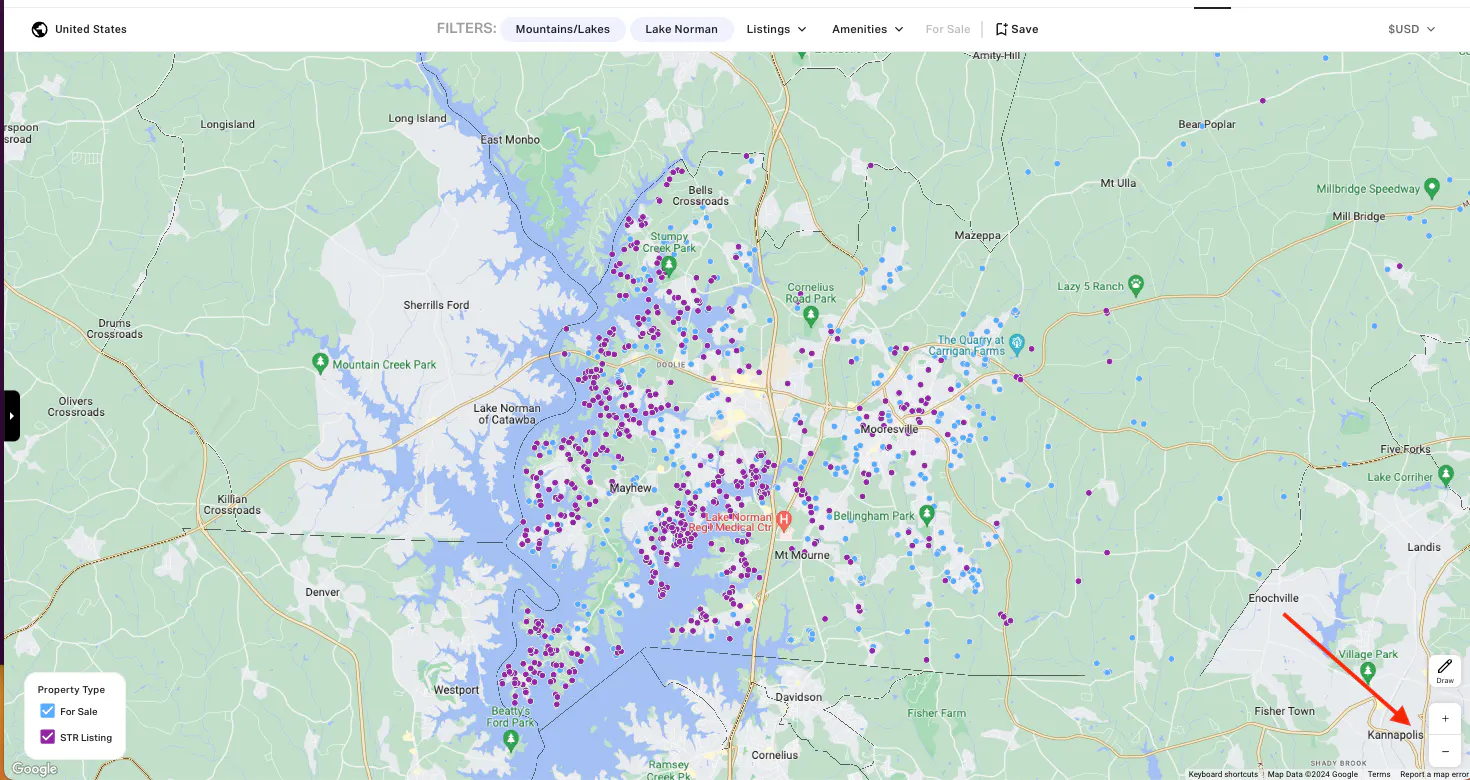
Select the black arrow on the map to expand the view of the submarket.
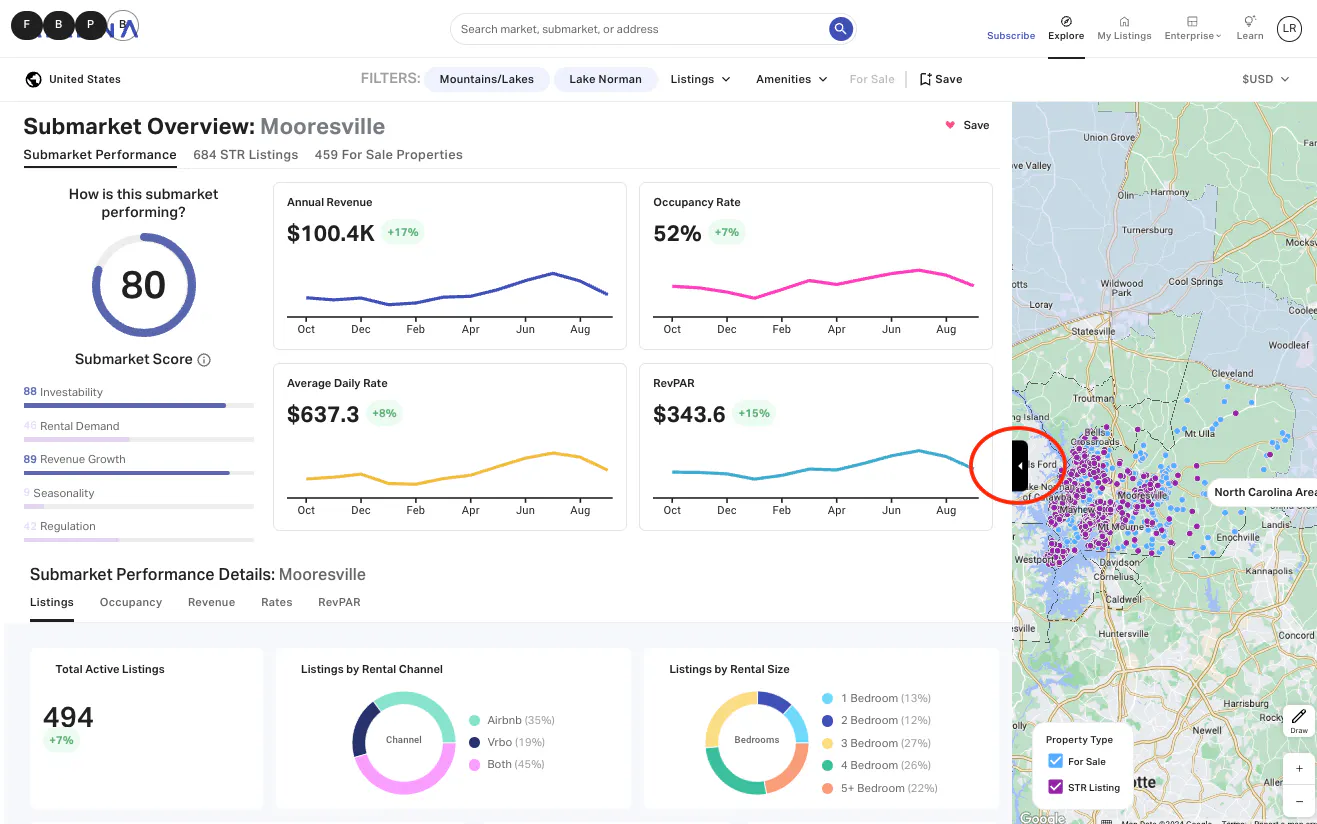
From here, you can see all active STR listings over the past year, plus any lakefront properties currently for sale. Use the plus and minus signs on the map to zoom in on specific areas.
Step 3: Draw custom regions
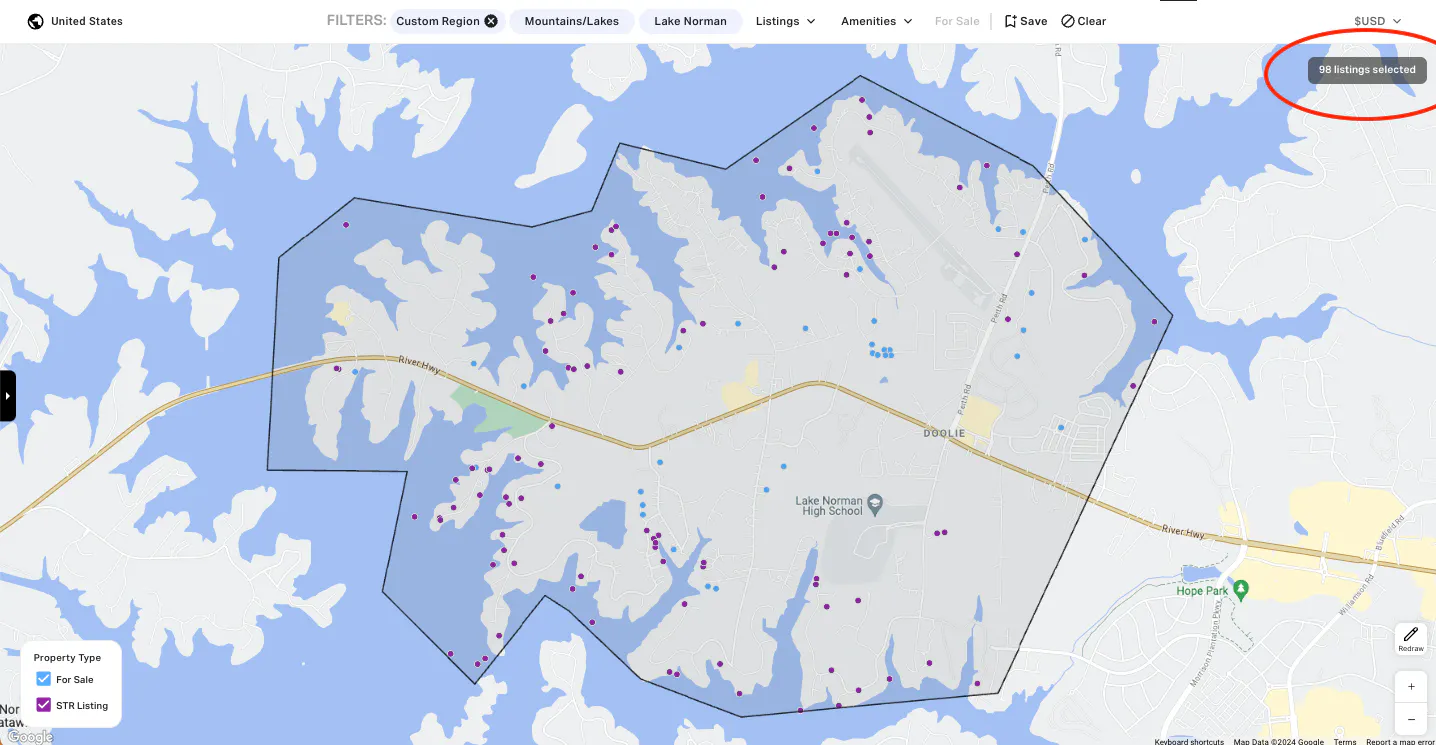
To create your first custom region, select the draw button in the bottom right-hand corner of the map, then outline an area of interest by clicking and dragging on the map.
For example, if you’re looking to buy on Lake Norman, you might draw a polygon around properties near Doolie, an area of Lake Norman with strong rental demand. When you close the polygon, the custom region you’ve created will display performance data, such as the number of active listings and metrics for that specific area.
Step 4: View performance metrics
With your custom region selected, click the black arrow on the left side of the screen to dive into performance data for that area.
For example, in the Doolie region, lake properties average $132,000 in revenue with a 50% occupancy rate and an ADR of $872.
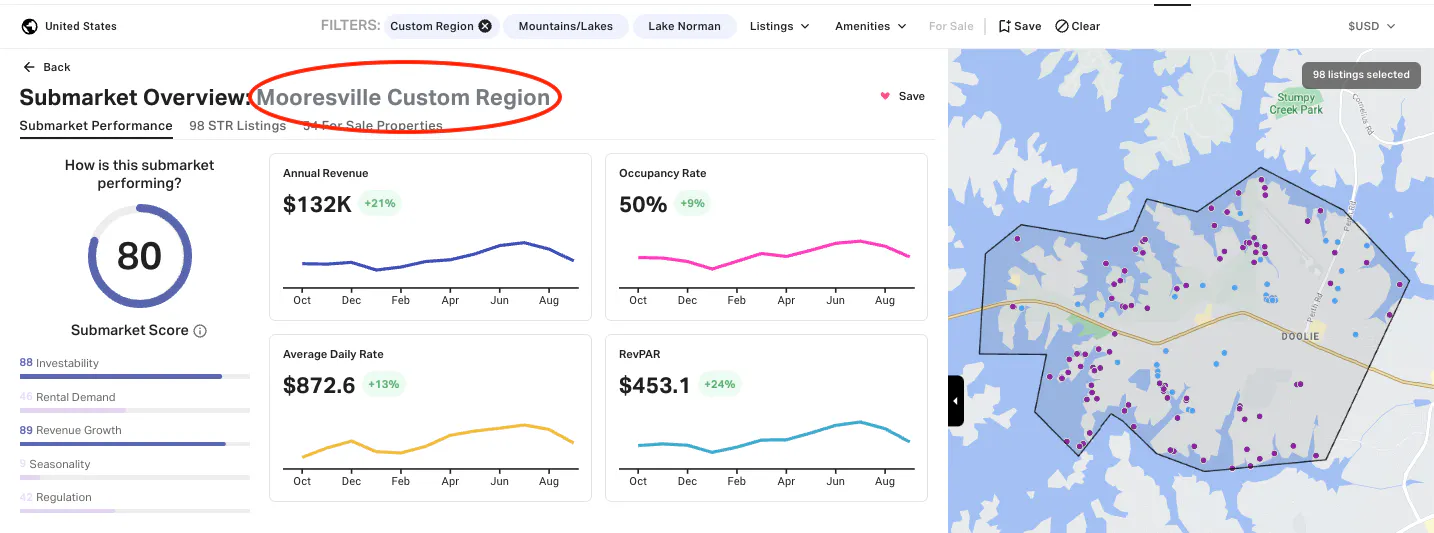
If you want even more granular data, you can use AirDNA’s filters to narrow down listings by property type, bedroom count, review score, and more. This enables you to tailor your analysis to specific investment goals.
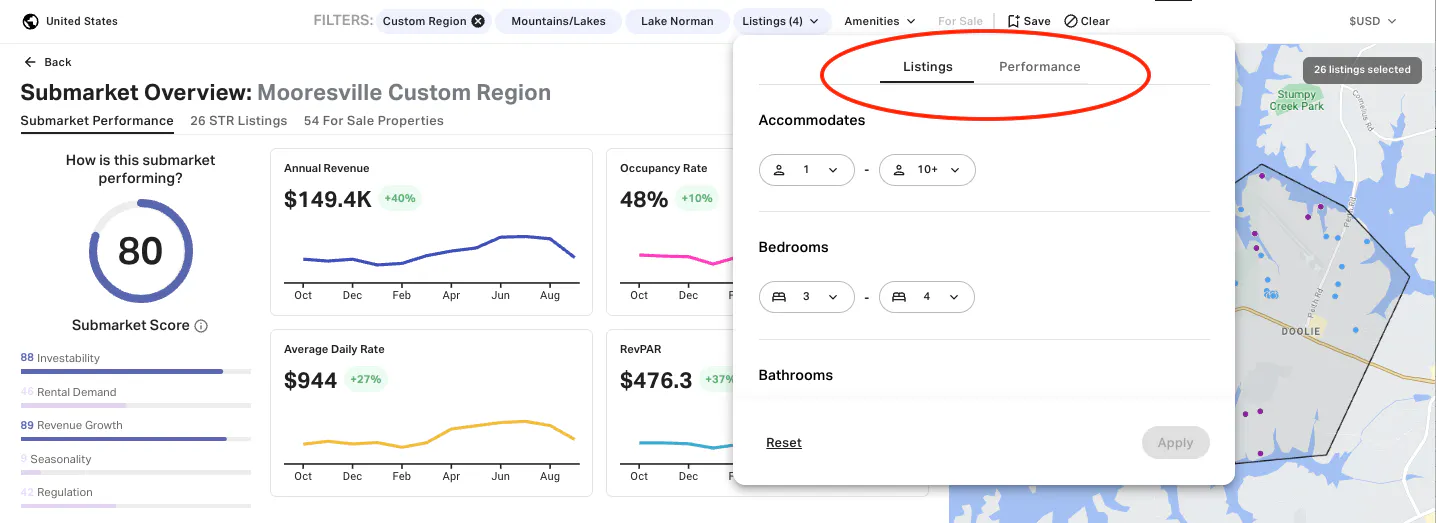
Step 5: Save and compare custom regions
Once you’ve pulled performance metrics for your first custom region, save it before moving on to create a second region for comparison. Click the save button on the filters toolbar, then click “Create New Saved Filter” and give your custom filter a name.

Now you’re ready to create your second region.
As an example, let’s say you’re interested in comparing your first region—Doolie—to properties west of Mayhew. Outline that area, and be sure to apply the same filters as your first region. Then, save it the same way you did the first one.
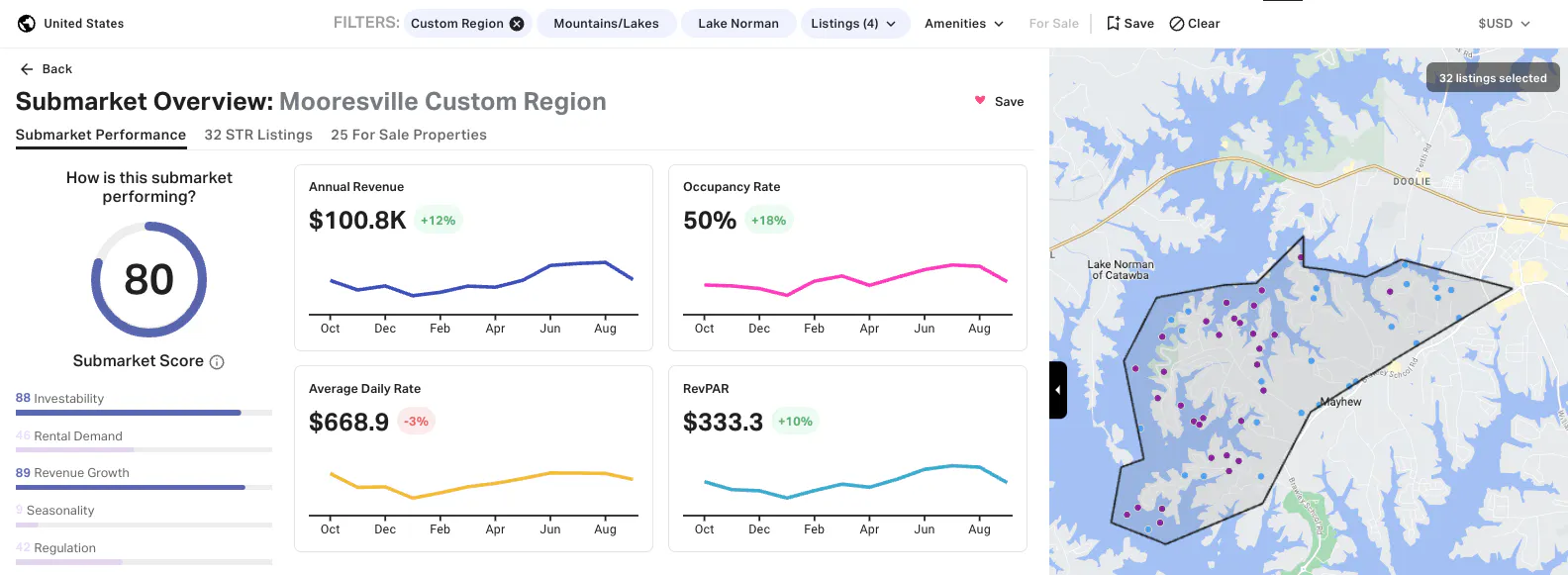
Step 6: Use Advanced Insights to compare side-by-side
Now that you have two custom regions, you can compare them side-by-side with the Advanced Insights tab, which is located on your dashboard in the horizontal bar under the Filters bar.
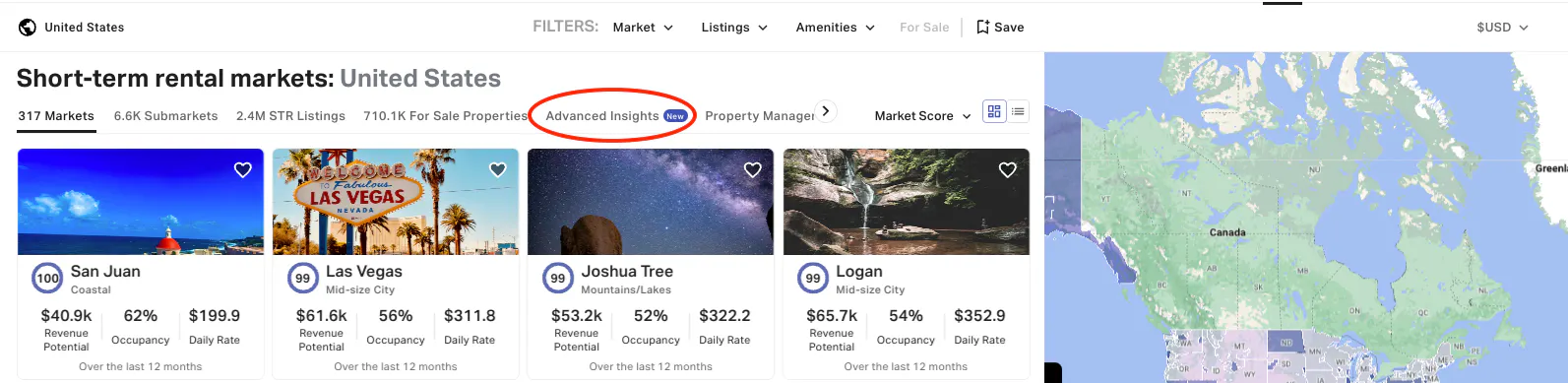
AirDNA’s Advanced Insights feature allows you to compare monthly performance across markets, listing attributes, property managers and more for your custom regions, revealing patterns that could impact revenue.
Using Lake Norman as our example, you’d discover that 3-4 bedroom properties in Doolie earned 25% more than those in Mayhew in 2023 and have widened that gap in 2024.
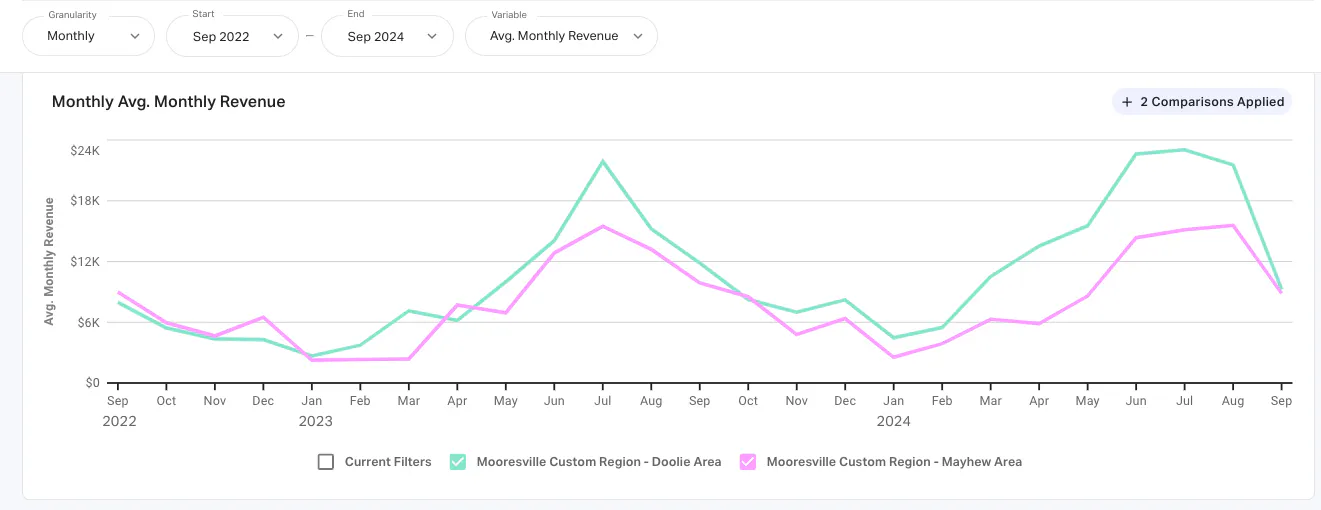
The growing revenue gap for these custom regions is likely attributed to shifts in supply and demand in the two regions over the last year. Using historical performance data and charts available in the Advanced Insights tab, you can further analyze the underlying supply, demand, occupancy, and ADR changes that are impacting revenue. Analyzing these trends will help you make data-driven decisions about which part of the lake is likely to deliver higher returns.
Step 7: Review home values
Creating custom regions allows you to compare performance across different areas within a submarket and zero in on zones with the highest revenue potential. However, to make an informed investment, you’ll want to consider home values as well since a property’s price impacts your overall yield.
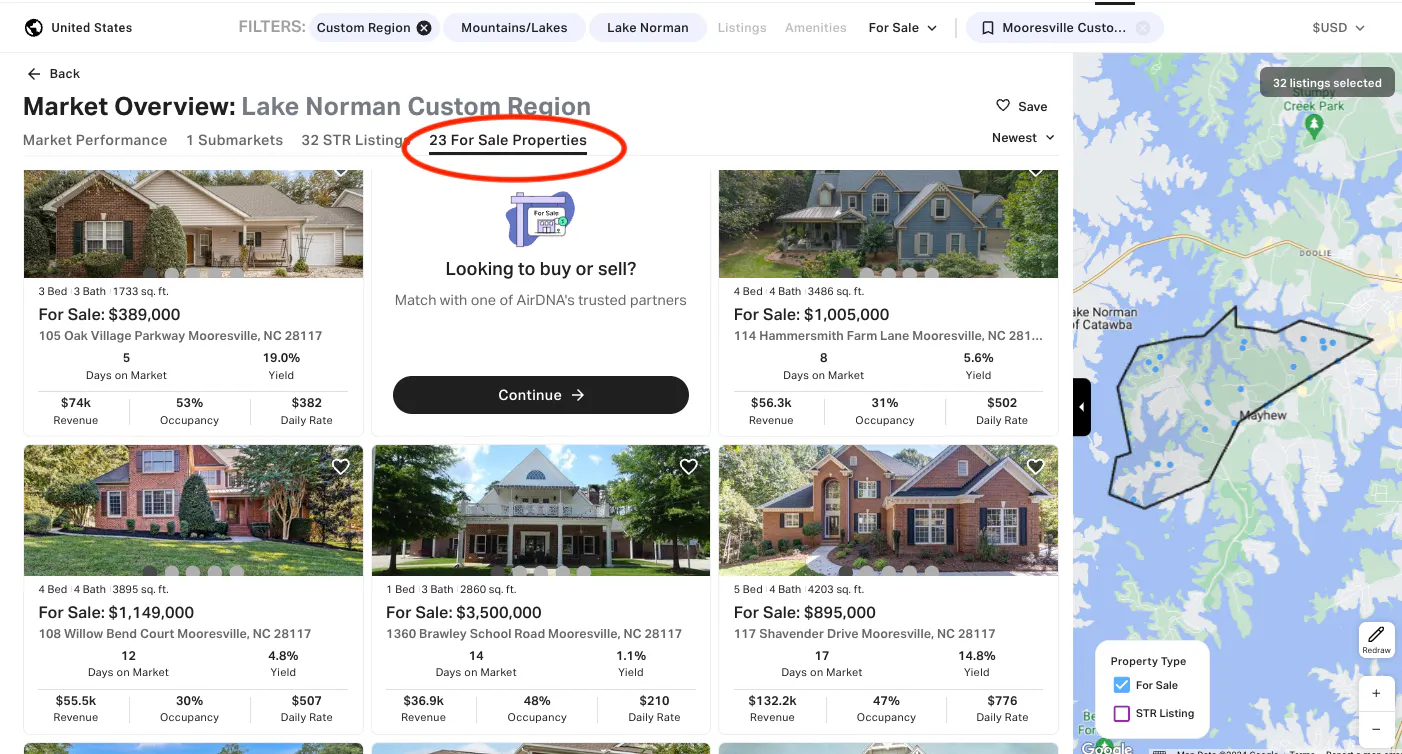
When you create a custom region in AirDNA, the tool automatically filters properties currently for sale within that area. Navigate to the “For Sale Properties” tab to view all for-sale listings within your custom region, complete with essential metrics like sale price, AirDNA’s revenue projections, occupancy, ADR, and yield for each property.
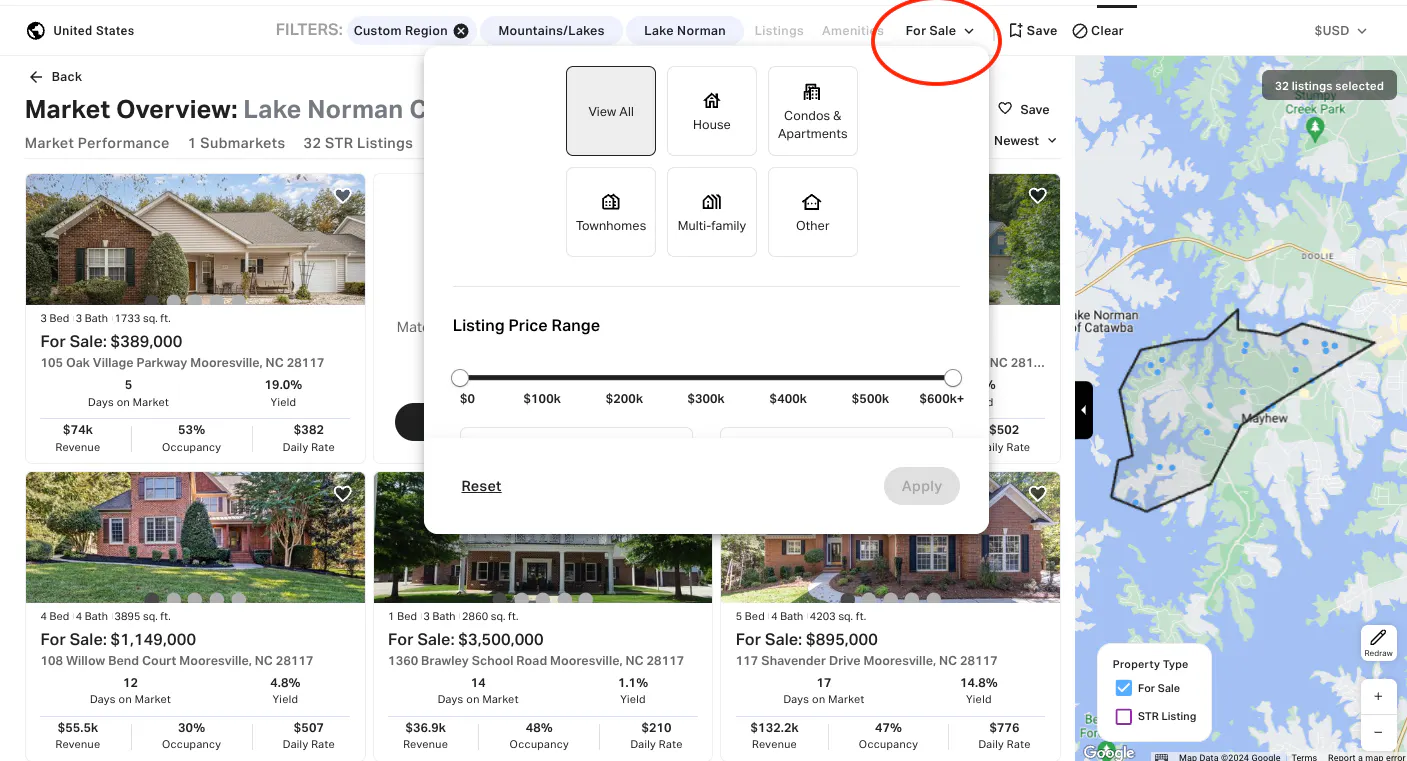
For a more tailored search, use the “For Sale” filter to narrow listings by property type, price range, bedroom and bathroom count, square footage, time on the market, and any short-term rental zoning restrictions. This filter helps you identify the right lake property that aligns with both your budget and yield goals, allowing you to make a confident, data-backed decision.
FAQ
How do I buy a lake house?
Buying a lake house starts with identifying the right location, setting a budget, and understanding local market trends. Research lakes that match your lifestyle or investment goals, and review real estate listings to find properties that fit your criteria.
If you're buying a lake house as a short-term rental investment, focus on markets with strong rental demand and high yields. Tools like AirDNA can help analyze revenue potential, occupancy rates, and the impact of amenities. Be sure to check local zoning and STR regulations to avoid restrictions, and consider working with a local agent experienced in waterfront vacation rentals to streamline the process as you look for the best lakes to buy a house on.
Is lakefront property a good investment?
Lakefront property can be a highly rewarding investment, particularly in popular lake house locations that enjoy high guest demand. Waterfront vacation rentals often command premium rates, have high appreciation potential and attract a diverse range of guests year-round.
However, like any real estate investment, lakefront properties come with potential downsides—higher maintenance, seasonal demand fluctuations, and local zoning rules. For STR investors, a lake house in a well-chosen market can yield excellent returns, especially if it’s optimized with amenities and managed strategically.
When is the best time to buy a lake house?
The best time to buy a lake house often depends on the specific market and your investment strategy. In general, late fall and winter can be ideal times to buy, as demand tends to be lower and sellers may be more willing to negotiate.
However, if you’re looking at high-demand areas with strong summer rental potential, peak listing periods like spring and early summer could also offer more inventory. Keep in mind that researching market trends and occupancy rates in your chosen location can provide insights into seasonality, helping you make a more informed buying decision.
ARTICLE SUMMARY
Searching for the perfect lakefront investment? Not all lakes are created equal—but AirDNA’s top 10 list of lakefront markets for STRs is is a great place to start. We’ll even show you how to use AirDNA to pinpoint the best spots on the lake you’re eyeing up.
Jamie Lane
AirDNA Chief Economist
He is responsible for data analysis, thought leadership, and leveraging advanced analytical techniques to provide new insights into short-term rental market trends. Native to Atlanta and an Airbnb host himself, Jamie enjoys cycling, mountain biking, backpacking, running, and playing in a dart league in his free time.
