The Best Type of Property for Airbnb by the Numbers
Published: October 27, 2025
Last updated: January 12, 2026

Jamie Zhang
Key Takeaways
- There’s no one-size-fits-all best Airbnb property type. What performs best depends on your market, your budget, and your strategy.
- Houses and villas tend to earn the most, averaging $130 in revenue per available rental (RevPAR) globally, significantly more than apartments and condos at $80 RevPAR.
- Yield matters as much as revenue. AirDNA data shows a 3-bedroom condo can deliver similar ROI to a 5-bedroom home, depending on price and performance.
If you’re investing in an Airbnb, one of the first and most important questions you’ll face is: What kind of property should I buy?
A spacious house? A city apartment? Something more offbeat like a tiny home or glamping tent? The options are endless . . . and so are the opinions.
The truth is, there isn’t one "best" property for everyone. What performs best depends on where you're investing, who you're hosting, and what your goals are.
That said, some property types consistently rise to the top.
In this guide, we’ll dig into the latest AirDNA data to show you which types of listings earn the most, book the most often, and are growing the fastest. Then we’ll help you figure out which one’s right for you.
What’s the Best Type of Property for Airbnb?
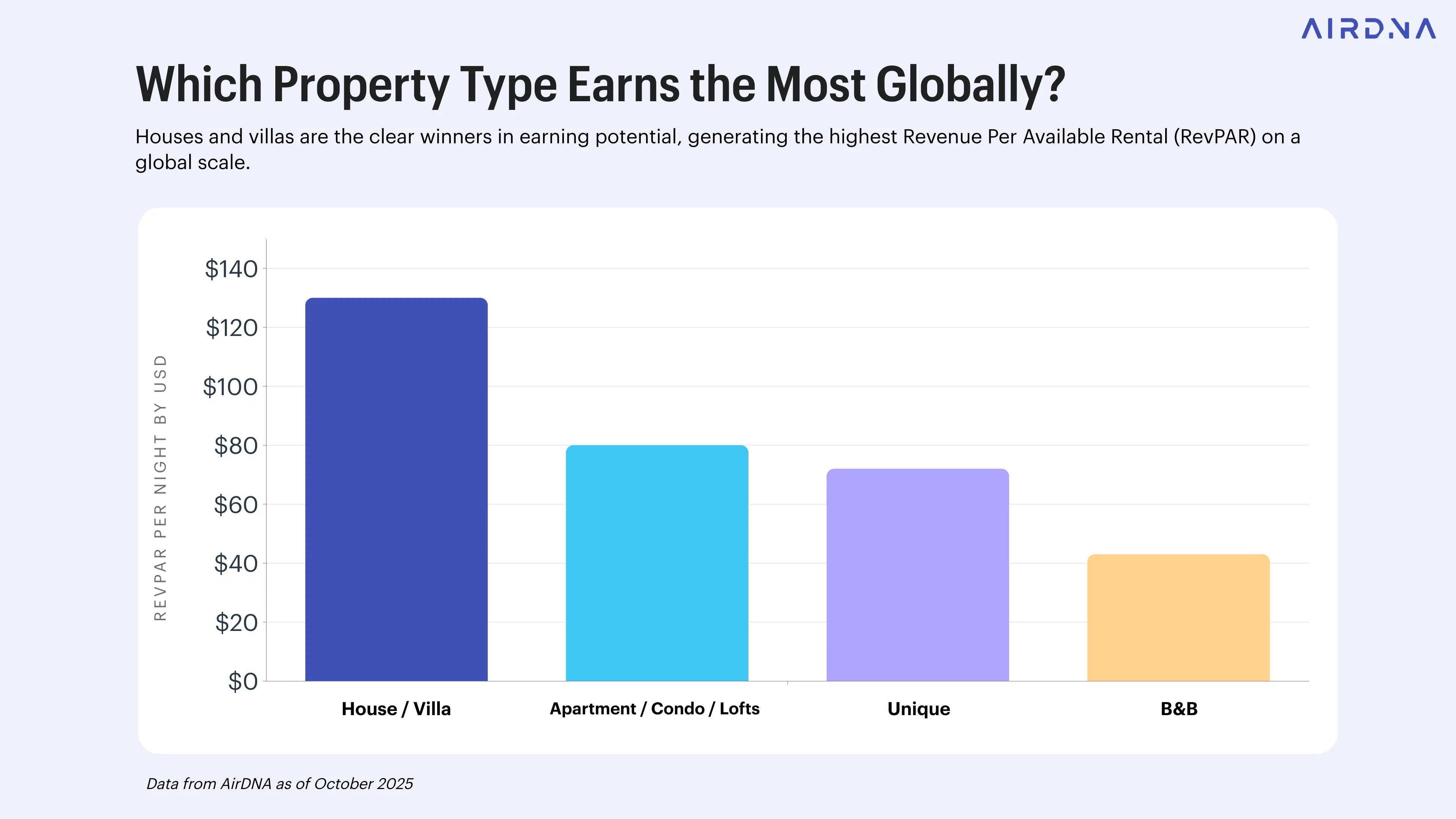
There’s no one-size-fits-all answer, but if your goal is to maximize income and occupancy, houses and villas consistently come out on top, according to AirDNA data. These listings earn an average of $130 per night in Revenue Per Available Rental (RevPAR)—a key metric that combines nightly rate and occupancy to show how much a property actually earns, on average, each night that it’s available.
That puts houses and villas well ahead of apartments and condos, which earn just $80 in RevPAR, despite making up a slightly larger share of global Airbnb listings.
Keep in mind that these earnings are just averages, and what you can expect in your market will likely diverge from these values. We dive deeper into the data and show you how to find accurate RevPAR averages down to the neighborhood level using the AirDNA app a little bit later.
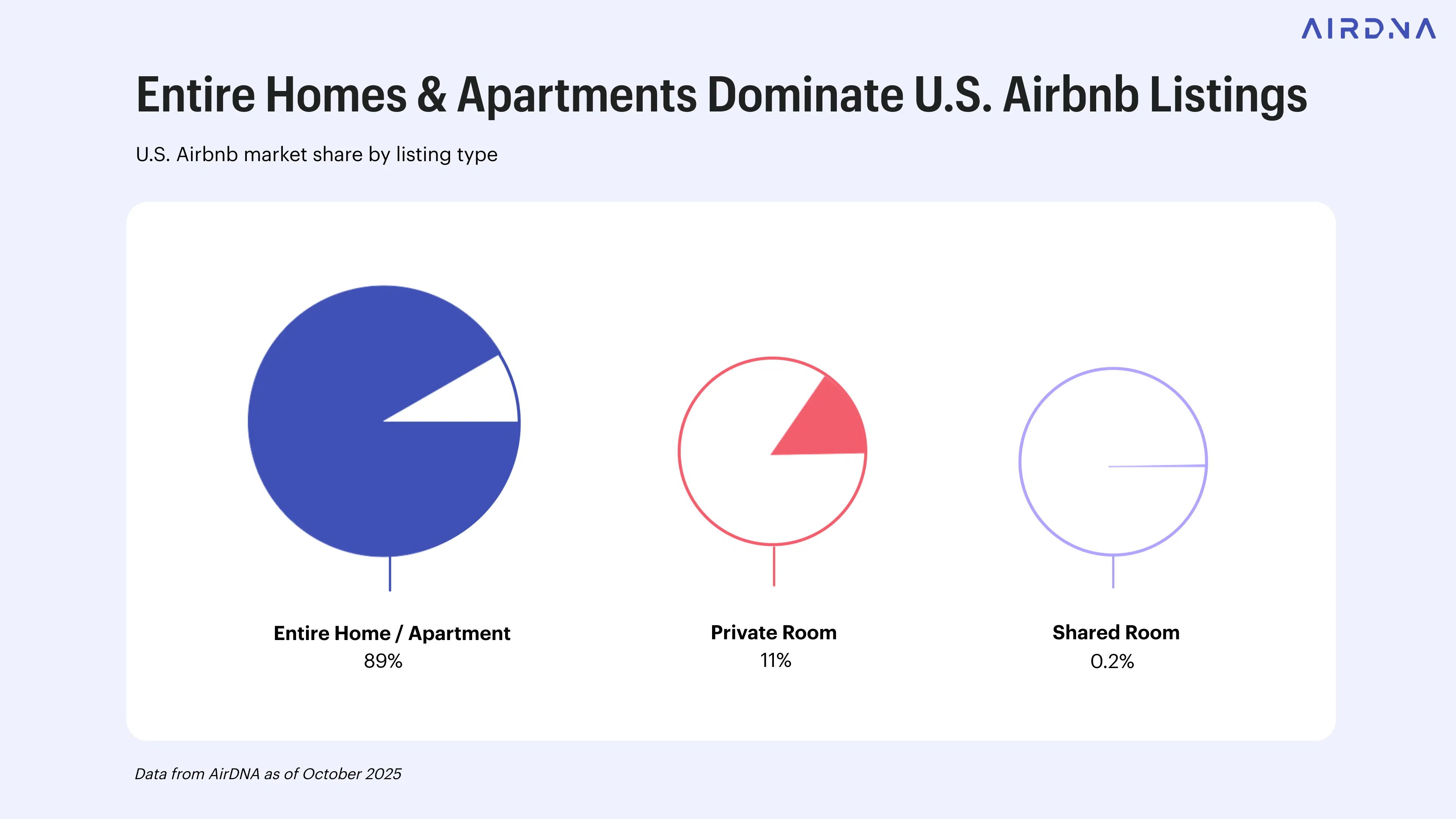
Houses/villas also tend to be listed as entire places, which now make up 84.2% of all Airbnb listings worldwide. In the U.S. specifically, houses and apartments that are offered as entire-place rentals make up an even higher share of listings at 89%. Private rooms account for 11% of Airbnb properties while shared rooms make up a meager 0.2% in the U.S.
In other words, the combination of full-property access and residential space isn’t just the most profitable. It’s also the most common.
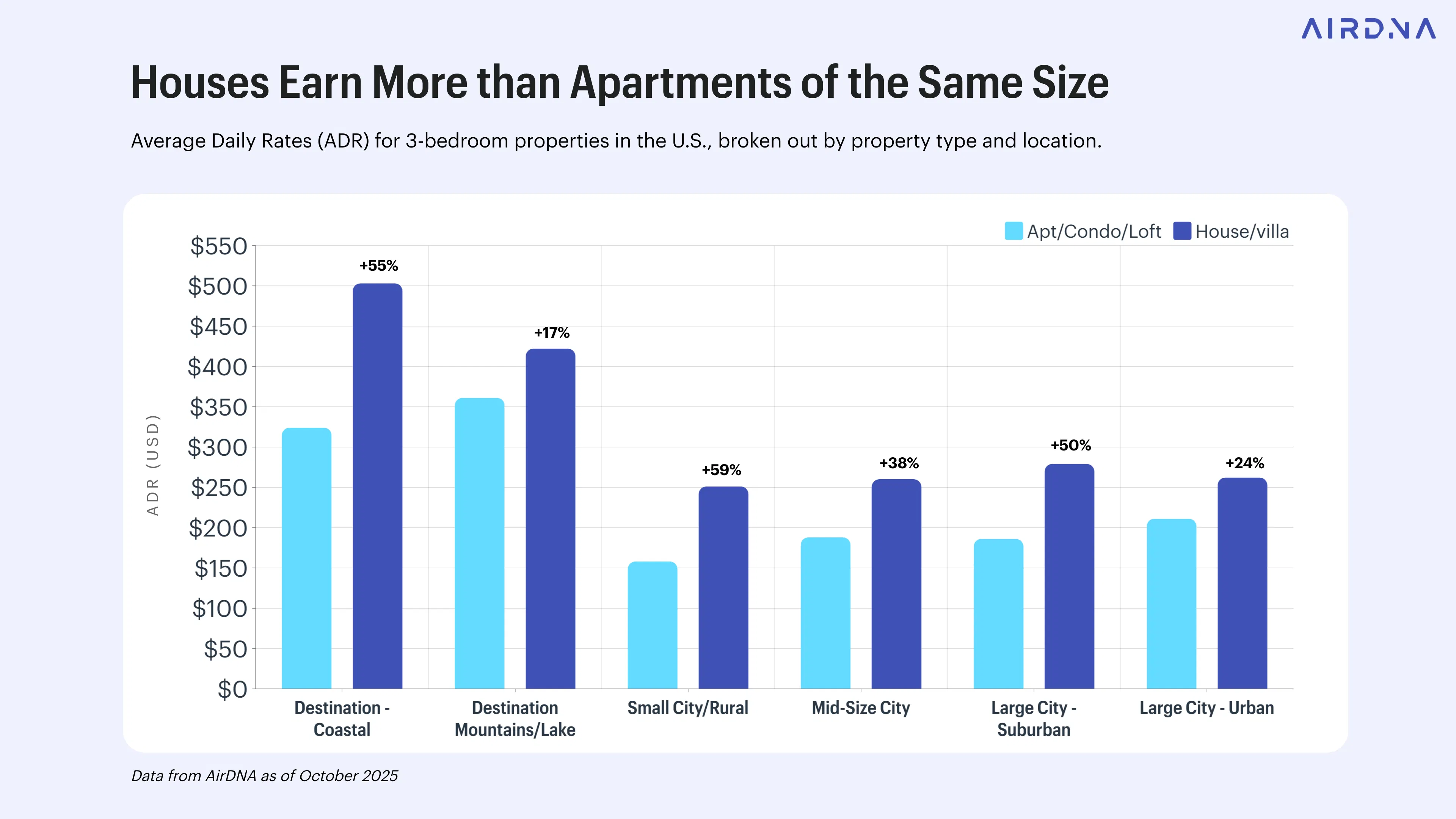
If you’re thinking, “Well, of course houses earn more. They’re just bigger,” that’s a fair assumption. However, size isn’t the only factor. To make a fair comparison, AirDNA looked at listings with the same number of bedrooms, specifically 3-bedroom properties.
Even then, houses still come out ahead. Just how much of an advantage they have over apartments, condos, and lofts changes, though, depending on where the vacation rental is operating.
In coastal vacation markets, for example, 3-bedroom houses earn $503 per night on average, while 3-bedroom apartments earn just $324. That’s a 55% difference in nightly rate, even when both listings offer the same number of rooms. The real estate type, not just the size, is what’s driving the higher earnings.
This is a notable shift from 2023. Two years ago, apartments had a pricing edge in certain markets, especially in mountain and lake destinations. However, guest preferences have evolved. In 2025, more travelers are prioritizing space, privacy, and amenities, especially for group trips, longer stays, and remote work. These shifts are giving houses and villas the upper hand, even in markets where apartments used to outperform.
So what does this all mean for you?
If your goal is to earn the most and appeal to the widest range of guests, an entire house or villa is hard to beat. They’re in high demand, consistently booked, and command higher nightly rates, especially with families, groups, and longer-stay travelers.
However, maximizing revenue isn’t everyone’s top priority. The best property type for you might depend on your budget, your market, how quickly you want to get started, or how much time you’re willing to spend managing the property.
Purchase price is also an important consideration, and apartments can be a lower up-front investment than a home. RevPAR only gives you a look at the average nightly earnings, but yield is another important metric that takes into account the property value. There are cases where an apartment will have a higher yield than a house even with lower nightly earnings.
In other words, what performs best on paper might not be the best fit in practice. Let’s walk through the key factors that shape the right Airbnb investment for your goals.
The Best Property Type for Airbnb in Different Types of Markets
The performance of different Airbnb property types isn’t one-size-fits-all. It’s shaped by the type of market you’re investing in. Whether you’re buying in a vacation town, a suburban area, or a dense urban core, the best-performing listing type can vary.
While AirDNA data shows that houses and villas outperform apartments in every major U.S. market type, just how much they outperform them depends on the market:
- Small cities and rural areas – Houses earn 64% more than apartments.
- Coastal vacation destinations – Houses earn 49% more.
- Suburban areas near large cities – Houses earn 49% more.
- Urban city centers – Houses earn just 20% more.
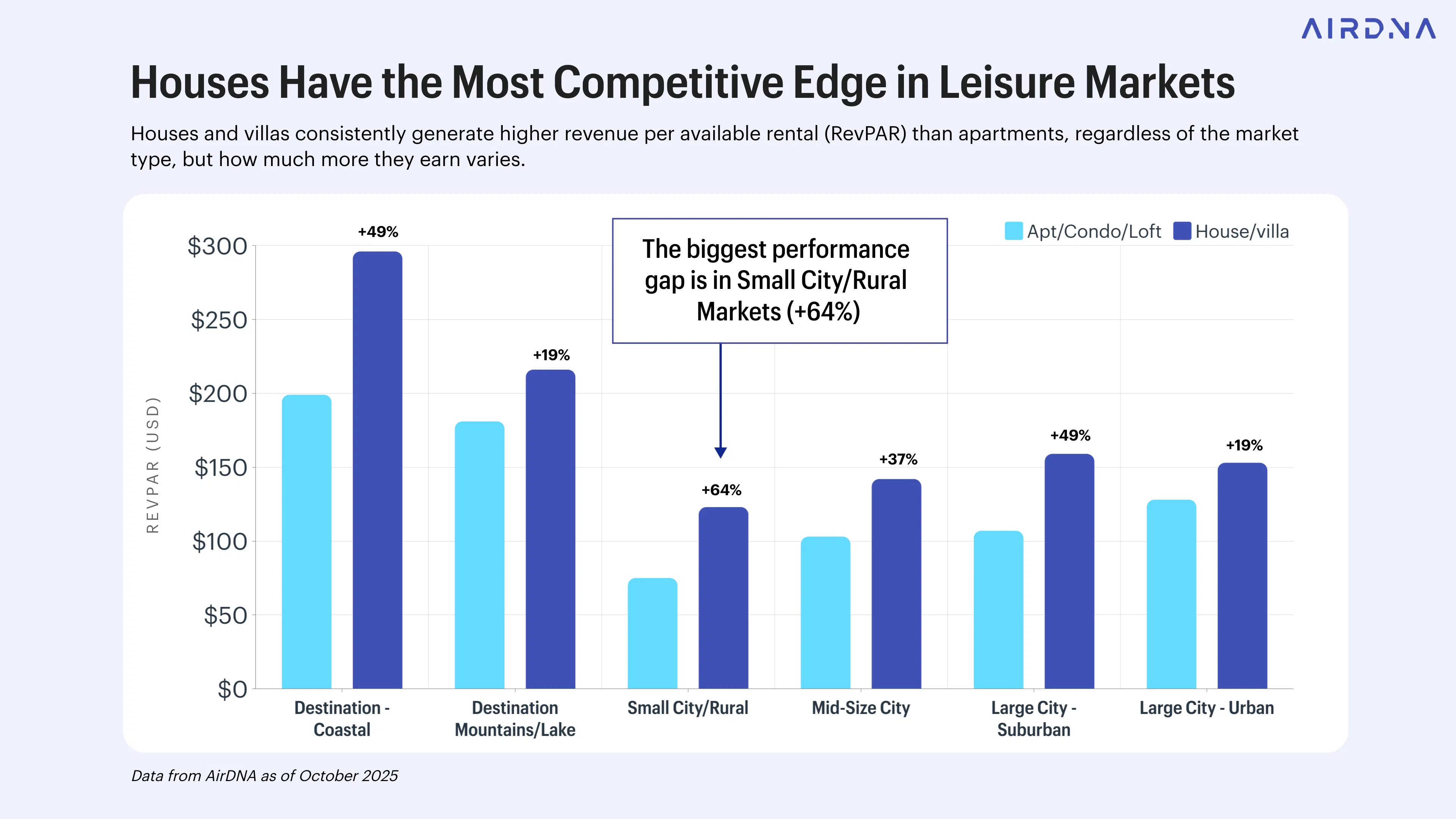
In other words, the smaller or more leisure-focused the market, the bigger the upside for houses. That makes sense because guests in these areas are often families or groups prioritizing space, privacy, and amenities.
However, in major cities, apartments can still be a great choice. The earnings gap narrows, plus short-term rental apartments are often more accessible due to lower prices, smaller footprints, and local regulations that favor multi-family buildings. They also appeal to a steady stream of travelers who value walkability, proximity to business districts, and ease of access over square footage.
While houses tend to win on revenue, apartments may win on practicality, depending on your market.
Why Unique Stays Are Still Profitable Airbnb Investment Properties
Treehouses. Glamping tents. Tiny homes. These kinds of listings can are quick to get booked and they’re growing fast.
According to AirDNA’s 2025 data, unique Airbnbs now make up 7.2% of Airbnb listings globally. In the U.S. specifically, they account for 4% of listings.
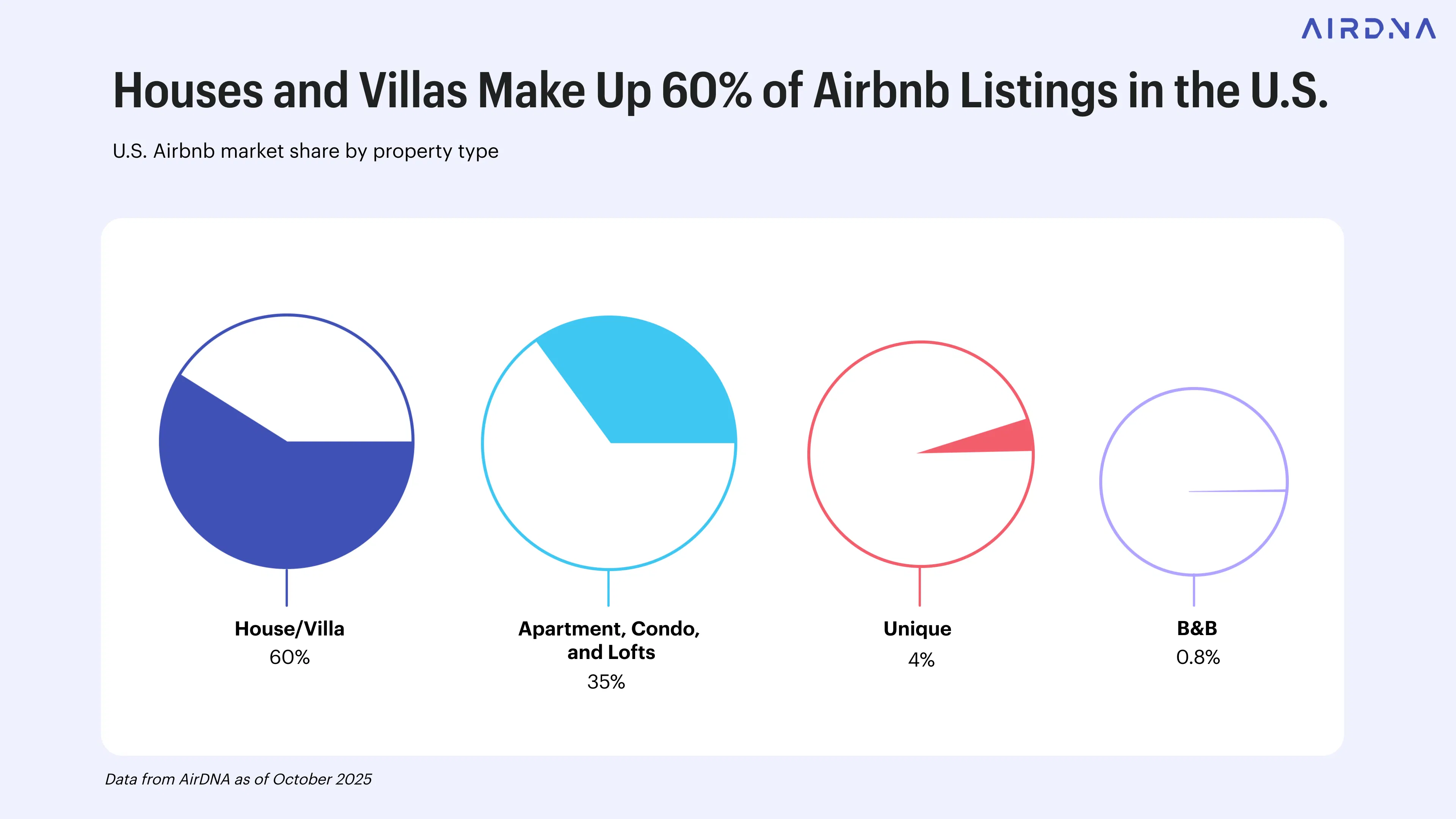
Don’t be fooled into thinking that unique properties aren’t carving out a meaningful niche in the Airbnb landscape just because they account for less than 10% of listings globally. That 10% translates into a monthly average of over 275,000 listings.
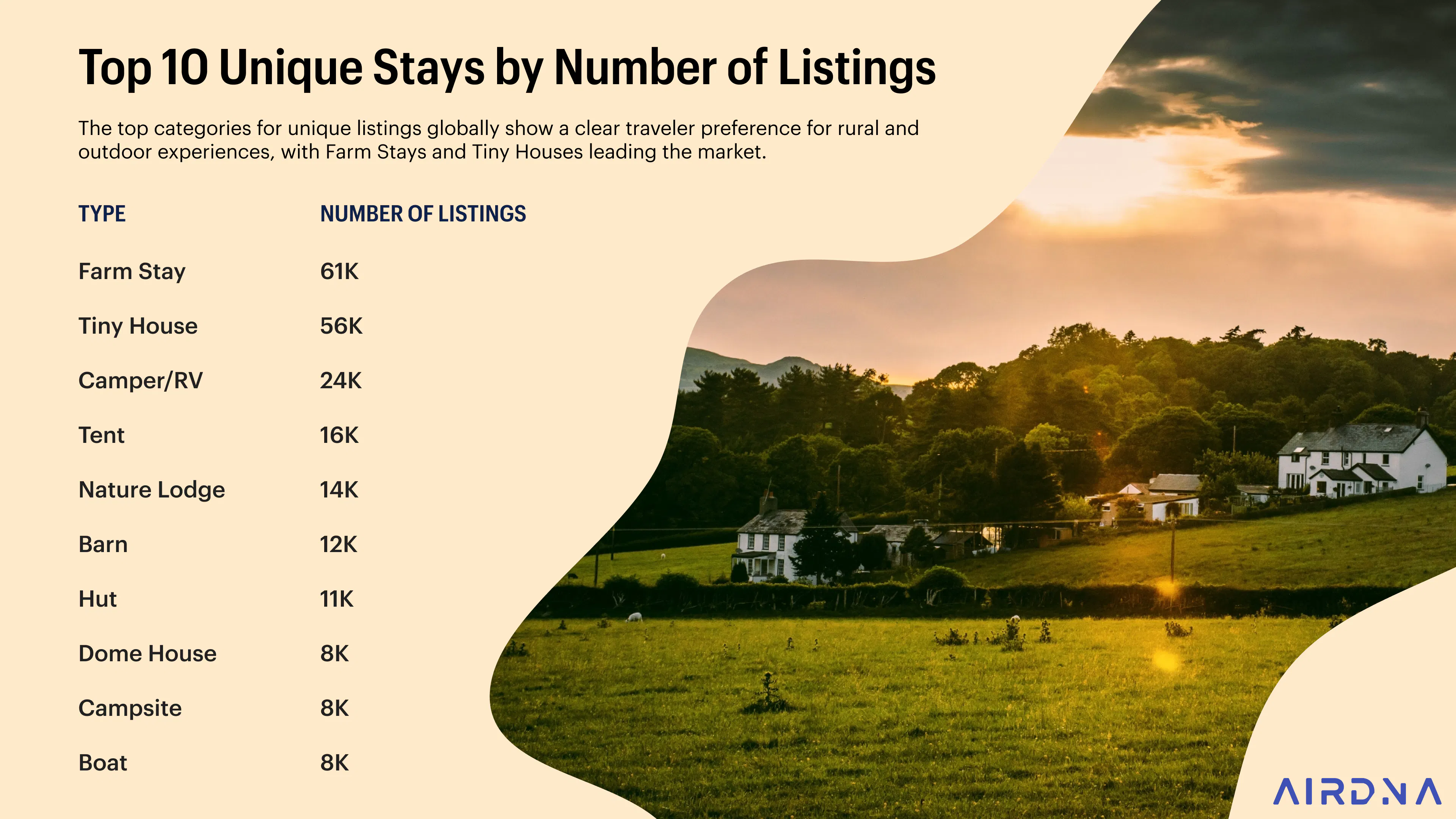
On top of that, some categories of unique properties are seeing double-digit growth year over year:
- Glamping tents → up 27%
- Tiny homes → up 23%
- Domes → up 19%
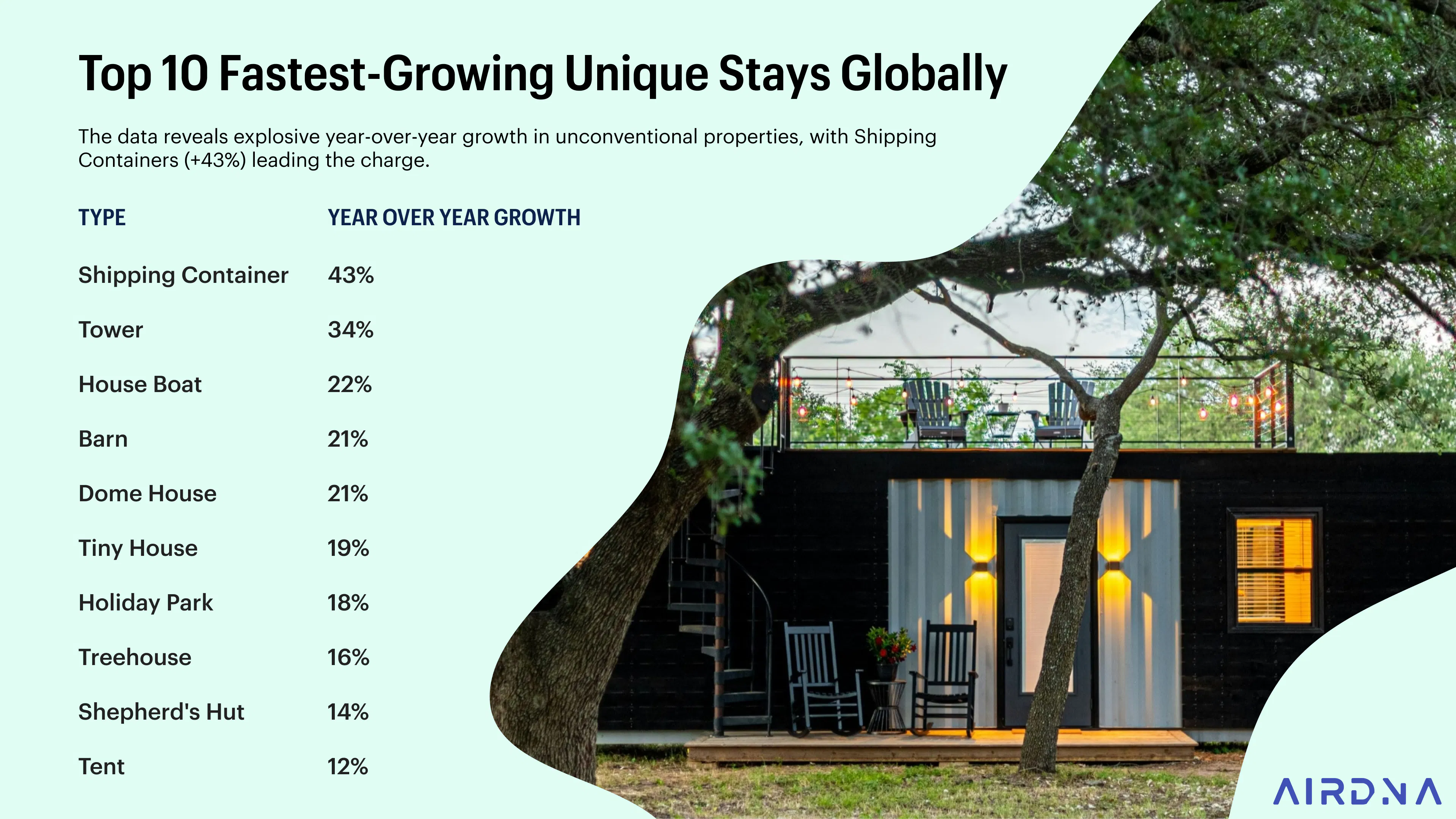
Unique stays can absolutely succeed, but only in the right markets and with the right setup. They tend to do best in rural or destination areas where the experience itself is the draw. If you're building on land you already own, or you want to offer something memorable and branded, they can be a smart long-term play.
That said, they come with tradeoffs. Some guests aren't looking for composting toilets or off-grid vibes, and zoning laws can be tricky. They also tend to be more seasonal and can require higher upfront investment (setting up electricity and plumbing for a treehouse, for instance, is no small feat!). With that in mind, a traditional house or apartment may be the best property type for your Airbnb business if your goal is steady income and broad guest appeal.

How to Choose the Best Airbnb Investment Property
Choosing the right Airbnb property type for your goals requires you to weigh what performs well in your market and what fits your strategy. Here’s how to make that call.
Understand your market
The best Airbnb property type really depends on where you're investing.
Different markets attract different types of guests which means the top-performing listings can vary a lot. A large house might be perfect in a beach town, while a smaller apartment could do better in a walkable city center.
The smartest investors don’t just look at the city as a whole. They zoom in on submarkets. A submarket is a smaller slice of a larger area, like a specific neighborhood, tourist corridor, or stretch of rural countryside. Performance can vary a lot between them.
The map feature within AirDNA helps you visualize how larger markets get broken out into smaller ones and how Airbnb performance can vary even between adjacent neighborhoods. Take Atlanta, for instance. We color code submarkets by performance—the darker the purple, the better the Market Score. The Marietta and Roswell submarkets are right next to each other, but Marietta has a 91 Market Score (out of 100), while Roswell’s is just 68.
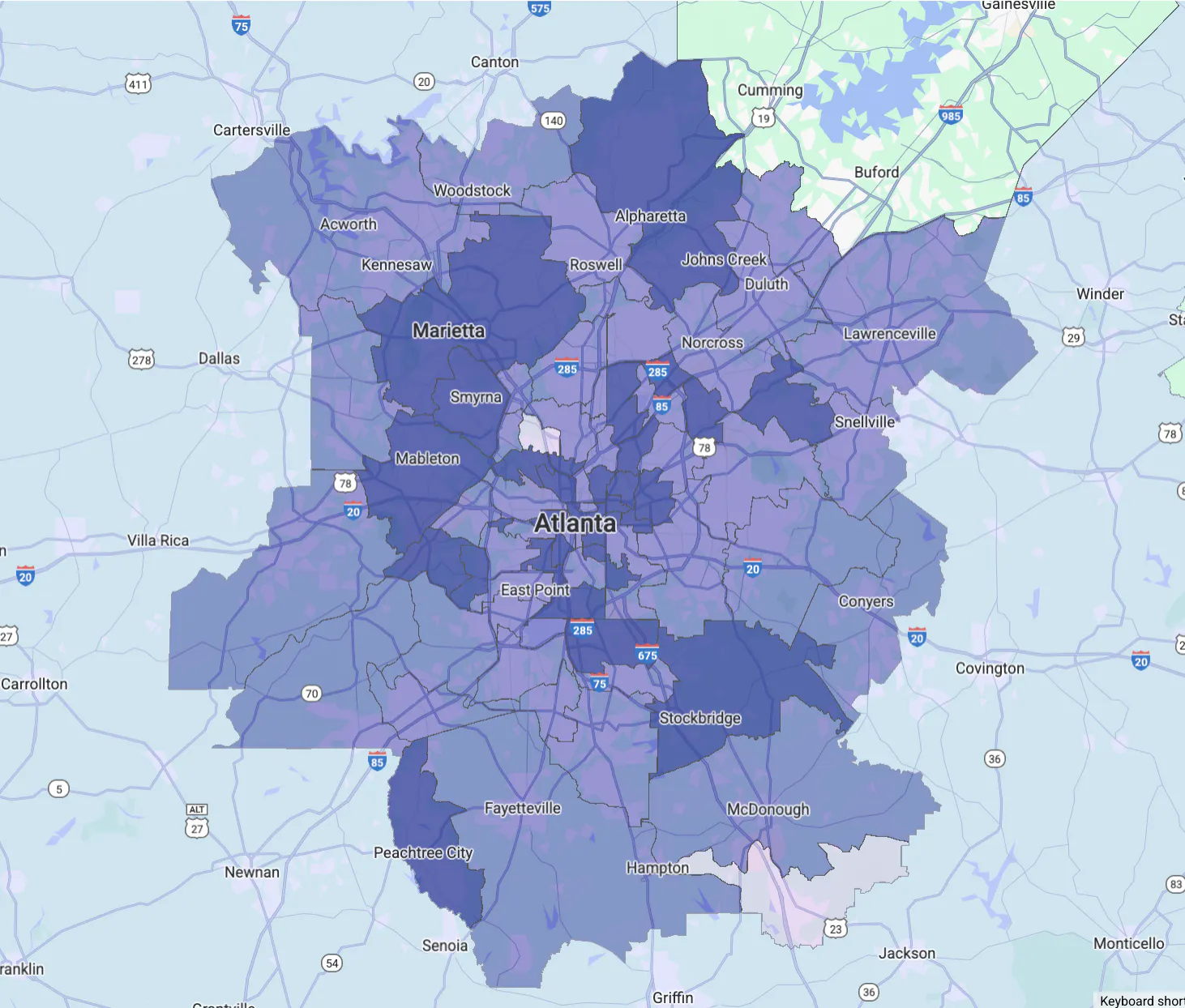
AirDNA’s Best Places to Invest report can help you spot high-performing pockets based on real-time demand, revenue, and competition. Just remember: traveler trends shift, so it's worth revisiting the data regularly.
Factor in your budget and timeline
Even if a house offers stronger long-term returns, it might not fit your budget or your runway. Apartments, condos, or even smaller unique stays (like tiny homes) can offer a more affordable entry point and a quicker path to hosting.
When comparing options, calculate not just the purchase price but the total startup costs:
- Renovation or furnishing costs
- Short-term rental readiness (kitchens, bathrooms, bedding)
- Utilities, maintenance, and platform fees
You will also want to weigh how quickly you want to launch. If you're aiming for faster cash flow or a lower-risk trial, a turnkey apartment may be a smarter short-term choice, especially in a high-demand city.
Know your management style
Different property types demand different levels of involvement. Entire homes tend to bring in higher revenue, but they also come with higher expectations for cleanliness, maintenance, and responsiveness.
If you’re managing your short-term rental remotely or working part-time, you might prefer a more hands-off listing, such as:
- A condo with on-site maintenance
- A studio apartment with quick turnovers
- A co-hosted private room or multi-unit setup
If you’re ready to scale, however, houses offer more pricing flexibility, more space to stand out, and more appeal to families, groups, and long-stay travelers.
Understand your local short-term rental regulations
Before you make any investment, check your market’s short-term rental regulations. These vary widely, and some cities limit STRs to certain property types or require specific licensing for entire homes.
Look into:
- Permitting or registration rules
- Tax obligations (occupancy taxes, income reporting)
- HOA or condo board restrictions, if applicable
Compliance isn’t optional. Understanding what’s allowed in your market can prevent costly surprises and ensures your investment is viable long-term.
Consider working with a local real estate expert
If you’re new to Airbnb investing or unfamiliar with the area, working with a short-term rental real estate agent can help you:
- Navigate regulations
- Identify high-potential neighborhoods
- Compare different property types and ROI potential
How to Choose the Best Airbnb Property Type Using AirNDA
We’ve already said it: there’s no single answer to what the best Airbnb property type is. It really depends on your market, your budget, and your goals.
Here’s the good news: AirDNA can help you figure it out.
Instead of guessing, you can use real data to see what performs best where you want to invest. With filters, local comp sets, and performance insights, AirDNA makes it way easier to choose the right property type for your Airbnb strategy.
Here’s how to get started:
1. Start by searching your market
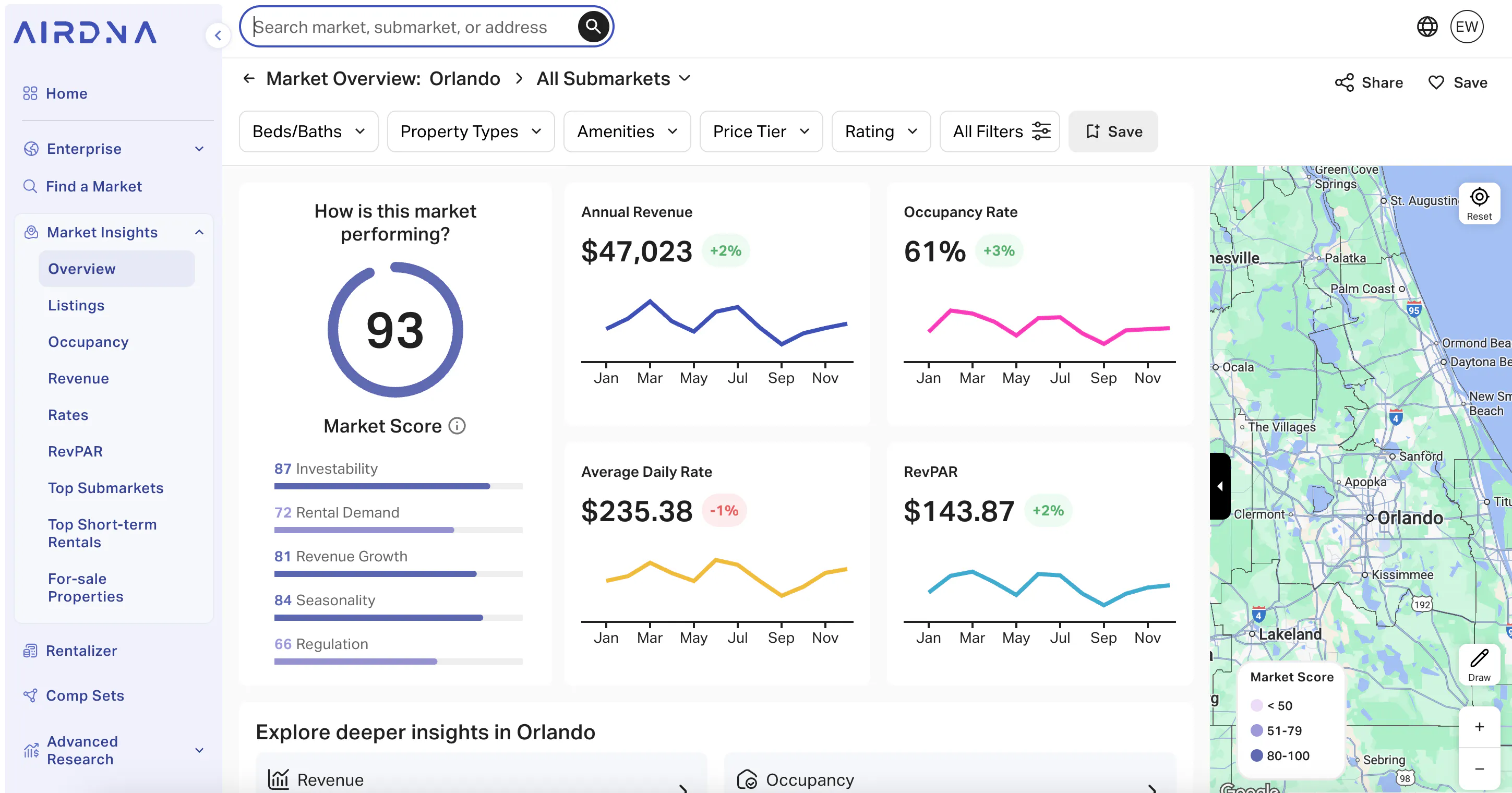
If you already know where you’re thinking of investing, plug that market into the search bar on AirDNA. For example, let’s look at Orlando, Florida, the largest short-term rental market in the U.S. by both listing count and total revenue.
The Market Overview page gives you a big-picture snapshot: average daily rate (ADR), occupancy, and revenue averaged over the last 12 months across all STRs in the area.
2. Filter by listing and property type
From there, use the filters to explore how performance varies by:
- Listing type (entire place, private room, shared room)
- Property type (house, apartment, B&B, unique)
- Bedroom and bathroom count
- Guest capacity
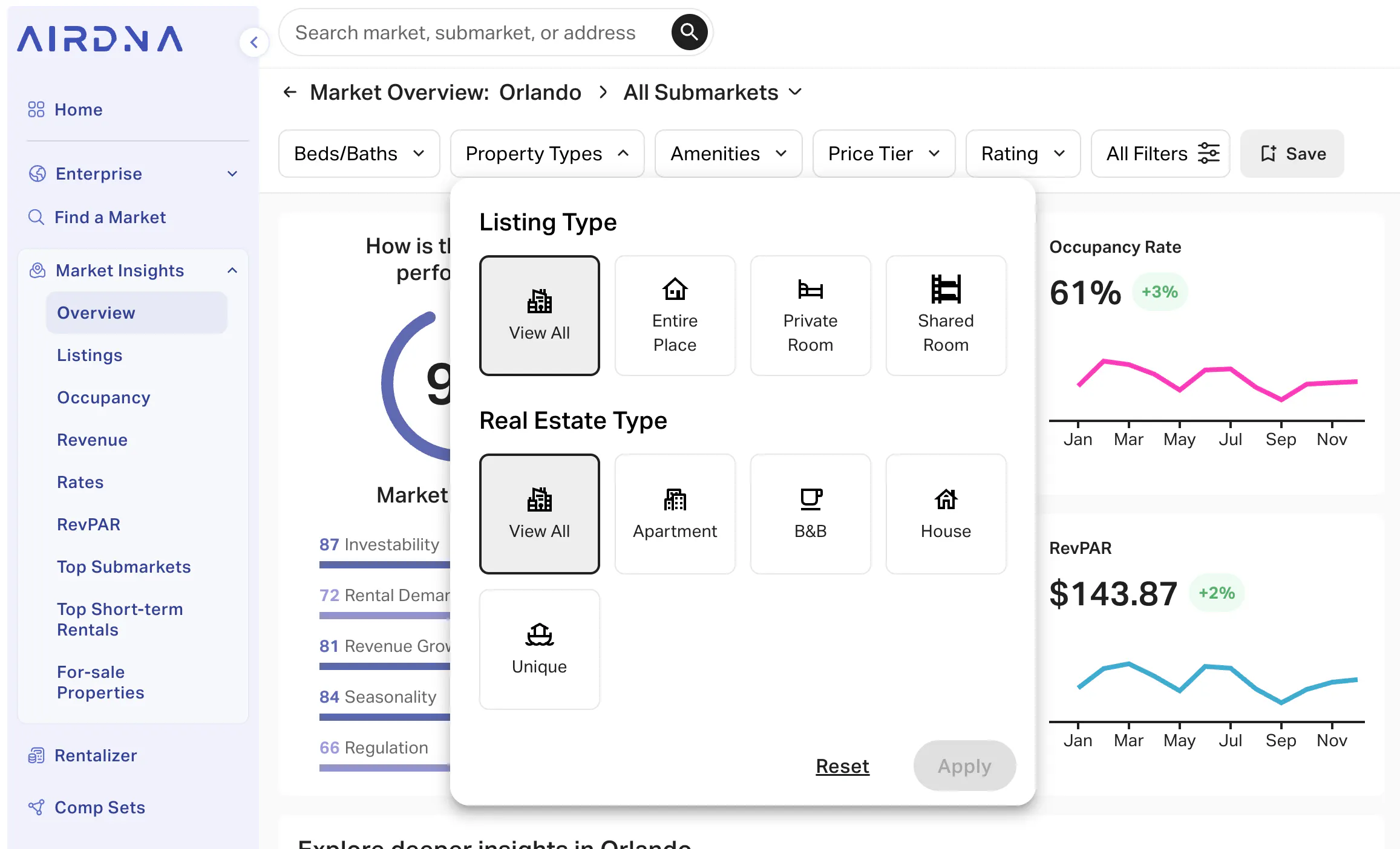
These filters help you answer key questions like:
- What is the best size house for Airbnb? Do larger homes really perform better?
- Is there substantial demand for private rooms or shared spaces?
- How do houses stack up against apartments in this market?
- Will investing in a property with an additional bathroom really affect my bottom line?
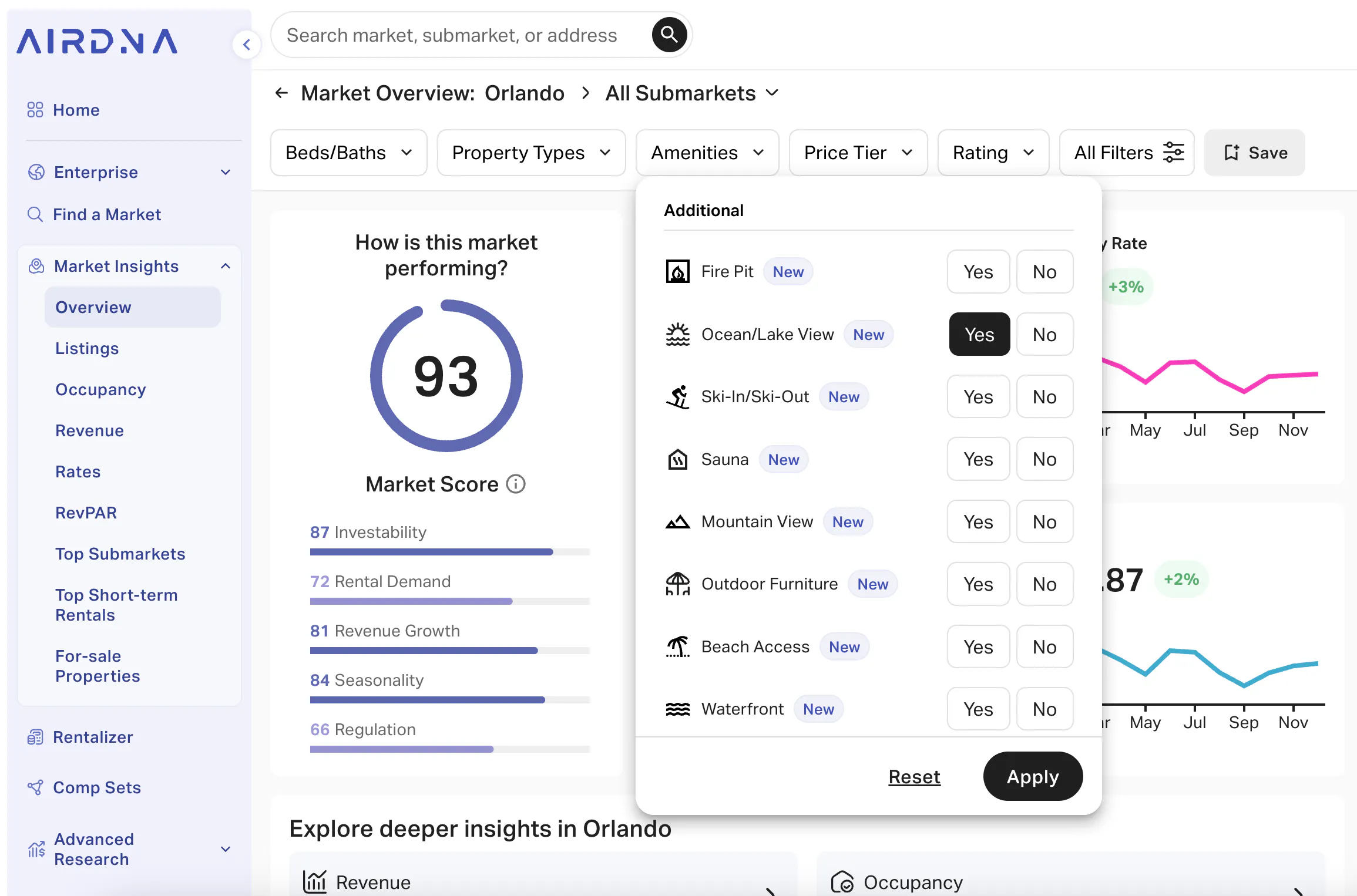
3. Layer on performance and amenity filters
Once you know your likely property size (maybe you’re capped at 1–2 bedrooms), explore performance by price tier and amenities. This helps you identify ways to boost your earnings through operational choices, even with smaller square footage.
For example, if you can earn 25% more by moving your property from the economy price tier to midscale, then you might be able to recoup an extra investment in high-quality furnishings. The same goes for investing in a hot tub or opening your home to pets.
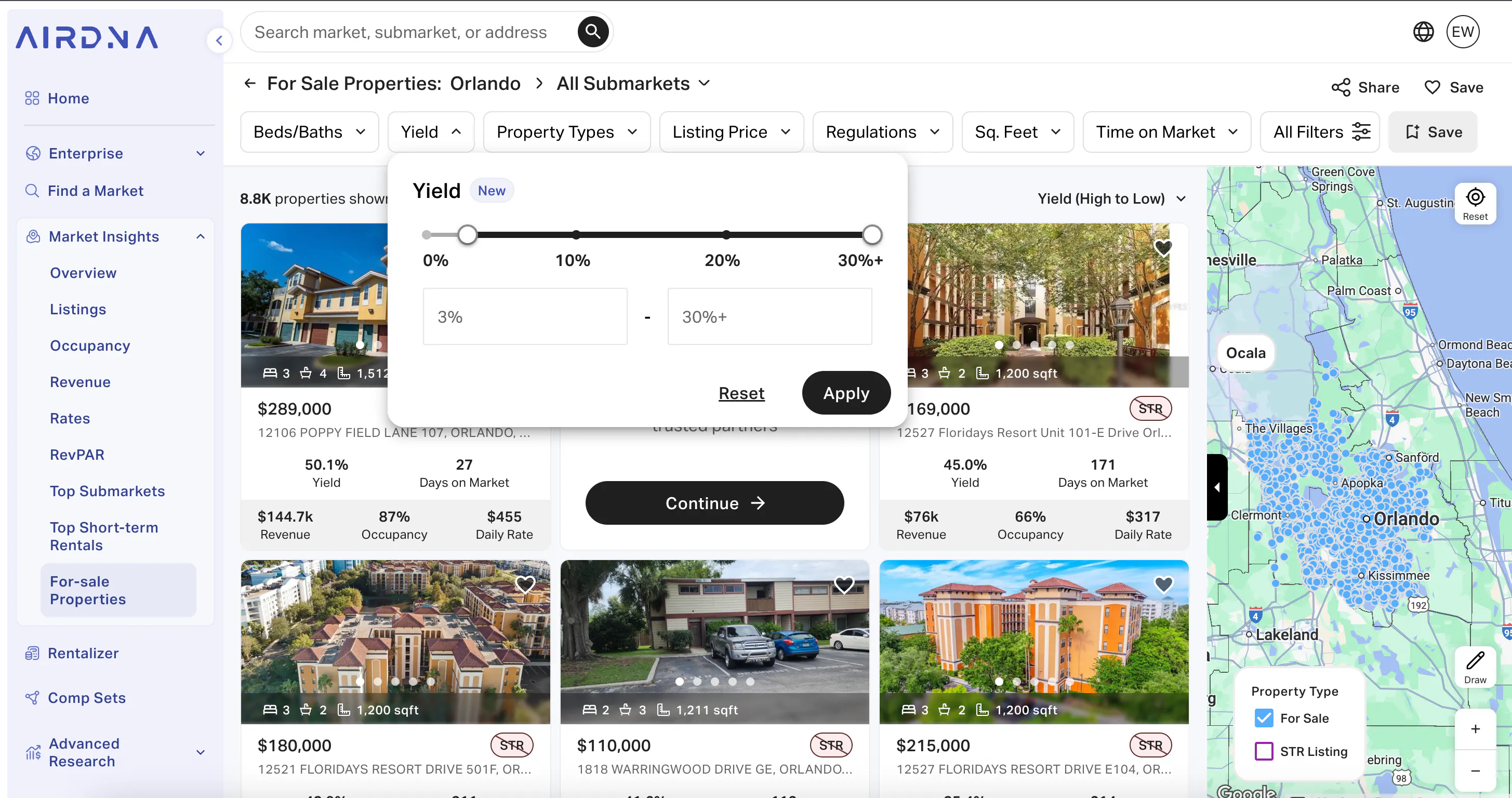
4. Balance earnings with costs by checking yield on for-sale properties
Of course, revenue is only half the picture. The For-Sale tab helps you explore yield: how much return you can expect based on the purchase price.
Navigate to the For-Sale properties tab for your market of interest from the left-hand navigation menu. We automatically generate revenue projections for every property that is currently for sale, based on how similar, active short-term rentals in the area are performing. You can sort these projections by yield to see which current investment opportunities offer the highest returns.
Yield divides gross earnings by the property purchase and multiplies the result by 100. You can consider a 10% yield as a middle-of-the-road return on your investment (ROI).
Just don’t forget to filter out properties that aren’t zoned for short-term rental use.
5. Compare high-yield listings across property types
Some of the highest-yielding listings in Orlando include:
- A 5-bedroom home generating $129K/year with 38% yield
- A 3-bedroom condo generating $66K/year with 36% yield
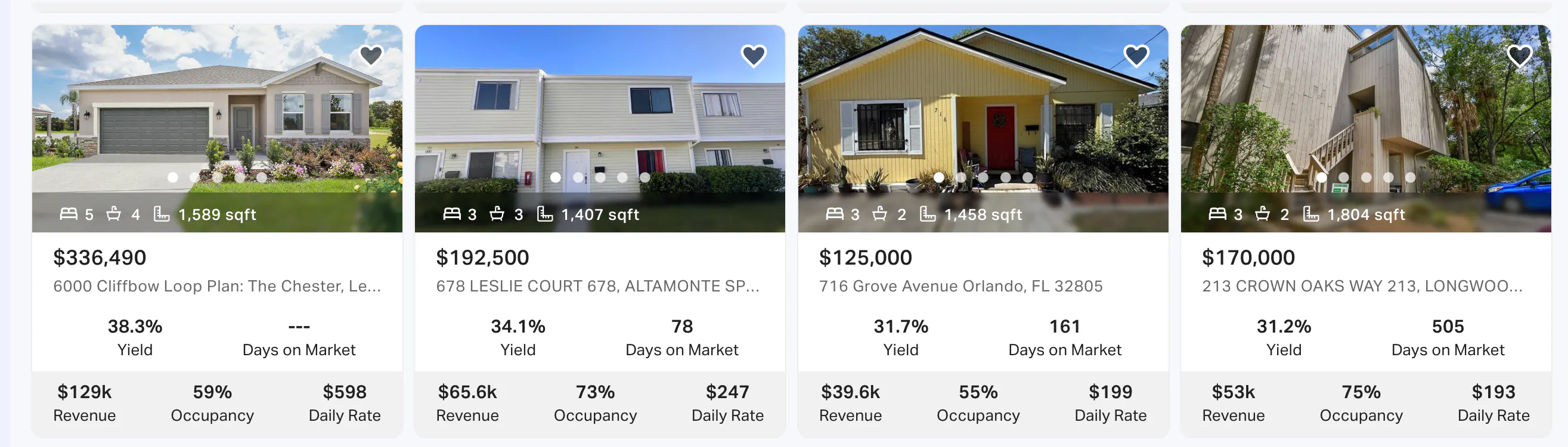
These are very different setups, but nearly identical ROI. This shows that there’s no single best Airbnb property type without considering price point and expenses.
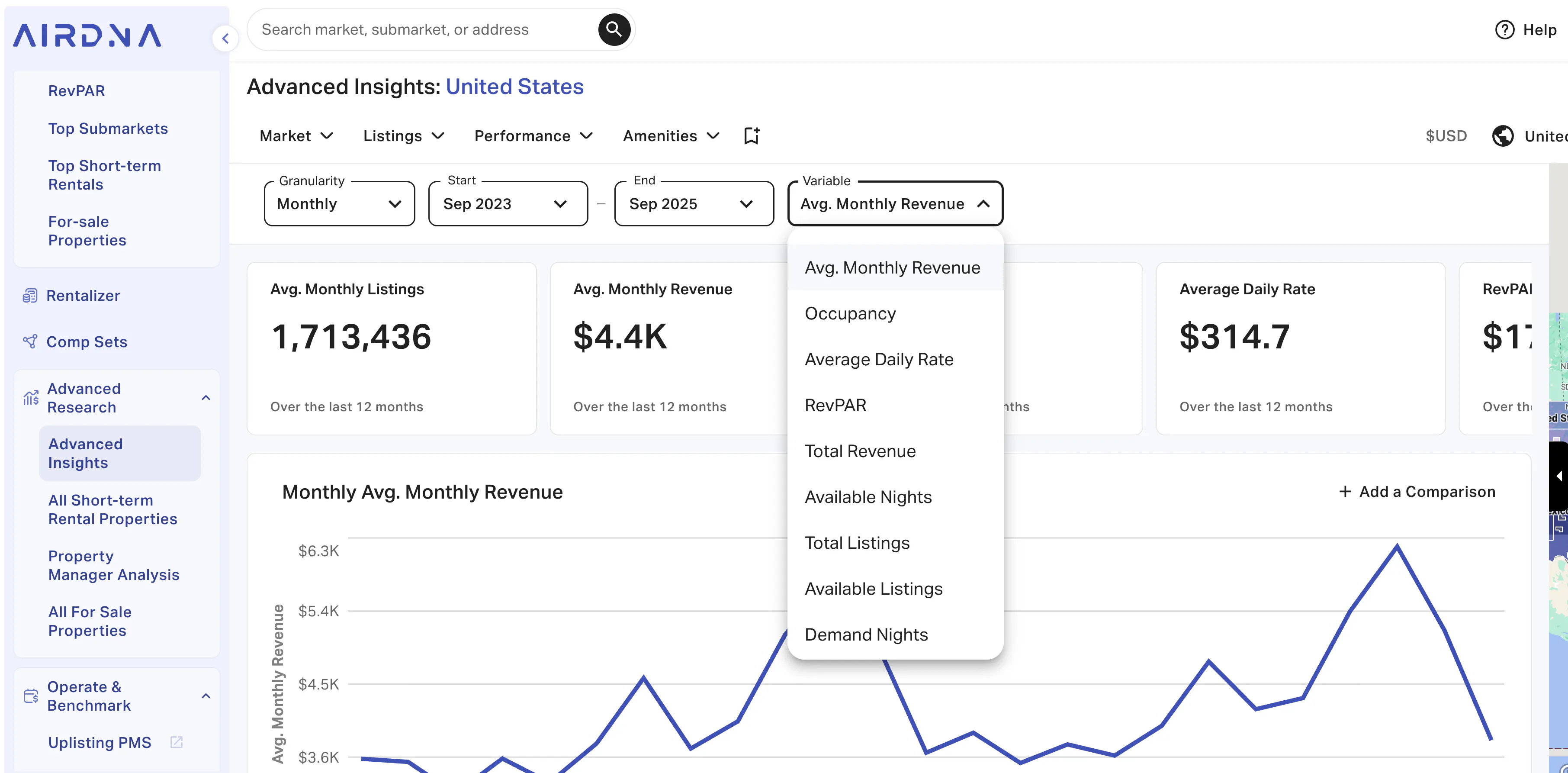
6. Upgrade to Advanced Insights (Advanced Tier)
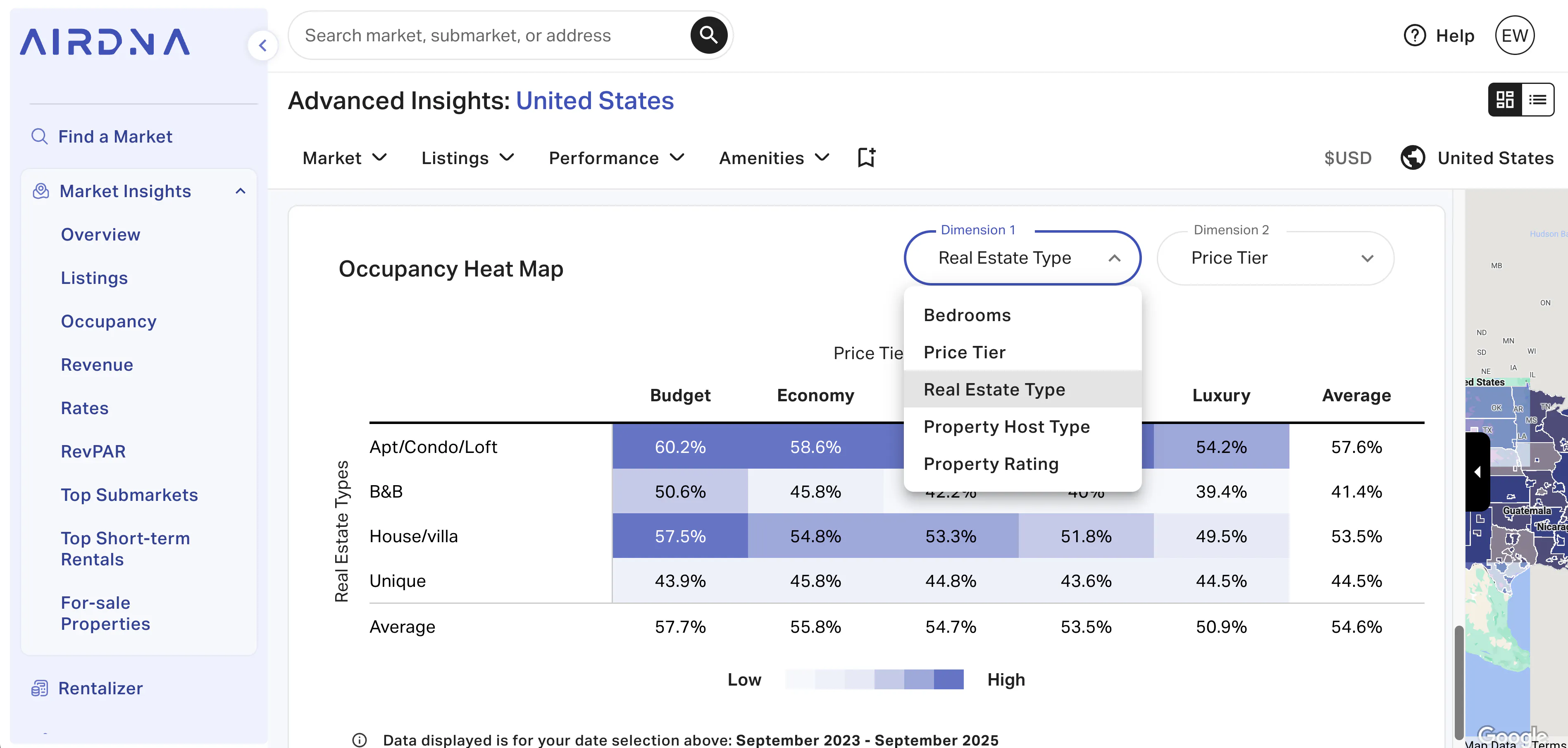
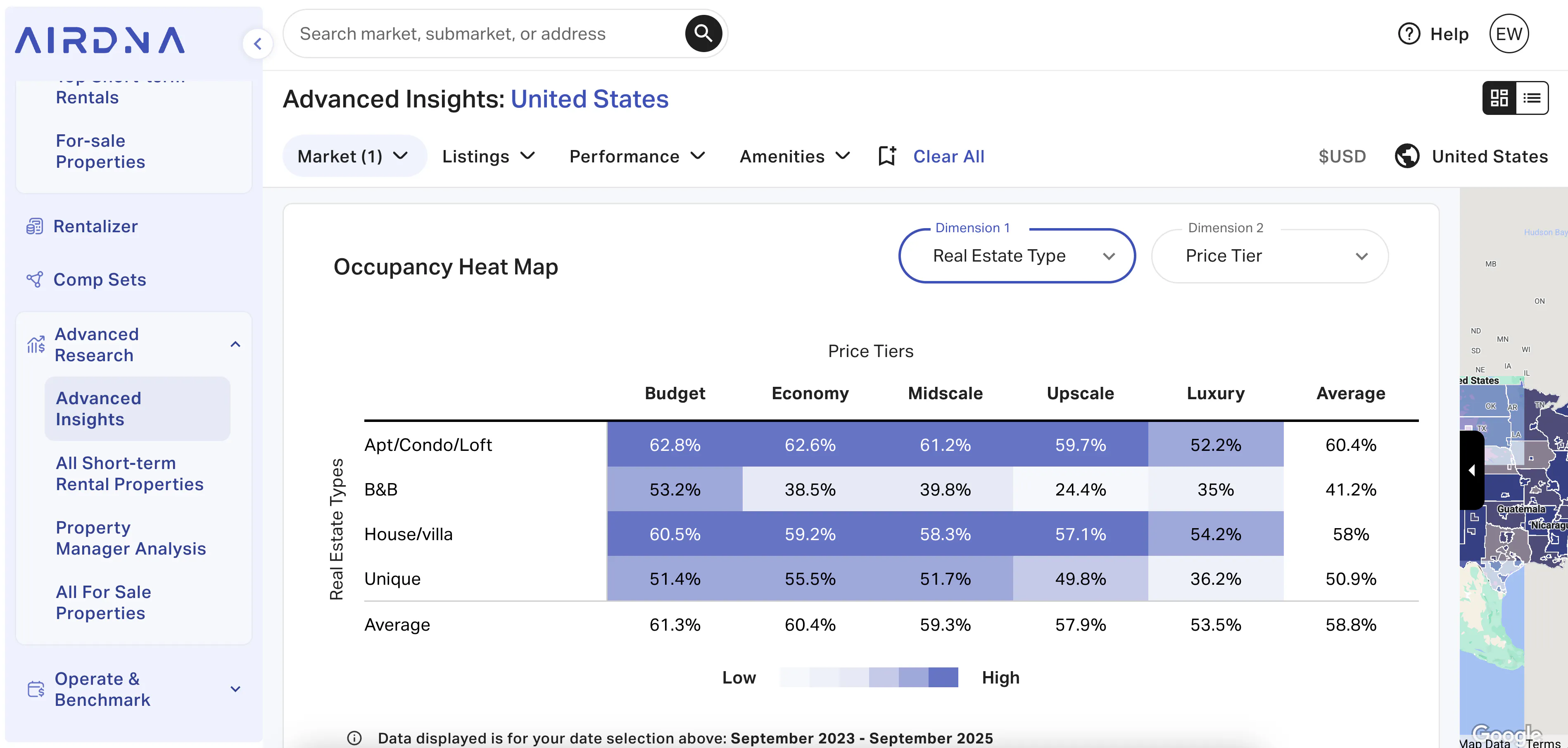
Want to dig deeper? The Advanced Insights tab (for Advanced Tier users) gives you broader control over how you view the data—by neighborhood, property type, rating, host type, and more.
Here you can explore:
- Occupancy and ADR by bedroom count or price tier
- Which property types dominate in your submarket
- Whether luxury or economy listings perform best
- What role guest ratings and host size play in success
After running the numbers, the answer usually becomes clear.
What feels like a complicated decision (house or apartment, studio or 3-bed, unique or traditional?) starts to make sense once you’ve seen how different properties actually perform in your market.
That’s because the most profitable real estate investment isn’t just about what works in general. It’s about what works for you.
FAQs
What is the best type of property for Airbnb?
If your goal is to earn the most and stay consistently booked, an entire home that’s a house or villa is your best bet. They bring in the highest average RevPAR globally ($130) thanks to strong demand, especially from families, groups, and long-stay travelers. The exact property specs (size, location, amenities) that perform best and the resulting revenue depends on your specific market, though—questions which you can answer with the AirDNA app.
What kind of Airbnbs make the most money?
If we’re looking at real estate types, houses and villas consistently make the most money on Airbnb. In 2025, they earned a global average of $130 in Revenue Per Available Rental (RevPAR), well above the $80 in RevPAR from apartments and condos. Even when size is controlled, houses and villas still come out ahead. For example, 3-bedroom houses in coastal vacation markets earned 55% more per night than 3-bedroom apartments. That extra income isn’t just about square footage. It reflects stronger guest demand for full homes, especially for longer stays, families, and group trips.
Are houses always a better investment than apartments?
Not always. While houses outperform across all U.S. market types, the gap varies. In rural or coastal areas, the advantage is big. In urban centers, where apartments are more common and regulations often favor them, a well-located condo can still be a smart, lower-maintenance choice.
What’s the best investment property for Airbnb?
The best Airbnb investment property is the one that fits your market, your budget, and your goals. A high-yield condo might beat a large home if it’s in the right location and easier to manage. Tools like AirDNA help you compare real-world performance so you’re not guessing.
Do unique stays like tiny homes and treehouses perform well?
Yes, in the right setting. Unique stays now make up 7.2% of global Airbnb listings and 4% in the U.S., with categories like glamping tents and tiny homes seeing double-digit growth. They work best in destination or off-grid areas, but they also come with more seasonality and setup costs.
How can I figure out what type of Airbnb works best in my market?
Use AirDNA to filter by listing type, size, amenities, and more. You can compare earnings, occupancy, and even yield on for-sale properties to see what’s actually performing well in your target area—no guesswork required.
ARTICLE SUMMARY
Wondering what the best Airbnb property type is for your next investment? The answer depends on your market, your budget, and what the numbers say. We’ll help you connect the dots.
Jamie Zhang
AirDNA Data Analyst
Jamie Zhang is a Data Analyst at AirDNA, leveraging her background in data science and analytics to uncover key trends in the short-term rental industry. Before joining AirDNA, she worked as a data analyst at Shanghai Disney, where she specialized in revenue forecasting and financial planning . She holds a Master’s degree in International Economics and International Relations from Johns Hopkins. Jamie enjoys cycling to explore different corners of the city.