

 Calculate Revenue
 Research Markets
 Find For Sale Properties
 Compare My Listing
 STR Revenue Calculator
 Custom Comp Sets
 Submarket Insights
 Custom Search Filters
 Rate Recommendations
 Performance Benchmarking
 Competitor Comparison
 Owner Contact Details
 Property-level performance data
 Tourism Insights
 Real Estate Investment Analytics
 About Us
 Sales
Sales Support
 Press
PressHow to Get More Bookings on Airbnb with Winter Amenities
Published: February 27, 2025
Last updated: March 11, 2025

Linda Rollins
Key Takeaways
- Listings with hot tubs can charge 32% more per night, while homes with ski slope access earn nearly double the revenue of similar properties without it.
- The same amenity that boosts earnings in winter might matter less to summer guests.
- Successful properties combine cozy features with smart pricing and seasonal marketing.
Winter is coming. For Airbnb hosts, those words can strike as much dread as they do in Westeros. One day your calendar is filled with bookings, the next it's as bare as winter trees.
However, some properties seem to thrive in the cold months and are consistently booked at premium rates. Their secret? The data indicates it’s all about amenities. Travelers aren’t just looking for a place to stay. They want a cozy, cold-weather retreat. A hot tub with a mountain view. A fireplace to curl up next to. Ski-in/ski-out access that makes hitting the slopes effortless.
Let's explore how to get more bookings on Airbnb via winter amenities and uncover strategies to keep your property thriving through every season.
Seasonal Amenities That Get More Airbnb Bookings in Winter
We analyzed thousands of listings across different markets to identify the most impactful winter features. Our data specifically focused on three-bedroom entire home rentals with at least 90 days of availability in 2024, measuring how amenities affect occupancy, nightly rates, and total revenue.
Here's what the data shows us about the three amenities that make the biggest impact on winter bookings and revenue:
Ski-in/ski-out access
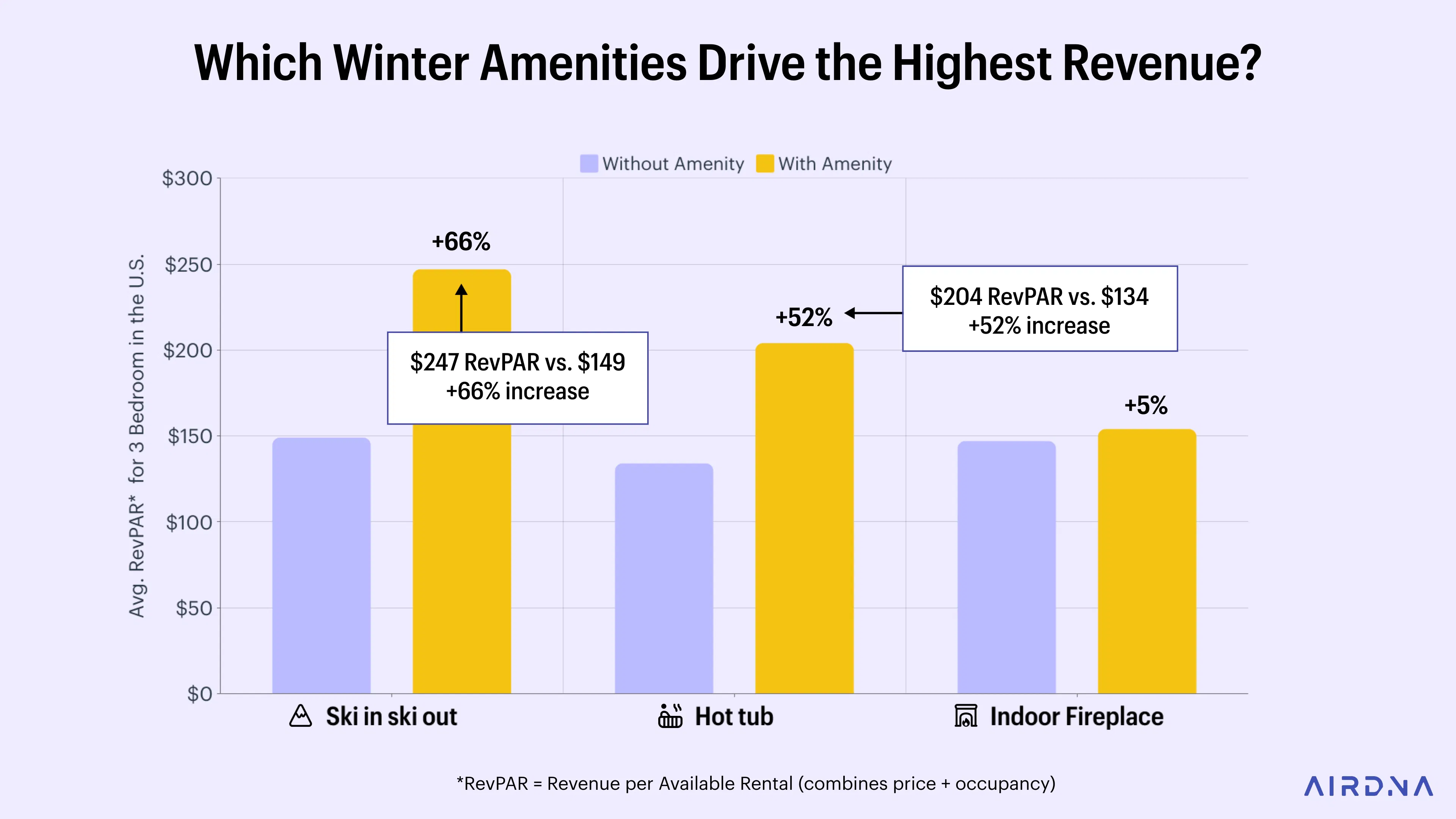
Talk about exclusive appeal: Only 1% of U.S. listings offer true ski-in/ski-out access, yet these slope-side properties earn 66% higher RevPAR (Revenue per Available Rental) in peak ski months compared to standard rentals.
The key driver of this revenue lift is pricing power. Ski-in/ski-out homes rent for an average of $507 per night in winter, compared to $300 for similar non-slope-side homes. Travelers are willing to pay a premium for easy mountain access, making this a major booking incentive in ski markets.
In some destinations, ski-in/ski-out access is a defining feature that’s captured by the high percentage of total listings that offer it:
- Aspen/Snowmass, Colorado: 39%
- Park City, Utah: 36%
- Breckenridge, Colorado: 31%
- Vail/Avon, Colorado: 30%
- Telluride, Colorado: 29%
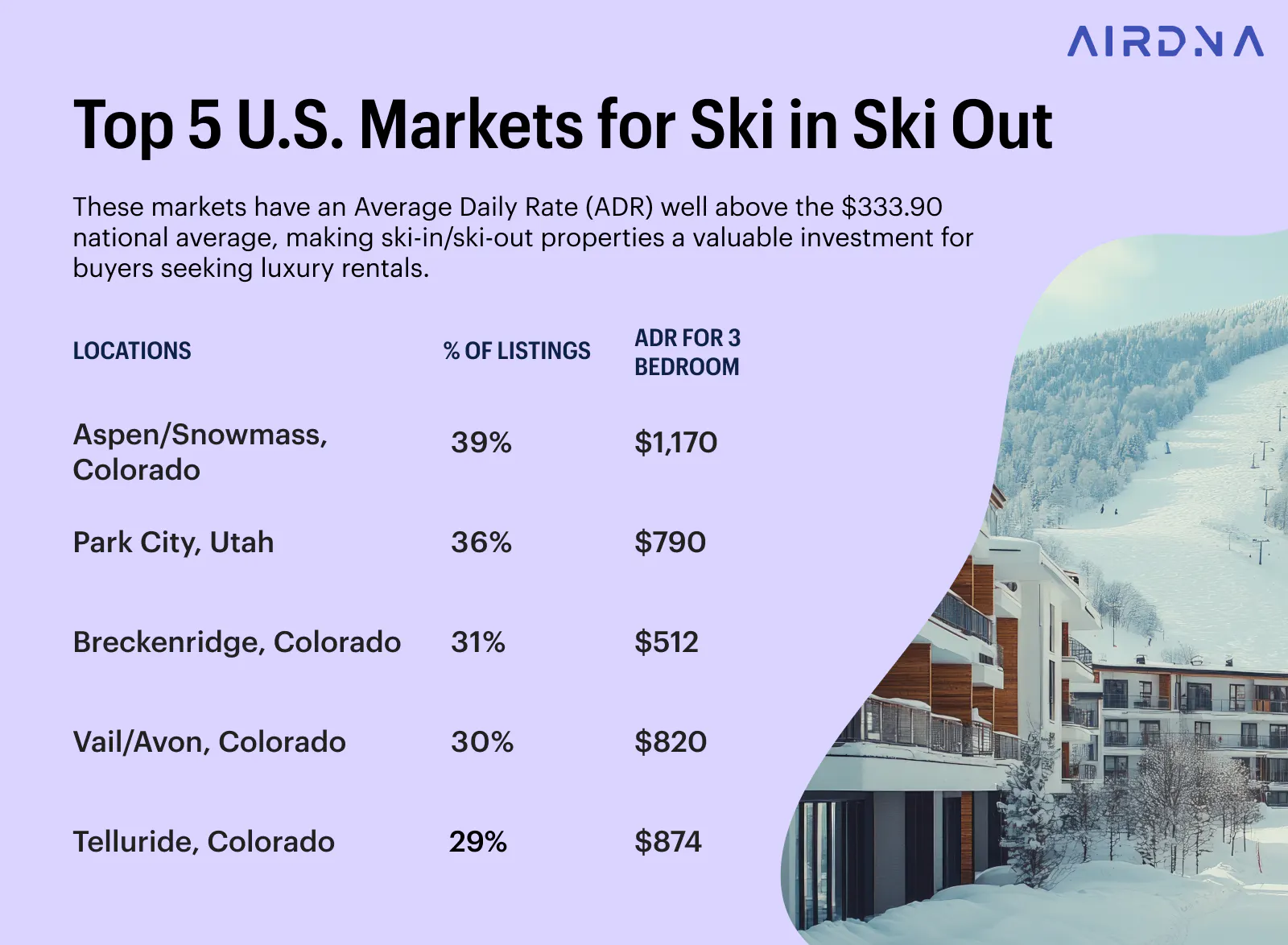
Ski-in/ski-out is not an amenity you can add on a whim. Rather, short-term rental investors are best positioned to seriously consider this amenity as a locational feature of a prospective purchase. If you have the budget to consider a luxury property, the premium nightly rates could be worth the hefty downpayment.
Hot tubs
Looking for an easy(ish) way to get more bookings on Airbnb? A hot tub is one of the highest-performing winter amenities, particularly in ski towns and cold-weather vacation destinations. The appeal is simple: After a long day on the slopes or exploring in chilly temperatures, guests want to relax in a steaming hot tub under the stars.
This demand directly impacts revenue:
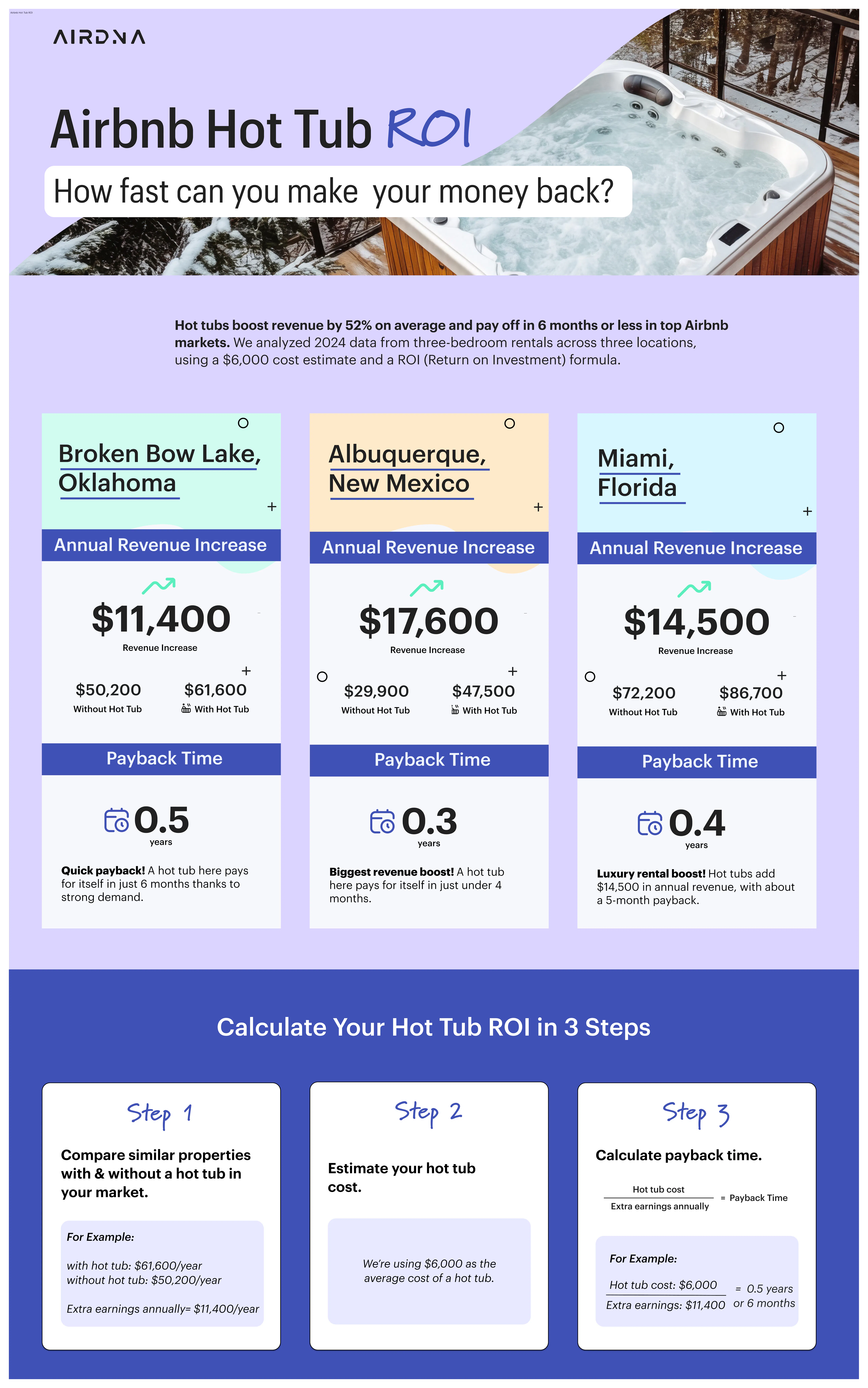
- Properties with hot tubs experience a 9% higher occupancy rate in winter compared to those without.
- Listings with hot tubs command nightly rates that are 32% higher than similar homes.
- Altogether, this results in a 52% increase in revenue per available night during winter months.
While hot tubs are valuable in many winter markets, some destinations see particularly high adoption rates. The majority of listings in the following markets have hot tubs:
- Broken Bow Lake, Oklahoma: 86% of listings.
- Logan, Ohio: 80%
- Gatlinburg/Pigeon Forge, Tennessee: 79%
- Deep Creek, Maryland: 76%
- Park City, Utah: 63%
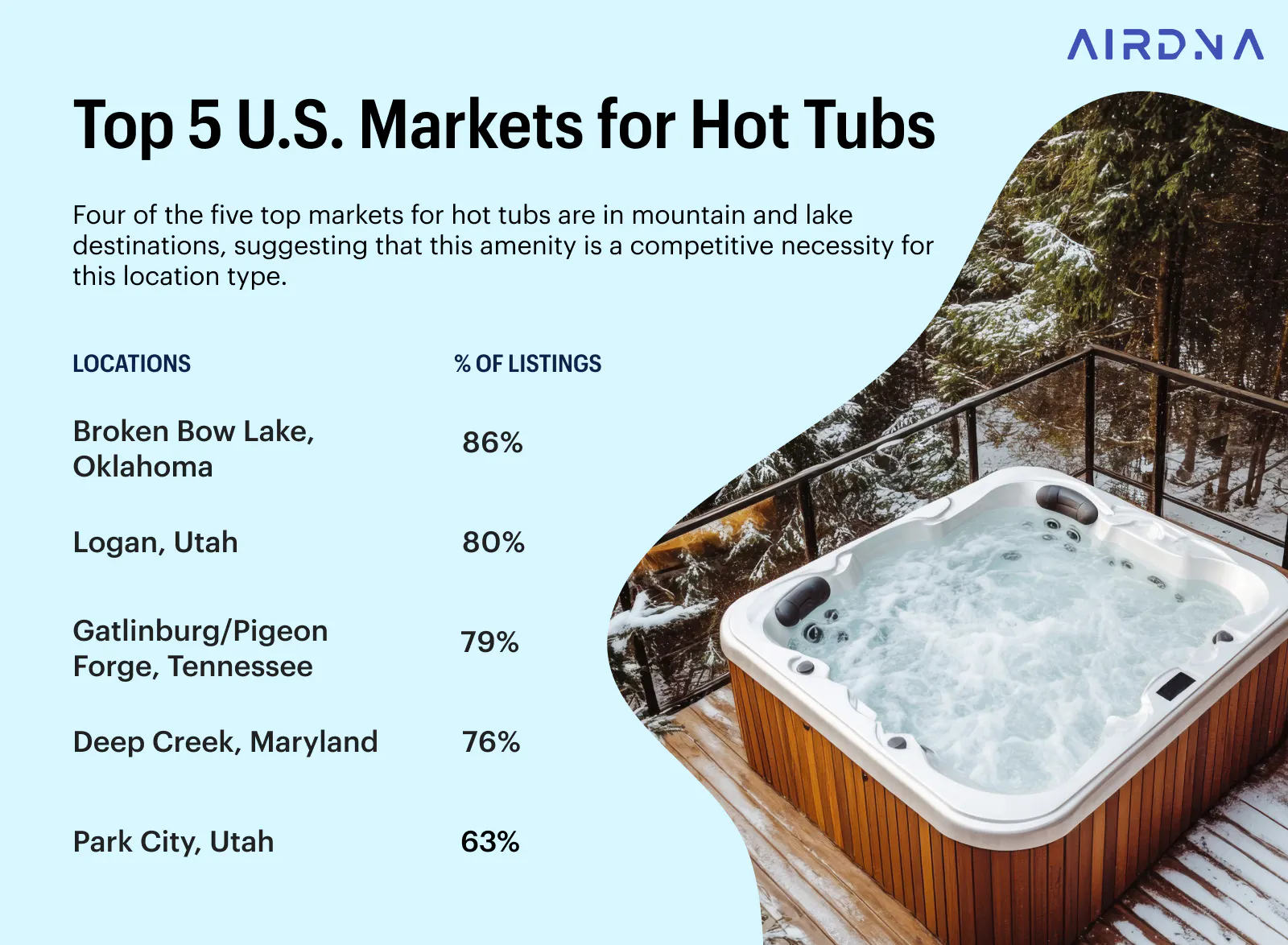
For hosts in ski markets and colder regions, adding a hot tub is no longer just a luxury upgrade – it's becoming a must-have feature for staying competitive in the winter rental market.
Indoor fireplaces
Nothing sets the winter mood quite like a crackling fireplace, and the data shows guests will pay more for that cozy ambiance.
Properties with indoor fireplaces command 11% higher nightly rates and earn 5% more overall in winter compared to similar homes without one. The revenue boost from indoor fireplaces is more modest than hot tubs or ski-in/ski-out access, so it’s important to weigh the investment cost against its returns.
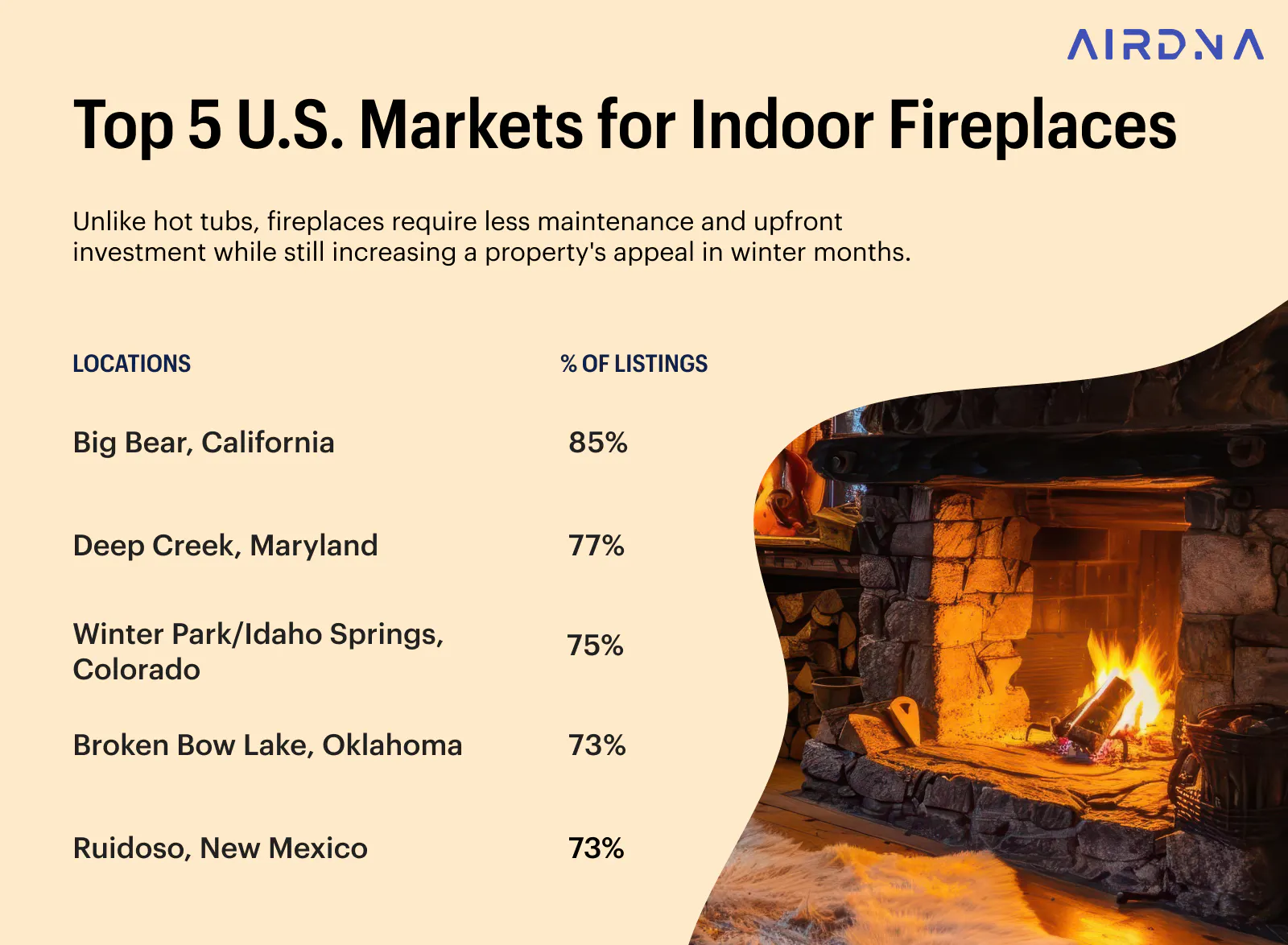
The following markets have the highest concentration of listings with fireplaces:
- Big Bear, California: 85% of listings have an indoor fireplace
- Deep Creek, Maryland: 77%
- Winter Park/Idaho Springs, Colorado: 75%
Do these winter amenities boost Airbnb bookings year-round?
Winter-friendly amenities like ski-in/ski-out access, hot tubs, and fireplaces can make a big impact on bookings, but their value isn’t the same all year. If you’re considering an upgrade, it’s important to think about how demand shifts in different seasons and whether the investment pays off beyond winter.
Take Park City, Utah, for example. In the winter, a home with a hot tub earns 22% more per night than a similar home without one. But in the summer, that extra earning power drops to 15%, since guests aren’t as eager to use a hot tub when the weather is warm.
The change is even more dramatic for ski-in/ski-out properties. These homes earn 20% more per night in winter when guests are paying for the convenience of direct slope access. Once ski season ends, though, the boost shrinks to just 2%. Being right next to the lifts isn’t as valuable in the summer.
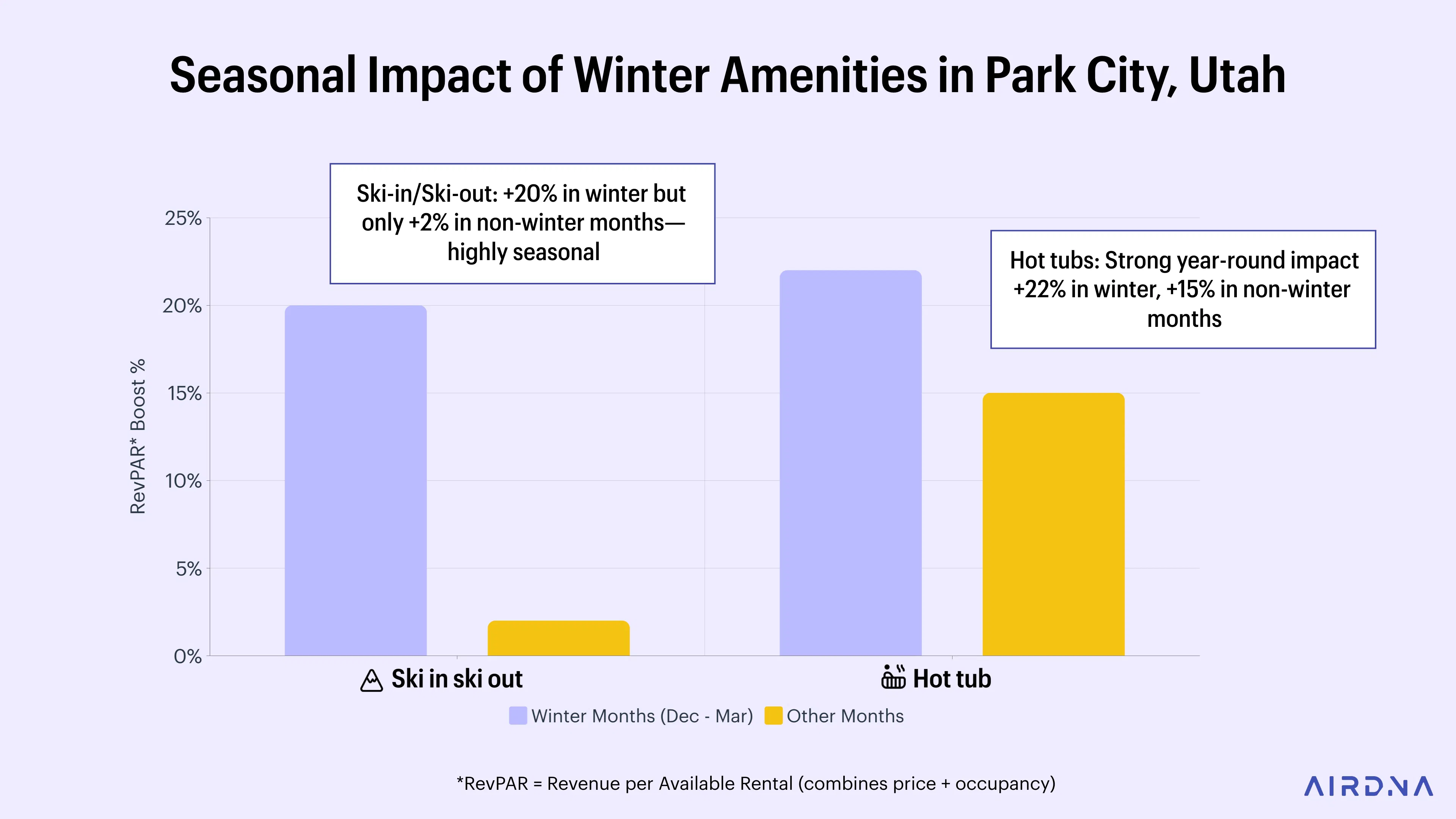
For hosts, the key takeaway is this: Some amenities make a big difference in the winter, but their impact fades when the seasons change. If your market depends on winter travelers, investing in ski-in/ski-out access or a hot tub can be a smart move. But if your area also attracts summer visitors, it's just as important to think beyond the cold months and adjust your approach when winter demand slows down.
How is your STR performing?
Your vacation rental may be amazing, but is it better than your competition? Connect your Airbnb listing to AirDNA to see its Booking Performance Score.
How to Use AirDNA to Decide If Adding an Amenity Is Worth It
Contemplating how to get more bookings on Airbnb and thinking about adding a hot tub, fireplace, or ski-in/ski-out access to your rental?
Before making the investment, it’s smart to check if the upgrade will actually boost bookings and revenue in your market.
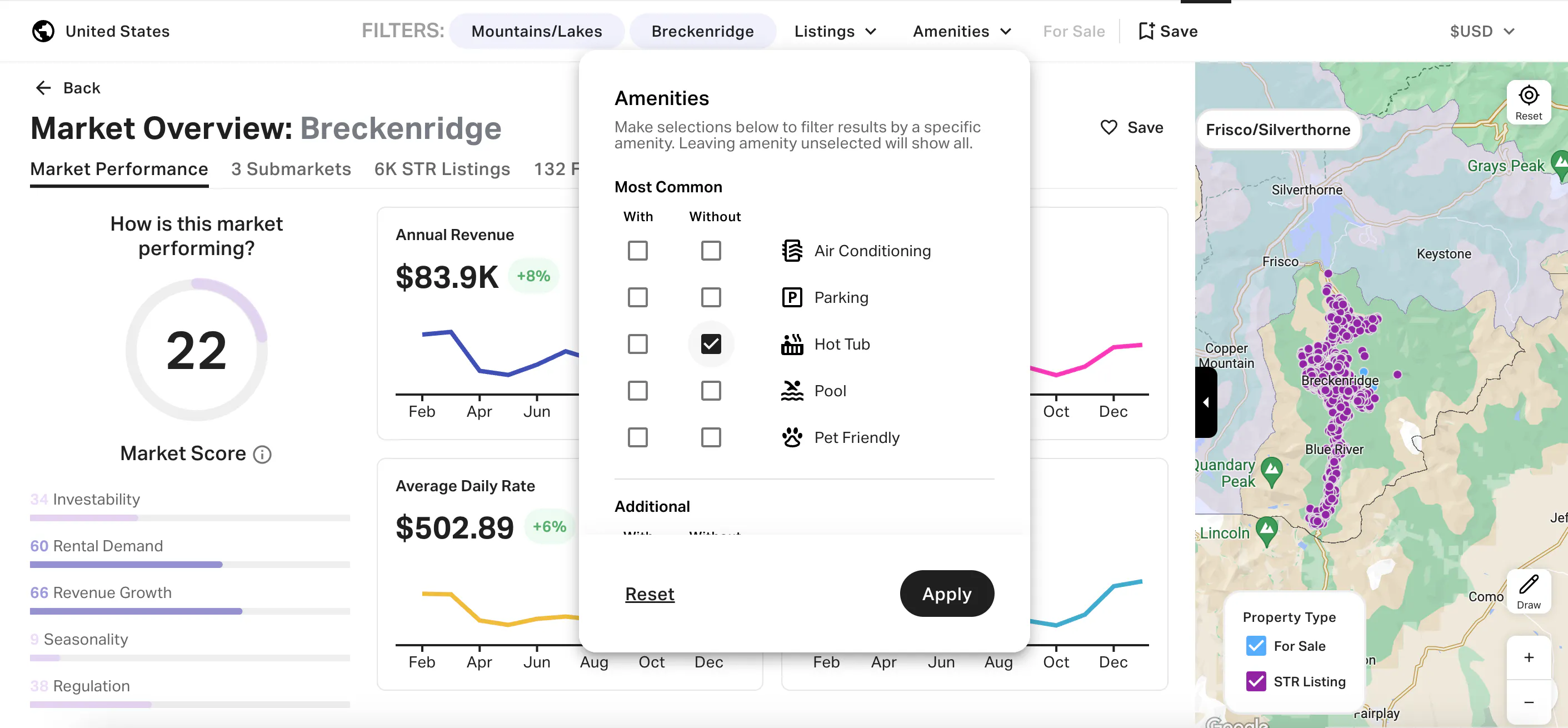
We've used the Breckenridge market as an example to show how you can use AirDNA to choose the right amenities and get more bookings.
Use the amenities filter to compare performance
With AirDNA, you can filter properties by specific amenities and analyze key performance metrics, including:
- Occupancy rate – Do homes with a hot tub or fireplace get booked more often?
- ADR (Average Daily Rate) – How much more do guests pay for listings with these features?
- RevPAR (Revenue per Available Rental) – How much extra revenue does an amenity contribute?
Refine your search to match your property
To get the most accurate comparison, AirDNA allows you to filter listings based on your property type, so you can see how amenities impact homes similar to yours.

- Filter by real estate type, bedroom count, price tier, guest rating, or availability to see how certain amenities affect homes that match your rental.
- For example, if you own a three-bedroom home in a ski town, you can compare how three-bedroom ski-in/ski-out homes perform versus those without slope access.
Analyze trends by season
AirDNA also provides monthly breakdowns of occupancy, pricing, and revenue trends, helping you see when an amenity adds the most value.
- If a hot tub drives higher bookings in winter, but demand for it drops in summer, this data can help you decide whether it’s a worthwhile investment for your market.
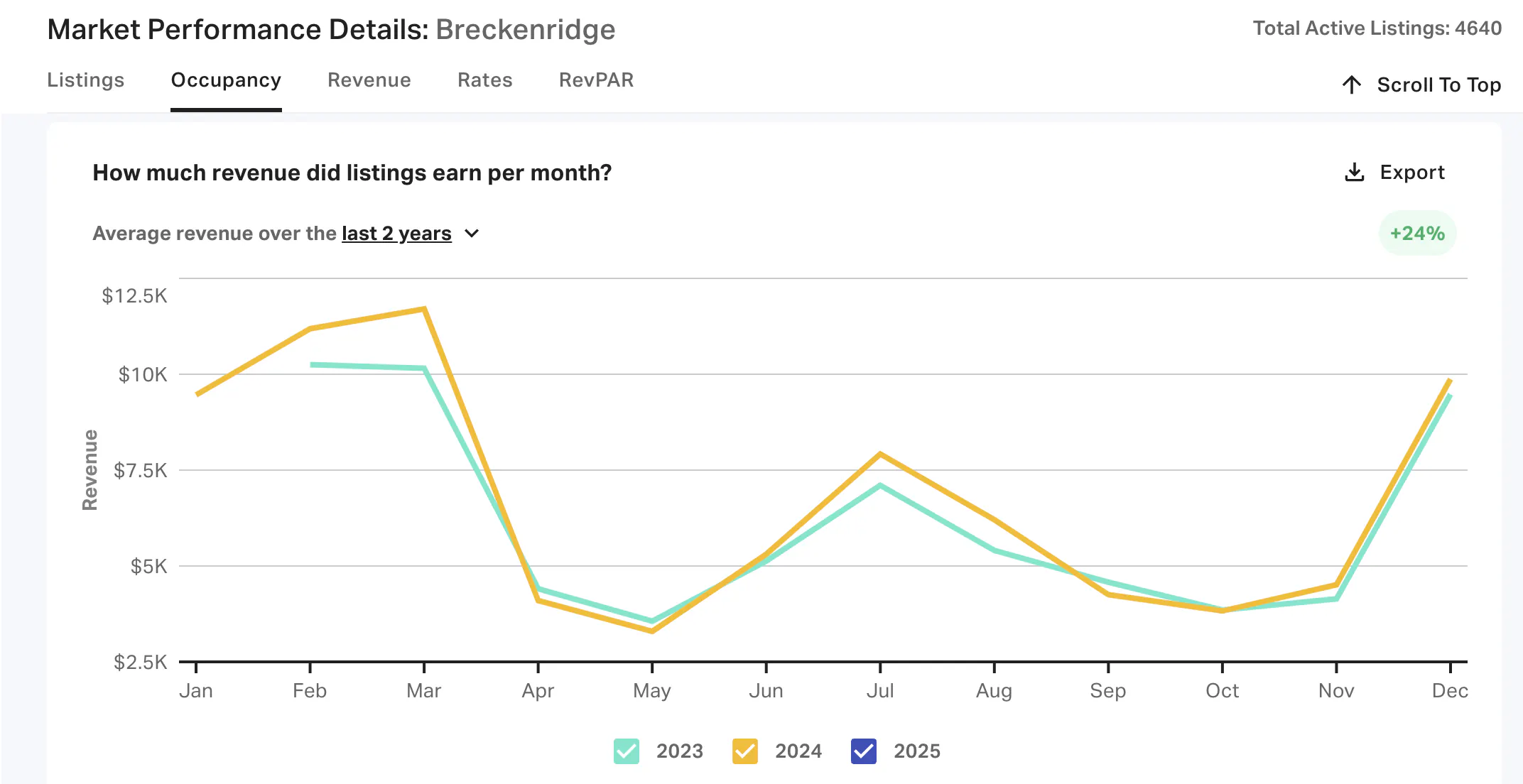
Not every amenity will be worth the cost, but investing in the right features can help your listing stand out and maximize revenue when demand is low. AirDNA makes it easy to see which upgrades actually attract guests, so you can make informed decisions that keep your property booked—not just in peak season, but all year long.
But how to get more bookings on Airbnb in those slower months? Of course, amenities alone won’t solve the challenge of slow seasons. While the right features can help boost bookings, understanding when and why demand dips in your market is just as important.
Smart investments happen here.
AirDNA’s powerful yet easy-to-use tools make hosting and investing a breeze. This means having every insight you need, all in one place, always up-to-date.
Understanding Airbnb’s Slow Season (and When to Expect It)
When is Airbnb slow season?
Airbnb’s slow season is the time of year when demand for short-term rentals is at its lowest. Fewer travelers are searching for accommodations, bookings decline, and average daily rates (ADRs) drop as competition for guests increases.
However, the slow season isn’t the same everywhere—it depends on location, traveler behavior, and seasonal trends. In many markets, demand follows traditional vacation patterns, with peak travel in summer and slower months in winter. But winter can be the most profitable time of year for destinations that rely on ski tourism, snowbird travel, or event-driven demand.
When is Airbnb peak season?
In the U.S., summer is the busiest season for short-term rentals, with July seeing the highest RevPAR, according to AirDNA data. This demand is largely driven by family vacations and increased travel to warm-weather destinations.
However, peak season varies depending on location. While coastal and lakefront markets thrive in summer, ski towns and winter destinations reach their highest occupancy from December through March.
Understanding your market’s specific seasonality pattern is key to maintaining strong bookings year-round. Whether your busiest months align with national trends or follow a different seasonal pattern, adjusting pricing, marketing, and amenities to match demand cycles will help maximize revenue in both peak and off-peak months.
Typical slow seasons by market type
Seasonality impacts every short-term rental market, but when and how demand slows depends on the type of destination.
Understanding your market’s slow season helps you adjust pricing, target different types of travelers, and invest in amenities that keep bookings steady year-round.
Urban markets
City rentals tend to be more stable year-round, but demand often slows in January and February as business travel declines and holiday tourism fades.
Some cities experience dips in late November and December as well, when travelers leave for holiday visits rather than booking city stays. Even in high-demand cities like New York, data shows a noticeable drop in bookings in the first two months of the year before travel picks up again in the spring.
Beach destinations
Markets that thrive in summer see steep demand drops in colder months. From November through February, occupancy rates decline as seasonal tourists disappear. Myrtle Beach, South Carolina, experiences some of its lowest RevPAR during this period, mirroring a trend seen in many coastal destinations. Warmer locations, like Florida’s Gulf Coast, attract snowbirds looking for extended stays, helping soften the seasonal impact compared to more northern beach towns.
Mountain & ski destinations
Ski towns follow the opposite pattern of beach markets, booming in December through March before bookings fall as the snow melts. Destinations like Telluride, Colorado, see nightly rates as high as $700 in winter, yet summer occupancy is much lower unless properties actively cater to hikers, mountain bikers, or festival-goers. Some ski markets, such as Park City, Utah, have successfully extended their seasons by promoting warm-weather attractions, helping to offset the post-ski-season slowdown.
Adventure markets
Destinations centered around hiking, national parks, and outdoor recreation typically see their peak seasons in spring and fall, when weather conditions are ideal. In winter, these markets slow considerably as fewer travelers visit. Moab, Utah, for example, thrives from March through October, drawing visitors to Arches and Canyonlands National Parks, but demand drops significantly in the winter months when colder temperatures limit outdoor activities.
The Best Strategies to Get More Bookings on Airbnb
Every host faces slow seasons, but a few smart strategies can help keep bookings coming in no matter the time of year. Here are some Airbnb booking tips to help you maximize reservations year-round.
Optimize your Airbnb listing
A well-optimized listing ranks higher in Airbnb search results, making it easier for potential guests to book your property. Small updates can make a big impact on visibility and bookings. Here are some Airbnb listing tips to increase your visibility and keep bookings steady, even during slower seasons:
- Use SEO-friendly keywords in your title and description to attract seasonal travelers. Phrases like "cozy winter Airbnb" or "perfect summer getaway" help match guest searches.
- Update your photos seasonally to highlight key features. In winter, showcase fireplaces, hot tubs, and ski-in/ski-out access. In summer, focus on patios, pools, and outdoor seating.
- Highlight must-have amenities that increase demand. Listings with hot tubs, for example, earn 52% more per available night in winter.
Use dynamic pricing strategies
Adjusting pricing based on seasonality helps keep occupancy rates high, even in slower months.
- Adjust rates for slow seasons to stay competitive. AirDNA Rate Recommendations track market demand to suggest optimal rates for maximum profit.
- Use discounts strategically to attract long-term stays. Offering weekly or monthly discounts appeals to digital nomads, remote workers, and extended vacationers.
- Capitalize on holiday demand by increasing rates during peak travel dates, such as New Year’s Eve, Valentine's Day, and ski season weekends.
Try Our Vacation Rental Pricing Tool
Use Dynamic Pricing to optimize your pricing strategy.
Target the right audience for seasonal demand
Different travelers book Airbnbs at different times of the year. Tailoring your listing to match their needs can lead to higher bookings and better reviews.
For winter travelers:
- Market to skiers, snowboarders, and holiday vacationers looking for a warm and cozy stay.
- Feature fireplaces, heated floors, boot dryers, and ski storage to appeal to cold-weather travelers.
For work-from-anywhere guests:
- Highlight high-speed Wi-Fi, dedicated workspaces, and quiet environments for remote workers.
- Offer extended-stay discounts to attract professionals looking for seasonal relocation options.
For family-friendly stays:
- Provide cribs, board games, and kitchen essentials to make traveling with kids easier.
- Market your space as a stress-free vacation rental for families with plenty of amenities for all ages.
By optimizing your listing, adjusting pricing strategies, and targeting the right audience, you can attract more guests and maximize revenue, no matter the season.

List on multiple platforms to expand your reach
Relying solely on Airbnb can limit your bookings—especially during slow seasons. Expanding to multiple platforms increases visibility, attracts different types of travelers, and helps you maintain steady occupancy throughout the year.
Here’s where else you can list to lessen the impact of slow season:
- Vrbo – A top choice for family-friendly and larger vacation rentals. Vrbo caters to travelers looking for whole-home stays, making it ideal for properties in resort towns and leisure destinations.
- Booking.com – Popular with international travelers and urban visitors. This platform attracts guests looking for both short stays and extended trips, helping to fill gaps in your calendar.
- Niche platforms – Specialty sites like Plum Guide (luxury stays) or BringFido (pet-friendly rentals) can connect you with highly targeted guests willing to pay a premium for specific features.
You might also want to consider a direct booking site. A direct booking site lets you accept reservations without platform fees and gives you more control over your business. Instead of relying solely on Airbnb or Vrbo, you can build a loyal guest base and keep more of your earnings.
Benefits of having your own booking site:
- No third-party fees – Keep 100% of what guests pay.
- Encourage repeat stays – Offer discounts to past guests and build long-term relationships.
- Market your rental independently – Promote your listing through social media, email campaigns, and Google searches.
Many property management systems (PMS) offer easy website integrations, so you can manage direct bookings alongside other platforms without extra hassle.
Run seasonal promotions and social media campaigns
Running promotions and using smart marketing tactics can help keep your Airbnb booked, even during slower months. Offering seasonal promotions is one of the easiest ways to attract more guests:
- Last-minute discounts encourage travelers to book open nights on short notice.
- Special packages create added value to the guest experience:
- Winter travelers: Offer ski passes or discounted gear rentals.
- Couples and weekend getaways: Include wine, chocolates, or spa vouchers.
- Adventure seekers: Provide guided tours, bike rentals, or national park passes.
These small incentives can make your property stand out and give travelers a reason to book your rental over a competitor’s.
Social media and word-of-mouth marketing can also boost bookings. Sharing high-quality photos and videos of your property on Instagram and Facebook—especially highlighting seasonal features like a fireplace in winter or an outdoor patio in summer—helps attract travelers looking for unique stays.
Other effective tactics include:
- Using location-based hashtags to reach travelers searching for accommodations in your area.
- Engaging with potential guests in travel groups to build awareness and answer questions about your rental or location.
- Encouraging past guests to refer friends and family by offering them a discount on a future stay when someone they refer books.
Repeat guests and referrals often turn into direct bookings, helping you rely less on third-party platforms while keeping your calendar full.

Work the Airbnb algorithm to your advantage
Airbnb’s search algorithm determines which listings appear first when travelers search for a place to stay—and higher-ranked properties get seen (and booked) more often. This is especially important during slow seasons, when fewer guests are searching and competition increases. Understanding how the algorithm works and keeping your listing active can help boost visibility, even when demand dips.
Airbnb prioritizes listings based on several key factors:
- Response time: Hosts who reply to inquiries quickly rank higher in search results.
- Positive reviews: A strong rating and good guest feedback improve visibility.
- Recent bookings: Properties with frequent reservations are seen as more desirable and rank higher.
- Listing completeness: Airbnb favors listings with detailed descriptions, updated availability, and high-quality photos.
During slow seasons, small actions can make a big difference in helping your listing stand out:
- Respond to inquiries within an hour. Fast response times show Airbnb (and potential guests) that you’re an engaged host.
- Maintain a 90%+ response rate. A strong response rate keeps your listing competitive, even when demand is low.
- Update your listing regularly. Adjust pricing, refresh your photos, or tweak your description—active listings signal to Airbnb that they’re well-maintained.
Since Airbnb favors listings that get regular bookings, a high search ranking on Airbnb helps you stay visible—even during slow seasons—so more potential guests can find and book your place. By staying responsive, optimizing your listing, and keeping your profile active, you can increase visibility and attract guests—even when competition is at its highest.
For more ideas to help you through a seasonal slump, read our guide on how to boost your off-season bookings.

FAQs
Why are my Airbnb bookings slowing down?
If you’re noticing a slow down in Airbnb bookings, you’re not alone. Most rentals go through slower periods depending on the season, guest travel trends, and competition. Beach towns tend to struggle in winter, ski markets slow down in summer, and cities often see a dip in bookings after the holidays. Knowing when your market slows down can help you adjust your pricing, marketing, and listing strategy to keep guests coming year-round.
What are the slowest Airbnb months?
The slowest months for Airbnb depend on location, but seasonal trends have a big impact on when bookings drop. For many markets, the slowest time of year falls between late fall and early spring, when travel slows and demand decreases. On the flip side, July is typically the busiest month across the U.S., when vacation travel is at its peak. If your market has a clear slow season, planning ahead with pricing adjustments, promotions, or targeting different types of travelers can help keep bookings steady year-round.
How can I get more winter bookings on Airbnb?
Winter can be a slow season for some markets but a peak time for others. If your rental is in a cold-weather destination, highlight winter-friendly features like a hot tub, fireplace, or ski-in/ski-out access to attract travelers looking for a cozy retreat. If you’re in a beach town or city, offering discounts for extended stays, remote workers, or snowbirds looking to escape the cold can help fill your calendar.
Should I lower my prices during slow months?
Dropping your prices can help attract budget-conscious guests, but it’s not always necessary. Instead, consider offering longer stay discounts, last-minute deals, or special perks like flexible cancellations or bundled experiences (such as ski passes or restaurant vouchers). Making small adjustments to your pricing and promotions can help boost bookings without drastically cutting your rates.
ARTICLE SUMMARY
Winter means slow season for most Airbnbs. Learn how to get more Airbnb bookings with the right amenities, plus proven strategies to thrive in any off-peak period.
Linda Rollins
Senior Research Analyst
Linda Rollins is a Senior Research Analyst at AirDNA and a self-managing short-term rental host, which means she understands the market as both an analyst and an operator. She writes research and blogs for AirDNA and for Adapt, its revenue management tool, making her work a go-to resource for investors trying to find and size up the right opportunities, and for operators looking to understand changing market dynamics and find concrete ways to improve occupancy, rates, and guest experience. Her data is regularly cited in major news outlets, and she has a knack for bringing both the numbers and the story behind them. In her free time, Linda enjoys spending time with her family, traveling, and looking for good eats.
