11 Tips to Manage an Airbnb Remotely
Published: December 18, 2025
Last updated: September 25, 2026

Bram Gallagher
Key Takeaways:
- With the right setup, you can run an Airbnb remotely in just about any market.
- Automate what you can, and count on your cleaners and handymen to handle anything that needs a physical touch.
- Short-term rental data helps you make better choices from a distance, including pricing your listing right and spotting solid investments.
Imagine running a successful short-term rental in a top-performing vacation market without ever living there. Remote Airbnb management makes that possible, giving you the freedom to invest in the best locations, not just the ones closest to home.
However, managing an Airbnb remotely takes more than a lockbox and a prayer. It requires the right tools, systems, and a deep understanding of the market you’re operating in.
Whether you’re managing one listing or scaling a full portfolio from afar, this guide walks through 11 proven strategies to manage your Airbnb remotely, with information on how AirDNA can help you make decisions every step of the way.
1. Understand Your Market
Whether you’re five miles away or five states away, understanding how a short-term rental (STR) market really works is one of the most important steps you can take as an STR host. Without it, you’re relying on guesswork for things like pricing, occupancy, and long-term revenue potential.
Understanding your market means digging deeper than just browsing a few listings. It’s about knowing:
- What similar listings actually earn, so you can set realistic income expectations.
- Which neighborhoods perform best, not just where properties look nice on paper.
- What guests in that market value most, like whether a hot tub or workspace makes a difference.
- When demand rises and falls throughout the year, so that you can prepare for slow and busy seasons.
- What regulations apply in your chosen area because rules vary widely, and you need to stay compliant.
- How competitive your pricing is based on what others are charging and how often they're booked.
- Whether the market has long-term potential, by looking at year-over-year performance trends.
You won’t get that full picture just from browsing listings on Airbnb. That might give you a vibe, but not the data to back your investment.
That’s where AirDNA comes in. Instead of guessing what’s happening in a market you’ve never set foot in, you get a clear look at the numbers on the ground: average daily rates (ADR), occupancy, revenue potential, and overall market strength all in one place.
Let’s say you're based in Chicago but considering buying a short-term rental in South Carolina. You’re not familiar with the area, but you’ve heard it has potential as a short-term rental market. Instead of flying out right away or relying on guesswork, you can search South Carolina in AirDNA and get a quick, data-driven view of how the market is performing.
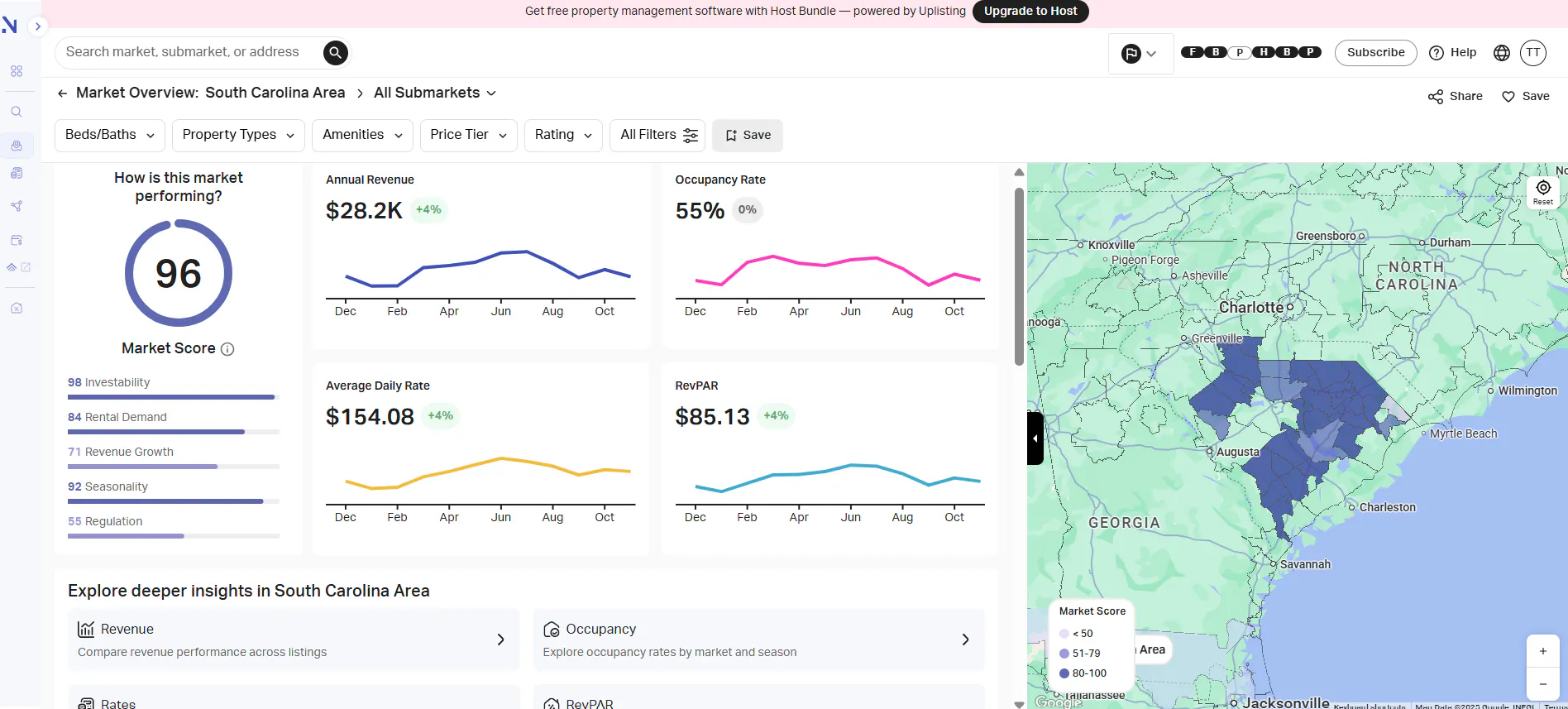
One of the first things you'll see is the Market Score: a number from 1 to 100 that helps you understand how strong the area is for short-term rentals overall. It factors in things like demand, seasonality, revenue potential, and regulation risk, so you can quickly size up whether it’s worth exploring further.
You’ll also see key insights like how much properties are earning, how often they’re booked, and how demand shifts throughout the year. You can even browse properties for sale in the selected market and filter by size, price, and yield to find options that align with your goals.
All of this helps you figure out if the area’s a good fit, what kind of property to consider, and what you might realistically expect to earn. You don’t have to be local to manage an Airbnb remotely. You just need the right information in front of you.
2. Get Professional Photos
If you’re managing your Airbnb remotely, you can’t drive over to snap a few photos in a jiffy, nor would you want to. Good photos of your listing have repeatedly been proven as critical to success. AirDNA data indicates that the more photos you have for your Airbnb listing, the higher your occupancy rates. Between the spring of 2023 and 2024, listings with 40 or more photos had an average occupancy rate of 55%, compared to just 50% for listings with one to ten photos.
You can also help your listings stand out by investing in professional photography from the start. Listings with high-quality images consistently outperform those with amateur photos, often seeing significantly higher booking rates and revenue.
Our recommendation is to focus on making a stunning lead photo, then follow up with at least 20 photos that capture both the interior and exterior. Don’t forget photos of key amenities, like your well-stocked kitchen, dedicated working space, washer/dryer, and anything else that will make you stand out and persuade guests that your listing is the right one for them.
Research real estate photographers near your property or ask your real estate agent for a referral. The best way to get images that will entice your guests is to work with a professional photographer who specializes in photographing homes and making them look good.

3. Hire Reliable Cleaning Services
Cleanliness has a big impact on your Airbnb ratings and your revenue, especially in post-pandemic travel. A small increase in Airbnb cleanliness ratings (even just 0.1 stars) can add $2–$3 to your nightly RevPAR, according to AirDNA data.
For remote Airbnb managers, this is especially crucial as you can't clean yourself. Find a trustworthy local cleaning team and share your booking calendar with them. Consider having a local co-host double-check their work or outsource cleanings to a property management service.
Once you have a reliable cleaning team in place, turnover should become a well-oiled machine, one that helps boost your occupancy, improve guest reviews, and keep things running smoothly without requiring you to be on-site.
That said, expecting guests to do nothing at checkout isn’t always practical, especially when you manage your Airbnb remotely. A few small tasks can go a long way in helping your cleaners do their job efficiently and keeping your property secure between stays.
Things like taking out the trash, starting the dishwasher, or locking up properly are easy for guests but make a big difference when you’re not nearby to double-check. In many vacation rental markets, these types of light checkout requests are common and often expected.
Work with your cleaners to set realistic expectations, then clearly communicate those to guests in a guide book as well as a message towards the end of their stay and. It’s about finding the right balance between being hands-off and keeping operations running smoothly from afar.
4. Use Remote Management Software
Managing an Airbnb remotely becomes significantly easier with the right property management software (PMS). These tools, including platforms like Uplisting, act as your virtual command center. Software allows you to oversee multiple aspects of your rental business from anywhere in the world.
Quality property management software can automate many time-consuming tasks, freeing you up to focus on strategy and growth when managing your Airbnb remotely. Look for features like:
- Centralized calendar management across multiple booking platforms
- Automated messaging for guest communications
- Financial reporting and accounting features
- Task management for cleaning and maintenance
You'll have a clearer overview of your property's performance and be better equipped to make data-driven decisions by centralizing these functions. This is particularly valuable when you can't physically be at your property to oversee operations, a common challenge for hosts running Airbnbs remotely.
Take the time to research and trial different options to find the best fit for the size and scale of your Airbnb business.
5. Build a Reliable Local Team
No matter how flawlessly you manage your listings, sometimes in-person really is better.
You could hire a professional property management company. These professionals can handle everything from guest communications to maintenance, allowing you to be truly hands-off.
However, if you prefer more control or want to minimize costs, you can build your own network of local support. This local team will be your eyes and ears on the ground.

Have a go-to list of handymen, plumbers, and electricians you can call if an issue arises.
Pro tip: if there's an Ace Hardware nearby, look into their Ace Handyman service. They're typically responsive and can fix a variety of issues. For remote Airbnb hosts, reliable services like these can be absolute lifesavers!
A co-host/house manager comes in very handy during these situations, as they can drop off replacement items or meet maintenance workers at the property as needed. They provide essential support when you're managing your Airbnb from a different city, state, or even country.
Whether you choose full-service management or put together your own team, there is a cost involved. However, the peace of mind, time saved, and guest experience often justify the expense.
6. Use Technology to Keep Things Running Smoothly
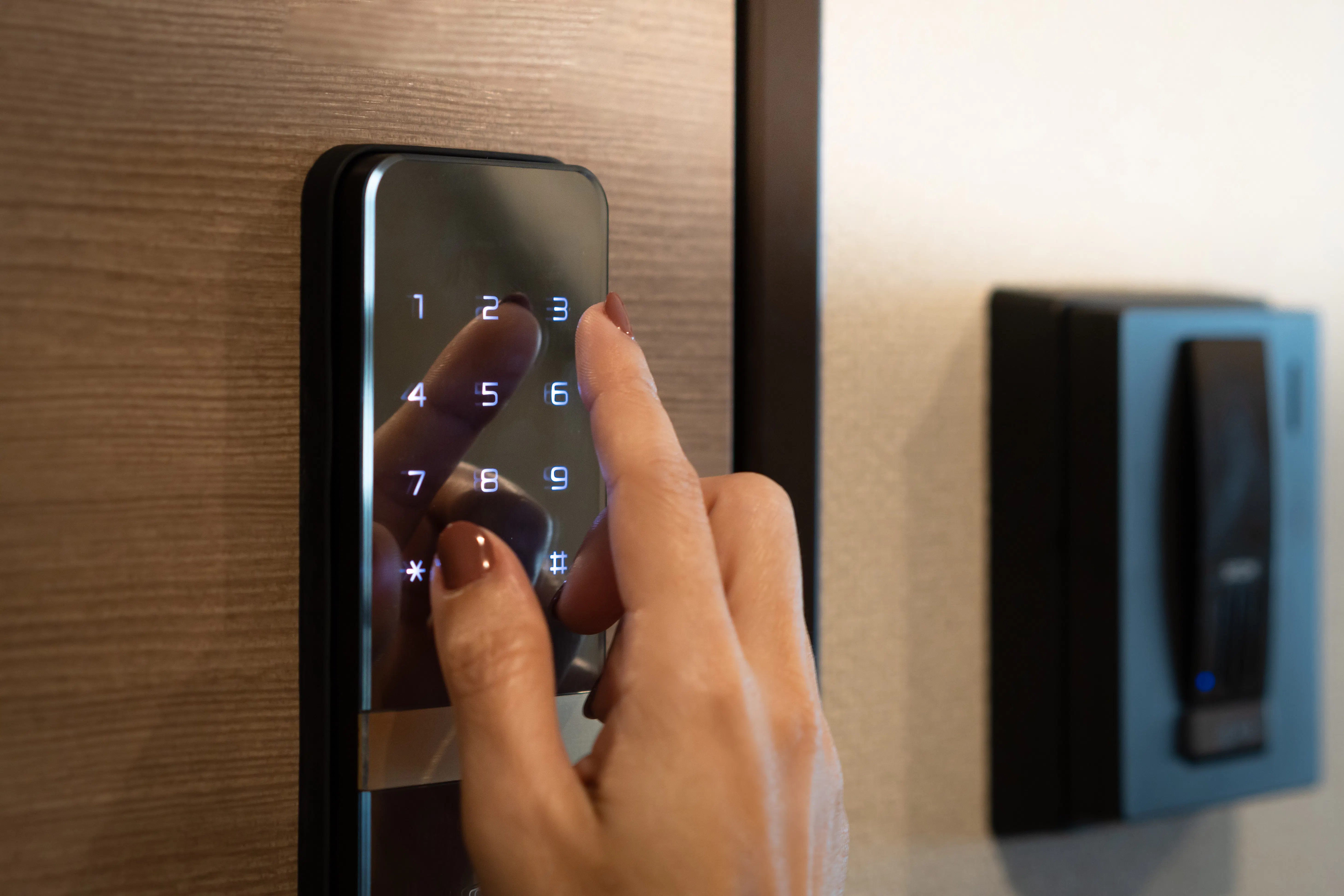
When you're managing an Airbnb remotely, your setup needs to work without you being there. That starts with check-in. A smooth, self-service arrival sets the tone for the guest’s entire stay.
You can use tools like lockboxes or key exchanges, but smart locks are often a better fit for remote hosts. Guests get a custom code, and you don’t have to coordinate key handoffs or worry about lost keys.
Beyond entry, smart home technology can help everything run more efficiently. Thermostats, lights, and sensors can help manage energy use, flag potential issues, and make the space more comfortable for guests, all without needing to be on-site.
Even check-out can be automated with scheduled messages and smart devices that help shut things down between guests.
When the right tools are in place, your rental runs more smoothly, guests have a better experience, and you spend less time troubleshooting from a distance.
7. Automate Guest Communications

All guests have the same basic questions: What’s the address? How do I get in? When’s check-out? They expect clear, timely answers, no matter where you’re hosting from.
When you’re managing remotely, especially across time zones, staying on top of every message can get tricky. Automation can take a lot of that pressure off your plate. Set up scheduled messages for key moments like booking confirmation, check-in instructions, and check-out reminders. Add an auto-reply to let guests know when they can expect a response if you're unavailable.
Tools like Uplisting make this easy by letting you build out message templates and triggers that send the right info at the right time. You can customize communication based on the booking platform, length of stay, or even the day of the week, so your guests always feel informed and looked after, even if you're asleep when they check in.
Clear, automated communication helps reduce questions, avoids confusion, and starts the stay off on the right foot, all of which matter even more when you’re not nearby to step in personally.
8. Develop a Guest Screening Process
Without being physically present to meet guests, you need to ensure you're welcoming responsible individuals onto your property.
Start by carefully reviewing each booking request. Look for complete profiles with verified information and positive reviews from other hosts. Be cautious with new accounts or unusual booking patterns, especially for longer stays or high-value bookings.

Implement a pre-booking questionnaire to gather more information about potential guests. Ask about the purpose of their trip, the number of guests, and whether they've read and agree to your house rules. This not only helps you screen guests but also sets clear expectations from the start.
Consider using identity verification tools offered by booking platforms or third-party services. These can provide an extra layer of security by confirming guests are who they claim to be. We're not saying you need to go full CSI, but using identity verification tools can give you that extra peace of mind.
Don't hesitate to communicate directly with guests before confirming a booking. A quick message exchange can reveal a lot about a guest's intentions and communication style. Trust your instincts; if something feels off, it's okay to decline a booking.
Remember, while it's important to be thorough, yourguest screening process should be fair and non-discriminatory. Focus on behaviors and verifiable information rather than personal characteristics.
9. Provide a Detailed House Guidebook
A clear, thoughtful Airbnb guidebook is one of the most valuable tools a remote Airbnb host can have. Think of it as your stand-in at the property: a way to anticipate guest needs, answer common questions, and create a smoother stay without being physically present
Your guidebook should cover all the basics of the property, including:
- Check-in and check-out procedures
- Wi-Fi passwords and instructions
- How to operate appliances and entertainment systems
- House rules and emergency contact information
Beyond these essentials, include local recommendations to add value to your guests' stay. Curate a list of nearby restaurants, coffee shops, and grocery stores. Go above and beyond by having your boots-on-the-ground team leave welcome baskets for guests that showcase local vendors. Consider adding specific suggestions to your guidebook recommendations that account for common dietary needs, like gluten-free or vegan options.
Although you're managing your Airbnb remotely, you're still in the hospitality business. Be prepared to field queries that might not be covered in your guide. You may receive unexpected questions, so be ready to do quick research if needed. Even if guests could find this information themselves, your willingness to help improves their experience and demonstrates good hospitality.
10. Understand Local Regulations
Short-term rental rules can vary widely, even between neighborhoods in the same city. That’s why you should do your research before buying, especially if you’re planning on managing the property remotely.
Don’t assume that just because other listings are nearby, your property will be allowed too. Some areas have rules around permits, minimum night stays, or whether short-term rentals are permitted at all. To help with this step, check out our guide to researching short-term rental ordinances in your area.
AirDNA also makes it easier to spot red flags early. Each market’s dashboard includes a Regulation score, which is part of the overall Market Score.
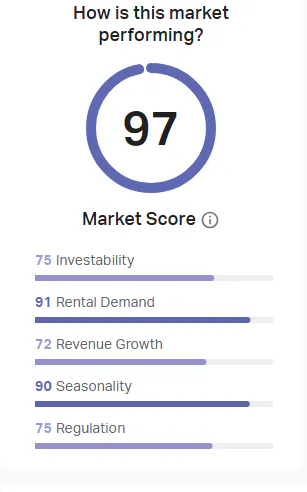
The regulation score rates the potential risk of local restrictions based on what’s currently in place, so you can quickly gauge whether a market might be more tightly regulated. The higher the Regulation Score, the fewer regulations there are that may affect your Airbnb investment.
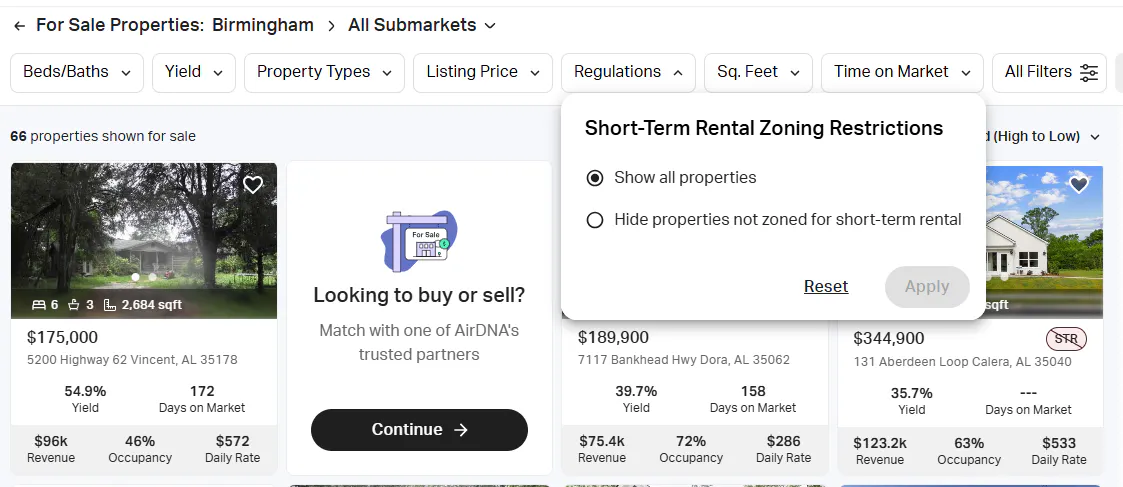
Plus, if you’re exploring For Sale Properties in AirDNA, you can filter out homes that aren’t zoned for short-term rental use. That means less guesswork and more confidence as you evaluate properties you may be looking at managing remotely. Keep in mind, though, that zoning ordinances are just one type of short-term rental regulation and you still need to do your research to understand if there are residency requirements, occupancy caps, minimum night stay requirements, tax structures, or other red tape that limits Airbnb operations.
11. Use Dynamic Pricing
If you’re managing your Airbnb remotely, pricing can be one of the hardest things to get right. Without local insight, it’s tough to know when to raise or lower your rates or by how much. That’s why many remote Airbnb hosts use dynamic pricing to stay in sync with market demand.
Dynamic pricing automatically adjusts your nightly rates based on real-time factors like seasonality, local demand, day-of-week trends, and how far in advance people are booking. It helps you fill gaps, make the most of peak periods, and stay competitive, even if you’re not around.
However, to use dynamic pricing effectively (or simply price your Airbnb more effectively on your own), it helps to understand how other listings in your market are performing.
A comp set, short for comparable set, is a group of properties similar to yours in location, size, and amenities. Reviewing the booking patterns, pricing, and availability in your comp set helps you gauge how your rental stacks up and where your pricing might need to shift.
In AirDNA, you can connect your listing and instantly view a curated list of comparable properties nearby.
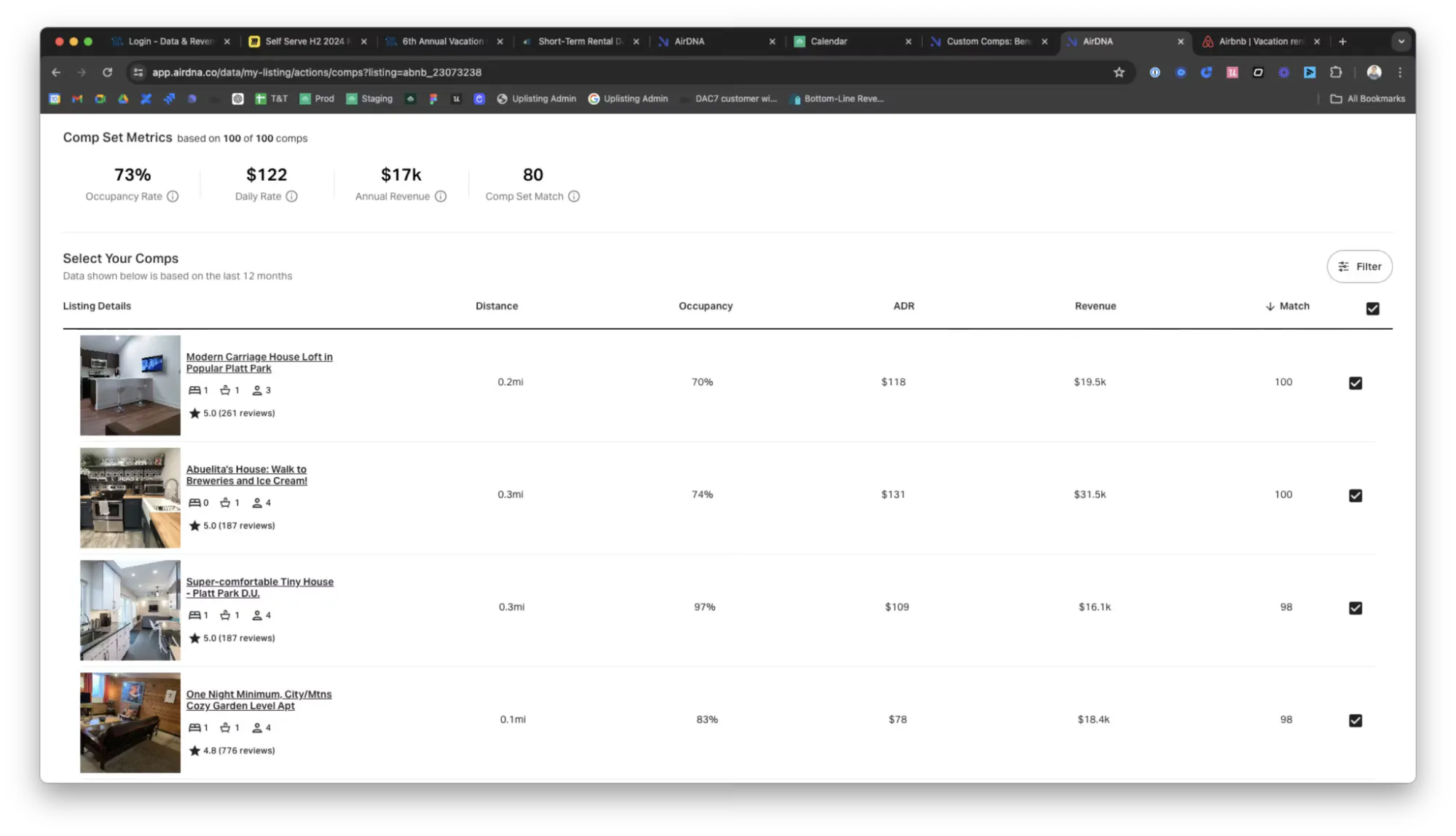
From there, filter based on things like guest capacity, review count, or specific amenities to get the most accurate apples-to-apples view.
Once you’ve saved your comp set, you can monitor key pricing and performance data over time.
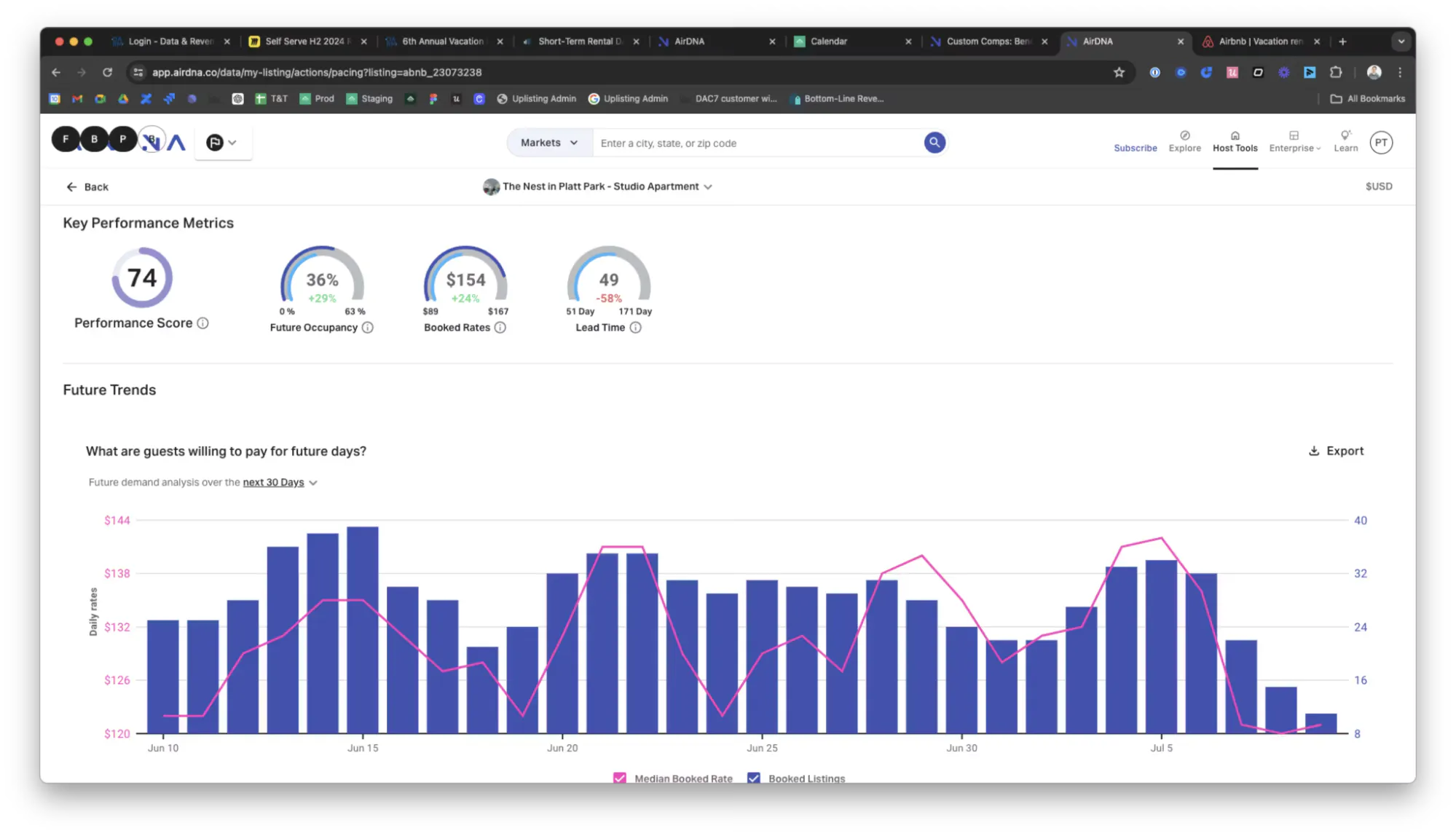
Together, these tools give you a clear edge, whether you're adjusting prices manually or plugging insights into a pricing model. For a deeper dive, check out our full guide to Airbnb pricing models
Common Mistakes of Remote Airbnb Management
Managing an Airbnb remotely comes with a lot of freedom, but also a steep learning curve. When you're not nearby to check in, handle issues, or stay plugged into the local scene, small cracks in your process can quickly lead to bigger problems.
Here are some of the most common mistakes hosts make when managing from afar:
- Double bookings: Forgetting to block off dates across platforms is easy without calendar syncing. One missed update can lead to two guests arriving at the same time.
- Slow or missed guest communication: Switching between inboxes or managing messages manually can cause delays, especially tricky if you're in a different time zone.
- Inconsistent pricing: Without real-time market data, it's hard to adjust for seasonal demand or local events, which can leave money on the table.
- Turnover coordination issues: Remote hosts often struggle to keep cleaning schedules in sync with bookings, leading to rushed turnovers or missed cleanings.
- Last-minute scrambles: If you forget to send check-in instructions, restock supplies, or confirm cleanings, you're stuck playing catch-up from a distance.
The good news? These aren’t hard problems to solve, if you have the right systems in place.
That’s where tools like Uplisting come in. A PMS helps you automate guest messaging, sync calendars, manage turnovers, and adjust pricing, all from one dashboard.
Key Responsibilities for Remote Airbnb Hosts
Think you can kick back and relax just because you've got remote management tools and a local team? Not so fast! While you can handle a lot of the day-to-day grind of running your Airbnb remotely, you've still got some important owner duties to keep your Airbnb thriving.
Schedule regular trips
Even with excellent remote management systems in place for your Airbnb, it's crucial to visit your property periodically. These trips allow you to:
- Assess the overall condition of your property
- Identify any maintenance issues that may have been overlooked
- Ensure your local team is meeting your standards
- Get a feel for the guest experience firsthand
- Stay connected with the local community and market trends
Aim to visit at least once or twice a year, or more frequently if possible. These visits can help you make informed decisions about upgrades, pricing strategies, and overall property management.
Create digital cleaning and inventory checklists
While your cleaning team handles the day-to-day tasks, it's your responsibility to set and maintain standards. Develop comprehensive cleaning checklists and item re-stock lists to ensure consistency and quality in cleaning procedures and the overall guest experience. These should include:
- Detailed cleaning procedures for each room
- A list of supplies to be restocked (toiletries, kitchen essentials, etc.)
- Any special instructions unique to your property
Regularly review and update these lists based on guest feedback and your own observations during property visits.
Make friends with your neighbors

Building good relationships with your property's neighbors is crucial, especially when you're not there regularly. Friendly neighbors can:
- Keep an eye on your property and alert you to any issues
- Provide a local point of contact in case of emergencies
- Offer valuable insights about the neighborhood and local events
Introduce yourself to the neighbors during your visits, and consider leaving them your contact information. Be responsive to any concerns they might have about your rental property. Good neighbor relations can contribute significantly to the smooth operation of your remote Airbnb. Plus, short-term rental hosts that make an effort to engage with their neighbors show they care about thebenefits of their Airbnb to the community, not just their own bottom line.
Why Run an Airbnb Remotely?
Running an Airbnb remotely offers hosts a smarter, more flexible approach to real estate investing. When you're not tied to where you live, you can focus on the markets that actually make sense for your goal, whether that means stronger returns, better seasonality, or more stable regulations.
This kind of strategy opens the door to:
- Investing in high-performing vacation spots without relocating
- Diversifying across markets to reduce risk
- Building a portfolio that works for you, not just one tied to your zip code
Curious what this looks like in real life? This short video features a remote host who manages their vacation rental from 1,800 miles away. They share what’s worked, what hasn’t, and how they stay connected to their property from a distance.
FAQs
How do I become an Airbnb host remotely?
The first step to running an Airbnb from a distance is making sure you’re investing in the right place. Use short-term rental data to figure out where demand is strong, what similar properties earn, and what kind of rules you’d need to follow as a host. Tools like AirDNA make it easier to get a clear picture without needing to visit in person.
Once you’ve chosen a market and bought your place, it’s all about setting up the right systems. Find a local team (or property manager) you can count on for cleaning, maintenance, and any on-the-ground help you might need. Then, lean on tech to handle the rest: think smart locks, automated messages, and Airbnb guidebooks go a long way in making remote hosting run smoothly.
With the right setup, you can manage your Airbnb from anywhere, no matter how far you are from the front door.
What are the best tools for managing an Airbnb remotely?
To successfully manage an Airbnb remotely, you’ll need tools that keep everything running smoothly, even when you’re not around. Start with a property management platform like Uplisting, which lets you sync calendars across platforms, automate guest communication, manage cleaning schedules, and handle day-to-day tasks from one dashboard. It’s especially helpful when you're juggling time zones or coordinating with a local team.
However, the day-to-day of running an Airbnb is only half the story. You also need a clear view of the market to make better decisions from afar. That’s where AirDNA comes in. We help you understand which markets are performing well, how much similar listings are earning, and what kind of returns you might expect. With tools to analyze occupancy trends, revenue potential, and seasonality, you can manage your Airbnb remotely with far more confidence. starting long before guests ever check in.
Can I have someone else manage my Airbnb?
Yes, you can hire a property management company or a local co-host to manage your Airbnb. They can handle day-to-day operations, guest communications, cleaning, and maintenance. While this involves a fee (typically a percentage of your earnings), it can reduce your workload and keep your listing running smoothly.
How do I handle guest issues remotely?
Put clear communication channels in place. Provide a comprehensive house manual and be responsive to guest messages. Have a local contact (co-host or property manager) who can address on-site issues quickly. Use smart home technology to solve some problems remotely (like thermostat adjustments or lock issues). Always have a backup plan and emergency contacts readily available for serious issues.
Can you remotely manage an Airbnb?
Yes, and more hosts are doing it every year. However, managing an Airbnb remotely takes more than just handing over the keys. You’ll need the right tech stack, clear systems, and a local team you trust to handle anything you can’t do in person.
Start with reliable property management software to automate guest communication, sync calendars, and manage bookings without constant oversight. Add smart home tools like keyless entry, noise monitors, and thermostats to stay in control, even from miles away. Just as important: build a dependable local team for cleanings, maintenance, and any on-the-ground help that comes up.
When you combine these tools with strong market data and a solid plan, remote Airbnb management isn’t just possible. It can be incredibly effective.
What is the 80/20 rule for Airbnb?
The 80/20 rule suggests that roughly 80% of your Airbnb income often comes from the top 20% of your efforts, and this holds especially true when you manage your Airbnb remotely. Instead of trying to do everything yourself, focus on the high-impact moves: optimizing your pricing, refining your listing, and choosing the right market.
That last one’s big. With AirDNA, you can use market-level data to identify high-performing areas, even if you’ve never been there. You can also build comp sets to make smarter pricing decisions that respond to real-time demand.
By automating low-value tasks and using data to guide the rest, remote Airbnb management becomes more efficient and more profitable.
What is the 6-year rule for Airbnb?
The 6-year rule refers to a tax guideline that may allow you to rent out your primary residence for up to six years without losing certain capital gains exemptions when you sell. This can be especially helpful if you’ve moved away and want to manage your former home as a remote Airbnb. It’s a way to generate income while living elsewhere, but tax rules vary, so it’s important to talk to a professional before making plans.
ARTICLE SUMMARY
Ever dreamed of owning a vacation rental in a prime location without having to live there? We show you how to run a successful short-term rental business from anywhere in the world. From leveraging smart technology to building a reliable local team, learn how to maximize your profits with minimal hands-on involvement in your Airbnb investment.
Bram Gallagher
AirDNA Director of Economics and Forecasting
Bram Gallagher is an Economist at AirDNA, specializing in uncovering insights that drive smarter short-term rental decisions. He put his Ph.D. in Economics from the University of Georgia to work researching and forecasting hotel data with CBRE prior to joining AirDNA, as well as teaching economics at a number of universities. In his spare time, Bram enjoys making wooden furniture with hand tools.