Calculate Revenue
 Research Markets
 Find For Sale Properties
 Compare My Listing
 STR Revenue Calculator
 Custom Comp Sets
 Submarket Insights
 Custom Search Filters
 Rate Recommendations
 Performance Benchmarking
 Competitor Comparison
 Owner Contact Details
 Property-level performance data
 Tourism Insights
 Real Estate Investment Analytics
 About Us
 Sales
Sales Support
 Press
PressWhat Is a Comp Set in Short-Term Rentals and Why is it Important?
Published: August 26, 2025
Summary
What is a comp set?
A comp set is a group of properties with similar features that you use to measure and evaluate the performance of a specific property. You might choose to compare features like location, size, amenities, and pricing strategy.
Why it matters
When you compare apples to apples, you can spot gaps in the market and position yourself for success—whether that's tweaking your nightly rates, adding that hot tub everyone's looking for, or giving your listing the edge it needs. Smart hosts use comp sets to stay one step ahead.
Who should know it
Hosts, property managers, and real estate investors—anyone focused on analyzing rental performance to make informed decisions.
Where you’ll see it
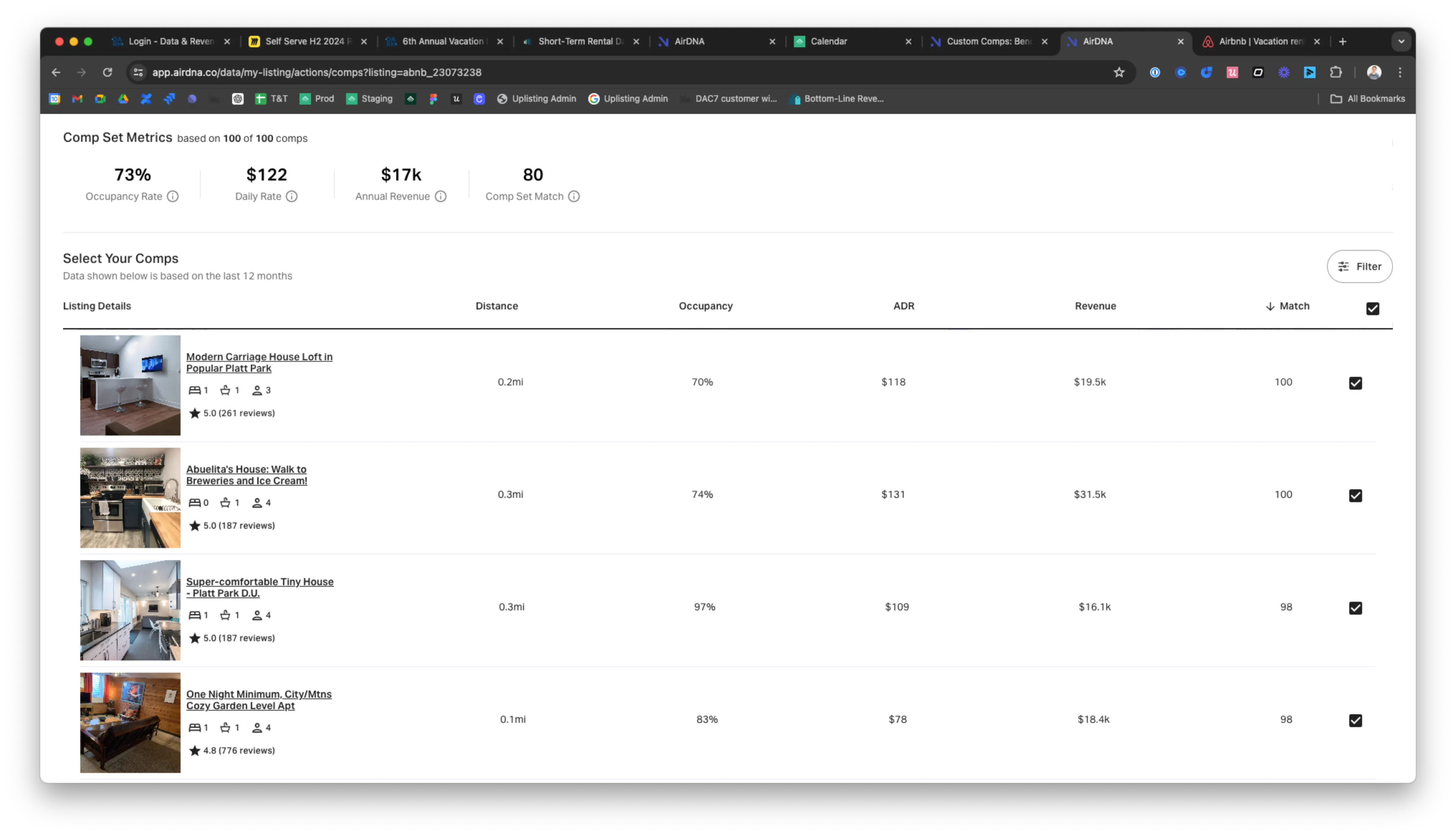
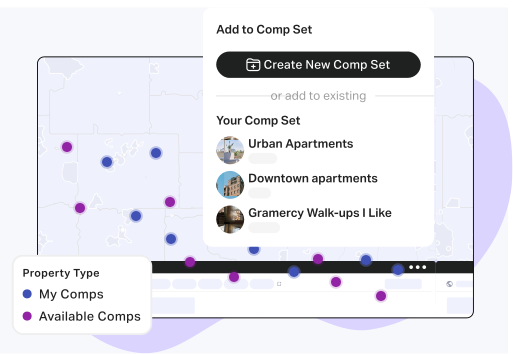
AirDNA has our very own custom comp set tool to help you track competitor performance, compare pricing strategies, and spot seasonal trends. You'll also find comp set features in most property management systems and pricing tools.
Comp Set Overview
A comp set (competitive set) is a group of similar short-term rental properties used for comparison and analysis. These properties share similarities in location, amenities, and pricing.
For example, if you own a 3-bedroom lakefront cabin with a hot tub, your comp set includes similar lakefront cabins. It wouldn’t include downtown apartments targeting different guests.
Check out our article on how to build a comp set to analyze similar listings and improve your short-term rental strategy.

Benefits of Using a Comp Set for Your Short-Term Rental
A comp set helps short-term rental hosts compare their properties to similar listings and gain actionable insights to stay competitive. Here’s how it can benefit you:
- Accurate pricing: A comp set keeps your pricing in line with similar properties. For example, if nearby rentals with similar features raise rates for weekends or peak seasons, you can adjust your prices to stay competitive.
- Refined marketing strategies: See what features attract guests in your market. If properties in your comp set highlight amenities like hot tubs or outdoor fire pits and get more bookings, you can showcase similar features to appeal to guests.
- Performance benchmarking: Compare key metrics like revenue, average daily rate (ADR), and occupancy. If your occupancy falls behind competitors, it might be time to tweak your pricing, amenities, or guest offerings.
- Adapting to market trends: Stay on top of guest preferences and seasonal trends. For instance, if competitors are adding remote-work amenities and seeing higher bookings, offering a dedicated workspace could make your property stand out.
- Focus on relevant competitors: Instead of sifting through hundreds of rentals, a comp set zeroes in on properties that are truly similar to yours. This targeted approach gives you clear, actionable data without unnecessary distractions.
- Maximizing revenue during events: Before local festivals, holidays, or peak seasons, check your comp set’s pricing and availability. Adjust your strategy to capture demand and maximize your bookings.
Key Components of a Short-Term Rental Comp Set
To create an effective comp set, focus on properties with characteristics most similar to your own. Here are the key components:
- Location: Proximity is key. Rentals in the same neighborhood or near the same attractions are your closest competitors.
- Property size and capacity: Look for properties with a similar number of bedrooms, guest capacity, and square footage.
- Amenities: Match features like pools, hot tubs, or dedicated workspaces to ensure fair and accurate comparisons.
If you’re curious about which amenities can boost your rental income, check out our guide to the best Airbnb amenities.
- Pricing and performance metrics: Evaluate metrics such as average daily rate (ADR), occupancy rate, and Revenue per Available Room (RevPAR) to understand how you stack up.
- Guest ratings and reviews: Properties with similar ratings and numbers of reviews since they'll have comparable market positioning and guest expectations.
How to Create a Comp Set for Your Short-Term Rental
Building an effective comp set is key to understanding your competition and improving performance. Follow these steps to get started:
- Identify relevant competitors: While you can browse similar properties on Airbnb and Vrbo, AirDNA makes it easier by letting you filter and track properties based on what matters—like location, size, amenities, and guest feedback. You can do this both at the listing level but aggregate as well (make this more beginner friendly that last line)
- Refine your selection: Narrow your list down to 5-10 properties that closely match yours. A focused comparison gives you more accurate and actionable insights.
- Analyze performance metrics: Compare your ADR, occupancy rates, and reviews against properties in your comp set. This helps you set realistic goals and adjust your strategies as needed.
- Make decisions based on data: Apply what you’ve learned to improve your strategy—whether it’s adjusting rates or adding amenities. AirDNA’s Dynamic Pricing makes this even easier by automatically adjusting your nightly rates based on demand using your comp set data.
- Adapt for events and seasons: For local events, holidays, or peak seasons, see how competitors adjust their rates and availability. Matching their strategies can help you capture demand and boost bookings.
- Monitor regularly: Markets change quickly. Review and update your comp set every quarter to account for new competitors, updated amenities, or pricing shifts.
Building and monitoring a strong comp set takes time, but it's worth the effort. When you know how you stack up against similar properties, you can make smarter decisions about pricing, amenities, and marketing—and that means more bookings and better returns for your rental business.
Want to get started? Check out how to use our custom comp set tool.