

 Calculate Revenue
 Research Markets
 Find For Sale Properties
 Compare My Listing
 STR Revenue Calculator
 Custom Comp Sets
 Submarket Insights
 Custom Search Filters
 Rate Recommendations
 Performance Benchmarking
 Competitor Comparison
 Owner Contact Details
 Property-level performance data
 Tourism Insights
 Real Estate Investment Analytics
 About Us
 Sales
Sales Support
 Press
PressHow to Build a Better Real Estate Portfolio with Airbnbs
Published: February 6, 2025
Last updated: August 21, 2025

Jamie Lane
Key Takeaways:
- A real estate portfolio is a strategic collection of properties designed to achieve specific financial goals.
- Start building your portfolio by assessing your finances, choosing a clear investment strategy, and researching markets that align with your goals.
- Incorporating short-term rentals into your portfolio can boost cash flow and diversify income streams for long-term growth.
Success in real estate isn’t about owning the most properties—it’s about building a portfolio that works smarter, not harder (and if you ask us, short-term rentals are the perfect way to do just that…but we’ll get to that later!).
If you’re ready to start—or scale—your portfolio, you’re not alone in feeling a little overwhelmed. How much do you invest? Where do you buy? Should you aim for long-term stability or seasonal spikes in income? The truth is, every successful investor once stood at the same starting line, armed with questions and ready to take that first step.
This guide will help you get there. From choosing your first property to diversifying with advanced strategies, we’ll show you how to create a real estate portfolio built to capitalize on today’s market.

What Is a Real Estate Portfolio?
A real estate portfolio is a strategic combination of real estate assets carefully selected to work in concert toward specific financial goals. Successful real estate investors craft portfolios that balance different property types, locations, and investment strategies.
Modern real estate portfolios can include:
- Traditional long-term rental properties
- Commercial real estate
- Short-term vacation rentals (Airbnbs)
- Real Estate Investment Trusts (REITs)
- Real estate-focused mutual funds
- Property development projects
The true value of a real estate portfolio lies in how well those assets perform together to achieve your goals. A portfolio’s value goes beyond the sum of individual property values; it encompasses the income generated, equity growth, and overall financial stability your portfolio provides. For example:
- A portfolio with steady cash flow from long-term rentals and high seasonal returns from short-term vacation rentals offers both stability and growth potential.
- A mix of urban properties and vacation homes in tourist hotspots spreads risk across different economic drivers, ensuring resilience even in fluctuating markets.
Ultimately, the difference between owning multiple properties and building a true portfolio lies in your strategic approach to acquisition, management, and growth.
Find profitable for-sale properties
We automatically calculate the earning potential of every for-sale property in the U.S.
How to Start Building a Real Estate Portfolio
We all start somewhere. These foundational steps matter—get them right, and you have a solid base to build on; skip them, and you risk your portfolio crumbling before it grows.
1. Take a hard look at your finances
Before jumping into real estate investing, it’s crucial to take a hard look at your financial situation. Real estate can be capital-intensive, but there are entry points for a variety of budgets and risk tolerances. The key is knowing your financial goals and how much you’re willing—and able—to invest upfront.
So, how much do you need to invest in real estate? The answer depends on your goals and the type of property you’re targeting. For example:
- A single-family rental might require a down payment of 15-25% of the purchase price, plus closing costs and reserves.
- A short-term rental (STR) could involve startup expenses like furnishing and higher maintenance costs.
If owning property feels out of reach, consider rental arbitrage for STRs. This strategy lets you lease a property, secure the landlord’s permission to sublet it as a short-term rental, and start earning income without the high upfront cost of buying. It’s a great way to break into the market without hefty capital requirements.
And don’t worry if you don’t have a pile of cash—there are financing tools to help you get started:
- Conventional Loans: A popular choice with straightforward terms for those with steady income and savings.
- Government-backed Loans: FHA loans let you start with a lower down payment—great if you’re just beginning.
- DSCR Loans: Focused on the property’s income potential rather than your personal finances, these are ideal for scaling rental portfolios.
No matter where you’re starting, there’s a financing path to help you take that first step. We’ve got a blog article dedicated to the best loans for short-term rentals if you want to learn more.

2. Choose your investment strategy
The right strategy depends on your financial goals, risk tolerance, and preferred level of involvement. Here’s a comparison of three popular strategies:
- Buy-and-hold: This long-term approach focuses on acquiring properties to generate consistent rental income and appreciate over time. It’s ideal for those seeking steady cash flow and equity growth with minimal turnover.
- Fix-and-flip: This short-term strategy involves purchasing undervalued properties, renovating them, and selling for a profit. It’s high-risk but can yield significant returns if you’re willing to manage projects actively.
- Airbnb-centric: Centering your portfolio on short-term rentals offers a dynamic way to generate high cash flow and capitalize on travel demand. This strategy requires hands-on management but can deliver higher returns than traditional long-term rentals (we’ll get to that later!).
Align your chosen strategy with your long-term financial goals. For instance, if you’re aiming for regular, monthly income, a real estate portfolio strategy focused on STRs might make sense. Conversely, if you prefer quick profits, flipping might be your path.
3. Research markets for investment
Market research is the backbone of any successful real estate strategy. The right market can amplify your returns, while the wrong one can turn even the best property into a missed opportunity. Some of the most lucrative real estate investments are often hidden in plain sight, waiting to be uncovered through careful research and analysis.
Here’s what to focus on when evaluating potential markets:
- Local regulations: Laws and regulations can make or break an investment, whether you're looking at short-term rentals (STRs) or long-term properties. Some areas have strict STR rules like licensing, zoning restrictions, or rental caps, while others may have rent control or tenant-friendly laws that affect long-term rental income. Researching these regulations upfront can help you avoid costly surprises.
- Demand: The best markets have strong, growing demand. For long-term rentals, look for population growth, an expanding job market, and desirable school districts. For STRs, tourism trends, event hubs, and seasonal appeal can drive bookings and revenue. A high-demand area supports rental income, property appreciation, and occupancy across property types.
- Growth trends: Long-term success often depends on choosing markets with rising property values and robust economic development. Look for new infrastructure projects, large-scale developments, or emerging industries that signal sustained growth. These indicators point to future opportunities for appreciation and increased demand.
While these factors apply across property types, investors focusing on STRs have additional tools at their disposal.
Platforms like AirDNA provide actionable data on short-term rental performance, including occupancy rates, average daily rates (ADR), and seasonal trends, making it easier to assess an area’s STR potential alongside its long-term viability.
4. Get started with your first property
Starting with a single property allows you to learn the fundamentals of real estate investing without overextending yourself. This initial investment serves as your hands-on education in property management, market analysis, and rental operations.
When selecting your first rental property, focus on:
- Strong local demand with multiple economic drivers
- Clear zoning and rental regulations
- Consistent rental potential throughout the year
- Property condition that matches your renovation budget
- Location you understand well, either through living or working there
Consider starting in a market you know well. This local knowledge gives you an edge in understanding rental patterns, property values, and building reliable professional relationships.
The goal here is to get your feet wet and your hands dirty—or, if you already have one or two properties, to refine your approach. Make sure you’ve got your systems and operations established before you start adding more properties to your portfolio. A strong foundation is key to sustainable growth.
Steps to Grow Your Rental Portfolio
Building a successful rental portfolio is a marathon, not a sprint. Scaling up thoughtfully and strategically is key to creating a resilient and profitable collection of properties. The goal is to expand responsibly, with a focus on sustainable growth.
Scale up thoughtfully and responsibly
Scaling too quickly can lead to financial and operational strain. Thoughtful planning and a solid foundation are essential for sustainable growth.
Start by ensuring your first property is performing well. It should demonstrate consistent occupancy, reliable cash flow, and strong tenant or guest satisfaction. This provides not only a financial safety net but also the operational experience to replicate success across additional properties.
Scaling often requires creative financing to free up capital without overextending yourself. Consider these options:
- Cash-out refinancing: Tap into the equity of a high-performing property to fund new acquisitions.
- DSCR Loans: Leverage rental property income to qualify for loans, allowing you to grow without relying solely on personal income.
- Portfolio loans: Bundle multiple properties under a single loan for streamlined financing and better terms.
- Home equity: Combine traditional mortgages with home equity loans to maximize your borrowing power.
Choose a financing strategy that aligns with your growth goals while maintaining manageable debt levels.
Optimize your processes
As your rental portfolio grows, efficient systems are key to managing multiple properties while staying focused on long-term growth. Here’s how to scale smartly and diversify income streams:
- Streamline property management: Use centralized tools to manage operations across property types. Platforms like Uplisting can automate bookings and pricing for short-term rentals (STRs), while property management software for long-term or commercial properties handles leases, rent collection, and maintenance.
- Diversify income streams: Go beyond standard rental income. For STRs, offer premium services like an Airbnb concierge, providing transportation or curated local experiences. Long-term rentals can charge premium rates by furnishing units or bundling utilities.
- Automate repetitive tasks: Reduce manual work by automating rent collection, pricing adjustments, and maintenance scheduling. STR-specific tools can optimize revenue with dynamic pricing, while automated payment systems simplify long-term rental management.
- Standardize operations: Create consistent policies for cancelations, leases, rules, and maintenance schedules to streamline management and make scaling easier.
By integrating efficient tools and processes, you can scale smoothly, explore new revenue opportunities, and improve operations.
Craft a cohesive strategy
As your portfolio grows, think strategically about how new acquisitions work together with your existing investments to strengthen your overall position. Consider these key factors when adding properties:
- Market diversification: Spread your investments across different neighborhoods, cities, or property types. When one area faces challenges, others might present opportunities.
- Income strategy: Balance properties with different return profiles. Some might offer steady monthly income, while others could provide stronger appreciation potential or seasonal peaks.
- Management efficiency: Look for properties that can share resources, vendors, or management systems. The right combination makes your portfolio easier to scale.
- Risk management: Choose properties that respond differently to market conditions. This might mean mixing residential and commercial, or combining properties in different economic zones.
The goal is building a resilient collection of assets that can perform well across different market cycles while moving you closer to your long-term investment goals.
Why You Should Build a Multi-Asset Portfolio
Remember the old saying about not putting all your eggs in one basket? That's diversification in a nutshell. When it comes to real estate investing, diversification means spreading your investments across different property types, locations, and strategies—not just to protect against market fluctuations, but to capture different types of returns and growth opportunities.
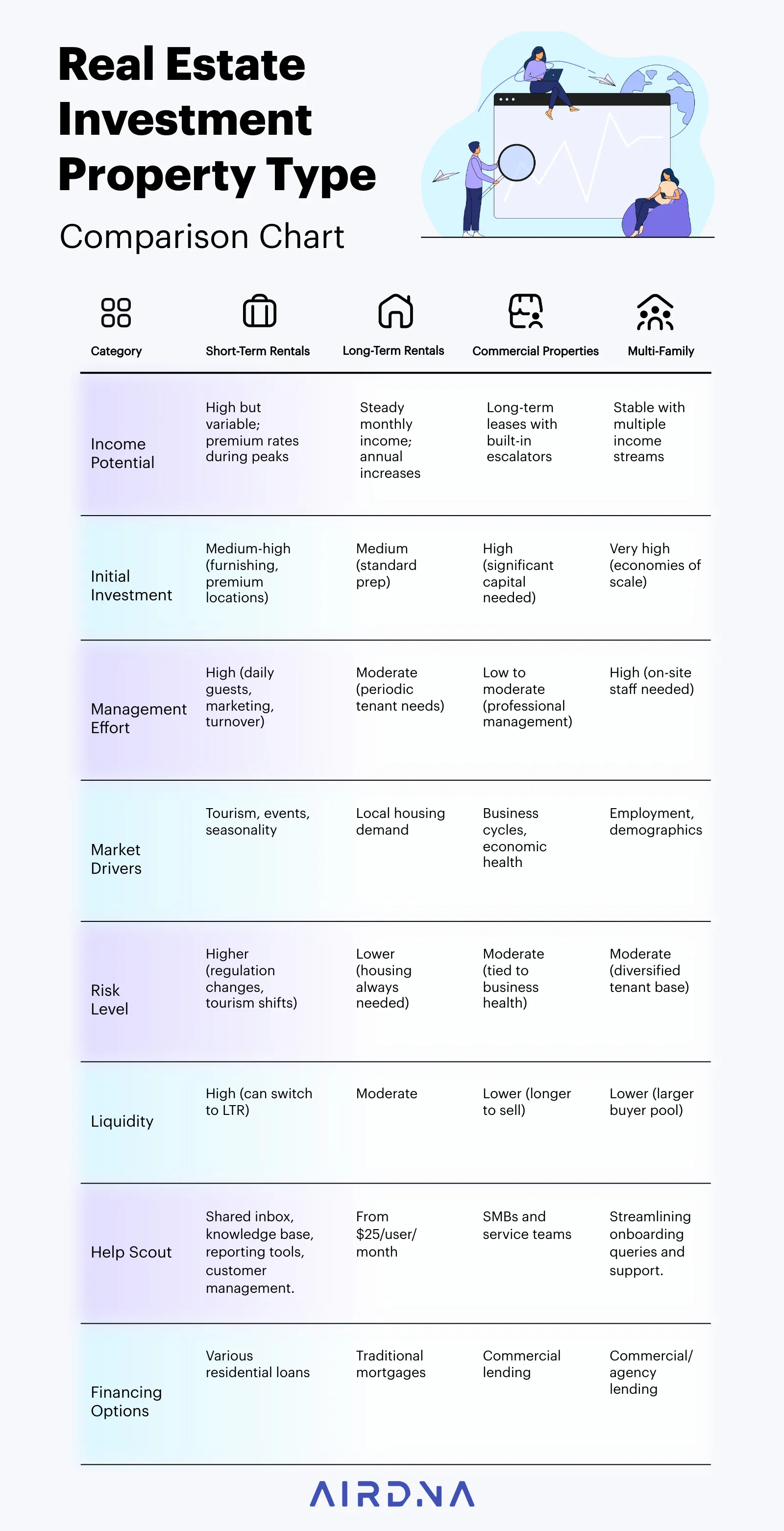
Each property type brings its own strengths to your portfolio. Commercial properties might offer long-term stability through multi-year leases. Multi-family properties can provide operational efficiency through scale. Long-term residential rentals deliver steady monthly income. Short-term rentals can tap into premium seasonal rates and tourism growth.
But how do these different property types really compare? Let's break down the key factors you need to consider when deciding which types of properties to include in your portfolio:
Note: We've focused on the most common types of direct property ownership. While REITs offer an easier way to invest in real estate without managing properties, they operate more like stocks and come with different considerations than the investments compared above.
Why Short-Term Rentals Should Be Part of Your Portfolio
Short-term rentals are powerful tools for improving returns and capturing market opportunities that traditional properties can't reach. Here's why they deserve careful consideration in your strategy:
High-income potential
STRs often yield higher income than long-term rentals, thanks to the premium pricing of nightly stays. In a high-demand area, even partial occupancy can outperform the steady monthly income from a traditional lease.
Flexibility in use
Unlike traditional rentals, STRs can double as personal vacation properties. You can enjoy your property when it suits you and rent it out when you're not using it—an appealing mix of lifestyle and income generation.
Tax advantages
Owning an STR opens the door to potential tax deductions, from property expenses to depreciation. While you’ll want professional advice to navigate these perks, the financial benefits can add significant value to your rental portfolio.
Exposure to different markets
STRs let you diversify geographically, tapping into tourism-driven markets where traditional rentals might struggle. Whether it’s a ski chalet or a beachfront condo, STRs expand your portfolio into areas with strong seasonal demand.
Scalability
STRs are ideal for reinvestment and portfolio growth. Profits can be funneled into new acquisitions, helping you scale faster than many other property types.
Get nightly rate recommendations
AirDNA’s vacation rental pricing tool uses data-driven recommendations to propose the best daily rates.
How to Make the Most of Your Short-Term Rental Portfolio
Want to know what separates the most profitable short-term rental portfolios from the rest? Top performers know that exceptional returns come from running their rentals like true hospitality businesses. Here’s how you do that:
Smart pricing strategies that drive revenue
Gone are the days of set-it-and-forget-it pricing. Today's most successful short-term rental investors use dynamic pricing strategies that respond to market conditions in real time. Start by analyzing your market's seasonality patterns, but don't stop there. Consider:
- High-impact local events that drive demand spikes
- Day-of-week pricing differences (weekend vs. weekday rates)
- Length-of-stay discounts for optimal occupancy
- Last-minute booking rates to minimize vacant nights
- Competitive positioning based on your property's unique features
The key is having reliable market data to inform these decisions. Using tools like AirDNA, you can track your competition's pricing and occupancy rates to find the sweet spot between maximizing revenue and maintaining healthy occupancy levels.

Operational systems that scale
The difference between a good short-term rental and a great one often comes down to operations. The most successful properties run like well-oiled machines, with systems for:
- Turnover management: Professional cleaning teams, maintenance checks, and amenity restocking between guests
- Quality control: Regular deep cleans, preventive maintenance, and property updates
- Guest communication: Automated but personalized messaging for check-in, stay updates, and check-out
- Review management: Proactive problem-solving and thoughtful response strategies
Systems like these means hosts can scale as they add more properties to their portfolio. Property management systems (PMS) or channel managers like Uplisting can automate much of these processes.
Advanced Portfolio Growth Strategies
Once you've got your first few properties established, here's how to strategically expand your portfolio:
Create new property combinations
Strong portfolios often pair properties in ways that balance risk and maximize operational efficiency. This means combining properties that perform differently across market cycles or clustering investments to make management more effective. For example, a stable office building providing steady income can balance out properties in high-growth areas, while properties with different peak seasons can help maintain year-round cash flow.
Learn how to spot opportunities in the market
The best returns often come from identifying markets just before major changes take hold. This might mean targeting areas with announced infrastructure improvements, watching neighborhoods adjacent to rapid development, or finding regions where property values haven't caught up to strong economic indicators. You're looking for clear signals of coming growth before prices fully reflect that potential.
Use creative financing
As your portfolio grows, you'll need more sophisticated financing strategies. Consider:
- Using cash-out refinancing from appreciated properties to fund new acquisitions
- Leveraging portfolio loans for more efficient scaling
- Structuring master leases with purchase options
- Creating strategic partnerships to access larger deals

Analyze your competition
Competitor analysis is a cornerstone of successful real estate investing. Understanding how similar properties perform in your market—what they charge, the amenities they offer, and the audiences they target—gives you the insights needed to position your own properties effectively. By identifying gaps in the market or trends your competitors are capitalizing on, you can refine your strategy to attract tenants or guests and maximize returns.
For short-term rentals (STRs), this analysis becomes even more critical. Unlike long-term rentals, where leases stabilize income, STRs compete for bookings daily, meaning small adjustments in pricing or amenities can significantly impact your performance. That’s where comp sets—groups of properties directly comparable to yours—come into play. These help you zero in on the true competition for your property, rather than relying on broad market averages that may not reflect your specific situation.
Use data to drive decisions
Every successful portfolio requires careful monitoring of performance metrics. For traditional properties, this means tracking things like:
- Net Operating Income (NOI)
- Cash-on-cash returns
- Vacancy rates
- Local market indicators
For short-term rentals, you'll need to watch metrics that change much more frequently:
- Average Daily Rate (ADR)
- RevPAR (Revenue Per Available Rental)
- Occupancy rates
- Seasonal demand patterns
By understanding these numbers, you gain the ability to spot opportunities for optimization—whether it’s adjusting pricing, improving amenities, or refining marketing strategies. For example, noticing consistently high occupancy paired with low ADR might signal an opportunity to raise prices, while low occupancy during a high-demand season could indicate the need for better promotion or property upgrades.
Beyond individual properties, data also helps guide your broader decisions about your real estate investment business. Identifying trends across your real estate investment portfolio can highlight which property types or markets are performing best, helping you focus future investments where they’ll have the greatest impact.

FAQs
How do you build a rental portfolio?
Building a rental portfolio starts with one property and a clear strategy. Assess your finances, choose a market, and focus on properties that align with your goals—whether that’s long-term stability or short-term cash flow. Start small, establish efficient systems, and use tools like AirDNA for market insights if you’re considering short-term rentals (STRs). As you grow, diversify your properties by type and location to balance risk and maximize returns.
Are vacation homes a good investment?
In our totally unbiased opinion? Absolutely. In popular vacation spots, short-term rentals can generate higher income compared to long-term leases, especially during peak seasons. Plus, investors have the option to enjoy their vacation property themselves when it's not rented out. However, vacation rentals also come with unique considerations, such as higher upfront costs, variable seasonal income, and location-specific regulations. Thorough market research, budgeting, and due diligence are crucial for maximizing the financial rewards and flexibility that vacation rental investments offer.
How much do you need to invest in real estate?
The amount you need depends on your investment type and strategy:
- Traditional properties: Expect a down payment of 15-25% of the property price, plus closing costs and reserves for repairs or vacancies.
- Short-term rentals (STRs): If purchasing a vacation rental property, plan for the same down payment, plus startup expenses unique to STRs, such as furnishings, photography, and marketing. For example, furnishing a two-bedroom STR taxes can cost $10,000–$15,000 depending on style and location.
- Rental arbitrage for STRs: This option eliminates the cost of buying by leasing a property and subletting it as an STR with landlord approval. However, you’ll still need funds for furnishings, deposits, and STR-specific setup costs like licenses and insurance.
If cash flow is a concern, financing options like FHA loans (with as little as 3.5% down) or DSCR loans (which focus on rental income potential) can help you get started.
Smart investments happen here.
Your vacation rental may be amazing, but is it better than your competition? Connect your Airbnb listing to AirDNA to see its Booking Performance Score.
ARTICLE SUMMARY
Ready to build a real estate portfolio that generates real returns? Smart investors know that true success comes from strategic growth, not just property acquisition. In this guide, we'll show you how to build a portfolio that balances steady returns with growth potential, and explore how options like short-term rentals can accelerate your path to financial freedom.
Jamie Lane
AirDNA Chief Economist
He is responsible for data analysis, thought leadership, and leveraging advanced analytical techniques to provide new insights into short-term rental market trends. Native to Atlanta and an Airbnb host himself, Jamie enjoys cycling, mountain biking, backpacking, running, and playing in a dart league in his free time.
