


Are Unique Vacation Rentals a Good Investment? What 2026 Data Shows
Published: July 24, 2024
Last updated: October 20, 2026

Bram Gallagher
Key Takeaways
- U.S. unique stay listings have grown 127% since 2019 and nights booked 155%, far outpacing houses and apartments.
- Treehouses lead the common unique stay types at about $43,800 in annual revenue per listing, more than twice the $19,300 average.
- Rates, not bookings, now drive growth: unique stay ADR is up about 7% since 2024 while occupancy holds just under 50%.
- The top unique stay markets sit within a day’s drive of a major city and near a national park or forest, led by Fredericksburg and Terlingua, Texas.
Did you ever want a treehouse as a kid? For a growing number of short-term rental investors, that childhood idea has turned into a business. Travelers increasingly want stays they can’t get anywhere else, from treehouses and tiny houses to domes and yurts, and many will pay a premium for them. So which unique stays perform best, and where are the best places to own one? We dug into AirDNA’s data to find out.
What Are Unique Vacation Rentals?
AirDNA groups short-term rental property types into four categories: houses and villas; apartments, condos and lofts; bed and breakfasts; and unique stays, which covers everything else.
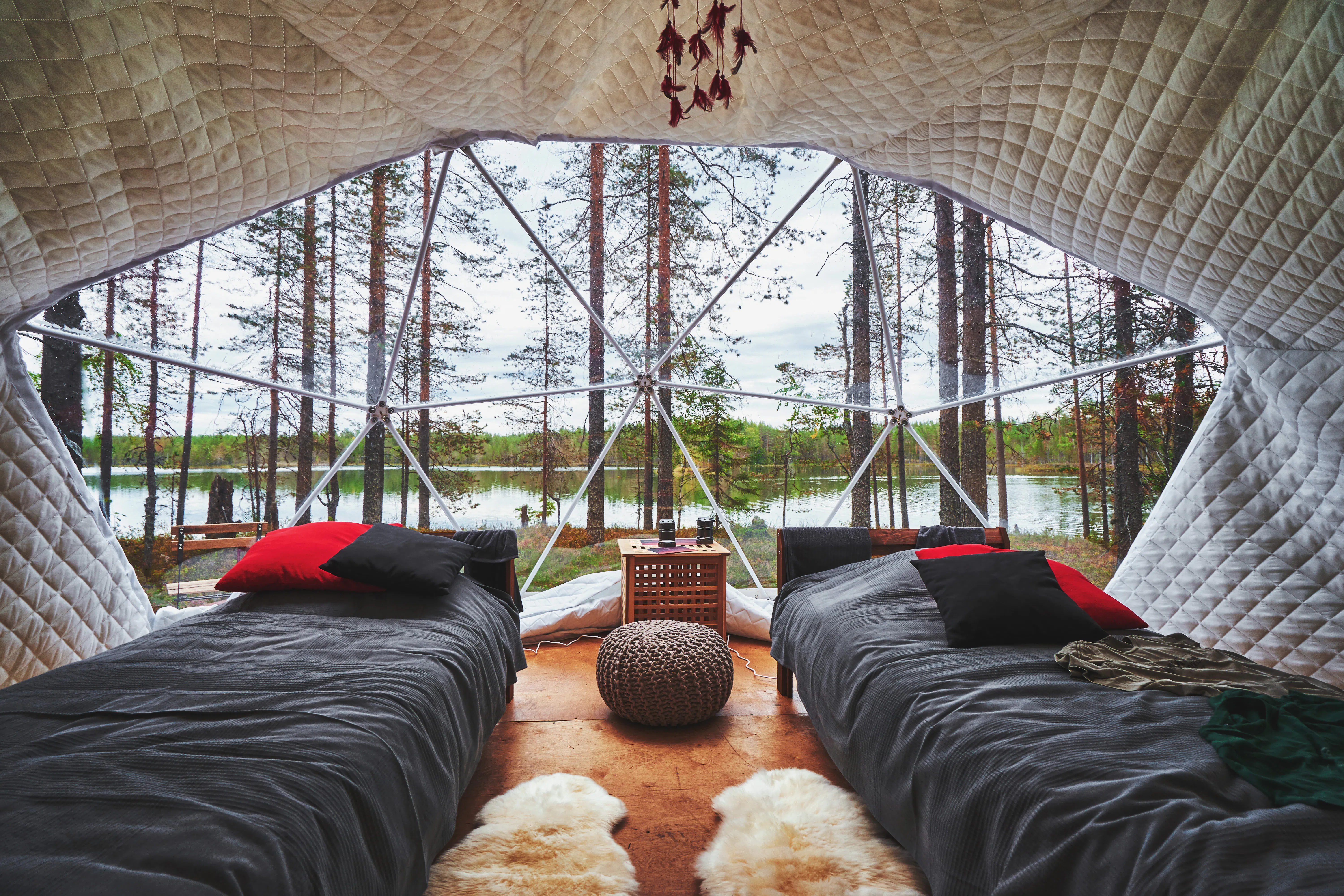
Unique vacation rentals are the unconventional end of the market: tiny houses, treehouses, campers and RVs, yurts, dome houses, barns, houseboats and more. Most of them fall loosely under what regulators call “pre-arranged camping,” a term far less glamorous than many of the properties it describes, and many travelers simply call them glamping.
What sets them apart is that the stay itself is the attraction. Guests book a unique rental for the experience and the story they’ll tell afterward, not just for a bed.
Are Unique Vacation Rentals a Good Investment?
They can be, if you pick the right type in the right place. According to AirDNA data, U.S. unique stays have more than doubled since 2019, and treehouses, the top earners among common types, bring in about $43,800 a year on average.
Unique stays combine three things investors look for: a product that stands out, demand that has grown quickly, and start-up costs that can be lower than a traditional home. A camper or yurt usually takes far less capital than a single-family home, and a smaller footprint means lower cleaning and upkeep costs between guests.
Lower start-up costs and strong guest interest have drawn a wave of new hosts. Monthly available unique stay listings in the U.S. have grown from 24K in 2019 to 55K over the last year, an increase of 127%. That supply growth has largely been fueled by demand: nights stayed in unique homes have increased 155% since 2019. Supply and demand growth for unique stays has far outpaced traditional rentals. Over the same seven years, houses have grown 65% in supply and 87% in demand, and apartments and condos have grown 28% and 45%. Even so, unique stays remain a niche, making up only about 3% of all available short-term rental listings in the U.S.
How Fast Have Unique Vacation Rentals Been Growing?
U.S. unique stays more than doubled between 2019 and 2026, but growth has slowed in recent years. It started with a pandemic boom. When people started traveling again, they wanted somewhere remote, outdoorsy and away from crowds, and unique stays fit the bill. Bookings jumped roughly 30% a year in 2020 and 2021, faster than new listings could appear, and occupancy peaked at about 59% in 2021.
Those strong numbers set off a building rush. From 2022 to 2024, hosts added listings faster than guests added bookings (unique listings grew by about a quarter in both 2022 and 2023), so the same demand was spread across more properties and occupancy slipped back to about 49%.
Now the market has cooled. Over the past two years, listings and bookings have each grown just 1% to 3% a year. Demand has leveled off, and higher borrowing costs have made new projects harder to finance. The upside: with supply and demand moving together, occupancy has held steady at about 49%.
What Types of Unique Vacation Rentals Are There?
What are the most common types of unique stays?
Unique vacation rentals come in many forms, but three types dominate. Tiny houses, campers and RVs, and farm stays are the most common unique stays in the U.S., and together they make up about 62% of all unique listings. The 10 most common types account for about 88%. The rest are spread across 23 other types, including shipping containers, houseboats, castles, towers, and lighthouses, and none of them account for more than about 1.3% of unique listings.
| Unique stay type | Avg. monthly available listings | Share of unique stays |
|---|---|---|
| Tiny house | 13,586 | 25% |
| Camper/RV | 11,545 | 21% |
| Farm stay | 9,111 | 16% |
| Campsite | 3,778 | 7% |
| Tent | 3,221 | 6% |
| Barn | 2,497 | 5% |
| Treehouse | 1,529 | 3% |
| Yurt | 1,400 | 3% |
| Dome house | 1,247 | 2% |
| Nature lodge | 937 | 2% |
AirDNA data, U.S. unique stays, 12 months ending September 2026.
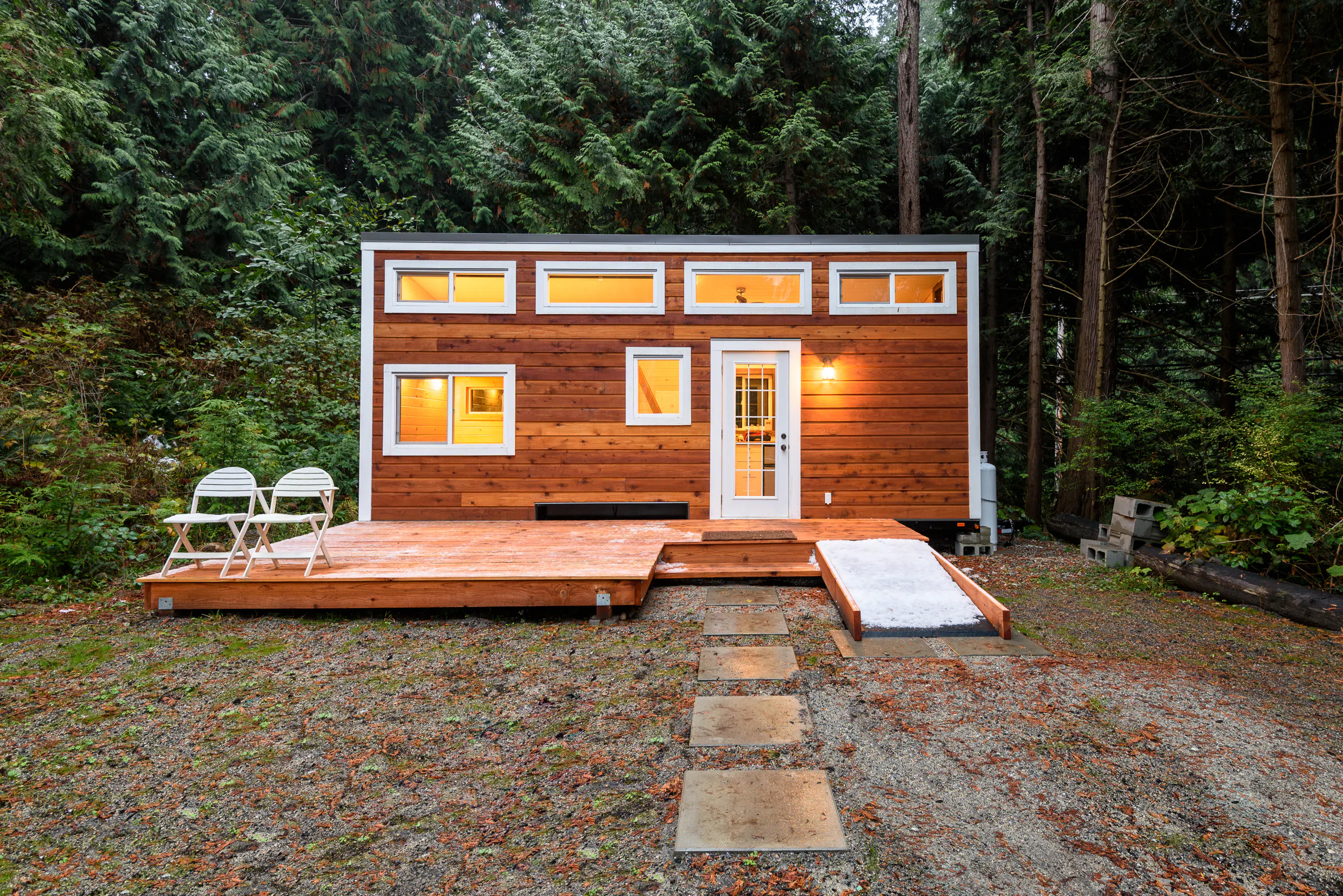
Tiny houses. Tiny houses are the most common unique stay, at about a quarter of all unique listings. Their small footprint and eco-friendly features appeal to travelers who want something memorable without roughing it.
Campers, RVs and pre-arranged camping. Campers and RVs rank second, at about 21% of unique listings.
Farm stays and barns. Farm stays and barns together make up about 21% of unique stays. They offer guests a rustic, hands-on experience, often with the chance to see farm life up close in a quiet countryside setting.
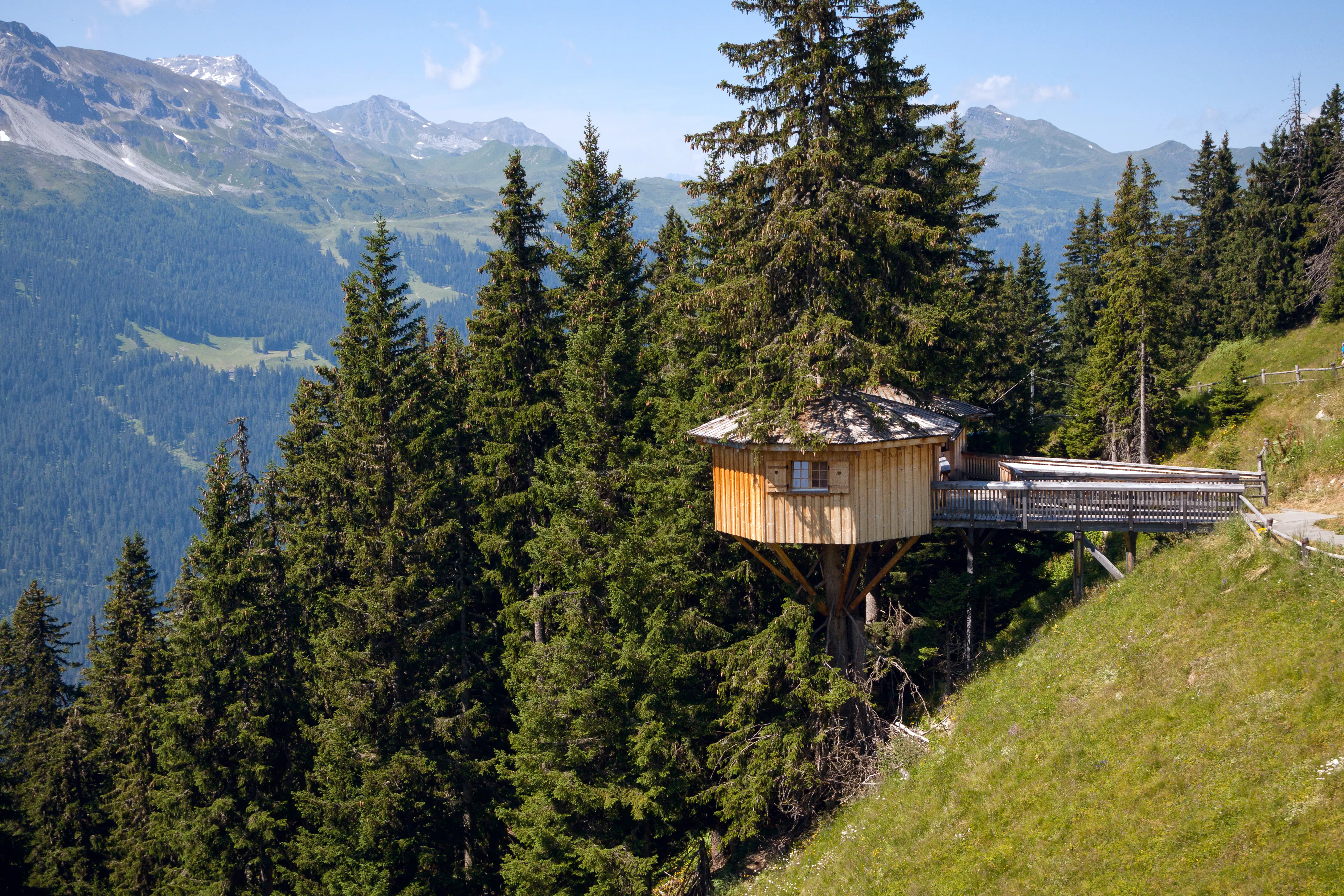
Treehouses, dome houses, yurts, and nature lodges. These make up a smaller share of the market, but each delivers its own kind of experience. Treehouses offer a playful escape, dome houses a stargazing-friendly novelty, yurts a taste of nomadic living, and nature lodges a mix of comfort and wilderness.
Which unique stays have grown the most?
Tiny houses haven’t always been on top. In 2019, farm stays were the most common unique stay. Campers and RVs passed them in 2022, and tiny houses took the lead a year later. Campsites, meanwhile, peaked in 2022 and have slipped since.
Over the past year, the growth picture has been more mixed. Dome houses grew fastest, adding about 18% more listings, and bookings kept pace. Tiny houses (+8%), barns (+8%), and treehouses (+6%) kept growing too. Campsites shrank the most, with listings down 7% and bookings down 11%. Nature lodges (−7%) and farm stays (−3%) also contracted, while campers, tents and yurts held about steady (within 1%).
The good news is that, for every unique property type, listing growth has generally moved in step with demand growth, so occupancy barely budged over the last year.
Are Unique Stay Rates Rising or Falling?
Average daily rates (ADR) for unique stays are trending upward. Since 2024, ADR is up about 7%. Occupancy has stayed flat at just under 50%, so higher rates explain almost all of the growth in RevPAR (revenue per available night), which is also up about 7%.
That’s a shift from the pandemic years, when occupancy did the heavy lifting. Occupancy peaked in 2021, then slipped as new listings flooded in. Since then, rates have been the biggest contributor to revenue growth. Part of the increase in rate is a mix effect: pricier types like treehouses, dome houses, and barns have grown the fastest, pulling the average rate up.
For hosts, the takeaway is that extra bookings aren’t coming easily, so pricing has been the main lever for growing revenue.
Which unique property types are raising rates fastest?
Nightly rates for unique stays can vary widely. Among the 10 most common types over the past year, treehouses (about $275) and dome houses (about $266) command the highest ADRs. Campers and RVs (about $102) and campsites (about $85) sit at the bottom. Rarer types go higher still (castles average about $550 a night) but number only a few hundred listings each.
Since 2024, barns have seen the biggest jump, with average nightly rates up about 14%, followed by campsites (+10%), farm stays (+9%) and yurts (+8%). Barns and farm stays turned nearly all of that into higher RevPAR because their occupancy held steady, while campsites gave much of their gain back through fewer booked nights. At the other end, rates for campers and RVs and nature lodges were flat, and the priciest types, treehouses (+4%) and dome houses (+5%), saw only modest increases.
| Unique stay type | Average nightly rate (ADR) | 1-year change | Change since 2024 |
|---|---|---|---|
| Treehouse | $275 | +1% | +4% |
| Dome house | $266 | +2% | +5% |
| Barn | $225 | +6% | +14% |
| Farm stay | $211 | +5% | +9% |
| Nature lodge | $209 | −6% | 0% |
| Yurt | $175 | +3% | +8% |
| Tiny house | $136 | +2% | +2% |
| Tent | $132 | +3% | +6% |
| Camper/RV | $102 | +2% | 0% |
| Campsite | $85 | +6% | +10% |
| All unique stays | $168 | +4% | +7% |
AirDNA data, 10 most common U.S. unique stay types, 12 months ending September 2026.
Annual revenue tells a similar story. Over the past 12 months, the average unique stay earned about $19,300. Treehouses led the common types at about $43,800 per listing, more than twice the average, followed by dome houses (about $35,600) and barns (about $28,800). Tiny houses earned about $20,800, right around the average, while campers and RVs (about $9,300) and campsites (about $4,700) earned the least, held back by lower nightly rates and shorter seasons. Size plays a part too. Farm stays and barns are the roomiest common types, averaging about two bedrooms, which helps them earn more per stay, while tiny houses are the smallest, sleeping about three guests on average. Treehouses and dome houses are no bigger than a typical camper, though, so their premium comes mostly from the experience.
| Unique stay type | Average annual revenue per listing |
|---|---|
| Treehouse | $43,800 |
| Dome house | $35,600 |
| Barn | $28,800 |
| Farm stay | $25,200 |
| Yurt | $21,300 |
| Tiny house | $20,800 |
| Nature lodge | $19,400 |
| Tent | $10,200 |
| Camper/RV | $9,300 |
| Campsite | $4,700 |
| All unique stays | $19,300 |
AirDNA data, 10 most common U.S. unique stay types, 12 months ending September 2026.
Which unique stays have the highest occupancy?
Tiny houses and treehouses book the most nights, at about 52% to 53% occupancy, while tents and campsites fill fewer than 40% of their available nights. Occupancy has barely moved for any type over the past year. Since 2019, though, some of the fastest-growing types have given up the most: yurt occupancy is down about 7 points and tiny houses about 5.
| Unique stay type | Occupancy | Change, past year (pts) | Change since 2019 (pts) |
|---|---|---|---|
| Tiny house | 53.0% | −0.4 | −4.8 |
| Treehouse | 52.0% | −0.7 | −2.9 |
| Barn | 48.8% | −0.1 | +1.6 |
| Camper/RV | 48.6% | −0.2 | −1.5 |
| Dome house | 48.2% | −0.3 | −2.3 |
| Farm stay | 47.5% | −0.2 | +1.7 |
| Yurt | 45.2% | +0.3 | −7.1 |
| Nature lodge | 40.1% | +0.5 | +3.7 |
| Tent | 39.9% | −0.6 | −1.1 |
| Campsite | 37.9% | −1.5 | +1.9 |
| All unique stays | 48.6% | −0.1 | +0.7 |
AirDNA data, 10 most common U.S. unique stay types, 12 months ending September 2026. Occupancy = booked nights / available listing nights; changes in percentage points.
How seasonal are unique vacation rentals?
Unique properties are less seasonal than houses. Most unique stays in the U.S. are busiest in July and slowest in January, like other vacation rentals, but the difference between those months is smaller. In 2025, occupancy for houses and villas was 21 percentage points higher in their busiest month than in their slowest (67% in July vs. 46% in January). For unique stays other than tents, campsites and campers, the difference was about 14 points (56% in July vs. 42% in January).
The steadier occupancy of unique stays is a reflection of size. Big homes, the kind families and groups tend to book, get the biggest summer boost: houses with four or five bedrooms go from 40% occupancy in January to 67% in July. Smaller places don’t see nearly as big of a seasonal jump, whether they’re houses or unique stays: one-bedroom houses went from 54% in January to 66% in July, and one-bedroom unique stays from 45% in January to 55% in July. Because about two-thirds of unique stays are studios or one-bedrooms, unique stays overall end up with steadier occupancy.
Tents, campsites and campers run on a different calendar. In winter, nearly 1 in 5 fewer are available to book, and the nights open to book fall by nearly half. The ones still open fill up, so their occupancy peaks in February (about 60%), even though they book the most nights in summer. Their slowest occupancy month is September (about 36%), when bookings drop after summer but most are still open.
Where Are the Best Markets for Unique Vacation Rentals?
Location matters as much for unique stays as for any rental. AirDNA data shows that the leading unique stay markets tend to share two traits:
- They’re within a day’s drive of a major city, and many are within a couple of hours.
- They’re near a major national or state park.
Unique stays do best where natural scenery meets a large pool of high-income earners who are willing to drive out of the city for it.
Weather plays a role too. Some areas that meet both criteria haven’t taken off as unique stay destinations because of frequent rain or cold. The Pacific Northwest is a good example.
Where are the most unique stays in the U.S.?
Fredericksburg and Terlingua, Texas, have the most unique stays in the U.S., followed by Sevierville, Tennessee, Key Largo, Florida, and Moab, Utah. To find the leading markets, we ranked AirDNA submarkets by number of unique stay listings over the last year and looked at their proximity to national parks and forests. We left out campsites, since campgrounds often list each RV or tent site separately, and a single campground can make a market look bigger than it is.
| Rank | Submarket | Avg. unique listings | Share of all listings | Nearby national park or forest |
|---|---|---|---|---|
| 1 | Fredericksburg, Texas | 274 | 10% | None |
| 2 | Terlingua, Texas | 222 | 35% | Big Bend National Park |
| 3 | Sevierville, Tennessee | 166 | 2% | Great Smoky Mountains National Park |
| 4 | Key Largo, Florida | 162 | 11% | Everglades and Biscayne National Parks |
| 5 | Moab, Utah | 158 | 11% | Arches and Canyonlands National Parks |
| 6 | Springdale, Utah | 148 | 30% | Zion National Park |
| 7 | Gatlinburg, Tennessee | 143 | 2% | Great Smoky Mountains National Park |
| 8 | Ocala, Florida | 132 | 13% | Ocala National Forest |
| 9 | Tracy City, Tennessee | 129 | 46% | None |
| 10 | Asheville, North Carolina | 128 | 4% | Great Smoky Mountains National Park, Pisgah National Forest |
AirDNA data, average available unique stay listings excluding campsites, 12 months ending September 2026. Share = unique stays as a percentage of all short-term rental listings in the submarket (U.S. average: 3%).
Fredericksburg, in the Texas Hill Country, is the largest unique stay market in the U.S., averaging about 275 listings over the past year. Terlingua, near Big Bend National Park, follows with about 220, and there unique stays make up about a third of all short-term rentals.
Why Fredericksburg? It’s a textbook example of what makes a unique stay market work. It sits about an hour to an hour and a half from both Austin and San Antonio, close enough for an easy weekend escape. It’s the heart of Texas Hill Country wine country, with dozens of wineries, and Enchanted Rock State Natural Area is a short drive away. The town draws couples, wedding parties, and friend groups looking for a stay that feels like part of the trip, and unique stays deliver exactly that. They make up about 10% of Fredericksburg’s short-term rentals, more than three times the national share.
The Mountain West is still a stronghold for unique stays. Moab, Utah, the gateway to Arches and Canyonlands, and Springdale, Utah, right outside Zion, are both in the top 10. In Springdale, unique stays make up about 30% of all short-term rentals, nearly 10 times the national share. Flagstaff, Arizona, which borders Coconino National Forest and is a popular base for visiting the Grand Canyon, sits just outside the top 10.
The Southeast has the most markets in the top 10. Sevierville and Gatlinburg, Tennessee, the two main gateways to Great Smoky Mountains National Park, both rank in the top 10 by count, but unique stays are only about 2% of their short-term rentals because both towns have so many cabins and condos. Key Largo, Florida, between Everglades and Biscayne National Parks, and Ocala, Florida, next to Ocala National Forest, sit at 11% to 13%.
Tracy City, Tennessee, on the Cumberland Plateau next to South Cumberland State Park, stands out: unique stays make up nearly half (46%) of its short-term rentals, the highest share in the top 10. Almost all of the unique homes (94%) are tiny houses. The area is about an hour from Chattanooga and 90 minutes from Nashville, attracting city travelers looking for a weekend of hiking and waterfalls.
Why do unique stays cluster near national parks?
Eight of the 10 largest unique stay markets sit near a national park or forest, and that’s no coincidence.
Parks and popular forests draw visitors from across the country, and many of those visitors are happy to trade a hotel for something less conventional, which makes them a natural audience for unique stays.
Lodging and campsites inside many national parks also sell out months ahead. That pushes travelers to nearby alternatives, and a unique stay can offer the outdoor experience they came for with more comfort than a campsite and more character than a hotel.
Supply plays a part too. Many park gateway areas are remote, with few existing houses for sale. Instead of buying a home, many hosts buy land and build their own stays, like cabins, tiny houses, domes, or treehouses, which is part of why unique stays make up such a large share of rentals in these areas.
Which unique stay markets are growing fastest?
Lake markets lead unique stay growth. Land Between the Lakes, Kentucky, tops the country, with unique listings up 33% over the past year, and Watts Bar Lake, Tennessee (+29%), and Lake Hartwell on the Georgia-South Carolina line (+25%) are also in the top five.
All three are lake markets within an easy drive of a major city: Land Between the Lakes draws from Nashville, Watts Bar Lake from Knoxville and Chattanooga, and Lake Hartwell from Atlanta and Greenville. (These rankings leave out campsites and RV spots, since campgrounds and RV parks often list each site separately.)
Tiny houses and campers are driving the growth. Across the 10 fastest-growing markets, they account for about three-quarters of new unique listings: tiny houses about 44% and campers and RVs about 30%. The lake markets follow the same pattern, with tiny houses leading growth in Land Between the Lakes and Lake Hartwell and campers leading in Watts Bar Lake.
| Rank | Submarket | Avg. monthly unique listings (past year) | 1-year change in unique listings |
|---|---|---|---|
| 1 | Land Between the Lakes, Kentucky | 79 | +33% |
| 2 | Watts Bar Lake, Tennessee | 51 | +29% |
| 3 | El Paso, Texas | 74 | +28% |
| 4 | Page, Arizona | 100 | +28% |
| 5 | Lake Hartwell, Georgia/South Carolina | 109 | +25% |
| 6 | Stanton, Kentucky | 78 | +23% |
| 7 | Fallbrook, California | 55 | +23% |
| 8 | Sandpoint, Idaho | 73 | +22% |
| 9 | Tyler, Texas | 62 | +20% |
| 10 | Seward, Alaska | 56 | +19% |
AirDNA data, average available unique stay listings excluding campsites and RV spots, 12 months ending September 2026 vs. the prior 12 months. Submarkets with at least 50 unique listings.
How Do You Invest in a Unique Vacation Rental?
A unique stay can be a strong investment, but it takes a deliberate approach. The tips below draw on an appearance by Jamie Lane, AirDNA’s SVP of Analytics, on the Behind the Stays podcast.
How do you find comps for a unique stay?
“When you’re analyzing unique stay type properties, especially in remote areas, you’re probably not going to find the comps next door, or even in the same city,” says Jamie. “You’ve got to go out and find comparable cities that are accommodating similar types of travelers that can provide a basis for what someone is willing and able to pay for a property that looks like this, even if it’s a thousand miles away.”
Build a custom comp set to estimate what a unique stay can earn, and don’t be afraid to widen your search well beyond your own area. If you’re planning a treehouse in the Texas countryside, look at similar properties in other rural destinations, even in other states, as long as they sit a similar distance from major cities and share similar weather and seasons.
AirDNA’s filters can help you find and summarize relevant comps, and AirDNA’s market and submarket boundaries make it easier to see where unique stays are concentrated. For a step-by-step walkthrough, see how to use AirDNA to research a short-term rental.
What makes a unique stay viable?
No single formula works everywhere. A few factors shape whether a unique stay succeeds:
- Location-specific trends: the type of unique stay that does well varies from place to place. Look at which types already perform in the area before you choose yours.
- Regulations: check local rules before you build. Rules aimed at something else, such as bans on mobile homes, can still block certain unique stay types.
- Local community: neighbors and local officials may need convincing. Unique stays can bring visitors who spend money at local businesses, and in some places the stay itself becomes the reason people visit.
How AirDNA can help
AirDNA gives prospective unique stay hosts the data to plan with:
- Market analysis: filter for unique stays and drill into submarkets to see where they’re concentrated and how they perform.
- Revenue projections: compare similar properties to estimate what yours could earn. For example, unique stays in Key Largo, Florida, average about $228 a night and earn about $122 per available night, the highest RevPAR among the 10 largest unique stay markets. AirDNA can help you pinpoint the addresses with the most earning potential.
- Cost vs. revenue: consider both revenue potential and associated costs. “If you buy a property and intend to build, start with lower-cost investments like tents and yurts as a tester of demand,” advises Jamie. “You can scale up to more permanent structures as you learn and grow.”
How Do You Run a Successful Unique Stay?
Buying or building a unique rental is only the first step. To get the most from it, you need to deliver a memorable stay and market it well.
Create a memorable experience
Details make the difference in this niche. Thoughtful amenities, distinctive design, and personal touches help a property stand out, whether it’s a rustic treehouse or a sleek modern tiny house. “Experience is going to be what drives differentiation,” says Jamie.
Market your unique rental
One of your biggest marketing decisions happens before the listing goes live. When you list on Airbnb, you choose a property type: apartment, house, secondary unit, unique space, bed and breakfast, or boutique hotel.
Some properties fit more than one. A tiny home next to your own house, for example, could reasonably be listed as a secondary unit or a unique space. Either is fine as long as it describes the property accurately, and you can change it later, so it can be worth testing whether one choice gets you more visibility.
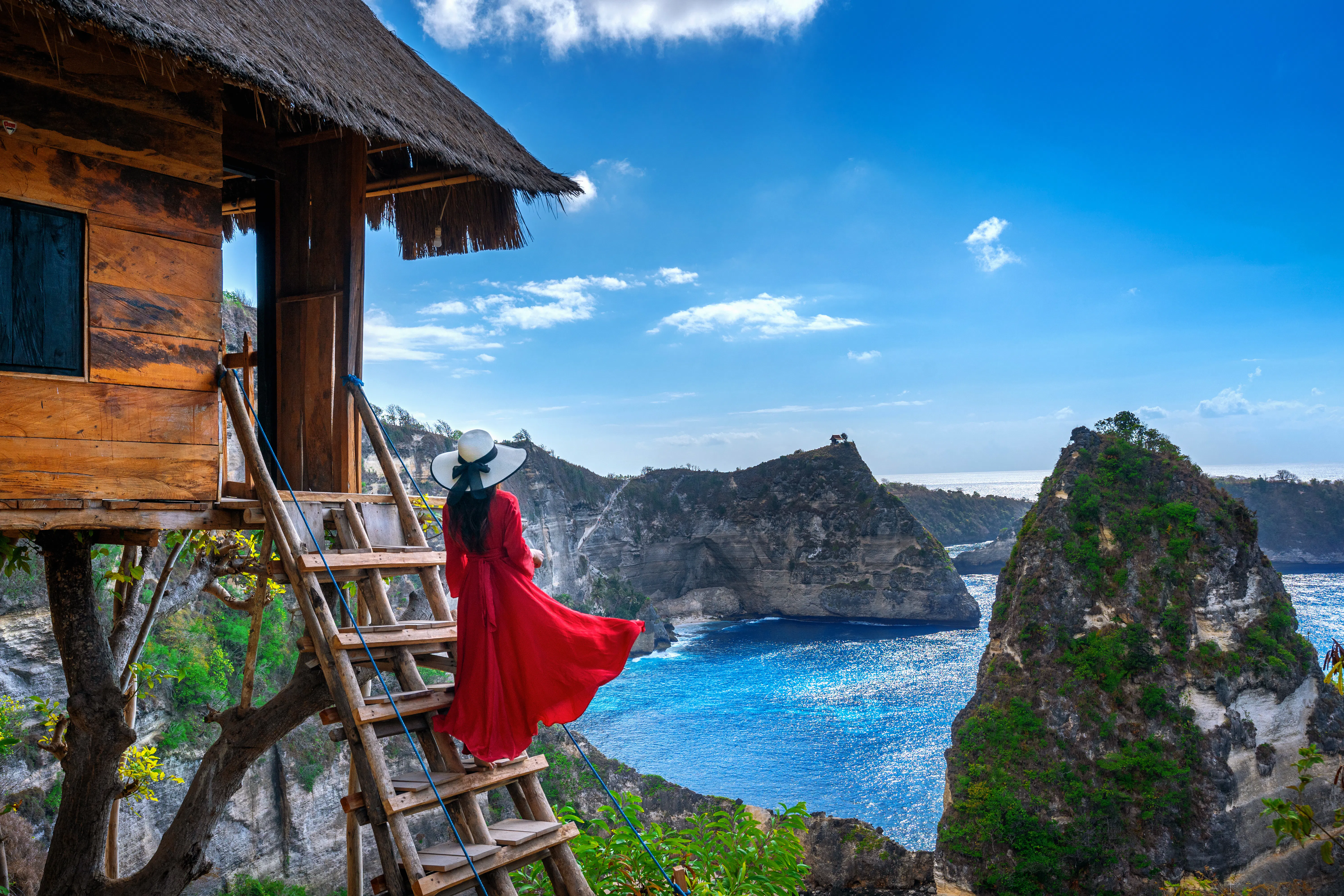
Lean into what makes your property unusual. Unique stays are made for photos, and that works in the host’s favor as much as the guest’s.
Use Instagram and other visual platforms to show off the property, create shareable moments, and work with influencers to drive direct bookings.
Manage seasonal trends
Demand for unique rentals rises and falls through the year, but the calendar depends on what you own. Most unique stays are busiest in July and slowest in winter. Tents, campsites and campers run on a different schedule: their occupancy is highest in February and lowest in September. Knowing which calendar your property follows is the first step to pricing it well.
Plan for the slow stretches, not just the peaks. September is a dip for every common type of unique stay, as summer trips end while most listings are still open. Instead of leaving those nights empty, ease your rates a little or offer a midweek deal to keep bookings coming.
Size matters too. Unique stays with four or more bedrooms (outside of tents, campsites and campers) see more than twice the summer jump in occupancy that one-bedrooms do, so getting seasonal pricing right matters even more for them.
Beyond the seasons, track local events, holidays and peak travel weekends, and adjust your rates so the property books well when demand spikes. A dynamic pricing tool like Adapt does this automatically. It starts from what comparable listings in your market are earning, then adjusts your nightly rates for the season, holidays and local events, and how far out each date is, so you don’t have to track every shift by hand.
Have strong review performance
Past guests can be your best marketing. Good reviews raise your visibility and bring in new bookings. Responding to reviews shows you value guest feedback, builds trust with people reading them before they book, and points you to what to improve next.
Unique stays tend to review well. About 47% of unique stays on Airbnb carry the guest favorite badge today, compared with 46% of houses and 31% of apartments. The badge marks Airbnb’s most-loved listings based on ratings, reviews and reliability, and it gives them a boost in search.
Unique stays’ slight lead over houses, and their much bigger lead over apartments, comes largely from who runs them. Only about 13% of unique stays are managed by operators with more than 20 listings, compared with about a quarter of houses and nearly half of apartments, and those large operators earn the badge far less often.
Within unique stays, permanent structures earn the badge far more often. Barns (65%), farm stays (65%), treehouses (64%) and tiny houses (57%) hold it about twice as often as campers and RVs (32%), tents (28%) and campsites (22%). Consistency is a big part of why. AirDNA’s analysis of the guest favorite badge found that badge holders score close to a perfect 10 on accuracy and check-in, and a permanent structure makes that easier to hit, with the same climate control, bathrooms, and comfort level every stay and fewer weather surprises.
| Unique stay type | Share with guest favorite badge |
|---|---|
| Barn | 65% |
| Farm stay | 65% |
| Treehouse | 64% |
| Tiny house | 57% |
| Yurt | 54% |
| Dome house | 53% |
| Camper/RV | 32% |
| Tent | 28% |
| Nature lodge | 27% |
| Campsite | 22% |
| Houses and villas (for comparison) | 46% |
AirDNA data, Airbnb listings available in September 2026, 10 most common U.S. unique stay types. The badge is Airbnb-only.
Keep Exploring with Expert Insights
For more on running a high-end treehouse retreat, watch Ben Wolff’s full interview on the STR Data Lab podcast below.
Frequently Asked Questions
What are the most profitable types of unique vacation rentals?
By revenue per available night (RevPAR), treehouses (about $143) and dome houses (about $128) lead the common unique stay types, followed by barns (about $110) and farm stays (about $100). Treehouses and dome houses also command the highest nightly rates, at about $275 and $266. Tiny houses earn less per night (RevPAR of about $72) but book more nights than any other type.
How much does a unique vacation rental earn per year?
On average, U.S. unique stays earned about $19,300 per available listing over the 12 months ending September 2026, according to AirDNA data. Treehouses earned the most among the common types (about $43,800), followed by dome houses (about $35,600) and barns (about $28,800). Tiny houses earned about $20,800, campers and RVs about $9,300 and campsites about $4,700. For comparison, houses and villas earned about $40,600.
Are glamping and unique stays still growing?
Yes, but slowly. U.S. unique stay listings grew less than 1% over the 12 months ending September 2026, after growing about 15% two years earlier, according to AirDNA data. They have still more than doubled since 2019 (+127%). Dome houses (+18%), tiny houses (+8%) and barns (+8%) are still adding listings, while campsites, nature lodges and farm stays are shrinking.
How does Airbnb define unique stays?
Airbnb treats a unique space as a property with an unusual or unconventional structure, such as a treehouse, yurt or farm stay.
How do you get a rare find on Airbnb?
Airbnb labels a listing a “rare find” for certain dates when it’s in high demand and usually booked. Competitive pricing and a standout guest experience are the two most reliable ways to get there.
Adapt, AirDNA’s dynamic pricing tool, adjusts your rates based on market demand to help lift revenue and occupancy. On the experience side, invest in distinctive design and amenities, and use guest reviews to keep improving.
How do I make my vacation rental unique?
If your property has an unconventional structure, such as a treehouse, yurt or farm stay, you can list it as a “unique space” on Airbnb. Any property can still feel unique: use local art or custom furniture that reflects the area, add personal touches like a welcome note or a basket of local goods, and make sure your photos, title and description lead with what makes the place special.
ARTICLE SUMMARY
Unique vacation rentals, from treehouses and tiny houses to domes and yurts, have more than doubled in the U.S. since 2019. We use AirDNA data to show which types earn the most, how rates and occupancy are trending, and where the top unique stay markets are.
Bram Gallagher
AirDNA Director of Economics and Forecasting
Bram Gallagher is an Economist at AirDNA, specializing in uncovering insights that drive smarter short-term rental decisions. He put his Ph.D. in Economics from the University of Georgia to work researching and forecasting hotel data with CBRE prior to joining AirDNA, as well as teaching economics at a number of universities. In his spare time, Bram enjoys making wooden furniture with hand tools.


