

 Calculate Revenue
 Research Markets
 Find For Sale Properties
 Compare My Listing
 STR Revenue Calculator
 Custom Comp Sets
 Submarket Insights
 Custom Search Filters
 Rate Recommendations
 Performance Benchmarking
 Competitor Comparison
 Owner Contact Details
 Property-level performance data
 Tourism Insights
 Real Estate Investment Analytics
 About Us
 Sales
Sales Support
 Press
PressBest Places to Invest in a Ski Vacation Rental
Published: January 27, 2026

Jamie Lane
Key Takeaways
- The best places to invest in a ski vacation rental are where demand, home pricing, and competition are balanced.
- Longer booking windows and predictable peak periods can make ski town markets great places to invest in short-term rentals.
- AirDNA helps investors compare ski markets and ski-adjacent submarkets using yield, demand, and pricing data.
Ski markets catch short-term rental (STR) investors’ attention for good reason: Demand is often highly seasonal but predictable, guests tend to plan trips (and book accommodations) well in advance, and the draw of a mountain stay doesn’t fade when the broader travel market cools.
Yes, some ski towns are burdened with staggering price tags and relatively thin margins, but there are gems offering a more attainable entry point and steadier performance. The challenge is knowing where demand, pricing, and competition actually line up, rather than relying on reputation alone.
To get there, we dug into AirDNA data to identify the best places to invest in a ski vacation rental based on yield, using the average revenue potential and average yield of properties that are currently for sale across the featured ski markets. Our findings reveal which markets are worth a closer look for ski-in ski-out Airbnb investments.
Why Ski Demand Is a Powerful STR Investment Driver
Unlike some short-term rental markets, ski towns boast demand that tends to be more intentional, more time-bound, and more closely tied to specific experiences, all of which can work in your favor.
Predictable booking windows
Across the U.S., booking lead times have been trending shorter year-over-year. Last-minute stays are increasingly common, with median booking lead time now sitting under 30 days nationally. The time between making the reservation and checking in is often even shorter during winter months.
Ski markets are often an outlier with longer booking lead times. Ski trips are usually planned weeks or even months ahead. Travelers need to coordinate lift tickets, travel logistics, and group accommodations weeks or months in advance.
When guests lock in their dates early, you enjoy more predictable booking patterns and fewer gaps on the calendar.
High nightly rates during compressed peak seasons
Ski demand doesn’t stretch evenly across the year. Holidays, weekends, and months with reliable snowfall pull demand into shorter windows. As a result, investors get to set high nightly rates for those high-demand periods.
That said, winter isn’t the only peak in many ski towns. Alpine destinations attract summer travelers too, driven by hiking, mountain biking, and outdoor recreation. That secondary season extends the revenue window and reduces reliance on a single stretch of winter demand.
Even in markets where demand is truly concentrated into just a few months, hosts still have flexibility. Some choose to run their short-term rentals seasonally, scaling back or pausing operations during the off-season. That approach can help reduce year-round operating costs (cleaning, utilities, and maintenance) while still capturing strong peak-season revenue.
Experience-driven demand
Ski travelers tend to prioritize convenience and access first. In fact, ski in/ski out Airbnbs earn 66% more revenue than short-term rentals without immediate proximity to the mountain.
That being said, offering a hot tub or an indoor fireplace can also significantly improve your revenue, by 52% and 5% respectively. Airbnbs near ski resorts have the advantage of a clearly defined guest demographic which makes it easier to curate an experience that meets their needs. Families and friend groups traveling to ski want a warm, cozy space to unwind in after a day spent outside.
That experience-driven demand can level the playing field for smaller or more modest properties who provide thoughtful touches like luxurious bedding or ski storage.

Our Methodology for Ranking Ski Markets
To identify the best places to invest in a ski vacation rental, we looked at the average revenue potential of short-term rental properties currently for sale across ski-driven markets, paired with the average yield those properties generate.
In simpler terms: How much income a property might produce relative to its purchase price.
This approach is in lieu of assessing average nightly rates or total revenue in a given market. That’s an important distinction, particularly in ski markets. Popular resort towns tend to boast impressive revenue numbers, but they also come with higher home prices, which can compress yields. In more accessible ski markets, revenue potential might technically be lower, but entry costs also tend to be lower, which can result in stronger overall yield.
For this analysis, we evaluated ski markets across the U.S. and ranked them by yield to find markets where revenue potential and pricing appear more closely aligned. The result is a list of ski markets where the data suggests a balanced opportunity for STR investors seeking strong markets to purchase ski houses for sale.
Note: Average home prices, revenue potential, and yield for each market is based on currently for-sale properties, which change day to day. The figures in this report are based on data from December 2025 but will fluctuate as the real estate landscape evolves.
Best Places to Invest in Ski Vacation Rentals
The ski markets below ranked highest based on average yield. While several familiar ski destinations appear on the list, many of the top performers sit just outside the most expensive resort cores. There, home prices are lower and returns can be more balanced.
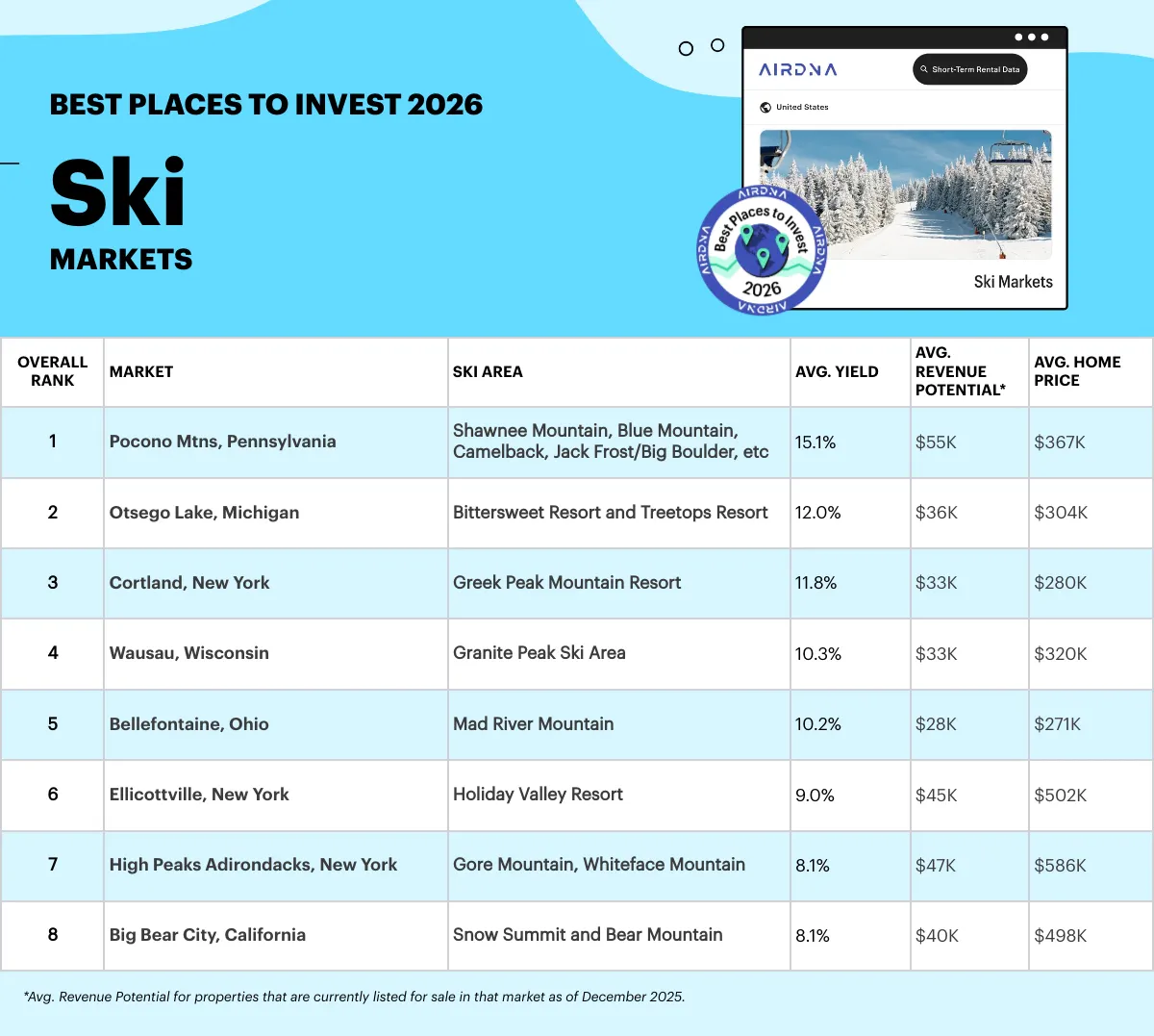
Keep in mind that variations in the types of property available mean that prices fluctuate wildly. A ski-in ski-out for sale commands a higher valuation than a ski town condo, and differences in amenities can significantly impact yield. Note that the data below is based on currently for-sale properties, which change day to day. Investors should look at yields for individual properties before investing.
1. Pocono Mountains, Pennsylvania


The Pocono Mountains are well known for skiing, with resorts that include Camelback Mountain, Jack Frost Mountain, Blue Mountain Resort, Big Boulder Ski Area, and Shawnee Mountain Ski Area.
However, this destination has the advantage of being a year-round tourism engine that spans outdoor adventure, warm-weather lake time, and amusement parks. With that type of diverse demand, investors here see returns beyond winter holidays and ski season.
The Pocono Mountains also add a “town” layer that many mountain markets lack. The towns of Stroudsburg and East Stroudsburg offer walkable downtowns with restaurants, shops, arts, events, galleries, and entertainment, all ideal for guests looking for something after a hike or day on the slopes.
Market fundamentals are compelling. Average home prices in East Stroudsburg are below $370K with a standout 15%+ average yield. Stroudsburg, which includes towns like Brodheadsburg and Saylorsburg, has a higher average home price around $470k and an accompanying yield of 10.4%.
With $50k in average revenue potential and yields above 10%, it's no surprise the Poconos top our list of best places to invest in ski vacation rentals.
Regulations:
Both Stroudsburg and East Stroudsburg Boroughs have established regulatory frameworks: hosts are required to obtain a short-term rental license/permit. East Stroudsburg Borough’s Short-Term Rentals Ordinance 1379 outlines inspections and renewal requirements, while Stroudsburg Borough code specifies occupancy limits.
Overall, regulations are structured but workable for investors who are prepared to follow a formal licensing process.
2. Otsego Lake, Michigan
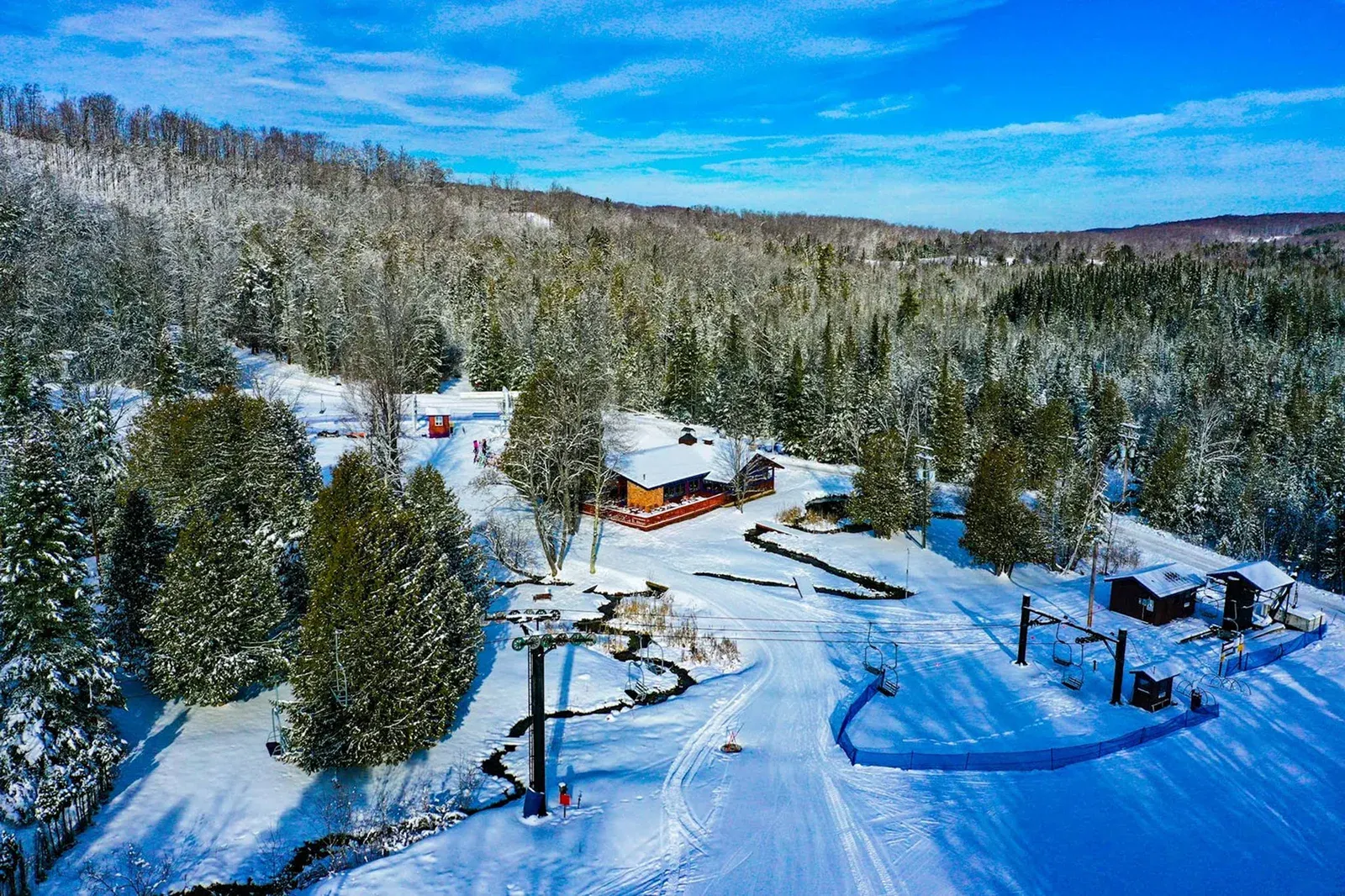
Photo courtesy of https://otsegoclub.com/

Otsego Lake in Michigan is proof that you don’t have to pay coastal prices to access resort-style bookings and strong projected returns.
This region delivers true four-season, “Up North” lake demand with accessible home prices. It’s a classic Michigan lake destination with enough variety to keep calendars filled beyond peak summer. Beach days, boating, and winter ice fishing spread demand across multiple seasons, reducing reliance on a single short window. During the winter, skiers flock to this area to enjoy the nearby Bittersweet Resort and Treetops Resort.
Market fundamentals are especially compelling for investors who want lifestyle appeal and business performance. The average home price is just over $300K, leaving room in the budget to invest in winter amenities like a firepit, hot tub, or EV charging. An average yield of 12% suggests a strong price-to-income balance and less downside risk than markets where prices outpace demand.
Regulations:
Regulations appear moderately favorable but currently uncertain due to proposed changes. A proposed Otsego County short-term residential rental ordinance indicates STRs would be required to register and obtain an annual permit through the county, suggesting a formalization of compliance requirements that you should monitor closely before investing.
3. Cortland, New York
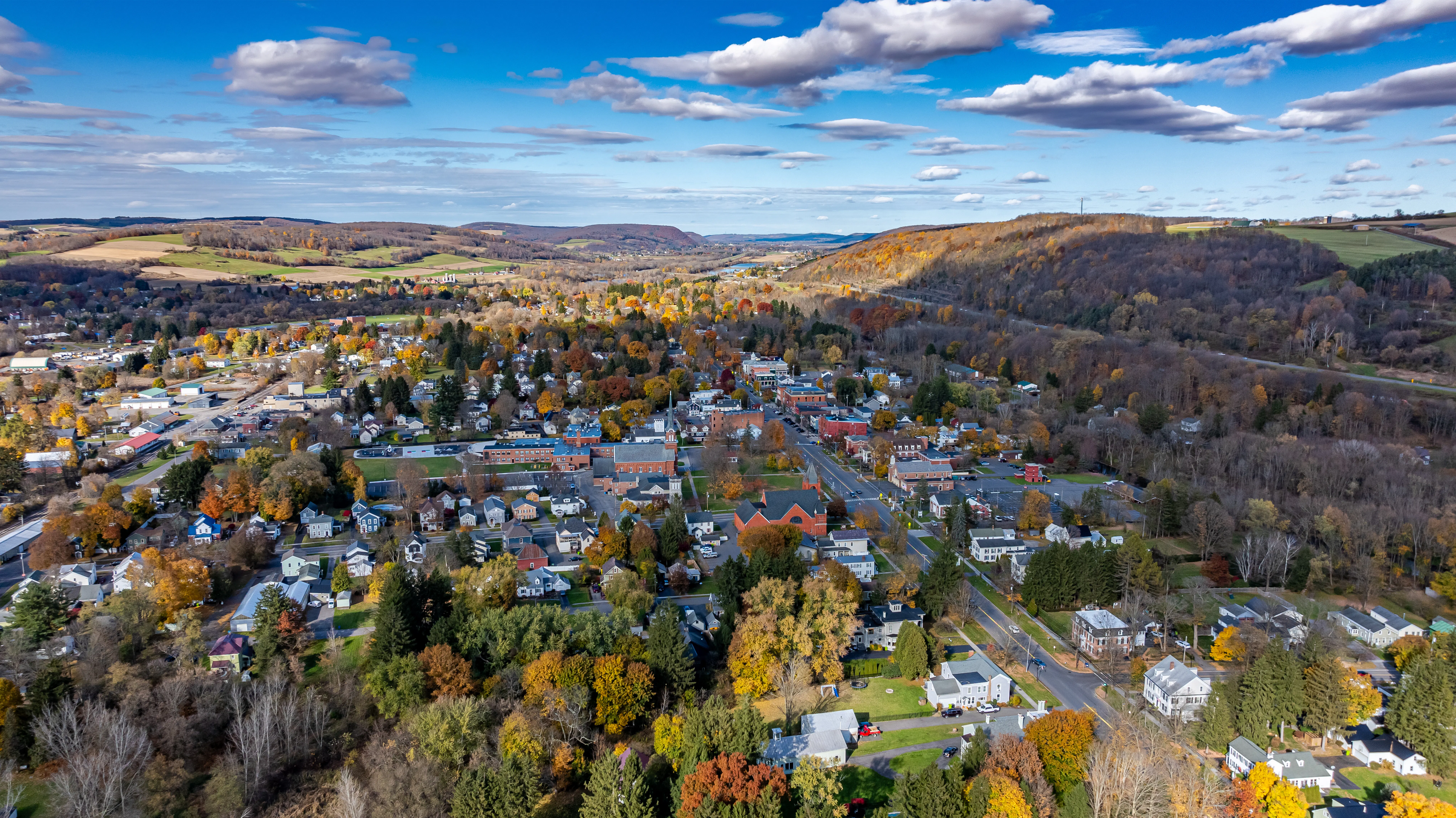

Cortland, New York, pairs diversified, year-round demand (college travel + a four-season outdoors scene) with an approachable entry price.
Sitting on the edge of the Finger Lakes region, Cortland provides easy access to lakes, trails, and Greek Peak Mountain Resort ski slopes without the premium costs of crowded resort towns. Campus visits, graduations, and athletics at SUNY Cortland help smooth occupancy beyond peak leisure weekends. Local culture—including cafés, art spaces, festivals, and downtown activity—supports weekend and local event travel, not just pass-through stays.
For investors, Cortland offers a compelling risk/reward profile. Low average home prices keep the cost of entry manageable, while an 11.8% average yield indicates attractive income relative to purchase price.
Regulations:
Cortland’s regulatory environment requires careful diligence. There are indications of broader state-level changes (an STR registry effective April 2025) that could impact compliance and taxes. Investors should confirm how (and whether) the City’s rental housing rules apply to short-term rentals specifically, and monitor state implementation timelines.
4. Wausau, Wisconsin
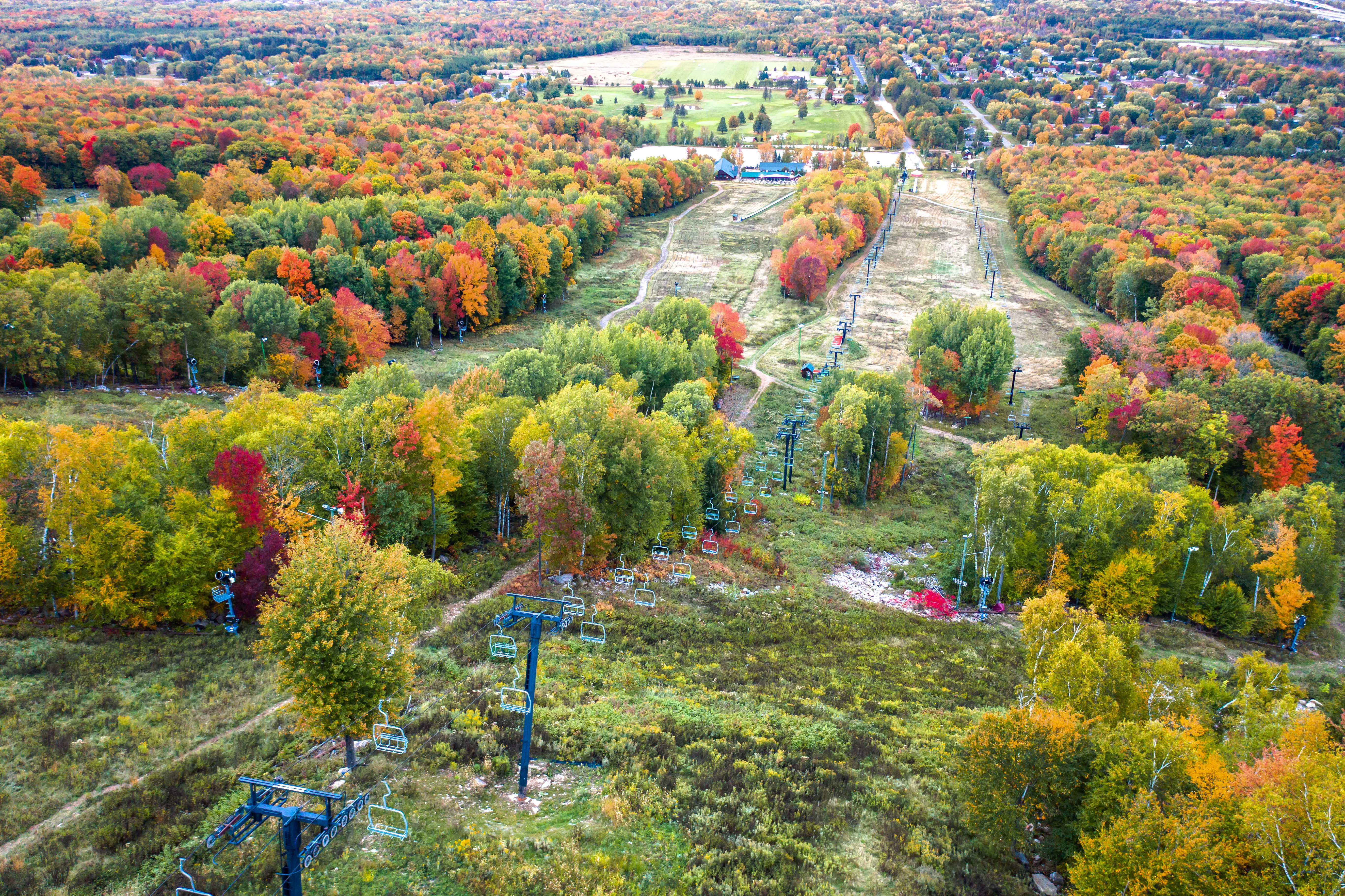

Wausau, Wisconsin, offers a balanced demand profile that’s hard to ignore: ski trips and snow-season weekends in winter, outdoor and lake-country exploring in summer, and reliable shoulder-season travel driven by local culture and events.
Demand drivers here are real and repeatable. Granite Peak Ski Area anchors winter travel, while Rib Mountain State Park delivers year-round outdoor appeal that includes hiking, views, and easy nature access for weekenders and families. The Leigh Yawkey Woodson Art Museum and other local museums add non-weather-dependent reasons to visit, which helps smooth seasonality.
STR investors in Wausau don’t rely on a single peak window and enjoy stabilized cash flow, with occupancy lows of 51% in the spring and a high of 75% during the summertime. Average home prices are reasonable compared to other ski markets, and a double-digit gross yield of 10.3% lets income do the heavy lifting instead of banking on aggressive appreciation.
Regulations:
Wausau’s regulatory environment appears generally favorable to STR investors but compliance-driven. Marathon County mandates that Tourist Rooming Houses must be properly licensed and have the license posted. The City of Wausau also has a residential rental unit registration requirement, suggesting STR hosts should expect to take steps to register their properties.
5. Bellefontaine, Ohio


Bellefontaine, Ohio delivers double-digit STR yield potential at an affordable entry price, backed by diversified demand from a revitalized downtown and four-season outdoor draws.
Outdoor and elevation-based tourism brings travelers to Campbell Hill (the highest point in Ohio). Mad River Mountain adds a winter spike, creating major demand during ski season. Downtown Bellefontaine’s walkable shopping, dining, and culture functions as a destination in its own right and supports short-stay leisure demand.
With average home prices well below $300K, the barrier to entry is manageable. Average yield is just over 10%, signaling a strong relationship between purchase price and earning power, precisely the sweet spot most STR investors chase.
Regulations:
Ohio short-term rental rules are primarily set at the city level, and some municipalities require registration/permits and compliance with building codes and inspections. While the City of Bellefontaine’s specific short-term rental laws aren’t made public online, it’s worth noting that Logan County (where Bellefontaine is located) expanded its 3% county lodging tax to include short-term rentals in 2025. We’d best categorize Bellefontaine’s regulatory environment as generally manageable, but investors should confirm any city requirements before purchasing a property.
How to Find the Best Markets to Invest In
One of the advantages of investing with demand drivers in mind is that you’re not limited to a single destination or property type.
With AirDNA, you can explore markets near the kinds of attractions that matter most to you, whether that’s outdoor recreation, seasonal tourism, or transportation hubs. You can also narrow in on markets that fit your budget or goals.
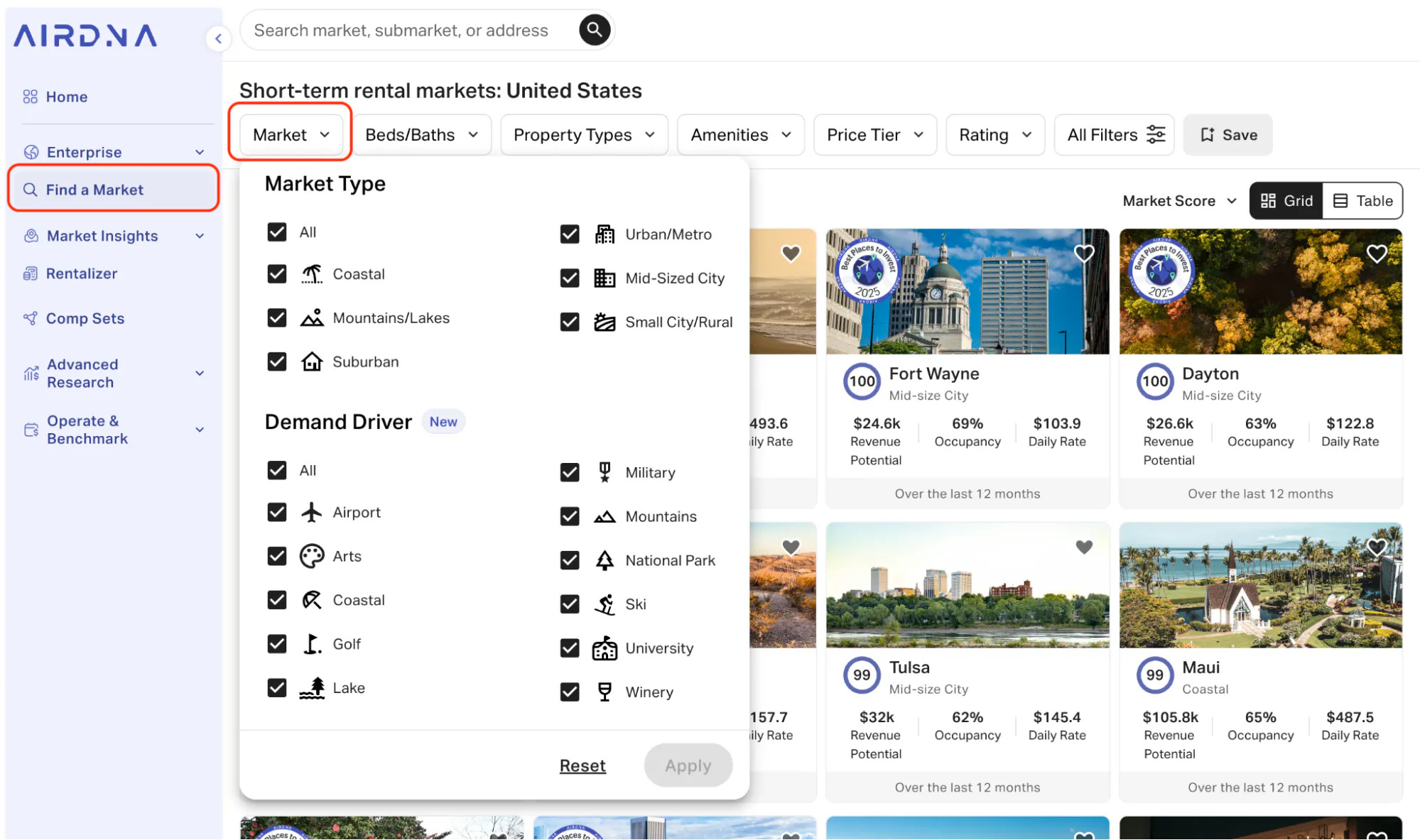
Use demand driver market filters
Different attractions yield different booking patterns. Using AirDNA’s demand driver filters, you can surface markets where short-term rental demand is tied to specific types of tourism, rather than relying on broad location searches alone.
This makes it easier to:
- Identify markets near the types of attractions you’re interested in
- Uncover nearby alternatives with similar demand dynamics but different pricing or competition levels
From the Find a Market tab in AirDNA, click the Market filter to choose which demand drivers you want to search for.
Filter by budget and yield
Once you’ve identified markets driven by the right kind of demand, look at for-sale properties in those markets.
To narrow down your options, use these filters:
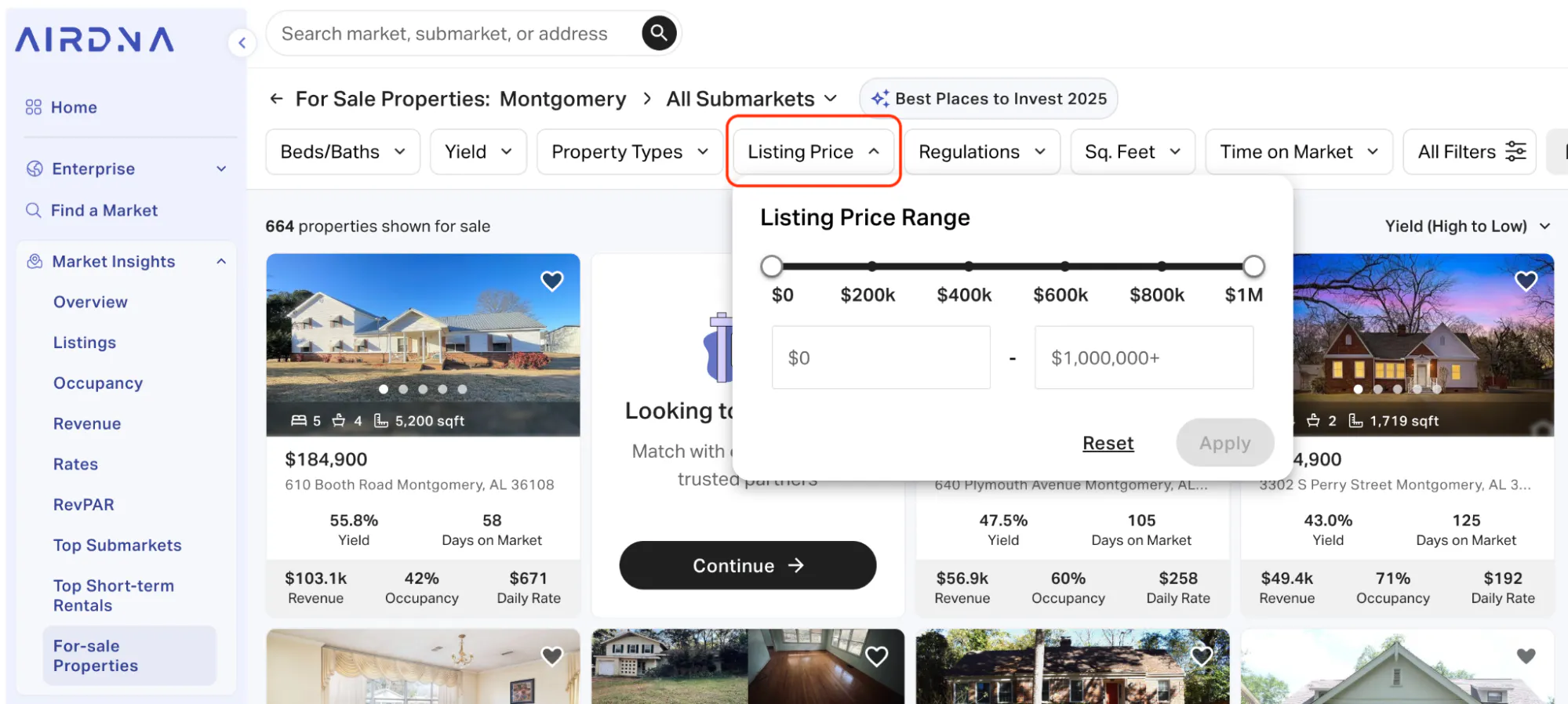
Price range filter
Use the listing price filter to only view for-sale properties within your budget. You can set upper and/or lower limits. Find this filter in the For-sale properties tab.
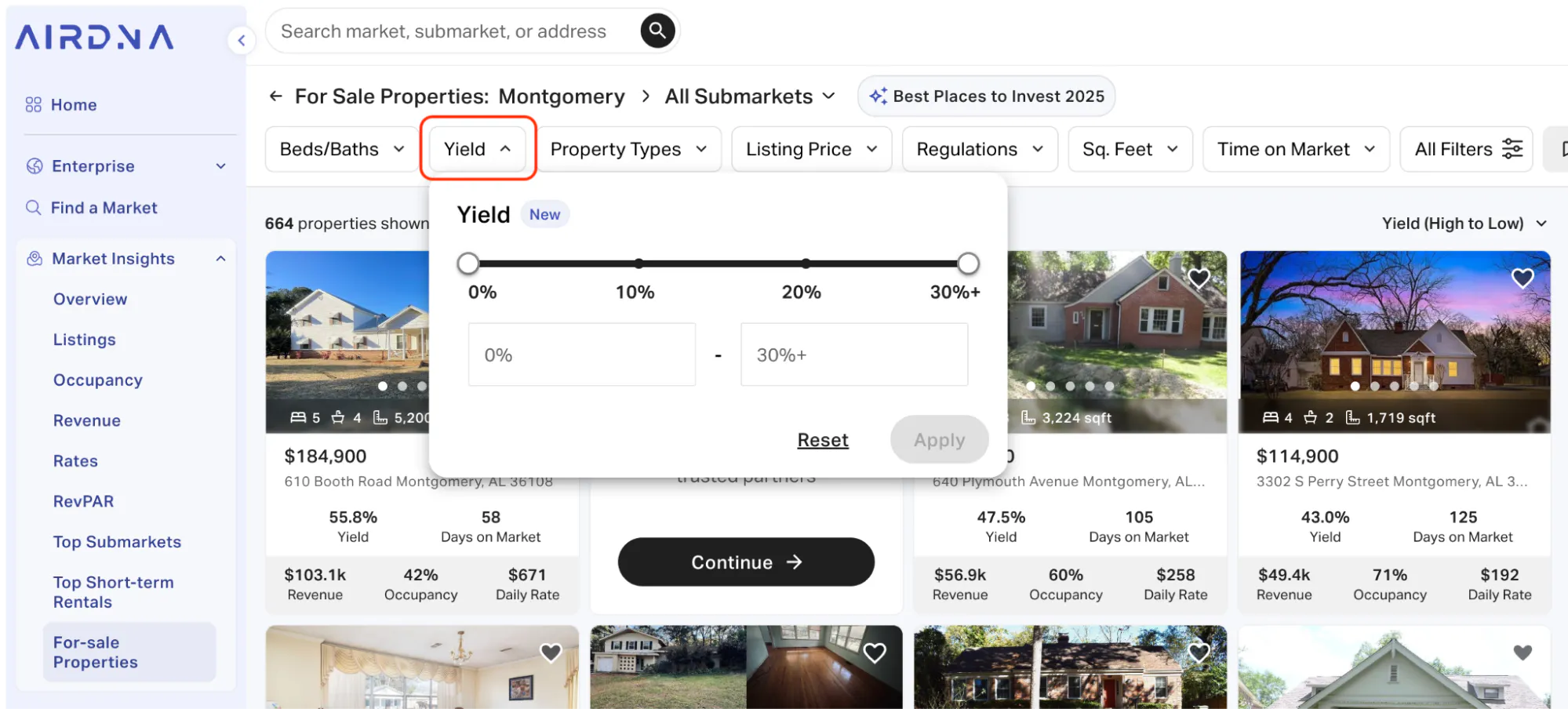
Yield filter
Use the yield filter to highlight properties that meet your desired yield. Setting a minimum yield will filter out any properties that likely won’t provide the returns you’re seeking. Find this filter in the For-sale properties tab.
FAQs
Are ski vacation rentals a good investment?
Yes, ski vacation rentals can be a good investment in markets where demand, pricing, and competition are in balance. These properties tend to benefit from predictable seasonal demand and guests who plan trips well in advance. That said, performance varies widely by market, home price, and proximity to attractions. Looking at yield, not just nightly rates, is important.
What should I look for when buying a ski vacation rental?
Proximity and ease of access to ski resorts is one of the most important factors to consider when shopping for a ski house for sale. Booking patterns and seasonality are important too. Ask yourself, ‘Is the rental in a market with demand outside of ski season?’
Beyond these factors, ski vacation rental investors should also look for:
- Purchase prices that are balanced with expected returns
- Adequate revenue potential
- Low or reasonable competition
Is a ski-in ski-out property always the best option for a rental investment?
Guests are willing to pay more for ski-in ski-out homes, but these properties also tend to come with higher purchase prices. In some markets, ski-adjacent properties may offer similar demand with a lower cost of entry. The strongest opportunities depend on how pricing and revenue potential align in a given market.
How can I find up-and-coming ski towns to invest in?
To spot emerging ski markets, use AirDNA’s demand driver filters to identify areas near ski resorts or mountain attractions. Then, compare home prices, revenue potential, and yield across markets to highlight places where demand is growing but acquisition costs remain accessible. Tracking changes in supply, occupancy trends, and booking lead time over time can also offer clues about which ski-adjacent markets are gaining momentum before they become widely recognized.
Start with yield, go deeper later
Use AirDNA to assess market performance and compare Airbnb yield across for-sale listings before diving into full ROI.
ARTICLE SUMMARY
Not all ski towns offer the same short-term rental investment potential. Our data highlights the best places to invest in ski vacation rentals and explains how to evaluate ski markets using pricing, demand, and yield data.
Jamie Lane
AirDNA Chief Economist
He is responsible for data analysis, thought leadership, and leveraging advanced analytical techniques to provide new insights into short-term rental market trends. Native to Atlanta and an Airbnb host himself, Jamie enjoys cycling, mountain biking, backpacking, running, and playing in a dart league in his free time.
