

 Calculate Revenue
 Research Markets
 Find For Sale Properties
 Compare My Listing
 STR Revenue Calculator
 Custom Comp Sets
 Submarket Insights
 Custom Search Filters
 Rate Recommendations
 Performance Benchmarking
 Competitor Comparison
 Owner Contact Details
 Property-level performance data
 Tourism Insights
 Real Estate Investment Analytics
 About Us
 Sales
Sales Support
 Press
PressBest Places to Invest in Airbnbs Near Golf Courses
Published: January 27, 2026

Jamie Zhang
Key Takeaways
- Airbnbs near golf courses perform best where home prices are balanced with revenue potential.
- Repeat golf travel and group stays can support steadier occupancy beyond major events.
- Proximity and access to golf courses can matter more than course prestige when evaluating golf-driven short-term rental demand.
Golf destinations have a way of attracting intentional, repeat travel. Players plan trips around specific courses, tournaments, and seasons, often returning to the same areas year after year. For short-term rental investors, that kind of demand is undoubtedly appealing, but only when pricing and performance align.
To identify the best places to invest in Airbnbs near golf courses, we analyzed markets where golf-centered travel plays a meaningful role and compared how properties currently for sale perform relative to their revenue potential. Our data-backed analysis reveals where demand, home prices, and yield are ideally balanced for investors exploring short-term rentals (STRs) near golf clubs and courses.
Why Proximity to a Golf Course Is a Powerful STR Investment Driver
For travelers looking to hit the links, location does a lot of the work. Proximity to the golf course influences how guests plan trips, who they travel with, and how they book, which are all factors that can make demand feel more predictable for nearby vacation rentals.
Trips tend to be planned, not spontaneous
Most golfers organize their golf outings well in advance. Tee times, group travel, and course availability encourage early planning, especially for multi-day stays or group outings. For hosts, that means clearer booking windows and more visibility into upcoming demand.
Group travel and longer stays
Golfers tend to travel in groups and stay for multiple nights, particularly in destination markets or during tournament weeks. That means you can fill more nights with fewer bookings instead of chasing lots of short stays. It also gives you more leverage when pricing larger homes that can accommodate big groups.
Demand extends beyond peak events
Tournaments and peak golf seasons (which vary based on location) drive strong demand, but many golf destinations also attract retirees, seasonal residents, and leisure travelers outside of big events. In markets with favorable weather or multiple courses, golf-related demand extends booking activity beyond a single peak window.

Our Methodology for Ranking Airbnb Markets Near Golf Courses
STR markets near golf courses can look appealing for a lot of reasons. However, strong golf demand doesn’t always translate into strong performance once you factor in home prices and competition.
To account for that, we evaluated markets near golf courses using yield, comparing the average revenue potential of properties currently for sale against their purchase price. In other words, we focused on how much income a property may generate relative to what it costs to buy.
We took this approach because nightly rates or top-line revenue alone don’t tell the whole story.
Some golf-adjacent markets post impressive nightly rates during peak seasons or tournament weeks, but elevated home prices mean narrower margins. In other markets, revenue potential is slightly lower, but lower entry prices and steadier golf-related demand create a more balanced income-to-cost profile.
Using AirDNA data, we analyzed Airbnb markets near golf courses across the U.S. and ranked them by yield to surface places where the numbers for demand and home prices indicate strong investment potential.
Note: Average home prices, revenue potential, and yield for each market are based on currently for-sale properties, which change day to day. The figures in this report are based on data from December 2025 but will fluctuate as the real estate landscape evolves.
Best Places to Invest in an Airbnb Near a Golf Course
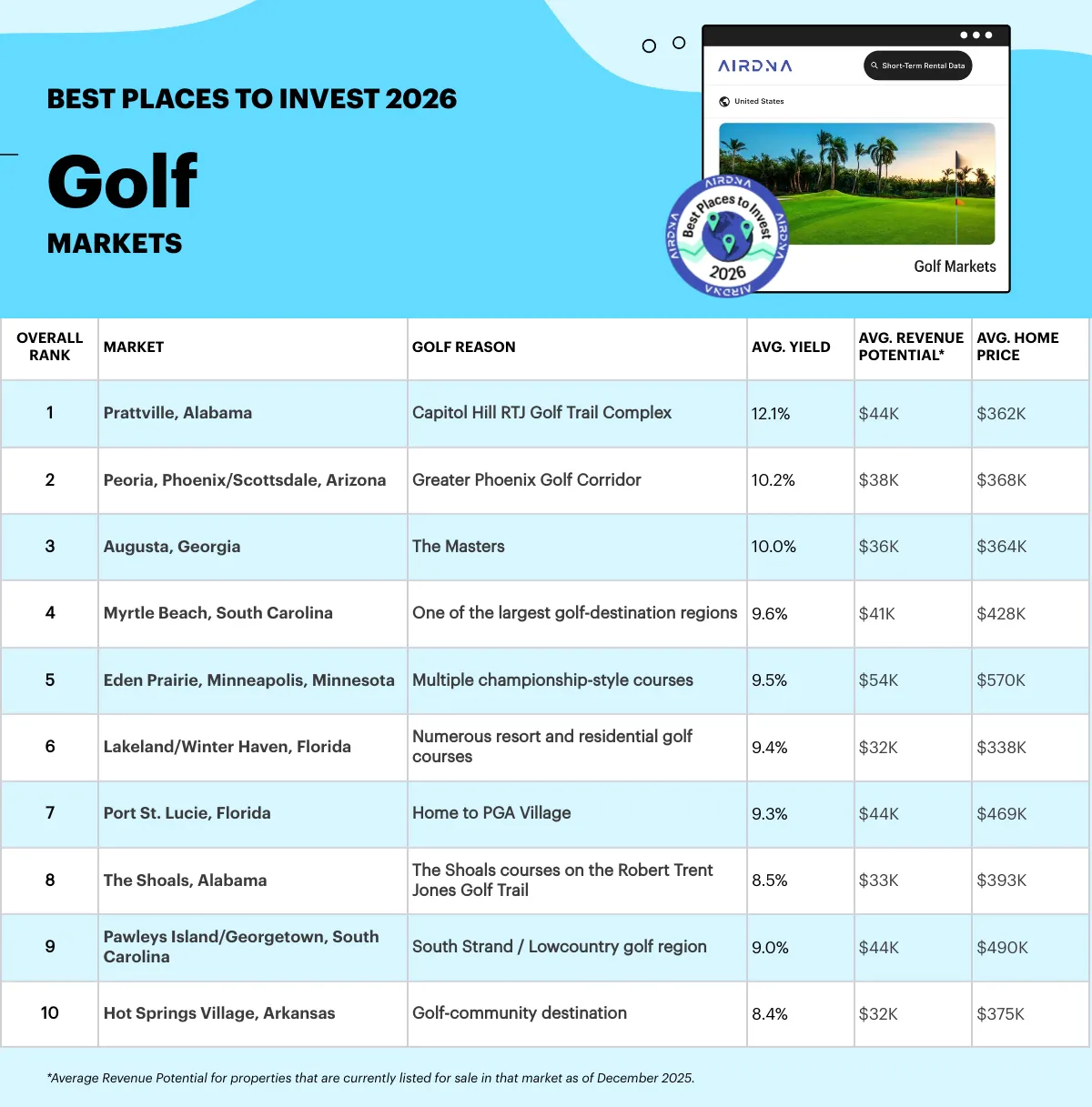
The markets below ranked highest based on yield. You’ll notice there are some well-known destinations alongside a few lesser-known spots that offer a particularly accessible entry point.
1. Prattville, Alabama – Capitol Hill RTJ Golf Trail Complex
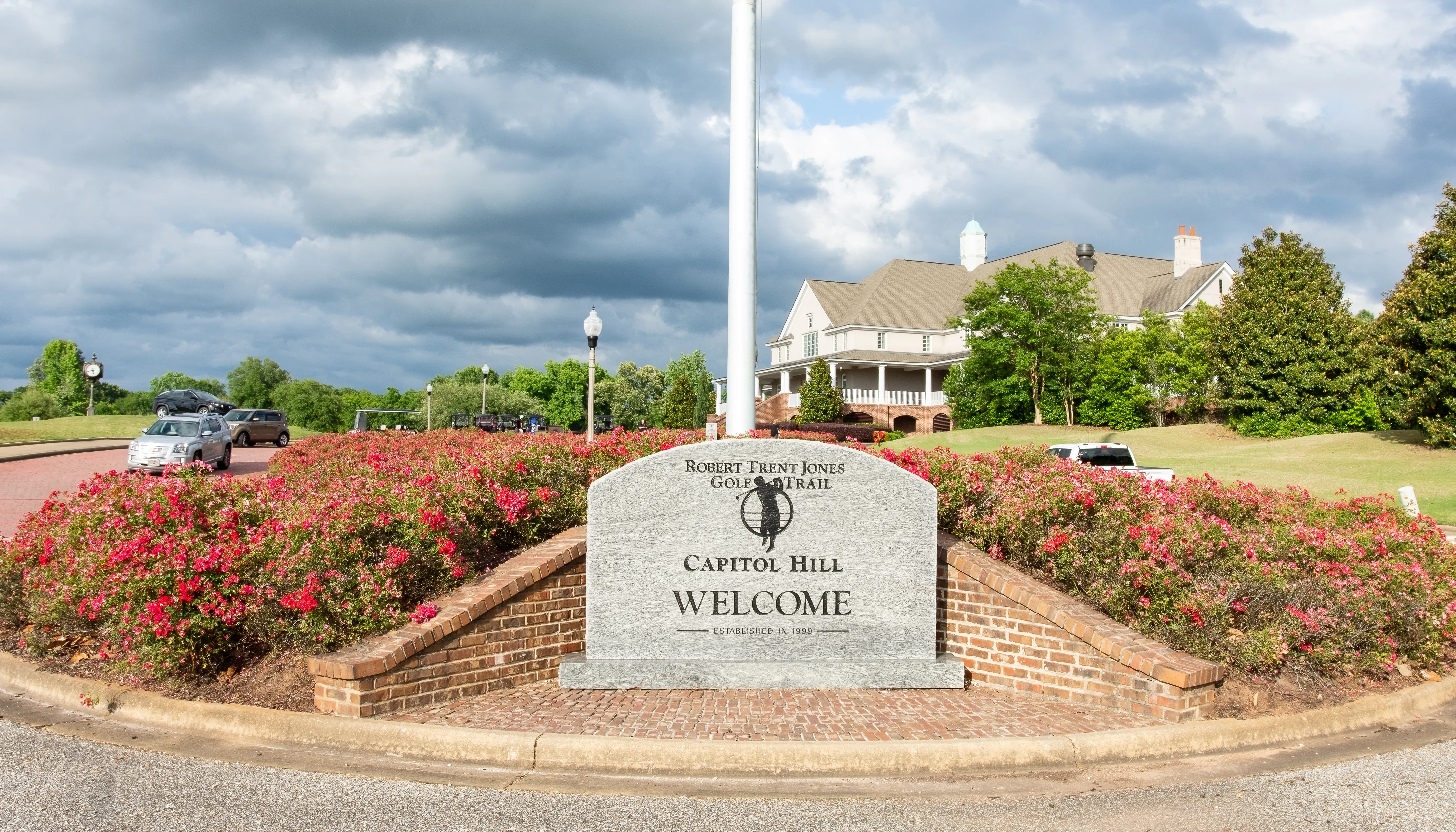

Prattville offers steady weekend demand built around outdoor recreation, history, and golf without the cost-prohibitive buy-in. Its proximity to Montgomery, Alabama, its reputation as a weekend escape supports consistent short-term rental performance.
Golf at Capitol Hill on the RTJ Golf Trail brings leisure travelers and groups who often stay longer and value quality, which powers strong STR performance across weekends and shoulder seasons. The average occupancy rate is 60% and stays between 50-70% year-round. Airbnbs near the RTJ Golf Trail can command particularly strong ADRs thanks to bookings by golf enthusiasts. Beyond golf, outdoor travelers stay here to experience Pratt Park, Wilderness Park, and Autauga Creek, while Old Prattville adds a walkable main-street experience that performs well for short stays.
The economics here are solid. With an average home price of $361,911 and average revenue potential of $43,901, Prattville delivers a stellar 12.1% average yield.
Regulations: Prattville’s short-term rental regulatory environment is unclear, given that there’s no publicly available information online about its STR laws and regulations.
What we do know is that in 2022, Prattville’s city council planned a temporary moratorium on issuing business licenses for short-term residential rentals. Whether that moratorium was implemented and is still applicable is unclear. Broader state-level summaries note that Alabama generally focuses on tax registration rather than a state STR license, but local rules can be the deciding factor. With all this in mind, prospective investors should contact the City of Prattville directly before moving forward.
2. Peoria, Arizona - Greater Phoenix Golf Corridor


Peoria delivers a lower-cost entry than nearby Phoenix/Scottsdale neighborhoods while still tapping year-round leisure and event-driven demand.
Market metrics support that positioning: the average home price is under $400K. Pair that with average revenue potential of over $37K and an average yield just over 10% and you’ve got a healthy return rate for a Sun Belt market with deep, diversified demand.
Golf-driven demand is high here, as Peoria sits within the Greater Phoenix Golf Corridor and boasts the well-known Peoria Pines Golf & Teaching Center. That being said, golf isn’t the only sports-related demand driver. The Peoria Sports Complex, home to many MLB Spring Training games, drives strong spikes around baseball travel and event weekends. Steady demand is rounded out with outdoor and family travel centered around Lake Pleasant day trips and easy access to regional activities.
Regulations:
Peoria’s regulatory environment is workable and generally investor-friendly, with clear compliance steps rather than outright bans. The City of Peoria provides rules for operating short-term rentals and notes that owners/managers must apply for a city license.
3. Augusta, Georgia - The Masters
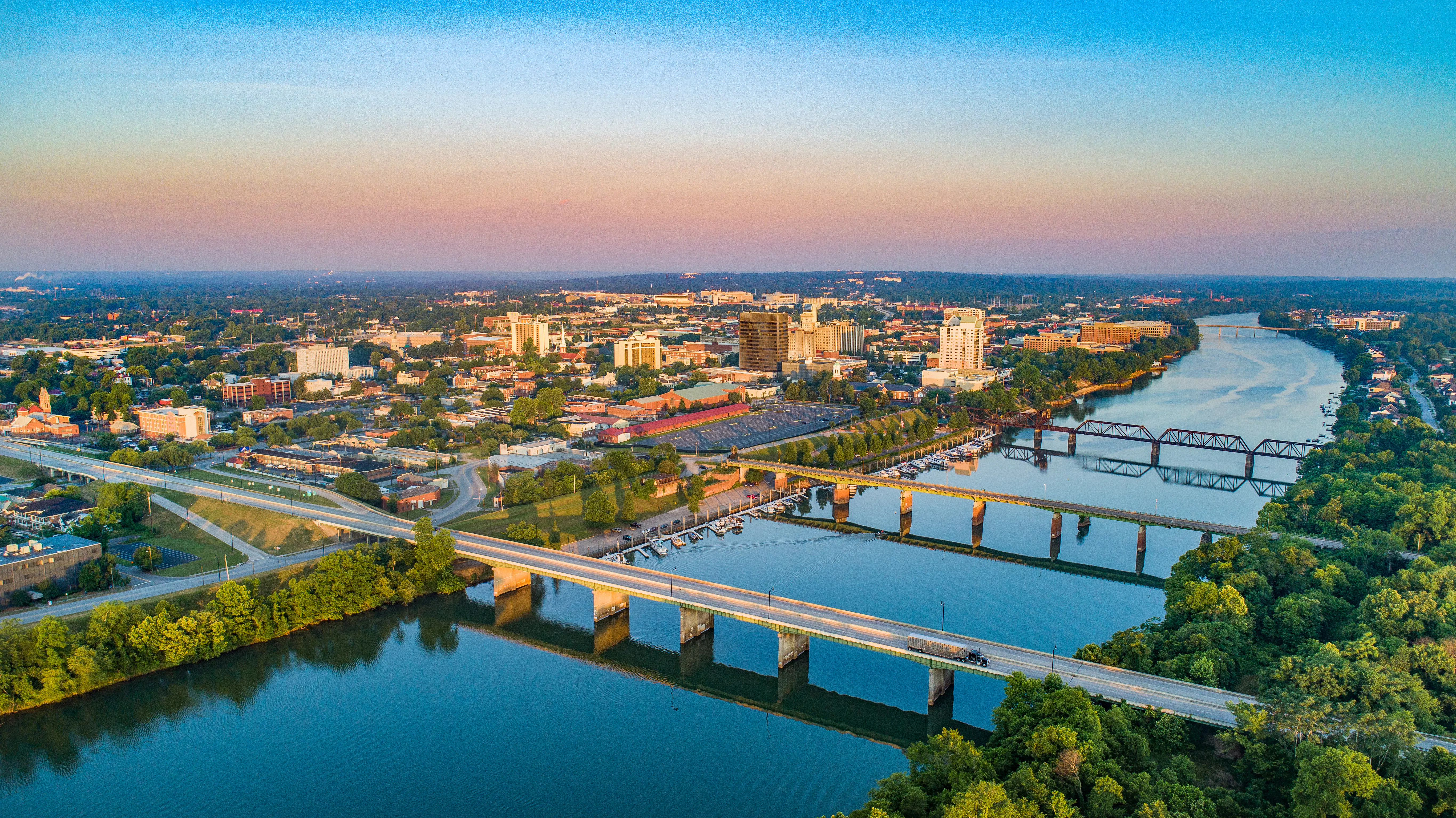

Augusta delivers a rare combination of reliable year-round demand plus massive event-driven revenue spikes (hello, Masters Week).
Year-round demand comes from outdoor recreation (including golfing), the arts, and a growing brewery and food scene. Major events like The Masters Tournament bring tens of thousands of travelers to the city. Airbnbs near Augusta National Golf Club see some of the strongest peak-night ADRs (average daily rates) in the market.
Key metrics support a strong investment thesis. With an average home price of $363,545 and average revenue potential of just over $36K, Augusta delivers a 10% average yield. This is a workable balance between income and entry cost for operators who manage expenses and focus on high-intent pockets near the riverfront, downtown, and event corridors.
Regulations:
Augusta’s STR environment appears generally favorable, but investors will need to seek further details as there is no publicly available information about STR rules on the city’s website. Investors should treat the rules as uncertain until verified with local government, but overall the market is described as easier to operate in than many comparable cities.
4. Myrtle Beach, South Carolina
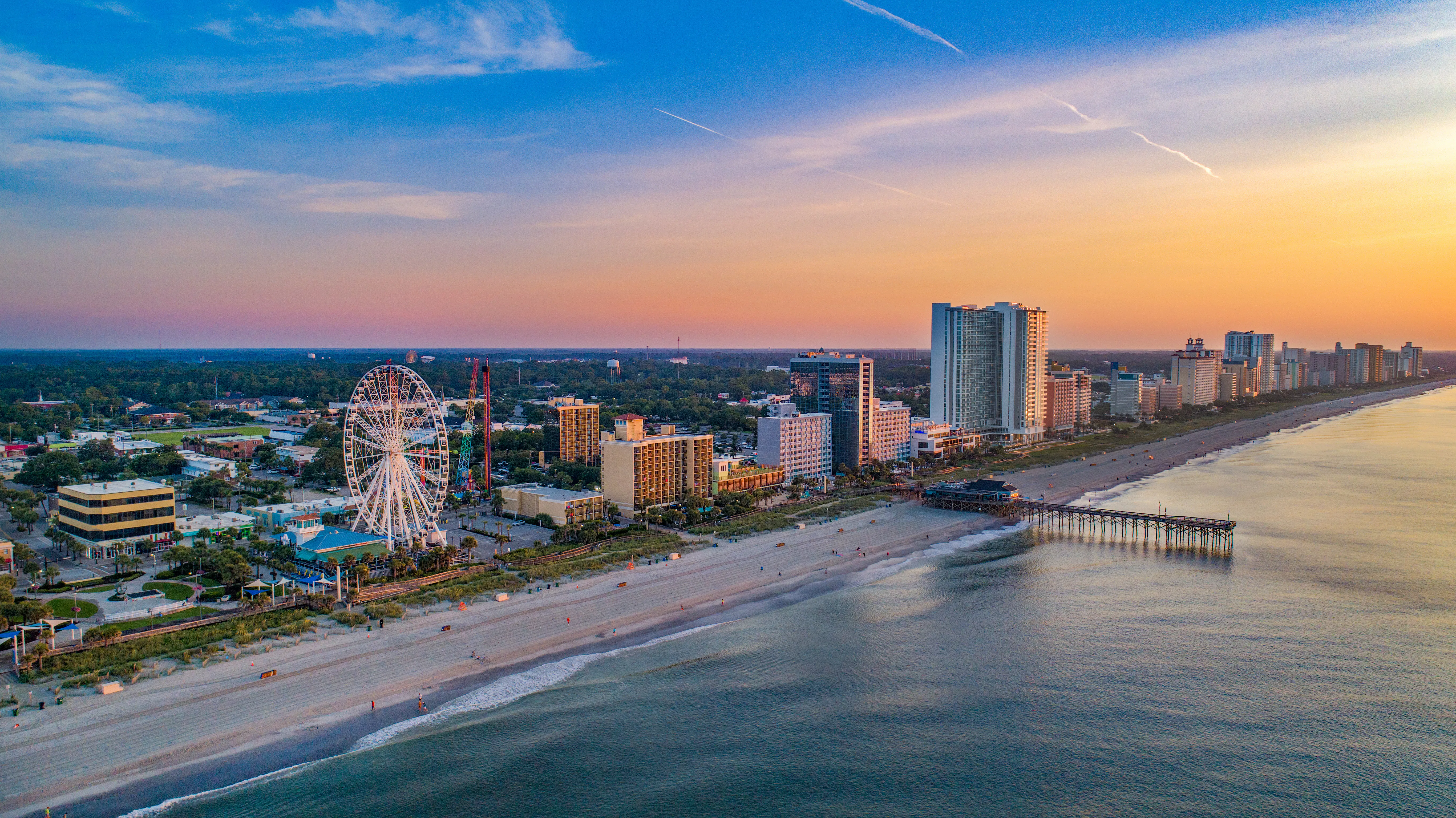

Myrtle Beach is a purpose-built vacation destination where STR demand is a core part of the tourism engine. While the beautiful beaches drive summer travel, golf plays a central role in why demand shows up consistently and at scale.
Often called the golf capital of the world, Myrtle Beach is home to 90+ championship golf courses and hosts major events like the PGA Tour’s Myrtle Beach Classic. Golf creates a steady pipeline of travel layered on top of the area’s core beach demand. The result is a market that doesn’t rely on a single weekend or attraction to perform.
Beyond golf, visitor demand is powered by a high-density mix of attractions. The Myrtle Beach Boardwalk anchors the classic beach and boardwalk vibe that many vacationers seek out. The market is also notably family-friendly, with all-ages attractions and staples like Ripley’s Aquarium.
Market economics are straightforward and investor-friendly. The average home price is just under $430K, a relatively attainable price point for a beach market. Average yield here is 9.6%, putting Myrtle Beach in returns-first territory and still leaving room in underwriting for management, insurance, and seasonal maintenance.
Regulations:
Myrtle Beach’s STR environment is structured and zoning-driven. The city defines short-term rentals as stays under 90 days and requires operators to obtain a business license, with permissions tied to zoning districts.
5. Eden Prairie, Minnesota
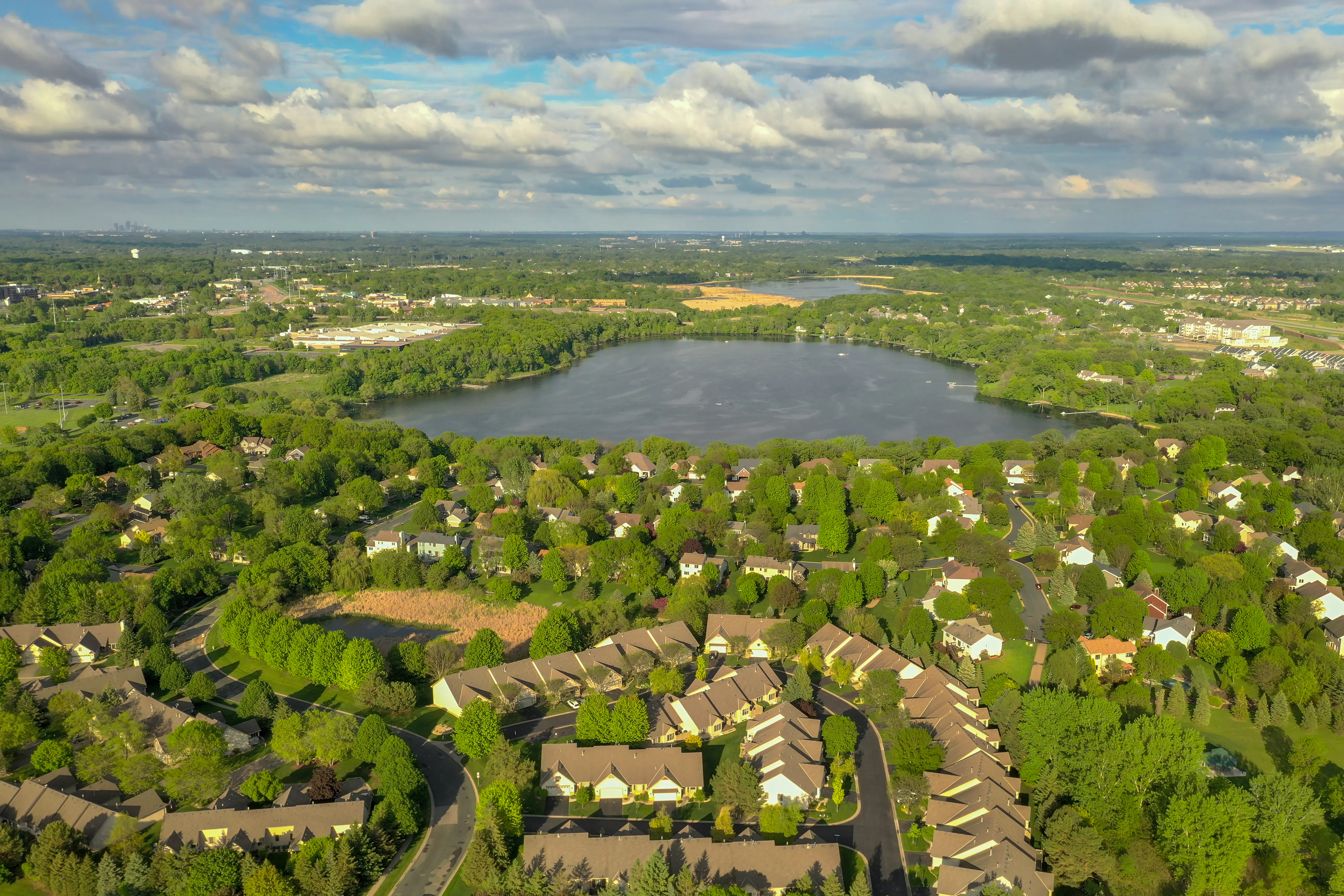

While Eden Prairie may not be the first market that comes to mind for golf travel, the area is home to multiple championship-style courses and benefits from beautiful, temperate summers that support regular tee-time demand.
A southwest Minneapolis suburb, Eden Prairie captures a wide mix of travelers: weekend getaways, visiting families, sports and events, relocations, and corporate travel. Guests value the extra space, parking, and calmer setting, while still being close to everything the Minneapolis–St. Paul Metro offers.
The average home price is on the higher end at $570K but is balanced by an average revenue potential of just over $54K, driven by larger homes that appeal to families and group travelers. The resulting 9.5% average yield stands out for a high-income metro and a near–double-digit return profile.
Regulations: Eden Prairie requires owners of rental dwellings to obtain and renew a Rental Housing License annually. The environment seems relatively favorable, but investors should check with the city directly to confirm requirements.
How to Find the Best Markets to Invest In
Thinking in terms of demand drivers gives you more room to compare STR investment opportunities. Rather than locking into one destination or market label, you can evaluate areas near the types of attractions that consistently bring travelers in, and then narrow the field based on what fits your budget and return goals.
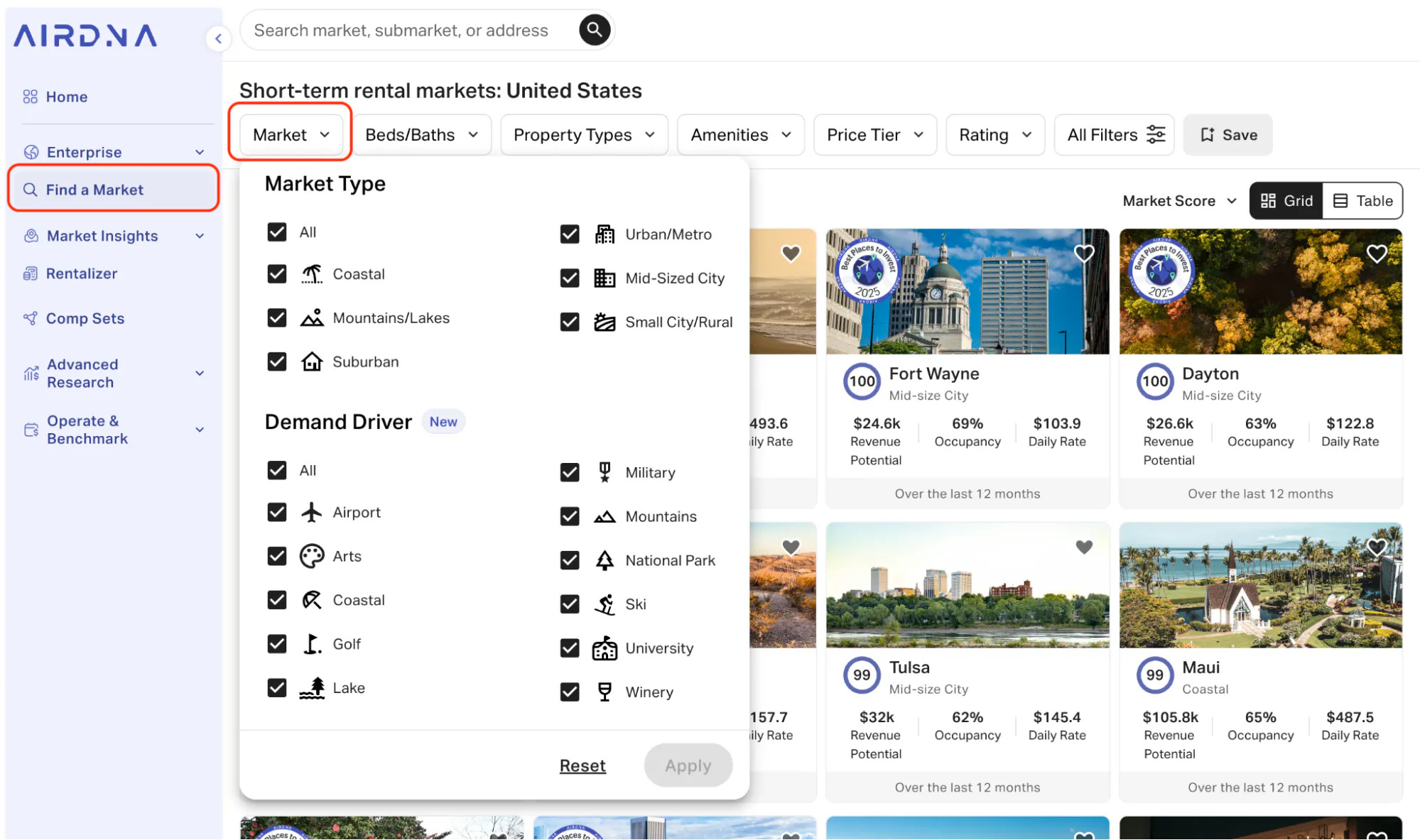
With AirDNA, you can explore markets connected to specific demand drivers (including golf courses) and compare how those markets perform based on pricing, revenue potential, and yield. Here’s how:
Use demand driver market filters
Demand driver filters help you:
- Focus on markets where demand-driven travel plays a meaningful role
- Compare markets with similar demand dynamics but different pricing or competition
From the Find a Market tab in AirDNA, click the Market filter to choose which demand drivers you want to search for.
Filter by budget and yield
Once you’ve identified markets with the right demand profile, the next step is to review for-sale properties in those areas.
To narrow down your options, use these filters:
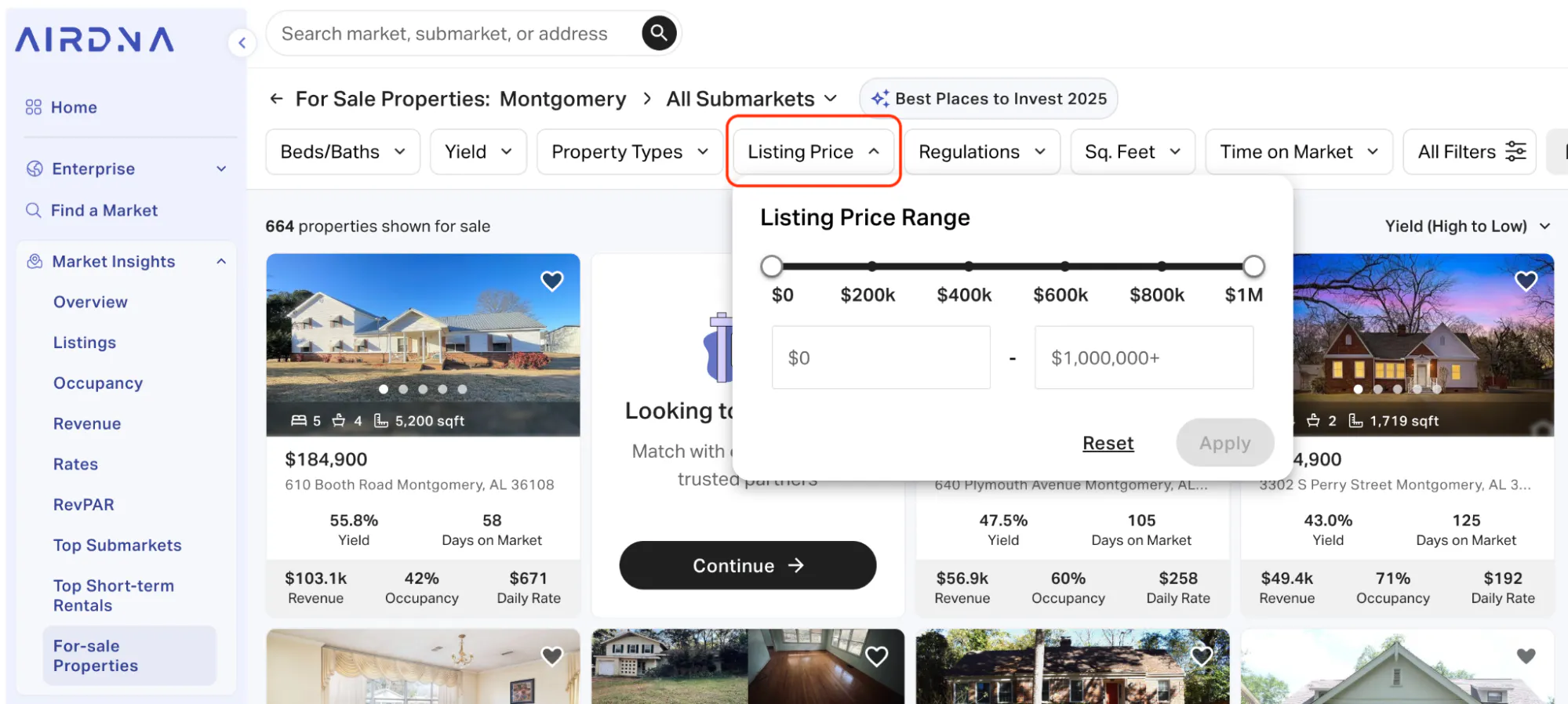
Price range filter
Use the listing price filter and set upper and/or lower limits to view properties within your target budget. Find this filter in the For-sale properties tab.
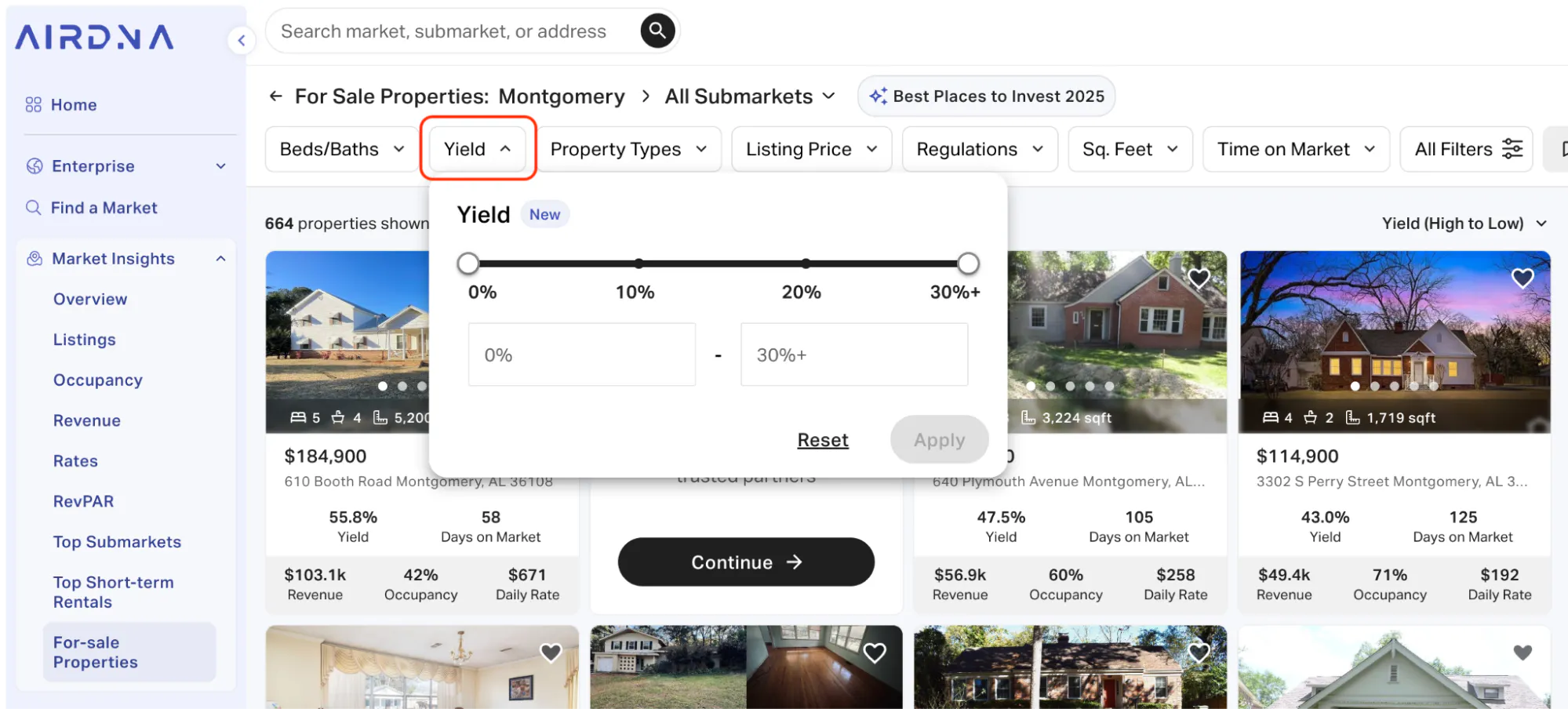
Yield filter
Apply a minimum yield threshold to highlight properties where revenue potential appears better aligned with purchase price. Find this filter in the For-sale properties tab.
FAQs
Are Airbnbs near golf courses a good investment?
Yes, Airbnbs near golf courses can perform well in markets where home prices, demand, and competition are in balance. Golf travel tends to be repeatable and planned in advance, but performance varies widely by market. Looking at yield rather than revenue alone can help identify markets that are worth the investment.
Do golf events and tournaments drive most of the demand in Airbnb markets near golf courses?
Major tournaments can create strong booking spikes for Airbnbs on golf courses, but they’re rarely the only source of demand. Many golf markets benefit from steady leisure travel, group trips, and seasonal events, which helps support more consistent occupancy across the year.
How close does an Airbnb need to be to a golf course to perform well?
Proximity definitely matters, especially for group trips and destination golfers. Properties with easy access to courses, whether through short drive times or placement within golf communities, tend to attract guests who prioritize convenience. That said, nearby areas with more affordable homes can also perform well from an investment perspective when access to golf courses is still straightforward.
Are golf-driven Airbnb markets seasonal?
Seasonality depends on climate and location. Warm-weather golf destinations might see year-round demand, while others experience peak seasons tied to spring, summer, or fall play. A golf-themed Airbnb might attract year-round bachelor parties no matter its location, while tourist hot spots might see seasonal shifts not tied to the local golf course. Markets with additional demand drivers beyond golf tend to feel less dependent on a single peak period.
ARTICLE SUMMARY
From destination courses to everyday golf hubs, demand near golf courses shows up in different ways. Using AirDNA data, we highlight the markets where golf-driven travel and home prices appear better balanced for short-term rental investors.
Jamie Zhang
AirDNA Data Analyst
Jamie Zhang is a Data Analyst at AirDNA, leveraging her background in data science and analytics to uncover key trends in the short-term rental industry. Before joining AirDNA, she worked as a data analyst at Shanghai Disney, where she specialized in revenue forecasting and financial planning . She holds a Master’s degree in International Economics and International Relations from Johns Hopkins. Jamie enjoys cycling to explore different corners of the city.
