Top 19 Airbnb Markets in Virginia
Published: July 31, 2025
Virginia’s tourism scene stretches from Atlantic beaches and historic colonial towns to mountain getaways along the Blue Ridge. For short-term rental (STR) investors, that means a diverse range of opportunities—each shaped by its own mix of demand drivers, regulatory climates, and property costs. Using AirDNA’s proprietary data, we’ve ranked the 19 best markets and submarkets across the Commonwealth where hosts are seeing the most promise right now.
What Is AirDNA’s Market Score?
Market Score is a proprietary metric that ranks how attractive a location is for short-term rental investment. Each score is calculated based on the following five metrics:
- Investability
- Rental Demand
- Revenue Growth
- Seasonality
- Regulation
Scores range from 0 to 100, with higher scores indicating stronger overall market health. In addition to an overall Market Score, each of the five metrics gets its own score on the same scale within the AirDNA app. This level of granularity is useful for Airbnb stakeholders interested in a particular aspect of market behavior.

Understanding Markets vs. Submarkets
This list includes both large markets and smaller submarkets, defined as:
- Markets refer to well-defined, often larger geographic areas like cities or metro regions.
- Submarkets are more granular locations such as small towns, neighborhoods, or lake communities within those larger regions.
Including both allows investors to spot pockets of opportunity that might be overlooked when focusing solely on large-scale market data.
Airbnb Market Overview in Virginia
Virginia’s STR landscape is a story of contrasts: high-density coastal tourism in Norfolk and Virginia Beach, heritage travel in Williamsburg, and wide-open mountain escapes in the Shenandoah Valley. College towns such as Blacksburg and Charlottesville deliver steady academic-year bookings, while lakeside and bayfront destinations like Lake Anna and Reedville cash in during peak summer months. Altogether, Virginia’s blend of leisure, business, and government travel creates a resilient baseline of demand that many investors find appealing—even as individual submarkets vary widely in performance.
This is sample data – view real-time data in the AirDNA platform.
AirDNA's Market Score is updated on a monthly basis to reflect the previous month's data. This ranked list is updated annually. Explore the app to get the most current data.
Top 19 Airbnb Markets in Virginia (Ranked by Market Score)

19. Norfolk/VA Beach
Market Score: 19.12
Average Annual Revenue: $46,117
The state’s largest coastal metro boasts year-round military and convention traffic plus strong summer beach demand. High competition and evolving regulations keep the overall score low, but large homes near the water can still gross impressive revenue.
18. Reedville
Market Score: 19.35
Average Annual Revenue: $41,092
Reedville is a historic Chesapeake Bay fishing village known for water-front estates and charter boats. Limited inventory means less competition, but seasonality is a major factor.
17. Deltaville
Market Score: 20.29
Average Annual Revenue: $39,611
Dubbed the “Sailing Capital of the Chesapeake,” Deltaville attracts boaters and anglers each summer. Affordable cottage-style properties make the barrier to entry relatively low, though off-season demand can be minimal.

16. Lake Anna
Market Score: 27.26
Average Annual Revenue: $68,240
Lake Anna headlines Virginia’s lake-house scene, with large waterfront homes commanding premium nightly rates. While the Market Score is hampered by seasonality, average annual revenue is among the highest on this list.
15. Colonial Beach
Market Score: 27.96
Average Annual Revenue: $34,809
Located on the Potomac River, Colonial Beach offers casinos, marinas, and small-town charm. Investors benefit from moderate ADRs and a growing arts community, though winter months remain soft.

14. Blacksburg
Market Score: 39.86
Average Annual Revenue: $40,022
Home to Virginia Tech, Blacksburg enjoys spikes in demand during football season, graduation, and campus events. Strong university regulations keep supply in check, supporting healthy ADRs.
13. Gordonsville
Market Score: 40.41
Average Annual Revenue: $39,265
Wine country meets history in Gordonsville, a small town near Monticello and Charlottesville’s vineyards. Upscale farmhouses and boutique cottages draw wedding parties and food-tourism crowds.
12. Radford
Market Score: 40.73
Average Annual Revenue: $39,593
Another college-centric submarket, Radford leans on Radford University, regional sporting events, and access to the New River. Lower property prices offset a modest off-season.
11. Stafford
Market Score: 45.81
Average Annual Revenue: $21,130
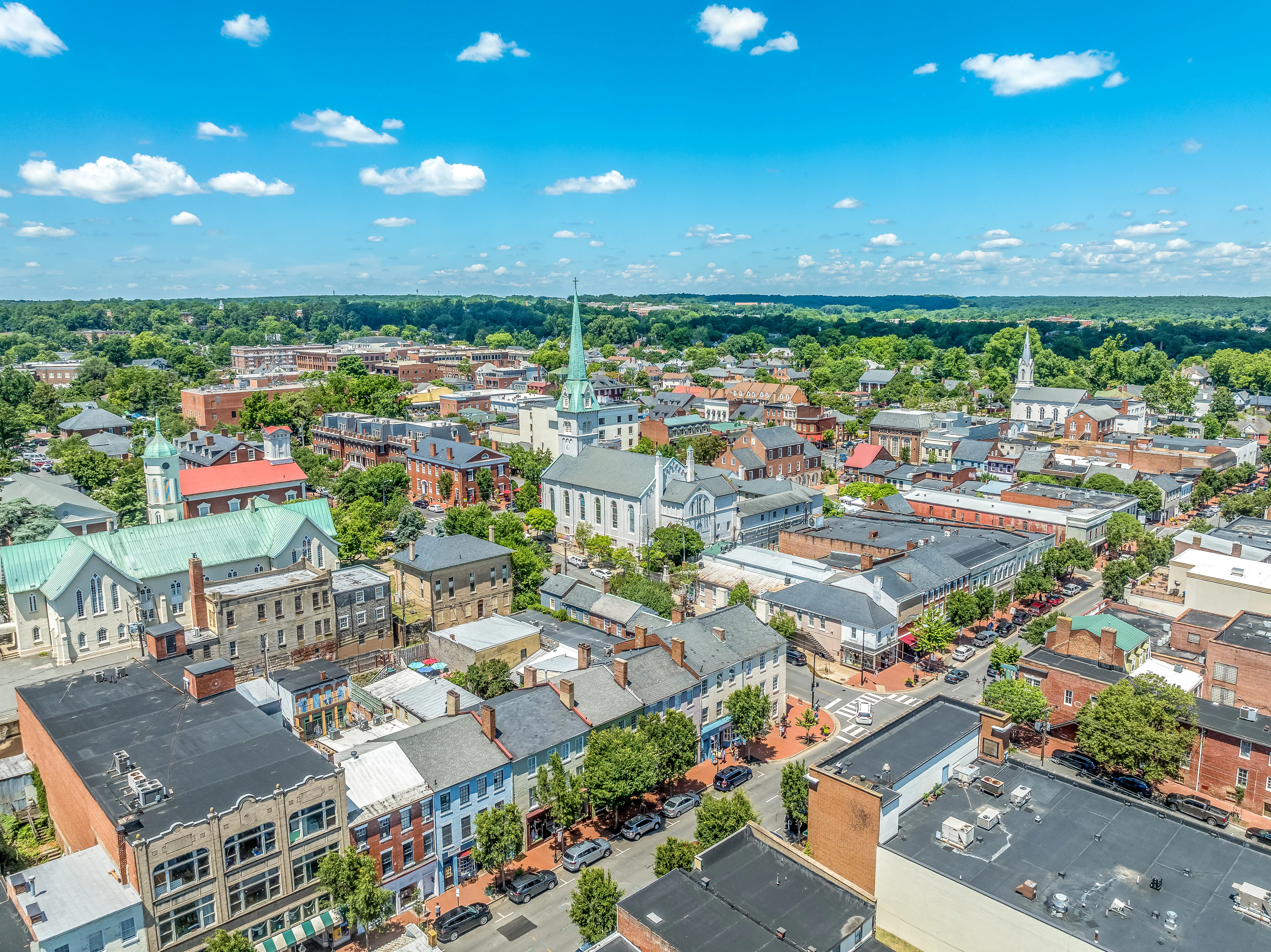
Just off I-95 between Washington, D.C. and Fredericksburg, Stafford benefits from transient business travel and military families stationed nearby. Regulation remains investor-friendly, although ADRs trail the state average.
10. Clarksville
Market Score: 47.48
Average Annual Revenue: $51,452
Clarksville sits on Kerr Lake—Virginia’s largest reservoir—offering prime fishing tournaments and waterfront festivals. Large lake houses command strong weekend premiums that drive annual revenue far above its Market Score ranking.
9. Fredericksburg
Market Score: 73.22
Average Annual Revenue: $22,649
Historic Fredericksburg attracts Civil War tourism, antiques shoppers, and commuters heading to D.C. The balanced mix of weekday and weekend demand supports consistent occupancy.

8. Charlottesville
Market Score: 75.50
Average Annual Revenue: $43,370
University of Virginia sports, wine trails, and fall foliage push Charlottesville toward the top tier. Limited housing supply near campus helps buoy rates during peak events.
7. Bristol
Market Score: 78.16
Average Annual Revenue: $26,423
Situated on the Virginia-Tennessee border, Bristol benefits from regional NASCAR races and live-music heritage. Budget-friendly properties and growing event calendars make this submarket a sleeper pick
6. Richmond
Market Score: 81.58
Average Annual Revenue: $28,965
The capital city blends government travel, corporate relocations, and a booming craft-food scene. Year-round demand and moderate regulation foster stable cash flow for STR operators.

5. Lynchburg
Market Score: 85.35
Average Annual Revenue: $24,288
With Liberty University and several regional hospitals, Lynchburg posts steady mid-week bookings. Low purchase prices relative to income potential raise its investability score.
4. Roanoke
Market Score: 90.17
Average Annual Revenue: $23,320
Gateway to the Blue Ridge Parkway, Roanoke marries outdoor recreation with a revitalized downtown arts scene. Consistent tourism and hospital traffic keep occupancy solid even in shoulder seasons.
3. Shenandoah Valley
Market Score: 93.58
Average Annual Revenue: $40,351
Known for hiking, wineries, and national parks, the Shenandoah Valley commands premium rates for cabins and farmhouses. A balanced seasonality profile and favorable regulations boost its overall score.
2. Danville
Market Score: 94.77
Average Annual Revenue: $26,966
Danville is reinventing itself with downtown redevelopment and the forthcoming Caesars casino resort. Early investors are capitalizing on rising ADRs before supply catches up.

1. Galax
Market Score: 98.22
Average Annual Revenue: $24,947
Famous for its annual Old Fiddlers’ Convention and Appalachian music heritage, Galax tops the list thanks to low housing costs and limited STR saturation. Outdoor recreation in nearby Grayson Highlands State Park adds additional year-round draw.
Should You Invest in Virginia?
Virginia’s STR landscape presents a compelling mash-up of steady government and university demand, booming craft-culture cities, and outdoor destinations with sky-high nightly rates. For investors chasing premium ADRs and summer surges, lakefront and bayfront markets like Lake Anna, Clarksville, and Reedville are standouts—despite their lower Market Scores driven by seasonality. Meanwhile, dependable occupancy and moderate entry costs in inland metros such as Roanoke, Lynchburg, and Danville offer attractive risk-adjusted returns.
Regulations vary widely at the county and city level, so thorough due diligence is essential. Yet overall, Virginia’s combination of economic diversity, tourism appeal, and relatively balanced regulatory climate keeps it firmly on the radar of savvy STR investors.