

 Calculate Revenue
 Research Markets
 Find For Sale Properties
 Compare My Listing
 STR Revenue Calculator
 Custom Comp Sets
 Submarket Insights
 Custom Search Filters
 Rate Recommendations
 Performance Benchmarking
 Competitor Comparison
 Owner Contact Details
 Property-level performance data
 Tourism Insights
 Real Estate Investment Analytics
 About Us
 Sales
Sales Support
 Press
PressUS Market Review August 2024: Summer Ends on a High Note
Published: September 30, 2024
Last updated: October 1, 2024

Scott Sage
Key Takeaways
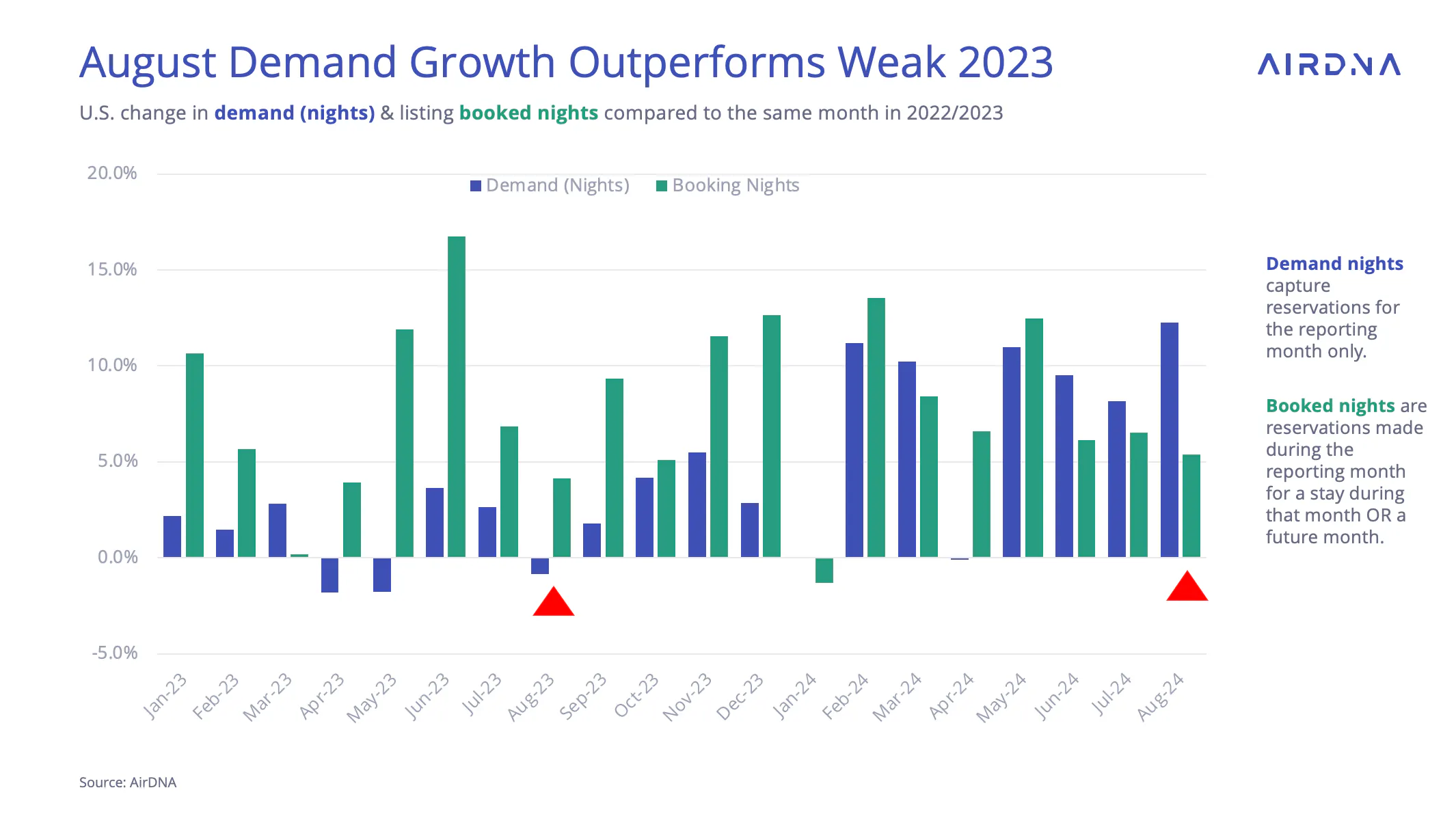
- August demand was up 12.2% year-over-year (YOY), driving a 4.4% increase in occupancy—the fastest growth since December 2021.
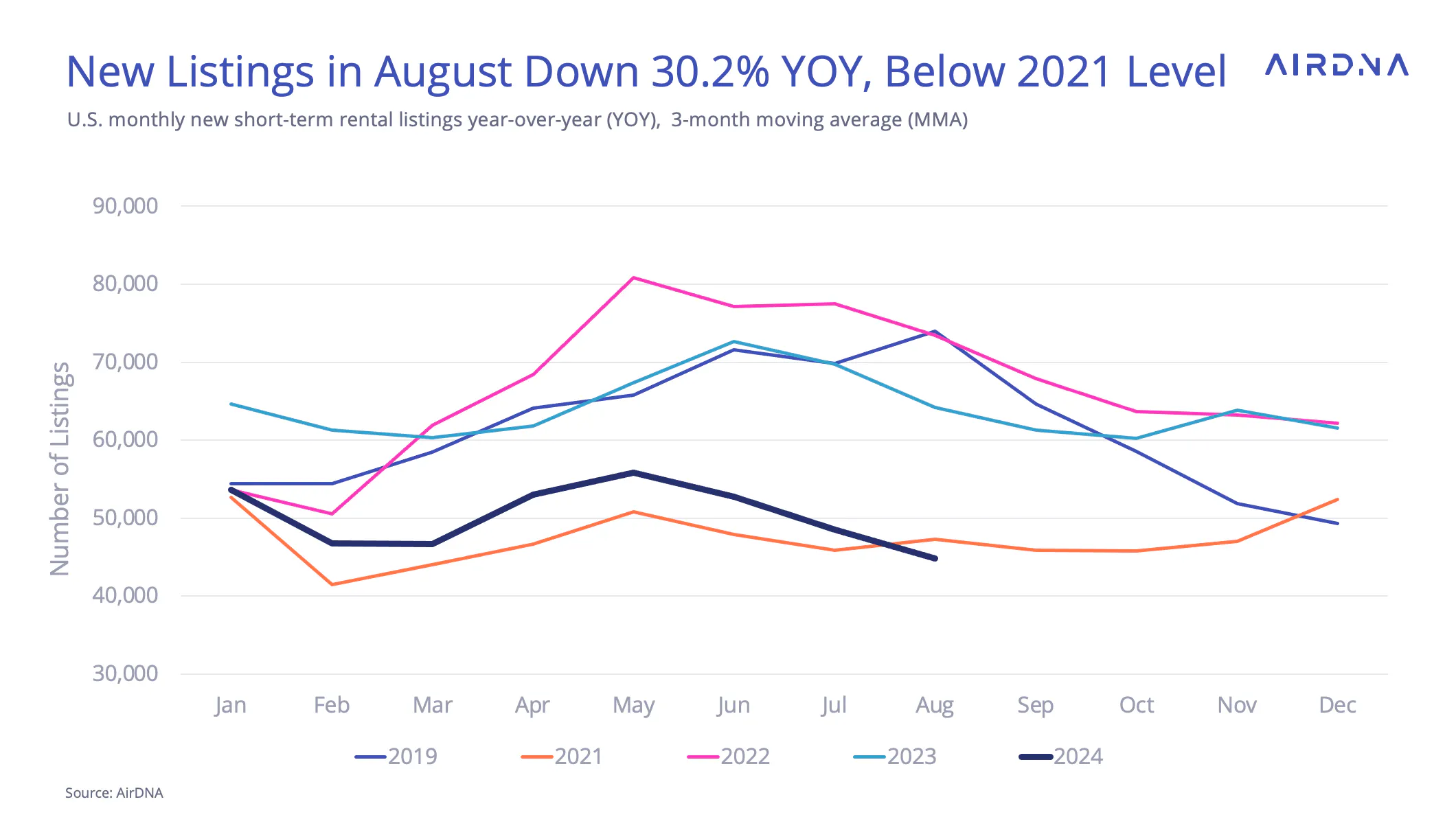
- Despite slow but continued supply growth, new listings declined and August is the month with the lowest new listings since 2021.
- September performance is more modest due to Labor Day falling earlier, but bookings for October through December are pacing 12-15% higher than last year.
August wrapped up a fantastic summer for the U.S. short-term rental (STR) market. During June, July, and August, hosts welcomed 70.4 million guest nights, marking a 9.8% increase compared to the same period in 2023. August alone saw even stronger growth, with demand rising 12.2% over last year. This boost was helped by a calendar shift that included two nights of Labor Day weekend falling in August.
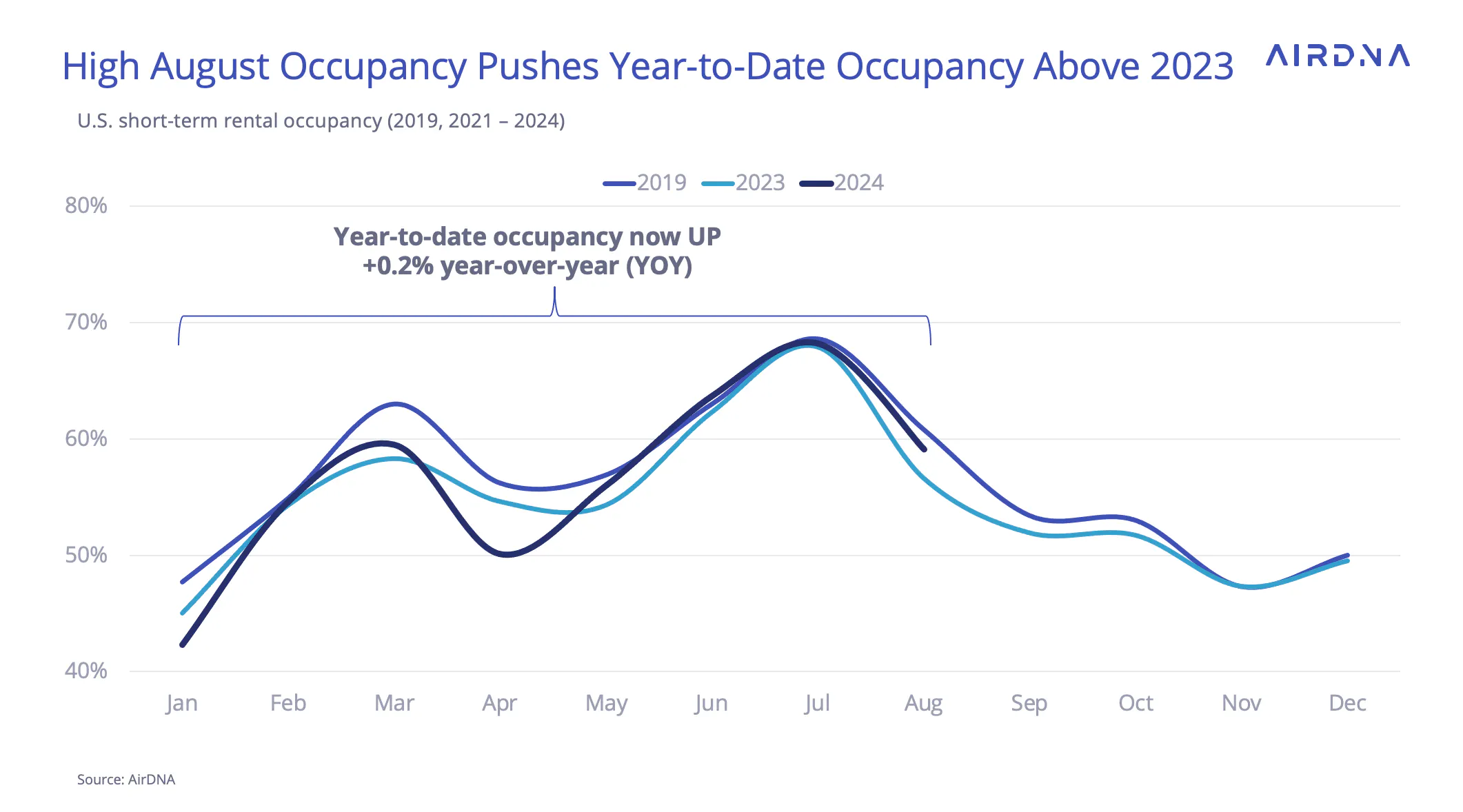
Not only did overall performance improve this summer, but individual property performance also saw a turnaround. Since reaching a peak in 2021, occupancy rates had been steadily declining year after year. However, in 2024, summer occupancy increased by 2.2% year-over-year (YOY), reversing that trend. Thanks to the strong August performance, the year-to-date occupancy rate has shifted from negative to positive.
The rise in occupancy appears to be driven by a combination of stronger demand and a slowing in new supply. While new listings haven’t stopped completely, supply growth has cooled significantly from the fever pitch pace seen in 2022. With occupancy levels now matching those of the pre-COVID summer of 2019, we expect that STR performance is back on its long-term growth path. Occupancy should continue to see year-over-year increases for the next few months before stabilizing.
Employment and Inflation’s Impact
The Federal Reserve has begun its much-anticipated “soft landing” strategy, which aims to reduce inflation without triggering a recession. On September 18th, the Fed announced its first major step, cutting rates by 50 basis points. This move was widely expected by economists after inflation dropped to 2.6% year-over-year (YOY) in August, getting closer to the Fed’s 2.0% target. The Fed is carefully balancing rate cuts to ensure that lowering inflation doesn’t have a negative long-term effect on the labor market.
In August, the labor market showed slight improvement, but not enough to prevent the Fed from cutting rates by 50 basis points this month. The August jobs report showed 142,000 new jobs, a significant improvement over July's 89,000. The unemployment rate also dipped to 4.2%, down from 4.3%. However, this unemployment rate is still higher than in 2018 and 2019, and recent revisions to earlier job growth figures have made the labor market in 2024 look less strong than previously reported.
In fact, the combination of a weaker labor market and low inflation led market analysts to anticipate a large, 50 basis point rate cut in September. Although current rates were raised at an unprecedented speed to limit inflation, we expected future cuts to be more gradual. The size of the September rate cut is more about signaling the Fed’s new focus on the labor market rather than its immediate effect on lending rates. In any case, these cuts are unlikely to cause a sudden increase in supply but will help align supply and demand growth more evenly over time.

At a Glance: Key U.S. STR Performance Metrics for August 2024
- Revenue per Available Rental (RevPAR) increased 10.1% year-over-year (YOY) to $193.62.
- Available listings were 1.74 million, up 8.1% YOY
- Total demand (nights) rose 12.2% YOY
- Occupancy was 4.1% higher YOY at 59.1%
- Average Daily Rates (ADR) increased 5.4% YOY to $327.51
- Repeat Rent Index (RRI) increased by 4.9% YOY
- Nights booked increased by 5.4% YOY
Listing Growth Accelerates Slightly Even as New Listings Tank
Overall, listing growth has been slowing. However, the micro-trend of the summer was accelerating supply in July and August. Despite this, the 8.1% growth rate is still far below the double-digit increases seen in 2022 and 2023. According to Freddie Mac, mortgage rates have dropped from their October high of 7.8% to around 6.4% by the end of August, as the market anticipates rate cuts. However, these rates remain much higher than in 2021 and early 2022. AirDNA doesn’t foresee a reversal of the slowing trend in supply growth this year or even next.
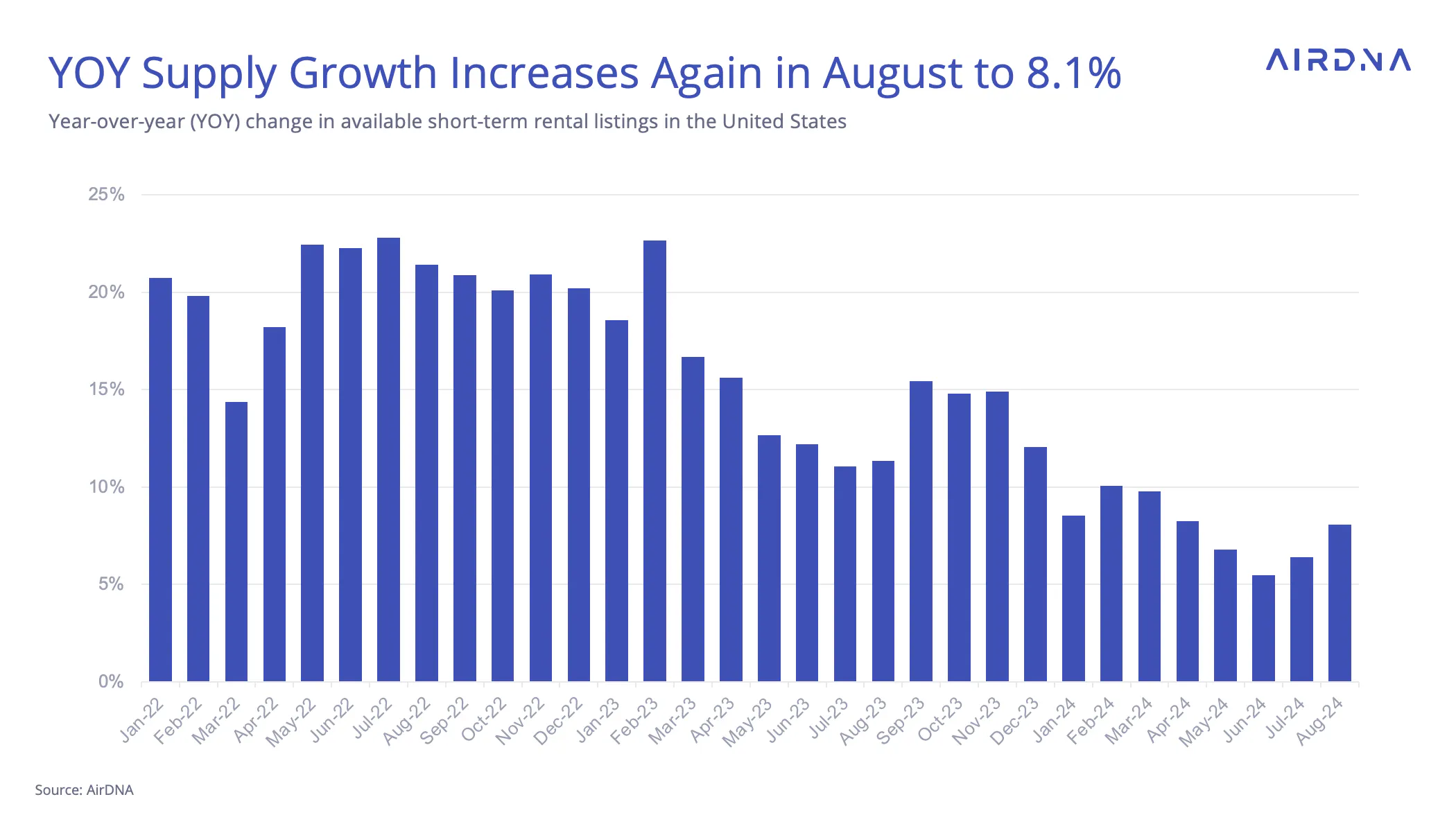
The recent supply growth may have been driven largely by existing listings either re-entering the market or staying active longer to take advantage of the strong summer demand. When we look specifically at new listing growth, the trend continues to decline. In fact, August 2024 saw fewer new listings than any month since 2021, with just 44,800 new listings posted.
August Brings 2024 Occupancy Above Last Year
While accelerating supply growth might seem concerning for operators who have faced declining occupancy in recent years, the good news is that demand growth picked up even faster. In August, demand was 12.2% higher than in August 2023, resulting in an additional 2.4 million nights stayed. This sharp increase came after two months of slower demand growth and occurred near the peak of the season.
The strong demand growth in August comes with two small caveats. First, August 2023 was impacted by a severe heat wave, which lowered demand by 0.8% compared to 2022, giving 2024 an easier comparison to outperform. Secondly, Labor Day fell earlier this year, shifting two holiday weekend days from September into August. Despite these factors, 22.1 million nights were hosted in August 2024, more than enough to boost occupancy.
August’s occupancy data marked several milestones for the STR market. Occupancy rose by 4.4% in August, the fastest single-month growth since December 2021. Every month this summer saw occupancy gains compared to the previous year, with the combined summer occupancy rate (June, July, and August) up by 2.2% compared to 2023.
Year-to-date occupancy struggled to match 2023 levels for the first seven months due to particularly low performance in January and April. However, occupancy has finally exceeded last year’s numbers in August. Additionally, the June through August occupancy rates nearly matched those of 2019, falling short by just 0.7%.
The Rising Tide of Demand Lifts All Boats
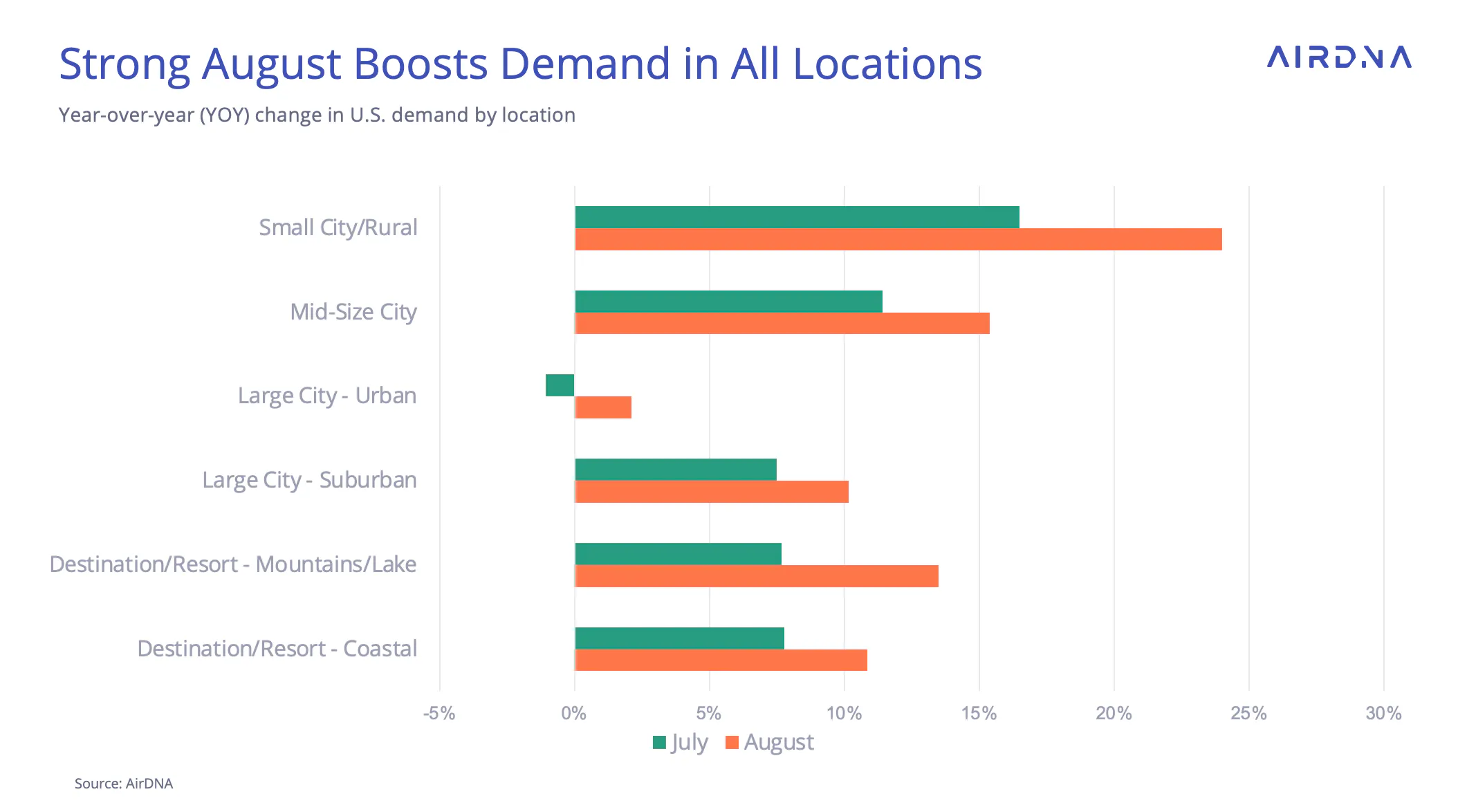
Turning to locations, the August tide lifts all boats, with every location experiencing higher demand growth compared to July. Even Urban markets, which saw a slight decline in July, posted a 2.1% increase in demand this August compared to August 2023. Small City/Rural markets not only saw the fastest growth but also the biggest acceleration, with demand soaring 24.0% year-over-year (YOY) in August, a substantial jump from July’s 16.5%.
Finally, Mountain/Lake destinations pulled ahead of Coastal and Suburban markets, which all saw growth of about 7-8% in July. Mountain/Lake locations increased their growth to 13.5% year-over-year (YOY) in August, just below the second-place finish for Mid-Size Cities, which posted 15.3% growth.
Rate Is Back, Mix Shift Is Out
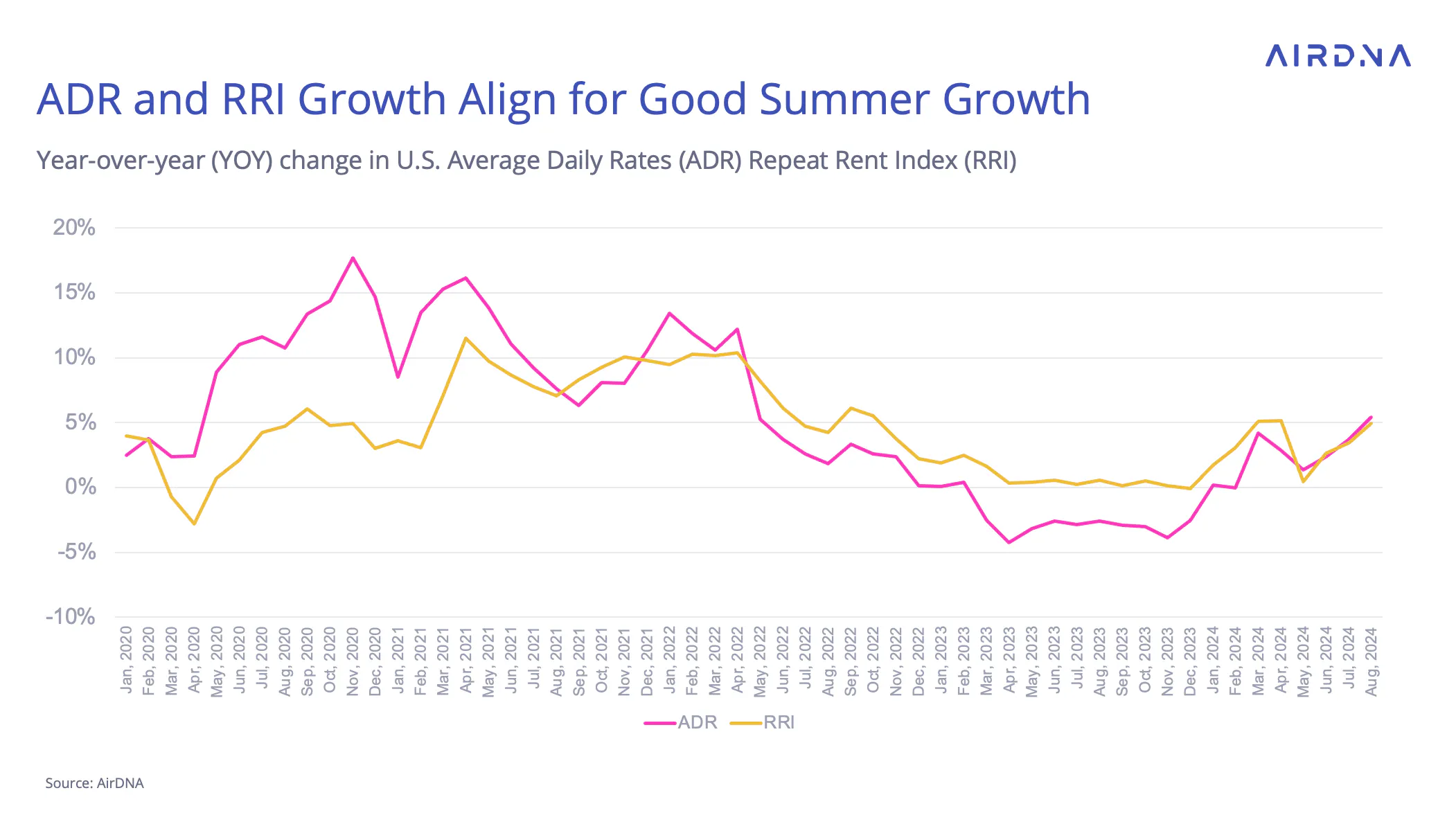
Nightly rate increases were minimal at best in 2023, and the AirDNA Repeat Rent Index (RRI) had been growing faster than Average Daily Rates (ADR) during that time period as well. RRI removes the effect of new listings on ADR, what we call mix shift. A stronger RRI indicated that new entrants to the market were undercutting existing prices. 2024, however, seemed to start stronger. ADR jumped immediately in January followed by an impressive 4.2% YOY increase in March.
Rate increases started to slow down by May, with ADR growth at just 1.3% YOY. However, the summer reversed that trend, with each month from June through August posting higher growth than the previous month. August ended strong, with ADR up 5.4%—the highest YOY growth rate since April 2022. Additionally, RRI grew at a similar pace to ADR throughout the summer, indicating that both new market entrants and existing hosts were generally aligned on pricing.
Modest September Gives Way to a High-Performing Fall
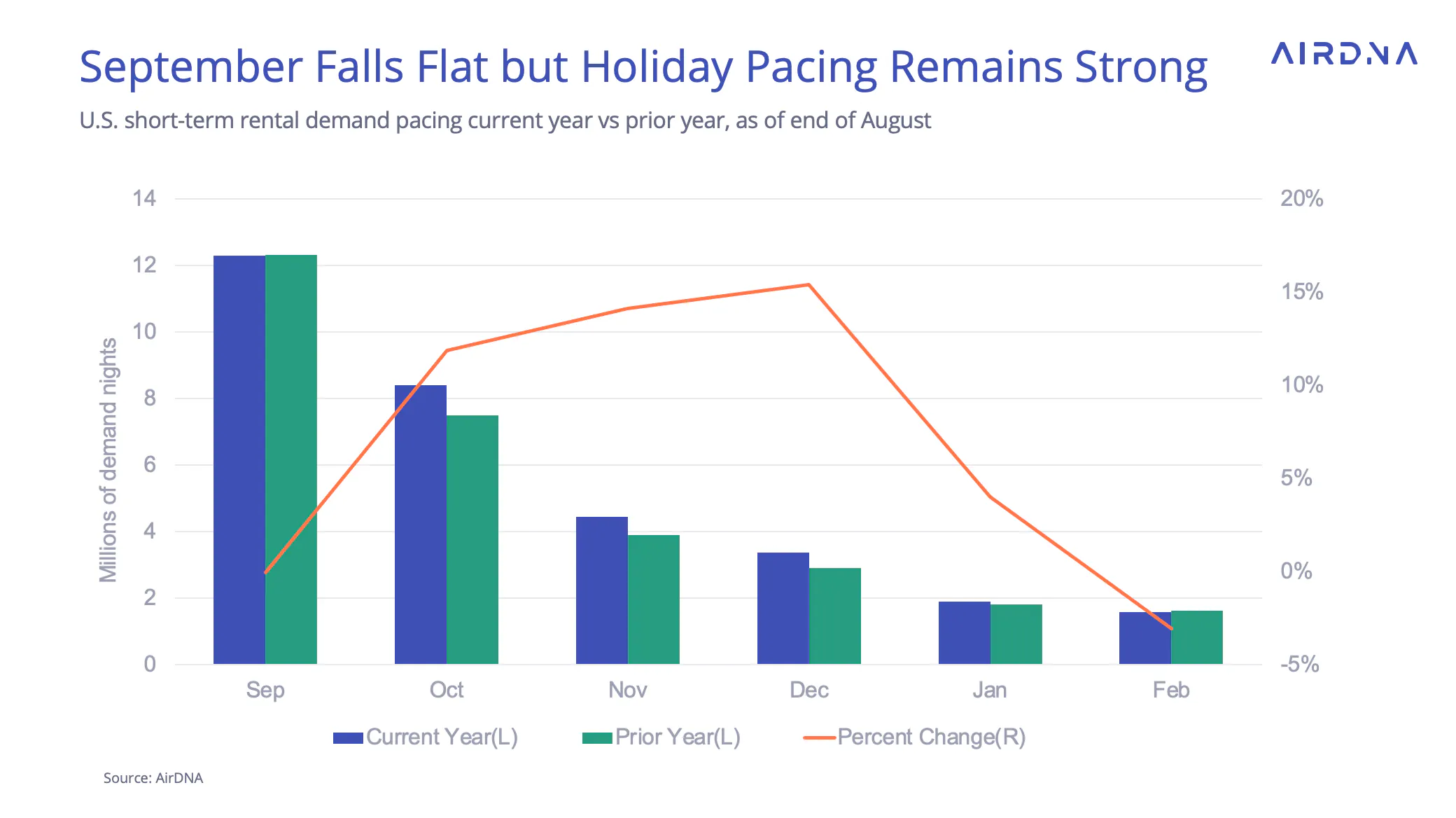
Labor Day weekend included only two days in September rather than four, which likely reduced the total demand for the month. However, pacing for September is still on par with this time last year. Looking ahead, October through December show stronger signs of growth, pacing between 12-15% higher than the same period last year. This suggests plenty of enthusiasm for fall and holiday travel.
ARTICLE SUMMARY
August 2024 brought a strong end to the summer for U.S. short-term rentals. As we head into fall, the outlook remains positive, with high booking levels signaling strong interest for the upcoming travel season.
Scott Sage
Senior Vice President, Marketing & Customer Experience
Scott is an Airbnb Superhost and industry pro, having founded Home Base BnBs—a short term rental management company that scaled to 200+ units. Scott combines his experience and passion for hosting to empower AirDNA customers' success. When he's not thinking about STRs, he is hiking, playing basketball, or playing pickleball.
