

 Calculate Revenue
 Research Markets
 Find For Sale Properties
 Compare My Listing
 STR Revenue Calculator
 Custom Comp Sets
 Submarket Insights
 Custom Search Filters
 Rate Recommendations
 Performance Benchmarking
 Competitor Comparison
 Owner Contact Details
 Property-level performance data
 Tourism Insights
 Real Estate Investment Analytics
 About Us
 Sales
Sales Support
 Press
PressThe Cheapest and Most Expensive Countries in Europe to Visit in 2026
Published: May 21, 2026
Last updated: May 29, 2026

Camilo Schmid Rivas
Key Takeaways
- Monaco, Iceland, Andorra, Switzerland and the United Kingdom are Europe’s most expensive countries for vacation rentals.
- The cheapest countries to visit in Europe are Eastern European destinations like North Macedonia, Kosovo, Moldova, Serbia and Bosnia-Herzegovina.
- Uncover affordable stays in traditionally expensive countries by exploring specific markets that offer lower rates than their national averages.
Europe’s short-term rental market spans everything from ultra-luxury alpine resorts to some of the best-value travel destinations in the world. For travelers, that means the cost of a European getaway can vary dramatically depending on where and when you go. For hosts, it creates very different opportunities around pricing, occupancy, and seasonal demand.
Using AirDNA data, we analyzed average daily rates (ADR), booking lead times, occupancy, and length-of-stay trends across Europe to identify the continent’s most expensive and most affordable short-term rental markets for 2026.
In this guide, we break down where travelers are paying the highest premiums, where budget-conscious guests can still find strong value, and what the data reveals about the markets generating the strongest revenue opportunities for hosts.
European Vacation Rental Rates
We've created an interactive map displaying the nightly rates, or ADRs, of nations across the continent to give travelers and hosts a comprehensive overview of the European short-term-rental landscape. This map is based on the Trailing Twelve Months ADR.
5 Most Expensive European Countries to Visit
Europe is home to some of the world's most sought-after travel destinations. That popularity comes with a higher price tag!
However, budget travelers can still experience the continent's rich culture and beauty without emptying their wallets by focusing on the least expensive European countries. Hosts, meanwhile, can capitalize on the high demand in these markets by offering competitively priced rentals that still provide a taste of luxury.
AirDNA has broken down the most expensive countries in Europe to visit, highlighting their overall costs while exploring hidden gems where travelers can find more budget-friendly options. We'll also explore what makes these markets so lucrative for short-term rental hosts and offer insights to help maximize Airbnb owner earnings. Later, we'll dive into the cheapest European countries to visit for those looking to explore Europe on a budget.
1. Monaco
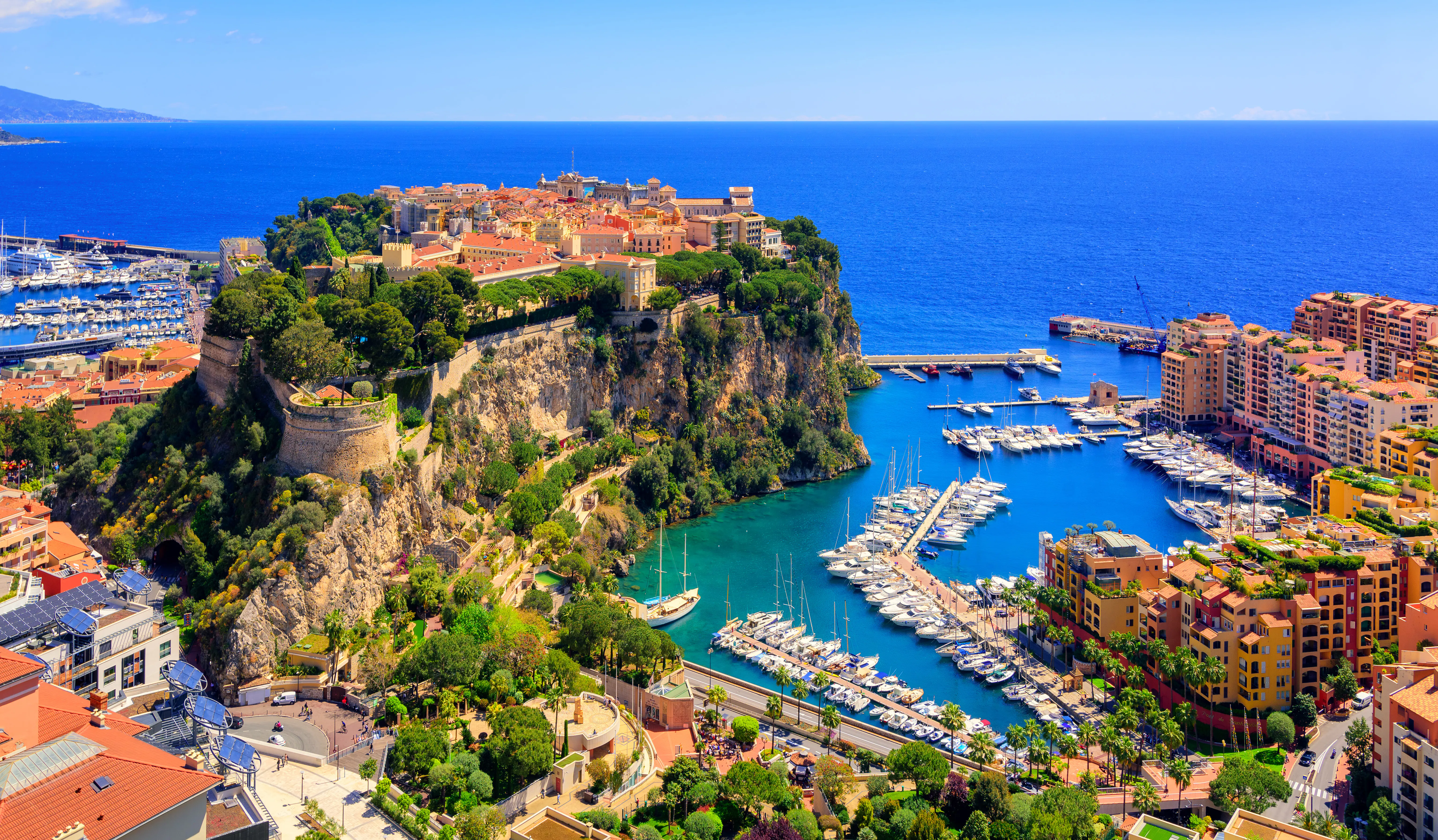
Monaco, the glamorous principality on the French Riviera, is unsurprisingly one of Europe's most expensive destinations. With 269 short-term rental listings, Monaco offers a range of luxurious accommodations for well-heeled travelers.
The majority of listings are on Airbnb (87%), with 1% on Vrbo, and another 12% listed on both platforms. This distribution suggests that Airbnb is the preferred platform for hosts and guests in Monaco's high-end market.
Travelers planning a trip to Monaco should book well in advance, with an average booking lead time of 63 days and a median of 25 days. The market is small at just 270 active listings on average TTM, so supply is tight throughout the year, especially around major events like the Monaco Grand Prix. AirDNA data indicates that a 3- to 4-day stay is the sweet spot for travelers to the area, with the average reservation running 3.8 nights, just the right amount of time to fully immerse themselves in the principality's luxurious lifestyle and signature events.
2. Iceland
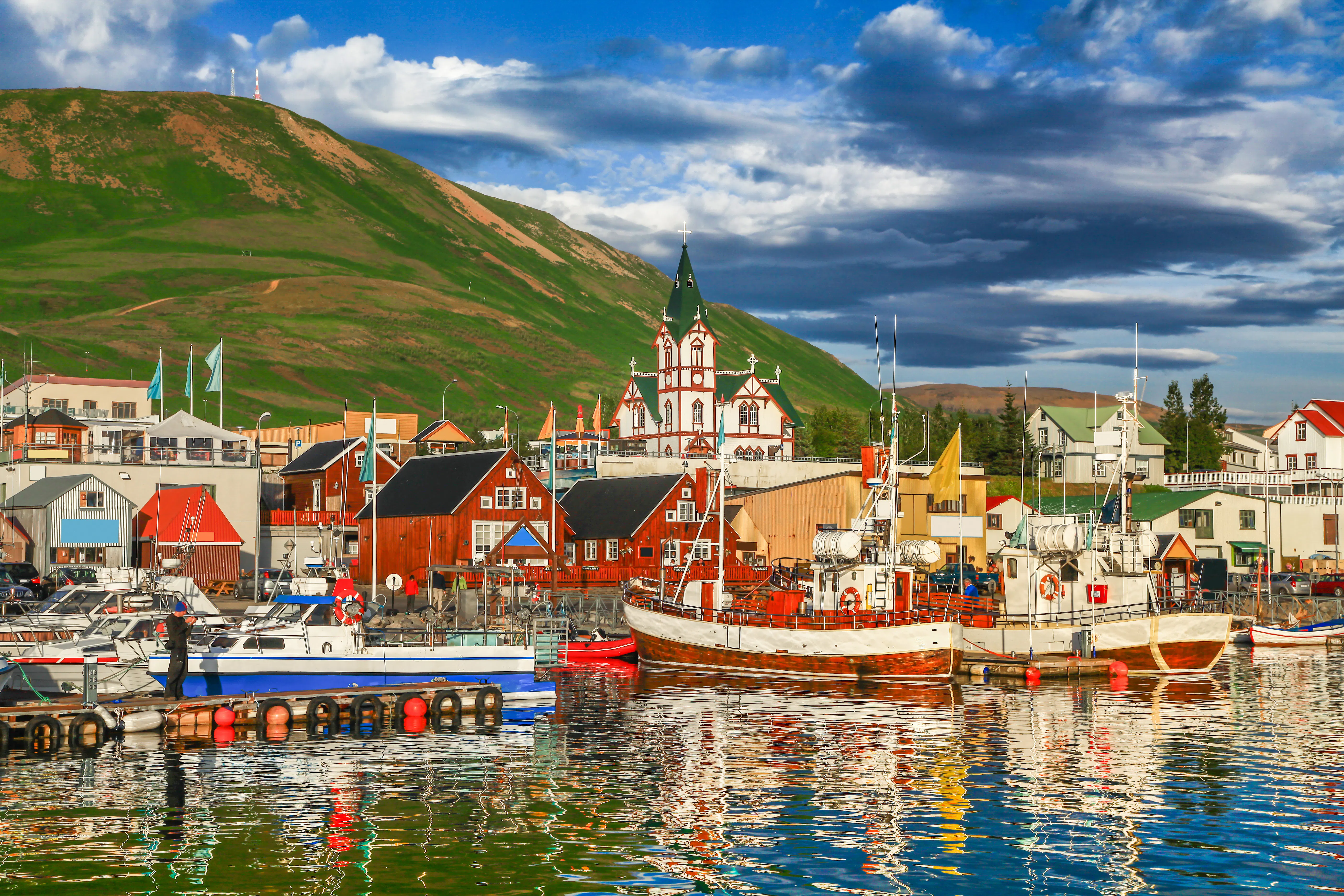
Iceland's rugged beauty and natural wonders make it a top choice for adventurous travelers.
Reykjavík stands as Iceland's flagship short-term rental market, with 2500 TTM available listings, an average daily rate (ADR) of €209.9 and a RevPAR of €142.2. These figures reflect the capital's consistent demand from both leisure and business travelers, offering hosts strong revenue potential year-round.
Iceland is a planning-intensive destination. With a TTM median lead time of 73 days, the highest in Europe, travelers commit to their trips well in advance, driven in part by limited supply, with just 6,900 available listings on average across the country. The flip side is the shortest length of stay in Europe, at 2.6 days TTM. Travelers don't settle in one place; they move across Iceland's ring road and natural sites, treating each stop as a brief base camp rather than a destination in itself. For hosts, that means quick turnover, high pricing power, and a booking window that rewards getting rates set early.
3. Andorra
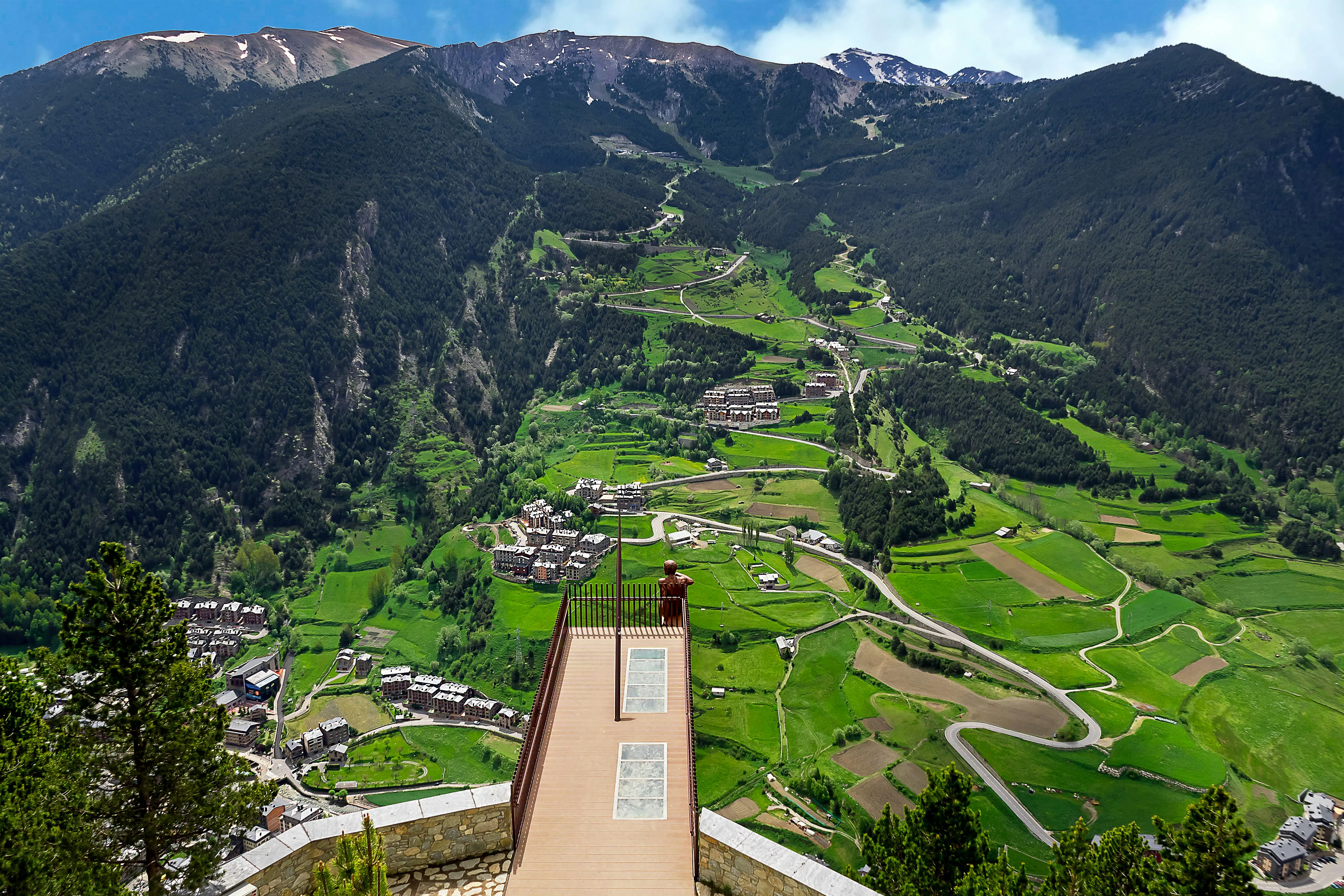
Andorra, the tiny Pyrenean principality wedged between France and Spain, punches well above its weight as a short-term rental market. Best known for its ski resorts in winter and hiking trails in summer, Andorra draws a steady mix of European travelers looking for mountain getaways without the price tags of the Alps. With an average daily rate (ADR) of €188.57 and a RevPAR of €92 across the country, hosts in Andorra benefit from genuine premium pricing, though demand is more concentrated than in larger markets.
A few characteristics make Andorra distinct. Supply is small, with just 1,020 available listings on aTTM average, meaning competition for visibility is lighter than in most European countries. Travelers book closer in than they do in Iceland or other planning-intensive destinations, with a median lead time of 25 days TTM, and they stay longer once they arrive, the average length of stay is 3.9 days, fitting the typical ski trip or weekend hiking break.
For hosts, the combination of high ADR, short lead times, and limited supply creates real pricing power, especially during peak ski weeks. Travelers seeking better value should look outside the main resort areas, where rates tend to soften without sacrificing easy access to the slopes.
4. Switzerland
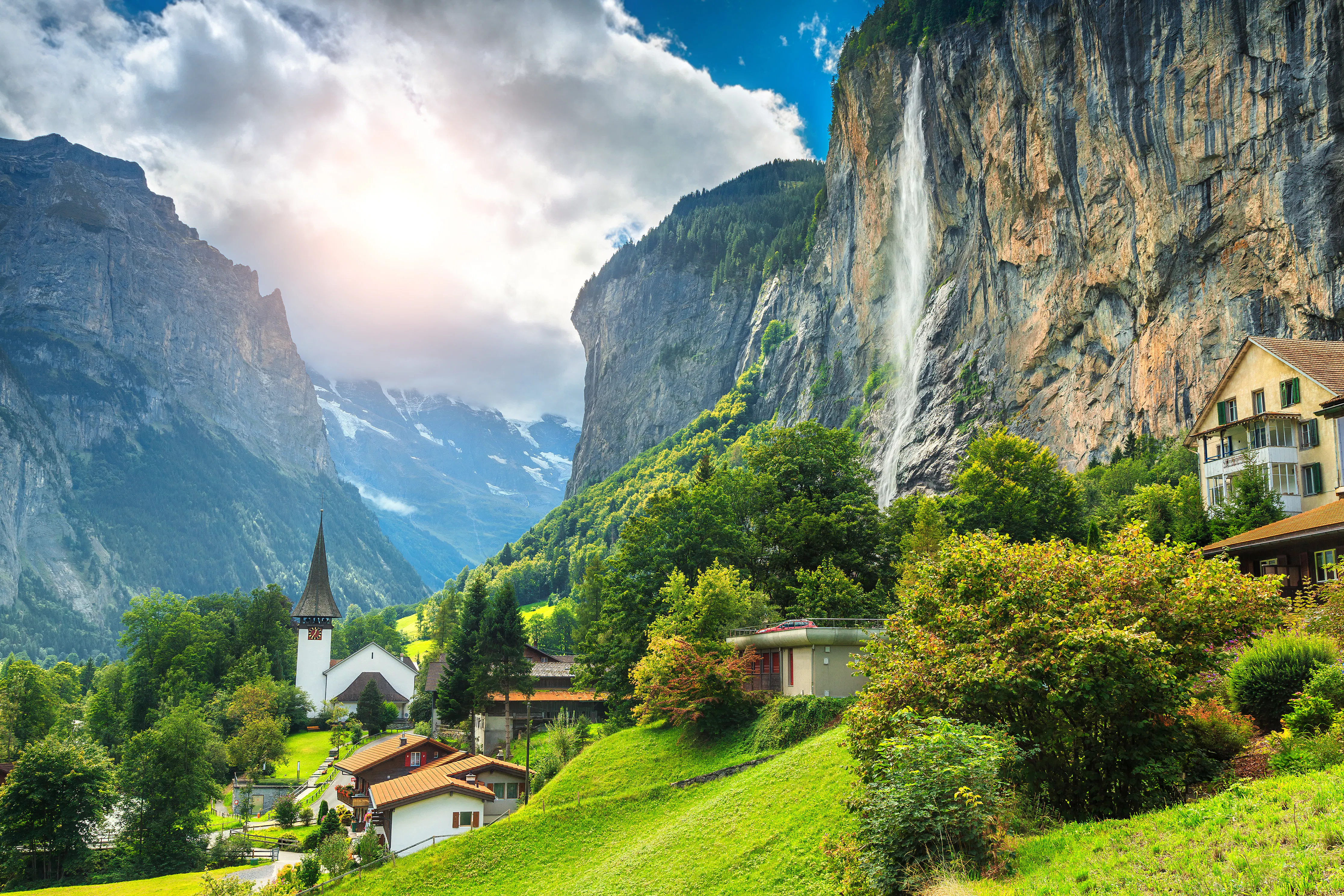
Switzerland is a land of striking contrasts, where snow-capped Alps meet serene lakes and cosmopolitan cities blend seamlessly with charming alpine villages. Renowned for its luxury, think five-star ski resorts, world-class watches, and gourmet chocolates, Switzerland also caters to more budget-conscious travelers with scenic rail passes, cozy mountain lodges, and accessible natural wonders that can be enjoyed without breaking the bank.
At the country level, Switzerland averages an ADR of €184.26 with occupancy at 57.2% and a RevPAR of €105.36 across roughly 50,500 active listings. Two cities anchor the Swiss STR market: Interlaken commands an ADR of €284.30 and a RevPAR of €184.83, with occupancy at 65% — the kind of pricing power that comes with year-round demand from skiers in winter and hikers in summer. Zurich, by contrast, sits at €150.06 ADR and €97.54 RevPAR, offering a more accessible price point while still maintaining the same 65% occupancy rate.
Switzerland is also a moderately planning-intensive market. Travelers book with a median lead time of 36 days and stay an average of 4.6 nights, suggesting trips that are decided well in advance and structured around longer alpine getaways rather than quick weekend hops.
For hosts, the dual nature of Switzerland's short-term rental market presents an opportunity to target different segments of travelers. Hosts in resort markets like Interlaken can capitalize on premium demand from international leisure travelers, while hosts in urban markets like Zurich can attract a steadier mix of business and weekend visitors at more accessible price points. Either way, high operating costs in Switzerland tend to offer a counterbalance to high nightly rates.
5. United Kingdom
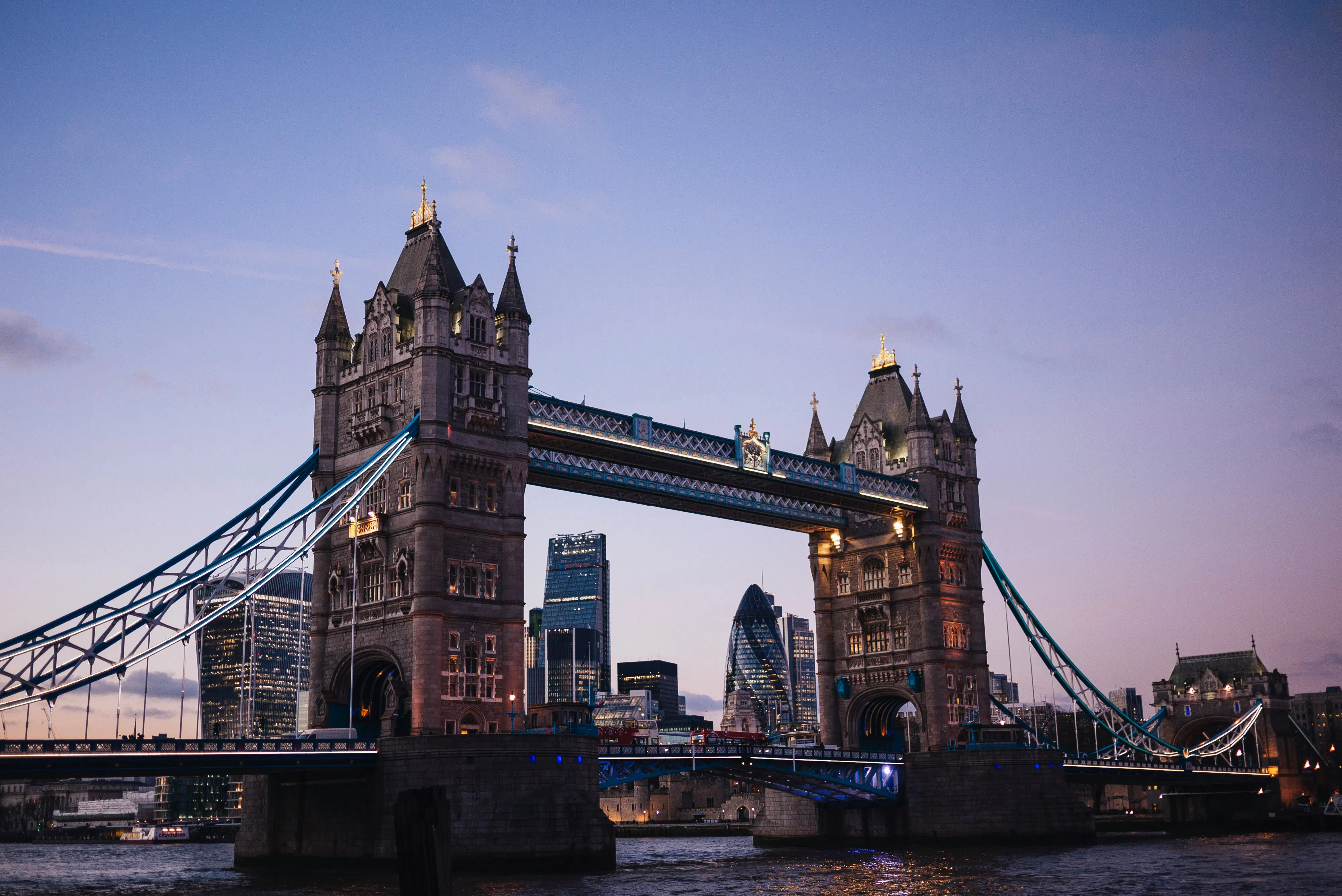
The United Kingdom, with its rich history, iconic landmarks, and vibrant cities, is one of the most heavily-trafficked destinations in Europe, and one of the largest STR markets in the world, with roughly 377,000 active listings TTM. At the country level, the UK averages an ADR of €175.79 with occupancy at 57.8% and a RevPAR of €101.65, putting it firmly in the upper tier of European pricing.
The highest ADRs aren't where you might expect. England's coastal and rural getaways top the list, Suffolk (€238.79), Gloucester/Cheltenham (€226.63), the Lake District (€214.12), the Isle of Anglesey (€219.01), and Dorset (€200.17), destinations where second-home travel and short countryside breaks command premium nightly rates.
Edinburgh is the only major city in the top tier, with an ADR of €225.42 and the strongest occupancy of any UK market at 68.3%, reflecting Scotland's tourism strength and the festival-driven demand spikes the city sees throughout the year. London, despite its global reputation as expensive, sits closer to the country average at €186.76 ADR with 63.6% occupancy, a function of its vast supply base of over 72,000 active listings absorbing demand at scale.
For travelers seeking more affordable options, the three cheapest UK markets with meaningful supply are:
- Birmingham (€109.85)
- Leeds/Sheffield (€121.29)
- Manchester (€122.12)
These cities offer a wealth of cultural experiences, dining options, and attractions at a more budget-friendly price point. Hosts in these markets can attract cost-conscious travelers while still maintaining steady occupancy in the mid-50s.
UK travelers book with a median lead time of 32 days and stay an average of 3.9 nights, fitting the typical short-break rhythm that drives most domestic and European inbound demand. For hosts, this means a relatively short window to capture each booking and tighter turnover than markets like Switzerland or Iceland.
5 Cheapest European Countries to Visit
Eastern Europe emerges as a treasure trove of affordable destinations for budget-conscious travelers seeking to explore Europe without burning through their wallets. The countries on this list offer unique cultural experiences, stunning natural beauty, and rich history at a fraction of the cost, making them perfect for travelers looking for cheap European countries to visit in 2026.
For hosts, these affordable European markets present a chance to attract cost-conscious travelers. Airbnb operators can tap into the growing demand for unique and immersive travel experiences in these lesser-known destinations by offering affordable, high-quality accommodations and local insights. Plus, hosts can differentiate their properties from those in more expensive markets by highlighting the exceptional value of staying in the cheapest countries in Europe as part of their marketing strategy.
1. North Macedonia
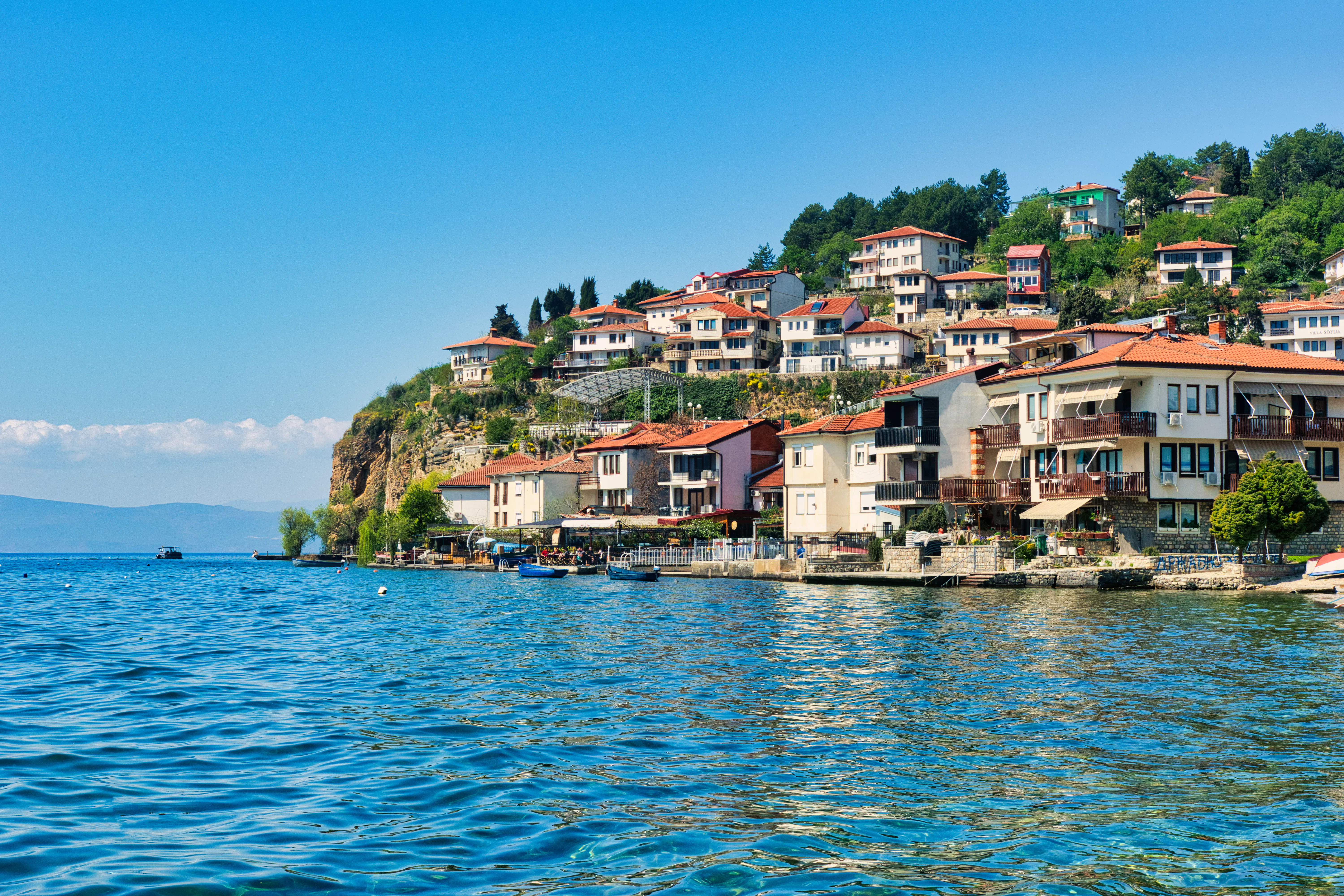
North Macedonia is the cheapest country in Europe to visit, with an average daily rate (ADR) of just €39.81 and a RevPAR of €20.93 across roughly 5,250 active listings. Travelers book close to the date, with a median lead time of 13 days, and tend to stay longer than the European average — 4.4 nights on average, turning short cultural visits into proper week-long explorations. Skopje and Ohrid anchor the country's STR market, with Lake Ohrid drawing particular interest from travelers seeking lakeside stays at a fraction of Western European prices.
2. Kosovo
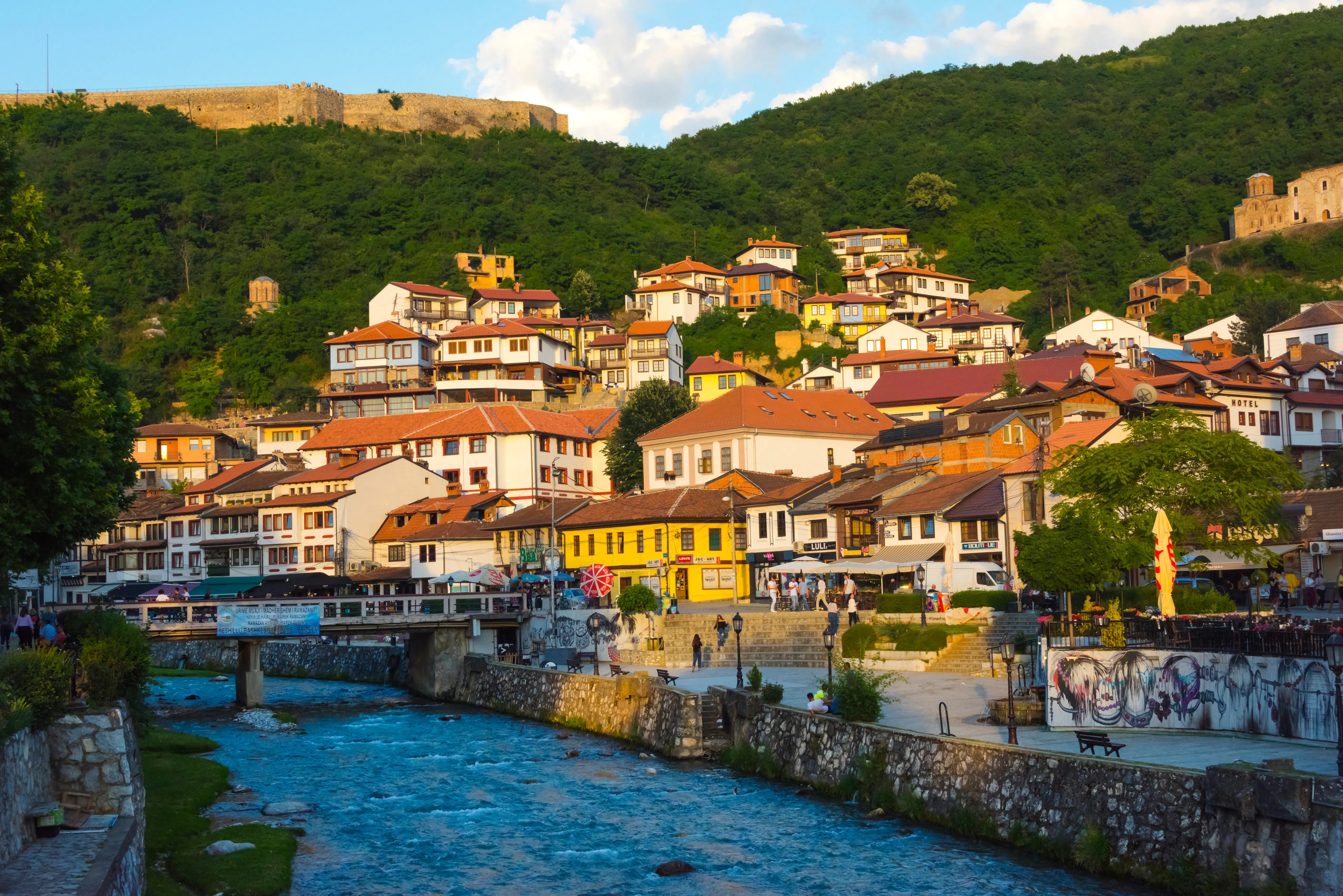
Kosovo, a hidden gem in the Balkans, offers an authentic cultural experience at the lowest cost in the region. The country's average ADR sits at €41.63 with a RevPAR of €19.97 across roughly 2,800 active listings, the smallest STR supply on this list. What makes Kosovo distinctive is the booking behavior: Travelers book with a median lead time of just 7 days, the shortest in Europe, and stay an average of 4.9 nights. The combination suggests last-minute, longer-form travel, visitors discovering Kosovo as part of broader Balkan trips rather than planning standalone visits months in advance.
3. Moldova
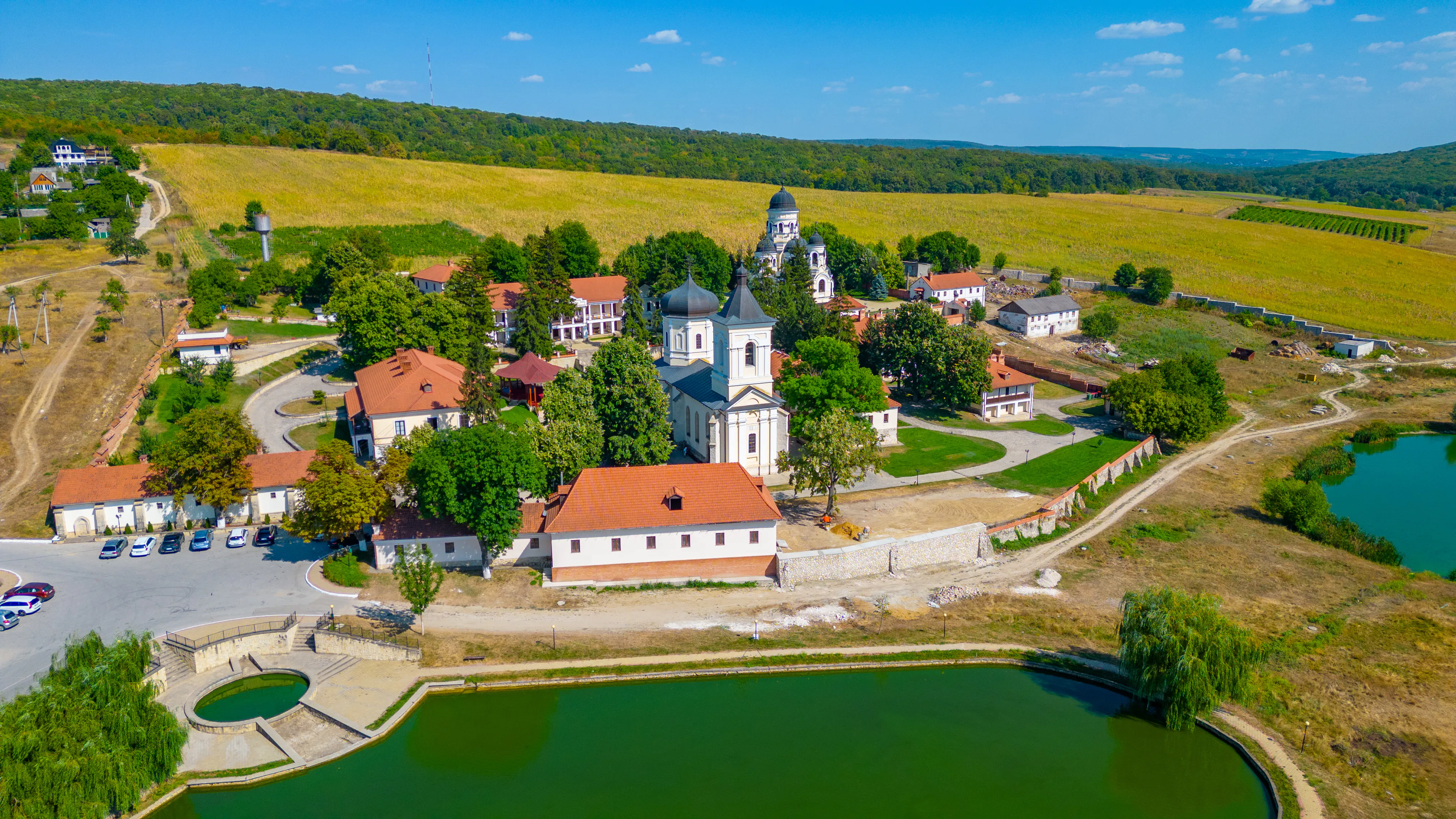
Moldova, a small country nestled between Romania and Ukraine, is known for its rolling hills, picturesque monasteries, and acclaimed wine country. With an average ADR of €45.49 and a RevPAR of €28.53, Moldova offers some of the strongest value-for-money in Europe, and the highest occupancy of any country on this list at 62.7%, suggesting demand is genuinely strong relative to supply. Chisinau, the capital, anchors the market with an ADR of €46.06 and a 64.4% occupancy across roughly 2,470 active listings. Travelers stay an average of 5.4 nights, the second-longest length of stay in Europe, pointing to wine tourism and slow-travel itineraries rather than quick city breaks.
4. Serbia

Serbia offers traditional festivals, distinctive cuisine, and warm hospitality across a more developed STR market than its neighbors, roughly 14,750 active listings, with an average ADR of €51.17 and a RevPAR of €26.50. Belgrade is the country's anchor market, with an ADR of €55.01 and a strong 60.4% occupancy across over 6,000 active listings. With a median lead time of 10 days and an average length of stay of 4.5 nights, Serbia attracts travelers who book on shorter notice and stay long enough to explore beyond Belgrade, into Novi Sad, the wine regions of Šumadija, and the natural parks along the Drina.
5. Belarus
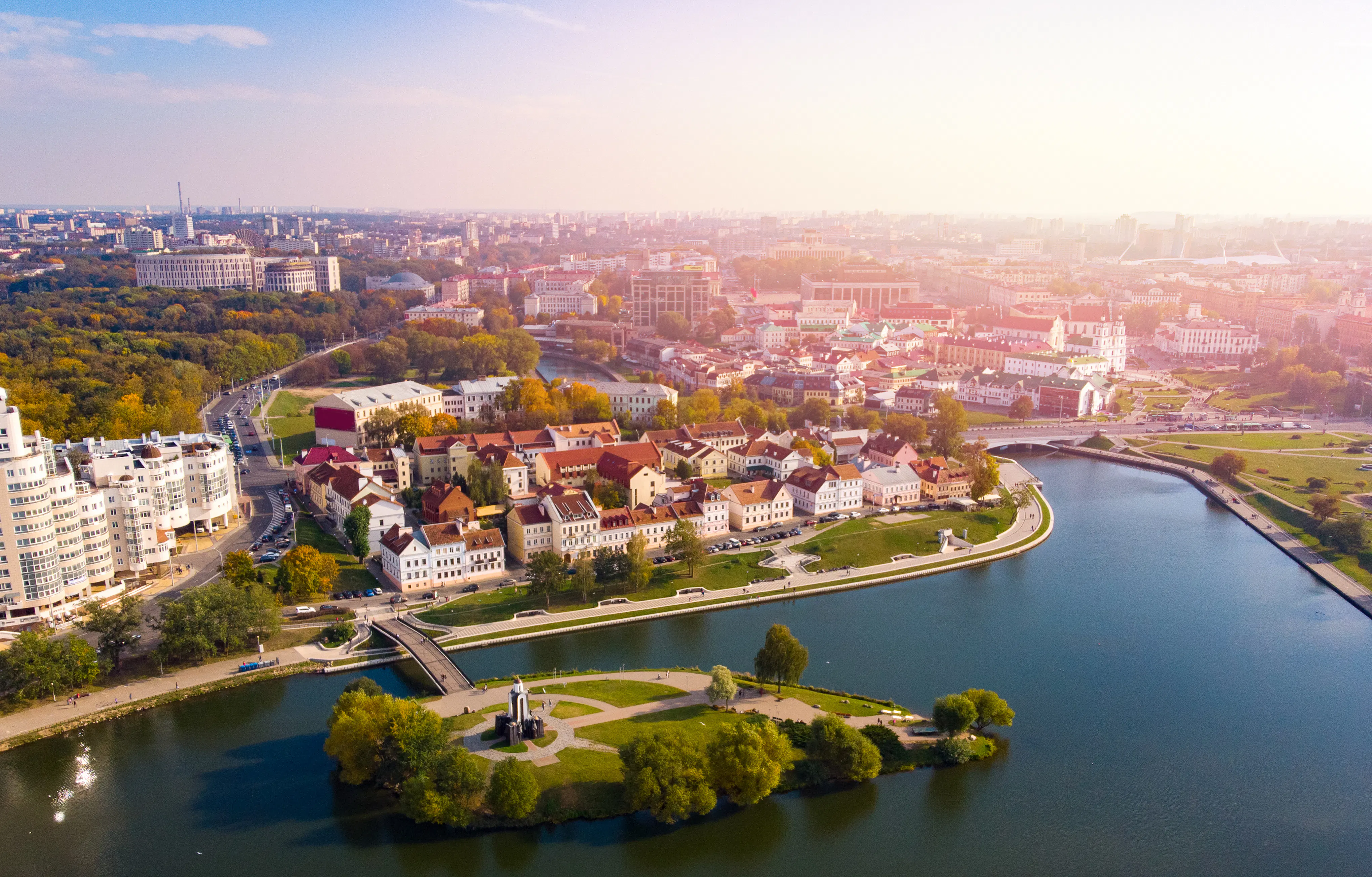
Bosnia-Herzegovina rounds out the list with an average ADR of €56.33 and a RevPAR of €27.18 across roughly 10,125 active listings, the second-largest STR supply among the cheapest countries. Sarajevo anchors the market with an ADR of €52.68 across nearly 3,000 active listings. Travelers book with a median lead time of 15 days and stay an average of 3.8 nights, fitting the typical short-break pattern of capital-city tourism mixed with side trips to Mostar and the Herzegovinian countryside.
Additional Budget-Friendly European Destinations
Eastern and southeastern Europe have become magnets for budget-conscious travelers, offering nightly rates that can be half of what you'd spend in Western capitals. Albania leads the way at €56.80 ADR, with Bulgaria (€60.67), Romania (€62.68), and the Baltic trio of Latvia (€69.24), Lithuania (€69.87), and Estonia (€79.20) all sitting comfortably below the European average. Hungary (€84.07) and Poland (€86.76) round out the budget-friendly cluster, offering capital-city access at prices that still feel like a deal — Budapest averages €82.83 ADR, while Warsaw comes in at €71.
The Balkan coast offers genuine value-for-money for travelers willing to look past the obvious. Albania's Tirana sits at just €42.73 ADR, the cheapest capital city in this group, while its coastal towns like Durrës (€63.50) and Vlorë (€66.76) deliver Mediterranean beach access at a fraction of what Spain or Greece charge. Montenegro's coastal markets,Ulcinj (€71.78), Budva (€83.46), and Kotor (€101.46), sit higher but still well under typical Mediterranean rates, and travelers tend to stay 5.3 nights on average, the longest length of stay in the region.
Booking patterns differ across these countries in ways worth noting. Romania, Bulgaria, and Poland see the shortest lead times — medians of 12, 13, and 15 days — fitting a last-minute, weekend-getaway pattern. Montenegro and Hungary book further ahead at a median of 27–28 days, more in line with typical Mediterranean planning behavior. For hosts, that gap matters: in short-lead markets like Bulgaria, the booking window is too compressed to capture an early-bird premium, so hosts rely on responsive pricing in the final two weeks to read demand and adjust rates as bookings come in. In longer-lead markets like Montenegro, hosts have time to set premium event-week or peak-season rates a month or more in advance and let early bookers commit at those prices.
These regions consistently top "best value" lists, making them prime spots for travelers looking to stretch their euros. With fewer crowds than major hotspots, you can explore medieval fortresses, UNESCO sites, and vibrant local customs on a modest budget — and find genuine STR availability without competing against the wave of inbound tourism that defines Western European peak seasons.
Budget Guide for Eastern Europe
For travelers aiming to make every euro count, an itemized approach reveals just how economical Eastern Europe truly is. Here's what your daily budget might look like in the region's most affordable destinations:
- Accommodation: As we've showcased, nightly stays often dip below €60 in cities like Rajoni Prishtines, Orhei, and Ohrid.
- Meals: Expect to pay just €5–10 for quality local dining experiences
- Transportation: Public transit typically costs €0.50–1.50 per ride, with day passes around €4
- Activities: Many museums offer free entry days or discounts under €5
- Local experiences: Walking tours often run on a tip-based system (€5–10 suggested)
Money-saving strategies
- Visit North Macedonia, Serbia, and Bosnia & Herzegovina for their abundance of free or low-cost cultural events
- Explore lesser-known gems like Korca (Albania) or Košice (Slovakia) to avoid tourist congestion and inflated prices
- Stay longer in one location to negotiate weekly or monthly accommodation discounts (often 20-30% off)
- Take advantage of significantly lower tourist taxes (sometimes under €1 per night compared to €5+ in Western Europe)
- Use local transportation apps rather than taxis to save up to 70% on getting around
Map out all potential expenses beforehand to comfortably plan multi-country trips or long-term stays without exceeding your budget. This data-backed strategy leaves you with more resources to invest in authentic local experiences rather than high lodging fees.

Finding Cheap Stays in Expensive European Countries
While national ADRs provide a general overview of a country's pricing, it's crucial to understand that these averages don't tell the whole story. Even within the most expensive countries, savvy travelers can find affordable options by exploring specific markets that deviate from the national average.
Spain and Greece, for example, have high national ADRs, placing them among the most expensive destinations in Europe. However, diving deeper into the data, we discover that some of their cheapest markets offer surprisingly budget-friendly options for travelers. Visiting a country known for its high prices isn’t out of reach, even if your finances are limited. Target the least expensive European countries or affordable regions within pricier destinations to stretch your travel budget significantly further.
How can hosts that are welcoming guests in affordable markets within more expensive countries make the most of their position? Attract cost-conscious travelers by offering competitive rates. Use the accessibility of your destination as a foundation for your marketing efforts.
Where Summer Travel Costs the Most and Where It Doesn't
Seasonality plays a crucial role in determining vacation rental rates across European destinations. In the short-term rental industry, seasonality refers to the fluctuation of bookings and prices throughout the year. Reservation rates and ADR are often influenced by factors such as weather, holidays, and local events. As a host, understanding seasonality patterns can help you adjust your nightly rates in response to fluctuating demand. As a guest, knowing where summer carries the steepest markup, and where it doesn't, can save you serious money.
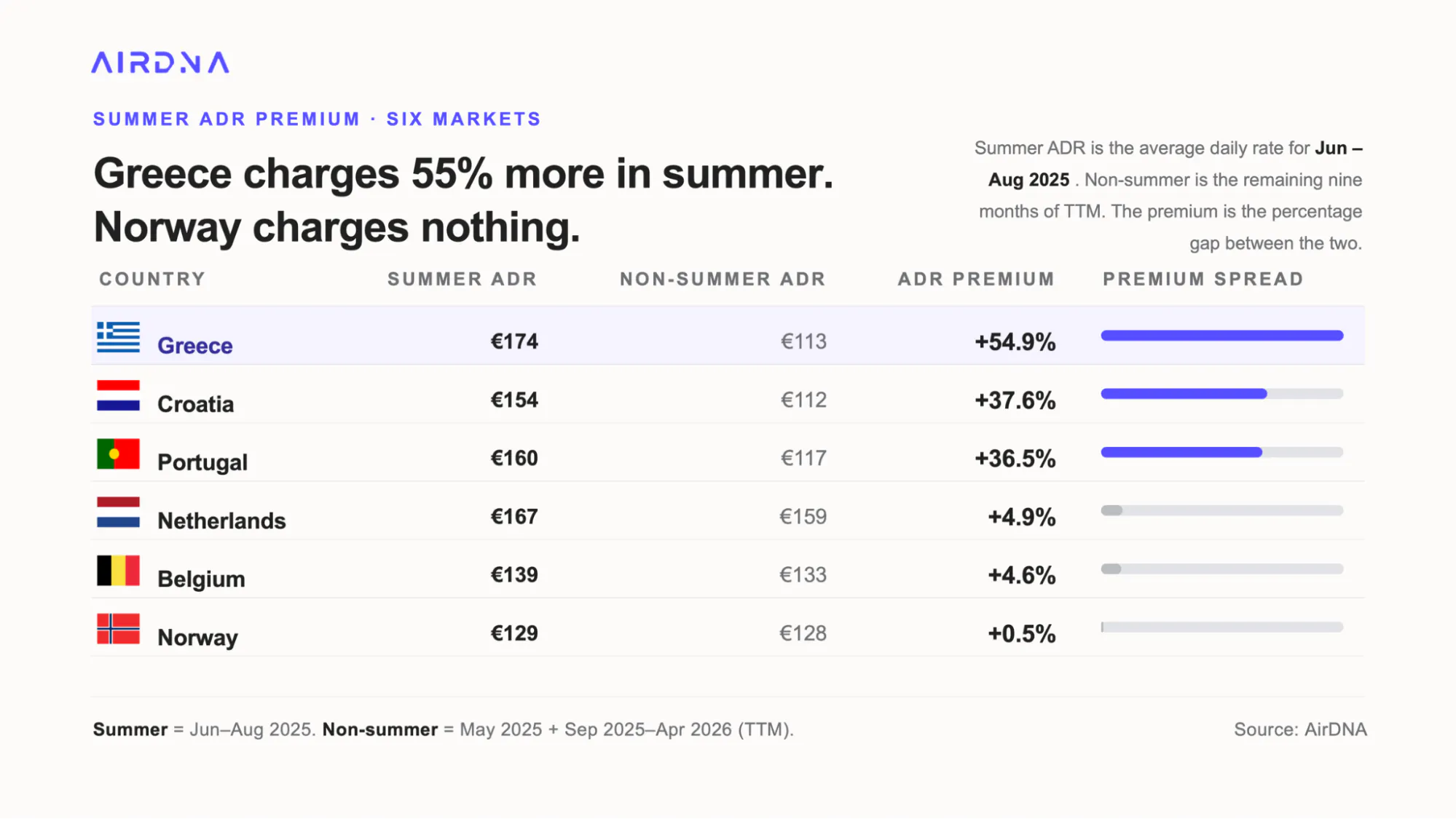
To quantify this, AirDNA compared summer ADR (June–August 2025) against non-summer ADR (the remaining nine months) across European countries. The result is a clean ranking of where summer travel costs the most relative to the rest of the year, and where it costs about the same.
The summer surge: where peak season costs the most
Three Mediterranean and Adriatic countries see some of the steepest summer premiums in Europe, with June–August ADRs running more than 35% above the rest of the year:
- Greece (+54.9%) — the largest summer premium in Europe. Greek ADRs jump from €112.64 in non-summer months to €174.46 in June–August. With island demand spiking from Mykonos to Santorini, Greece is the country where summer-vs-shoulder timing makes the biggest difference to a traveler's budget.
- Croatia (+37.6%) — ADRs climb from €112.09 in non-summer to €154.28 in June–August, driven almost entirely by the Dalmatian coast and the islands.
- Portugal (+36.5%) — the Algarve and Lisbon together push summer ADR to €160.06, against €117.27 the rest of the year.
For travelers, the takeaway is straightforward: in these three countries, shifting your trip even one month to either side of peak summer can translate into 30%+ savings on accommodation.
The flat-rate countries: where summer barely costs more
At the other end of the spectrum, several countries see almost no summer premium at all — destinations where you can travel in July without paying meaningfully more than you would in October.
- Norway (+0.5%) — summer ADR (€128.95) is virtually identical to non-summer ADR (€128.28). Norway's tourism demand spreads across the year, with winter aurora travel and summer fjord trips balancing each other out.
- Belgium (+4.6%) — summer ADR sits at €139.29, against €133.22 the rest of the year. Brussels and Bruges draw steady year-round visitors, smoothing out the seasonal cycle.
- Netherlands (+4.9%) — Amsterdam's consistent year-round demand keeps summer ADR (€167.35) only marginally above non-summer (€159.49).
The same pattern shows up sharply at the city level. Portimão on Portugal's Algarve coast sees the biggest summer premium of any major European market, with ADRs jumping 71.6% from €91.71 in non-summer to €157.39 in June–August. Mykonos isn't far behind at +65.6% — though both the base and the peak are in a different league entirely, climbing from €457.95 to €758.45 per night. Marbella rounds out the trio of summer-surge cities at +57.3%. On the flat-rate end, three urban cultural destinations barely move with the seasons: Prague (+2.4%), Hamburg (+2.3%), and Napoli (+2.1%) all see summer ADRs within a few euros of their non-summer averages, reflecting the steady year-round demand of city-break tourism over weather-driven travel.
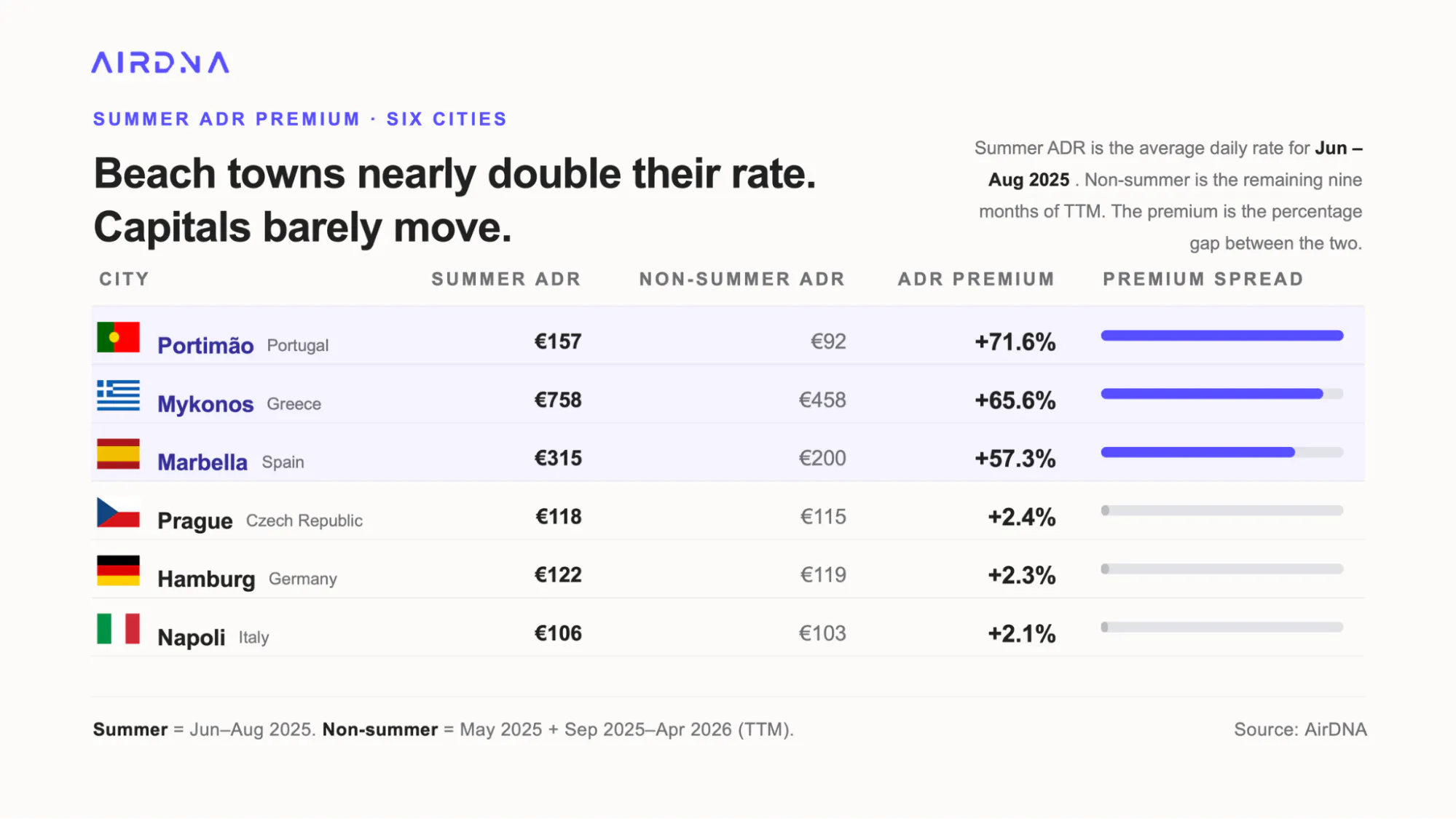
The framing flips the conventional "expensive vs. cheap" narrative. The Netherlands may have a higher base rate than Croatia, but a summer traveler to Amsterdam isn't paying a meaningful premium for the timing — only for the destination. A summer traveler to Croatia, by contrast, pays roughly €40 more per night than someone who visits in October.
For hosts, the inverse is also useful. Markets with high summer premiums reward aggressive dynamic pricing — there's real money to capture at peak. Markets with flat seasonal pricing reward year-round occupancy strategies and consistent rate management instead.
For more insights on the European vacation rental market, check out our latest European market review and a guide to understanding Europe’s seasonality.
FAQs
What is the least expensive European country to visit?
Based on AirDNA's vacation rental data, North Macedonia is the cheapest country in Europe to visit, with an average daily rate (ADR) of just €39.81. Kosovo (€41.63), Moldova (€45.49), Serbia (€51.17), and Bosnia-Herzegovina (€56.33) round out the top five — all sitting comfortably below the European average. Albania (€56.80) is another strong contender, especially for travelers looking to combine budget-friendly stays with Mediterranean beach access. If you're looking for the best budget experience, consider focusing on the lesser-known Balkan cities, where tourist crowds haven't driven up prices. Even in prime travel seasons, these destinations typically remain well below Western European rates.
What country in Europe is the cheapest to fly to?
While flight costs fluctuate seasonally, central and eastern European nations often boast the most economical fares. Travelers report year-round deals to cities like Prague, Budapest, and Warsaw for much less than flights into Western European hubs. The Czech Republic, in particular, is known for fairly consistent flight bargains, with some routes averaging only a few hundred euros round-trip. Albania and other Balkan countries also gain traction among budget airlines, especially during shoulder seasons. Monitoring comparison sites and booking several months in advance usually helps secure the best price.
Which city in Europe is the cheapest for vacation?
Tirana, Albania's capital, takes the top spot with an average ADR of just €42.73 — the cheapest capital city in Europe by a wide margin. Chisinau in Moldova (€46.06) and Sarajevo in Bosnia-Herzegovina (€52.68) are close behind, both offering rich cultural experiences and walkable old towns at a fraction of Western European prices. Belgrade (€55.01) and Sofia (€55.62) round out the top five cheapest capitals, each delivering vibrant nightlife, historical landmarks, and strong food scenes on a modest budget.
What is the best city to spend 3 days in Europe?
If you're seeking a blend of history, cuisine, and walkability, it's hard to beat a mid-sized Eastern European city like Budapest or Kraków. Both offer scenic old towns, UNESCO World Heritage sites, and vibrant nightlife at prices below those in Western capitals — Budapest's average ADR sits at €82.83, while Kraków comes in at €84.83. In just three days, you can visit thermal baths or medieval castles, sample local comfort food, and explore centuries-old architecture. Many Central European gems remain underrated, leaving you with fewer crowds and better deals than the typical Paris-or-Rome short break.
ARTICLE SUMMARY
Explore the spectrum of short-term rental costs across Europe with insights for both hosts looking to optimize earnings and travelers seeking the best deals. This guide delves into the most expensive and cheapest destinations, providing strategic tips for maximizing profitability as a host and uncovering budget-friendly stays as a guest.
Camilo Schmid Rivas
Senior Research Analyst
Camilo Schmid Rivas is a Senior Research Analyst at AirDNA who brings a uniquely well-rounded perspective to short-term rental analytics. With a background that spans investment, real estate, and business analysis—including roles at Stayery and Sollers Consulting—Camilo has worn many analyst hats, each sharpening his ability to turn complex data into clear, actionable insights. A graduate of École hôtelière de Lausanne, he now channels his multidisciplinary expertise into uncovering trends that drive smarter STR decisions. In his free time, he enjoys playing tennis or scuba diving in or around Barcelona.
