Calculate Revenue
 Research Markets
 Find For Sale Properties
 Compare My Listing
 STR Revenue Calculator
 Custom Comp Sets
 Submarket Insights
 Custom Search Filters
 Rate Recommendations
 Performance Benchmarking
 Competitor Comparison
 Owner Contact Details
 Property-level performance data
 Tourism Insights
 Real Estate Investment Analytics
 About Us
 Sales
 Support
 Press
An Investor's Guide to Eco-Friendly Vacation Rentals
Published: March 18, 2024
Last updated: September 25, 2026

Bram Gallagher
Key Takeaways:
- Eco-friendly vacation rentals cater to a growing market of travelers seeking sustainable accommodations, offering high return on investment (ROI) through properties like dome houses and tiny homes.
- Key features of successful eco-friendly rentals include energy efficiency, renewable energy sources, and minimal environmental impact.
- When investing in eco-friendly properties, consider market trends, location, sustainability features, operational needs, and regulatory compliance to align with market demand and eco-friendly values.
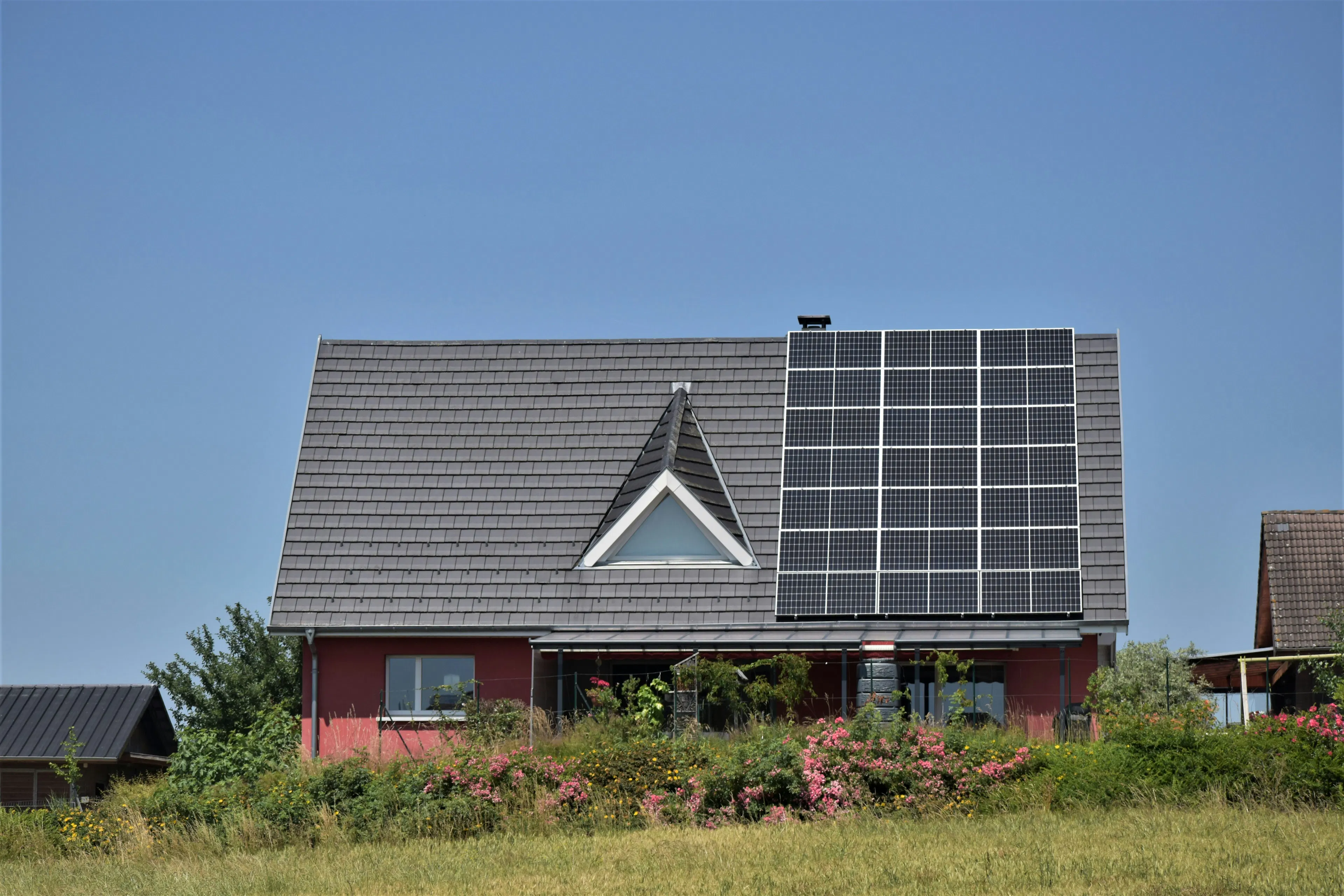
Putting the environment first doesn’t mean your return on investment (ROI) comes last. In fact, the planet and your short-term rental (STR) business can flourish hand in hand.
As travelers increasingly look for accommodations that prioritize the world’s well-being, eco-friendly vacation rentals offer a way for guests to lower their carbon footprint and still enjoy a holiday.
For investors, this spells opportunity. Eco-friendly vacation rentals offer the potential for high ROI while fighting climate change.
The key to succeeding in this niche market is understanding it.
What Is an Eco-Friendly Vacation Rental?
An eco-friendly vacation rental is a property designed to minimize its environmental impact.
In this article, we focus on property types that are energy efficient (either by design or by nature of their small square footage) and those that use recycled or natural materials designed to blend into the natural environment.
Types of Eco-Friendly Vacation Rentals
- Dome Houses: Geodesic structures known for their energy efficiency and ability to blend into natural settings.
- Earth Houses: Homes buried in the earth, leveraging the ground's natural insulation.
- Shipping Containers: Repurposed materials that give these structures a second life as innovative living spaces.
- Nature Lodges: Built within natural surroundings, often using sustainable practices to preserve the ecosystem.
- Tents: Minimalist accommodations with a low environmental footprint, usually temporary and mobile.
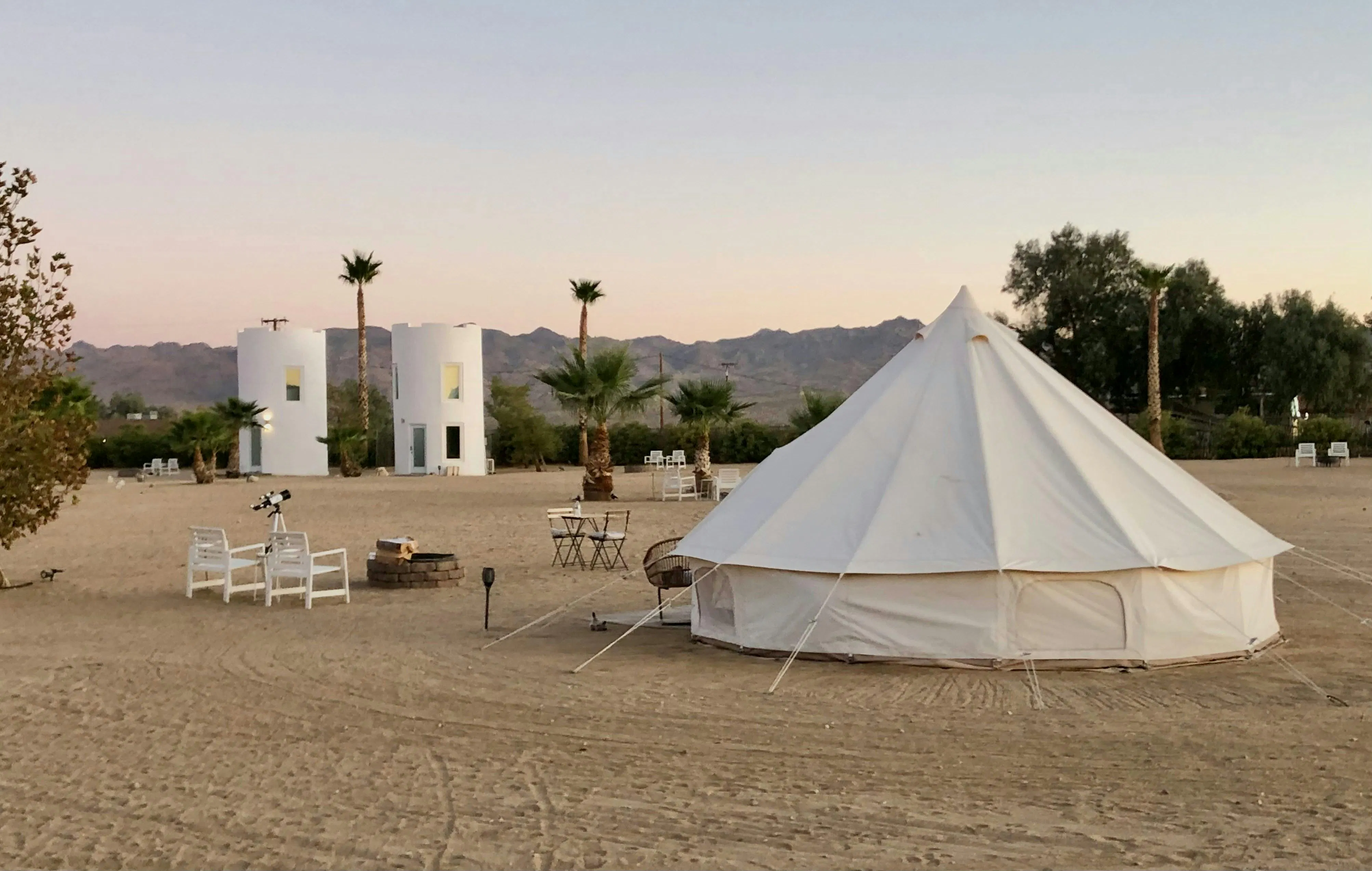
- Tipis: Conical tents made from natural materials, respecting the land and traditional designs.
- Yurts: Circular dwellings with a heritage of eco-conscious construction, blending with the outdoor environment.
- Tiny Houses: Compact living spaces that reduce energy consumption through their reduced size.
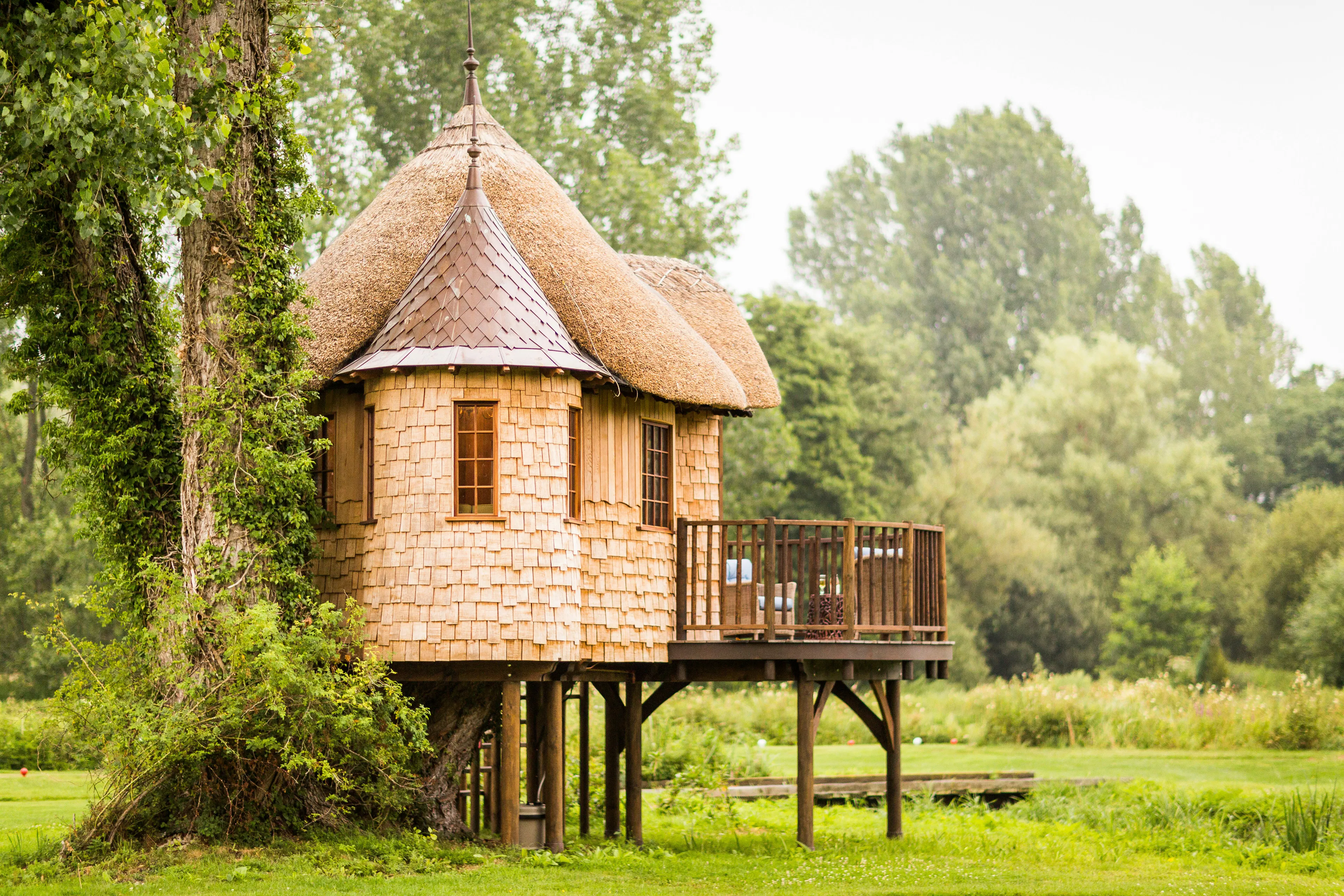
- Tree Houses: Structures built into trees, often from sustainable timber, which reduces land use.
- Nature Lodges: Built within natural surroundings, often using sustainable practices to preserve the ecosystem.

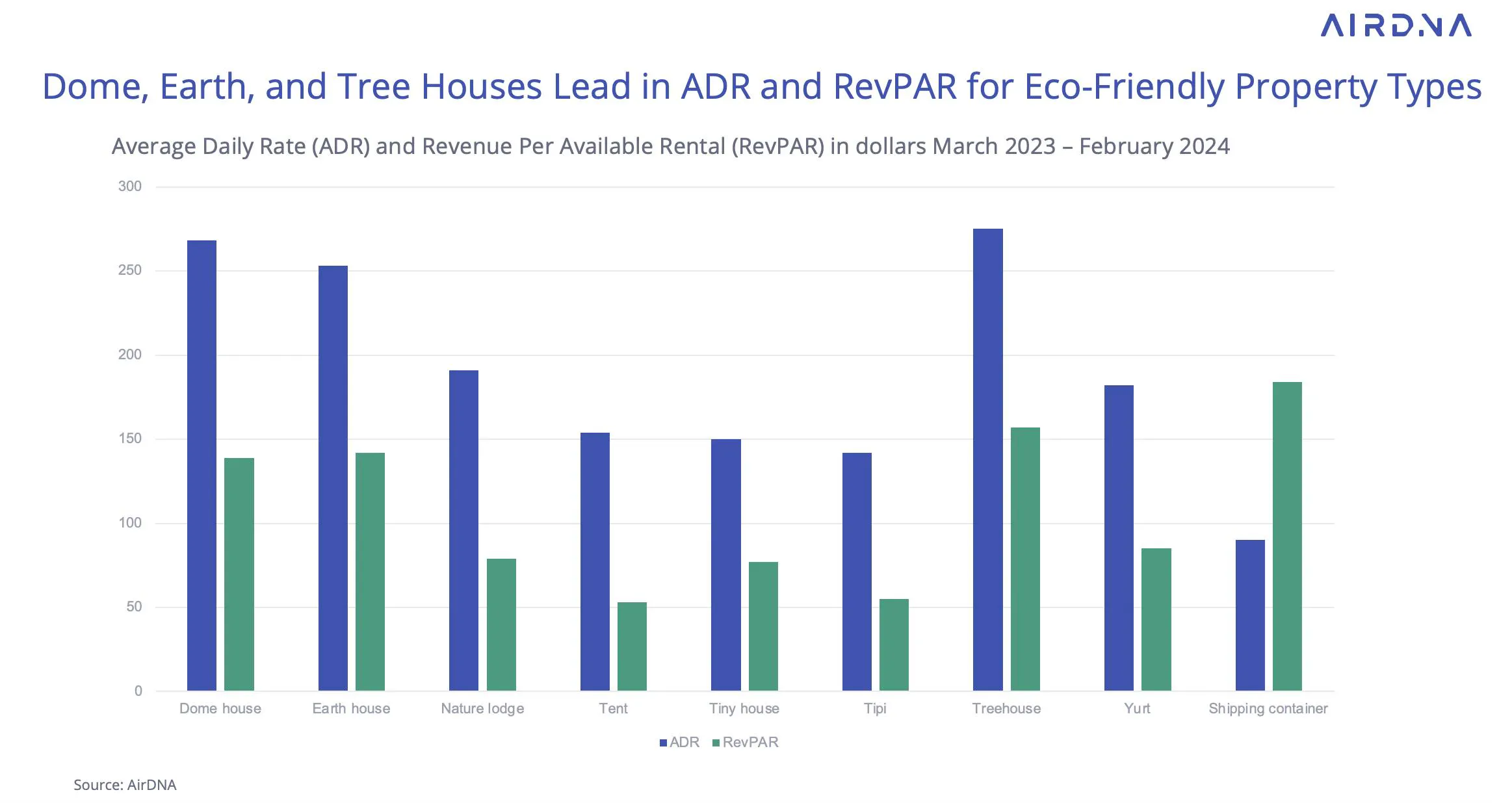
Investors should note that each eco-friendly type caters to the market's growing desire for sustainable travel choices. Data indicates that some of the most unconventional eco-friendly properties, such as dome houses, earth houses, and treehouses, are leaders in Average Daily Rate (ADR) and Revenue Per Available Rental (RevPAR).
This showcases their exceptional performance in the rental market and underlines the potential for investors to garner higher returns by focusing on eco-friendly properties that offer both an escape for guests and a commitment to the environment.
Why Invest in Eco-Friendly Vacation Rentals?
The rising demand for environmentally-friendly travel experiences indicates a larger shift in consumer values. Properties that prioritize environmental stewardship are not just a passing trend: they are an answer to the call for meaningful action in the travel industry.
This presents a unique opportunity for investors to align with the eco-consciousness of travelers and capitalize on the emerging and profitable market for sustainable tourism.
Pros and Cons of Eco-Friendly Vacation Rentals for Investors
Eco-friendly vacation rentals offer a compelling investment opportunity in today's market, catering to a growing segment of eco-conscious travelers looking to take sustainable vacations.
Here’s an overview of the pros and cons of investing in eco-friendly vacation rentals:
Pros:
- Growing Market Appeal: A rising trend in sustainable living heightens the attractiveness of eco-friendly properties, tapping into a market of travelers prioritizing environmental concerns.
- Financial Incentives: Government incentives, such as tax rebates for renewable energy use and recycling facilities, can offset initial costs, making sustainable investments financially viable.
- Operational Cost Savings: Although upfront costs may be higher, investing in sustainable materials and technologies, like solar panels, can significantly reduce long-term operating expenses.
- Better Reputation: Committing to eco-friendly practices not only attracts guests but also boosts your brand image, appealing to stakeholders interested in environmental sustainability.
- Higher Revenue Potential: Properties with green credentials often command higher rates, contributing to an enhanced return on investment (ROI) and stronger revenue per available room (RevPAR) during peak demand.
- Market Niche Advantage: Specializing in sustainability attracts a niche market, potentially leading to higher occupancy rates and bolstering passive income opportunities.
Cons:
- Initial Investment Hurdle: Sustainable appliances and construction materials can be costly upfront, requiring a pricier investment initially.
- Market Variability: The demand for eco-friendly accommodations isn't uniformly strong across all locations, which could affect expected returns.
- Regulatory Complexity: Keeping up with sustainability regulations demands diligence and possibly expert consultation to navigate successfully.
- Specialized Maintenance: Eco-friendly features, such as green roofs or gray water systems, might necessitate unique care. This can pose challenges for property management.
Investors can make informed decisions by carefully weighing the potential for higher demand and long-term savings against the realities of upfront costs and market limitations.

What to Consider When Choosing an Eco-Friendly Vacation Rental Property
Investors should consider several key factors to identify the property that aligns with market trends and personal investment goals.
Market Trends
Utilize comprehensive data and analytics to understand which types of eco-friendly properties perform best in your target market. Look at ADR and RevPAR metrics to gauge potential profitability.
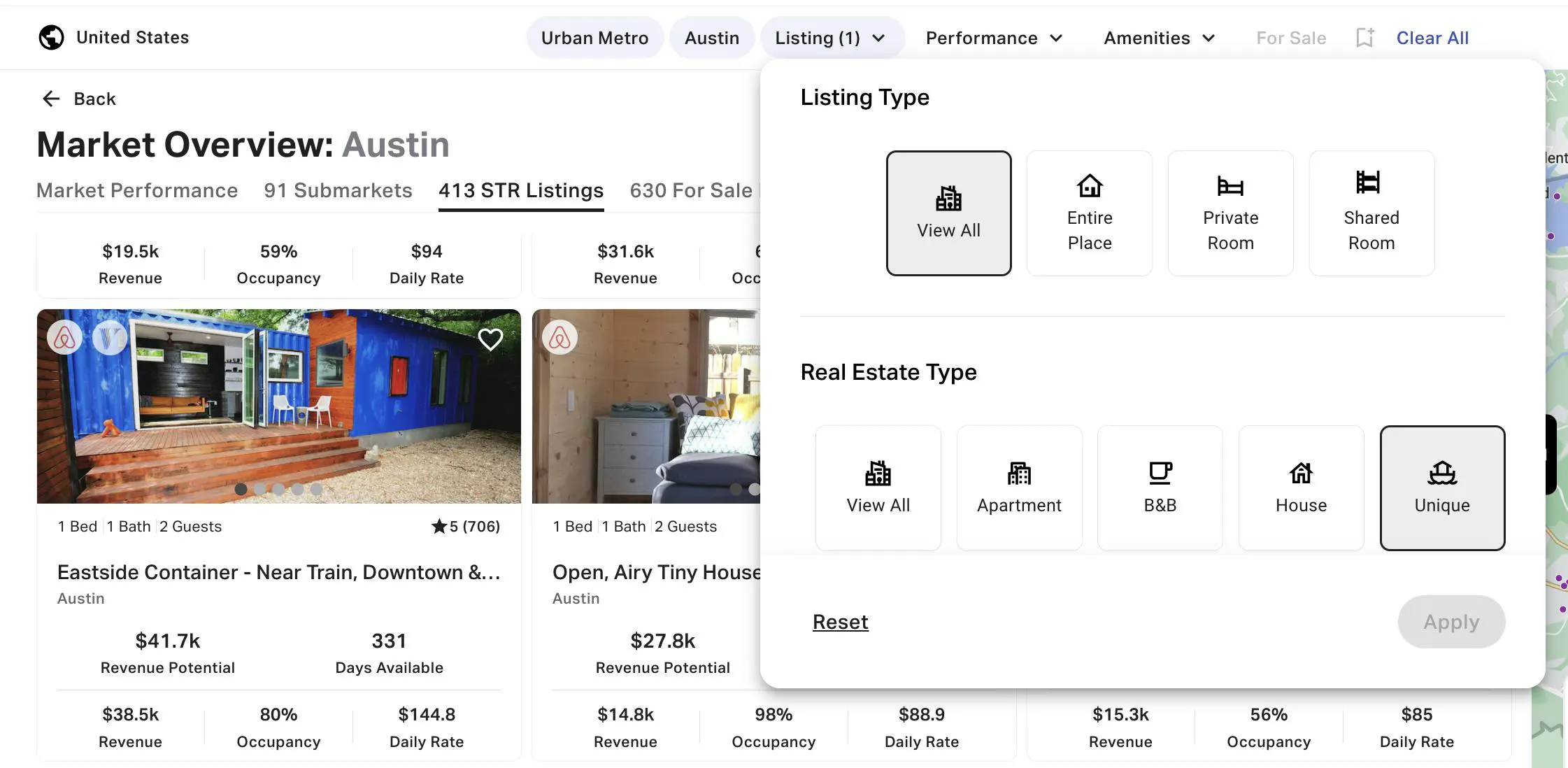
On AirDNA’s app, you can filter listings by Real Estate Type - Unique, the category under which eco-friendly listings can be found. In the case of Austin, Texas, campers and tiny homes are a common type of Unique listing. As a prospective eco-friendly vacation rental investor, you could look at active listings across various eco-friendly property types to see how competitors are performing in terms of annual revenue, occupancy and ADR.
Location
The location of your investment should resonate with eco-friendly values. Properties nestled in nature, near national parks, or in areas known for sustainable living often attract eco-conscious travelers. Ensure the location supports eco-tourism and has a market for this niche.
Property Features
Assess which eco-friendly features are most appealing and cost-effective. Energy efficiency, renewable energy sources, sustainable materials, and low-impact designs are attractive to guests and can lower operational costs. Features that seamlessly integrate with nature can also be a significant draw. Check out our article on How to Build a Sustainable House for Airbnb for a more in-depth assessment of eco-friendly property features.
Amenities
AirDNA research shows investors should rethink their amenity strategy for eco-friendly vacation rentals. Despite offering fewer traditional amenities like gyms, pools, air conditioning, and fully equipped kitchens, eco-friendly vacation rentals tend to excel in guest experience metrics. We found a higher percentage of eco-friendly vacation rentals have Superhost status, pet-friendly amenities, and Instant Book.
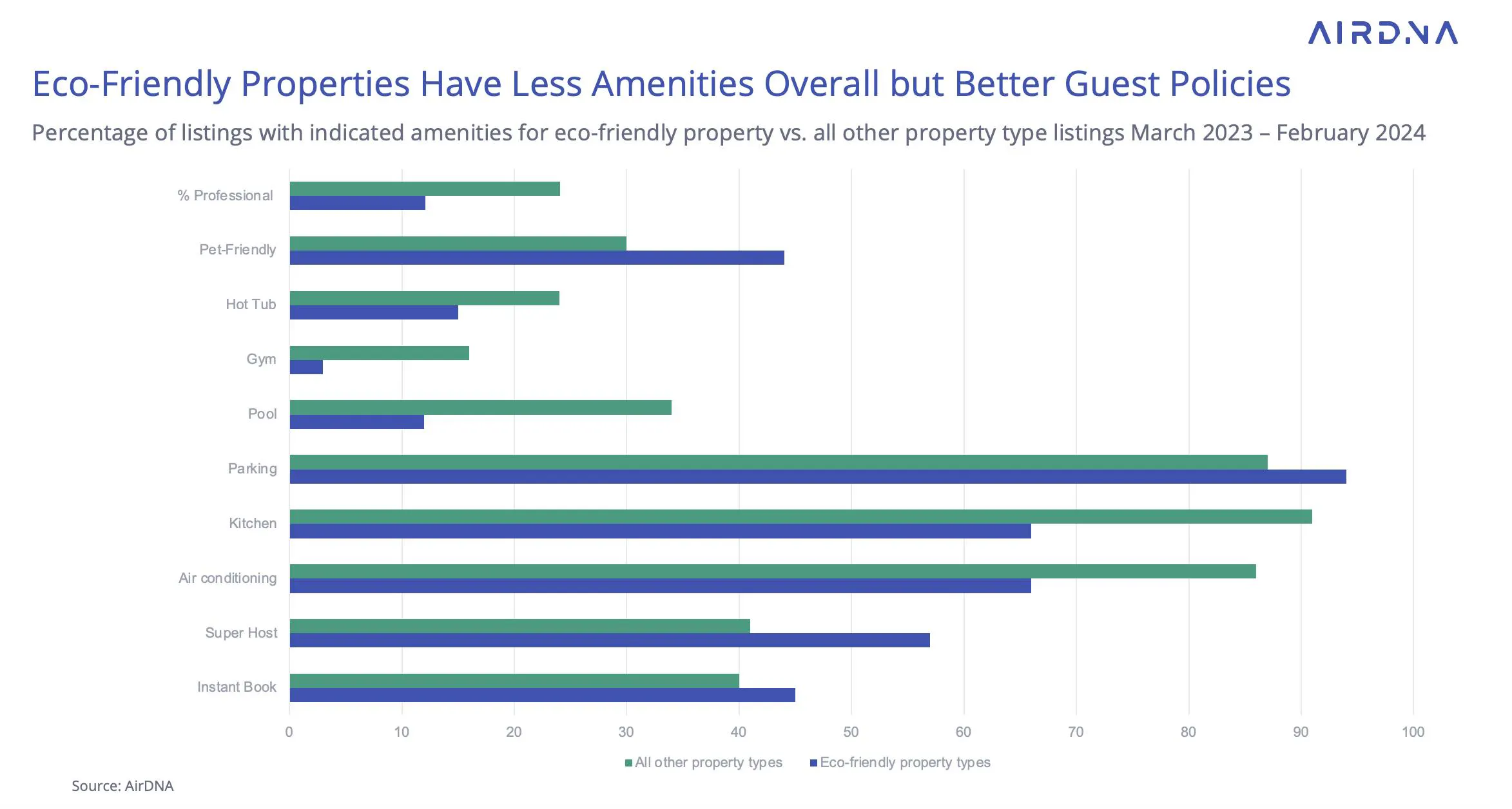
Think of it this way: don’t pass on that eco-friendly property you’re eyeing up because it doesn’t have a pool. Guests who prefer eco-friendly vacation rentals tend to prioritize the quality and principles of their accommodation choices over the presence of traditional luxury amenities.
Sustainability Certifications
Properties with recognized green certifications may have an added appeal as they provide assurance of genuine sustainability efforts. These certifications can be a powerful marketing tool and may qualify for additional incentives.
Operational Considerations
Consider the operational aspect of eco-friendly properties. While they may have fewer traditional amenities, which can reduce overhead, they might require specific maintenance expertise. For example, a yurt may not be able to support a traditional plumbing system, necessitating a compost toilet that requires informed upkeep. Balance the need for special care with the potential for reduced long-term operating expenses.
Regulatory Compliance
Stay informed about zoning codes and environmental regulations that could impact the operation of your eco-friendly rental. Compliance not only protects the environment, in some cases, but also safeguards your investment against potential fines or forced operational changes.
Tiny homes offer a good example. Zoning regulations often forbid tiny homes from being the primary structure on a property. In some areas, they are only allowed as accessory dwelling units (ADUs) unless they meet a certain square footage requirement.
Community and Cultural Impact
Understand the impact of your investment on the local environment, community, and culture. Eco-friendly investments that support local communities and respect cultural heritage tend to be more successful and sustainable in the long term.
Financial Projections
Conduct financial projections with a focus on the long-term. Initial investments may be higher, but so can the returns. Factor in potential savings from incentives, lower utility costs, and the higher rates eco-properties can command.
Choosing the right eco-friendly vacation rental investment means balancing economic opportunity with environmental responsibility. Strive to provide an exceptional guest experience that aligns with the growing trend of sustainable travel options. With careful consideration and strategic planning, investors can find properties that contribute to a greener future AND generate healthy financial returns.
Popular Markets for Sustainable Tourism
The U.S. regions exhibiting the strongest presence of eco-friendly vacation rentals, according to recent AirDNA data, are the South Atlantic, Pacific West, and Mountain West, with the South Central West not far behind. This distribution highlights areas where the demand for sustainable living and travel experiences is most pronounced. Investors considering eco-friendly properties should note these regions as prime markets.
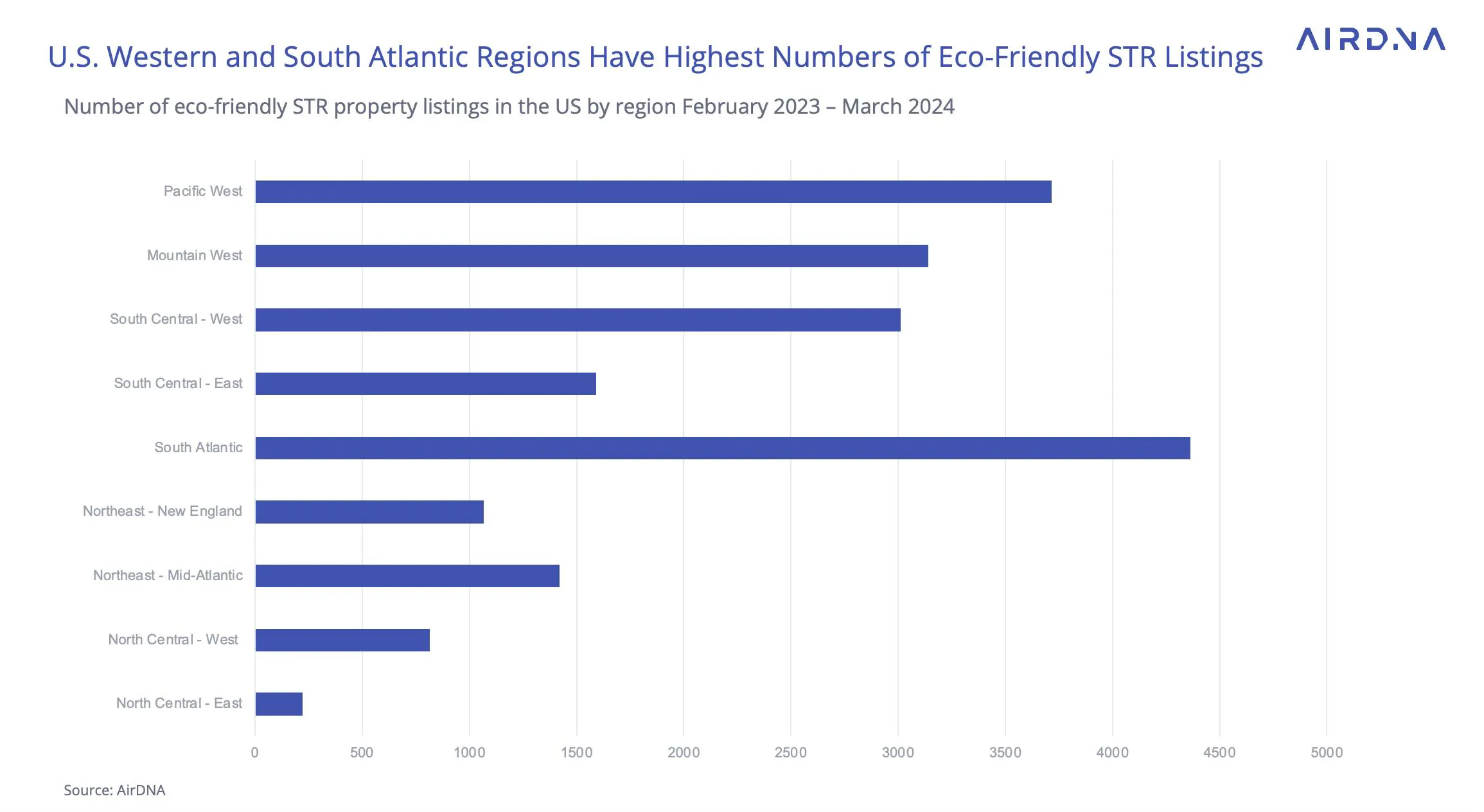
Within these destinations, specific markets stand out for their high volume of eco-friendly short-term rental (STR) listings.
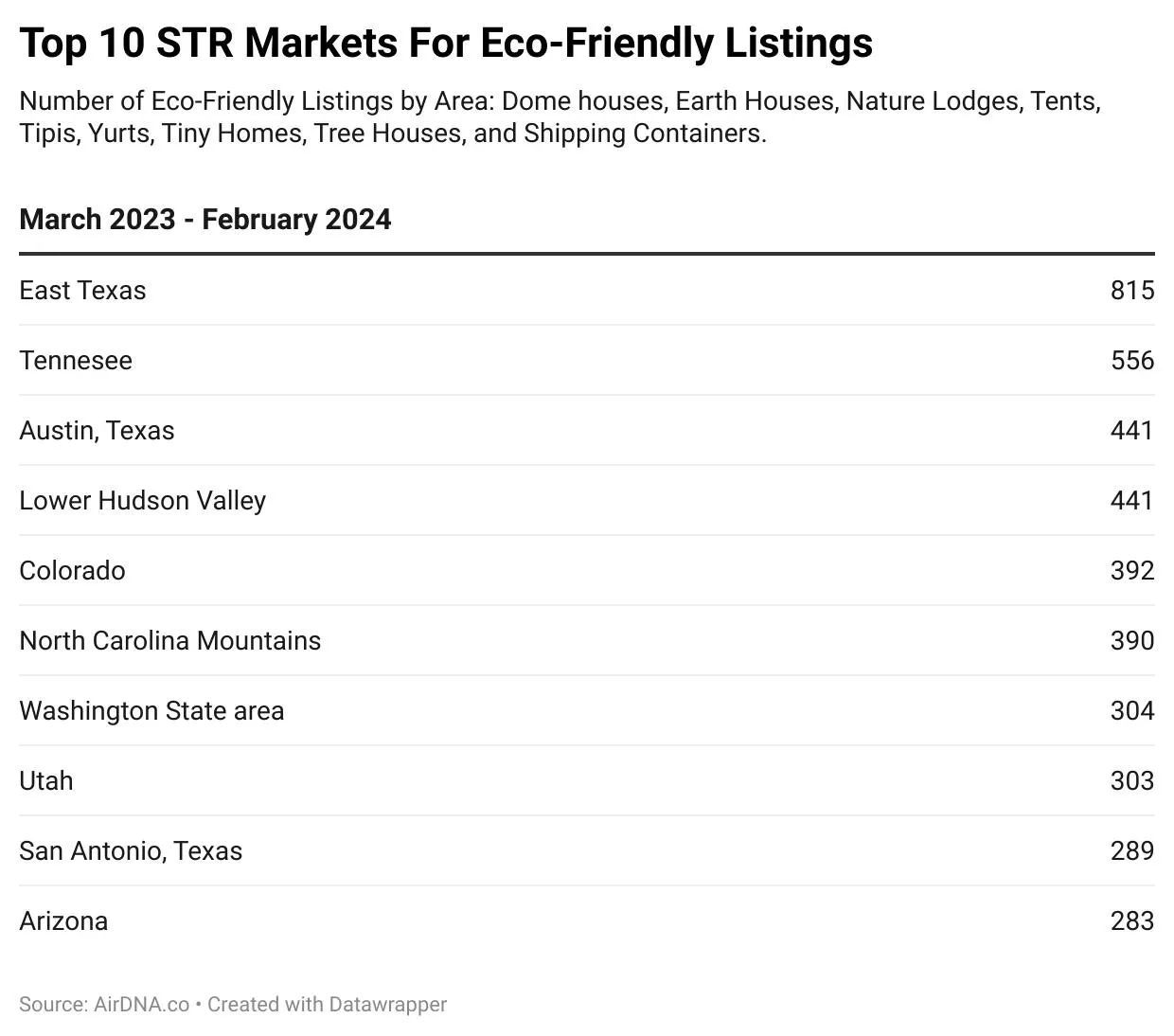
These figures provide valuable insights for investors that can be leveraged for strategic investment decisions.
7 Essentials of Eco-Friendly Vacation Rentals
Investors looking into the eco-friendly vacation rental space need to prioritize sustainability and environmental integration. Here are six key aspects to consider when assessing a property for its green credentials:
1. Environmentally Integrative Design
Choose rentals that blend with local landscapes and cultural milieus to reduce ecological impact and celebrate regional character. Look for design elements that complement the setting, using layouts and materials that are harmonious with the locale.
2. Sustainable Construction Materials
Opt for properties constructed with eco-friendly, non-toxic materials like reclaimed wood, natural stone, or bamboo. Such materials not only minimize environmental damage, but can also contribute to energy conservation.

3. Native Landscaping
Prioritize outdoor spaces that support local ecosystems, utilizing native plants and offering habitats for indigenous wildlife to foster natural biodiversity and reduce water usage.
4. Renewable Energy Integration
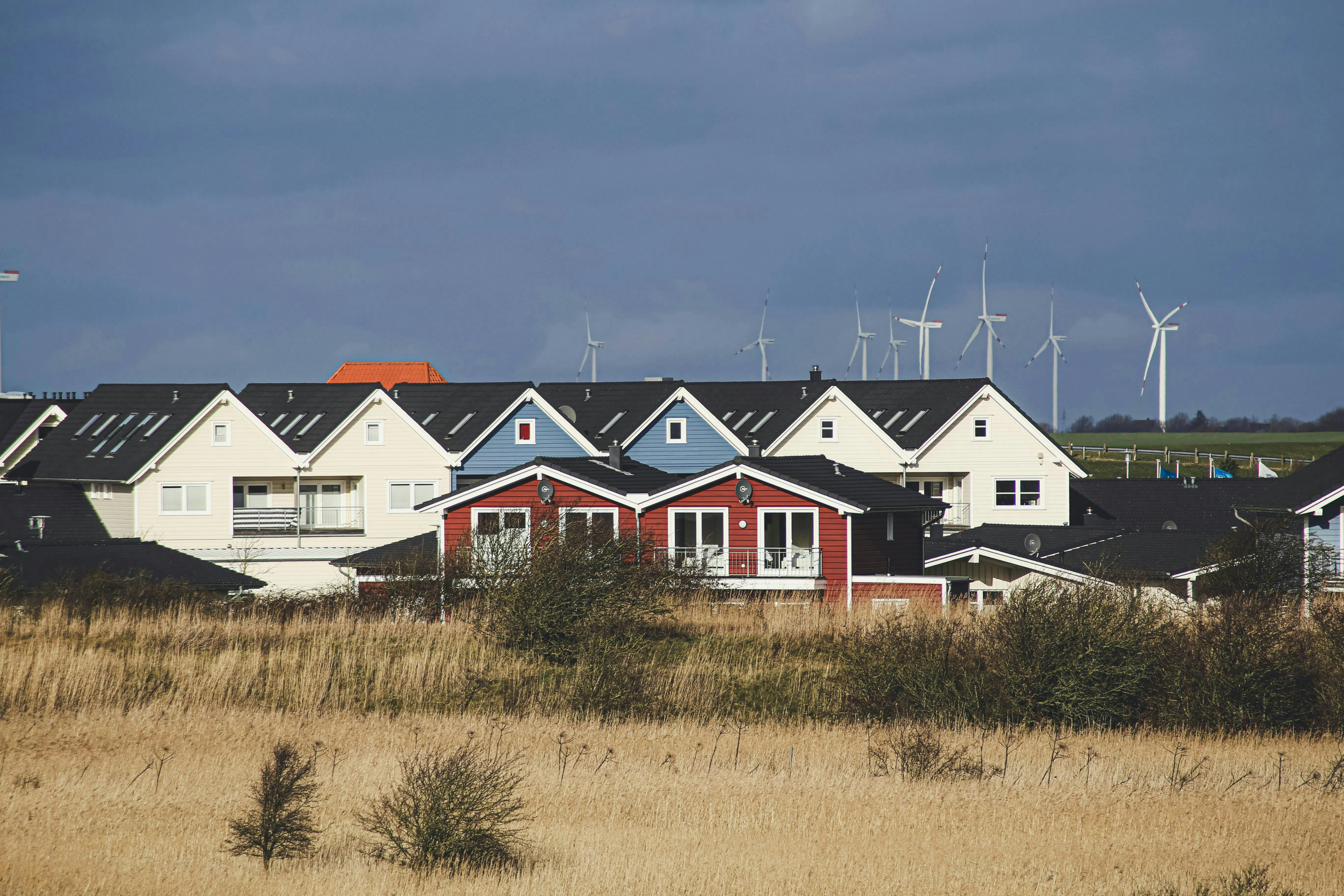
Seek out properties with self-sufficient energy solutions such as solar panels or wind turbines, demonstrating a commitment to reducing fossil fuel reliance and promoting renewable energy.
5. Waste Reduction Systems
Ensure the property incorporates waste-minimizing features like comprehensive recycling options and composting capabilities, key indicators of an authentic eco-friendly property.
6. Energy-Efficient Amenities
Confirm the presence of amenities aimed at conserving resources, such as LED lighting, high-efficiency appliances, and water-saving fixtures. These are critical for sustainable operations.
7. Nearby Local and Sustainable Activities
The property's location should offer guests convenient access to environmentally-friendly attractions, amplifying the earth-friendly experience and underscoring a commitment to conservation.
By focusing on these essential aspects, investors can ensure that their eco-friendly vacation rental investment aligns with the growing demand for sustainable travel solutions.
Sustainable Tourism in the Market
Eco-friendly vacation rentals are part of a wider trend towards sustainable tourism. Discover why this trend has caught AirDNA's attention for 2024, along with other key investment trends.
ARTICLE SUMMARY
This guide explores the lucrative opportunity in eco-friendly vacation rentals, highlighting their appeal to eco-conscious travelers and offering insights on how to invest effectively in sustainable properties.
Bram Gallagher
AirDNA Director of Economics and Forecasting
Bram Gallagher is an Economist at AirDNA, specializing in uncovering insights that drive smarter short-term rental decisions. He put his Ph.D. in Economics from the University of Georgia to work researching and forecasting hotel data with CBRE prior to joining AirDNA, as well as teaching economics at a number of universities. In his spare time, Bram enjoys making wooden furniture with hand tools.