

 Calculate Revenue
 Research Markets
 Find For Sale Properties
 Compare My Listing
 STR Revenue Calculator
 Custom Comp Sets
 Submarket Insights
 Custom Search Filters
 Rate Recommendations
 Performance Benchmarking
 Competitor Comparison
 Owner Contact Details
 Property-level performance data
 Tourism Insights
 Real Estate Investment Analytics
 About Us
 Sales
Sales Support
 Press
PressEuropean Review August 2025: Record Listings, Softer ADR, and Shifting Travel Demand
Published: September 15, 2025
Last updated: December 1, 2025

Camilo Schmid Rivas
Key Takeaways
- European short-term rental listings reached a record 4.1 million in August, growing 1.2% year-over-year.
- Demand nights hit a new high with 66.6 million recorded, but nights booked slipped 4%, hinting at softer forward momentum.
- Occupancy gains were strongest for luxury and upscale properties, even as budget listings maintained the highest overall occupancy at 73%.
- RevPAR was strongest in coastal markets like Marbella, Dubrovnik, and Calpe, while Oktoberfest demand surged, led by budget-friendly stays.
July marked another record high for Europe’s short-term rental (STR) market, as available listings climbed 1.2% year-over-year (YOY) to reach 4.1 million. Demand also set a new record, with 66.6 million nights booked, up 0.3% from last year, suggesting a healthy overall balance between supply and demand in Europe.
This supply-demand balance nudged occupancy slightly lower to 72.3% (-0.4% YOY). Leading to, nightly rates softening, with average daily rates (ADR) slipping 1.6% to €147.1, pushing revenue per available rental (RevPAR) downward to €106.45. The moderation in ADR suggests travelers are still price-sensitive, as overall demand momentum remains flat.
With inflation steady and interest rates low, conditions for supply growth remain favorable heading into the second half of the year, though slower listing growth in mature Southern European markets may disrupt supply trends in Q3 and Q4.
At a Glance: August 2025 STR Performance in Europe
- Available listings reached an all-time high of 4.1 million, an increase of 1.2% YOY
- Demand Nights reached a new record 66.6 million, up 0.3% YOY
- Average daily rates (ADR) decreased slightly by 1.6% YOY to 147.1 €
- Average occupancy rate reached 72.3%, down 0.4% YOY
- Revenue per Available Rental Night (RevPAR) decreased 2% to 106.45 €
The State of the European Economy
The European Central Bank held interest rates unchanged in August, with the deposit facility rate steady at 2%. Inflation also remained stable at 2.1% for the month, bringing the 12-month trailing measure also to 2.1%, which is in line with the ECB’s medium-term target.
For households, credit conditions remain tight. Mortgage costs have stabilized at around 3.3%, well above pre-2022 levels, while consumer credit rates have risen to 7.5% according to the ECB. Meanwhile, deposit returns have weakened to 1.7% for term deposits and just 0.25% on overnight balances. These conditions burden disposable income and discourage leveraged investment in second homes, likely keeping retail short-term rental investors away and keeping supply growth limited.
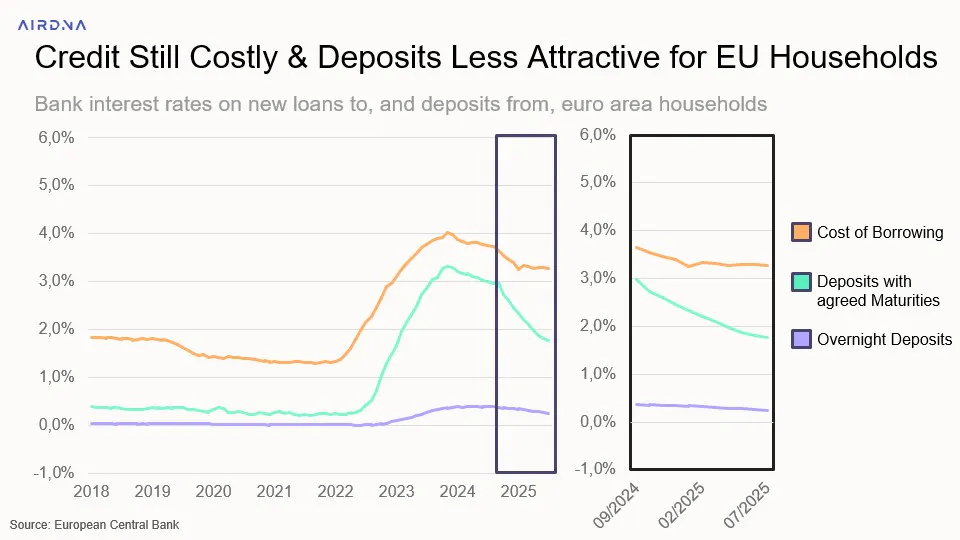
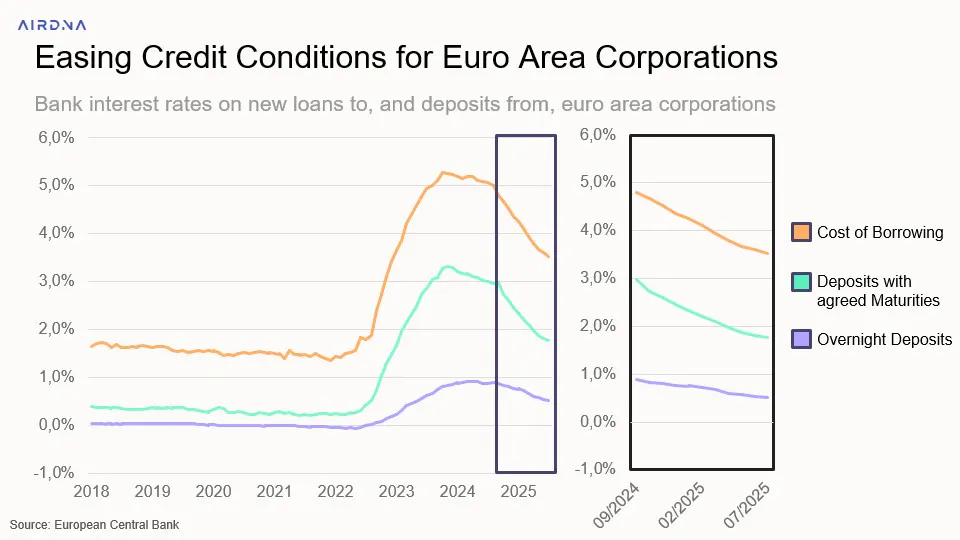
In contrast, corporate borrowing costs have eased more visibly, falling from above 5% in 2023 to around 3.5% today. With deposit yields also declining sharply, the opportunity cost of holding cash has increased, encouraging reinvestment into higher-yielding assets. For professional STR operators, this translates into more favorable financing conditions for portfolio expansion.
STR Listings Reach Third Consecutive Peak
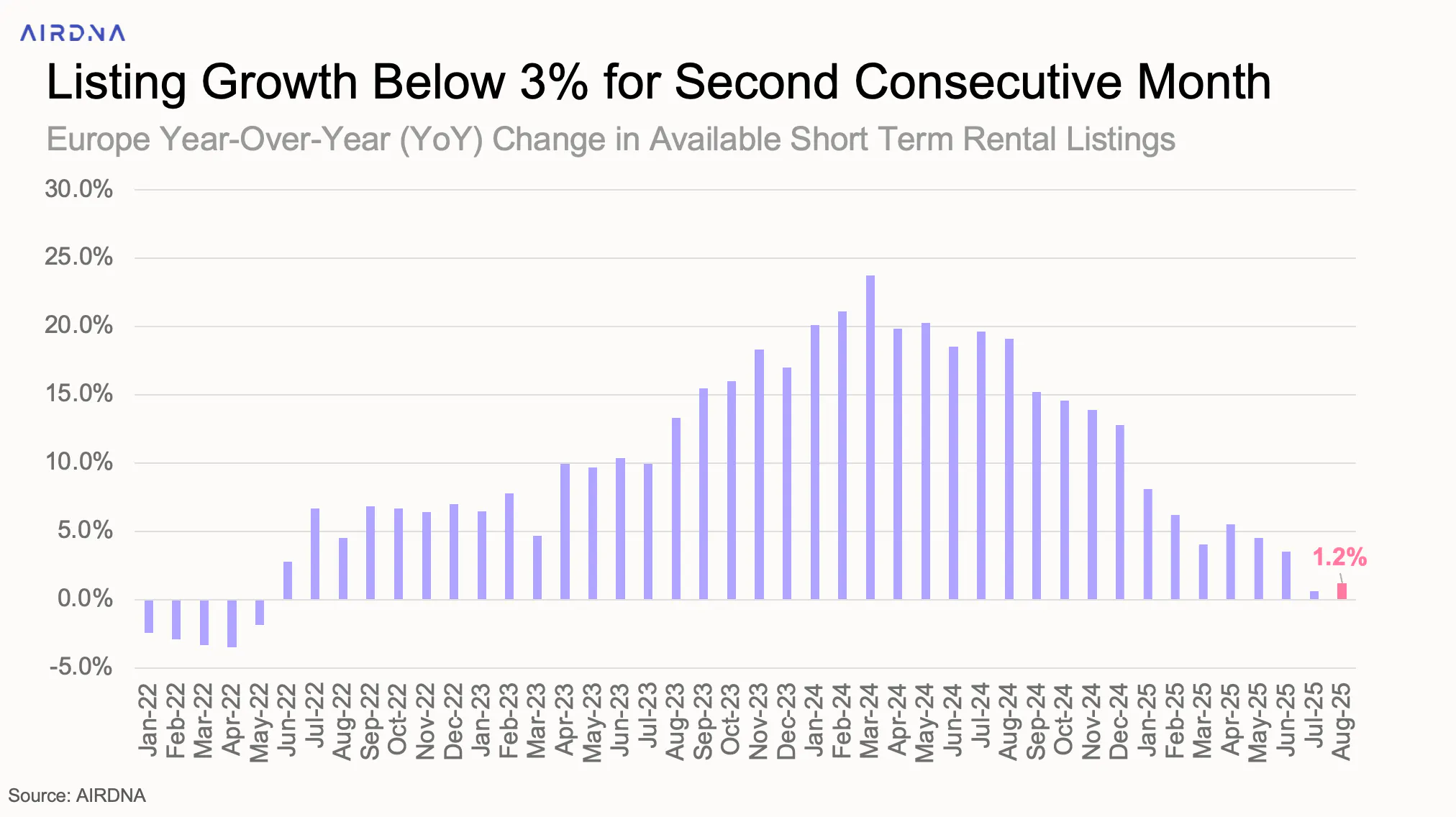
European short-term rental listings hit a record for the third consecutive month in August, reaching 4.1 million, a 1.2% year-over-year increase. This marked a second month of slowing supply growth with supply in July growing 0.6% YoY..
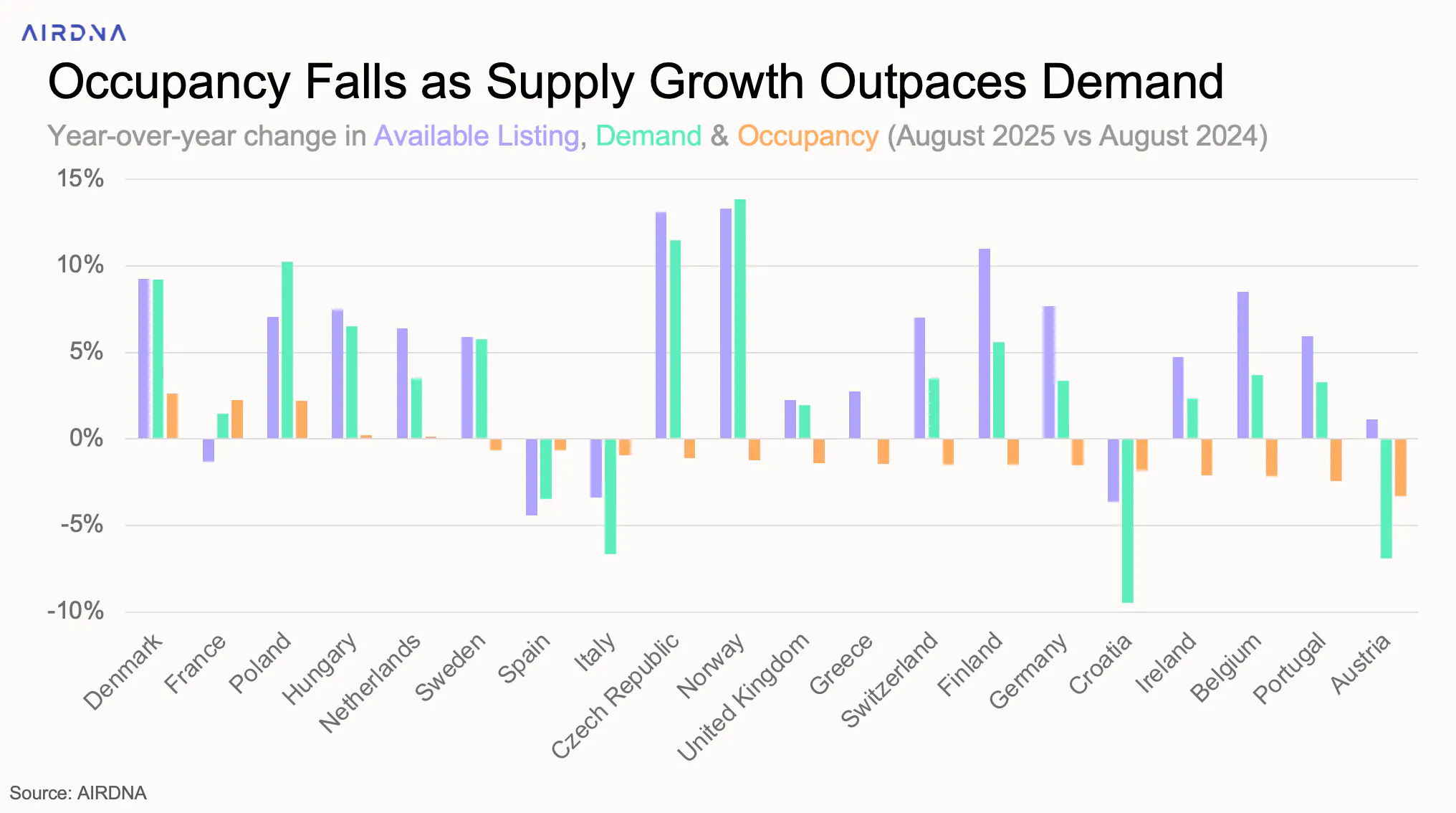
Some major markets experienced slight annual declines, including Italy (-3.4%), Spain (-4.4%), and France (-1.4%). France’s drop largely reflects the unusual supply spike tied to last year’s Summer Olympics. Meanwhile, Italy and Spain continue to face regulatory pressures, with Spanish cities like Barcelona, Madrid, and Mallorca enforcing stricter requirements that limit new supply, while Italian cities such as Florence and Venice remain affected by ongoing policy uncertainty.
Not all markets are slowing. Excluding Paris, France saw listings rise 2.1% year-over-year. Germany (+7.7%), the Netherlands (+6.4%), and Switzerland (+7%) all posted strong gains, demonstrating sustained momentum. With inflation stable at the ECB’s 2% target and interest rates holding at their lowest level since December 2022, supply growth is still expected to persist into Q3 and Q4.
Demand Growth Decelerates as Nights Booked Flatten
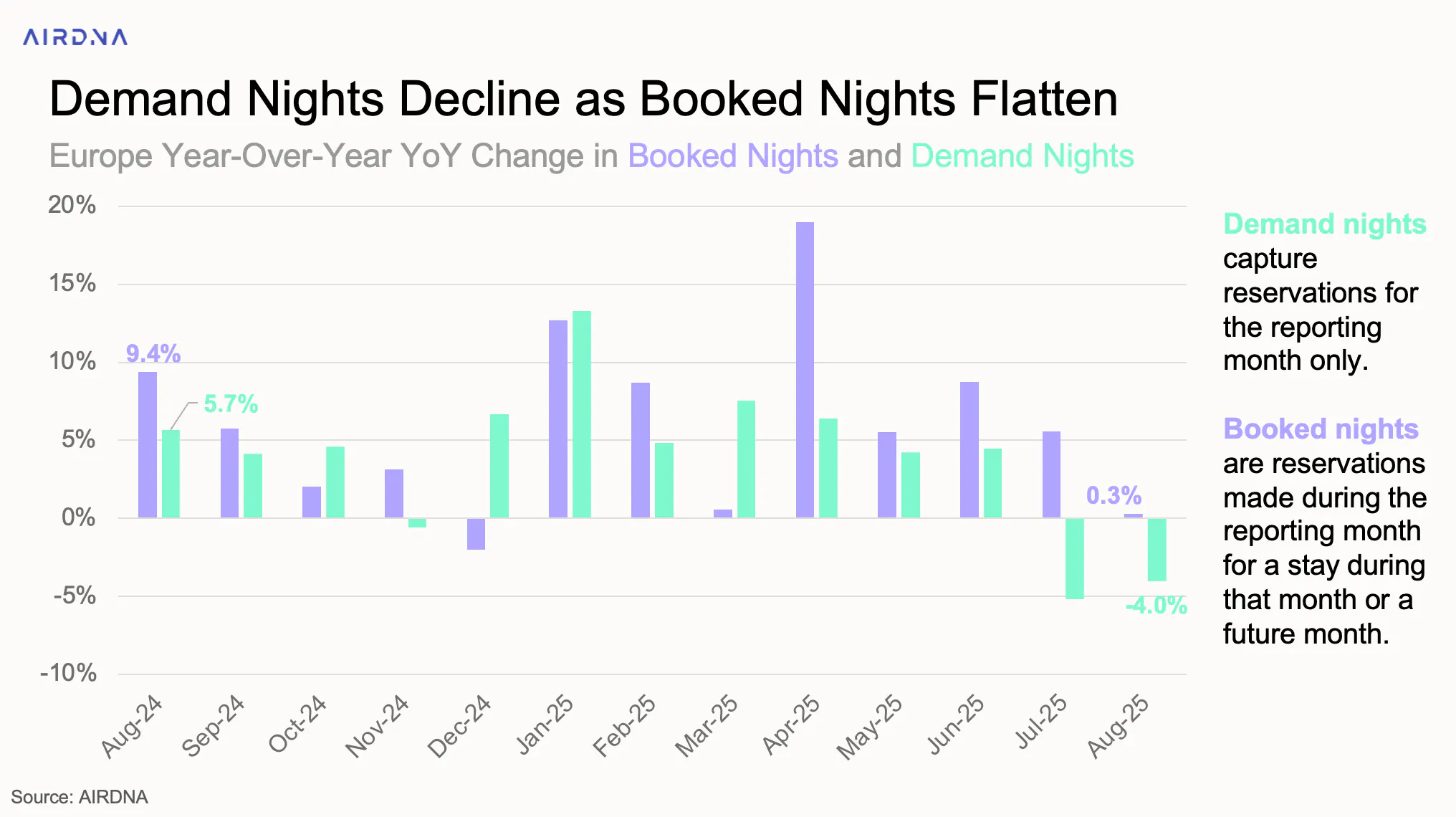
Demand nights remained flat at 0.3% year-over-year in August to a record 66.6 million, but nights booked slipped -4%, signaling a slight cooling in booking momentum.
As summer ends, bookings for the coming months are tapering off, even as shoulder-season demand grows. Despite shorter lead times indicating fewer advance bookings, signaling a gradual slowdown into the upcoming autumn and winter months.
European short-term rental demand rose again in August, with 16 of the top 20 markets posting year-over-year gains. Northern and Central Europe led the way:
- Norway (+13.9%)
- Poland (+10.2%)
- The Czech Republic (+11.5%)
Denmark (+9.2%) and Sweden (+5.8%) also saw strong growth, underscoring the ongoing shift of travel demand toward northern destinations.
In contrast, many Southern European markets struggled to match last year’s levels:
- Italy (-6.7%)
- Austria (-6.9%)
- Croatia (-9.5%)
Spain declined by 3.4% while France (+1.5%) and the United Kingdom (+2%) posted moderate gains. As mature markets significantly lag behind northern markets.
Budget Listings Show Highest Occupancy, While Luxury Promises Growth
Occupancy growth across Europe was relatively muted in August 2025, with only a few countries posting meaningful year-over-year increases. Denmark (+2.6%), Poland (+2.2%) and France (+2.2%) led the gains, while Germany, and Switzerland each saw a decline of -1.5%.
For most markets, occupancy remained flat even as both supply and demand expanded. Norway is a prime example, listings grew 13.3% and demand surged 13.9%, with occupancy holding steady as new inventory absorbed the additional bookings. Similar patterns emerged in Hungary, Sweden, and the Czech Republic, where high growth in both supply and demand left occupancy unchanged.
Some southern markets experienced year-over-year drops. Belgium (-2.2%), Portugal (-2.4%), and Austria (-3.3%) all saw occupancy slip as new supply outpaced tepid or negative demand growth. The Netherlands and the United Kingdom also recorded slight declines, reflecting the challenge of balancing growing inventory with softer late-summer demand.
France stood out as a rare bright spot among larger markets. Demand rose by 1.5%, while supply declined by 1.3% as last year's Olympics supply exited the market, allowing occupancy to increase by 2% year-over-year despite the country’s strict regulations and mature market conditions.
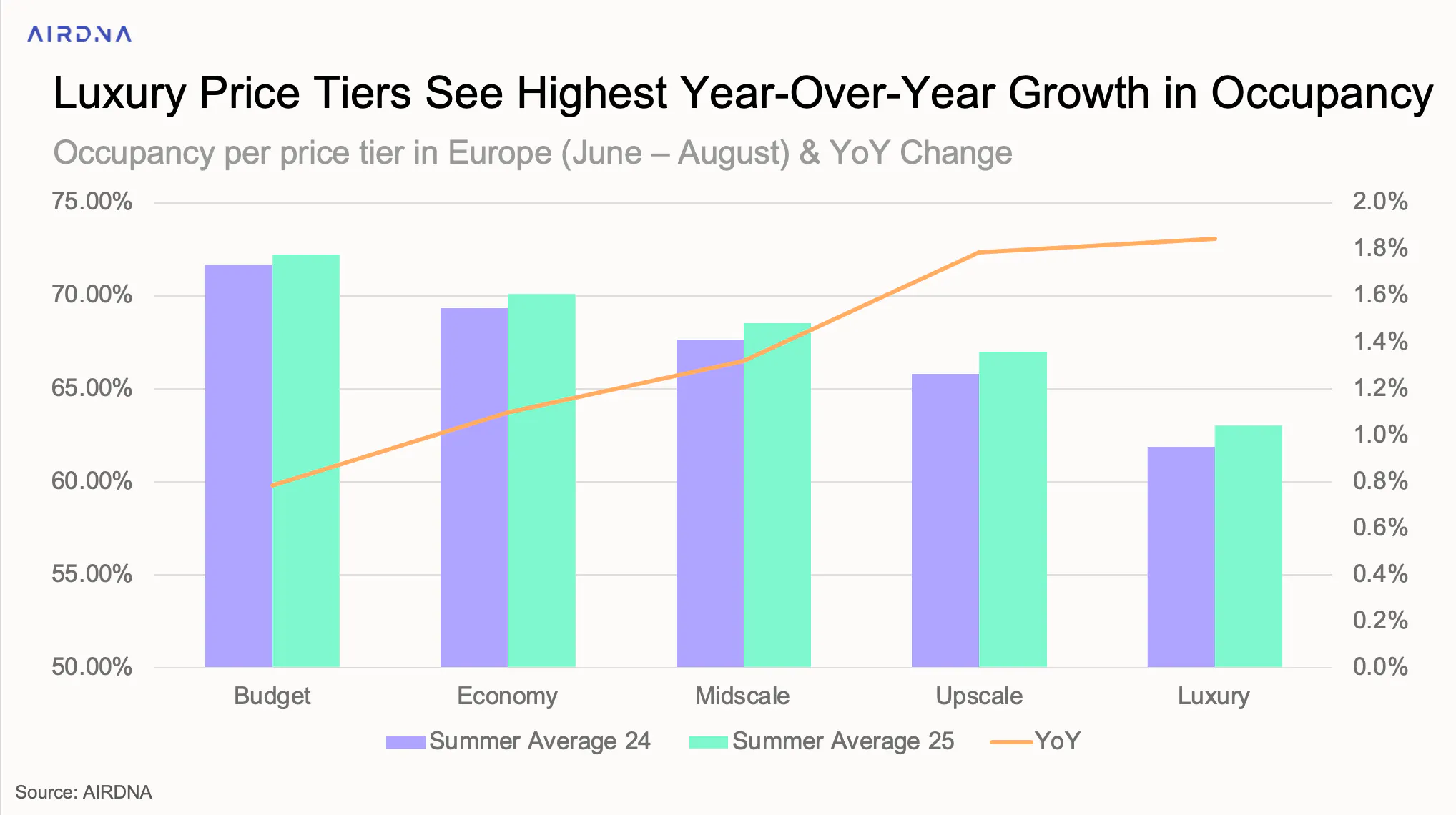
With occupancy declining slightly in August, by -0.4% year-over-year, it’s worth looking back at the entire summer to compare occupancy trends across price tiers. Budget properties continue to dominate in overall occupancy, averaging 72% compared to 63% for luxury listings.
However, the strongest year-over-year gains came from the top end of the market. Luxury properties saw occupancy climb 1.8%, while upscale listings rose 1.79%. Budget and midscale properties grew more modestly, with budget listings up just 0.8% year-over-year. This suggests demand is increasingly leaning toward higher-end accommodations as supply growth slows down too, even as lower-priced options maintain the highest occupancy levels overall.
Pricing Power Splits European STR Performance
Average daily rates (ADR) across Europe edged down 1.6% year-over-year in August, a further decrease from the -0.3% ADR decline in July. This trend was not consistent across all markets.
The following countries posted healthy ADR growth:
- Finland (+6.1%)
- Spain (+2.4%)
- Ireland & Netherlands (+2.2%)
- United Kingdom (+2.1%)
Other countries recorded notable declines:
- France (-7.1%)
- Czech Republic (-5.3%)
- Greece (-3.3%)
France and the Czech Republic both saw strong demand growth, highlighting just how strong August 2024 had been as a comparison point.
RevPAR performance this summer highlighted a clear divide between Europe’s strongest tourist hubs and markets still struggling to recover. At the top end, Iceland and Monaco led the way, with ADRs above €200 and occupancy rates at 76% in Iceland. Monaco maintained its premium positioning, with summer ADR at €386 and driving strong RevPAR gains. The UK, Spain, Portugal, and Croatia also delivered strong results, benefiting from robust summer demand and solid pricing power.
Performance was more mixed in mid-tier markets. Italy, Switzerland, and Austria kept ADRs high but saw occupancy hover around 60–70%, limiting RevPAR growth. Conversely, Malta and Slovenia achieved occupancy rates above 70% but with ADRs closer to €120–140, resulting in mid-range RevPAR outcomes.
At the lower end of the spectrum, Kosovo, Romania, and Bulgaria faced challenges with both occupancy and pricing power. ADRs fell below €70 and occupancy slipped under 65%, creating some of the weakest RevPAR figures in Europe. These dual pressures often reinforce each other, as operators lower rates to attract bookings, further compressing revenue performance.
RevPAR trends across Europe’s top 50 markets
Performance among Europe’s top 50 markets this summer showed sharp contrasts between coastal leisure hubs, major urban centers, and secondary cities.
Coastal destinations led the way. Marbella was the clear standout, with ADRs over €300 and occupancy above 75%, delivering the highest RevPAR in Europe. Other Mediterranean hotspots, including Dubrovnik, Croatia; Calp, Spain; Hvar, Croatia; and Pula, Croatia, also excelled, posting 75–85% occupancy rates and ADRs between €150 and €200.
Major cities such as Amsterdam, London, and Cannes kept ADRs above €200 and occupancy near 70%, securing their place among the top RevPAR performers despite not matching the peak occupancy levels of coastal markets.
Mid-tier destinations like Berlin, Lisbon, and Valencia, Spain maintained steady occupancy rates of 70–75% but had more moderate ADRs (€110–130), resulting in more modest RevPAR growth. Florence, Dublin, and Siracusa, by contrast, leaned on higher pricing power rather than occupancy to stay competitive.
At the lower end, Belgrade, Serbia; Bucharest, Romania; and Turin, Italy struggled with ADRs below €80 and occupancy rates below 65%, producing some of Europe’s weakest RevPAR figures. Turin’s softer results were partly due to demand shifting toward southern Italy, while surging supply in Belgrade and Bucharest put pressure on both rates and occupancy despite solid demand growth. Similarly, Lyon, France; Warsaw, Poland, and Montpellier, France, saw occupancy rebound but still lacked the pricing power of more established tourist hubs, leaving their RevPAR below the regional average.

Oktoberfest Promises Growth For Budget Listings
Oktoberfest remains one of Europe’s biggest events, drawing 6.7 million visitors in 2024, and demand for 2025 is pacing 9.5% higher.
The strongest growth is in the first week (+14.1%), with gains tapering to +6.6% in the second week and +5.3% in the final days. Weekdays are seeing slightly higher year-over-year growth (+9.6%) than weekends (+9.4%), though weekends still represent the peak demand period.
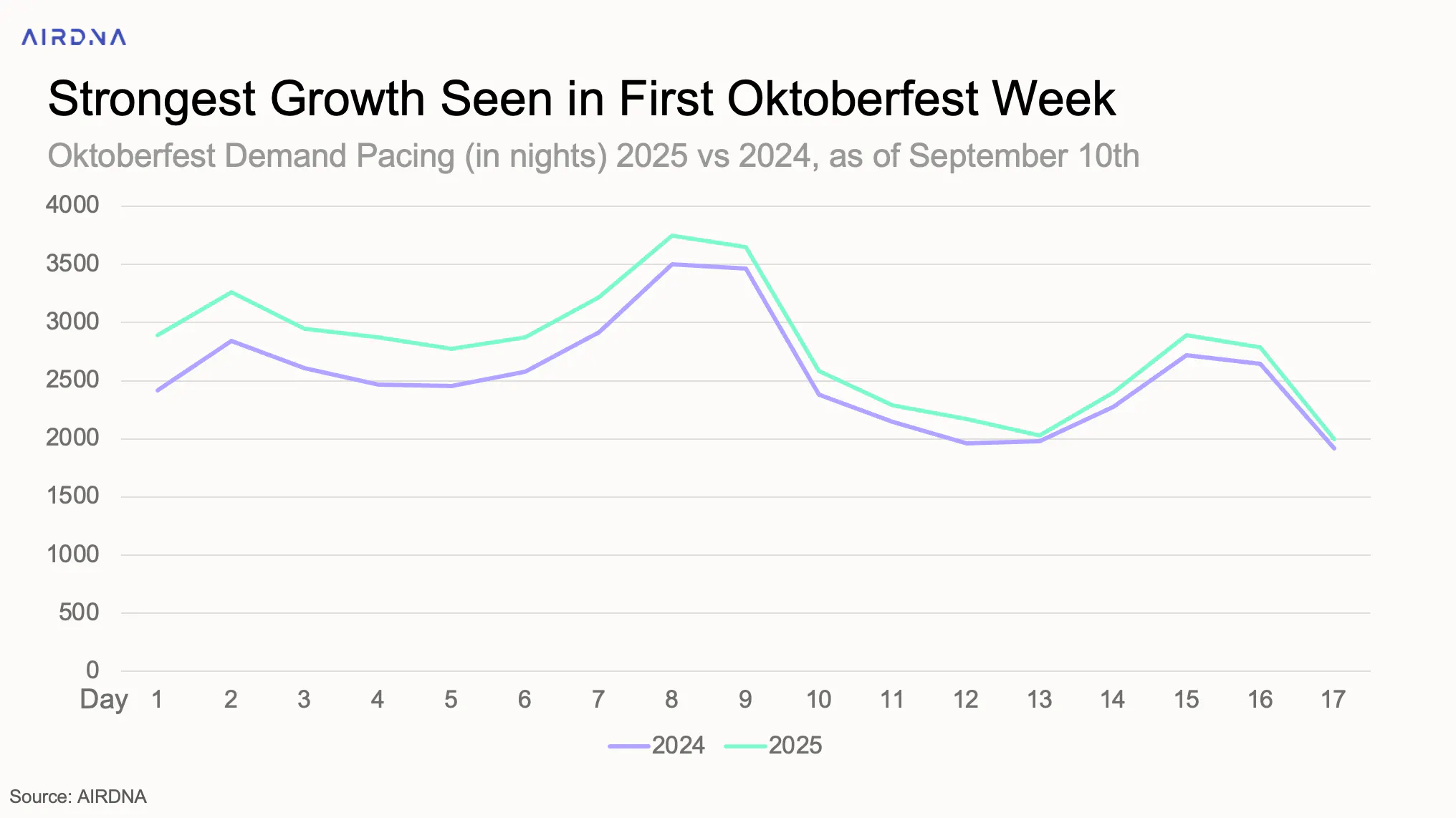
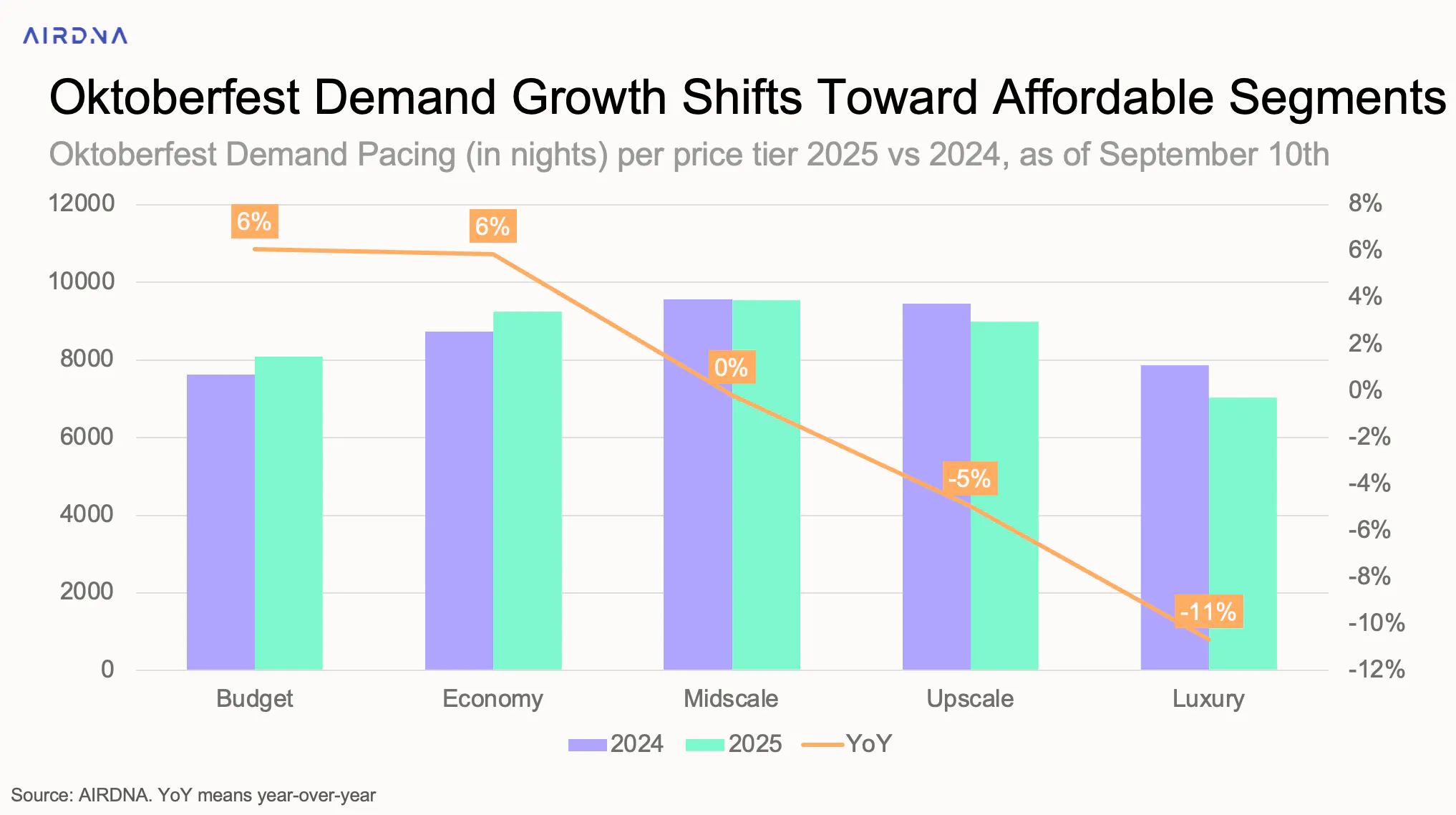
This year’s demand is shifting toward more affordable accommodation. Budget and economy listings are both up 6% year-over-year, while upscale and luxury bookings are down 5% and 11%, respectively. The data suggests travelers are prioritizing cost-effective stays even as overall demand rises.
ARTICLE SUMMARY
August 2025 brought record listings and demand for Europe’s STR market, though ADR softened slightly, leading to declining RevPAR. Resorts and major events like Oktoberfest drove growth, while northern markets outperformed southern ones.
Camilo Schmid Rivas
Senior Research Analyst
Camilo Schmid Rivas is a Senior Research Analyst at AirDNA who brings a uniquely well-rounded perspective to short-term rental analytics. With a background that spans investment, real estate, and business analysis—including roles at Stayery and Sollers Consulting—Camilo has worn many analyst hats, each sharpening his ability to turn complex data into clear, actionable insights. A graduate of École hôtelière de Lausanne, he now channels his multidisciplinary expertise into uncovering trends that drive smarter STR decisions. In his free time, he enjoys playing tennis or scuba diving in or around Barcelona.
