

 Calculate Revenue
 Research Markets
 Find For Sale Properties
 Compare My Listing
 STR Revenue Calculator
 Custom Comp Sets
 Submarket Insights
 Custom Search Filters
 Rate Recommendations
 Performance Benchmarking
 Competitor Comparison
 Owner Contact Details
 Property-level performance data
 Tourism Insights
 Real Estate Investment Analytics
 About Us
 Sales
Sales Support
 Press
PressEuropean Review June 2025: Lesser-Known Destinations Drive STR Momentum
Published: July 21, 2025
Last updated: September 13, 2025

Linda Rollins
Key Takeaways
- Europe’s short-term rental listings hit a record 4.05 million in June, up 5.3% year-over-year, though listing growth has slowed in major markets.
- Listing growth slowed notably in large markets like the UK, France, Italy, and Spain, largely due to tightening regulations.
- Lesser-traveled destinations in Eastern and Northern Europe saw the strongest growth, reflecting shifting traveler preferences.
- Booking lead times remained stable overall, with slight decreases in budget properties and longer lead times for larger homes.
June marked a strong start to Europe’s summer travel season, with short-term rental demand and occupancy hitting new highs despite ongoing economic uncertainty.
Demand nights reached a record 48.5 million (an 11.7% increase from last year) while available listings also rose to an all-time high of 4.05 million. With demand growing faster than supply, occupancy rose 3.6% year-over-year (YOY), and hosts benefited from a 6% increase in average nightly rates.
These trends suggest robust momentum heading into the peak travel months, driven in part by growing interest in lesser-known (albeit cheaper) destinations across Eastern and Northern Europe.
At a Glance: June 2025 STR Performance in Europe
- Available listings reached an all time high of 4.05 million, an increase of 5.3% YOY
- Demand nights reached 48.5 million, up 11.7% YOY
- Average daily rates (ADR) rose 6% YOY to 163 €
- Average occupancy rate hit 61%, up 3.6% YOY
- Revenue per Available Rental Night (RevPAR) grew 9.8% YOY to 99 €
- Booked nights increased 12.2% YOY

The State of the European Economy
The economic outlook for the euro area in 2025 remains uncertain, weighed down by trade tensions, higher U.S. tariffs, and a strengthening euro; factors expected to dampen exports and investment. However, stronger-than-expected activity in Q1, driven by frontloaded exports and new government spending on infrastructure and defense, should partly offset a slowdown anticipated in the second half of the year.
In its June projections, the European Central Bank (ECB) kept its 2025 GDP growth forecast steady at 0.9%, unchanged from March. Growth for 2026 was slightly revised down from 1.2% to 1.1%, reflecting ongoing trade pressures and the stronger euro.
The ECB expects consumer spending to remain a key driver of GDP growth, supported by a robust labor market, rising wages, and falling inflation. Employment is projected to grow by 0.6% in 2025, with wages increasing 3.2%, enabling an annual private consumption growth of 1.2% through 2027. Inflation, which reached the ECB’s 2% target in June, is forecasted to fall below 2% in the second half of 2025 and stabilize around 1.9% by 2026.
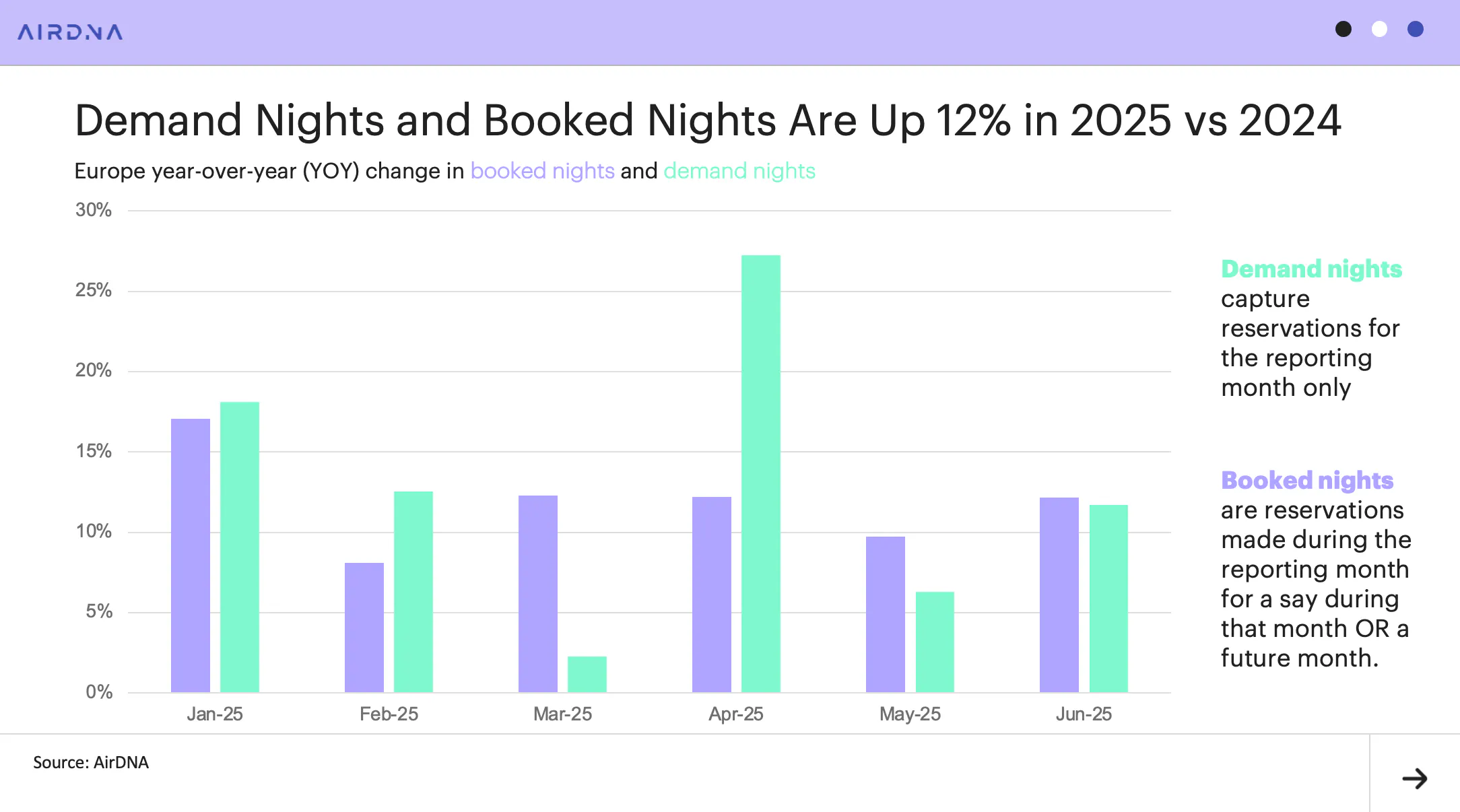
Short-term rental demand and booked nights so far this year reflect encouraging consumer spending growth, especially in leisure travel. Year-to-date, booked and demand nights are both up 12% year-over-year. While a strengthening euro will soften demand from U.S. travelers, ongoing growth in regional European travel is expected to sustain short-term rental demand across the continent.
Listing Growth Slows Amid Regulatory Pressure
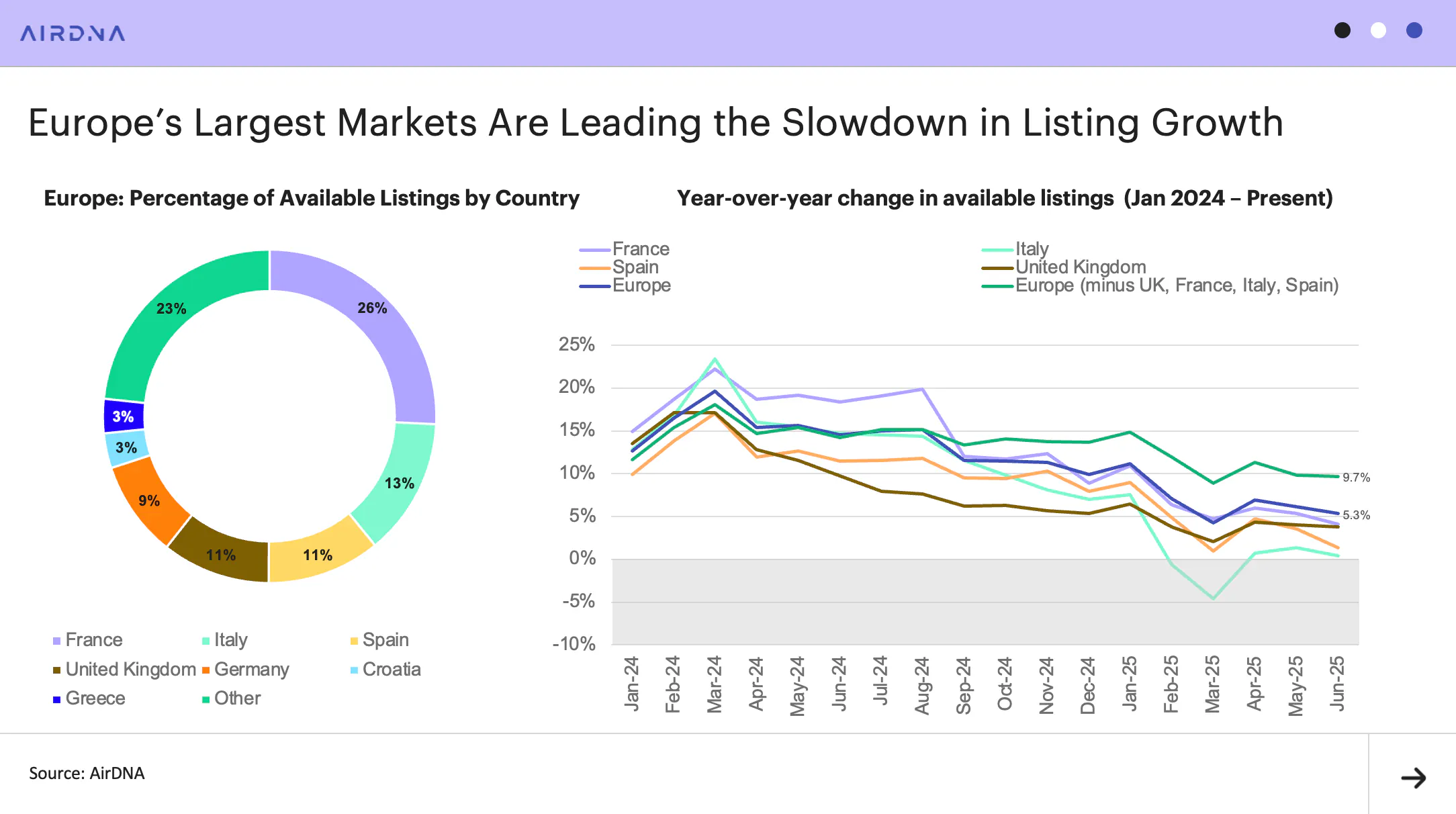
While short-term rental listings hit a record high of 4.05 million in June, year-over-year listing growth slowed to just 5.3%. After three years of consistent double-digit growth, European listing expansion has tapered significantly in recent months. The first half of 2025 saw average listing growth of 6.7%, down sharply from 12.5% in the second half of 2024.
This slowdown is largely driven by the largest markets, including the UK, France, Italy, and Spain, which together account for 60% of Europe’s short-term rental inventory. Year-to-date listing growth in these countries has lagged behind the rest of Europe, with the UK growing 4.1%, France 6.1%, Italy just 0.7%, and Spain 3.9%, compared to 11% growth in other European markets.
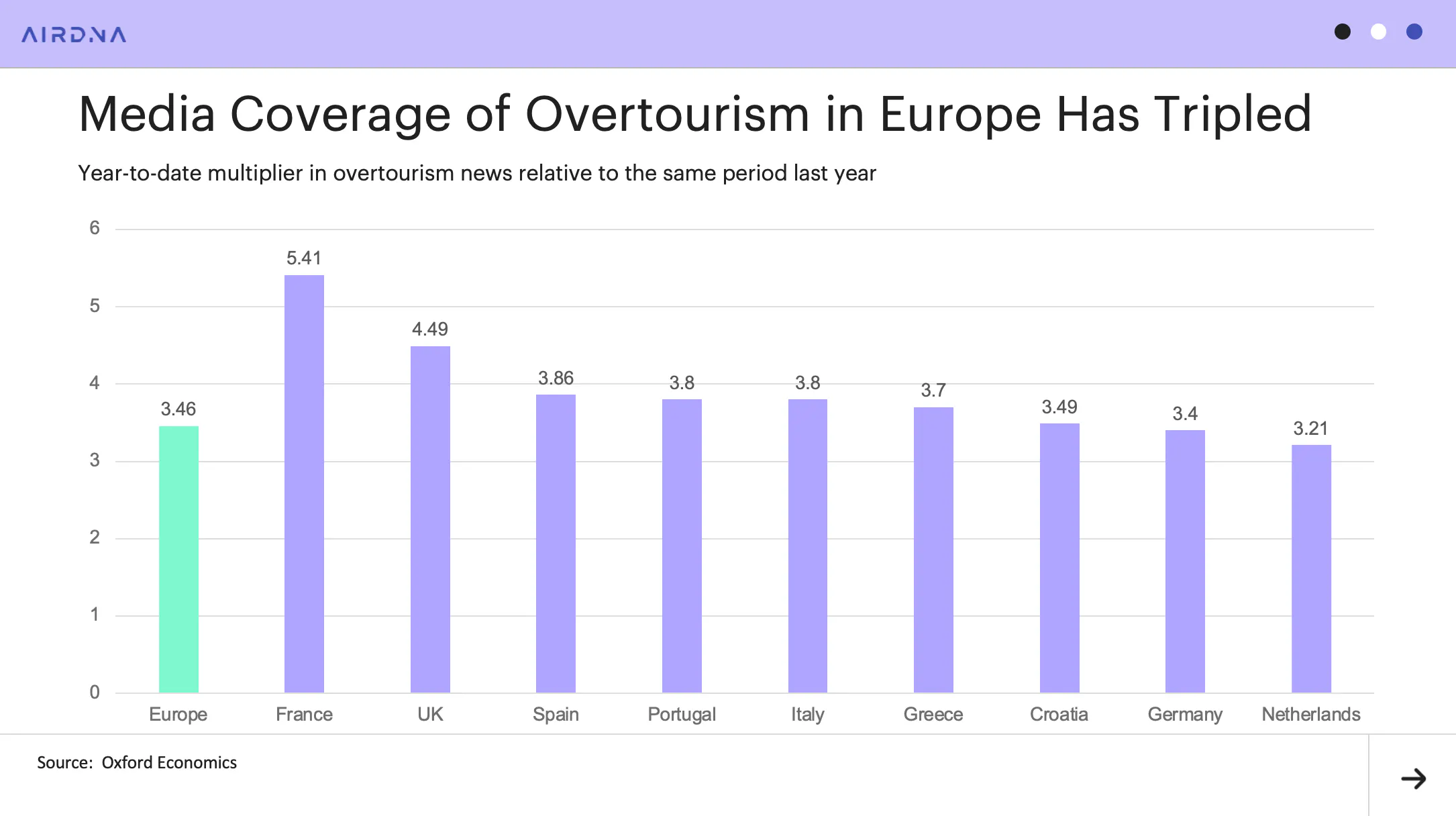
Across Europe, short-term rentals have come under increasing scrutiny amid rising concerns over overtourism and housing affordability. Oxford Economics reports that media mentions of overtourism have more than tripled year-over-year, fueling regulatory responses.
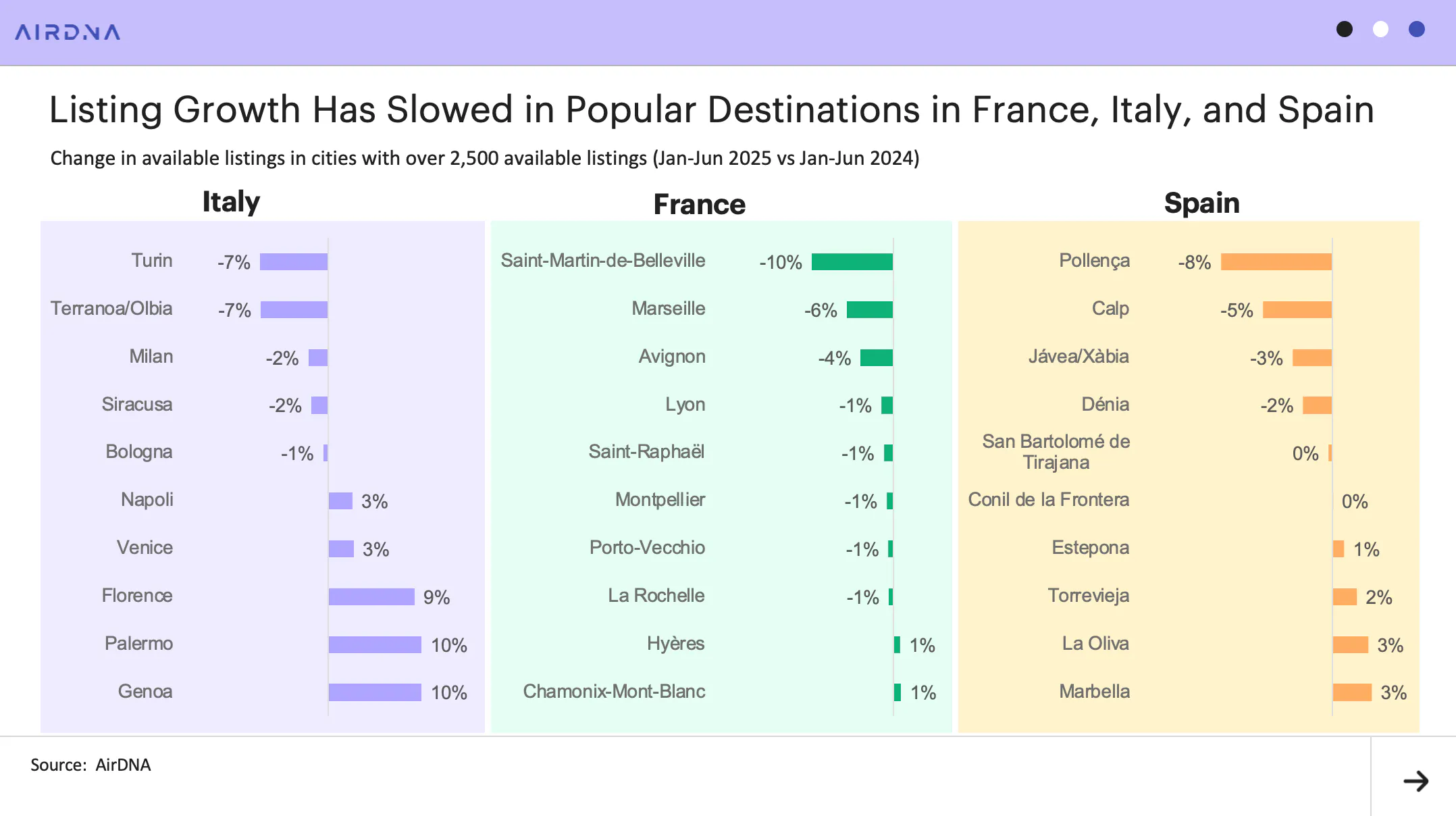
In reaction, many countries have tightened short-term rental regulations. The listing declines in major markets can be partly attributed to these stricter rules. For example, in cities like Turin, Lyon, Avignon, and Marseille, caps on rental days have reduced available listings. In tourist-heavy areas such as Xàbia and Dénia, moratoriums on new licenses have slowed new listings. Beyond restricting operations, governments are enforcing tougher registration and licensing requirements, increasing taxes on rental income, and imposing measures such as banning keyless entry systems, a notable policy temporarily enacted by Italy’s interior ministry last November before being overturned.
The ECB’s June macroeconomic forecast highlights a return to positive housing investment growth in Q1 2025, supported by stronger housing demand, rising real incomes, and lower mortgage rates since late 2023. While these trends could encourage renewed listing growth in the short-term rental market, mounting regulatory pressures are likely to deter new investment and keep listing growth sluggish in many popular tourist destinations.
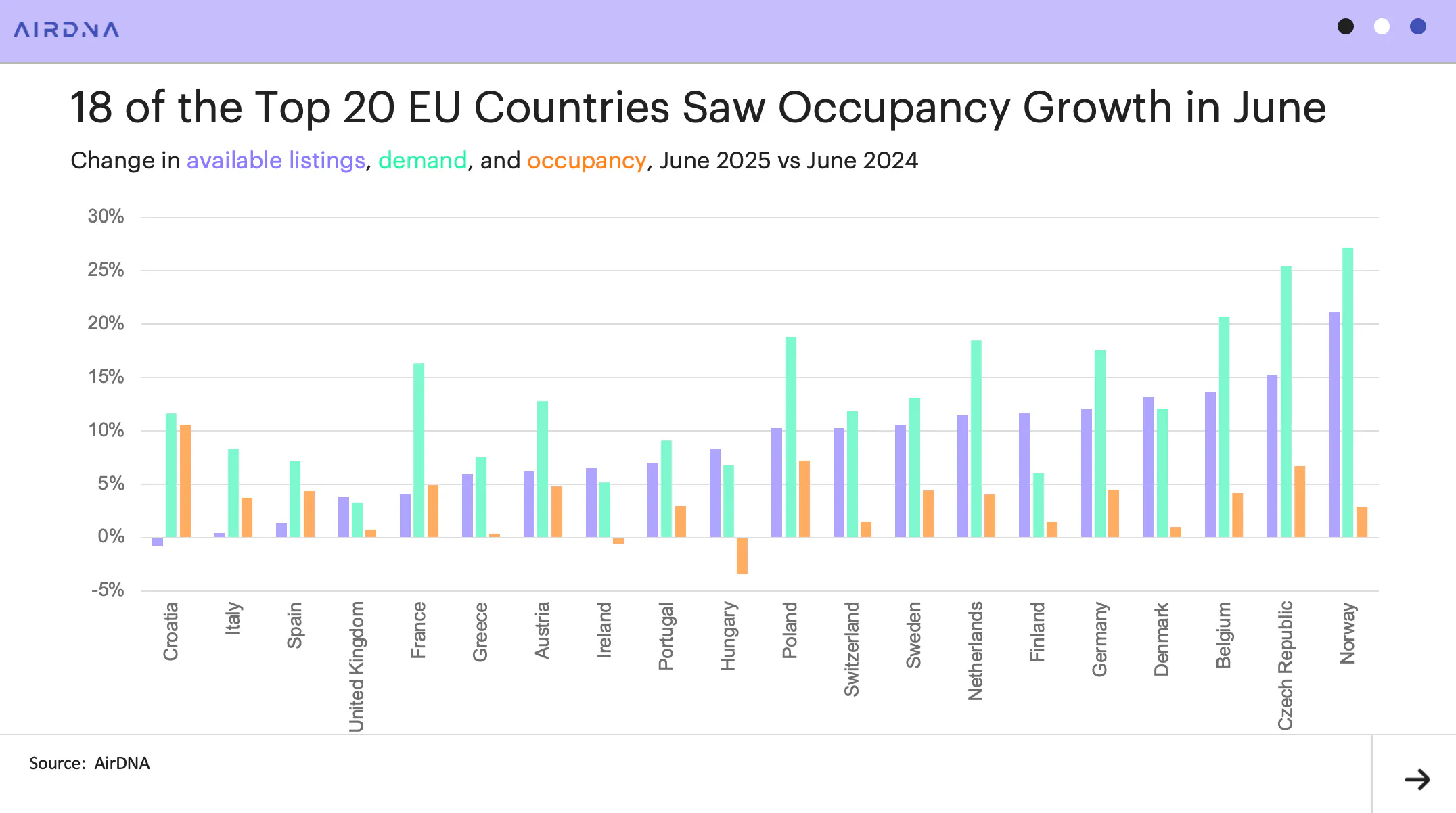
Occupancy Climbs in 18 out of Europe’s 20 Largest Markets
Consistent with the trend seen so far this year, listing growth remained muted in June for Italy, Spain, the UK, and France—staying below 5% in all four markets. However, this slower pace of listing growth meant less inventory to meet rising demand, resulting in occupancy gains across the board.
The strongest occupancy performers last month were Croatia, Poland, and the Czech Republic, each boasting more than 6% YoY occupancy growth. In Croatia, listings declined 0.8% YoY while demand surged 11.7%, driving a 10.6% increase in occupancy. Poland and the Czech Republic saw even stronger demand growth (both above 15% YoY) which significantly outpaced supply and led to occupancy surges.
Other markets with notable demand growth in June included Norway, Belgium, and the Netherlands. Norway remains a leader in demand growth with a 27% year-over-year increase in June, translating to a 3% occupancy boost. Belgium and the Netherlands saw demand rise by 20.7% and 18.5%, respectively, each recording a 4% occupancy increase for the month.
Lead Times Hold Steady After Months of Decline
After several months of decline earlier this year, lead times for bookings in June held steady. The median lead time remained at 27 days, unchanged from June of last year.
Booking patterns varied notably by price tier and bedroom count. While most price tiers saw stable or slightly longer lead times, budget properties experienced a small decrease, from a median of 30 days last June to 29 days this year. It’s worth noting that budget listings typically have the highest occupancy rates and longer lead times in Europe. Recent economic uncertainties may have led some travelers to postpone committing to their June stays.
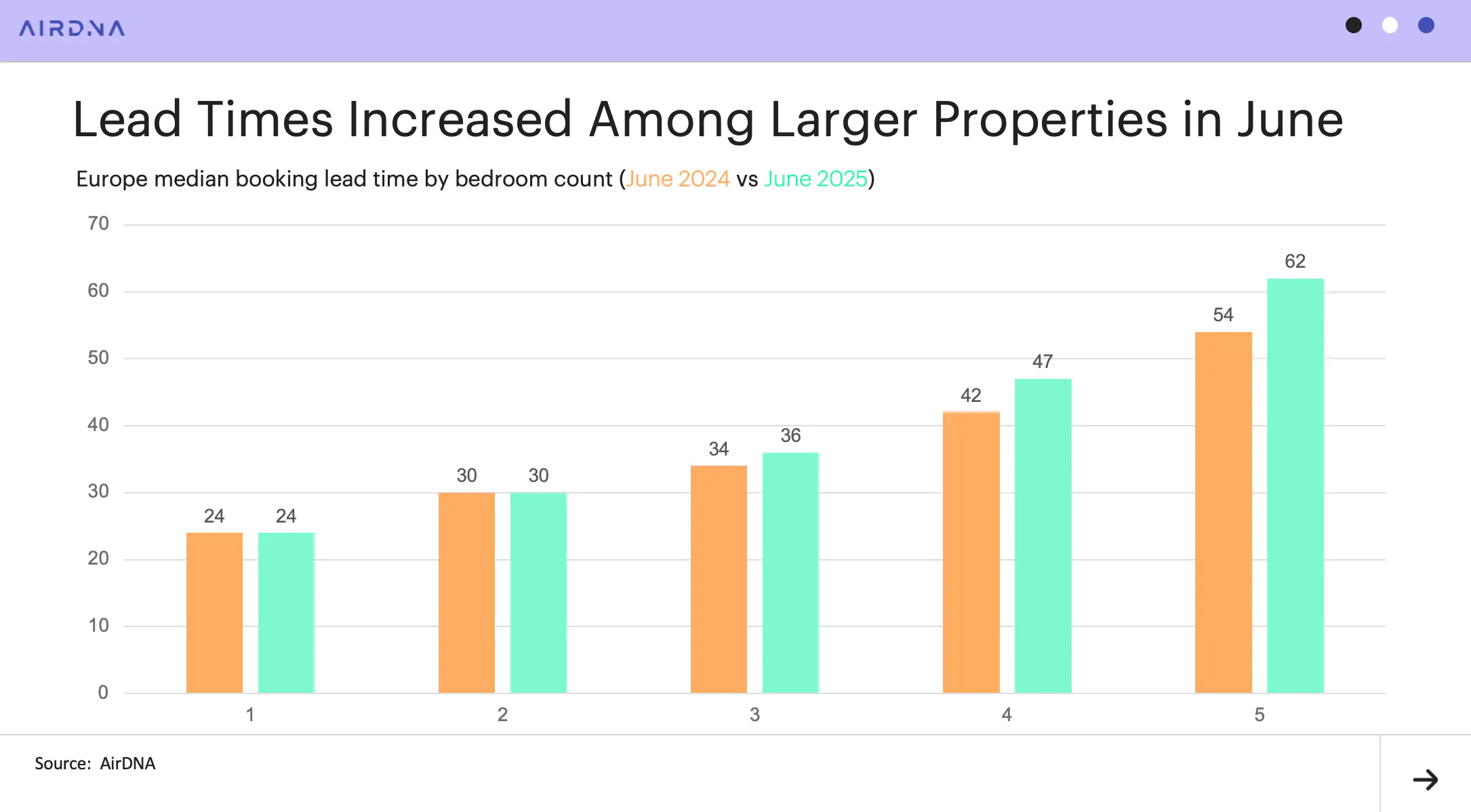
Conversely, larger properties saw increased lead times. Median lead times for four-bedroom homes grew by five days compared to last June, and five-bedroom properties saw an eight-day increase. This was driven by fewer last-minute bookings (under 30 days) and more bookings made over 90 days in advance for these larger properties.
Lesser-Traveled Destinations Are Driving Demand Growth
Looking ahead, forward booking data indicates Europe’s short-term rental market will continue its upward trend, with bookings from August through year-end up 9.5% year-over-year.
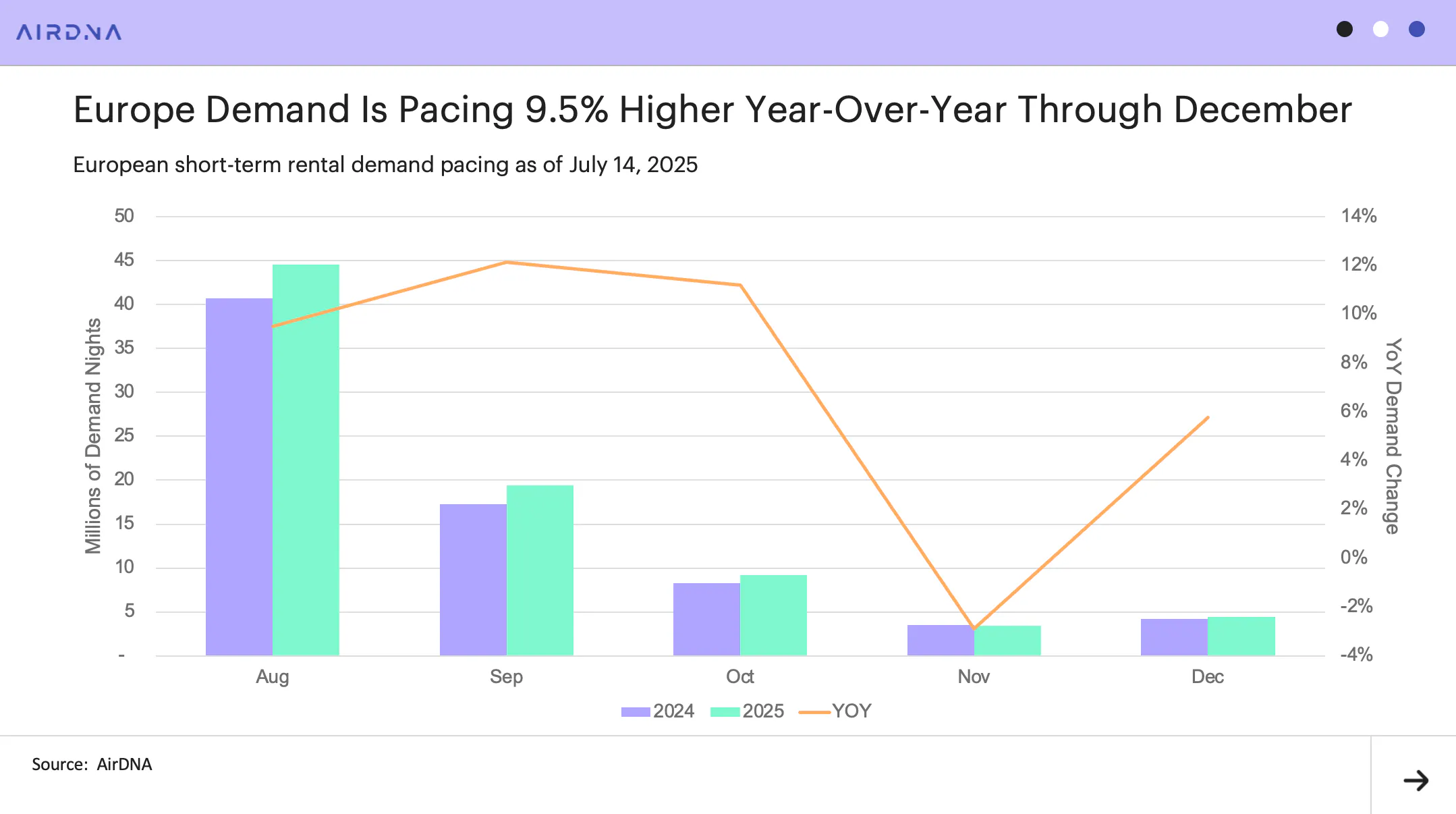
August remains the peak month for STR demand, but booking patterns reveal notable shifts in traveler preferences. Lesser-known Eastern European destinations are experiencing some of the strongest growth. Kosovo and Moldova, which had fewer than 5,000 nights booked for August this time last year, are now seeing nearly double that demand. Other Eastern European markets, including Poland, Bosnia-Herzegovina, and North Macedonia, are seeing bookings increase by more than 30% year-over-year.
Beyond the east, Northern European countries are attracting more visitors as cooler, more affordable, and less crowded alternatives to Southern Europe’s popular, and recently overheated, destinations. Estonia, Lithuania, and Norway have all seen August bookings rise by 20–30%. In contrast, Southern European markets like Italy and Spain are seeing more modest year-over-year growth of 10% or less.
ARTICLE SUMMARY
June 2025 saw record demand and occupancy in Europe’s short-term rental market, led by growth in lesser-known destinations. Slower listing growth in major markets was offset by rising rates and strong forward bookings.
Linda Rollins
Senior Research Analyst
Linda Rollins is a Senior Research Analyst at AirDNA and a self-managing short-term rental host, which means she understands the market as both an analyst and an operator. She writes research and blogs for AirDNA and for Adapt, its revenue management tool, making her work a go-to resource for investors trying to find and size up the right opportunities, and for operators looking to understand changing market dynamics and find concrete ways to improve occupancy, rates, and guest experience. Her data is regularly cited in major news outlets, and she has a knack for bringing both the numbers and the story behind them. In her free time, Linda enjoys spending time with her family, traveling, and looking for good eats.
