

 Calculate Revenue
 Research Markets
 Find For Sale Properties
 Compare My Listing
 STR Revenue Calculator
 Custom Comp Sets
 Submarket Insights
 Custom Search Filters
 Rate Recommendations
 Performance Benchmarking
 Competitor Comparison
 Owner Contact Details
 Property-level performance data
 Tourism Insights
 Real Estate Investment Analytics
 About Us
 Sales
Sales Support
 Press
PressEuropean Review May 2026: ADR Continues Recovery Despite Demand Dropping Slightly
Published: June 12, 2026
Last updated: June 16, 2026

Camilo Schmid Rivas
Key Takeaways
- Summer demand remains resilient, with bookings for June through August pacing 4.9% ahead of 2025 levels and upper-tier properties continuing to lead occupancy growth.
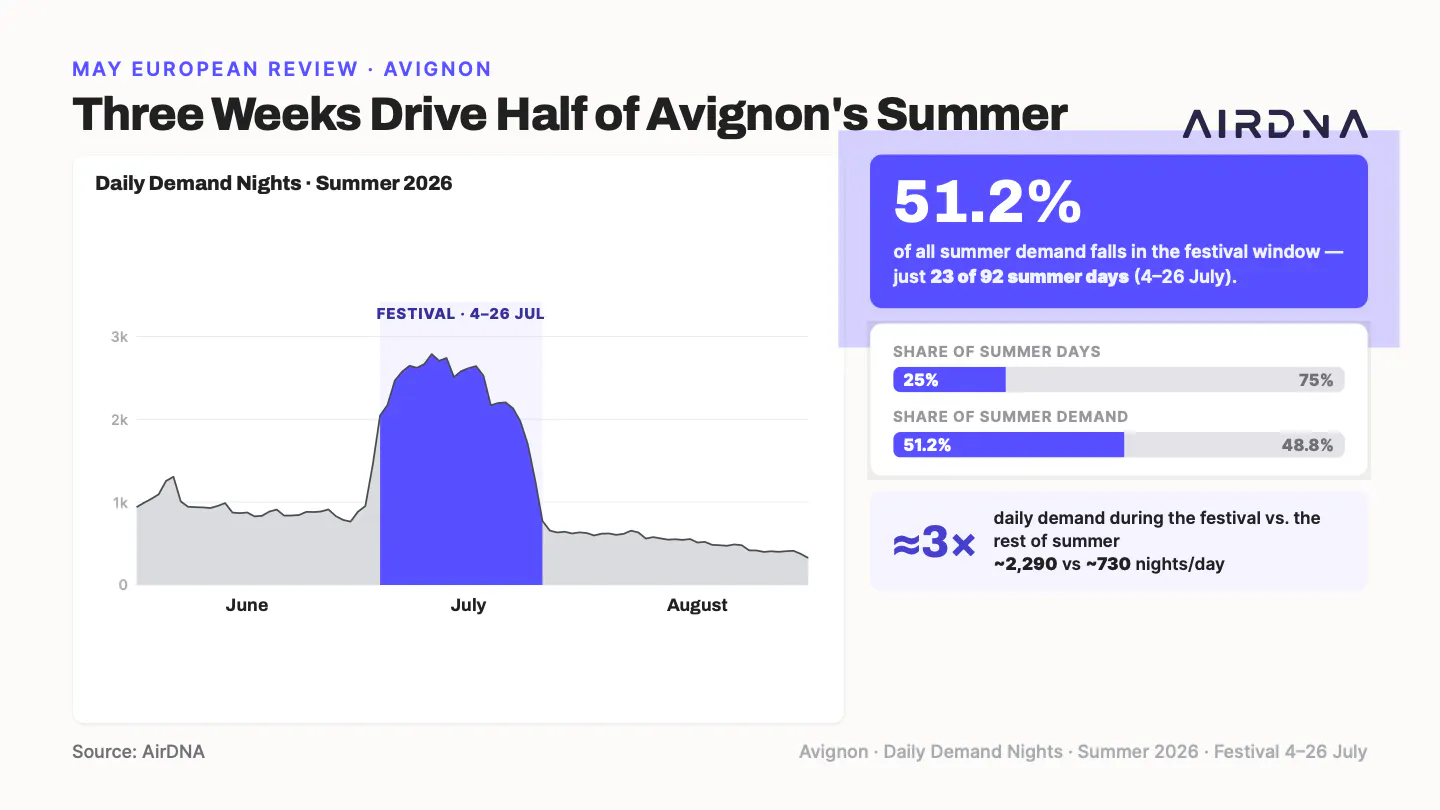
- Major events are driving outsized demand, with Avignon’s summer festival accounting for more than half of the city’s seasonal demand and Bad Bunny’s European tour generating nearly €20 million in additional STR revenue.
- Supply growth remained steady across Europe, although regulatory changes and market conditions continue to drive divergent trends in countries such as Spain, Greece, and Croatia.
In May, Europe's short-term rental market showed signs of stabilization as supply growth slowed to 2.6% year-over-year. Although demand declined slightly by 1.1%, occupancy improved to 58.3% and ADR continued its recovery, rising 6.8% to €140.
Looking ahead, summer demand remains resilient, with bookings for June through August pacing 4.9% ahead of 2025 levels. Major localized events are also set to play an important role in shaping demand patterns this summer, with destinations such as Avignon seeing more than half of their seasonal demand concentrated within a single festival period, while large-scale events like Bad Bunny's European tour continue to generate significant short-term rental demand across multiple markets.
At a Glance: May 2026 STR Performance in Europe
- Available listings reached 3.86 million, an increase of 2.6% YoY
- Demand Nights declined by 1.1% YoY to a Total of 39 million
- Average daily rates (ADR) increased by 6.8% YoY to €140
- Average occupancy rate grew to 58.3%, up 1.1% YoY
- Revenue per Available Rental Night (RevPAR) increased by 8% YoY to €81.6
May’s performance suggests the European short-term rental market is stabilizing after a softer spring. Despite continued supply growth and a slight decline in demand, occupancy improved as the market absorbed additional supply more effectively than earlier in the year. ADR and RevPAR also strengthened, while forward booking data points to a positive outlook for the summer season. Growth remains positive across all price tiers, led by the upper segments, with Midscale, Upscale, and Luxury continuing to outperform Economy and Budget from June to September.
The State of the European Economy
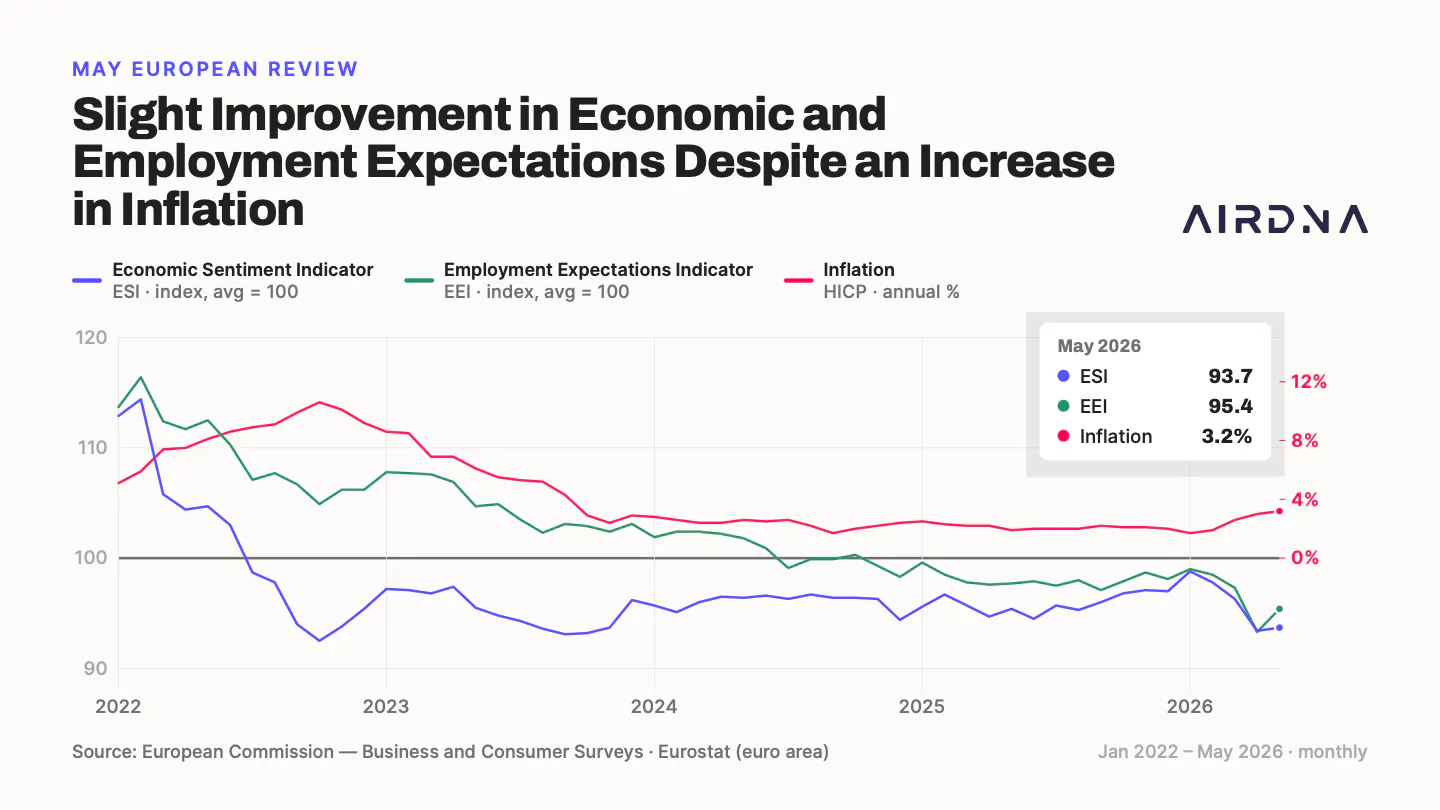
May marked the third consecutive month that inflation remained above the ECB’s 2% medium-term target in the Euro Area, rising to 3.2%, its highest level since September 2023. Core inflation, which excludes energy and food, also increased to 2.5%, suggesting the impact of the conflict in Iran is beginning to feed through into consumer prices. As a result, the European Central Bank is widely expected to raise its deposit rate to 2.25% at its June 11 meeting, with a further rate hike anticipated later in the year.
Inflation is expected to remain elevated throughout the rest of 2026, averaging 2.9%. Meanwhile, economic growth forecasts have been revised downward for the third consecutive time since March, with GDP growth now expected to reach just 0.7%, the weakest outlook since 2023.
Despite these pressures, European sentiment has improved slightly. Both the Economic Sentiment Indicator, which tracks economic activity across five key sectors, and the Employment Expectations Indicator, which measures business managers’ outlook for hiring, remain below their long-term averages but have recovered modestly from the downturn that began in February 2026.
With summer bookings continuing to pace ahead of last year, strong domestic travel demand is expected to help offset some of the pressure from rising travel costs and higher fuel prices.
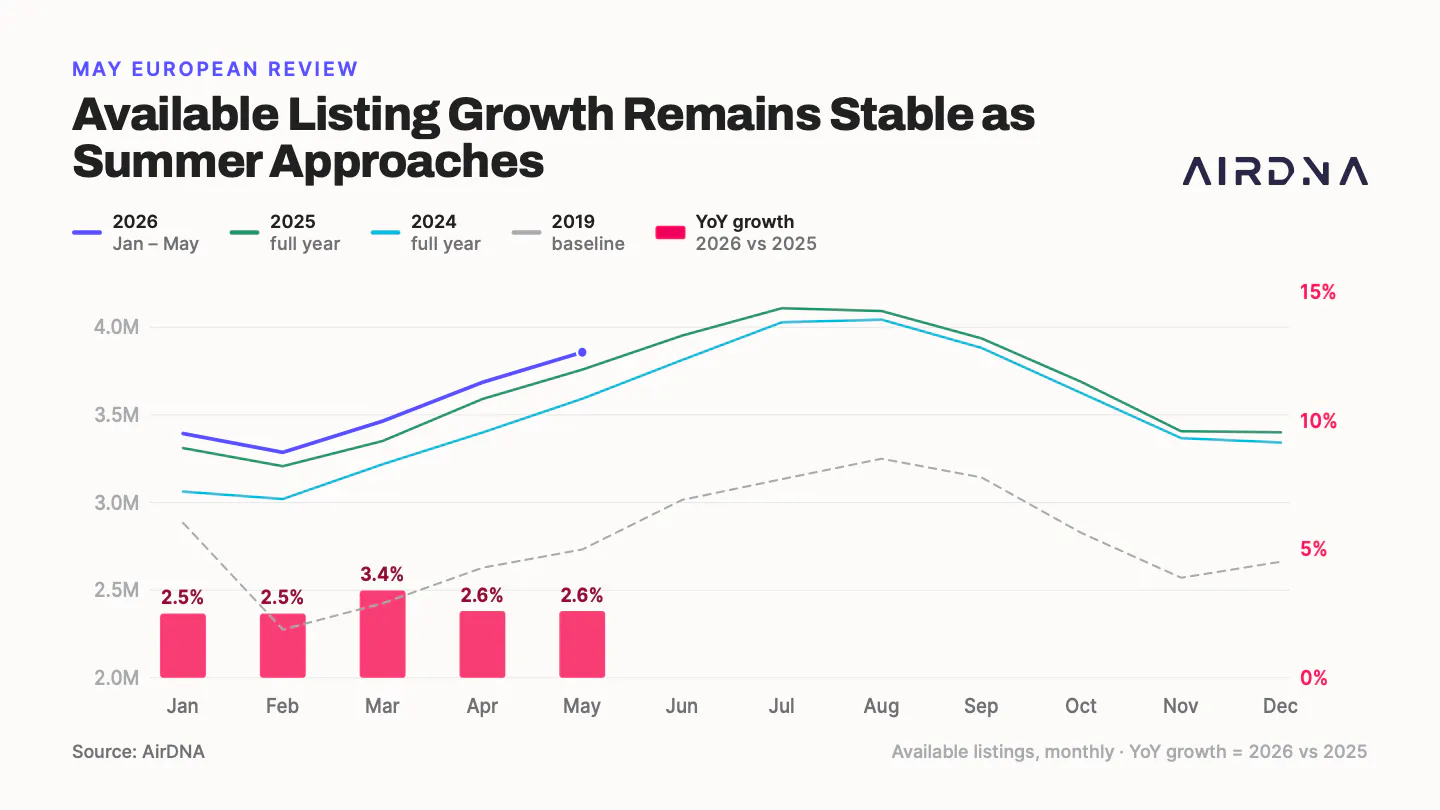
Steady Supply Growth in May as Summer Approaches
Available listing growth in Europe remained stable through May, with listings reaching 3.86 million, up 2.6% year-over-year and closely aligned with the 2026 average growth rate of 2.7%. This slower pace of expansion reflects a shift away from the rapid supply growth seen in 2024 and 2023, when listings increased by 18.1% and 12.8%, respectively.
In absolute terms, the market has added approximately 99,000 listings since May 2025 and more than 265,000 since May 2024, highlighting continued supply growth even as year-over-year gains normalize.
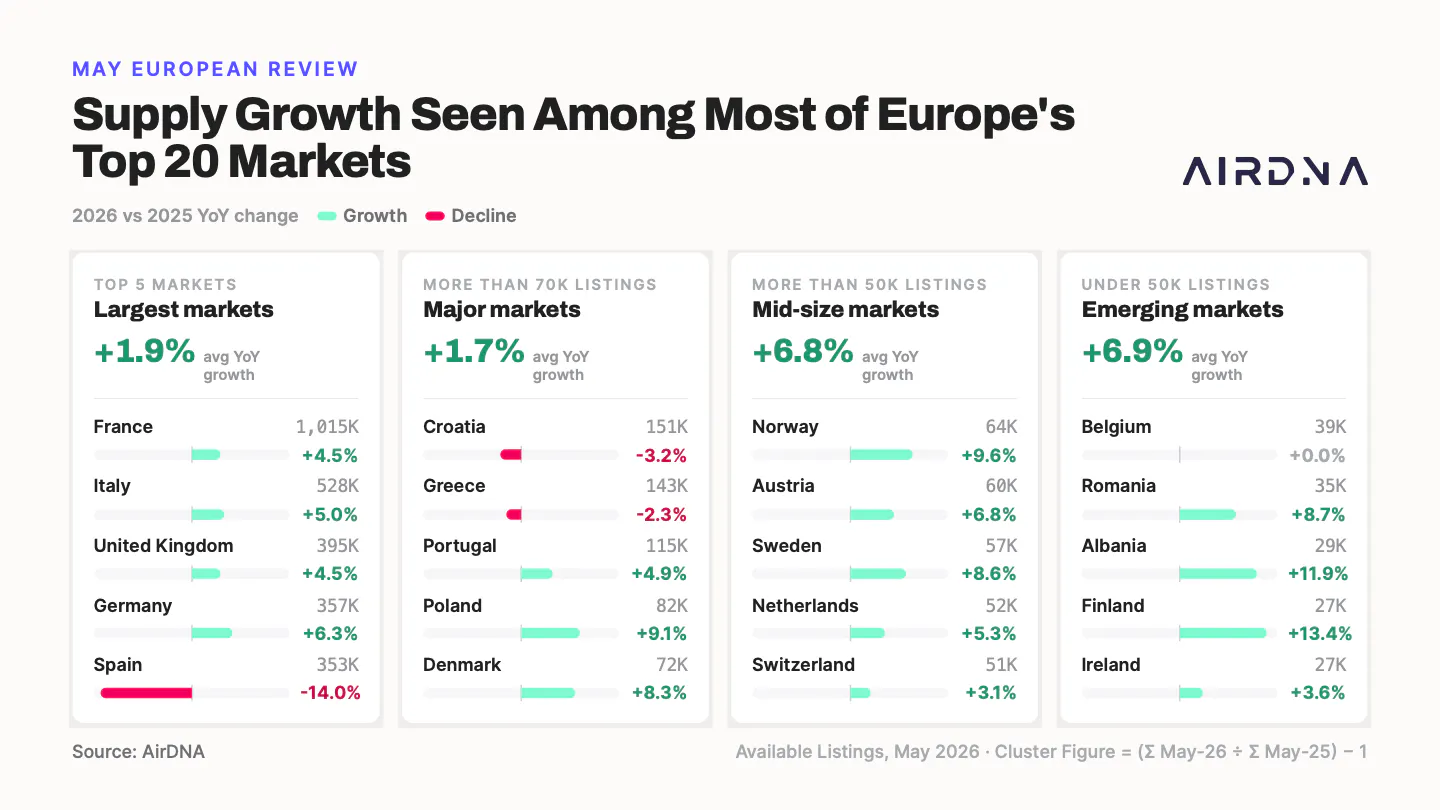
Looking across Europe’s top 20 markets, supply growth trends varied significantly. The five largest markets grew by 1.9%, below the European average of 2.6%. However, much of this slower growth can be attributed to Spain, where available listings declined by 14% following delisting efforts introduced at the beginning of Q3 2025. Excluding Spain, Europe’s largest markets continued to see healthy supply growth, led by Germany at 6.3% year-over-year.
A similar pattern emerged among markets with more than 70,000 listings. Croatia and Greece weighed on overall growth, while Portugal, Poland, and Denmark continued to expand. In Croatia, May marked the tenth consecutive month of declining supply, a trend driven by weakening demand following a period of overpricing. Greece has also experienced a sustained decline in supply since regulations introduced in October 2025 sought to improve market quality by enforcing broader short-term rental standards and removing lower-quality listings.
Meanwhile, both mid-sized and emerging markets continued to record strong supply growth. The Nordic countries remained in a particularly strong growth phase, while more mature markets such as Switzerland and Ireland continued to expand, albeit at a slower pace than their respective market clusters.
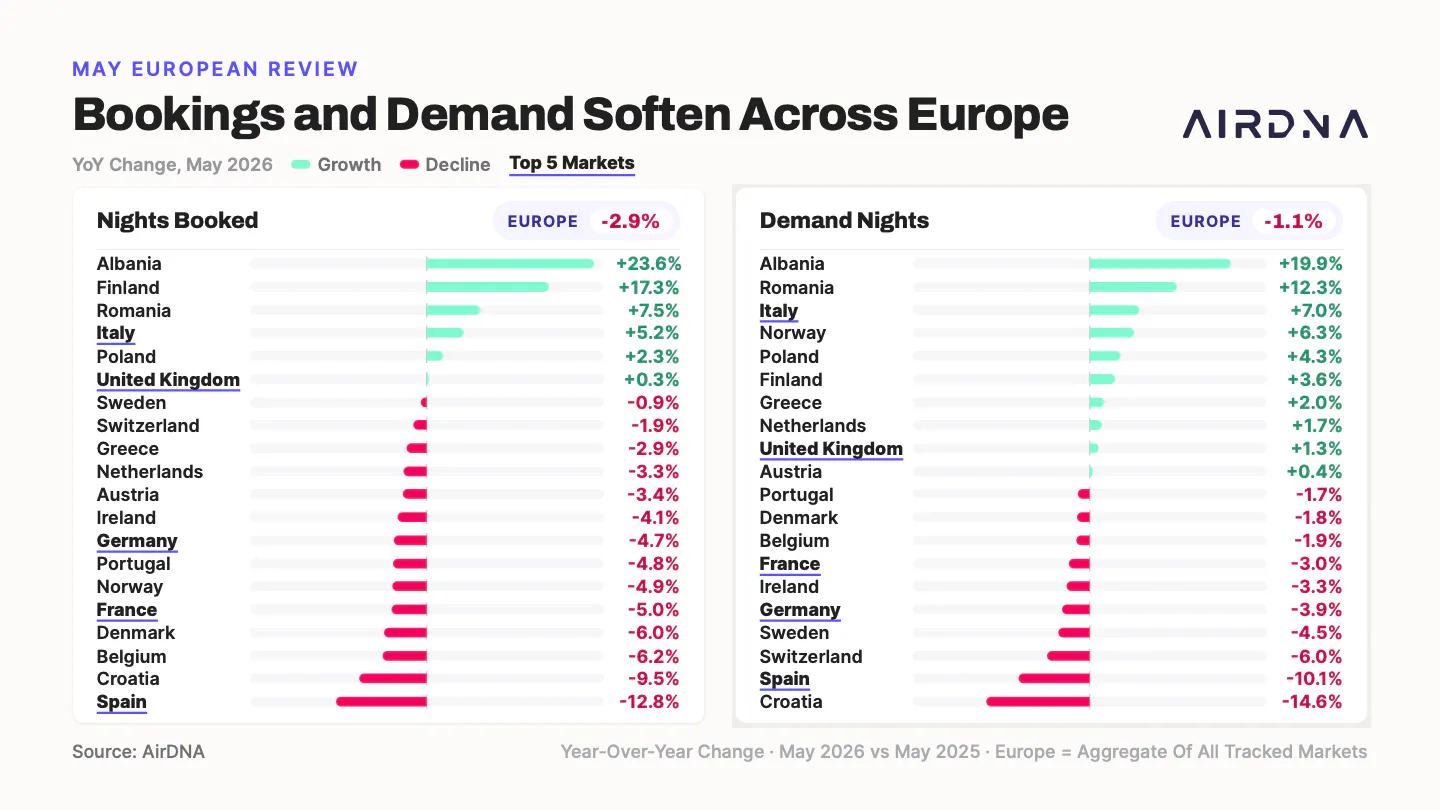
Demand Nights & Nights Booked See Decline Over 2025 but Gains Over 2024
Demand nights in Europe fell 1.1% year-over-year to 39 million nights, marking the ninth consecutive month of decline. However, the pace of decline continued to moderate, making May the third-smallest drop during this period and a significant improvement from April (-6.2%) and February (-5.6%). Nights Booked, which measures reservations made during the reporting month for current and future stays, also declined for the tenth consecutive month, falling 2.9% year-over-year, broadly in line with April’s decline of 2.6%.
At the country level, performance varied considerably across Europe’s largest markets. Italy continued to outperform, recording growth in both Nights Booked and Demand Nights, while the United Kingdom remained broadly flat across both metrics. By contrast, France and Germany have experienced softer booking activity since mid-2025, with Nights Booked declining for ten consecutive months.
While both Demand Nights and Nights Booked have trended downward since Q2 2025, much of this reflects comparisons against exceptionally strong performance in 2025. Against a backdrop of rising travel costs and persistent inflationary pressures, a 1.1% decline in demand suggests the European short-term rental market remains relatively resilient.
Occupancy Declines in Most Nations as Supply Growth Accelerates
Despite demand nights declining slightly (-1.1%) and available listings increasing (+2.6%), overall occupancy in Europe rose 1.1% year-over-year to 58.3%. This was largely driven by a decline in available listing nights across much of the continent, including 12 of Europe’s top 20 markets.
When broken down by price tier, the upper segments continued to outperform. This trend has persisted throughout 2026, despite demand generally remaining weaker than supply. May was also the first month of the year in which occupancy increased across all price tiers, supported by stronger post-Easter travel activity.
By bedroom count, two- and three-bedroom properties recorded the strongest year-over-year occupancy growth. These mid-sized listings also maintained higher occupancy rates than larger properties with four or more bedrooms, while remaining close to the performance of studios and one-bedroom rentals.
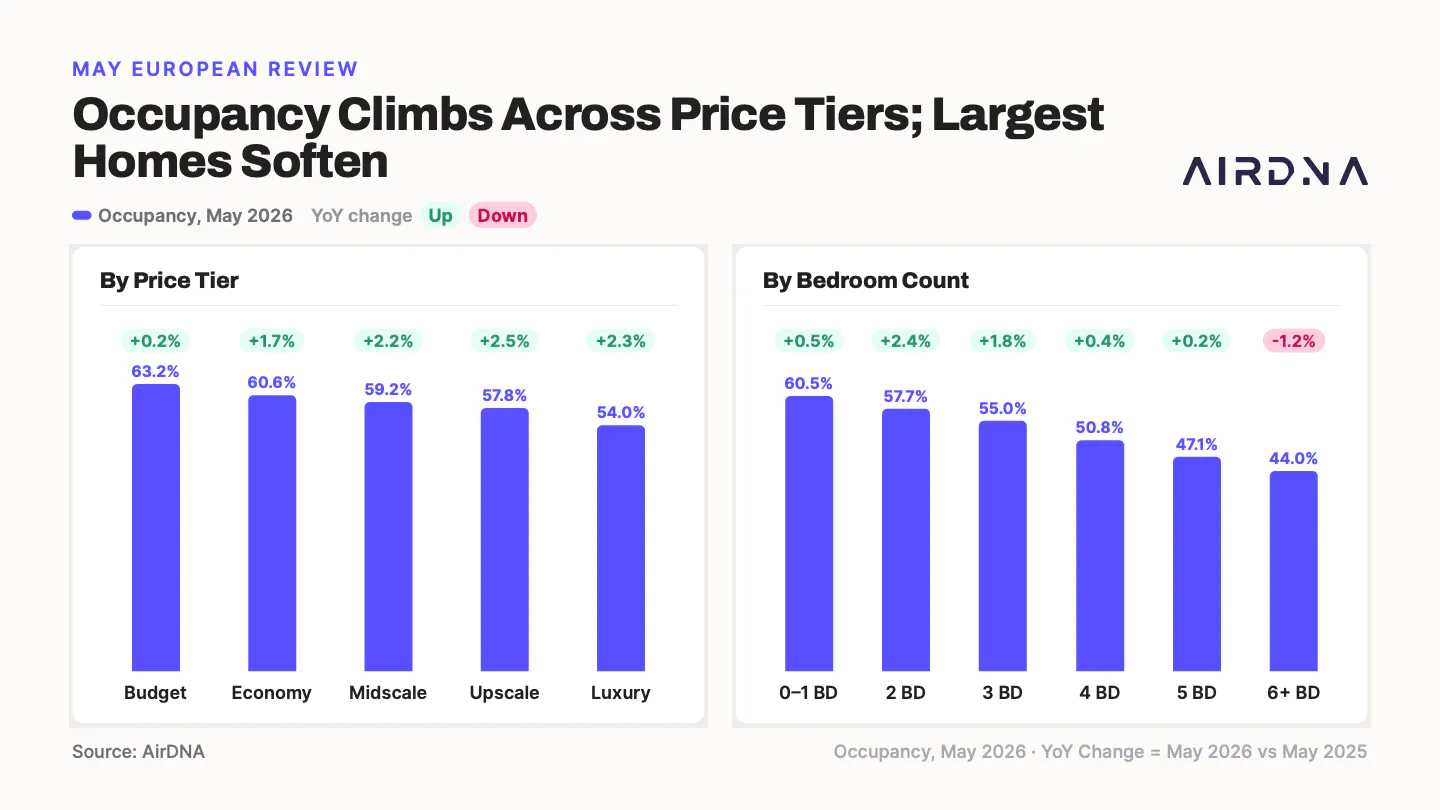
Overall, the K-shaped trend observed throughout Q1 continued into May, with higher-priced properties continuing to outperform more affordable segments. At the same time, smaller and mid-sized properties recorded the strongest occupancy gains, suggesting that less price-sensitive travelers remain the primary driver of growth.
ADR Recovers As RRI Continues Growing
Average daily rates in Europe continued their recovery for a third consecutive month, rising 6.8% year-over-year in May to €140. This was slightly higher than the 5.9% increase recorded in April and bodes well for ADR performance heading into the peak summer season. It also marks the first time since late 2024 that ADR has increased for three consecutive months.
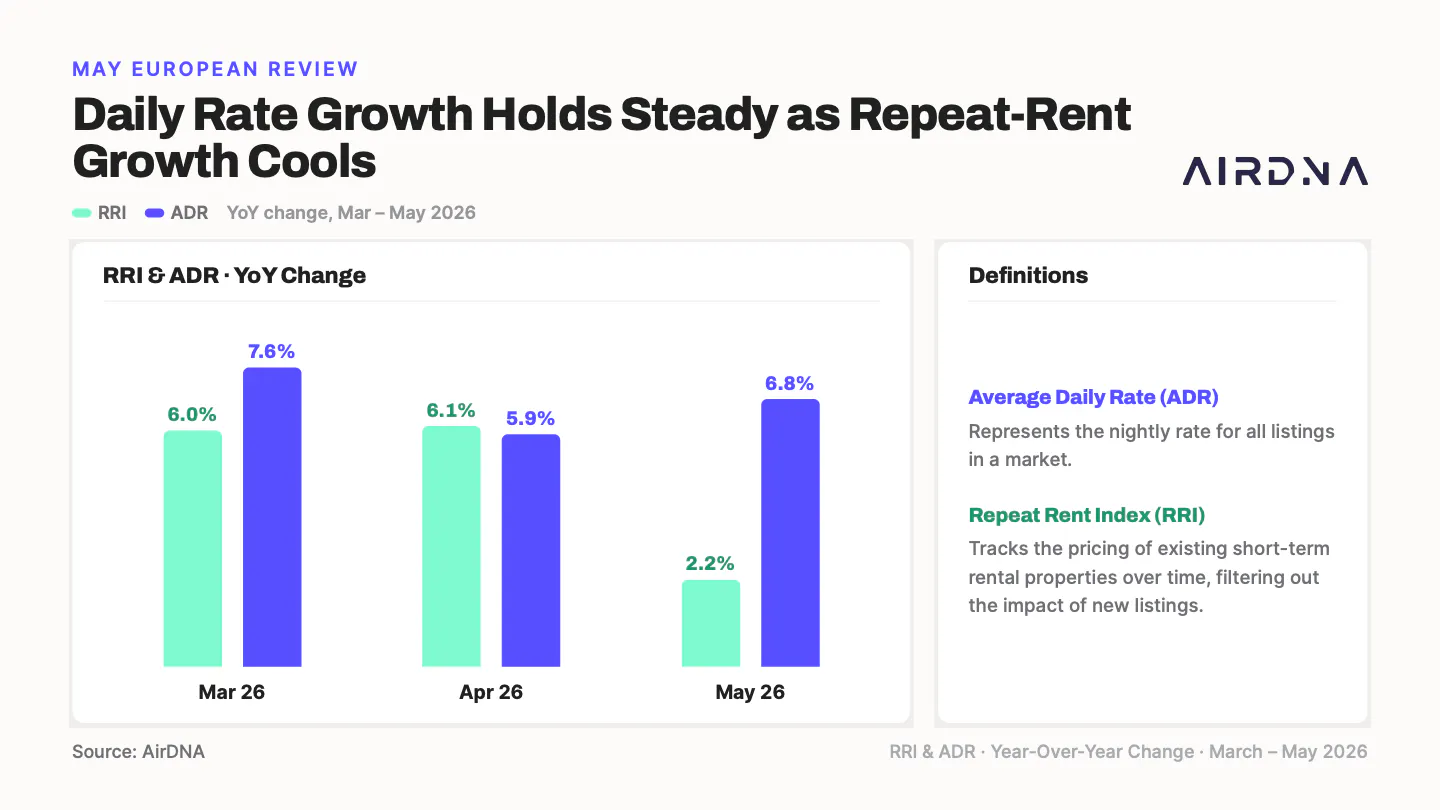
The Repeat Rent Index (RRI), which tracks pricing changes among existing operators and excludes the impact of new listings, increased by 2.2%. While this represents slower growth than the 6.1% recorded in April, it suggests that much of the increase in ADR is being driven by a mix shift rather than stronger pricing power among existing hosts.
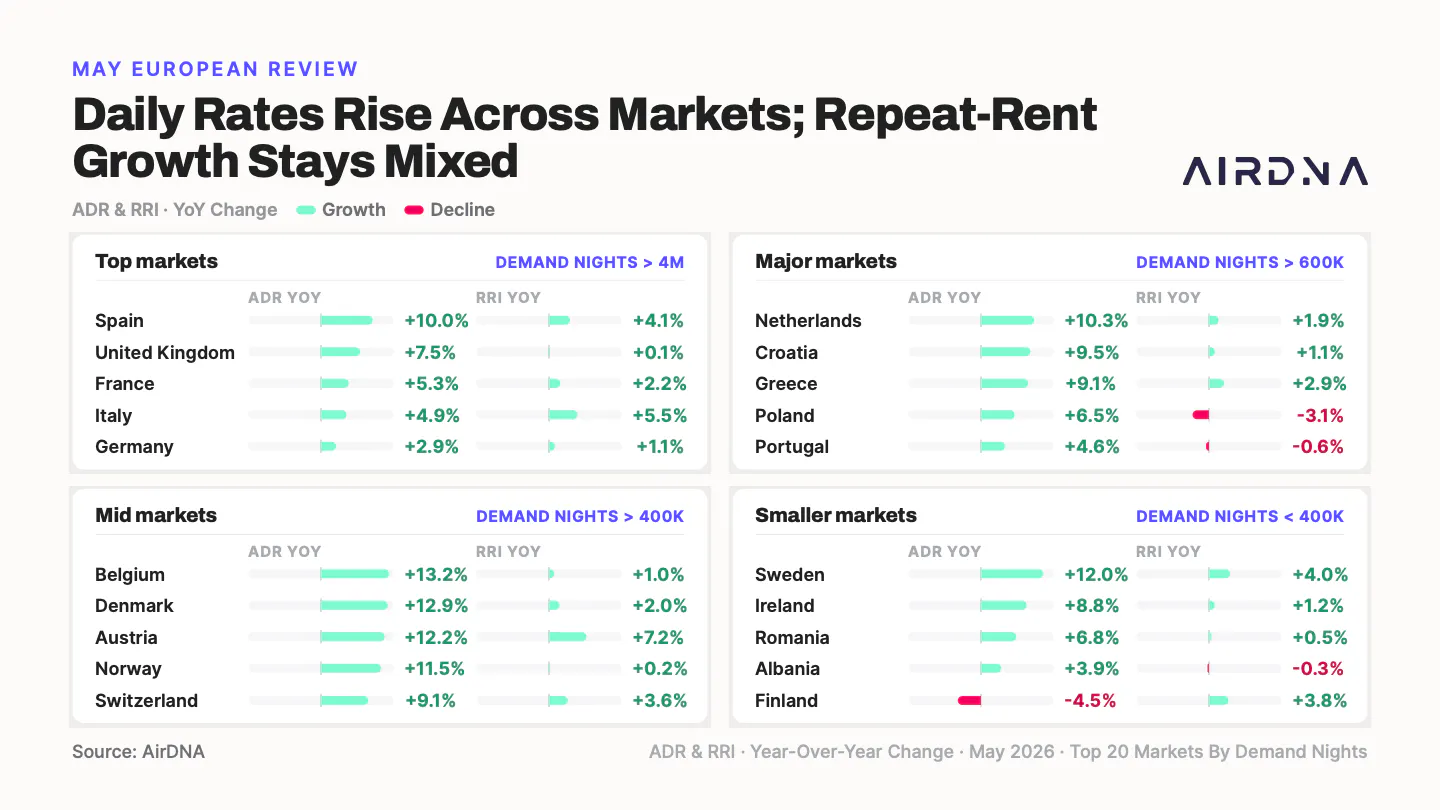
At the national level, 19 of Europe’s top 20 markets recorded ADR growth, while 17 also posted year-over-year gains in RRI. Among mid-sized markets with between 400,000 and 600,000 demand nights, ADR growth was particularly strong, with four of the five markets posting double-digit increases and Switzerland close behind at 9.1%. RRI growth within this group was more modest, with Austria standing out at 7.2%. This suggests that while mix shift is helping lift rates across these markets, Austrian hosts have also been able to increase pricing on existing inventory.
In markets with tighter regulations and declining supply, including Spain (-14%), Greece (-2.3%), and Croatia (-3.2%), both ADR and RRI continued to increase. In Spain, demand has declined at a slower rate than supply, concentrating bookings among fewer hosts and supporting stronger pricing. The data also suggests that new supply entering these markets is skewed toward higher-priced inventory, helping explain the gap between ADR and RRI growth. This may be one of the effects of recent regulations designed to improve market quality by reducing lower-quality listings.
European Summer Demand Continues to Accelerate
With summer just around the corner, European traveler demand is poised for a strong season despite recent uncertainty and rising travel costs. Overall summer demand is up 4.9% for June through August, with growth continuing into the shoulder season as September demand is already pacing 9% ahead of last year. This suggests travelers may be shifting trips to more affordable dates amid rising travel costs.
On a monthly basis, demand is pacing weakest in June, down 1.8% year-over-year, before recovering strongly in July (+9.5%) and rounding out the summer with a strong August (+7.6%) performance.
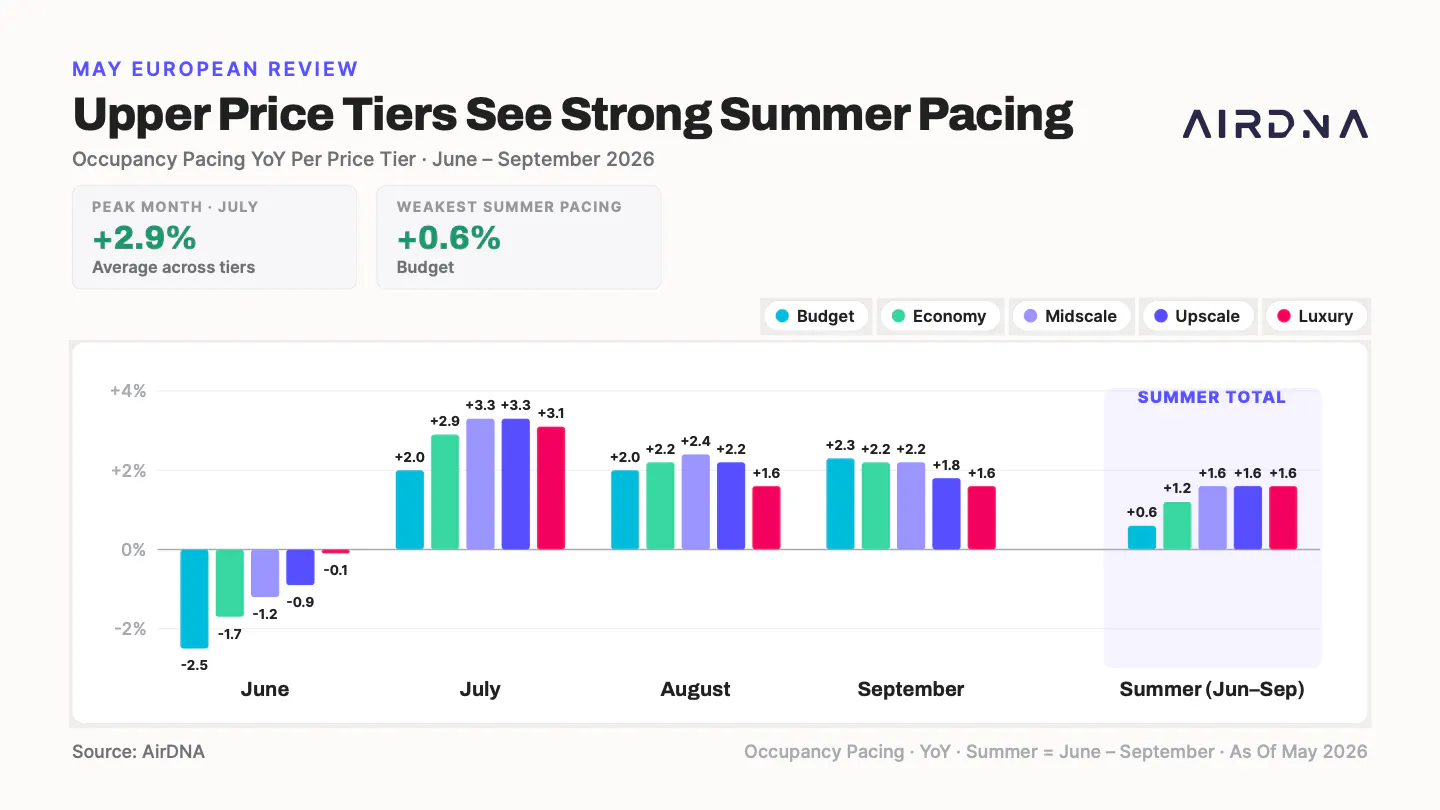
On a price-tier basis, the K-shaped occupancy growth observed in May appears set to continue throughout the summer months, with occupancy pacing significantly higher in the upper price tiers. However, the difference becomes less pronounced at the start of the shoulder season, as more budget-conscious travelers drive occupancy growth in September.
Avignon Music Festival Drives Half of Avignon’s Summer Demand
Avignon offers a clear illustration of how heavily a single event can concentrate demand in a short-term rental market. Just 23 summer days—the festival window running from July 4 to 26—account for more than half of the city's total summer demand. Daily demand nearly triples during those three weeks, climbing from roughly 730 nights per day across the rest of the summer to around 2,290 nights at the festival's peak.
In a market like this, a handful of dates can define the entire season, making awareness of the local event calendar one of the most important drivers of annual performance. Hosts best positioned to capture that demand typically prepare months in advance by setting minimum length-of-stay requirements that cover the full festival period, maintaining premium pricing rather than discounting too early, and carefully managing availability so their highest-value nights remain open.
Events of this scale reward planning, and operators who track them gain a measurable advantage over those who don't. Adapt, AirDNA's revenue management tool, is designed to help hosts anticipate demand spikes like Avignon's and turn them into some of the strongest revenue opportunities of the year.
Bad Bunny Driving Additional Demand in Europe
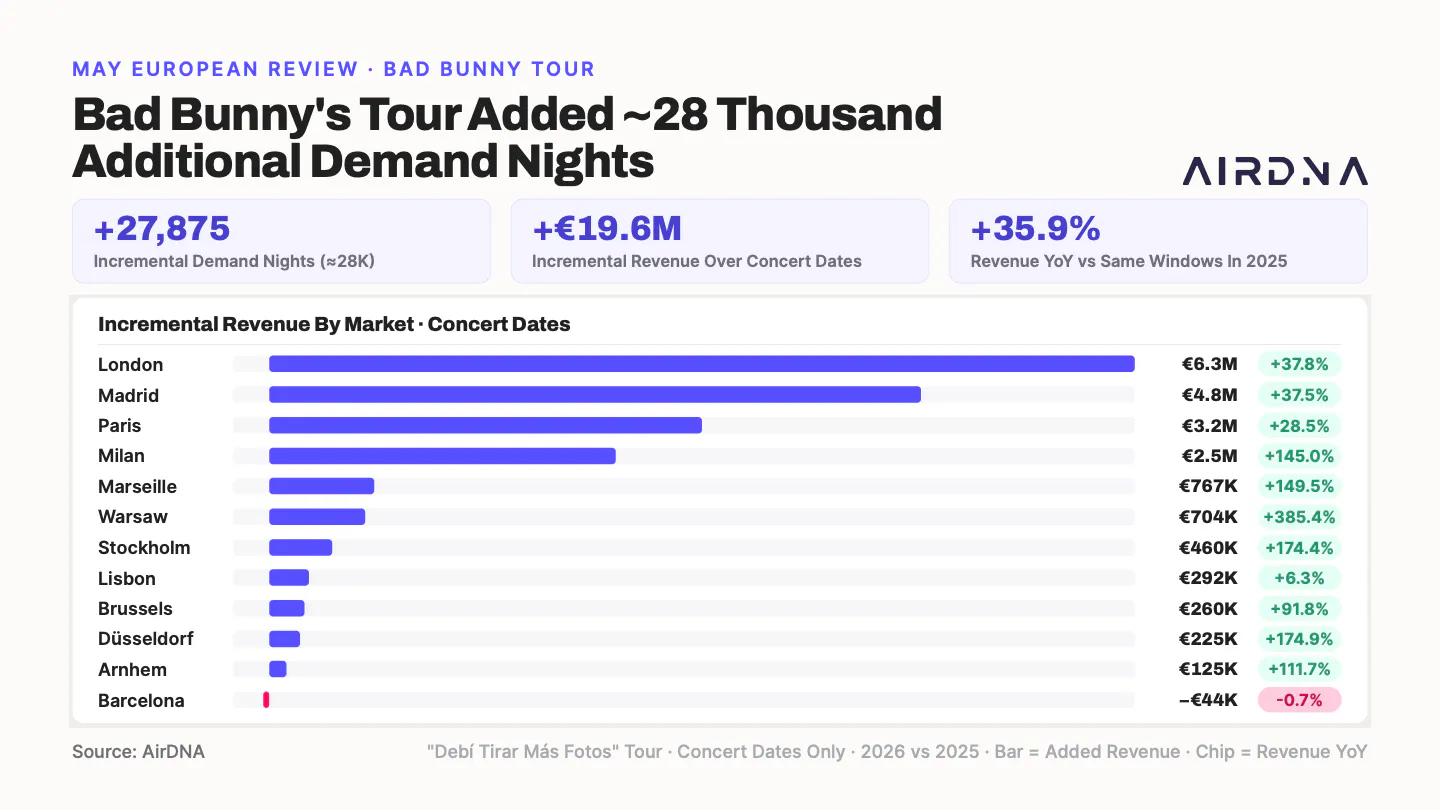
Across the European leg of his Debí Tirar Más Fotos tour, Bad Bunny drove a clear lift in short-term rental performance, generating roughly 28,000 incremental demand nights and nearly €20 million in additional revenue during the concert dates alone. That represents a 35.9% increase in revenue compared to the same period last year.
The impact wasn't uniform across every market. Barcelona (-14.4%) and Madrid (-2.3%) were the only cities to record slight declines in demand. Both markets have large, established Latino populations who were already likely to attend, meaning the concerts may have attracted fewer out-of-town visitors than in other destinations. Even so, pricing told a different story. Madrid's ten-show residency increased revenue by 37.5%, adding €4.8 million as hosts captured premium rates across an extended run. Barcelona, meanwhile, remained broadly flat at -0.7%, with softer demand and stronger pricing largely offsetting one another.
The standout performers were generally smaller markets with lower baseline demand and more room for growth. Warsaw saw demand surge 160.8% while revenue climbed 385.4%, generating an additional €700,000. Stockholm followed a similar pattern, with demand up 73.8% and revenue up 174.4%. Milan and Marseille also saw significant gains, with Milan alone contributing more than 12,000 incremental demand nights and €2.5 million in additional revenue.
London and Paris posted more modest percentage increases, but delivered the largest absolute revenue gains of the tour, generating an additional €6.3 million and €3.2 million, respectively.
One important caveat is that these figures only capture the concert dates themselves, meaning they likely understate the tour's true economic impact. Many fans extend their trips beyond the event dates, creating additional demand before and after the concerts. With several tour dates still ahead, hosts in upcoming markets have an opportunity to prepare now by adjusting pricing, length-of-stay requirements, and calendar availability before demand arrives.
ARTICLE SUMMARY
Europe’s short-term rental market showed signs of stabilization in May, with occupancy and ADR continuing to improve despite softer demand. Summer bookings remain strong, while major events such as the Avignon Festival and Bad Bunny’s European tour are helping drive demand across key markets.
Camilo Schmid Rivas
Senior Research Analyst
Camilo Schmid Rivas is a Senior Research Analyst at AirDNA who brings a uniquely well-rounded perspective to short-term rental analytics. With a background that spans investment, real estate, and business analysis—including roles at Stayery and Sollers Consulting—Camilo has worn many analyst hats, each sharpening his ability to turn complex data into clear, actionable insights. A graduate of École hôtelière de Lausanne, he now channels his multidisciplinary expertise into uncovering trends that drive smarter STR decisions. In his free time, he enjoys playing tennis or scuba diving in or around Barcelona.
