

 Calculate Revenue
 Research Markets
 Find For Sale Properties
 Compare My Listing
 STR Revenue Calculator
 Custom Comp Sets
 Submarket Insights
 Custom Search Filters
 Rate Recommendations
 Performance Benchmarking
 Competitor Comparison
 Owner Contact Details
 Property-level performance data
 Tourism Insights
 Real Estate Investment Analytics
 About Us
 Sales
Sales Support
 Press
PressHow an Airbnb with a Pool Stacks Up
Published: November 12, 2024
Last updated: September 25, 2026

Bram Gallagher
Key Takeaways:
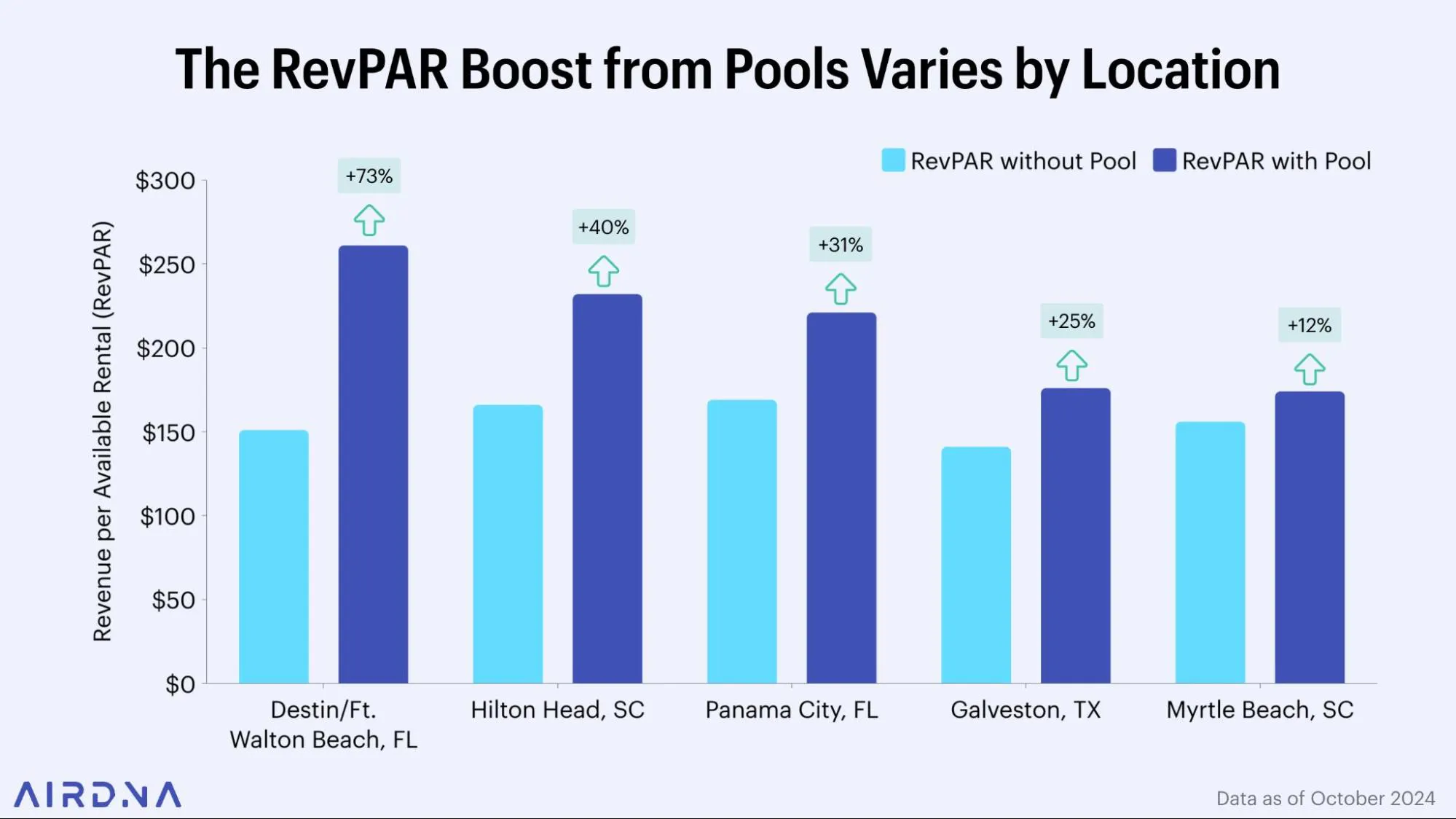
- Airbnbs with pools in warm, coastal, and high-demand markets can see a RevPAR increase of 12-73%.
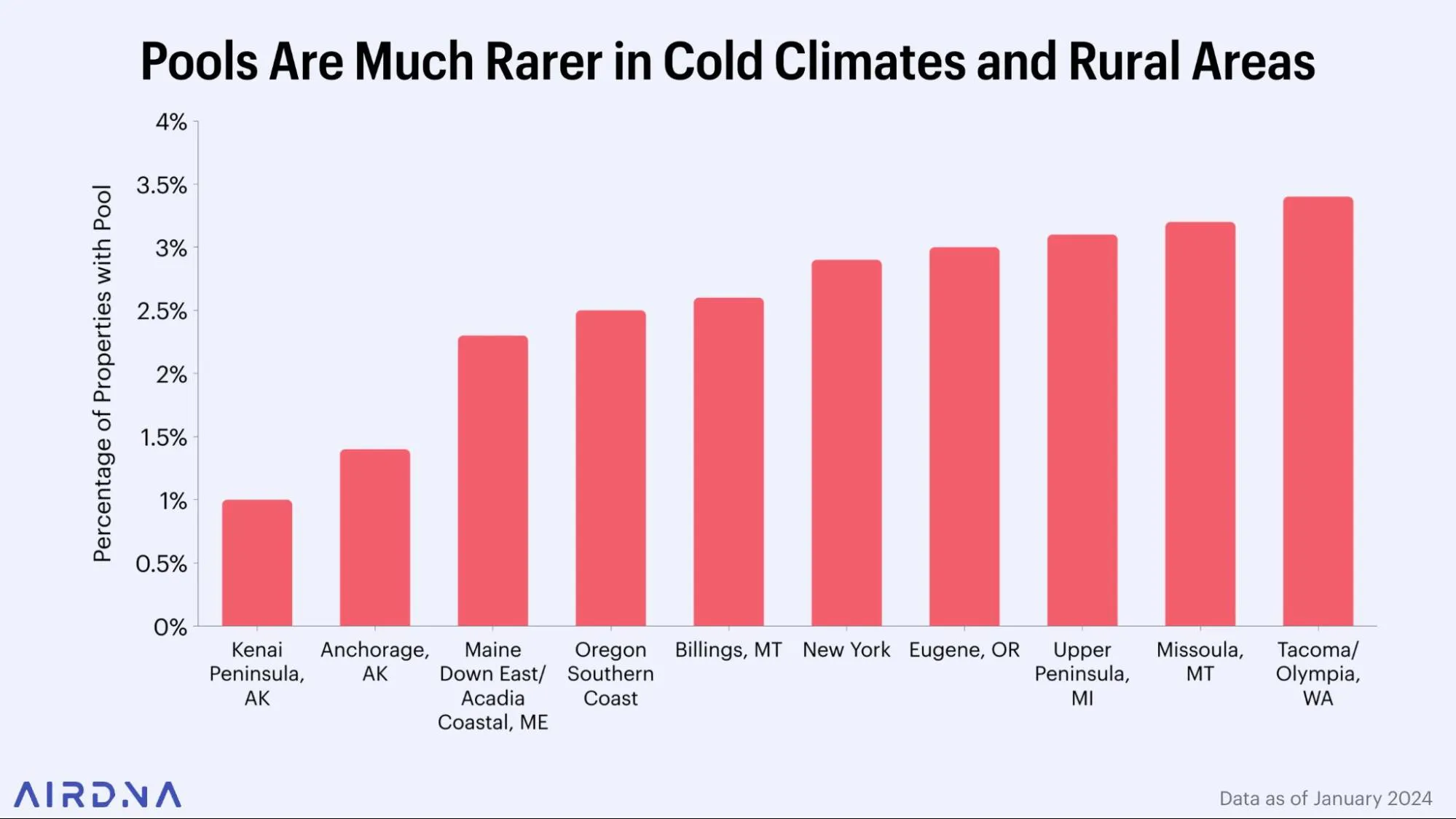
- Certain markets, particularly those with cold climates and in rural areas, see little to no revenue gains from pools.
- Use AirDNA to compare the revenue, occupancy, and ADR of Airbnbs with pools versus those without a pool in your specific market.
Imagine this: a group of guests splashing in the pool, savoring every second of their sun-soaked getaway at your Airbnb. They're fully immersed in vacation bliss, snapping poolside photos and making memories that will last long after their stay ends. Meanwhile, across town, you're sipping your coffee, checking your AirDNA metrics, and silently cheering, "cha-ching!"—every splash bringing in extra revenue.
It’s no surprise, then, that Airbnbs with pools are highly sought-after as a premium amenity , especially in high-end and coastal properties. For hosts, though, the big question remains: Is installing a pool worth the cost?
In this article, we’ll explore the performance metrics of Airbnbs with pools, the return on investment (ROI) for pools by market, and financing options that could make adding a pool to your property feasible. With the right data, Airbnb hosts can assess whether a pool will add significant value and help drive bookings at a premium rate.
Ditch the guesswork
Plan your STR strategy based on real booking activity and trends—plus, see how things change year over year.
Performance Highlights of Airbnbs with Pools
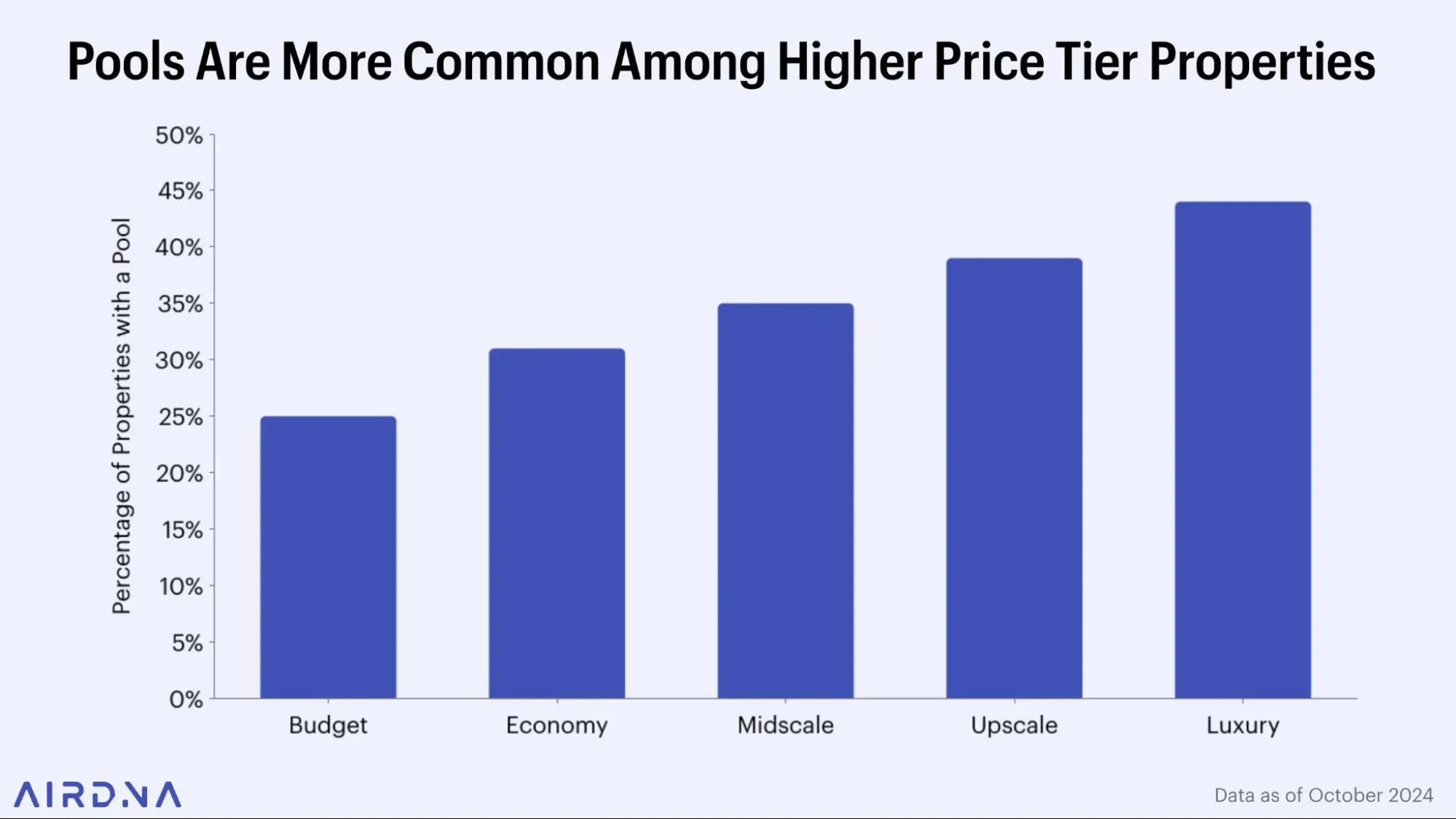
Across the U.S., 34% of STR properties have a pool. This number creeps up as the price tier of the Airbnb property increases. Almost half of luxury listings, which account for properties in the top 20% in terms of ADR for any given market, have pools (44%). Only 25% of budget properties, which account for properties in the bottom 20% in terms of ADR for any given market, have pools.
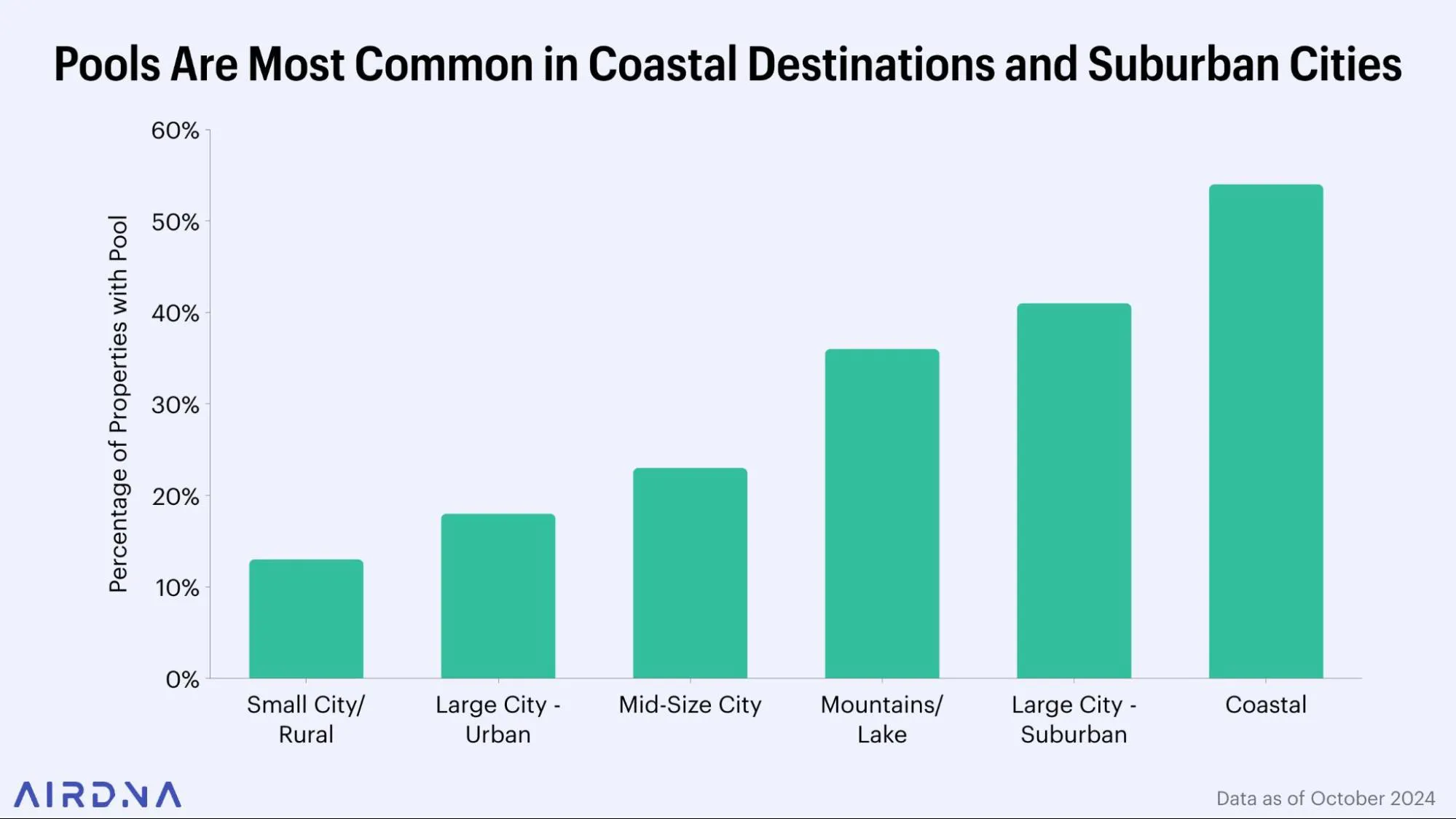
Pools add a clear value boost for properties in warm and coastal markets where guests seek out properties with outdoor spaces and premium experiences. The highest concentration of Airbnbs with pools are in beach towns and coastal markets, with 54% of listings having pools. Behind coastal destinations, large suburban cities are the next most popular region for vacation rentals with pools at 41% of total listings.
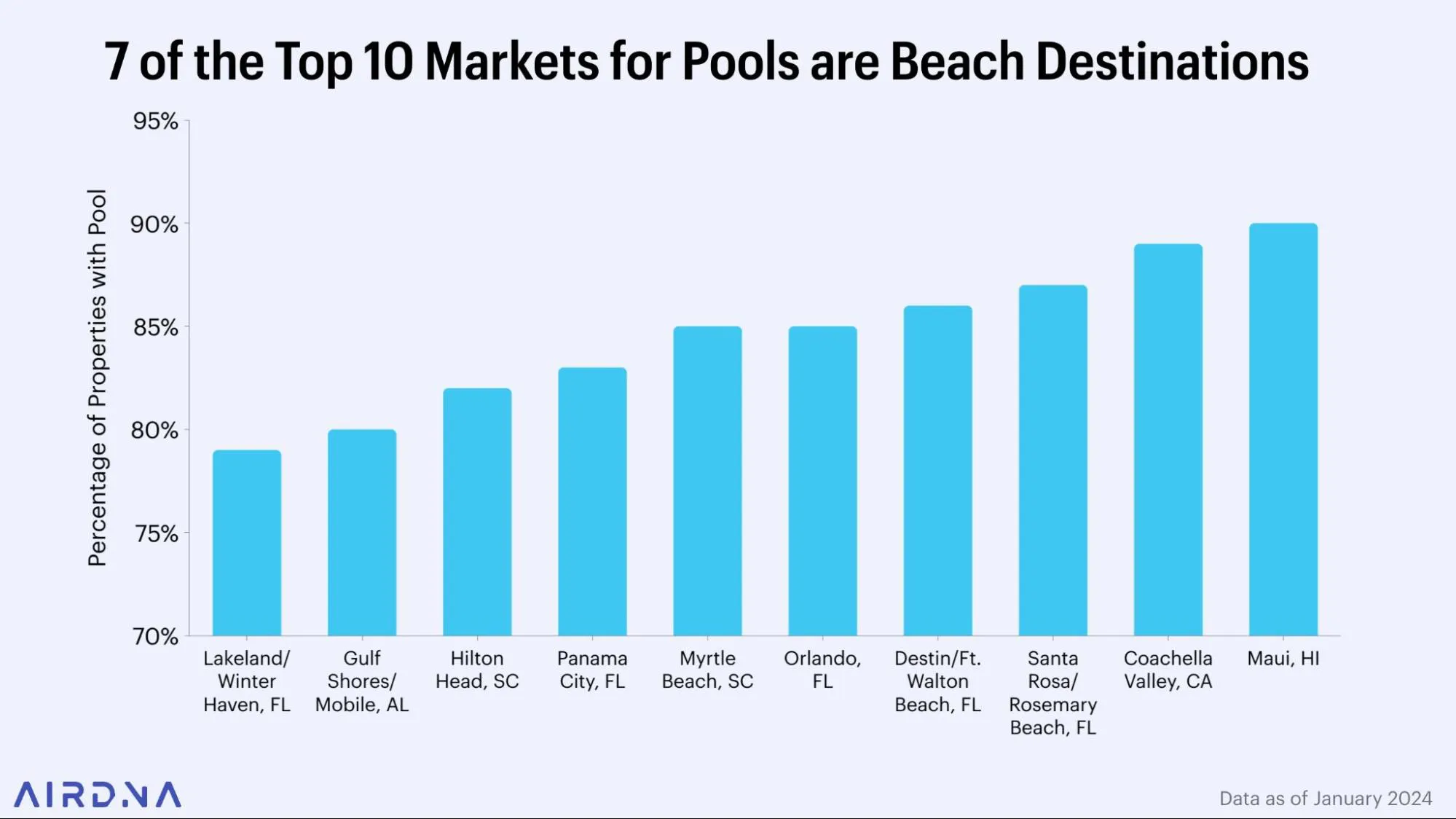
If you hone in on the top 10 short-term rental markets for pools, it’s clear that beach destinations take the cake—7 of the 10 top markets are beach towns.
RevPAR and ADR
Airbnbs with pools typically achieve higher RevPAR (revenue per available room) and ADRs (average daily rates) compared to those without.
The RevPAR for three-bedroom homes with pools increases by an impressive 38% compared to those without pools. This boost is largely driven by higher nightly rates (ADR). In fact, three-bedroom homes available full-time with pools average $355 per night—a 29% premium over similar listings without pools.
Occupancy
Occupancy rates for short-term rentals with pools are also higher. 3-bedroom Airbnbs with pools maintain a 59% occupancy rate, which is 7% higher than comparable properties without pools.
The ROI on Pools by Market
Not every market will see the same returns from adding a pool.
While Airbnbs with pools in warm, coastal destinations tend to see substantial increases in RevPAR, some markets see only slight changes. For example, properties with pools in Ft. Walton Beach, Florida enjoy a 73% increase in RevPAR. In contrast, Airbnbs with pools in Myrtle Beach only see 12% growth in RevPAR.
Similarly, properties with pools in cold climates and rural areas typically don’t see the same returns. In fact, you’re much less likely to find an Airbnb with a pool in cold and rural regions.
Ultimately, the return on investment (ROI) for adding a pool to your Airbnb varies widely based on location and market. You need to understand your market to truly assess the ROI of a pool—and that’s where AirDNA can help.
Use AirDNA to Analyze the ROI on Pools in Your Area
AirDNA makes it easy for hosts to analyze the impact of adding a pool to an Airbnb.
With AirDNA, you can use the amenities filter to view revenue performance for properties with and without pools in any specific location.
Here’s how:
1. Use the Amenities Filter: Search for your specific submarket, then use the amenities filter to narrow down performance information to properties with pools.
Once you’ve applied the filter, you’ll see occupancy, ADR, and RevPAR information that is exclusive to properties that have pools. Compare how those numbers change for properties without pools by resetting the amenity filter to properties without pools. This exercise gives you clear insights into the revenue premium associated with pools in your area.

2. Refine by Property Type and Bedroom Count: You can narrow down your analysis further by adding additional filters for real estate type and bedroom count. Set parameters that match the details of your property so you can get performance information for comparable properties.
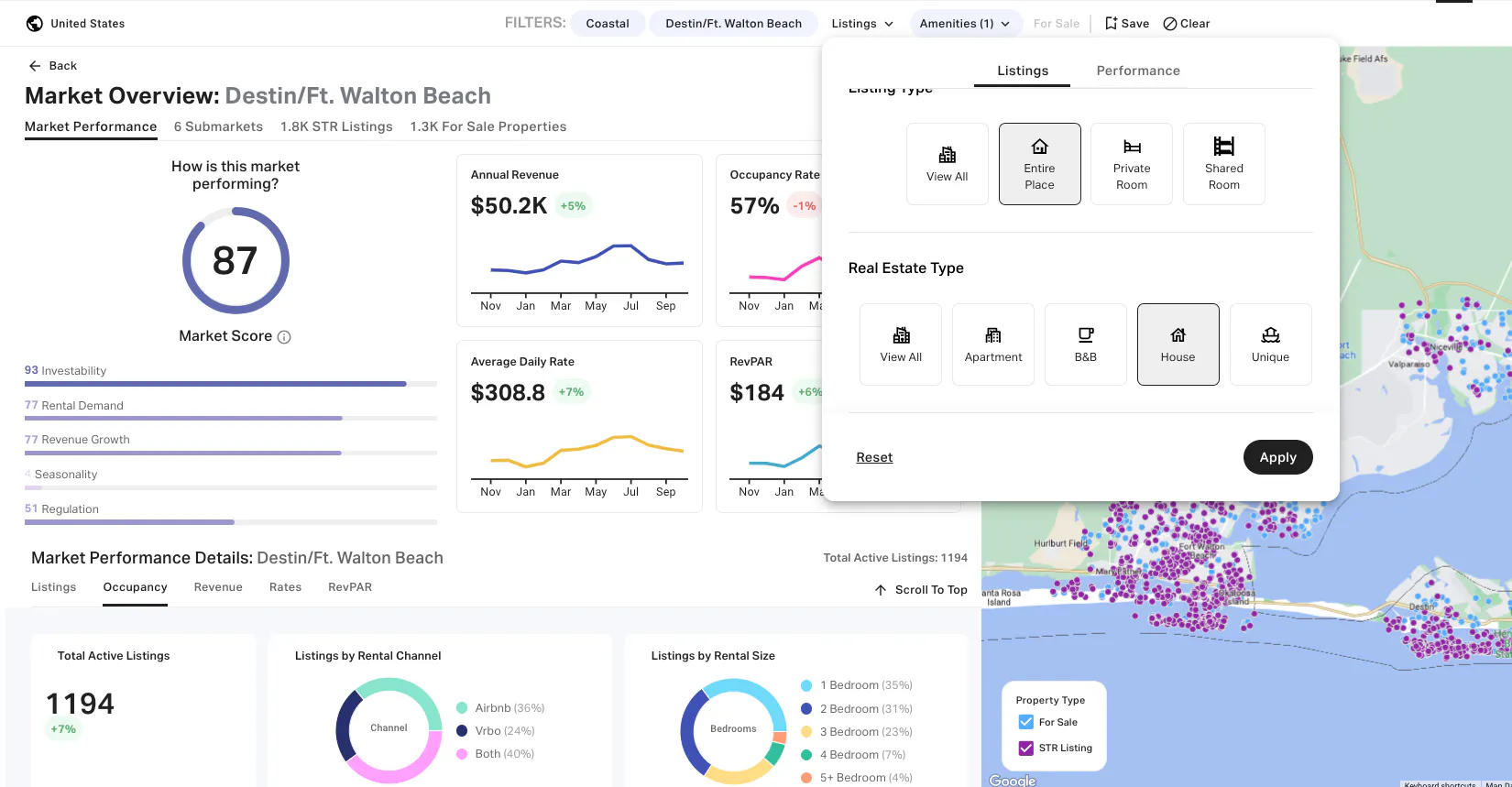
3. Filter by Price Tier, Rating, and Availability: Additional filters allow you to focus on specific metrics, like high-rated properties or properties available year-round, giving a complete picture of how a pool could influence your bottom line.
How is your STR performing?
Your vacation rental may be amazing, but is it better than your competition? Connect your Airbnb listing to AirDNA to see its Booking Performance Score.
We’ve already talked about how you can assess potential ADR, RevPAR, and occupancy gains using the amenity filter on AirDNA’s dashboard. That covers the potential revenue potential of a pool, but what about the costs?
Estimate annual expenses by getting quotes for a swimming pool install to get a sense of how much you’d have to invest upfront. Get a quote for annual pool maintenance, too, so you can estimate how much you’d have to spend yearly.
Like any amenity, pools can depreciate in value over time. Include the depreciation in your ROI calculation, considering that the pool’s appeal may fade over the years or require significant upgrades.
Research local real estate data to understand the resale implications of adding a pool. Pools can add value to your property, particularly in warm climates and tourist-heavy regions. In some markets, though, they may have little impact on resale value, or even deter certain buyers.
Consider seasonal variability and how your local climate may impact your ROI. Pools in warm or tropical climates tend to offer more consistent ROI, while in seasonal areas, the boost may be limited to high summer months.
ROI calculators give an excellent snapshot, but remember: hypothetical ROI doesn’t always translate to real-life gains. Things like fluctuating seasonal demand, economic downturns, or unexpected expenses (e.g., repairs) can change the picture. It's a good idea to create a “worst-case” scenario projection alongside your ideal scenario to ensure that the pool investment still makes sense if things don’t go perfectly as planned.
If and when you do install a pool, AirDNA’s property performance dashboard can track your ADR, occupancy, and RevPAR metrics over time, giving you a clearer sense of how revenue increases over time and whether the investment was worth the cost of pool installation and continuous upkeep.
Financing Options for Pool Installation
Let’s say that you’ve crunched the numbers and you’ve decided that adding a pool is worth it. Now you’re ready to start installing one. You might want to finance the installation to avoid paying for a swimming pool upfront. Here are some of the best ways to finance a swimming pool:
- Home Equity Line of Credit (HELOC): HELOCs allow hosts to borrow against their home equity with relatively low interest rates, making it a good choice for those with strong credit and available equity.
- Personal loans: Personal loans are another viable financing method, though interest rates and terms vary widely based on credit score.
- Pool-specific financing programs: Some pool contractors offer financing options tailored specifically for pool installations. These may include favorable loan terms or promotional rates.
- Credit cards or lines of credit: Though this option can lead to higher interest costs, credit cards or lines of credit are flexible solutions for covering partial costs or minor upgrades.
Choosing the best financing option for a pool depends on your budget, expected revenue gains, and overall investment strategy. Evaluate all your options to make a decision that aligns with your financial goals and performance expectations.
Smart investments happen here.
AirDNA’s powerful yet easy-to-use tools make hosting and investing a breeze. This means having every insight you need, all in one place, always up-to-date.
Pros and Cons of Adding a Pool to Your Airbnb Property
Adding a pool can be a major asset to an Airbnb property, but it also brings unique challenges. Here’s a breakdown of the pros and cons of a pool for your Airbnb:
Pros of Installing a Pool
- Higher Nightly Rates: People are willing to pay more for pools, period.
- Improved Occupancy Rates: In high-demand regions, a pool can attract more bookings.
- Competitive Edge: Pools are considered premium amenities, especially in coastal and beach markets. In markets where only some listings have pools, offering one makes you standout.
- Increased Guest Satisfaction: A pool can improve the guest experience, leading to higher ratings, repeat bookings, and word-of-mouth referrals.
Cons of Installing a Pool
- Substantial Upfront Costs: Installing a pool is expensive, often costing tens of thousands of dollars.
- Ongoing Maintenance and Repair: Pools require regular cleaning, chemical balancing, and periodic repairs, adding to operational costs.
- Liability and Insurance Costs: Pools increase liability risks, which can result in higher insurance premiums and additional safety considerations.
- Seasonal Demand Fluctuations: Pools may not offer a consistent revenue boost year-round for properties in colder climates, which reduces their long-term ROI in some markets. Even in warmer destinations, the winter off-season may require closing the pool and lowering nightly rates.

Is Adding a Pool Right for Your Airbnb Property?
Adding a pool to your Airbnb should be a data-informed decision. Here’s a breakdown of who might benefit most from adding a pool:
- Luxury and high-end property owners
- Property owners in warm or tropical climates
- Airbnb operators in coastal and beach markets
- STR owners with suburban or family-friendly properties
- Hosts targeting longer stays and staycations
- Vacation rental home owners with data-driven evidence of demand for pools
If you fall into one of these categories, investing in a pool may be worth exploring as it could increase your property’s revenue potential and guest appeal. However, you’ll have to carefully weigh the potential ROI against the costs and responsibilities of ownership.
AirDNA provides Airbnb hosts with insights into occupancy rates, revenue, and guest demand across different markets, helping them make confident choices about adding high-value amenities like pools. You can ensure your decision aligns with market demand and maximizes your property’s revenue potential by using real-time data.

FAQ
Is a pool a good investment?
In many markets, adding a pool can boost both occupancy rates and ADR, resulting in higher overall revenue. However, the ROI will vary by location and seasonal demand. Pools tend to be a particularly lucrative investment for suburban and coastal listings and properties in warm climates.
Does a pool add value to a house?
From the standpoint of adding value through higher nightly rates, pools can justify premium pricing. This is especially true for rental properties in warm climates or popular vacation spots. However, pools might add little to no value to houses in cold or rural areas. Research local real estate data to understand the resale implications of adding a pool.
How much value does a pool add to a house?
On average, a pool can increase a property’s value by 5-8%, though this varies based on location, property type, and market demand.
ARTICLE SUMMARY
Explore the costs, benefits, and revenue potential of adding a pool to an Airbnb. Learn about market-specific return on investment (ROI) and financing options. We did the homework on how pools affect occupancy rates, ADR, and RevPAR to determine if this premium amenity is a wise investment for your vacation rental.
Bram Gallagher
AirDNA Director of Economics and Forecasting
Bram Gallagher is an Economist at AirDNA, specializing in uncovering insights that drive smarter short-term rental decisions. He put his Ph.D. in Economics from the University of Georgia to work researching and forecasting hotel data with CBRE prior to joining AirDNA, as well as teaching economics at a number of universities. In his spare time, Bram enjoys making wooden furniture with hand tools.
