European Review October 2025: Slower Travel, Softer Prices, and Olympic Momentum in Italy
Published: November 25, 2025
Last updated: August 31, 2026

Camilo Schmid Rivas
Key Takeaways
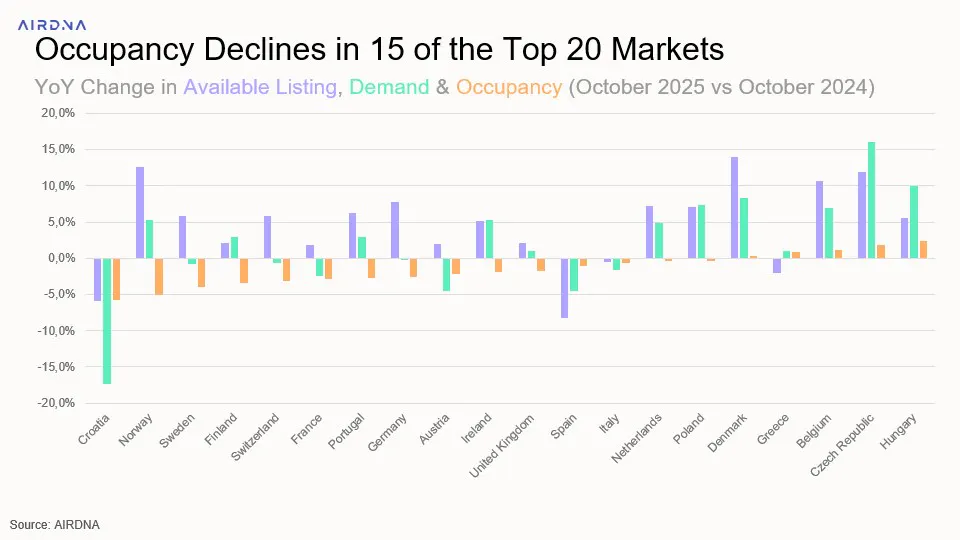
- Available listings increased in 16 of Europe's top 20 countries, while stricter regulations in Spain decreased supply by 8.2% year-over-year (YoY).
- The RRI (Repeat Rent Index) remained positive for nine consecutive months at 4.6% YoY, indicating stable pricing power for existing operators.
- Northern Italy is experiencing a significant demand boost from the Milano-Cortina Winter Olympics.
October brought a mixed performance across Europe’s short-term rental (STR) market. After several months of stagnation, available listings edged up again, despite sharp regulatory-driven declines in Spain. Meanwhile, demand slipped for the second month in a row. With supply rising and demand flattening, occupancy fell in most major European markets. Revenue per available rental (RevPAR) declined as average daily rates (ADR) continued its gradual softening.
Even with these pressures, pricing strength among established operators remained evident. The Repeat Rent Index (RRI), which tracks nightly rates for existing operators and removes the effect of new listings, posted its ninth consecutive month of positive growth. This signals steady rate resilience beneath the broader slowdown in ADR.
Forward-looking bookings point to softer demand across early 2026, although northern Italy stands out as a major exception. The upcoming Milano–Cortina Winter Olympics are driving a notable surge in regional demand.
As Europe heads toward winter and a more mature phase of post-pandemic growth, the market continues to be shaped by regulation, shifting travel patterns, and a rebalancing between established and emerging destinations.
At a Glance: October 2025 STR Performance in Europe
- Available listings reached 3.6 million, an increase of 1.8% YOY
- Demand Nights decline slightly by 0.5% YOY to 38.2 million
- Average daily rates (ADR) decreased slightly by 1.5% YOY to 120.2 €
- Average occupancy rate reached 54.9%, down 1.8% YOY
- Revenue per Available Rental Night (RevPAR) decreased by 3.3% YOY to 66€

The State of the European Economy
The European economy has entered a period of relative stability, with both inflation and unemployment showing consistent moderation through 2024 and 2025. According to Eurostat data, euro area inflation has settled near 2.2%. It’s inflation's lowest level since 2021, after peaking above 10% in late 2022.
With this continued stability, the European Central Bank (ECB) kept interest rates steady. They are maintaining the Main Refinancing Operations Rate at 2.15%. Meanwhile, unemployment has stayed steady around 6.3%, the most stable rate in over a decade and a sign of underlying labor market resilience despite tighter financing conditions and slowing industrial activity.
Low inflation along with steady employment has established a foundation for renewed growth momentum into the mid-2020s. Forecasts from Oxford Economics project a gradual rise in GDP growth throughout the eurozone, increasing from about 0.8% in 2024 to 1.6% by 2027. Germany, after contracting in 2023, is expected to return to positive growth, while France and Italy continue to experience steady moderate expansion.
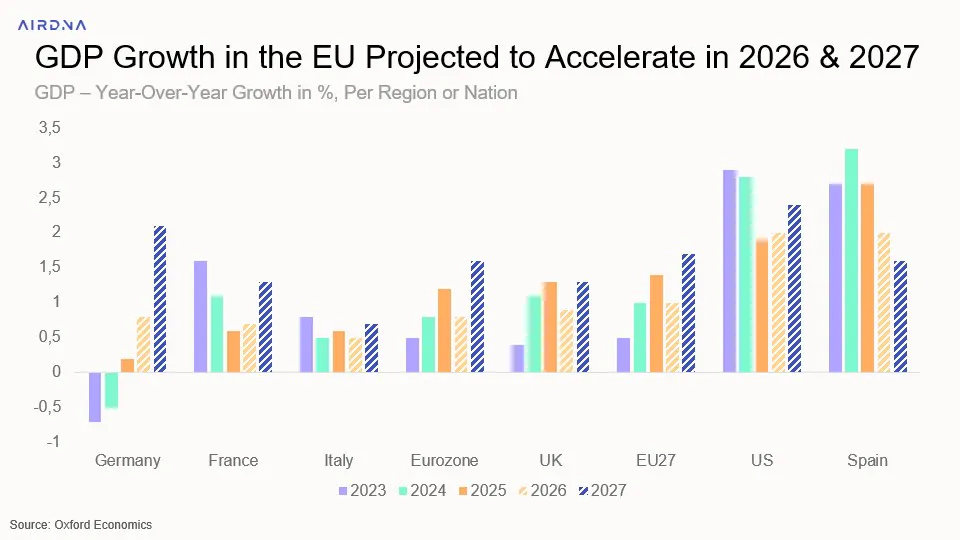
As the ECB adopts a more supportive stance and financial pressures ease, domestic demand and investment are expected to strengthen. Stronger domestic demand and investment will lift household spending and business confidence into the mid-2020s. While Europe’s economic trajectory is less volatile than the U.S., it is increasingly defined by stability rather than stimulus.
For the short-term rental sector, this environment suggests that stable macro fundamentals, not major economic shocks, will shape performance in 2026 and beyond. Low inflation supports purchasing power, steady employment encourages domestic travel, and rising confidence benefits both tourism and housing markets. However, regulatory tightening remains the largest constraint on STR supply across many European destinations.
Available Listings Increase in 16 of the 20 Leading Countries
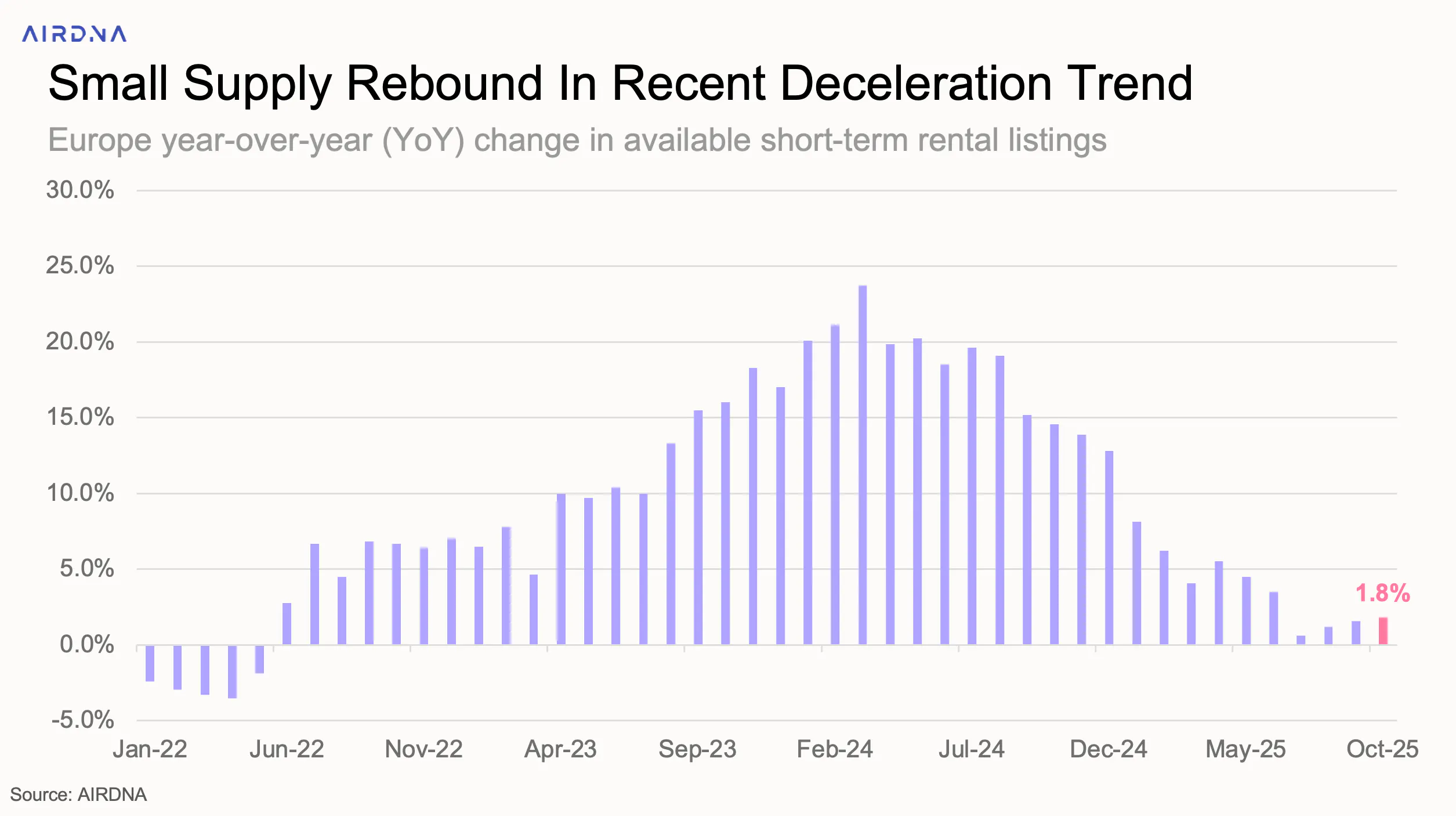
Available listings across Europe reached 3.69 million units in October, a 1.8% year-over-year increase. After hitting a low point of 0.6% YoY growth in June (the slowest rate since May 2022) supply growth has begun to edge up again.
October’s increase marks the second consecutive month with growth under 2%, signalling a cooling expansion phase after rapid post-pandemic gains. Despite easing economic uncertainty and declining interest rates, the continent-wide regulatory clampdown on short-term rentals continues to limit supply, particularly in southern Europe.
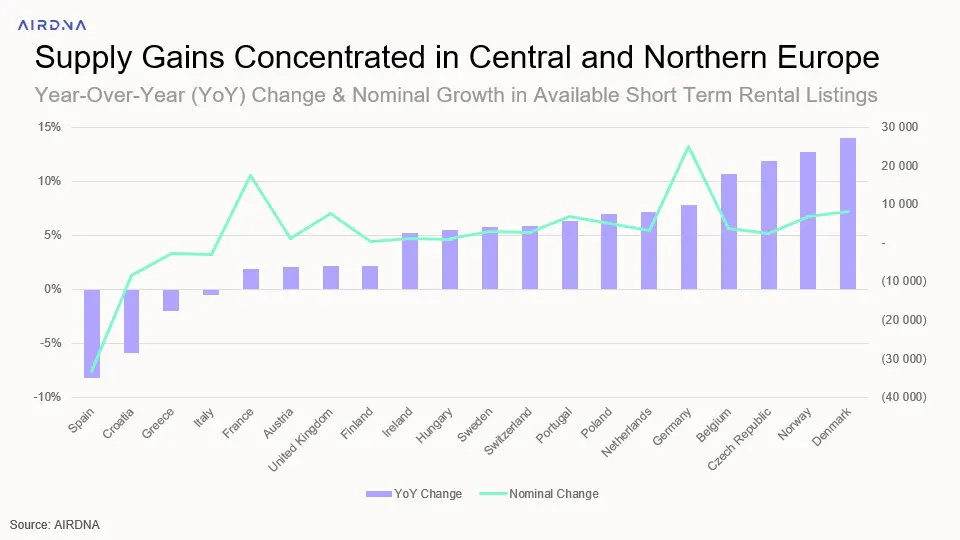
Spain experienced the most severe contraction for the second straight month, with available listings down 8.2% YoY. The regulatory actions introduced in August targeted tens of thousands of units and resulted in a 33,000-unit reduction in October alone.
Croatia recorded the second-largest decline at –5.9% YoY, or roughly 6,000 fewer listings, underscoring how pronounced Spain’s drop has been relative to other markets.
Growth in more mature markets remained modest. Italy saw a 0.6% decline, while France and the United Kingdom posted small increases of 1.9% and 2.1%, respectively. France, Europe’s largest STR market, added nearly 18,000 units in October, the second-highest nominal increase across the continent. Germany led Europe in absolute supply growth, adding 25,000 listings, a 7.8% year-over-year rise.
Northern Europe continued to outperform. The Nordic region recorded strong gains for the second month in a row, with Norway up 12.7% and Denmark up 14%, while neighbouring Finland (+2.1%) and Sweden (+5.8%) saw more moderate growth.
Overall, Europe’s supply picture in October reflects a market still growing, but at a slower and more uneven pace. Supply growth is heavily shaped by regulatory environments and varying levels of demand stability across regions.
Demand Flattens in Autumn
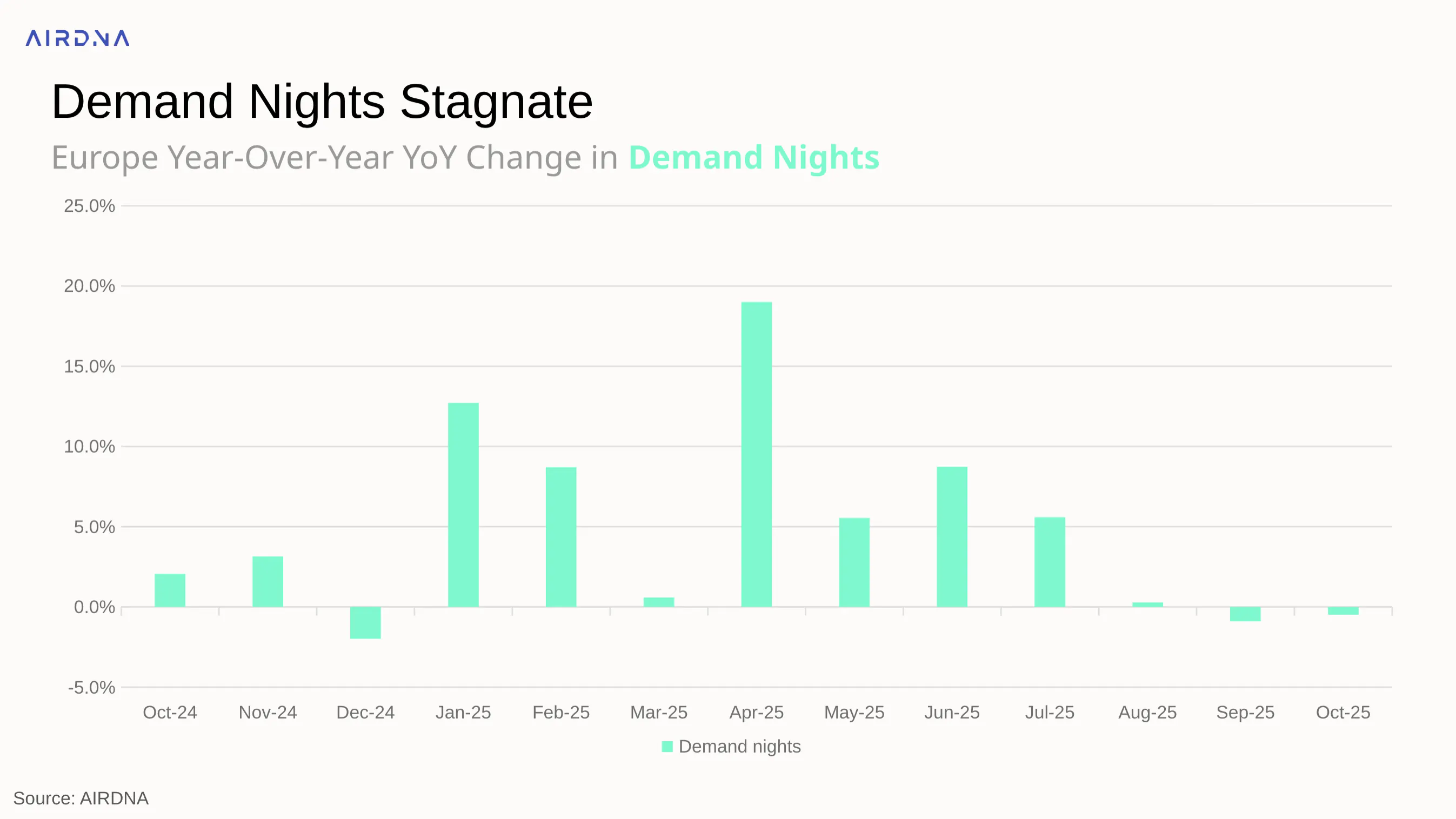
With supply growth in the low single digits, demand has followed a similar trend. Demand nights capture reservations for the reporting month only—in this case, we’re looking at short-term rental reservations in October.
October marks the third consecutive month of flat or slightly negative change at 0.5%, with August at 0.3% and September decreasing slightly by 0.9%. This is the first time since the pandemic that demand growth is below 1% for more than two consecutive months. After a record-breaking Q2, the European market is cooling down as winter approaches.
Overall demand in Europe in October 2025 declined by 0.5% year-over-year, resulting in 185,000 fewer demand nights.
Europe’s recent slowdown in demand likely reflects a combination of market saturation, stricter regulations, and seasonal normalization. STR supply has mostly stabilized after two years of rapid growth, limiting new bookings and reducing short-term availability in key markets like Spain and France.
Meanwhile, tougher licensing rules and enforcement have decreased listings in several southern destinations. These factors have led to softer booking activity through October 2025. The culprit is not collapsing demand, but a maturing, capacity-constrained market is adjusting to stricter rules and seasonal shifts.
Stagnating Demand and High Supply Gains Lead to Occupancy Declines
Occupancy fell across most major European markets in October as supply continued to grow faster than demand. While available listings increased in 16 of Europe’s top 20 countries, demand nights were unable to keep pace.
As a result, occupancy declined in 15 countries year-over-year (YoY). This marks a clear shift into a slower, more mature phase of post-pandemic growth after two years of rapid expansion.
A handful of countries did record occupancy gains YoY. The strongest improvements came from:
- Hungary: +2.3%
- Czech Republic: +1.8%
- Belgium: +1.1%
However, these were outweighed by more significant occupancy declines elsewhere. The steepest drops occurred in:
- Croatia: –5.7%
- Norway: –5.0%
- Sweden: –4.0%
Across Europe, October’s performance shows a broad softening in occupancy. Nordic and Central European markets continued to see strong supply growth. However, demand did not keep up, putting downward pressure on occupancy rates. Croatia stood out with a sharp –17% YoY decline in demand. Other major destinations like Spain and France saw only mild softening.
Despite stricter regulations and minimal demand growth, supply continues to rise in most countries. Steady supply growth is contributing directly to these occupancy losses. Overall, occupancy across Europe’s top markets fell 1.6% year-over-year. Declining occupancy reflects the continent’s wider transition toward slower expansion and a more balanced post-recovery market.
Stable RRI Suggests Pricing Stability Despite Declining ADR
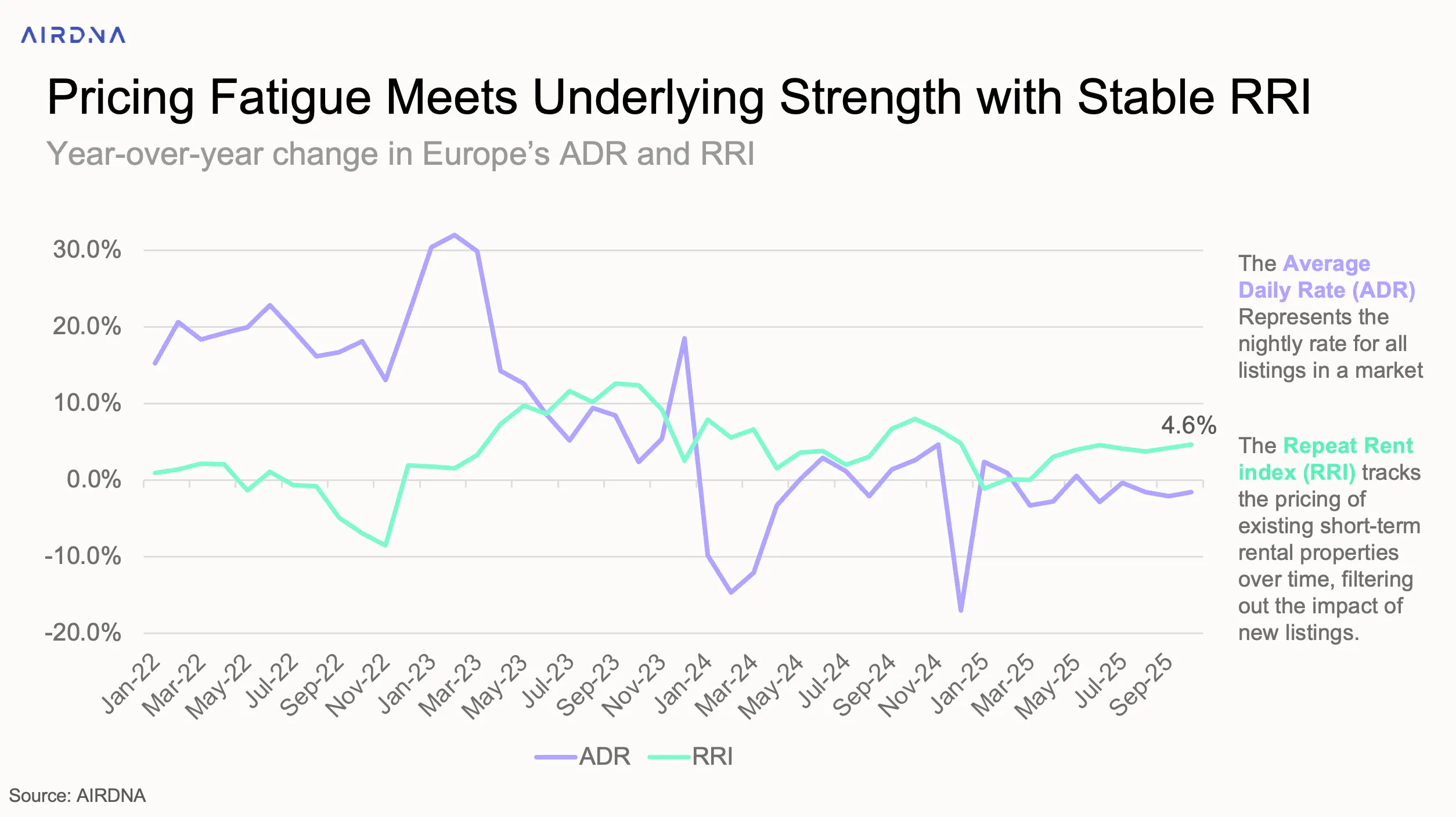
Average daily rates (ADR) declined in October by -1.5% year-over-year (YoY). This marks the 7th month in 2025 with negative ADR growth, with only January, February, and May seeing positive growth. The ADR trend remains negative, averaging -1.7% over the last five months. However, October showed an improvement from the -2.1% decrease in September.
In contrast, the Repeat Rent Index (RRI), which tracks pricing changes among existing operators and removes the effect of new listings entering the market, continued its strong year-over-year growth at 4.6%. RRI is up from 4.2% growth in September, continuing its positive trend and making October the 9th consecutive month of growth.
The contrast between RRI and ADR indicates an underlying stability beneath the apparent softness of the ADR decline. Despite new supply entering at lower prices, existing operators still manage to raise their rates.
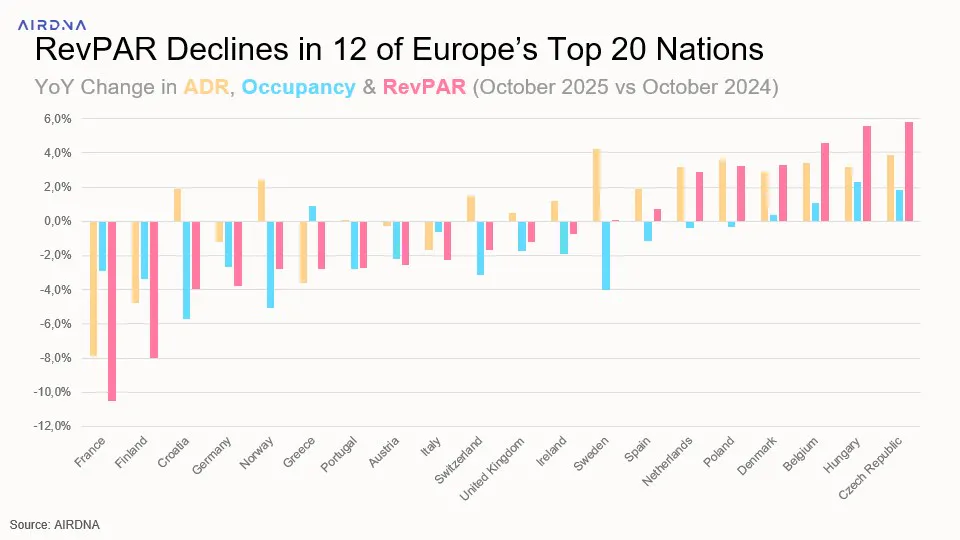
Examining ADR performance among the top 20 European countries, the following nations stand out with the highest year-over-year growth.
- Sweden: +4.2%
- Czech Republic: +3.9%
- Poland: +3.6%
We saw the most significant declines in:
- France: -7.9%
- Finland: -4.8%
- Greece: -3.6%
France’s 7.9% drop in ADR, despite a 3.7% increase in the Repeat Rent Index (RRI), shows a clear normalization of demand after the Paris 2024 Olympics. Major events like the Olympics typically cause temporary price increases in key markets like Paris, Marseille, and Lyon, as hosts benefit from high global demand.
However, the following year sees a correction, with prices returning to more sustainable levels. This effect is amplified by a 1.9% rise in supply, mainly in lower-priced listings, which has shifted the market mix downward. Established hosts keep strong pricing power and can outpace inflation. Newer hosts compete at lower nightly rates, collectively pulling the national ADR average down.
Generally, the trend seems to be that RevPAR is declining due to decreasing occupancy rates. Demand remained flat and available listings increased in 16 of the 20 top European countries, contributing to these occupancy losses. With increased occupancy pressure, it is expected that ADRs will decrease as operators attempt to offer more attractive prices.
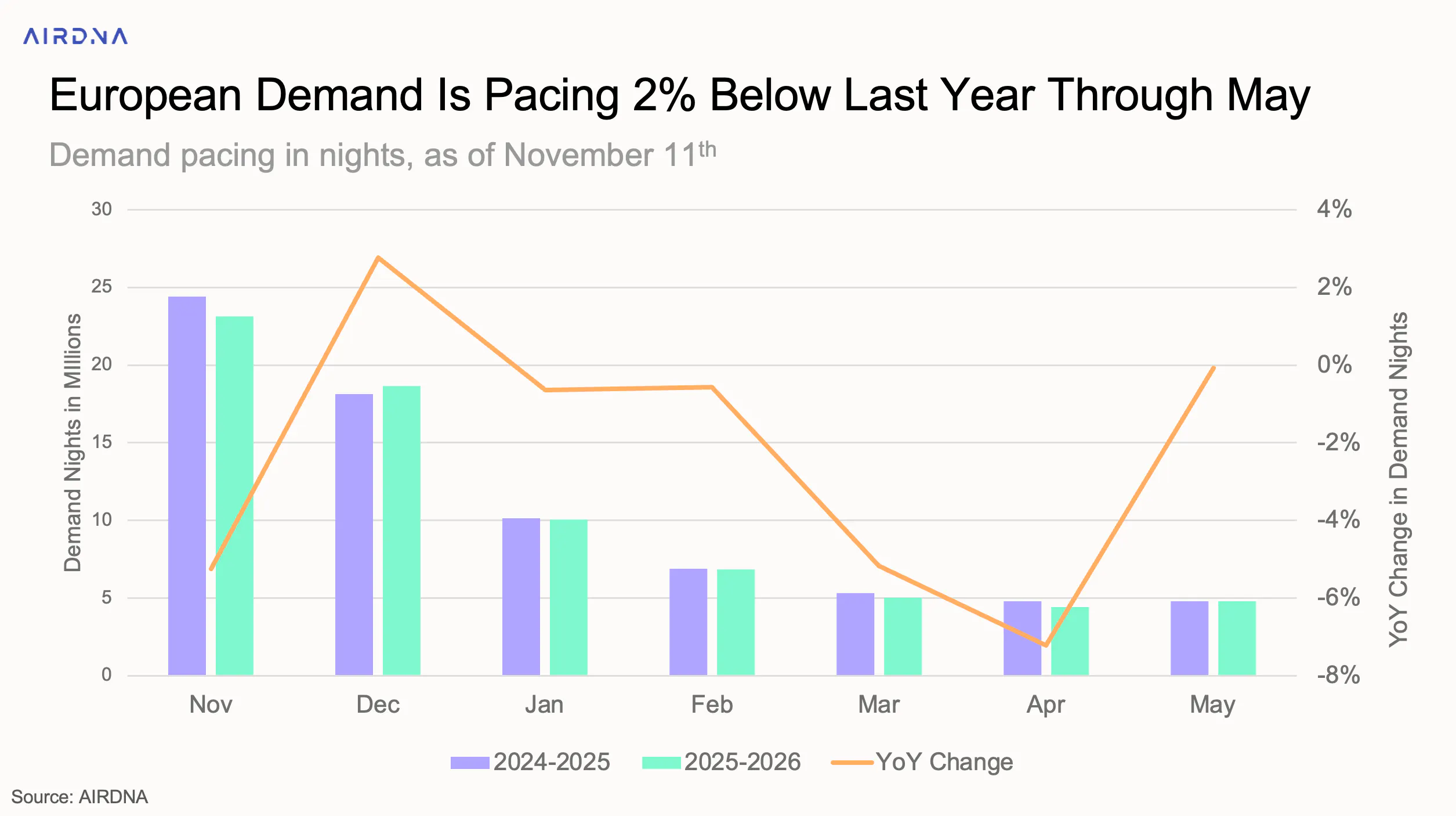
Demand Pacing Slows in Early 2026 Despite Positive December Pacing
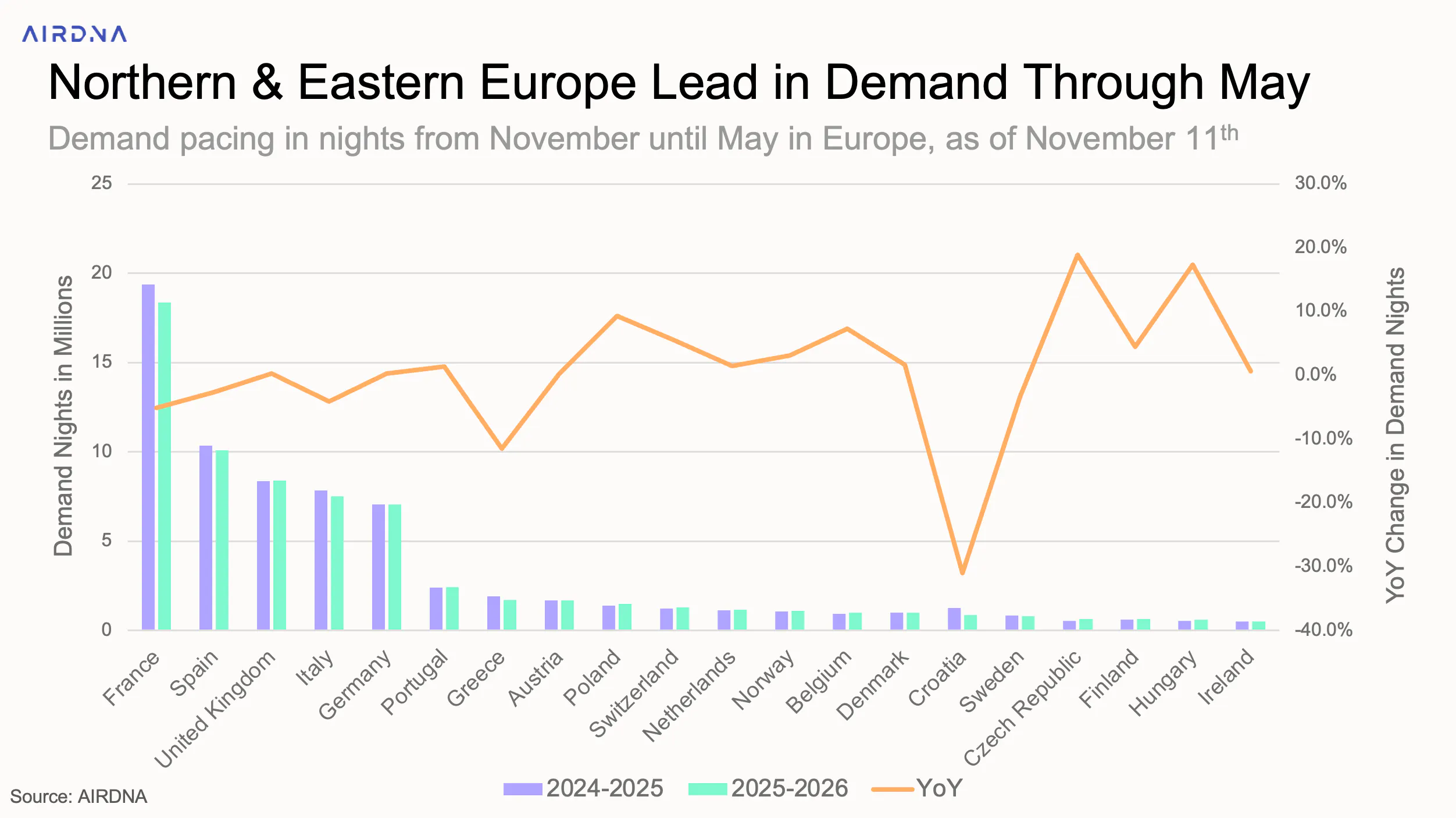
European short-term rental demand continues to ease through mid-2026. As of November 11, demand for stays through May 2026 is roughly 2% lower than last year’s levels, showing a slowdown in travel across the continent.
The decline in demand is most evident in the shoulder months of March and April, where demand nights are down 5–7% year-over-year. We’re seeing slower early-spring bookings after a relatively strong winter in 2024–2025.
However, not all months are underperforming. December bookings are up 3% YoY, indicating strong holiday travel demand. May 2026 is currently tracking flat with last year, which is an encouraging sign that booking momentum may be stabilizing as summer gets closer.
The overall trend suggests travelers remain interested in key winter and early-summer periods, but shorter booking windows and macroeconomic caution could be dampening future demand. This is especially true during off-peak months.
Analyzing short-term rental demand through May 2026 shows clear regional differences. Major Southern markets like France, Spain, and Italy still make up most booked nights, but their growth has mostly leveled off compared to last year.
Meanwhile, Northern and Eastern European destinations (including Poland, the Czech Republic, Finland, and Hungary) are seeing larger year-over-year increases, reflecting growing off-season and regional travel to smaller markets.
At the same time, several mature markets like Croatia and Denmark are experiencing sharp year-over-year declines, signaling a post-summer normalization after last year’s strong peaks.
Overall, the data shows Europe’s main markets still lead in volume, but the momentum is shifting toward emerging and more affordable destinations. Travelers continue to drive additional growth there despite slowing demand in larger markets.
It's important to note, however, that with consistently shorter booking windows, there is still time for demand to catch up.
Winter Olympics Boost Demand in Northern Italy
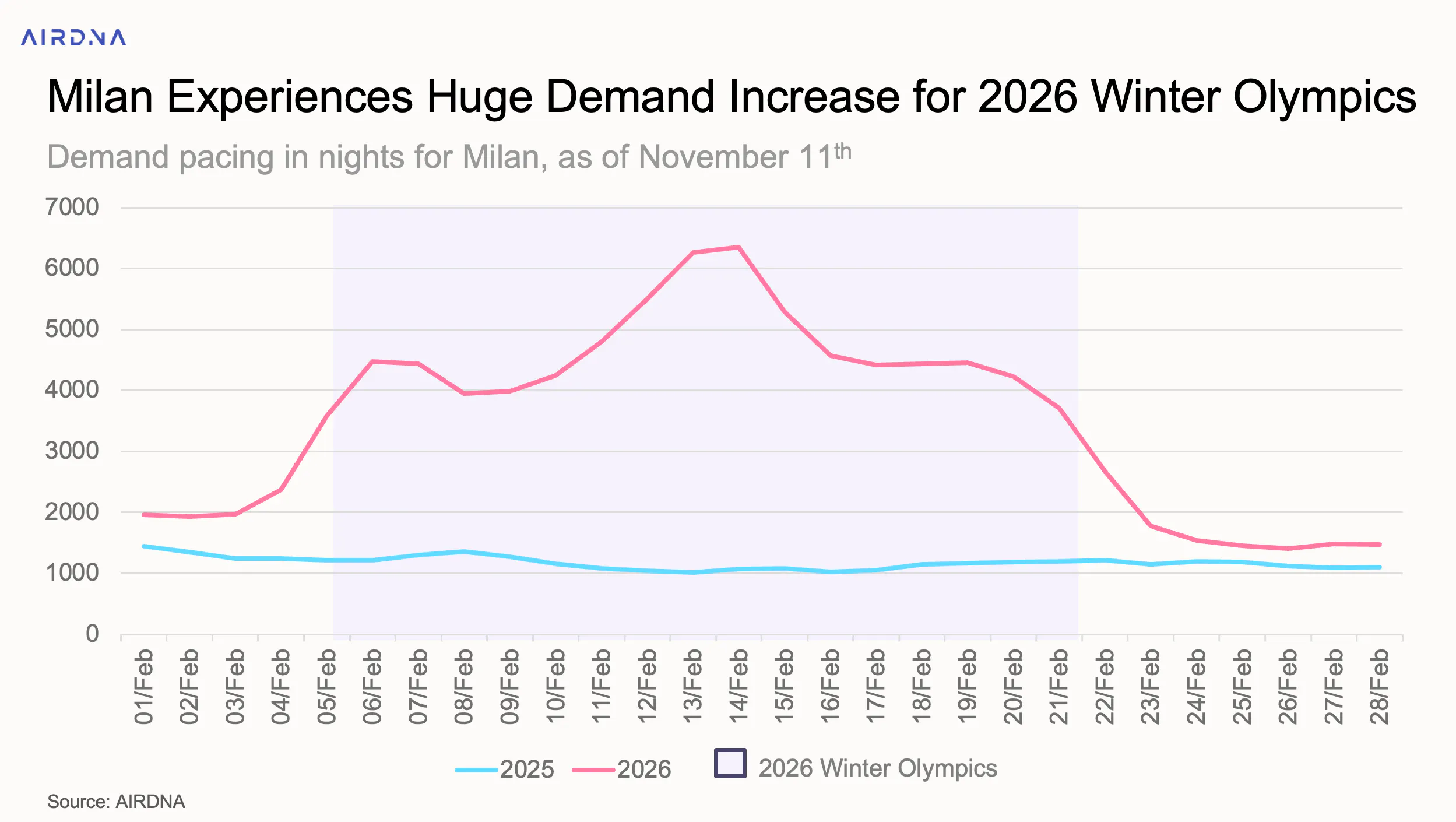
With the Milano-Cortina 2026 Winter Olympics approaching, demand in northern Italy has been increasing. The chart below shows demand data for Milan in February, comparing bookings between 2025 and 2026.
Demand in Milan is rising sharply ahead of the 2026 Winter Olympics, with bookings during the February games period already well above normal seasonal levels. Compared to the same period last year, nightly demand has more than doubled for February. This surge reflects Milan’s role as the main gateway and host city for the Games, attracting not only spectators but also media, teams, and event staff.
This Olympic-driven boost is spreading across Northern Italy, with nearby Alpine destinations and host regions experiencing significant year-over-year (YoY) demand growth. Notable demand increases are apparent in Verona (+94%) and Antholz-Anterselva (+143%) ahead of the 2026 Winter Games.
Most alpine destinations show moderate gains as early bookings for February rise, although Livigno stands out with a -36% year-over-year decline in booked nights. This drop, however, is due to a 42% decrease in available listings. Occupancy actually increased by 10% YoY, indicating tightening supply rather than weaker demand.
Overall, the trend highlights a shift in traveler distribution within Italy’s Olympic corridor. Demand is expanding beyond traditional ski hubs toward host and gateway cities linked to the Games.
ARTICLE SUMMARY
In October 2025, Europe’s short-term rental market softened as modest supply growth and declining demand led to lower occupancy and average daily rates. Despite the slowdown, established hosts maintained pricing strength, and northern Italy saw a surge in bookings ahead of the 2026 Winter Olympics.
Camilo Schmid Rivas
Senior Research Analyst
Camilo Schmid Rivas is a Senior Research Analyst at AirDNA who brings a uniquely well-rounded perspective to short-term rental analytics. With a background that spans investment, real estate, and business analysis—including roles at Stayery and Sollers Consulting—Camilo has worn many analyst hats, each sharpening his ability to turn complex data into clear, actionable insights. A graduate of École hôtelière de Lausanne, he now channels his multidisciplinary expertise into uncovering trends that drive smarter STR decisions. In his free time, he enjoys playing tennis or scuba diving in or around Barcelona.