Best Places to Invest in a Short-Term Rental with $400-550K
Published: January 27, 2026

Jamie Lane
Key Takeaways
- The best places to invest in a short-term rental with a $400–550K budget are markets where purchase prices and revenue potential stay in balance to support strong yield.
- At this price point, markets with year-round or multi-season demand tend to perform better than those that rely on short peak periods.
- AirDNA helps investors compare pricing, revenue, and yield to identify markets where a $400–550K investment can deliver steady STR returns.
A $400–550K budget is a practical middle ground for short-term rental (STR) investing. It’s enough to open doors in established vacation markets, but not so high that returns are precariously dependent on perfect timing or aggressive pricing.
At this price point, the challenge isn’t finding a property. It’s finding a market where purchase prices, demand, and income potential are still reasonably aligned. Some areas in this range offer strong nightly rates but hefty price tags. Others look affordable on paper but struggle with inconsistent bookings or heavy seasonality.
This list focuses on markets where that balance still exists. Each location on our list boasts properties that typically fall within a $400–550K budget and show healthy income potential relative to purchase price. These are the markets where short-term rentals perform steadily without relying on best-case assumptions.
What to Consider When Investing in an Airbnb With $400-550K
A $400–550K budget gives you flexibility, but it also comes with tradeoffs. Before zeroing in on a market, it’s worth stepping back and pressure-testing how that price point actually performs.
Be sure to consider:
How far your budget really goes in the market
In some destinations, $400–550K buys a turnkey home in a prime area. In others, it only gets you a small property, a less central location, or a home that needs work. The difference matters. Location, layout, and condition all play a role in how often a property books and what guests are willing to pay.
Demand quality, not just popularity
Well-known vacation markets aren’t automatically better investments. What matters more is why guests are coming and how consistently they show up. Markets with repeat visitation, weekend and shoulder-season demand, or multiple demand drivers tend to perform better than places tied to a single event or short peak season.
Local short-term rental rules
Regulations vary widely, even within the same state. Before committing, confirm whether short-term rentals are allowed, how permits work, and whether rules are stable or still evolving. Regulations matter just as much as revenue potential when evaluating risk.

Our Methodology for Ranking the Best Places to Invest with a $400-550K Budget
To identify the best markets for a $400–550K short-term rental investment, we started with price and then worked outward to performance.
First, we used AirDNA’s For-Sale Properties data to surface markets where listings consistently fall within this budget range. We focused on areas where buyers can realistically expect to find multiple properties priced between $400K and $550K.
From there, we assessed how those properties actually perform as short-term rentals. That meant looking beyond top-line revenue and paying closer attention to how income potential compares to purchase price. Markets with strong yields rose to the top.
All data reflects market conditions as of December 2025 and is intended to show relative performance, not guarantees. Individual results will vary based on property type, location, and operations.
Best Places to Invest in a Short-Term Rental for $400-550K
With a $400–550K budget, the strongest opportunities show up in markets where pricing hasn’t outpaced demand. The markets on this list offer homes within reach while still delivering solid short-term rental performance.
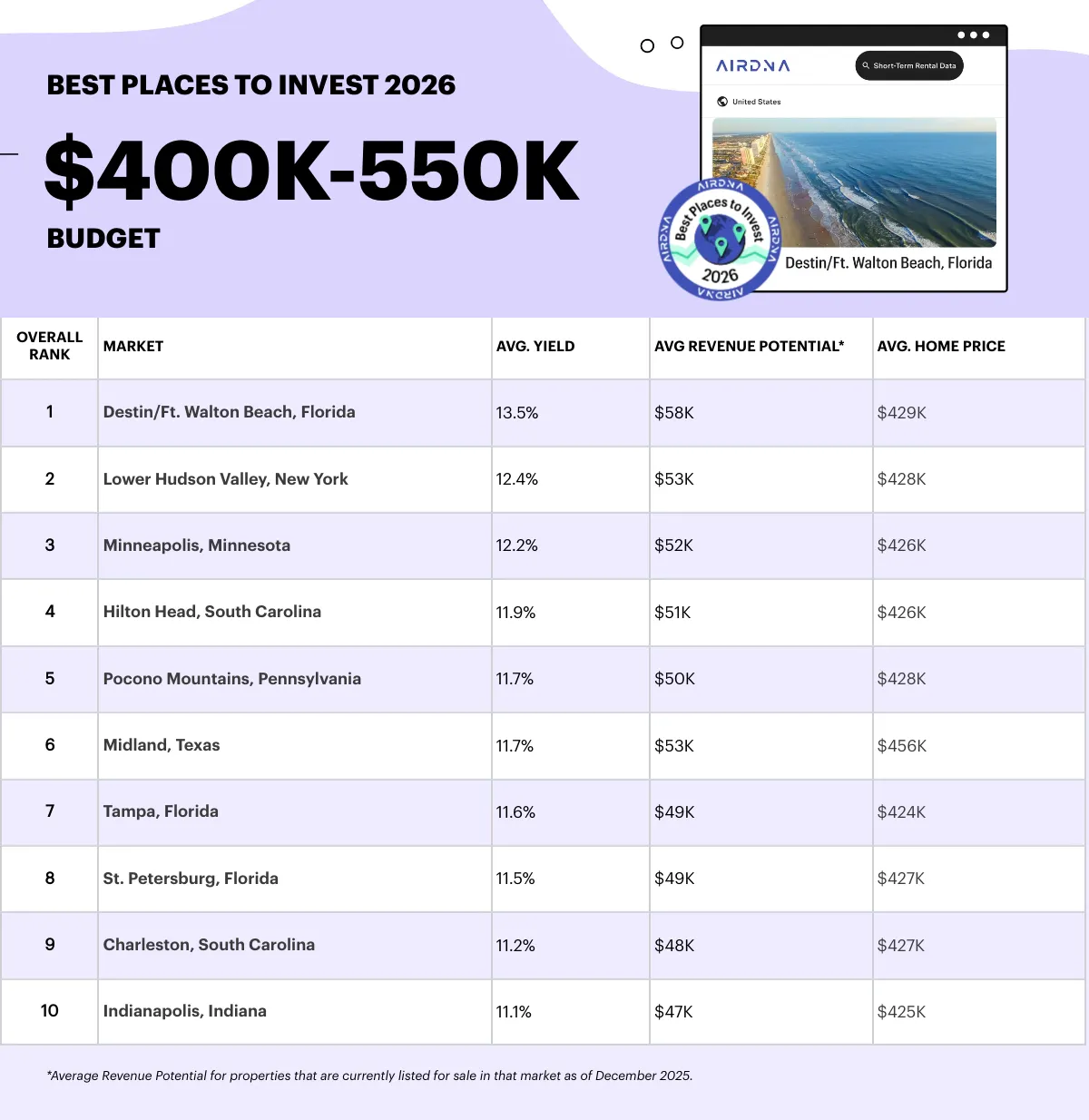
Keep in mind that performance at this budget is still highly property-specific. Two homes at similar price points can produce very different results depending on location, layout, condition, amenities, and local regulations. You should always evaluate yield and revenue potential at the individual property level before making an investment decision.
1. Destin/Ft. Walton Beach, Florida
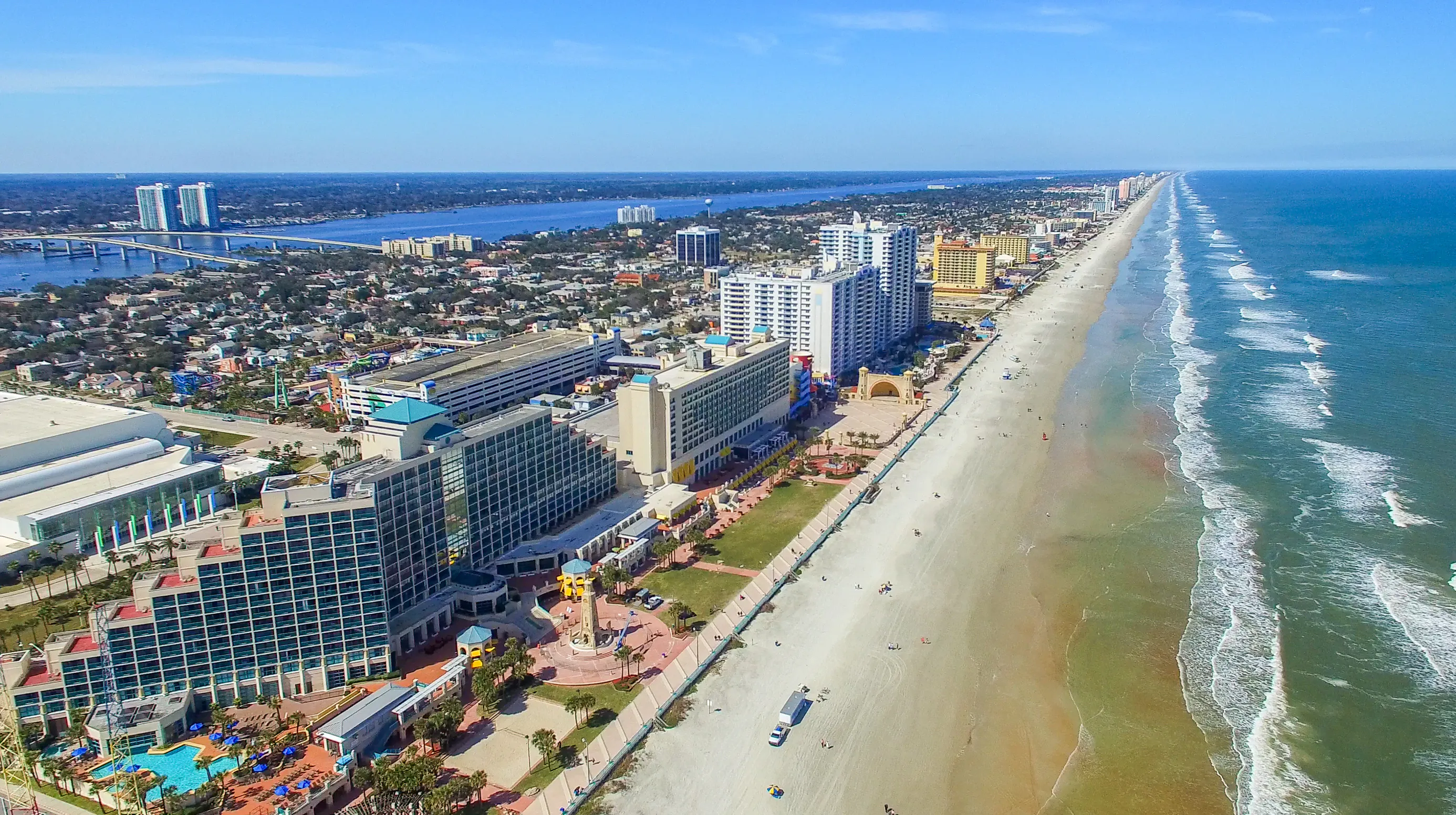

Destin/Ft. Walton Beach in Florida delivers steady, family-driven beach demand with returns that still make sense at today’s prices. It’s a well-established Gulf Coast destination where guests book entire homes, stay multiple nights, and spend on experiences, which creates a strong foundation for short-term rental performance.
Demand isn’t limited to a single season or attraction. Calm Gulf waters, white-sand beaches, and experience-led activities like dolphin tours and boating drive repeat visits. Meanwhile, family-friendly attractions like parks and aquariums help support bookings beyond peak summer months. Homes near the beach or harbor—and those designed with families in mind—are best positioned to capture both seasonal upside and more consistent year-round occupancy.
Average home prices sit just under $430K, which is a reasonable entry point for a beach market. $57,804 in revenue potential and an average yield of 13.5% make this a compelling opportunity for a mature Florida beach market.
Regulations:
Destin/Ft. Walton Beach requires short-term vacation rentals to register with the city, and Okaloosa County outlines what it can regulate (including items like occupancy limits and registration requirements). Overall, it’s not a hands-off market (investors should expect compliance steps) but the rules are defined and manageable.
2. Lower Hudson Valley, New York


The Lower Hudson Valley offers reliable, year-round demand driven by its proximity to New York City. This is a beloved weekend getaway destination, attracting repeat visitors looking for quick escapes without flights. Those factors support steady pricing and occupancy even in a relatively high-cost region.
Demand in the Lower Hudson Valley is broad and resilient. Guests come for a mix of river towns, hiking and outdoor access, historic sites, arts and culture, and a well-established food-and-drink scene. That variety helps reduce seasonality and pulls in multiple traveler types, from weekend couples and holiday groups to remote workers seeking privacy and outdoor space.
From a numbers standpoint, the market holds up. Average home prices sit just under $430K with $53,322 in revenue potential and an average yield of 12.4%. For a Northeast market at this price point, that balance reflects strong top-line performance.
Regulations:
The regulatory environment across the Hudson Valley is highly local and uneven—rules vary town-by-town and, in some areas, becoming more restrictive through caps, permit requirements, and zoning constraints.
Investors should expect to confirm STR eligibility at the municipality level. For example, Cold Spring (a village in the region) only issues 33 STR permits via a lottery system. This illustrates that some submarkets can be tightly controlled.
3. Minneapolis, Minnesota


Minneapolis, Minnesota combines year-round big-city demand with a more approachable entry price than many major metros. The result is a short-term rental market that holds up beyond peak seasons and doesn’t rely on a single demand spike to perform. Note that the Minneapolis market has 25 submarkets with varying property affordability and neighborhood-level short-term rental performance differences.
Demand in Minneapolis is well balanced. Arts and culture, pro sports, business travel, and easy access to lakes and parks drive both weekend leisure stays and steady midweek bookings. That mix helps smooth occupancy and supports more consistent pricing throughout the year.
From a numbers standpoint, Minneapolis offers compelling returns relative to acquisition costs. Average home prices are just under $430K. With an impressive $51,880 in revenue potential, you get an average yield of 12.2%. For a primary metro, that balance reflects solid cash-flow potential paired with long-term market stability.
Regulations:
Minneapolis is structured and somewhat restrictive for investors. The city requires a short-term rental registration or license. It also mandates that STR investors can only have one short-term rental property in Minneapolis in addition to their homesteaded property.
With these policies in mind, investors should plan for licensing compliance and limitations on scaling non-owner-occupied inventory.
4. Hilton Head, South Carolina
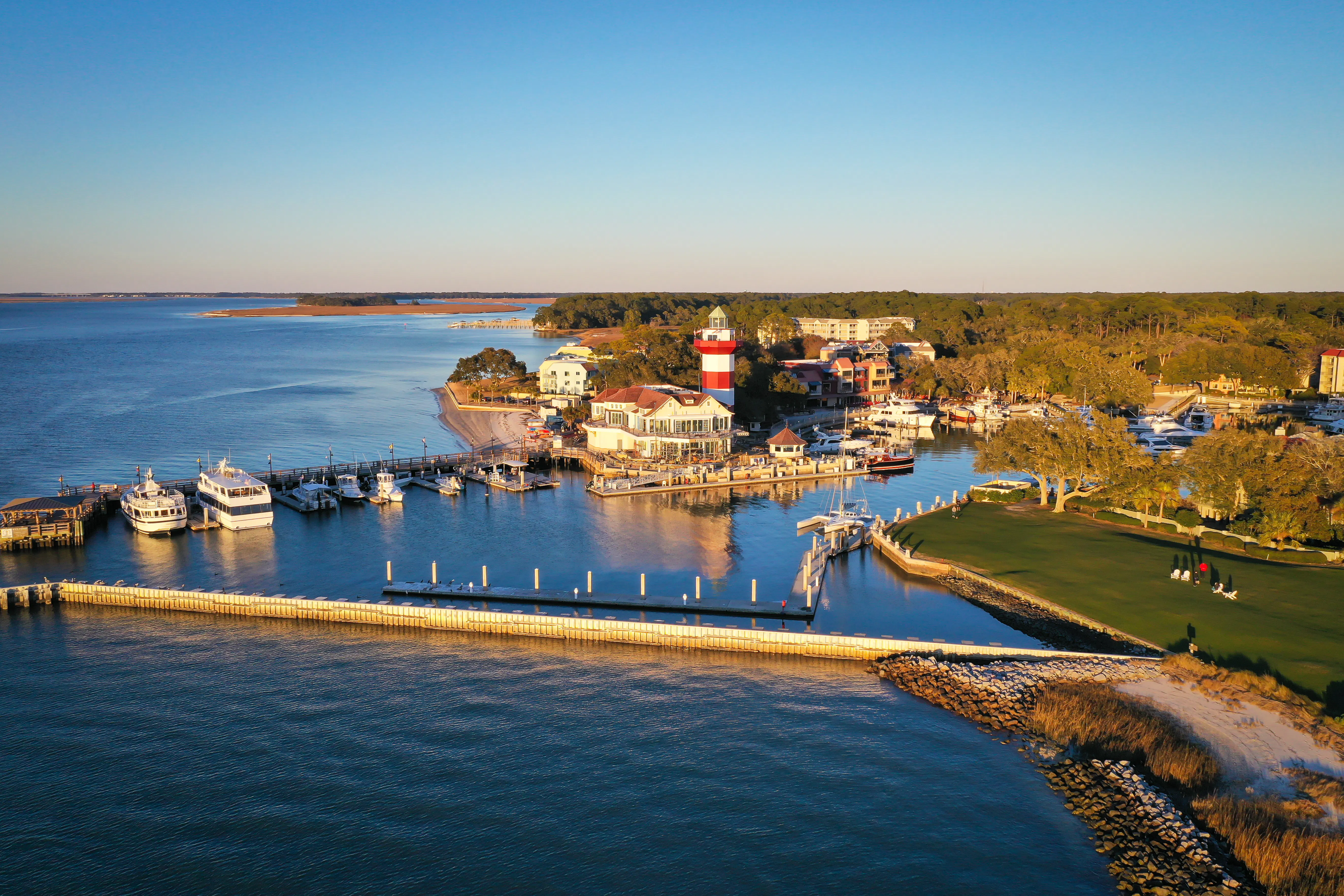

Hilton Head, South Carolina is a proven, nationally recognized beach market with demand that shows up year after year. As a mature resort destination, it offers predictable occupancy and pricing, with guests willing to pay for a polished, family-friendly experience.
Demand is broad and resilient. Beaches anchor the market, but outdoor recreation, golf, tennis, dining, and shopping extend stays and support shoulder-season bookings. Well-known areas and resort-style amenities help keep the island top of mind for repeat visitors, reducing reliance on peak summer travel alone.
From a numbers perspective, the market still works. Average home prices are just over $426K and the market commands an impressive $50,902 in revenue potential for an average yield of 11.9%. In a mature coastal market, that balance supports reliable cash flow instead of relying on future appreciation.
Regulations:
Hilton Head requires STR hosts to obtain short-term rental permits and pay a $250 fee each year. In addition to the annual permit, hosts also have to hold a Town of Hilton Head Island Business License. Verify local regulations before investing.
5. Pocono Mountains, Pennsylvania
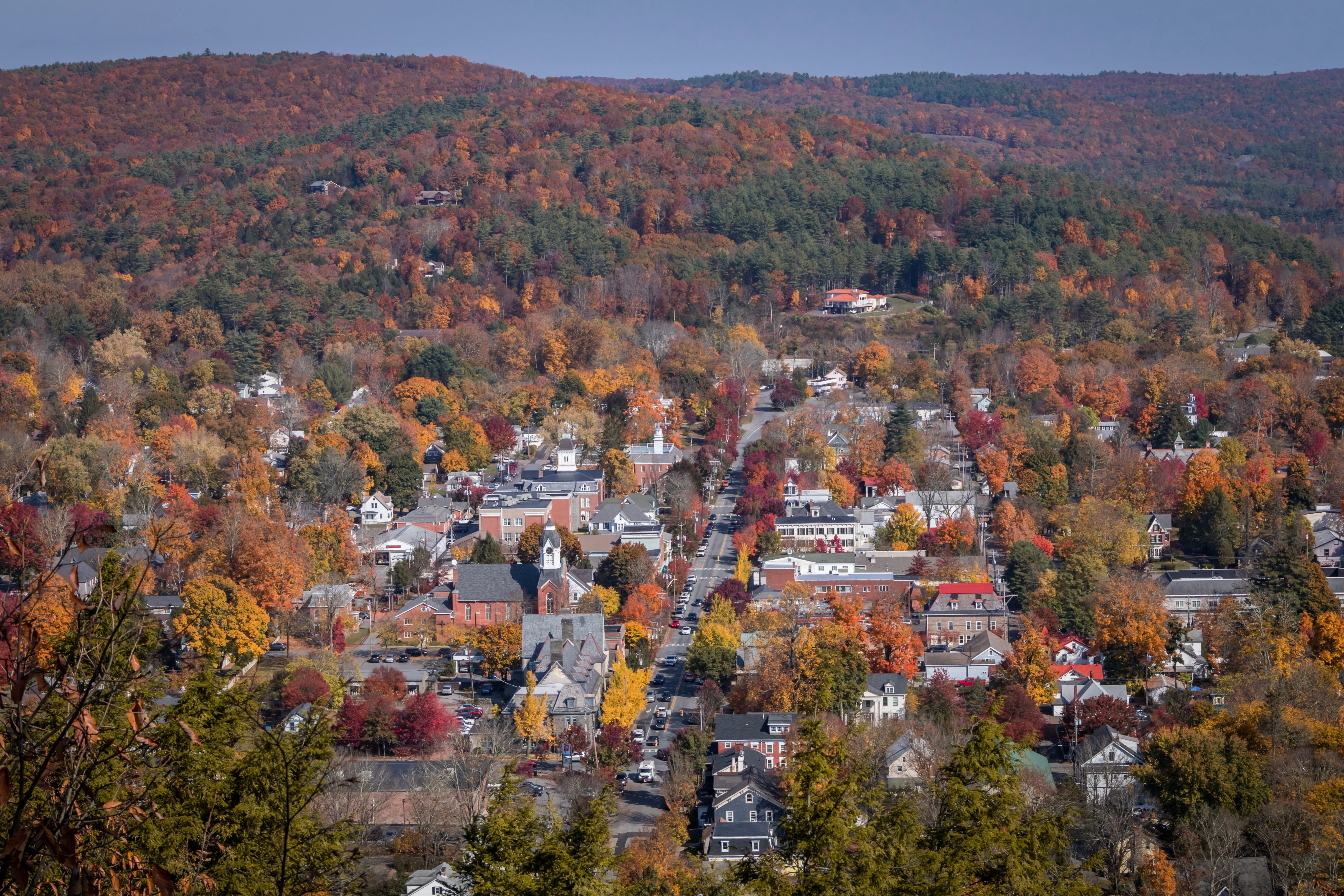

The Pocono Mountains combine nature appeal with easy drive-to access from New York City and Philadelphia. That proximity fuels steady weekend and holiday demand, especially for cabins and larger homes designed for family trips and group getaways.
Demand here is seasonal, with average occupancy peaking at around 65% during the summer months and sitting in the 30-40% range the rest of the year. Outdoor recreation carries the market, from hiking, lakes, and fall foliage to winter ski weekends. Meanwhile, waterparks, indoor attractions, and seasonal events support demand even when the weather turns.
From a performance standpoint, the Pocono Mountains is a winning region for STR investing. Average home prices are under $430K and average revenue potential is just over $50K, producing an average gross yield of 11.7%. That’s a strong return profile for investors who want cash-flow potential without relying on aggressive appreciation.
Regulations:
Both Stroudsburg and East Stroudsburg Boroughs have established regulatory frameworks: hosts are required to obtain a short-term rental license/permit. East Stroudsburg Borough’s Short-Term Rentals Ordinance 1379 outlines inspections and renewal requirements, while Stroudsburg Borough code specifies occupancy limits. Within Emerald Lakes specifically, community rules indicate that association members may rent or lease their residence, suggesting an HOA-level framework that allows rentals.
How to Find the Best Markets to Invest In at Any Budget
Start with price, then evaluate performance
Use AirDNA’s For-Sale Properties data to reveal markets with listings in your price range. Use the Listing Price filter to set a price range with upper and lower limits.
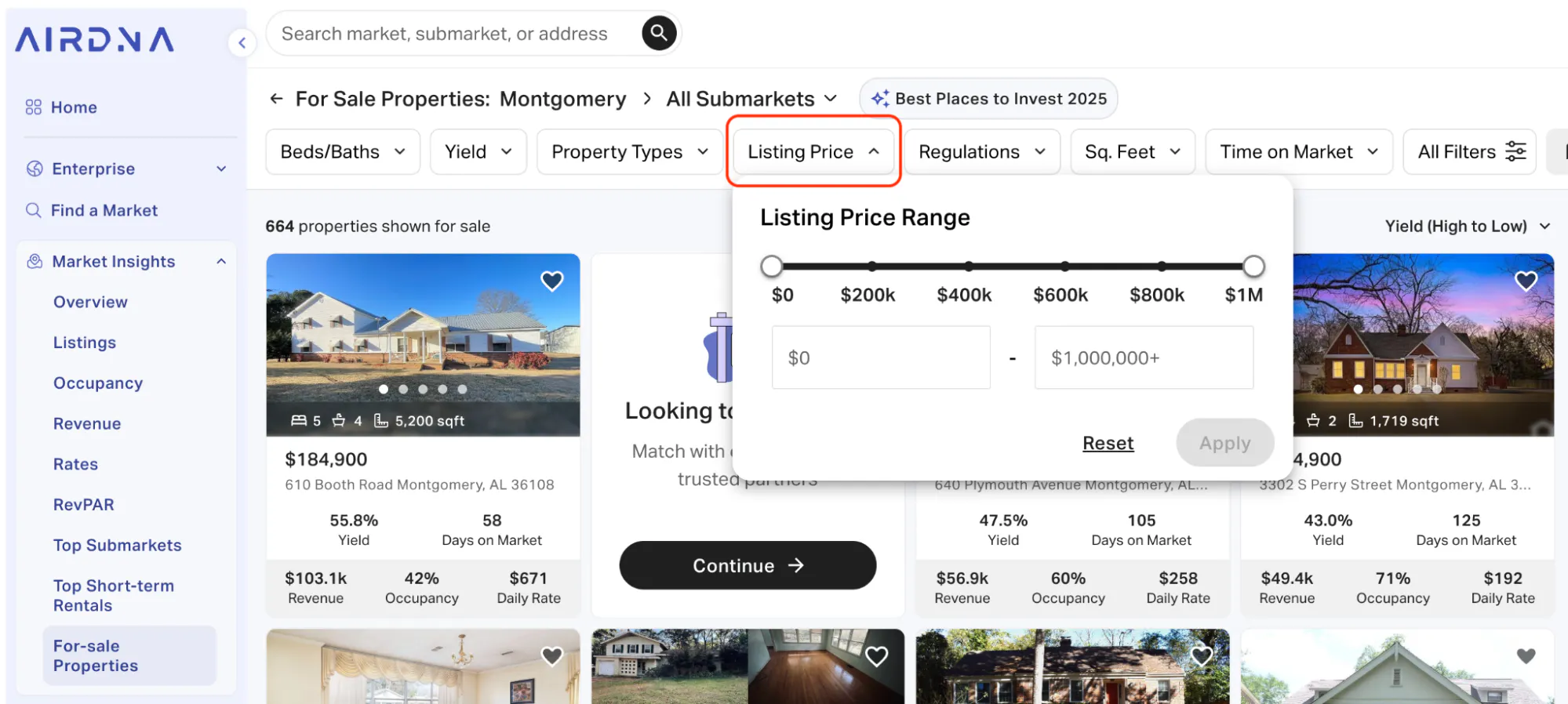
Once you’ve got a short list of for-sale properties, focus on how those properties actually perform.
- Compare average revenue potential across similarly priced markets
- Look for yield strength, not just overall revenue
- Seek out markets with consistent demand rather than highly seasonal ones
Use yield to stress-test affordability
Just because a home is priced lower doesn’t mean it’s a better deal for an STR investment. Looking at yield reveals how income potential compares to purchase price.
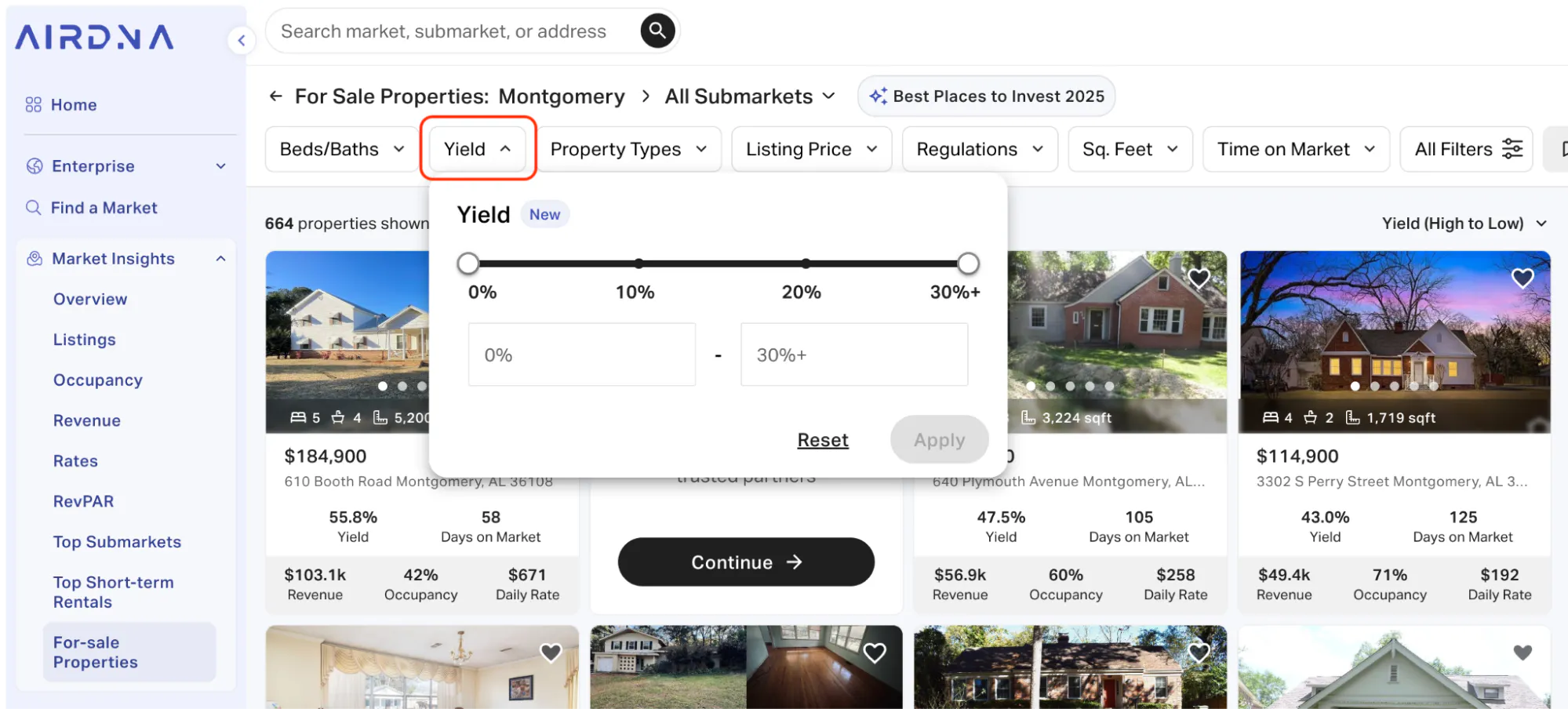
By applying a minimum yield filter, you can weed out markets where lower prices don’t translate into strong performance.
Set a lower limit using the yield filter to only show properties that meet your desired yield. Find this filter in the For-sale properties tab.
FAQs
Is $400–550K a good budget for investing in a short-term rental?
Yes, this budget can work well in markets where home prices and demand are still aligned. It’s often enough to access established destinations without relying on aggressive pricing or best-case assumptions to make the numbers work.
What type of property performs best at a $400-550K budget?
That depends on the market. AirDNA has Market Filters that allow you to see how property size, amenities, price tier, and more affects short-term rental performance in any given area.
How much does seasonality affect returns at the $400-550K price range?
Seasonality varies widely by market. Some destinations rely heavily on peak seasons, while others benefit from year-round or multi-season demand. Understanding how bookings shift throughout the year is key to underwriting realistic cash flow.
Where can I find properties for $400-550K that perform well as Airbnbs?
Using AirDNA, you can view for-sale listings alongside short-term rental performance data to narrow the field. Price, revenue, and yield filters make it easier to find properties that align with both your budget and return targets.
ARTICLE SUMMARY
Investing in an Airbnb with a $400–550K budget means finding markets where home prices are balanced by consistent demand and strong yields. This article highlights U.S. markets where properties in this range support steady short-term rental performance, using AirDNA data to surface realistic investment opportunities.
Jamie Lane
AirDNA Chief Economist
He is responsible for data analysis, thought leadership, and leveraging advanced analytical techniques to provide new insights into short-term rental market trends. Native to Atlanta and an Airbnb host himself, Jamie enjoys cycling, mountain biking, backpacking, running, and playing in a dart league in his free time.