

 Calculate Revenue
 Research Markets
 Find For Sale Properties
 Compare My Listing
 STR Revenue Calculator
 Custom Comp Sets
 Submarket Insights
 Custom Search Filters
 Rate Recommendations
 Performance Benchmarking
 Competitor Comparison
 Owner Contact Details
 Property-level performance data
 Tourism Insights
 Real Estate Investment Analytics
 About Us
 Sales
Sales Support
 Press
PressEuropean Review March 2025: Demand Dips, But Cannes and Spring Bookings Surge
Published: April 16, 2025

Jamie Zhang
Key Takeaways
- March short-term rental (STR) demand across Europe rose just 1.8% year-over-year, largely due to Easter shifting to April this year.
- Travel interest remained strong overall, with spring break bookings holding steady and last-minute Easter getaways still available in cities like Munich and Cologne in Germany.
- On-the-books demand for the May Cannes Film Festival in France has already surged, pointing to a strong shoulder season ahead.
After a promising start to 2025, Europe’s short-term rental market took a brief breather in March. However, the slowdown isn’t a cause for concern. With Easter falling in April this year, March missed out on the usual holiday travel boost, especially compared to 2024, when the holiday landed in late March.

At a Glance: March 2025 STR Performance in Europe
- Available listings totaled 3.3 million, reflecting a 4.6% increase year-over-year (YoY)
- Demand nights reached 26.6 million, a slight increase of 1.8% YoY
- Average daily rates (ADR) averaged €145, a decrease of 1.8% from 2024
- Average occupancy rate was 49%, 7.3% lower than that in 2024
- Revenue per Available Rental Night (RevPAR) decreased 8.9% year-over-year to €71
The State of the European Economy
Europe’s economic picture in March was a bit of a mixed bag. On March 20, the European Central Bank (ECB) slightly downgraded its 2025 GDP forecast from 1.0% to 0.9%, citing weak manufacturing output and sluggish investment activity. Still, the services sector remains a bright spot, continuing to prop up overall growth.
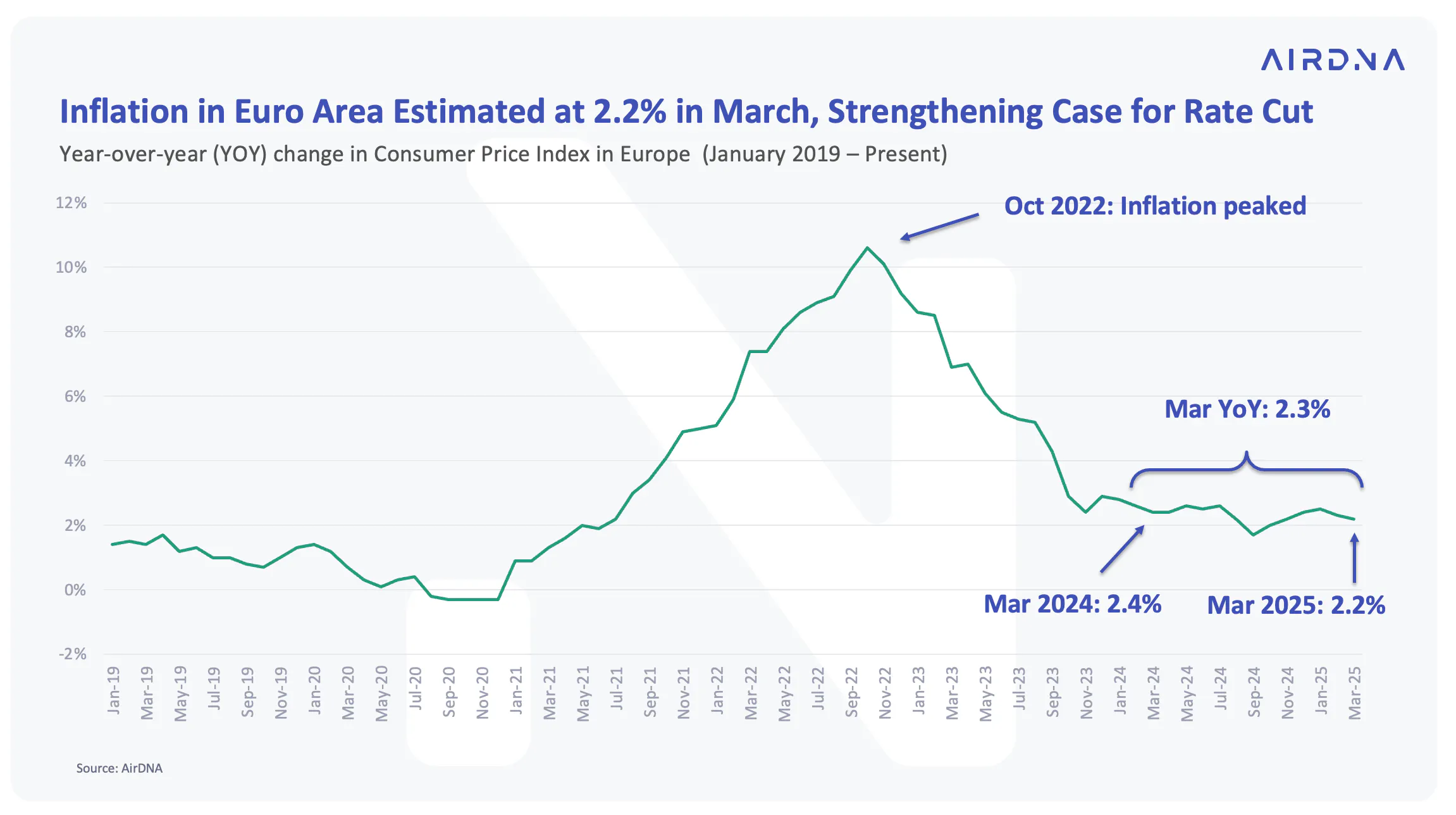
Inflation continues to ease. In March, euro area inflation dropped to 2.2% — down from 2.4% in the same month last year. Over the past 12 months, the average inflation rate has hovered around 2.3%, staying close to the ECB’s medium-term target.
A stronger euro is also helping to ease price pressures. The currency is up 7% against the U.S. dollar compared to last year, making imported goods cheaper and supporting the broader disinflation trend.
In response, the ECB made its sixth consecutive rate cut in March, lowering the deposit rate to 2.5%. With inflation stabilizing and the exchange rate favorable, markets widely expect another rate cut in April. For investors, this trend could mean lower mortgage costs and improved opportunities to finance new listings.
That said, not everything is smooth sailing. The new U.S. administration’s shifting tariff policies could cause ripples in the European economy. A proposed 25% tariff on EU imports could shave 0.3% off GDP growth in the first year, according to initial ECB analysis. And if the EU responds in kind, retaliatory measures could push that impact closer to –0.5%.
Demand Growth Softens, Occupancy Dips
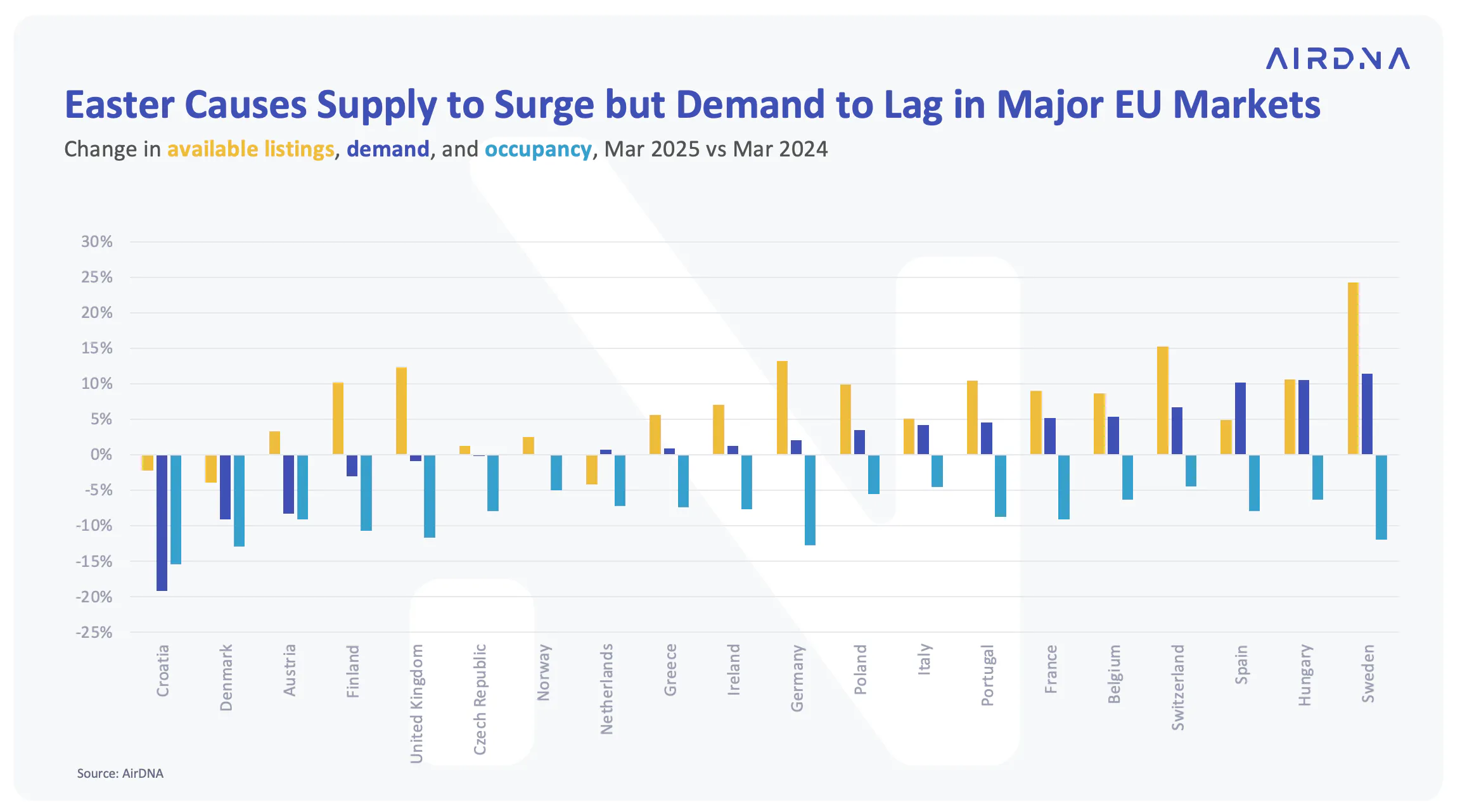
March demand growth varied widely across Europe, with the Easter shift playing a major role in redistributing travel activity into April. Only 6 countries saw more than 5% year-over-year growth in nights stayed — a noticeable slowdown compared to February, when over half of Europe’s top 20 countries hit double digits.
Still, the demand story isn’t all muted. Several markets managed to buck the trend:
- Sweden (+11.4% YoY)
- Hungary (+10.5% YoY)
- Spain (+10.2% YoY)
- Switzerland (+6.7% YoY)
- Belgium (+5.4%)
- France (+5.1%)
Some countries clearly felt the impact of timing and seasonal shifts, though, with notable drops in nights stayed:
- Croatia (-19.2% YoY)
- Denmark (-9.1% YoY)
- Austria (-8.3% YoY)
- Finland (-3.0% YoY)
- United Kingdom (-0.9% YoY)
Occupancy took a hit across much of Europe, as supply continued to grow faster than demand. Croatia, Denmark, and Germany saw some of the sharpest drops, driven by expanding inventory and delayed holiday bookings. In most cases, these dips are temporary and reflect calendar quirks more than broader market weakness.
Greece Stays Resilient in the Face of Holiday Shifts
While Greece doesn’t celebrate Easter at the same time as many of its European neighbors, it still felt the ripple effects of the holiday shift. Inbound travel slowed slightly in March, with many international visitors pushing their trips into April instead.
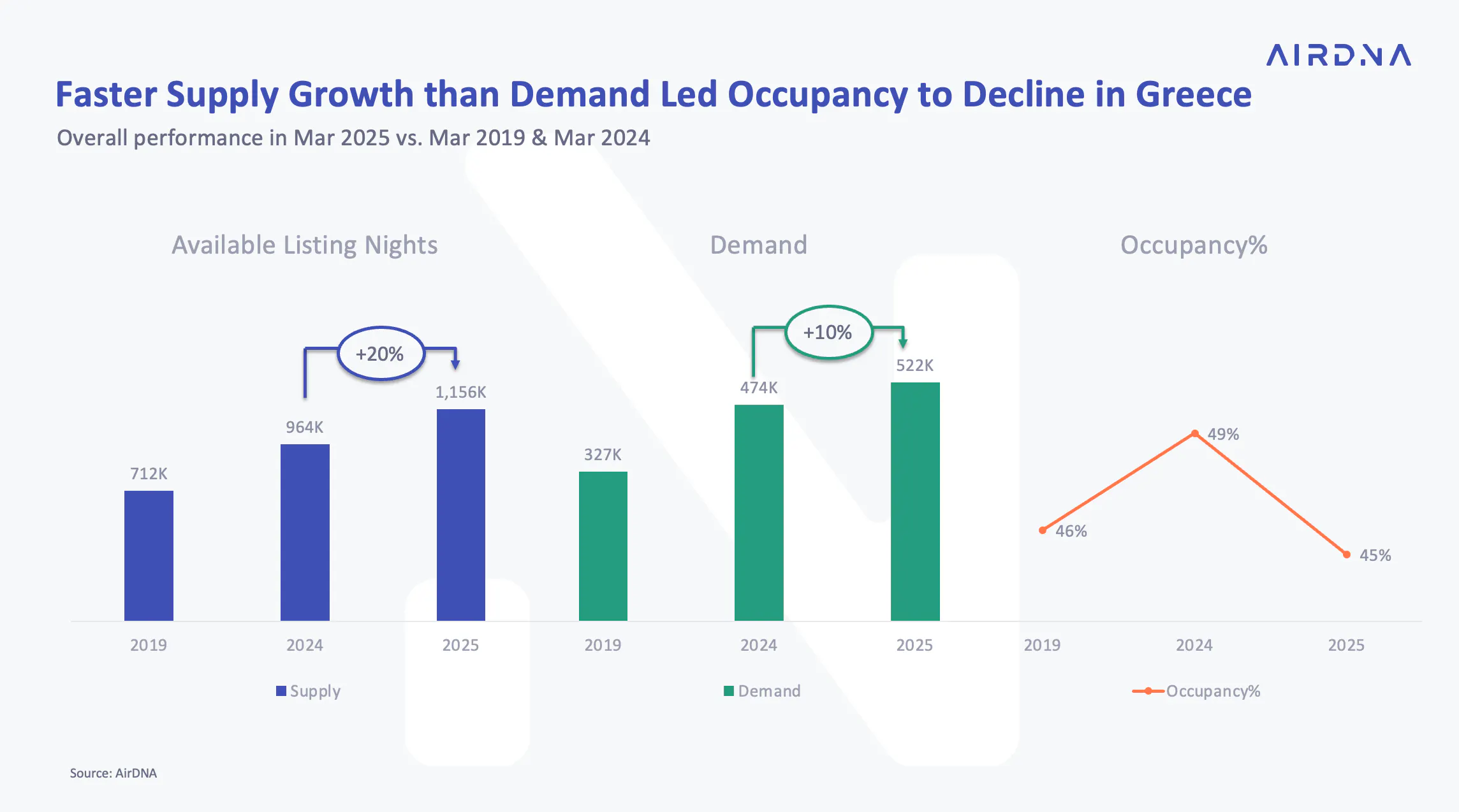
Occupancy dropped by 4 percentage points (–8% YoY), but the underlying cause wasn’t weak demand, rather expanding availability. Although the total number of listings in Greece grew by a modest 5% year-over-year, the number of available listing nights surged by 20%, creating more supply than the market could absorb in March.
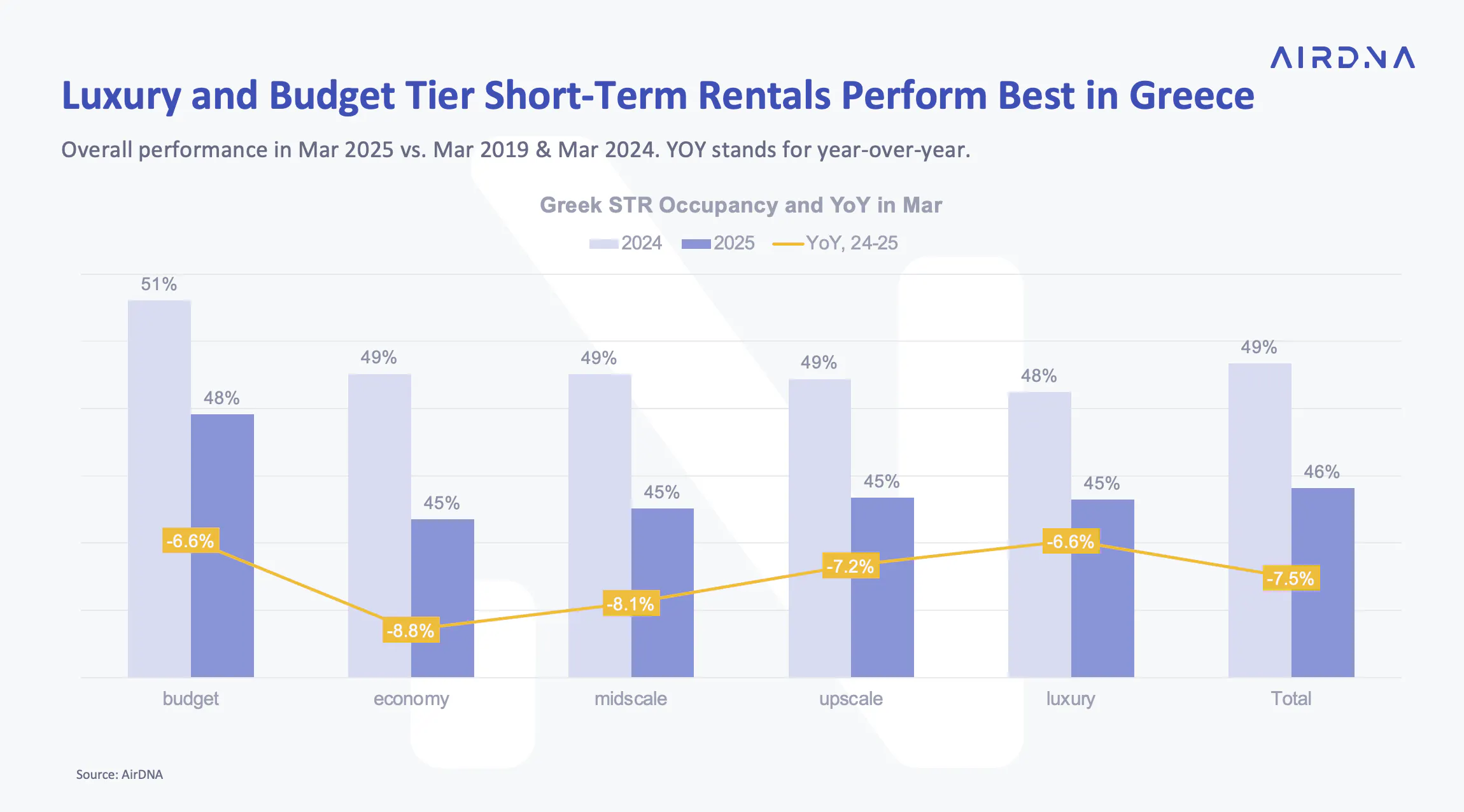
Looking at performance by price tier, the high and low ends of the market held up best. Luxury and budget properties saw the most stable occupancy, each declining only 6.6%. In contrast, economy and midscale tiers were more affected by the supply-demand mismatch.
There were also bright spots. In Thessaloniki, upscale and luxury properties bucked the national trend, posting year-over-year occupancy gains of 4% and 6% respectively. The economy tier, on the other hand, saw the weakest performance, reinforcing a growing preference for more premium experiences.
Last-Minute Spring Break Deals in Europe?
With Easter falling in April this year, many travelers are still locking in their spring getaways — and the data suggests there’s strong momentum heading into semana santa.
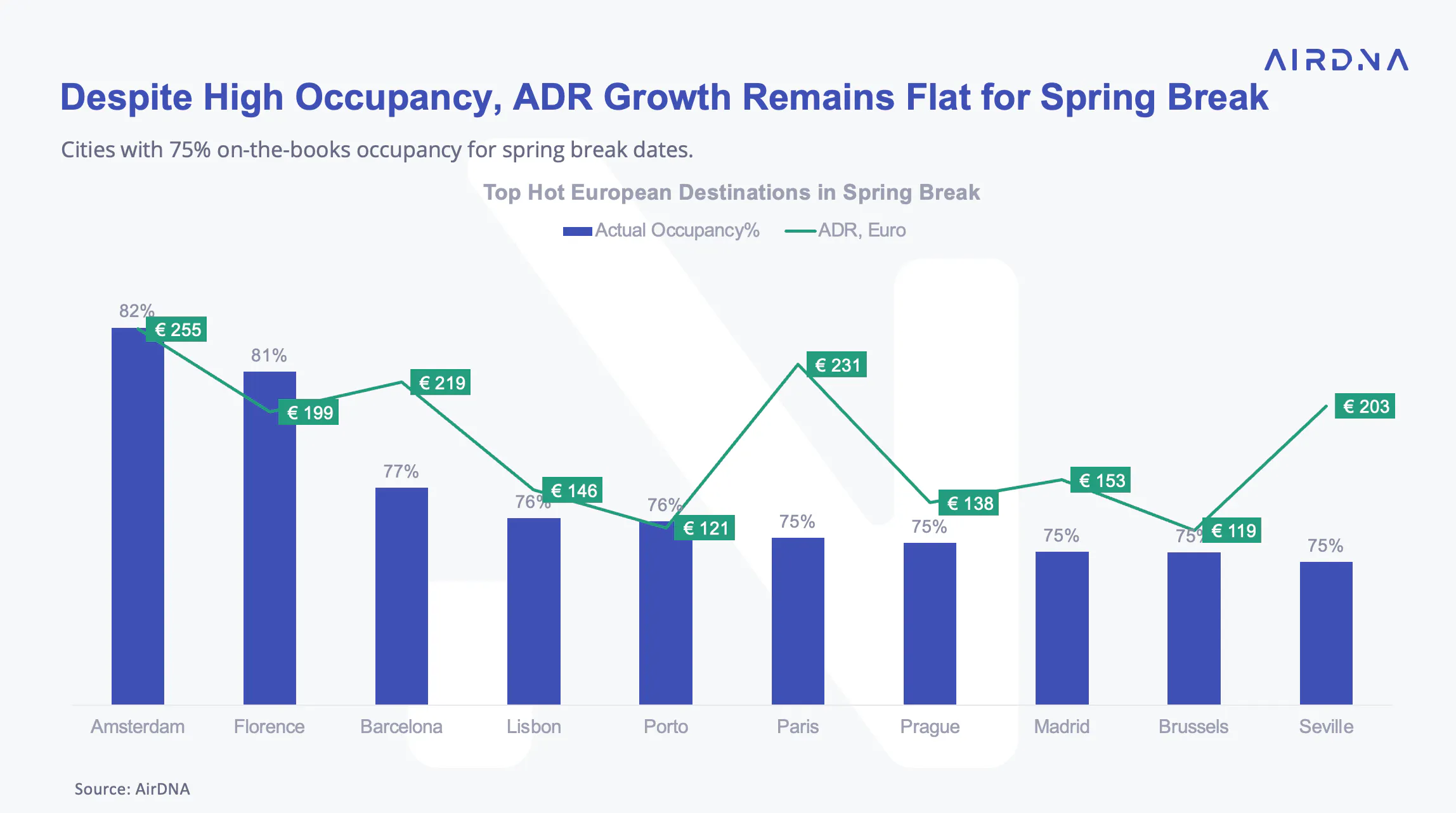
As of early April, 10 major European destinations had already reached 75% on-the-books occupancy for Easter week, up an average of 10 to 20 percentage points compared to the same time last month. Amsterdam leads the pack with 82% occupancy and a €255 average daily rate (ADR).
What’s surprising? Despite the high demand, prices are holding steady. Across the top cities, ADRs during Easter week are flat compared to both the week before and the week after — rising only 0–2% on average. That makes now a prime time for travelers to find solid value in typically high-demand destinations.
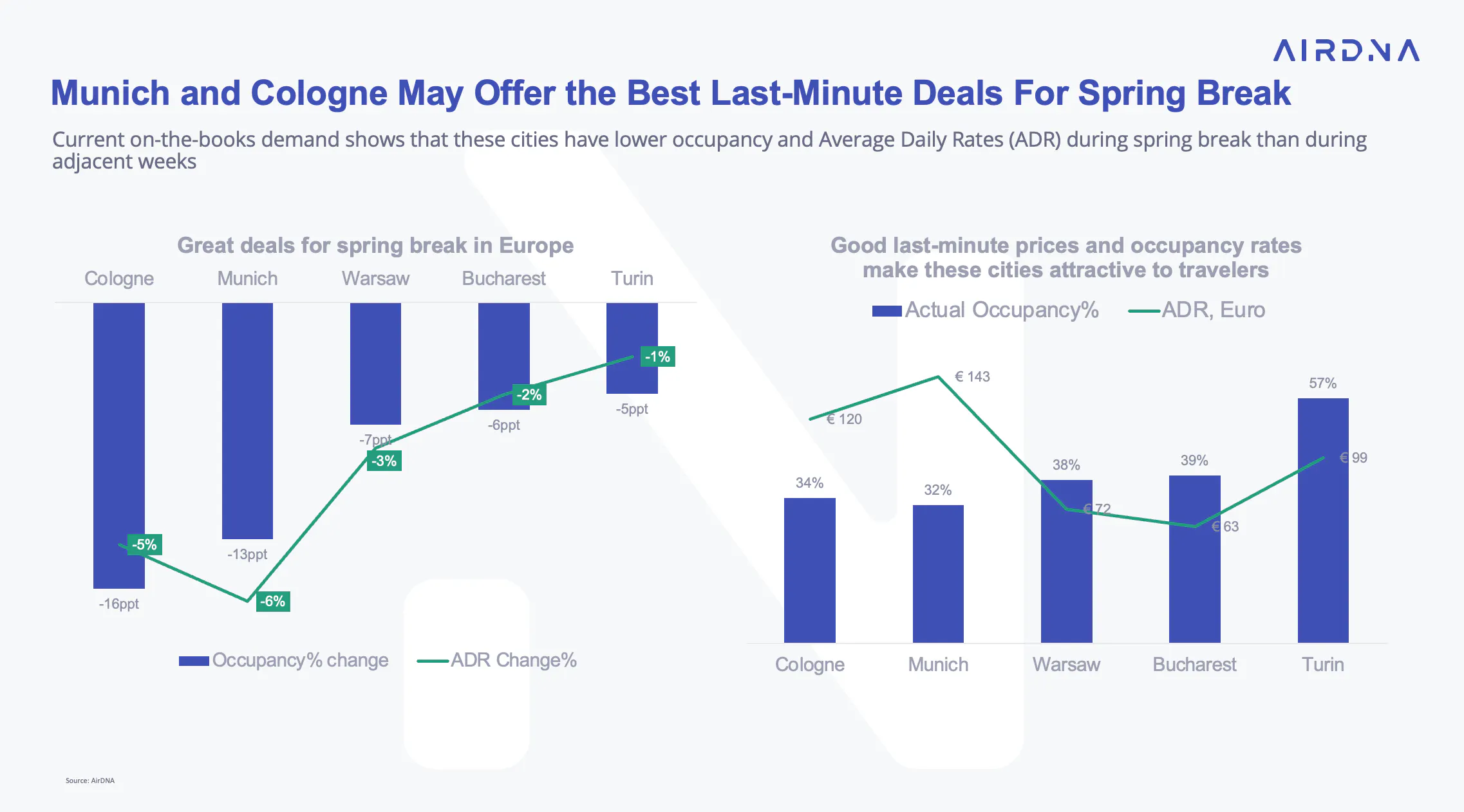
For those hoping to skip the crowds, a few cities are showing lower projected occupancy for Easter week compared to surrounding dates — making them ideal for a quieter spring break. Cologne and Munich, Germany, in particular, stand out as last-minute opportunities with availability and stable pricing still on offer.
Cannes Film Festival Ignites Short-Term Rental Demand
Sun, cinema, and surging demand for local events — the Cannes Film Festival in France is shaping up to be a major revenue driver for hosts on the French Riviera this spring.
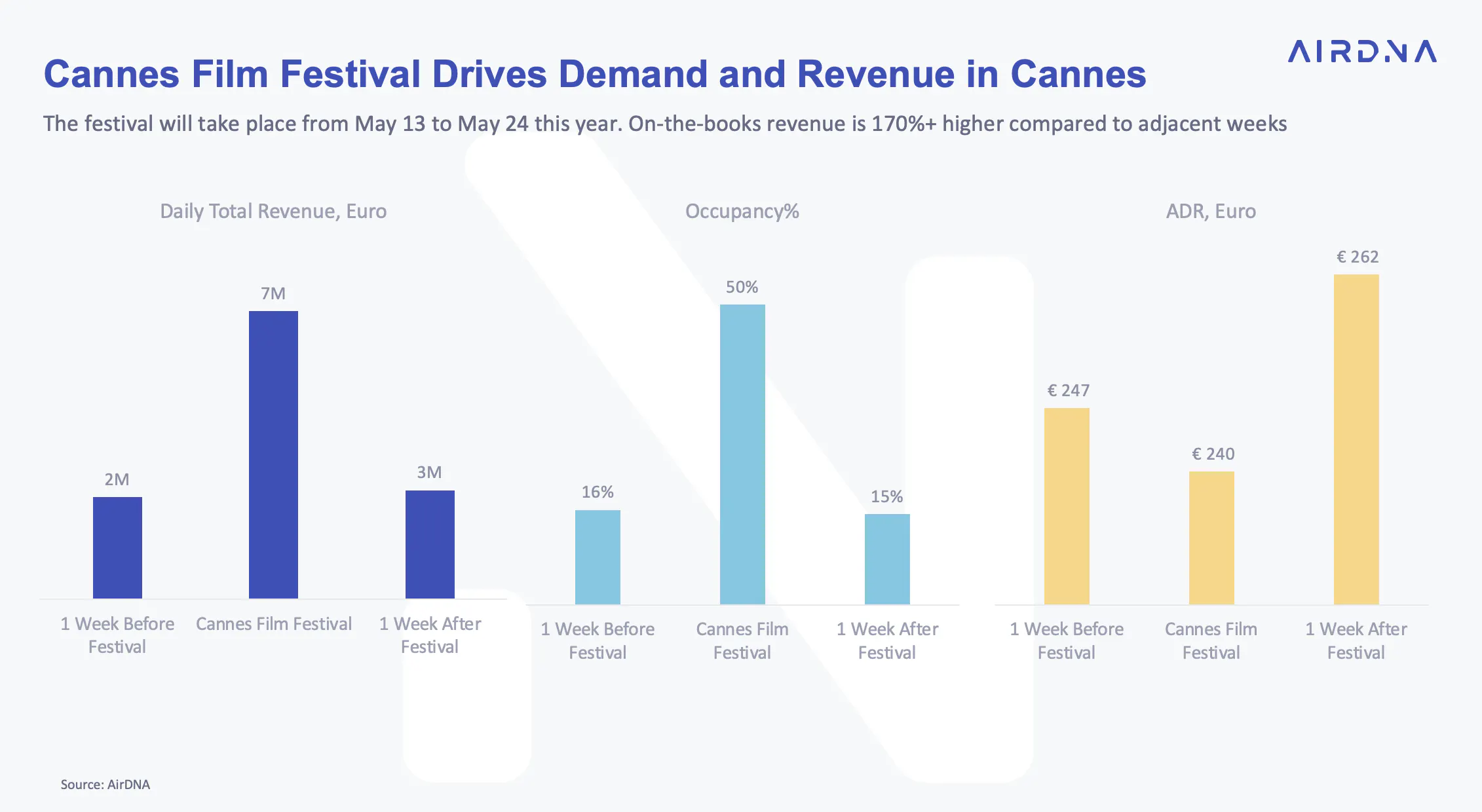
Scheduled for May 13–24, the 12-day event is already showing a massive uptick in short-term rental bookings. On-the-books demand has climbed sharply, with daily demand nights during the festival reaching 30,000 — pushing average occupancy to 50%. That’s more than double the occupancy of adjacent weeks.
The revenue impact is even more striking. Daily revenue for Cannes short-term rentals is projected to hit €7 million during the festival, up 173% compared to surrounding periods. Demand is clearly the driver here, as listings fill up quickly and guests lock in their stays well in advance.
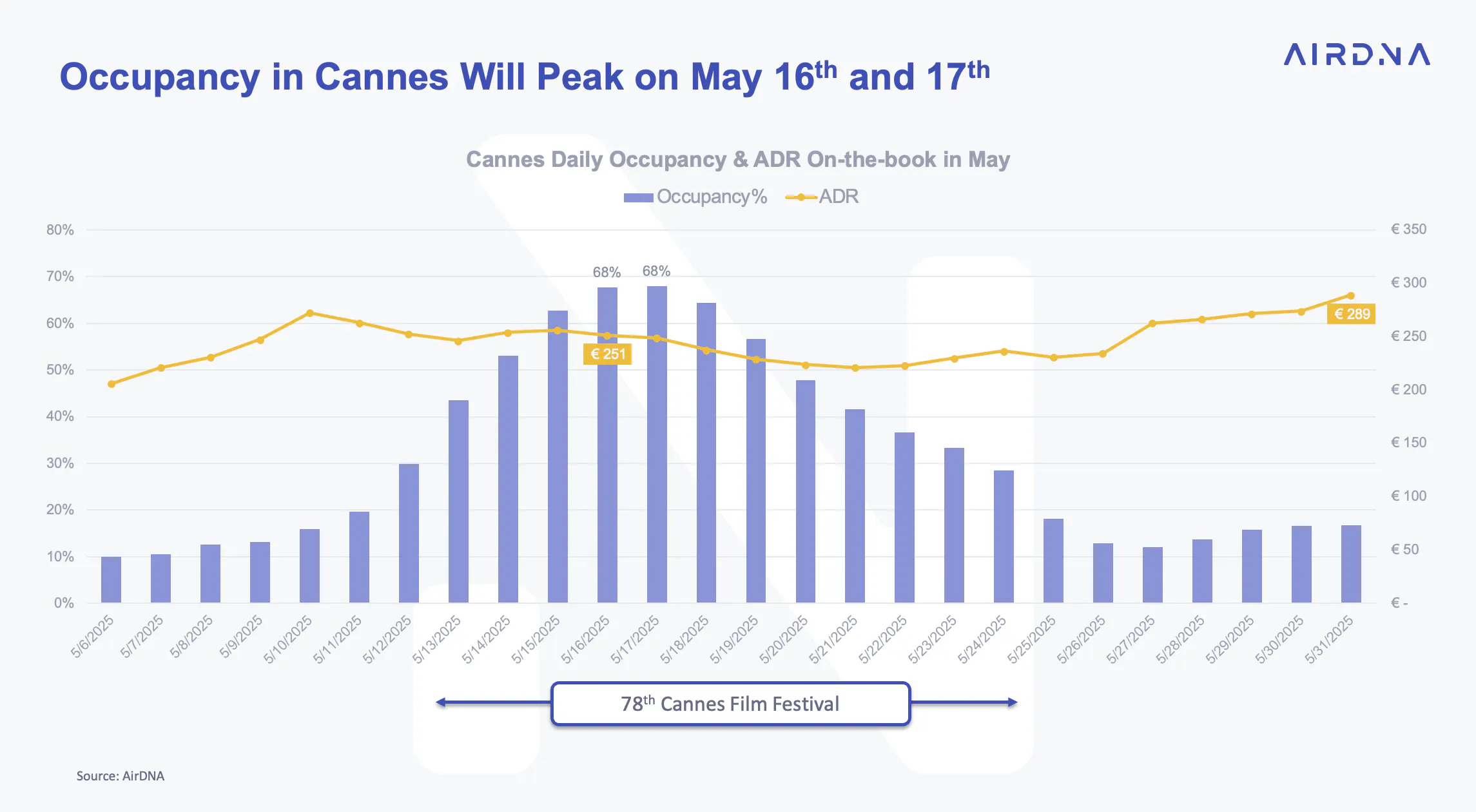
Peak occupancy is expected on the first Friday and Saturday of the event, where current bookings already sit at 68%. ADRs during the festival have climbed to €251, cementing Cannes as one of the most lucrative short-term rental markets in Europe this May.
ARTICLE SUMMARY
March 2025 saw relatively flat year-over-year demand in Europe’s short-term rental market, largely due to Easter shifting into April this year.
Jamie Zhang
AirDNA Data Analyst
Jamie Zhang is a Data Analyst at AirDNA, leveraging her background in data science and analytics to uncover key trends in the short-term rental industry. Before joining AirDNA, she worked as a data analyst at Shanghai Disney, where she specialized in revenue forecasting and financial planning . She holds a Master’s degree in International Economics and International Relations from Johns Hopkins. Jamie enjoys cycling to explore different corners of the city.
