


7 Property Management Tips for 2026 From Bach Bros, a Top 5 U.S. Property Manager
Published: October 22, 2026

Camilo Schmid Rivas
Bach Bros Properties ranks fifth on AirDNA’s 2026 Best Property Managers list and won its Fastest Growing award, after taking first place in 2025. Its portfolio rose from 114 to 221 listings (+94%) in a year, while its review-weighted guest rating held at 4.95. Almost all of it, 97% of listings, sits in one market: Fredericksburg, Texas.
On AirDNA’s STR Data Lab podcast, the Bach Bros team shared the practices behind that growth. You can watch the full episode at the end of this post.
This piece pairs each tip with AirDNA data, comparing the top 25 managers on the 2026 ranking to U.S. hosts with five to 99 listings. Performance figures compare each home to similar homes in the same market, bedroom count, and price band, so a strong market is not mistaken for strong management.
Every tip comes from Bach Bros, and most are paired with AirDNA data; a few, such as how a manager works with owners or staff, sit outside what booking data can measure and rest on the team’s experience alone.
Key Takeaways for 2026
- A top review score was worth about $8,500 a year, or +17% in revenue, compared to a similar U.S. listing without one in 2026.
- Every one of the top 25 managers kept all of its listings above a 90% response rate, compared to 82% of hosts with 50 to 99 listings.
- 67% of Fredericksburg listings had high price variability in summer 2026, compared to 34% across the U.S., so dynamic pricing keeps a manager level rather than ahead.
- 82% of Gatlinburg listings have a hot tub, so it keeps a cabin in the running without lifting it above the rest.
- A $28,000 flair upgrade lifted one Bach Bros home’s annual revenue from $35,000 to $52,000 (+49%).

1. Put Ratings First: A Top Review Score Is Worth About $8,500 a Year
The Bach Bros team treats guest ratings as the priority and lets revenue follow, and the data supports that order. Across the U.S. in 2026, a top review score was worth about $8,500 a year, or +17% in revenue, compared to a similar listing without one. Between 2025 and 2026, listings rated 4.97 or higher stayed among their market’s top 10% of earners 73% of the time, compared to 57% for listings rated below 4.6, and were nearly twice as likely to climb out of the bottom half (18% compared to 10%).
Among the top 25 managers, 70% of listings were rated 4.9 or above in summer 2026, compared to 44% for hosts with five to nine listings. At Bach Bros, the share was 75%. In the twelve months to August 2026, its occupancy ran at 1.17 times that of similar homes, while its ADR, the average nightly rate, was 1.01 times theirs, which suggests the rating pays through booked nights rather than a higher price.
2. Answer Every Guest Fast, on Every Listing
The second rule is fast communication at all times, backed by a team with the right tools. Every one of the top 25 managers kept all of its listings above a 90% response rate in summer 2026, compared to 82% of hosts with 50 to 99 listings. Their average response rates barely differ, at 99.6% compared to 97.9%, so the gap lies in consistency across the portfolio rather than in the typical listing.
Among hosts with five to 19 listings, homes with a 100% response rate earned +10% revenue per available night compared to similar homes in the twelve months to August 2026. Bach Bros held a 100% response rate on every listing, with communication and check-in each rated 4.99 out of 5, which points to a team built to answer every guest rather than most of them.
3. Specialize in One Market and Grow Deeper, Not Wider
“You’re going to be able to operate the best in your backyard,” the team said, adding that staying local is what serves owners and guests best. The top 25 managers work the same way: in summer 2026 the median manager kept 98% of its listings in one market and one state, spread across about six submarkets.
Focus alone does not separate the best, since hosts with 50 to 99 listings are also typically single-market businesses. What stands out is that the top 25 kept that focus while growing, adding depth in a market they know rather than new markets. Between 2021 and 2026, the top 10% of listings in mountain and lake markets went from earning 67% more than the typical listing of the same size in the same market to 88% more. Across the U.S. that premium rose from 67% to 75%, while in suburbs it narrowed from 65% to 63%. The gap is consistent with how uneven demand is: in the twelve months to August 2026, booked nights in mountain and lake markets were as concentrated as if they were spread evenly across 8.4 of the year’s twelve months, compared to 9.9 in suburbs, and wider swings between peak and quiet months give a skilled operator more to gain from pricing and minimum stays.
4. Look Past Portfolio Averages to Find the Listings Slipping Behind
The Bach Bros team reads performance listing by listing, using AI to interpret the data, because an average hides where individual homes are slipping, whether it is the average across a manager’s own portfolio or across a whole market. In the team’s view, the weakest months of the year are where a manager pulls ahead of competitors, since scarce demand goes to the listings that are priced and presented best. Airbnb’s two quality badges show the difference: Superhost works like a portfolio average, earned at the account level so every listing under a qualifying account carries it, while Guest Favorite is judged home by home on recent reviews and so shows which listings fall short.
Among listings that already held Superhost status in summer 2026, 55% of those run by the top 25 also held Guest Favorite, the same share as hosts with five to nine listings, compared to 37% for hosts with 50 to 99 listings. At those larger hosts the account clears the bar while many individual homes do not. Guest Favorite sat on 75% of Bach Bros’ Airbnb listings.
At market level an average hides the same split: in Gatlinburg, revenue per full-time cabin fell 15% for the typical cabin from its 2021 peak to the twelve months to July 2026, before inflation, compared to a 4% decline for the top 10%. A single market figure blends those outcomes, which is why the weakest listings, not a portfolio or market average, show where to act.
5. Treat Dynamic Pricing as Table Stakes in Markets Like Fredericksburg
In Fredericksburg, Bach Bros said, “the secret is out”: competitors there price dynamically almost as a rule. In summer 2026, 67% of Fredericksburg listings had high price variability, meaning their nightly rate moves often and substantially through the year, compared to 34% across the U.S. That ranks Fredericksburg fifth among 293 U.S. markets with at least 1,000 listings, behind Gatlinburg/Pigeon Forge (73%), Broken Bow Lake (72%), Deep Creek (69%) and Joshua Tree (69%).
Among Fredericksburg’s top 10% of earners in the twelve months to August 2026, 83% priced dynamically, only 16 points above the market as a whole, compared to a 24-point lead for the top 10% across the U.S. At Bach Bros, 97% of listings are priced dynamically. In a market this saturated, dynamic pricing keeps a manager level with the competition, so the advantage has to come from how the homes are run.
6. Skip Amenities Everyone Has: 82% of Gatlinburg Listings Have a Hot Tub
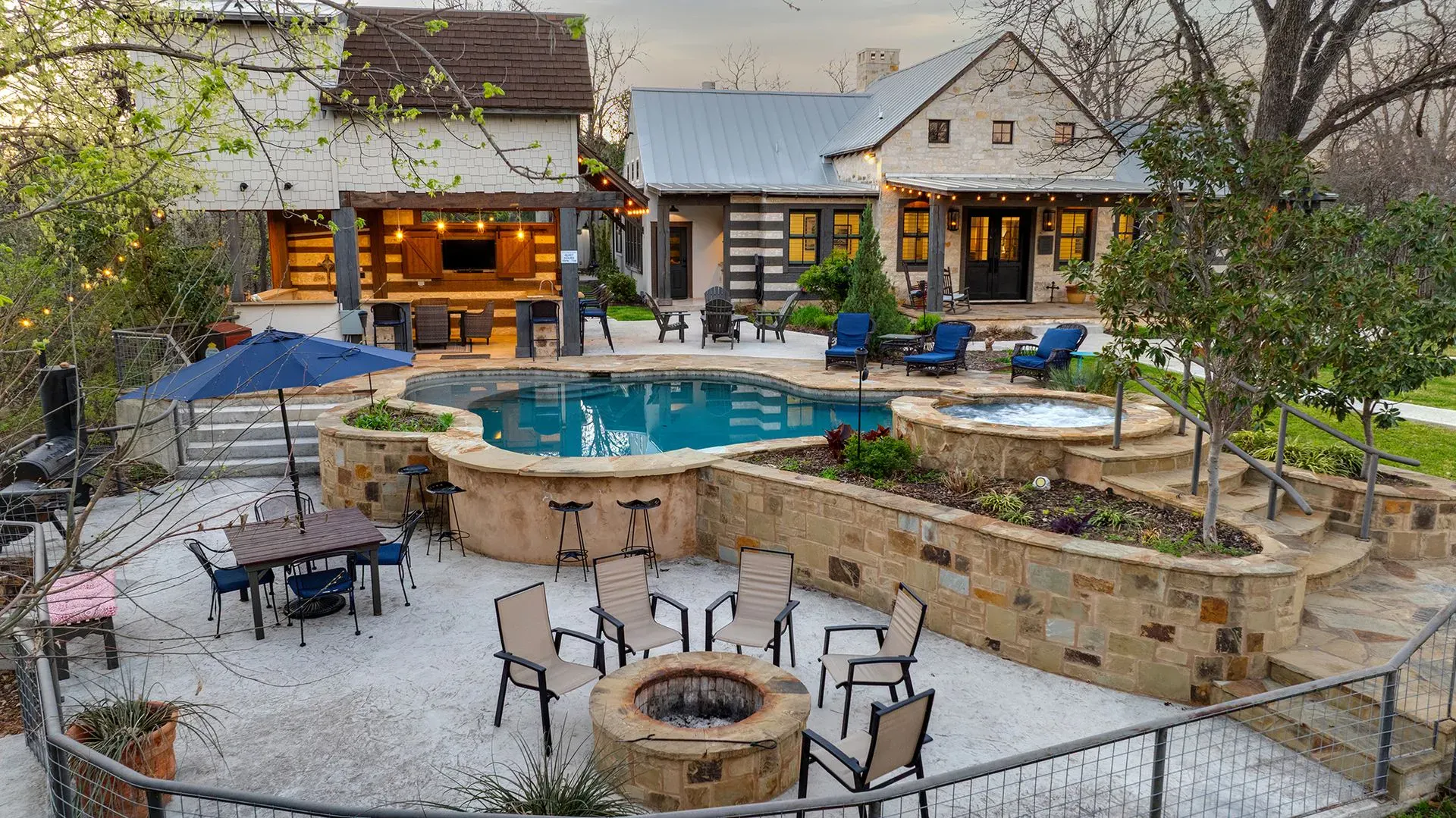
A hot tub no longer sets a listing apart once every competitor has one, Bach Bros said, and smaller amenities have lost the pull they once had. Gatlinburg, one of the most competitive U.S. markets, shows the pattern at its most extreme: 95% of the top 10% of listings there have had a hot tub for nine years, and 82% of all listings have one, so a hot tub keeps a cabin in the running without lifting it above the rest.
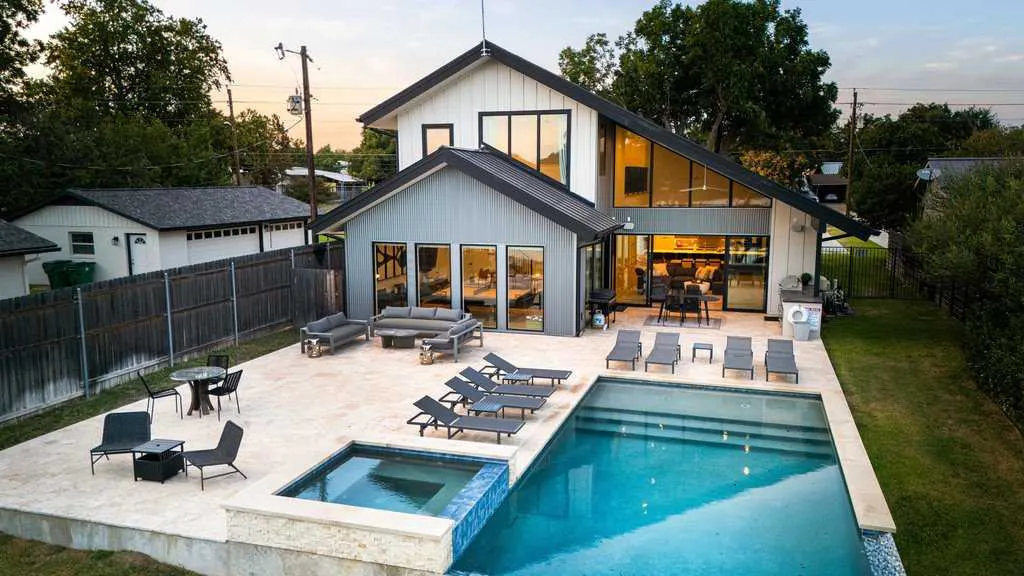
Air conditioning followed the same path across the U.S.: in 2026, 92% of top-earning listings had it, up from 76% in 2018, compared to 90% of all other listings, a gap of 1.4 points. Several smaller amenities added little once other features were held constant: a fire pit was worth +2% in revenue in 2026, and a sauna, free parking, or cable TV about 0%. An amenity adds value when it’s scarce in its local market, so the relevant benchmark is nearby competition, not a national checklist.
7. Add Flair, Then Photograph It With 30 or More Photos
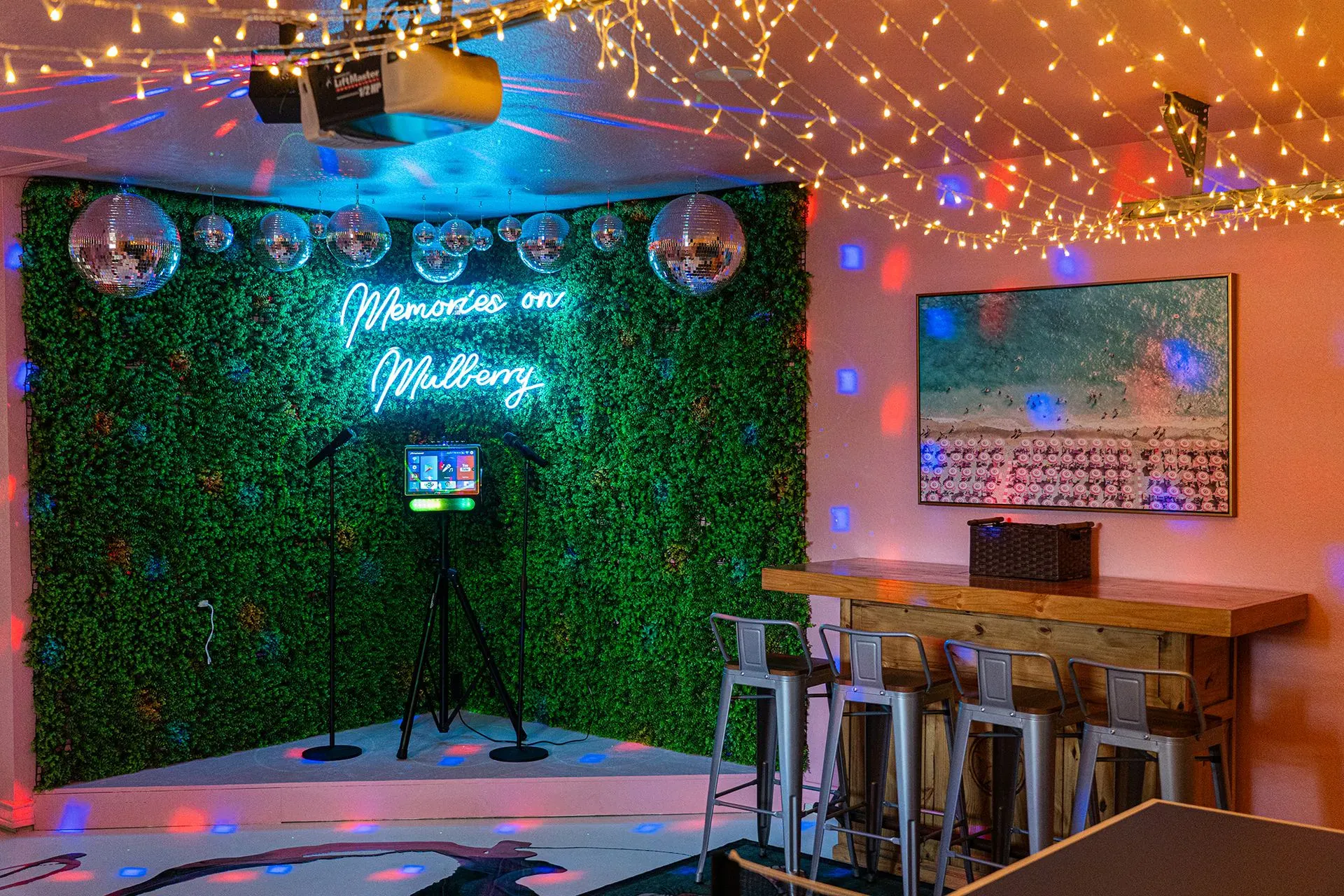
The team separates interior design from short-term rental flair: interior design is a comfortable sofa or a plant in the corner, while flair is a feature that sets the home apart, such as a dedicated karaoke room, neon lights or a disco ball. In one of their own homes, co-founders Joe and Max invested $28,000 in features like these and annual revenue rose from $35,000 to $52,000 (+49%), recovering the outlay in under two years before costs.
Flair is added to an ordinary home, which is different from the property itself being the novelty: unique stays and bed and breakfasts earned around a quarter less per available night than similar homes in the twelve months to August 2026, so the return comes from a standout feature in a home guests already want, not from novelty alone.
Photos are how flair reaches the guest: among hosts with five to 19 listings, homes with 30 or more photos earned +17% revenue per available night compared to similar homes with fewer, over the same twelve months. The top 25 managers posted a median of 45 photos per listing in summer 2026, compared to 26 for hosts with five to nine listings. Bach Bros’ listings carry a median of 40 photos, which suggests the return on an upgrade depends as much on how it is shown as on what is built.
The Bottom Line: These 2026 Practices Work at Any Portfolio Size
Bach Bros’ advice and AirDNA’s data point the same way: high ratings, fast responses on every listing, depth in one market, attention at the level of each home, and photos that show what it offers. Dynamic pricing and popular amenities still matter, but in a market as competitive as Fredericksburg, they keep a manager level rather than ahead.
None of these practices depend on scale, so they transfer to hosts of any size, and Bach Bros’ growth to more than 200 listings with its rating unchanged suggests they hold as a portfolio expands. To see which operators lead where your property is, browse AirDNA’s rankings of the top property managers in 317 U.S. markets.
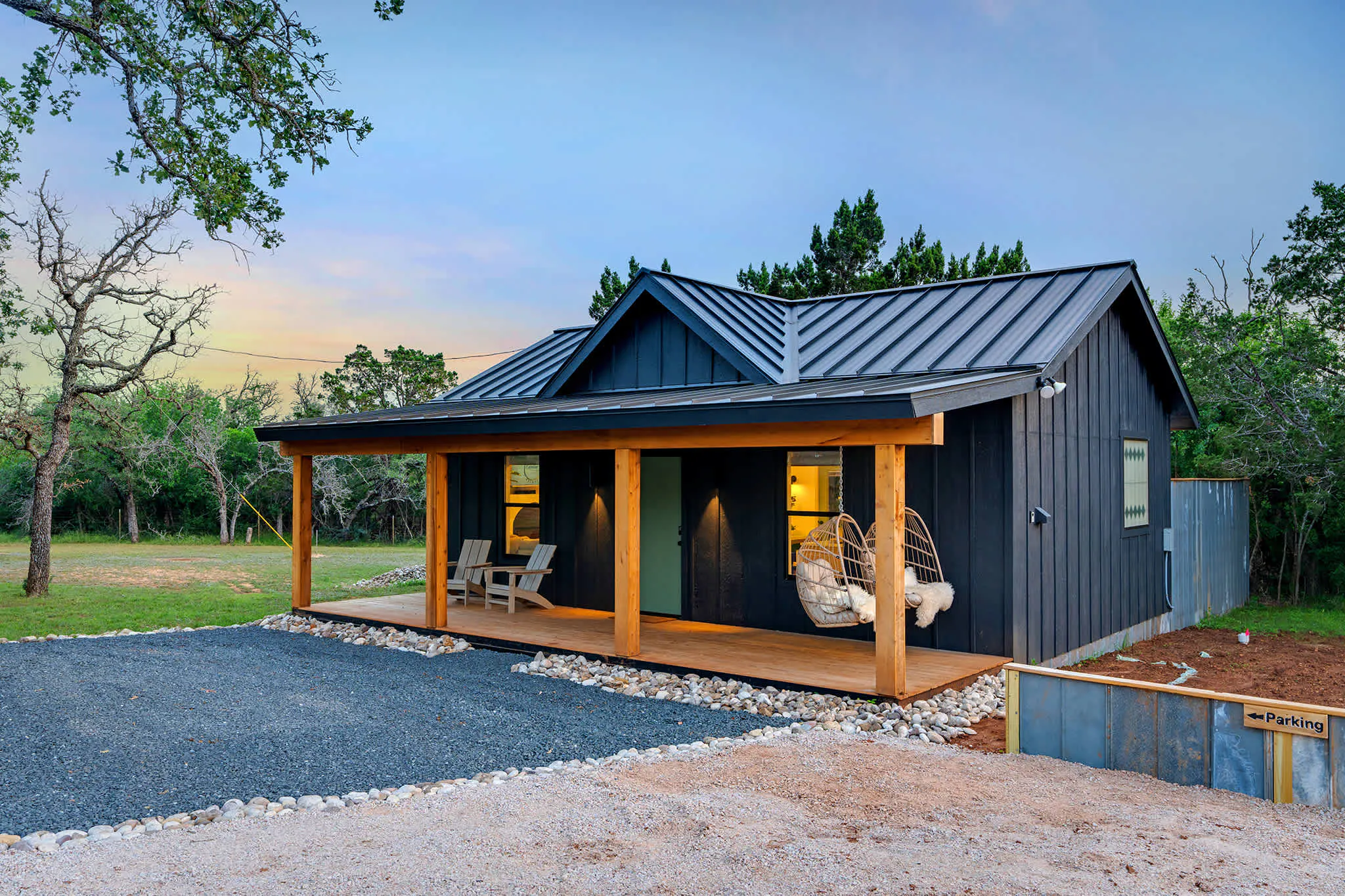
Watch the Full Bach Bros Episode of the STR Data Lab Podcast
Hear the Bach Bros team explain how they scaled to more than 200 listings without letting guest ratings slip, in episode 197 of the STR Data Lab podcast.
FAQs
Why is Bach Bros one of the best property managers in 2026?
Bach Bros Properties ranks fifth on AirDNA’s 2026 Best Property Managers list and won the Fastest Growing award, after ranking first in 2025. Its portfolio rose from 114 to 221 listings while its review-weighted guest rating held at 4.95, with 97% of listings in Fredericksburg, Texas.
How much are high Airbnb guest ratings worth?
Across the U.S. in 2026, a top review score was worth about $8,500 a year, or +17% in revenue, compared to a similar listing without one. Listings rated 4.97 or higher stayed among their market’s top 10% of earners 73% of the time between 2025 and 2026, compared to 57% for listings rated below 4.6.
Does response rate affect short-term rental revenue?
Yes. Among hosts with five to 19 listings, homes with a 100% response rate earned +10% revenue per available night compared to similar homes in the twelve months to August 2026. Every one of the top 25 managers kept all of its listings above a 90% response rate.
Is dynamic pricing still an advantage for property managers in 2026?
In saturated markets it keeps a manager level rather than ahead. In Fredericksburg, 67% of listings had high price variability in summer 2026, compared to 34% across the U.S., and 97% of Bach Bros listings are priced dynamically.
How many photos should a vacation rental listing have?
Among hosts with five to 19 listings, homes with 30 or more photos earned +17% revenue per available night compared to similar homes with fewer. The top 25 managers posted a median of 45 photos per listing in summer 2026, and Bach Bros a median of 40.
ARTICLE SUMMARY
Property management tips for 2026 from Bach Bros, fifth on AirDNA’s 2026 Best Property Managers list and its fastest-growing manager, shared on the STR Data Lab podcast and paired with AirDNA data on ratings, response rates, market focus, pricing, amenities and photos.
Camilo Schmid Rivas
Senior Research Analyst
Camilo Schmid Rivas is a Senior Research Analyst at AirDNA who brings a uniquely well-rounded perspective to short-term rental analytics. With a background that spans investment, real estate, and business analysis—including roles at Stayery and Sollers Consulting—Camilo has worn many analyst hats, each sharpening his ability to turn complex data into clear, actionable insights. A graduate of École hôtelière de Lausanne, he now channels his multidisciplinary expertise into uncovering trends that drive smarter STR decisions. In his free time, he enjoys playing tennis or scuba diving in or around Barcelona.


