6 Things That Matter Less Than You Think, According to the Best Property Managers
Published: October 16, 2026
Last updated: October 22, 2026

Camilo Schmid Rivas
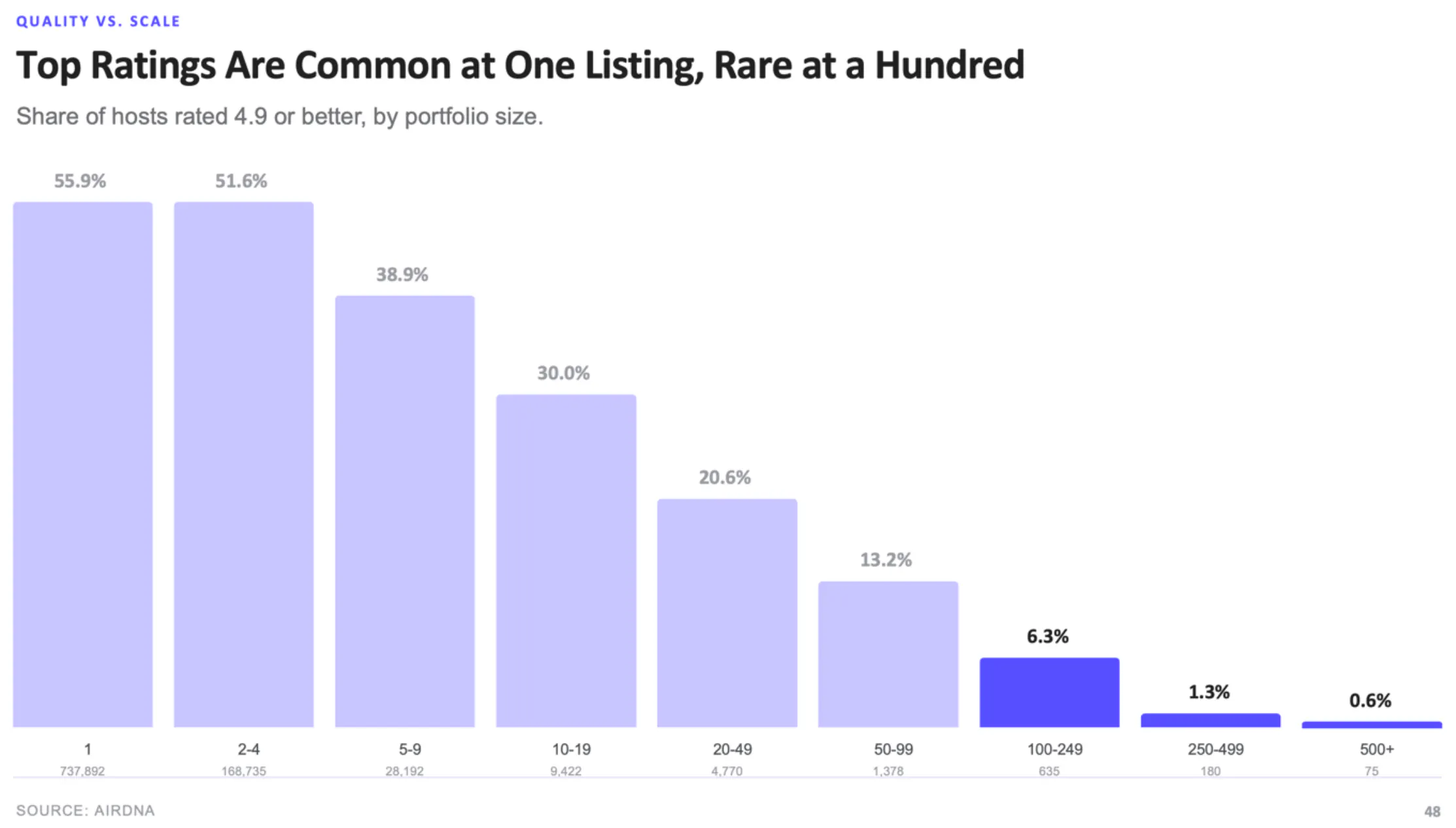
More than half of single-listing hosts in the U.S. hold a guest rating of 4.9 or better. At 20 to 49 listings, about one host in five does. Past 100 listings it is one in sixteen, and above 500 it is 0.6%. Keeping quality high gets harder as a portfolio grows, and our Best Property Managers ranking exists to find the operators who manage it anyway.
In a companion piece, we looked at what the top 25 on that ranking do differently. This piece looks at the other side: practices that sound like the mark of a professional operation but do not separate the best short-term rental property managers from the rest. Some are already common at every size, some divide the top managers themselves, and some show only a modest link to revenue or ratings once similar homes are compared. Knowing which is which helps a host decide where not to spend their time.
Key Takeaways
- The top 25 charge just 1% more than comparable homes; their revenue edge comes from filling more nights, not from a higher rate.
- Instant book splits the best managers: seven of the 25 use it on almost none of their listings, and twelve on almost all of them.
- Firm cancellation terms are the most common policy in every group, on 39% to 44% of listings, so they carry no signal.
- The top 25 offer weekly and monthly discounts on 43% and 32% of listings, against 59% and 61% for hosts with five to nine units.
- Ratings fall as portfolios grow, from 4.85 for hosts with five to nine units to 4.71 for managers with more than a hundred listings.
How We Compared the Top 25 With Other Hosts
- Who: the top 25 managers from our 2026 ranking, all of whom run more than a hundred U.S. listings.
- Compared with: every U.S. host with five or more listings, grouped by portfolio size (5 to 9, 10 to 19, 20 to 49, 50 to 99, and 100 or more). Owners of one to four units are left out, because their ratings run high for reasons that do not carry over to a growing business.
- Like for like: performance is measured against comparable homes in the same market, with the same bedroom count, in the same price band.
- When: a settled trailing twelve months for listings active in summer 2026.
A practice makes this list when the top 25 sit within the range other groups already cover, when they split on it among themselves, or when it shows only a modest link to revenue or ratings among hosts with five or more listings.
6 Practices That Matter Less Than You Might Think
1. Charging more than the competition: the top 25 price just 1% above similar homes
The top 25’s median nightly rate is $424, against $172 for hosts with five to nine units, but that gap reflects bigger homes in pricier markets. Compared with similar homes in the same market and price band, they charge just 1% more. No group in the study prices meaningfully above comparable homes. The top 25’s revenue advantage comes from filling more nights, not from a higher rate.
2. Instant book: the best managers split on it
The top 25 switch it on for 63% of listings, fewer than managers ranked 101 to 582 on our list at 91% and other managers with more than a hundred listings at 70%. They are also sharply divided: seven of the 25 use it on almost none of their listings, and twelve on almost all of them. Among hosts with five or more listings, instant book goes with around 4% more revenue per available night but slightly lower ratings, which may be why the best managers reach different conclusions.
3. Strict cancellation terms: common everywhere, so they carry no signal
Firm terms are the most common policy in every group, on 39% to 44% of listings. The top 25 are split: 21% of their listings use moderate terms and 19% super strict. Across hosts, strict terms show almost no link to revenue or ratings. The one clear pattern is what the top 25 avoid: flexible cancellation appears on 1% of their listings, against 18% for hosts with five to nine units, and it goes with around 12% lower revenue per available night.
4. Standing weekly and monthly discounts: the top 25 rely on them less
Hosts with five to nine units offer weekly discounts on 59% of listings and monthly discounts on 61%; the top 25 offer them on 43% and 32%. Discounts are not harmful: listings that offer them earn around 3% more per available night than comparable ones that do not, with marginally higher ratings. But the best managers rely on them less, adjusting the nightly rate to demand instead.

5. Novelty properties: slightly higher ratings, about a quarter less revenue
Unique stays and bed and breakfasts make up 8% of listings for hosts with five to nine units, but less than half a percent for the top 25. Against comparable homes in the same market and price band, these properties earn slightly higher ratings but around a quarter less per available night. The best managers build on whole homes instead.
6. Getting bigger: ratings fall as portfolios grow
Size does not produce quality. Ratings fall steadily as portfolios grow, from 4.85 for hosts with five to nine units to 4.71 for managers with more than a hundred listings, and the top 25 run fewer listings than other large managers, at a median of 134 against 148. Their homes are no older either, at a median of 2.3 years against 2.6 for hosts with five to nine units, so none of this comes from having started earlier.
The Bottom Line: Get These Settings Right Once, Then Focus on How Listings Are Run
The practices on this list fall into two groups. Some are common enough or contested enough that they set no one apart: firm cancellation terms appear everywhere, and instant book trades a little rating for a little revenue, which is why the best managers do not agree on it. Others are assumed to drive results more than the data supports, such as a higher rate, standing discounts, novelty properties, or a larger portfolio.
For a host deciding where to spend time, these are settings worth getting right once rather than revisiting constantly. The differences that hold up across the top 25 sit in how listings are run: pricing to demand, minimum stays, photos, and responsiveness on every listing.
FAQs
Should property managers turn on instant book?
It depends on the portfolio. The top 25 managers in AirDNA’s 2026 ranking switch it on for 63% of listings, and they are sharply divided: seven use it on almost none of their listings and twelve on almost all. Among hosts with five or more listings, instant book goes with around 4% more revenue per available night but slightly lower ratings.
Do the best property managers charge higher nightly rates?
Not against comparable homes. The top 25’s median nightly rate is $424, against $172 for hosts with five to nine units, but compared with similar homes in the same market and price band they charge just 1% more. Their revenue advantage comes from filling more nights.
Which cancellation policy do top property managers use?
Firm terms are the most common policy in every group, on 39% to 44% of listings. The top 25 are split between moderate terms (21% of listings) and super strict (19%). What they avoid is flexible cancellation: it appears on 1% of their listings and goes with around 12% lower revenue per available night.
Do weekly and monthly discounts increase short-term rental revenue?
Slightly. Listings that offer them earn around 3% more per available night than comparable ones that do not, with marginally higher ratings. The top 25 still use them less, on 43% and 32% of listings, against 59% and 61% for hosts with five to nine units, and adjust the nightly rate to demand instead.
Does a bigger portfolio mean better guest ratings?
No. Ratings fall steadily as portfolios grow, from 4.85 for hosts with five to nine units to 4.71 for managers with more than a hundred listings. The top 25 also run fewer listings than other large managers, at a median of 134 against 148.
ARTICLE SUMMARY
AirDNA compared the top 25 operators from its 2026 Best Property Managers ranking with every U.S. host running five or more listings to find which common practices do not separate the best short-term rental property managers from the rest. Charging more than comparable homes, instant book, strict cancellation terms, standing discounts, novelty properties and sheer portfolio size all matter less than hosts tend to think.
Camilo Schmid Rivas
Senior Research Analyst
Camilo Schmid Rivas is a Senior Research Analyst at AirDNA who brings a uniquely well-rounded perspective to short-term rental analytics. With a background that spans investment, real estate, and business analysis—including roles at Stayery and Sollers Consulting—Camilo has worn many analyst hats, each sharpening his ability to turn complex data into clear, actionable insights. A graduate of École hôtelière de Lausanne, he now channels his multidisciplinary expertise into uncovering trends that drive smarter STR decisions. In his free time, he enjoys playing tennis or scuba diving in or around Barcelona.