What Is Supply in Short-Term Rentals?
Published: February 24, 2025
Summary
What is supply?
Supply refers to the total number of short-term rental listings that are available for booking in a specific market during a given time period. This includes both full-time and part-time listings, as long as they are actively offering nights for rent.
Why it matters
Supply shows how many rentals are competing for bookings. More listings mean more choices for travelers but tougher competition for hosts, affecting prices and occupancy. Tracking supply trends helps hosts and investors decide where to list, how to price, and when to adjust their strategy.
Who should know it
Investors, hosts, and property managers making decisions on pricing, marketing, and expansion in the short-term rental market.
Where you’ll see it
Supply is a key metric in market reports and investment analyses, helping investors and hosts assess competition, demand, and pricing trends. Tracking supply alongside regulations and new listings provides insight into market shifts and opportunities.
Supply Overview
In short-term rentals, supply refers to the total number of active listings available for booking in a market at any given time. This includes vacation homes, apartments, and other rental properties listed on platforms like Airbnb and Vrbo.
Understanding supply is crucial for both hosts and investors. Too many listings can lead to oversaturation, increased competition, and lower prices, while too few may indicate high demand and pricing power. A well-balanced market offers the best opportunity for profitability. By tracking supply trends, you can better assess whether entering or expanding in a particular market makes financial sense.

Key short-term rental supply metrics
Several supply-related metrics help investors and hosts analyze market conditions and competition:
- Total active listings – The number of short-term rentals available for booking within a set period.
- Available listing nights – The total nights listings are open for reservations, reflecting how much of the supply is actually available.
- New listings – The number of properties newly added to the market, signaling market growth or increased competition.
- Occupancy rate – While not a direct measure of supply, it helps show whether demand is keeping up with the number of available rentals.
AirDNA provides real-time data on short-term rental supply, including these metrics. By tracking trends alongside demand and pricing, hosts and investors can spot profitable markets, avoid oversaturation, and make smarter decisions to stay competitive.
The Importance of Supply in Short-Term Rentals
The number of available short-term rentals affects profitability, competition, and long-term success. Here’s why supply matters:
- Understanding market competition: Too many listings can make it harder to secure bookings. It is important to check supply levels to avoid overcrowded markets.
- Spotting market gaps: Different types of rentals attract different kinds of guests. Some areas may have too many of one type but not enough of others that travelers need. For example, a city may have many one-bedroom apartments but few larger homes for families. Spotting these gaps helps you offer rentals that match demand.
- Maximizing profit potential: A market with high demand and limited supply allows you to charge higher nightly rates and reduce the risk of vacancies. Check out our investor’s guide to market analysis to find high-performing short-term rentals.
- Adapting to market trends: Tracking supply changes helps you adjust pricing, marketing, and property features to stay competitive.
- Reducing risks: Changes in regulations, market trends, and traveler preferences can affect supply. Being aware of these factors helps you make better decisions.

Factors Affecting Short-Term Rental Supply
Here are some key factors that influence the number of short-term rentals in a market:
- Market demand: When more travelers visit an area, more property owners list their homes for short-term stays. Seasonal travel trends, major events, and tourism growth all affect how many rentals enter the market. Check occupancy rates and bookings to see if demand supports the rentals.
- Local competition: A vacation rental in a prime location might seem like a great choice, but if there are too many similar listings nearby, it can lead to lower occupancy and reduced nightly rates.
It’s important to look beyond the total number of rentals and consider the mix of property types such as small vs. large homes or budget vs. luxury stays.
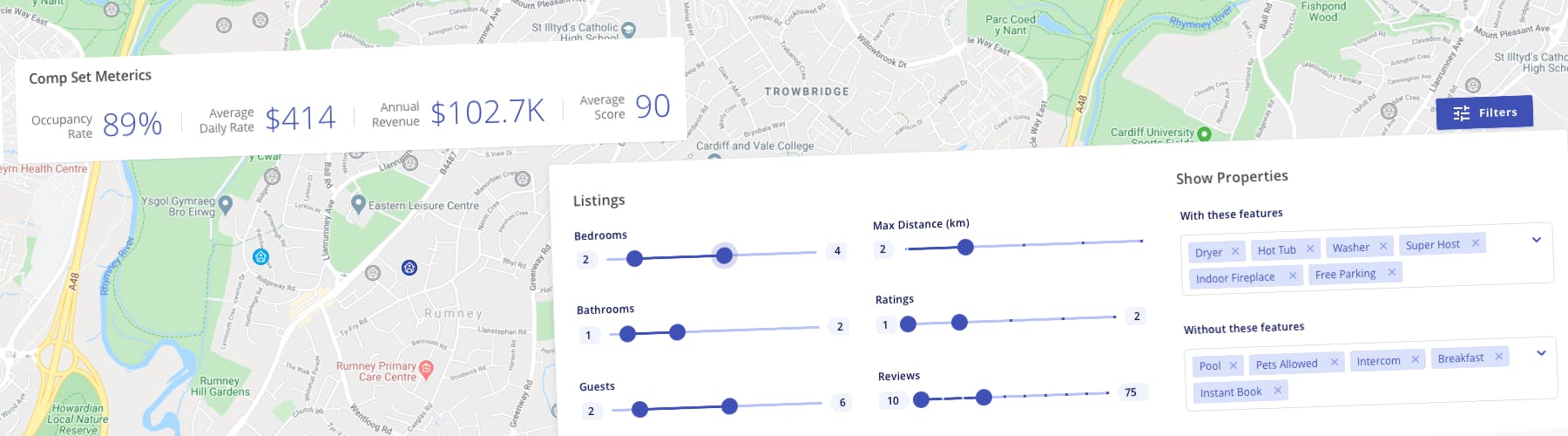
Learn how to benchmark your rental against similar properties with a well-defined comp set. - Regulations and legal restrictions: Many cities have laws that limit short-term rentals. Some require permits, while others cap the number of rental days per year.
Short-term rental regulations can change suddenly, making hosting harder or increasing supply if restrictions are lifted. Staying updated on local laws helps avoid unexpected challenges. - Economic conditions: Rising inflation, mortgage rates, and maintenance costs can push some hosts out of the short-term rental market.
If operational costs get too high, property owners may switch to long-term leases instead, reducing the number of available short-term rentals. - Seasonality and market fluctuations: Supply isn’t steady all year. Many hosts only list their properties during peak travel seasons and remove them in slower months.
Understanding how seasonality affects supply throughout the year helps hosts plan for steady profitability. - Platform and market trends: Platforms like Airbnb and Vrbo impact supply by giving hosts more visibility. However, high competition on these platforms can lead to price drops and lower profits.
This is why checking both supply and demand matters because you need both to see if a market has real potential.