

 Calculate Revenue
 Research Markets
 Find For Sale Properties
 Compare My Listing
 STR Revenue Calculator
 Custom Comp Sets
 Submarket Insights
 Custom Search Filters
 Rate Recommendations
 Performance Benchmarking
 Competitor Comparison
 Owner Contact Details
 Property-level performance data
 Tourism Insights
 Real Estate Investment Analytics
 About Us
 Sales
 Support
 Press
Airbnb Politics and the Trump Effect on Short-Term Rentals
Published: January 10, 2025
Last updated: July 30, 2025

Jamie Lane
Key Takeaways
- Higher mortgage rates and tighter federal oversight could limit new STR investments,
- The share of international travelers to the U.S. is shrinking, highlighting the importance of targeting domestic travel demand.
- Leveraging automation and targeting remote workers can help hosts navigate rising costs and stay competitive.
The political tides in the United States are shifting once again, and with the Trump administration back in power in 2025, short-term rental (STR) hosts are left speculating about how Airbnb politics will evolve. From shifting economic policies to mounting Airbnb regulatory challenges, the decisions made in Washington could redefine the future of hosting—creating both obstacles and new opportunities for STR investors.
In this article, we’ll explore lessons learned from Trump’s first administration, predictions for how his second term will impact the short-term rental market, and actionable strategies for STR hosts to stay ahead.
The First Trump Administration and Its Impact on STRs
Trump’s first term (2017–2021) reshaped the short-term rental industry in ways hosts can’t afford to ignore. We can better anticipate how Trump’s second term might shape the future of short-term rentals by revisiting the policies and trends of his first term.
Economic policies that shaped STR demand
Trump’s fiscal stimulus packages and tax reforms fueled increased consumer spending during his first administration, which indirectly boosted demand for domestic travel and STR bookings.
Reduced corporate taxes also encouraged investment in real estate, including STRs, creating a more favorable environment for property owners. However, rising property values and interest rates during this period also created barriers to entry for many would-be STR investors.
Immigration policies and hospitality labor shortages
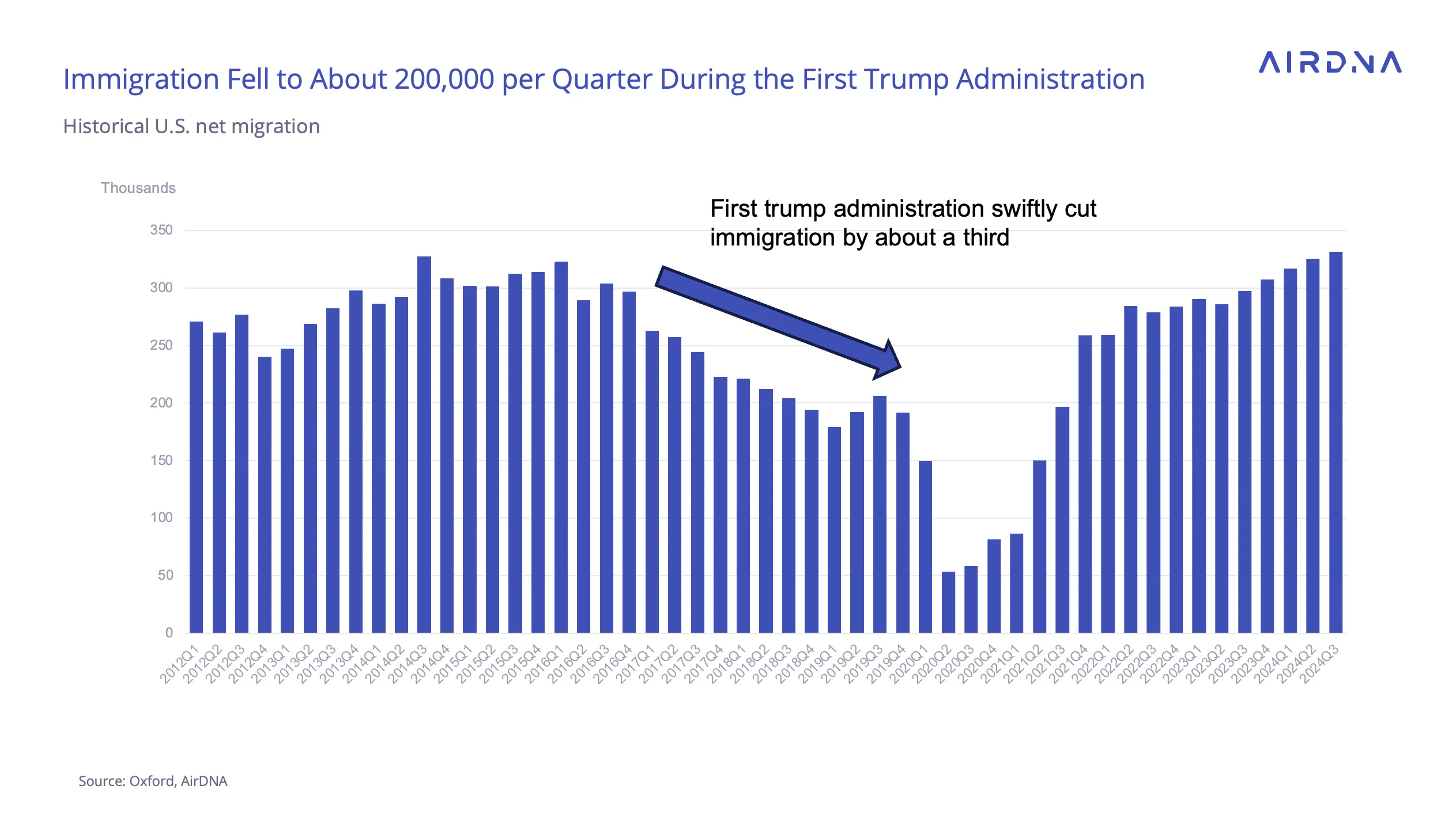
During Trump’s first term, stricter immigration policies reduced the immigrant labor pool from 300,000–320,000 to as low as 180,000. This shortage in the critical workforce for the hospitality drove up wages, increasing operational costs for STR hosts who relied on immigrant labor for cleaning, property management, and guest services.
Federal deregulation vs. local STR laws
Trump’s push for deregulation across various sectors stood in contrast to increasingly stringent Airbnb laws enacted at the local level. Major markets like New York and Los Angeles tightened their regulations during Trump’s first administration, reducing STR supply in urban areas and amplifying the complexities of Airbnb politics. This tension highlighted the decentralized nature of Airbnb regulatory challenges, a theme likely to persist in the upcoming administration.
How the Second Trump Administration Could Impact STRs
With Trump back in office, short-term rental hosts should prepare for new Airbnb regulatory challenges. These challenges include potential federal oversight of booking platforms as well as zoning compliance. Hosts should also brace for potential shifts in economic policies, the housing market, and international travel trends.
Economic policies
Elevated interest rates will exacerbate STR investment challenges
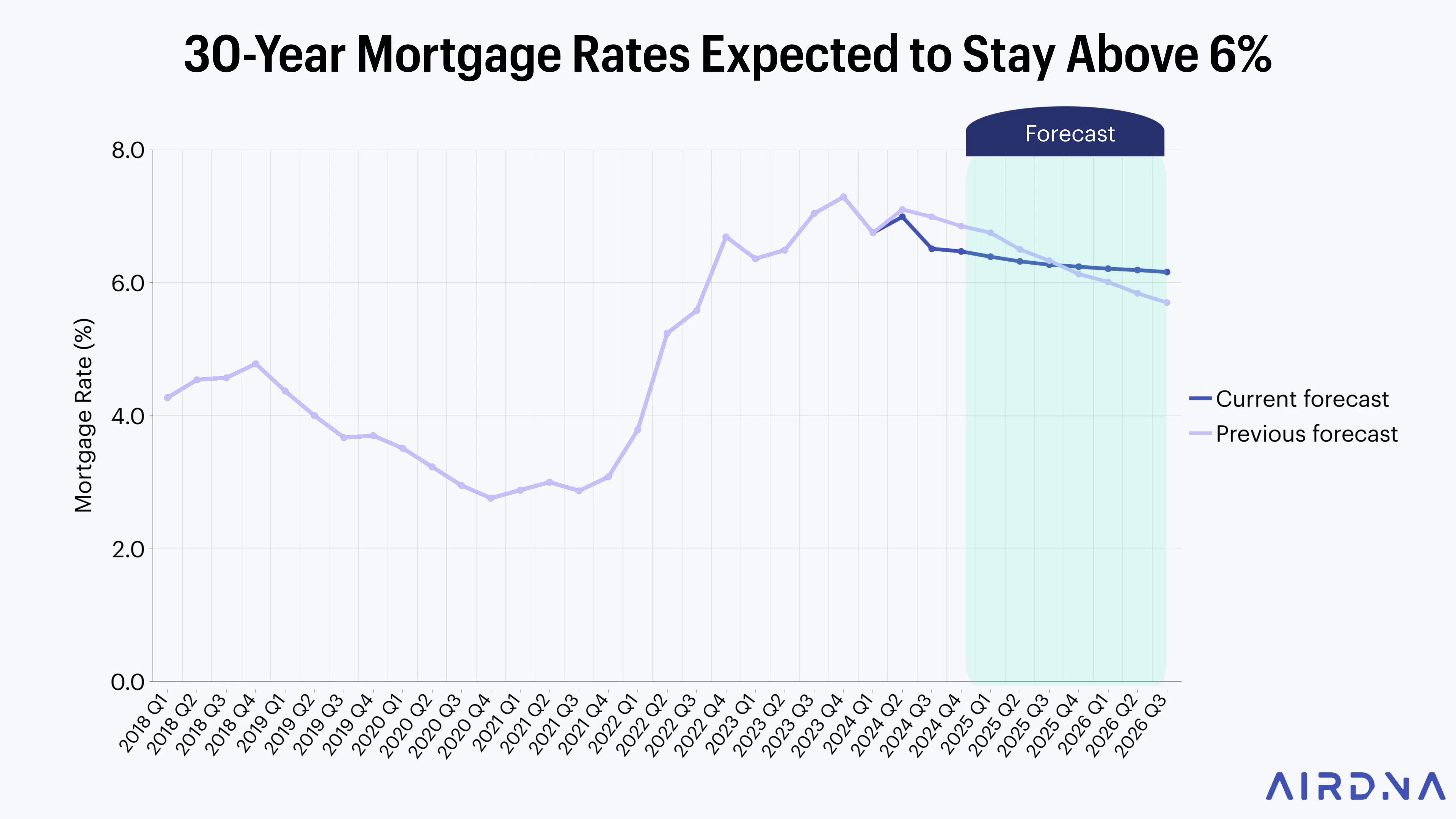
Interest rates are expected to remain elevated through 2025 as the Federal Reserve continues its efforts to curb inflation. Forecasts suggest 30-year mortgage rates will stay above 6%, doubling borrowing costs compared to pre-pandemic levels. As a result, STR investors face a tough landscape where steady demand is overshadowed by skyrocketing property prices.
Reduced immigration and wage growth in the hospitality sector
Trump’s hardline stance on immigration—a defining feature of his first administration—reshaped labor markets, and a second term could magnify these effects. Looking ahead, tighter immigration policies coupled with fiscal stimulus could further squeeze labor availability, pushing costs even higher. Hosts will have to get creative to balance rising expenses with protecting profitability during Trump’s second presidency.
Stronger real GDP growth
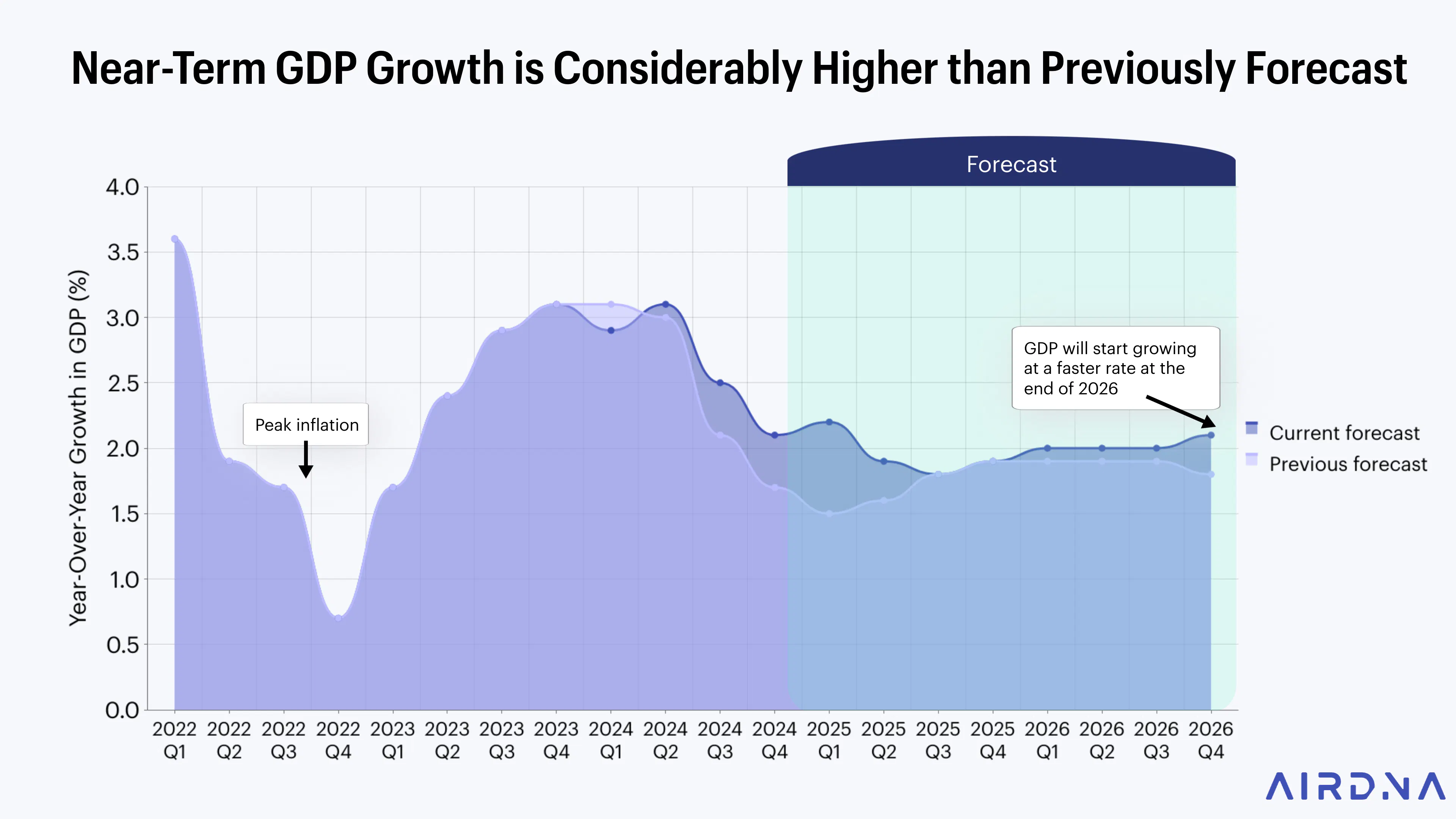
Real GDP growth is projected to outpace previous forecasts, with rates expected to reach 2–2.25% in the near term. While slight dips to around 1.75% may occur by late 2025 as fiscal and monetary policies stabilize, growth is set to accelerate again by 2026.
This resilience bodes well for short-term rental demand, driven by steady consumer spending. Hosts should align their offerings with evolving traveler preferences to capitalize on growing demand. Leveraging market analytics tools like AirDNA is essential to track trends effectively and keep nightly rates competitive.
Federal employment cuts could create market vulnerability
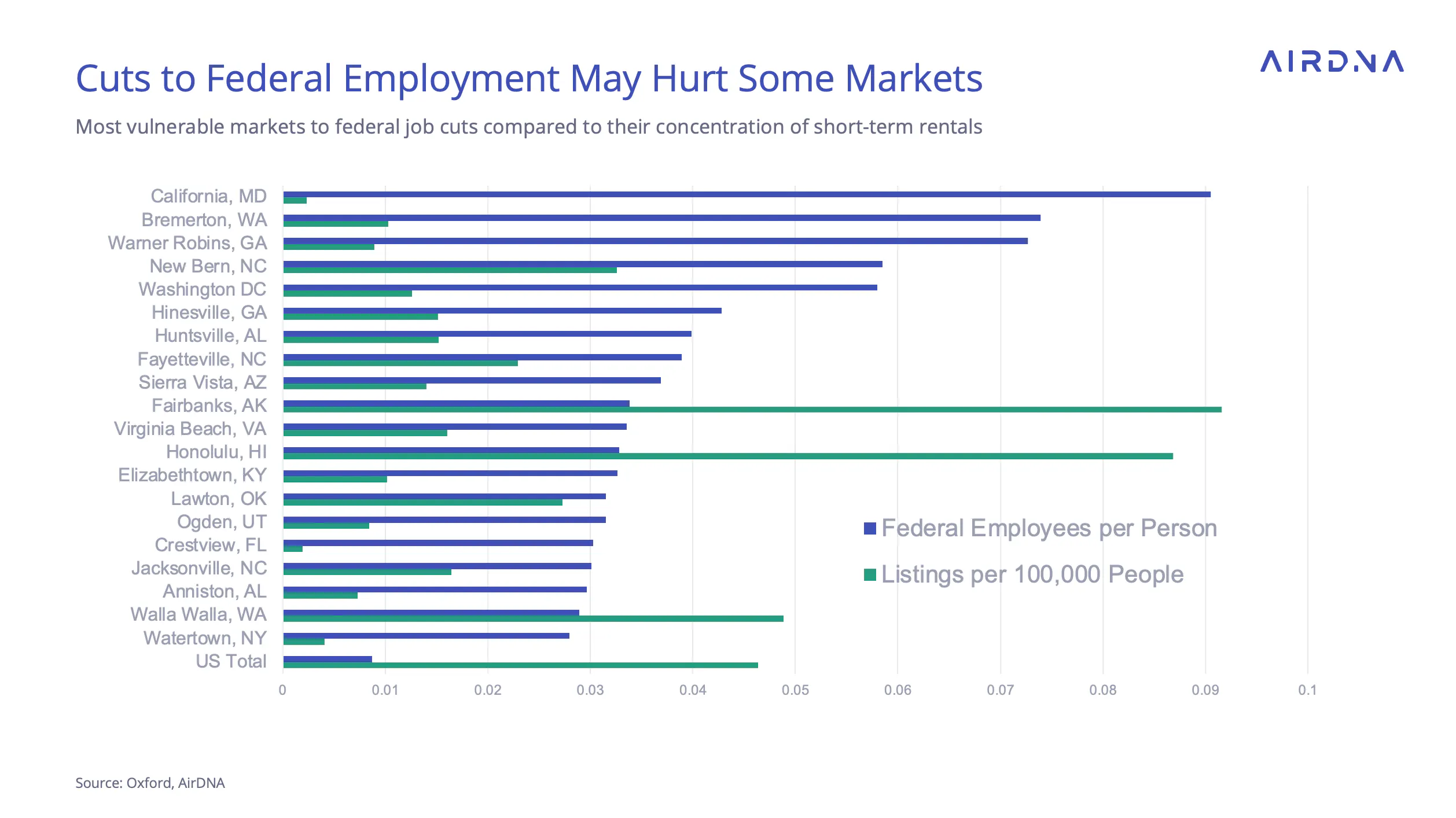
Federal employment cuts under a second Trump administration could disproportionately impact certain markets. Locations with a high concentration of federal jobs, such as California, Maryland, and Washington D.C., could experience economic downturns. This might trickle down to affect STR demand in these areas.
Housing market outlook
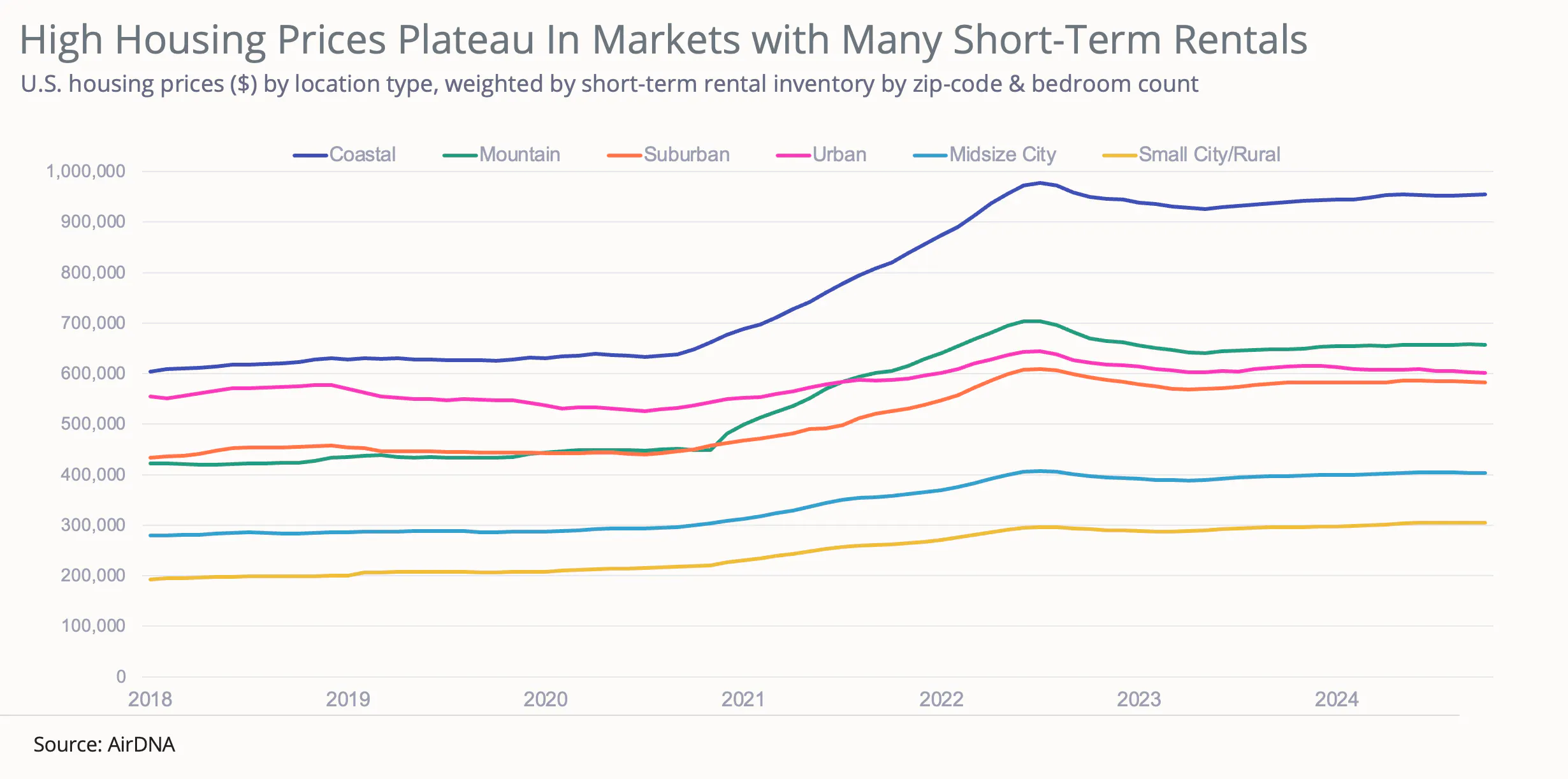
High mortgage rates haven’t slowed housing prices in markets with a lot of short-term rentals. Housing prices are expected to plateau rather than decline because strong demand and limited supply in sought-after locations keep these prices resilient. Price appreciation is stabilizing in coastal and mountain regions in particular, offering existing property owners a reassuring level of predictability in an otherwise volatile market.
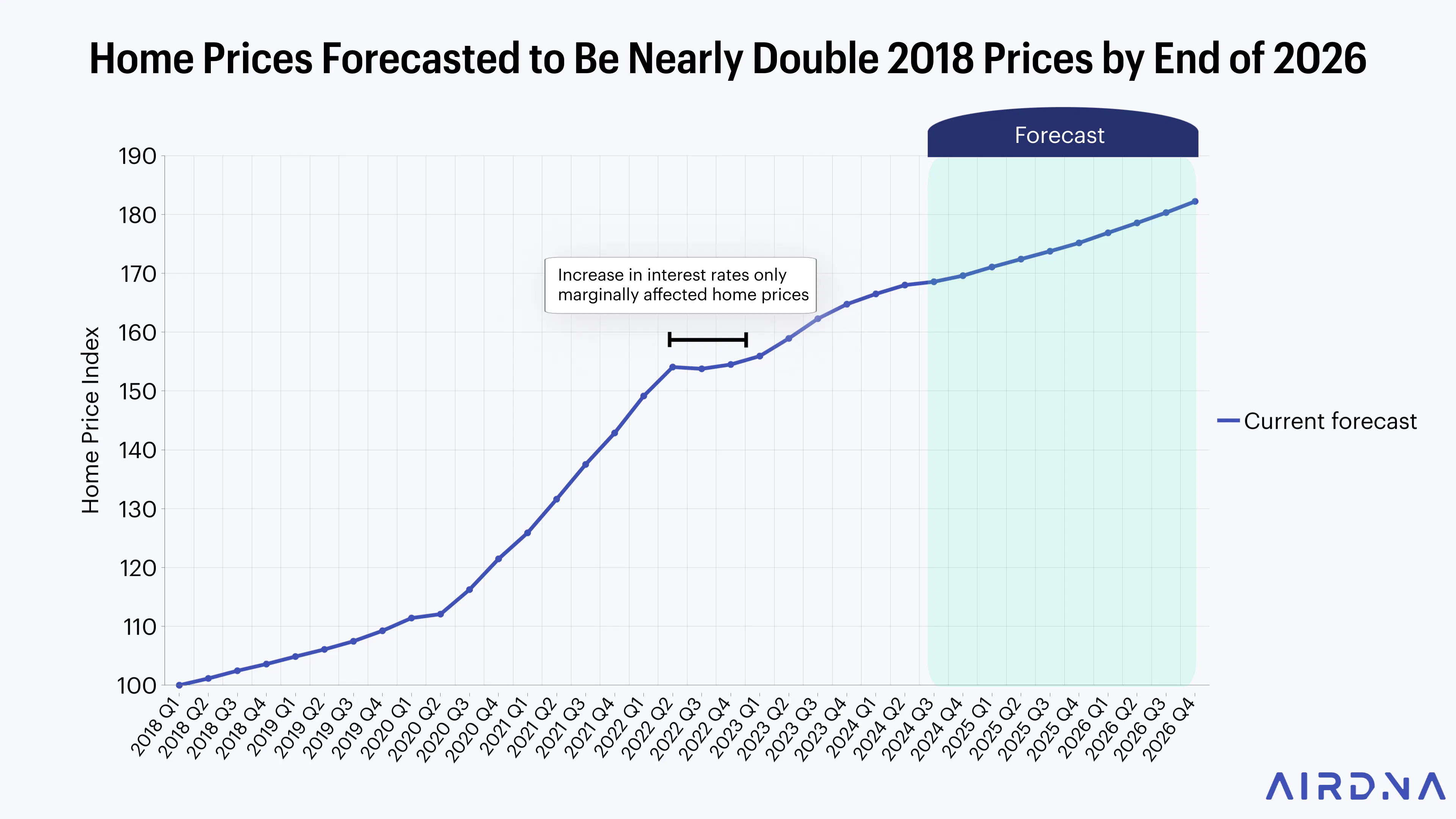
More broadly, housing prices are projected to reach nearly double 2018 levels by the end of 2026. “This is a double whammy for investment,” says Bram Gallagher, AirDNA’s Director of Economics & Forecasting. “As far as we can tell right now, Trump administration policies are going to continue or maybe even intensify these trends rather than reverse any of them.”
International travel patterns
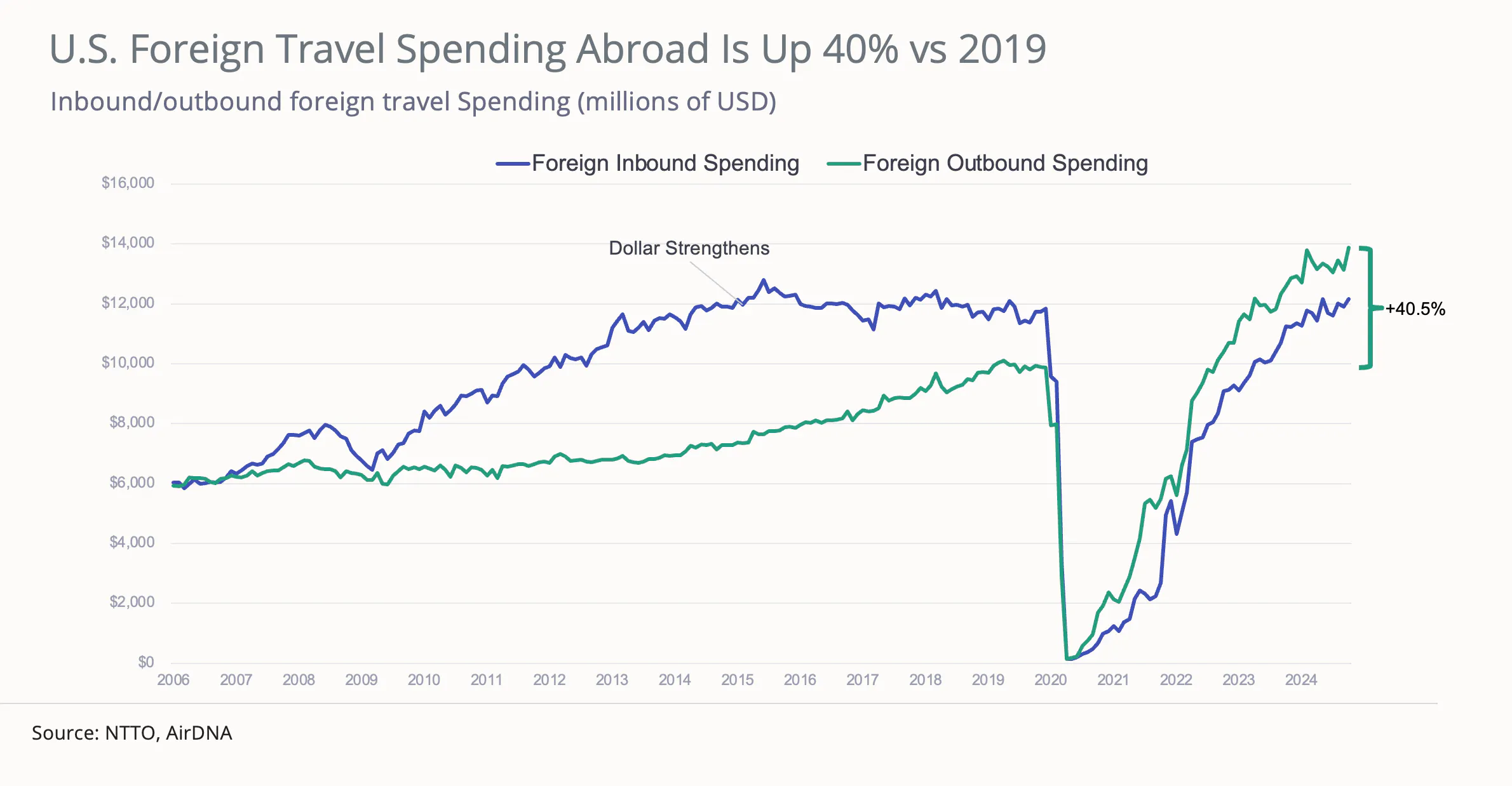
Airbnb politics and international travel patterns are changing, with trends already taking shape that could intensify under a second Trump administration. First, outbound foreign travel spending by U.S. travelers has soared 40% above 2019 levels, showcasing a strong appetite for vacationing internationally.
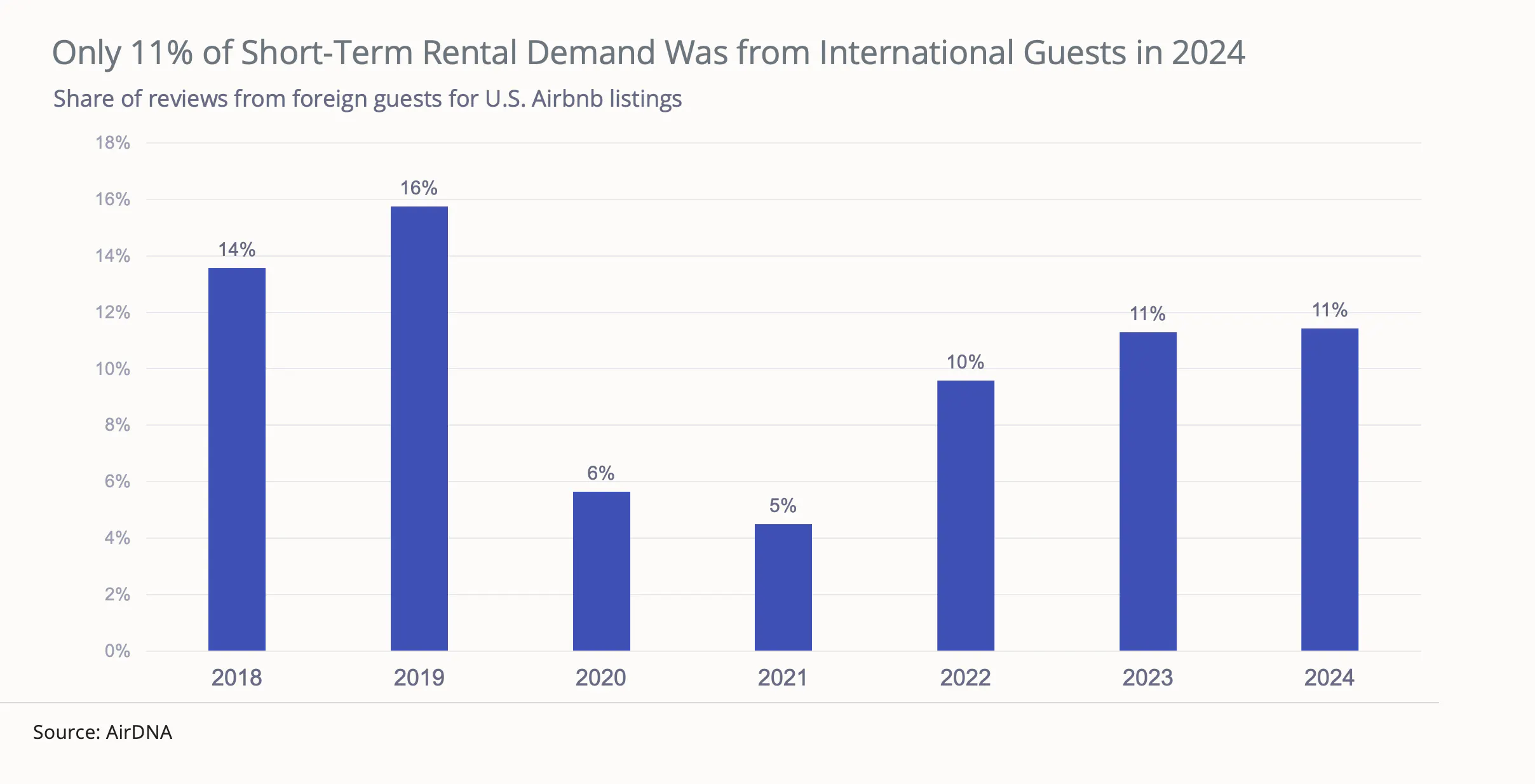
Hosts who rely on international travelers to fill vacancies face a very different reality. Inbound demand for U.S. short-term rentals remains weak, with foreign guests projected to account for only 11% of bookings in 2024. For context, demand from international guests in the last 8 years peaked at 16% in 2019.
This presents a challenge for hosts who have traditionally relied on guests visiting from abroad. Urban and coastal markets are particularly affected. The number of reviews left by foreign visitors is declining in cities like New York and Los Angeles, where international guests have historically played a pivotal role in keeping Airbnbs booked.
Notably, Chinese visitation to the U.S. has plummeted, and the numbers tell a striking story. During Trump’s first term, trade conflicts triggered a 12% drop in Chinese travelers—a decline the U.S. still hasn’t recovered from. Monthly visitation remains far below pre-2016 levels, while Europe has stepped in to capture this high-value market.
Europe continues to outpace the U.S. in attracting Chinese tourists, capitalizing on fewer trade tensions and more relaxed visa policies. For U.S. STR hosts, this shift underscores a growing reliance on domestic travelers to sustain occupancy, forcing many to adapt their strategies to thrive in a less globally connected market.

Stabilization and Shifting Investment Dynamics
The short-term rental market is settling into a new era of stability after years of pandemic-fueled turbulence. While investment opportunities still exist, shifting dynamics in revenue growth, rising costs, and evolving supply-demand trends are reshaping the landscape for hosts and investors alike.
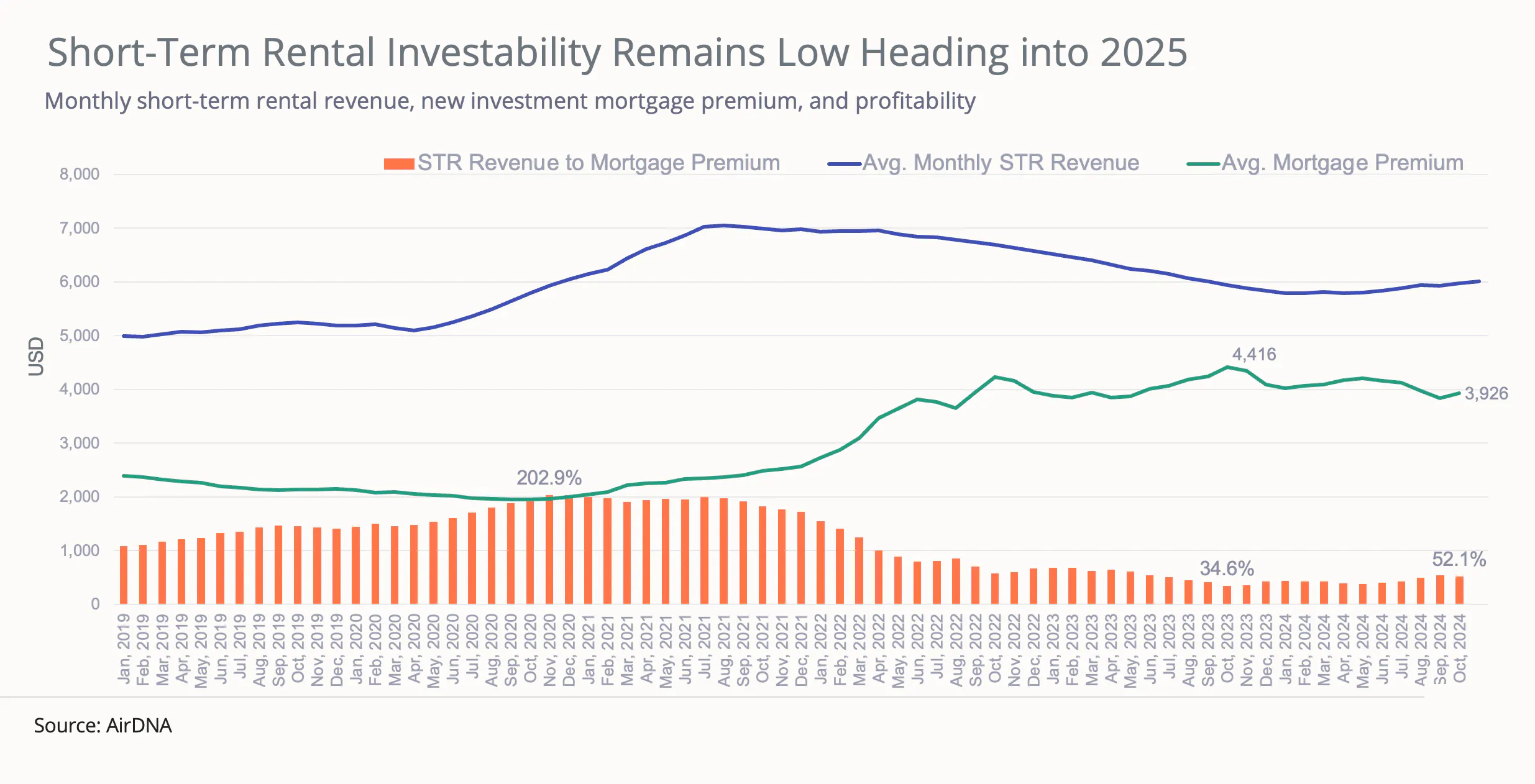
Revenue trends: peaking and declining
STR revenue experienced a dramatic surge during the pandemic as supply contracted, occupancy climbed, and average daily rates (ADRs) hit record highs. Unfortunately, this boom was temporary.
Since 2022, average monthly STR revenue has steadily declined, with an 8% drop in revenue per available room (RevPAR) recorded in 2023. This downward trend reduced cash flow potential for new investments and created challenges for operators relying on elevated pandemic earnings continuing into the post-pandemic era.
Investment costs: a barrier to new acquisitions
The cost of acquiring STR properties has more than doubled since 2020 due to rising home prices and elevated mortgage rates. In 2020, monthly mortgage premiums for an average STR property hovered around $2,000. By October 2023, this figure peaked at $4,500. While rates have eased slightly, the current average mortgage premium remains just under $4,000—still a substantial barrier for prospective investors.
The ratio of STR revenue to monthly mortgage premiums, a critical indicator of investment attractiveness, highlights these challenges. Given that 30-year mortgage rates are expected to stay above 6% through 2026 while home prices only climb, investability will probably remain a challenge throughout the first half of the second Trump presidency.
Supply growth will stabilize
After years of fluctuation, the growth in available STR listings is expected to stabilize by late 2025. This marks a big shift from when the number of listings plummeted during the pandemic and then rapidly expanded. For investors, this stability means fewer disruptions in supply and demand dynamics, allowing for more predictable revenue streams.
Occupancy and revenue alignment
Occupancy rates, which dipped in the years following the pandemic, are forecasted to return to pre-pandemic averages by the end of 2026. By that time, occupancy rates will align with the 2018–2019 benchmark of 56%, creating a more stable and familiar hosting environment for operators.
Additionally, ADR and the Repeat Rent Index (RRI) are converging. AirDNA’s Repeat Rent Index (RRI) is designed to track the performance of existing short-term rental properties over time, filtering out the impact of new listings. This metric helps distinguish whether changes in the Average Daily Rate (ADR) are driven by shifts in the market or merely by new, differently priced properties entering the market. ADR and RRI converging means that supply and demand are finding equilibrium in the market.
How STR Hosts Can Prepare for Policy Changes
Staying compliant with federal, state, and local Airbnb laws ensures your business can thrive despite shifting policies. Here are key strategies to overcome potential Airbnb legal challenges and ensure your business remains resilient:
Stay ahead of economic trends
Understanding market dynamics is critical in an environment of high interest rates, shifting traveler preferences, and fluctuating demand. To stay ahead:
Leverage AirDNA's data tools
Monitor demand forecasts, pricing trends, and occupancy changes specific to your market. Accurate, real-time insights allow you to anticipate shifts and adapt your strategies before competitors do.
Diversify your portfolio
Spread investments across different regions and property types. This approach helps mitigate risks from economic downturns or regulatory crackdowns in any one market. For example, expanding into smaller cities or rural areas can make you more resilient to strict urban regulations or local economic slowdowns.
Build a resilient STR business
STR hosts must create flexibility and cater to emerging traveler needs to thrive amidst uncertainty.
Attract new demographics
The rise of remote work has transformed the travel landscape. Offer amenities like high-speed internet, dedicated workspaces, and long-term rental discounts to appeal to remote workers and digital nomads. These features can drive occupancy during traditional off-seasons.
Focus on affordability
As economic pressures grow, travelers are gravitating toward budget-friendly options. Position your properties in accessible price tiers without compromising quality. Offering thoughtful amenities and competitive pricing can set you apart in this value-driven market.
FAQs
The return of a Trump administration raises questions about how upcoming policies could affect short-term rental (STR) hosts. Here are quick answers to some of hosts’ most pressing concerns:
What Airbnb regulatory challenges might STR hosts face under the Trump administration?
Hosts could encounter a dual challenge: increased federal involvement and more aggressive local regulations. Federal policies may introduce stricter requirements around short-term rental registrations, occupancy tax collection, and zoning compliance. Local governments might further tighten rules to address housing shortages and community concerns. Wondering how you can influence the conversation around STRs in your community? Check out our Airbnb advocacy guide and learn what types of data can dispel common myths surrounding the relationship between STRs and housing affordability, community integrity, and local economies.
Will economic policies under Trump favor STR investors?
While tax cuts or deregulation might create favorable conditions for some investors, elevated interest rates and rising operational costs could offset these benefits. For many hosts, the cost of acquiring and maintaining properties will remain a significant hurdle.
Hosts should focus on maximizing returns from existing properties and positioning listings to cater to the growing demand for affordable rentals.

How will Trump’s immigration policies affect Airbnb operations?
If Trump implements stricter immigration policies, the labor market could tighten further. This could make it more difficult (and expensive) to hire workers for roles like property management and cleaning services. Hosts may need to explore automation tools like Uplisting.
How can STR hosts manage rising operational costs?
With elevated mortgage premiums and wage growth driving up costs, hosts should focus on efficiency. Strategies like bundling services, automating guest communications, and offering extended stays to reduce turnover can help offset expenses while keeping profits high.
What are the biggest Airbnb political issues hosts should watch in the Trump era?
Hosts should pay close attention to three key Airbnb politics topics during the Trump era:
- Federal oversight and regulatory shifts. While Trump’s administration generally favors deregulation, federal oversight of STR booking platforms like Airbnb and Vrbo could increase. This might include requirements meant to increase platform accountability, such as tax remittance or transparency in fees. These shifts could add compliance burdens for hosts, especially in urban areas.
- Local regulations and housing policy. Local governments are expected to continue tightening zoning laws and occupancy limits, particularly in cities facing housing shortages. These evolving Airbnb laws could lead to stricter registration requirements, caps on rental days, or even outright bans in some areas, forcing hosts to adapt quickly.
- Economic and labor market challenges. Broader political decisions, such as immigration restrictions and rising labor costs, will directly affect STR operations. Hosts may face increased expenses for property management and cleaning services due to tighter labor markets, all while navigating the larger complexities of local and national Airbnb politics.
ARTICLE SUMMARY
Trump’s return to the White House could shake up the short-term rental market. Dive into what hosts need to know, from economic trends to regulatory shifts and smart strategies to thrive.
Jamie Lane
AirDNA Chief Economist
He is responsible for data analysis, thought leadership, and leveraging advanced analytical techniques to provide new insights into short-term rental market trends. Native to Atlanta and an Airbnb host himself, Jamie enjoys cycling, mountain biking, backpacking, running, and playing in a dart league in his free time.
