What Is a Short-Term Rental (STR)?
Published: February 7, 2025
Summary
What is a short-term rental?
Properties rented for brief stays (typically under 30 days) through platforms like Airbnb and Vrbo. Whether it's a city apartment or a mountain cabin, these rentals have transformed how people travel—and how investors build wealth through real estate.
Why it matters
STRs have created a $100+ billion industry by offering higher earning potential than traditional rentals. Their flexibility lets savvy investors adapt to market changes quickly, while data-driven strategies help maximize returns in any market condition.
Who should know it
Everyone in the property game—from first-time hosts testing the waters to seasoned investors expanding their portfolios. Property managers and real estate professionals are jumping in too, recognizing STRs as a key part of modern real estate strategy.
Where you'll see it
You'll spot "STR" throughout AirDNA's reports and industry forecasts. The term also appears anywhere vacation rental performance is being measured or discussed—from local regulation documents to property management dashboards. When you see "STR metrics" or "STR data," you know we're talking about the key numbers that drive investment decisions, like occupancy rates and RevPAR.

Short-Term Rental (STR) Overview
A short-term rental (STR) is a furnished property that hosts rent to guests for brief stays—typically under 30 days—through platforms like Airbnb and Vrbo. From urban apartments to beachfront villas, these rentals give travelers a home-like experience while offering property owners the potential for higher returns than traditional leasing. With the STR market surging past $100 billion and set to double by 2030, these properties aren't just changing how people travel—they're creating exciting new paths to real estate success for smart investors.
Key Characteristics of Short-Term Rentals
Below are some key characteristics of short-term rentals:
1. Rental duration
STRs are all about flexibility, typically hosting guests anywhere from a single night to a few weeks. While specific stay limits vary by location (many cities cap stays at 30 days), these rentals are designed for travelers seeking that sweet spot between a hotel stay and a long-term lease.
2. Types of STRs
Short-term rentals come in all shapes and sizes to suit both guests and owners.
Entire Homes
The most popular choice in the STR world. These properties give guests complete privacy and all the comforts of home—perfect for families or groups seeking their own space. With fully equipped kitchens, multiple bedrooms, and room to spread out, entire homes often earn higher nightly rates while offering guests a more authentic local experience.
Accessory Dwelling Units (ADUs)
Think charming guest houses, converted garages, or garden cottages. These separate living spaces let hosts tap into the STR market while keeping their primary residence private. ADUs are particularly appealing to solo travelers and couples looking for a cozy, independent stay.
Private Rooms
Single rooms can be ideal for hosts just starting their STR journey or travelers seeking a more budget-friendly option. Guests get their own room while sharing common spaces like kitchens and living areas. This setup creates opportunities for cultural exchange and local connections that many travelers value.
Unique Stays
The showstoppers of the STR world—treehouses, converted airstreams, tiny homes, and other one-of-a-kind properties that catch every scroll-stopper's eye. While unique properties might need extra attention to detail, their distinctiveness often commands premium rates and attracts experience-seeking travelers.
Shared Spaces
The most social option in the STR family, shared spaces offer budget-conscious travelers a place to rest while potentially meeting other guests. Though less common, these arrangements appeal to adventurous spirits and those prioritizing affordability over privacy.
Learn more about what counts as a short-term rental.

How Short-Term Rentals Operate
Short-term rentals work as flexible income sources for homeowners or investors. The operation of an STR involves several steps, including marketing the property, managing bookings, and ensuring guest satisfaction. Here’s how they typically function:
- Owner flexibility: Homeowners can use STRs to generate income by renting out primary residences, vacation homes, or investment properties.
- Booking platforms and automation: Platforms like Airbnb and Vrbo simplify the process of listing and managing rentals, with tools to automate pricing and streamline guest communication.
- Guest expectations and management: STR owners must maintain their properties to ensure they remain "guest-ready," which involves frequent cleaning, restocking supplies, and addressing guest inquiries.
Managing an STR comes with its own set of challenges. Hosts need to navigate seasonal demand swings, keep up with property maintenance, and stay on top of local regulations. The good news? Data-driven strategies and smart market insights can help turn these challenges into opportunities for growth. Read more about short-term rental risks and how to navigate them.
Short-Term vs. Long-Term Rentals
Short-term and long-term rentals (LTRs) serve different purposes and attract distinct tenant types. The table below highlights the main differences:
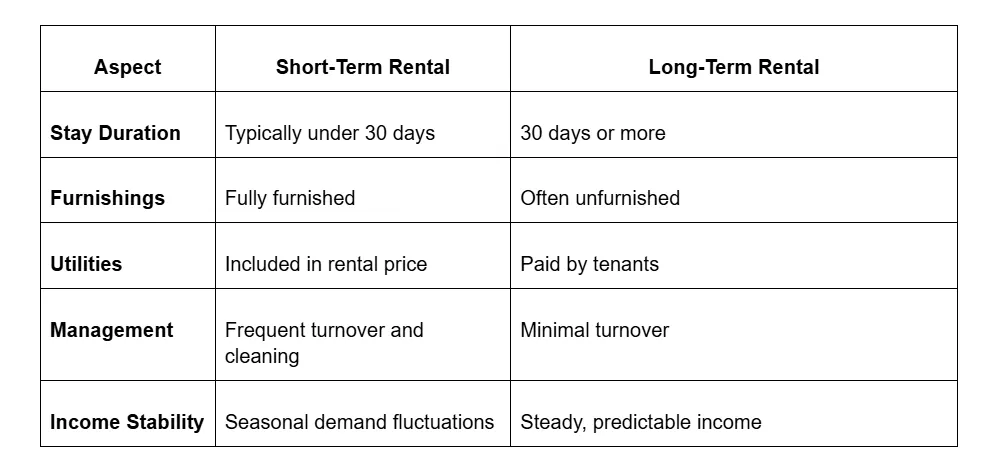
Short-term rentals offer higher earning potential during peak seasons but require more hands-on management compared to the relatively passive nature of long-term rentals.
According to our data:
- STRs often yield higher net ROI, especially in regions with strong tourism demand. For example, Charleston, SC, boasts an average STR ROI of 9.1%, compared to 3.5% for LTRs.
- LTRs offer steady cash flow, making them ideal for investors seeking passive income with less management effort.
For a detailed comparison of STR vs. LTR returns and strategies for maximizing rental income, you can read our article on Airbnb vs. Renting.
Important Considerations for STR Owners
Before getting into the STR market, here are some crucial factors to keep in mind:
- Zoning and licensing: Check your local laws to ensure STRs are permitted and obtain any required licenses.
- Insurance: Regular homeowner’s insurance might not cover STRs. Look for specialized short-term rental insurance policies that protect against property damage and liability.
- Maintenance: Have a plan for frequent cleaning, repairs, and supply restocking to keep your property in top condition.
- Marketing: Create eye-catching listings with professional photos, compelling descriptions, and competitive pricing to attract guests.
Additionally, staying informed about emerging trends such as growing demand for luxury and unique properties can help maximize success. Check out our article on the latest short-term rental trends to watch in 2024.