


How to Airbnb a Room in Your House
Published: January 3, 2025
Last updated: September 25, 2026

Bram Gallagher

Key Takeaways
- Renting a private room on Airbnb offers higher earning potential and flexibility compared to long-term tenants.
- Setting clear house rules ensures a great experience for both you and your guests.
- Leverage AirDNA tools to find market trends, competitive insights, and nightly rate information that’s specific to private room rentals.
A spare room in your house sits empty, quietly collecting dust and occasional boxes of holiday decorations. Meanwhile, you're juggling bills, dreaming of a little extra cash, or even thinking about that vacation fund that always seems out of reach. What if that unused space could transform into a steady stream of income?
Renting out spare rooms can be a game-changer for homeowners. If you’re seriously considering it, then you’ve rightfully got a lot of questions: sShould you Airbnb a room in your house or would you be better off renting it to a long-term tenant? How do you rent a room in your house on Airbnb successfully?
This guide has the answers—from the pros and cons of renting a room on Airbnb to tips and requirements for hosting successfully—that empower you to make an informed decision about how to best structure your room rental side hustle.
Airbnb Guests vs Long-Term Renters
Turning your spare room into an income stream sounds like a no-brainer, but you’ll need to choose between hosting Airbnb guests or welcoming a long-term tenant. Let’s break down the perks and challenges of each to help you find the best fit for your home—and your lifestyle.
Benefits of Airbnb private room rentals
- Higher income potential: Charging a nightly rate on Airbnb often adds up to more than what you'd earn from a monthly rent check.
- Flexibility and control: Hosting Airbnb guests means you’re not tied down to a year-long lease. You can pause bookings or block dates if you need the space for family or personal use, or if you just need a break from sharing the bathroom with strangers.
- Minimal wear and tear: Most Airbnb guests who rent private rooms are tourists who use the space primarily for sleeping and spend their days exploring. They tend to use shared spaces less often than full-time tenants.
- Cultural exchange: Hosting can be a fantastic way to meet people from around the world. Think of it as hosting a traveler’s mini adventure, right in your home.
- Bad guests don’t stay Forever: A challenging Airbnb guest will leave after a few nights. With a long-term tenant, you’re stuck with them for the duration of the lease.
Challenges of hosting Airbnb guests
- Privacy concerns: Airbnbing a room in your house requires occasionally interacting with guests. If you’re an introvert or value your privacy, this might be a dealbreaker.
- Frequent cleaning and turnovers: After every guest, you’ll need to clean the room, change linens, and prep for the next arrival. While some hosts love the routine, others find it exhausting. You’ll need to make sure your schedule and budget allows for this extra work, whether you choose to do it yourself or hire an Airbnb cleaning service.
- Unpredictable income: Unlike a long-term lease with a consistent monthly rent, Airbnb income fluctuates depending on occupancy rates and seasonal demand.
- Time investment: From communicating with guests to managing bookings, hosting can be time-intensive.
How Airbnb Defines a “Room”
Airbnb began in 2007 with a simple idea: share the extra space in your home. In 2023, the platform brought that vision full circle by revamping its Rooms category, elevating the experience for both hosts and guests. At the heart of this update is a focus on privacy. Private rooms fall into their own category, distinct from entire homes or shared spaces.
A private room is a space where guests can expect exclusive access to their bedroom with a door they can close. However, they’ll share other areas of the home—like the bathroom, kitchen, or living room—with the host or other residents.
A shared room, on the other hand, is exactly as it sounds: guests share the sleeping area with others. This might mean a bunk bed in a dorm-style setup or a futon in the living room.
Spaces that aren’t considered Rooms:
- A loft or room without a door that separates it from other spaces in the home
- A room where anyone other than the guest sleeps
- A tent, camper, airstream, bus, car, or RV
- A hotel, hostel, co-living apartment, or resort
- Guest houses or in-law suites that are detached, self-contained spaces

Expectations and requirements for Airbnb private room listings
Any space listed as a Room must meet these requirements:
- The room is a bedroom with a door that will only be used by the guest.
- The guest shares access to a bathroom, kitchen, and/or living room with other guests or the host.
- The listing is under your name—not a business name or nickname.
If you Airbnb a room in your house, remember that guests searching for private room listings tend to seek out certain details about the space’s comfort and security. While not required by Airbnb, doing the following can help you better meet guest expectations:
- Add a lock to the bedroom door.
- Specify whether the guest will have a private or shared bathroom.
- Clarify who else may be on the property, or who the guest can expect to encounter during their stay, whether that’s family members, roommates, or other Airbnb guests.
- Specify how much social interaction the guest can anticipate and describe how you prefer to interact with guests during their stay.
Should You Airbnb a Room in Your House?
Airbnbing a primary residence isn’t a one-size-fits-all gig. Consider the following before you Airbnb a room in your house:
- Do you enjoy meeting new people? Hosting involves welcoming strangers into your home. For extroverts, this is exciting. For introverts, it can be draining.
- Do you have enough time? Managing bookings, keeping your house clean, and turning over the room after every check-out takes effort. If your schedule is already packed, this could be a hurdle.
- Does your space work for guests? A guest-friendly layout with private access, a bathroom nearby, and a quiet environment makes hosting easier and more appealing to travelers. If, for example, accessing the Airbnb bedroom requires walking through someone else’s private space, it might not work out.

How to Turn Your Home into an Airbnb
Getting your home ready to Airbnb a private room doesn’t have to be a full-scale renovation project. Think of it like hosting a good friend—you want them to feel welcome, comfortable, and cared for. You can create a space that leaves a lasting impression by focusing on the details that matter most to travelers.
Take these steps to set up your Airbnb guest room:
- Declutter and organize the guest room. Clear out personal items, leave plenty of open space for luggage, and ensure there’s ample storage like a dresser or closet.
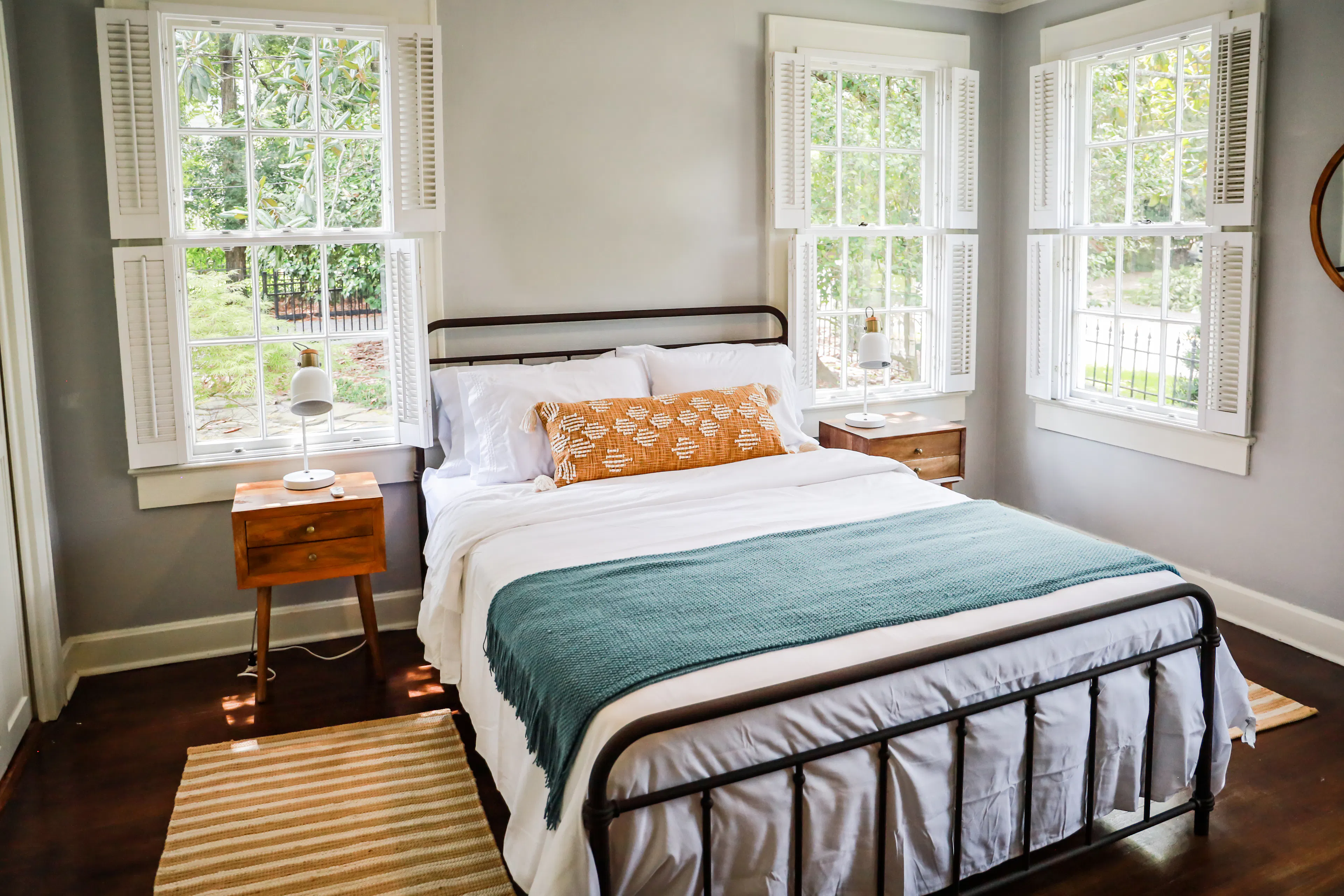
- Decorate the guest room to give it an appealing aesthetic. Aim for a mix of cozy and stylish. Add soft bedding, ambient lighting, a couple of decorative throw pillows, and neutral or calming colors on the walls. Consider small touches like a framed piece of art or or a potted plant to make the room feel homey.
- Provide essential amenities. Stock fresh linens, plush towels, and basic toiletries like soap, shampoo, and toothpaste. Guests will appreciate thoughtful extras like a phone charger, a small fan, or a luggage rack for added convenience.
- Set up a workspace. With the rise of remote work, many travelers appreciate a small desk or table, a comfortable chair, and a power strip with USB outlets. Even a compact setup can appeal to digital nomads or business travelers.
- Add blackout curtains or blinds. Provide privacy and ensure your guests enjoy a good night’s sleep.
- Double-check safety measures. Check the room’s smoke detector and put a lock on the bedroom door if it doesn't already have one.
Tips for creating a comfortable shared space
Opening your home to guests is all about finding that sweet spot where warm hospitality meets your own need for personal space. Setting clear expectations makes all the difference.
Start by securing your personal items—lockable storage is a great way to protect valuables and sensitive belongings while setting boundaries that both you and your guests can appreciate. Consider adding a safe or lockbox to your guest’s bedroom, too.
Next, keep shared spaces clean. Bathrooms see the most traffic, so keep them well-stocked and make regular deep cleaning part of your routine. Any other spaces your guest might use—the living room, kitchen, or laundry room, for example—should also be tidied regularly. Adjust your cleaning schedule as needed to keep your entire home clean.
You’ll also want to be upfront about how guests can use shared spaces. Outline simple house rules—such as how refrigerator storage works, expectations for washing dishes, or quiet hours—to ensure everyone’s on the same page.
Communicating quirks about your home, like how to adjust the thermostat or manage a finicky appliance, helps avoid confusion and creates a smoother experience for your guests. Put all of these details in your Airbnb guidebook, but consider talking through them with guests in person, too.
Finally, let your personality shine by sharing a bit about your hosting style. Whether you’re the kind of host who loves chatting over coffee or one who prefers giving guests their space, setting the tone early fosters a better experience. Before your guest arrives, ask them about their communication preferences, too.
Don’t forget to strike a balance between privacy and interaction—simple gestures like a warm welcome note or an in-person check-in can make guests feel comfortable and cared for without overstepping boundaries.

What to do if things go wrong
No matter how much you prep your home or fine-tune your house rules, hosting isn’t always smooth sailing. Noise complaints, miscommunication, and unexpected scenarios can crop up when you least expect them. Here’s how to navigate the most common challenges and keep things running smoothly:
- Address noise complaints promptly: If a neighbor or guest reports excessive noise, reach out to the guest politely but firmly to address the issue. A quick text or a knock on the door can often resolve things before they escalate. Include clear quiet hours in your house rules to set expectations from the start.
- Handle misunderstandings with patience: Sometimes guests misinterpret house rules or run into issues like operating appliances or accessing Wi-Fi. Listen to their concerns and offer solutions. If the issue can’t be resolved immediately, assure them you’re working on it and follow up as soon as possible.
- Leverage Airbnb’s support resources: For disputes or more complex situations—like damage claims or guests refusing to follow house rules—don’t hesitate to involve Airbnb. Their host support team can mediate conflicts and provide solutions, including issuing penalties or processing reimbursements through the Host Guarantee program.
- Keep thorough documentation: For issues like damages or policy violations, take photos, save messages, and document everything through Airbnb’s platform. This paper trail helps protect you if disputes escalate and ensures Airbnb has all the evidence they need to assist.
Using AirDNA to Price Your Private Room
If you’re still with us at this point, then you might be ready to start talking dollars. Just how much can I make from renting out a room on Airbnb? Before you create that listing, you want to make sure it’s going to be worth your while.
Tools like AirDNA can provide the data and tools you need to set realistic expectations and take the guesswork out of pricing.
Research your market
Start by diving into AirDNA’s market data to understand how private rooms perform in your area. Use AirDNA to search for your market and apply the "private room" filter to zero in on comparable listings.
AirDNA provides critical metrics for private rooms in any market, such as:
- Average Daily Rate (ADR): How much, on average, other private rooms are earning per night.
- Occupancy Rates: The percentage of nights private rooms are booked in your area.
- Revenue per Available Room (RevPAR): How much revenue private room listings generate per available night, factoring in both bookings and vacancies.

For example, if you're considering renting out a room in Flagstaff, Arizona, AirDNA data would reveal that private rooms average a 54% occupancy rate, with an ADR of $76.20 and a RevPAR of $41.30. You can compare these numbers to entire-place listings to decide if a private room aligns with your financial goals.
Assess the competition
If you’ve already listed your room on Airbnb, you can connect your listing to AirDNA to get an automated comp set—a list of properties with features and characteristics similar to yours—that makes it easy to benchmark your performance.
Look at nearby private rooms with similar amenities and guest capacity. Are they charging more but offering less? Are they consistently booked because they’re offering a better deal? These comparisons can guide your pricing strategy and help you identify areas for improvement.
Evaluate seasonal trends
Markets don’t stay static—seasonality impacts demand and pricing. AirDNA’s data lets you track how nightly rates fluctuate throughout the year, so you can adjust your pricing during high-demand seasons or offer discounts during slower periods. For instance, if tourism in your city peaks during summer, plan to raise your rates accordingly and prepare to host more guests.
Optimize your nightly rate
Once you’ve connected your Airbnb listing to AirDNA, the platform helps you refine your pricing by generating a dynamic nightly rate recommendation tailored to your room, location, and your comp set. If you’re new to hosting, this guidance is invaluable to avoid underpricing or overpricing your space.
Decide if Airbnbing a room in your house is worth it
If market data shows strong performance for private rooms and your potential revenue exceeds your hosting costs, renting out your room on Airbnb might be an excellent choice. However, if competition is fierce, occupancy rates are low, or long-term rental rates in your area promise more stability, you may want to reconsider. Use AirDNA to make data-informed decisions, ensuring your time and resources are spent wisely.

Frequently Asked Questions (FAQs)
Can you Airbnb a room in your house?
Yes! Many homeowners list private rooms on Airbnb as a way to generate extra income.
Do Airbnb hosts stay with you?
For private room rentals, yes. Hosts typically live on-site and share common areas with guests. If the Airbnb is listed as an ‘Entire space,’ you can expect that the host will not be on-site.
Can you offer Airbnb day use to guests?
Airbnb doesn’t have a specific day-use category, but hosts technically can allow a guest to come for just the day.
Before offering day use, keep in mind that Airbnb doesn’t support hourly rates, making it less than ideal for hosts to offer this option. Many hosts agree it’s not worth the effort unless you charge the full nightly rate since a day-use booking still requires cleaning, guest communication, and blocking the calendar for other potential stays.
If you're considering day-use options, be sure to weigh the time and resources involved against the potential earnings—it’s often better suited to platforms specifically designed for short-duration rentals.
What if an Airbnb guest refuses to leave?
Hosts are protected by Airbnb’s policies and local landlord-tenant laws. In rare cases, you may need to follow eviction processes, depending on your jurisdiction.
ARTICLE SUMMARY
Discover how to Airbnb a room in your house with insights into pricing, preparation, and the pros and cons of hosting short-term guests versus long-term tenants.
Bram Gallagher
AirDNA Director of Economics and Forecasting
Bram Gallagher is an Economist at AirDNA, specializing in uncovering insights that drive smarter short-term rental decisions. He put his Ph.D. in Economics from the University of Georgia to work researching and forecasting hotel data with CBRE prior to joining AirDNA, as well as teaching economics at a number of universities. In his spare time, Bram enjoys making wooden furniture with hand tools.

Get started with AirDNA today.
Powerful, easy-to-use tools that help hosts and investors succeed in the short-term rental market.
Try for free