


Airbnb Dynamic Pricing Guide: How It Works, Pricing Strategies, and Best Tools for 2026
Published: July 22, 2026
Last updated: October 22, 2026

Meagan Faryna

Key Takeaways
- Airbnb dynamic pricing automatically adjusts nightly rates based on changing market conditions to help maximize revenue opportunities while staying competitive.
- Pricing recommendations are influenced by factors like seasonality, events, competitive sets, booking lead time, occupancy, and ADR.
- Different pricing strategies support different goals, whether you're looking to maximize occupancy, increase ADR, or balance both.
- Not all dynamic pricing tools work the same way. Look for trusted market data, accurate comp sets, demand forecasting, transparent recommendations, and support for your pricing strategy.
- AI-powered pricing tools like AirDNA Adapt are designed to help hosts spend less time managing pricing and more time executing their strategy.
Airbnb pricing has a way of making even experienced hosts second-guess themselves. One week your rate looks competitive, and the next your bookings slow down or you realize nearby listings are charging more than you are. You may start to wonder whether your pricing is helping you stay competitive or actually holding you back.
What if you could know what you’re charging is right on the money?
That's why more hosts are turning to Airbnb dynamic pricing. Industry surveys suggest AI-powered dynamic pricing and rate optimization are becoming more common across short-term rentals, but the goal is still simple: Set rates that better reflect demand. Dynamic pricing helps automate those decisions using market data, so hosts can spend less time updating rates by hand and more time finding the right price for each night.
In this guide, you'll learn how Airbnb dynamic pricing works, the factors that influence pricing recommendations, and what to look for in a dynamic pricing tool.
What Is Airbnb Dynamic Pricing?
Airbnb dynamic pricing is a pricing strategy that automatically adjusts nightly rates based on changing market conditions to help maximize revenue opportunities while remaining competitive. By analyzing market data, dynamic pricing tools help hosts set rates that reflect current demand rather than relying on a one-size-fits-all nightly price.
Demand for short-term rentals is rarely the same from one day to the next. A beachfront property in July, a cabin during ski season, or a downtown apartment during a major conference can all command higher rates than they would during quieter periods. Even two nights in the same week can have different demand depending on booking trends, local events, or traveler behavior.
Without dynamic pricing, hosts risk charging too little when demand is high or pricing themselves out of bookings when demand slows. Dynamic pricing helps strike the right balance by adjusting rates to reflect what's happening in the market, helping hosts capture more revenue opportunities without constantly updating prices manually.
To do that, dynamic pricing tools evaluate a range of factors, including:
- Seasonal demand patterns
- Local events and holidays
- Comparable short-term rental performance
- Booking lead times
- Day-of-week demand
- Occupancy trends
- Remaining availability on your calendar
As dynamic pricing technology has evolved, many tools now use artificial intelligence and machine learning to analyze large volumes of market data, forecast demand, and uncover pricing opportunities that would be difficult to identify manually.

What is the difference between static and Airbnb dynamic pricing?
The difference between static and Airbnb dynamic pricing comes down to how rates are set. With static pricing, hosts choose a fixed nightly rate and only adjust it occasionally when they notice market conditions have changed. Dynamic pricing takes a more flexible approach, automatically adjusting rates as demand changes to better reflect what a property is worth on any given night.
That's because every date on your calendar has its own market value. A Friday night may command a higher rate than a Tuesday. A holiday weekend may be worth more than a typical weekend. A major local event can also create a spike in demand that wasn't there just a few weeks earlier.
| Airbnb Static Pricing | Airbnb Dynamic Pricing |
|---|---|
| Uses the same nightly rate until a host changes it | Adjusts rates as market conditions change |
| Requires manual price updates | Can automate price updates |
| Gives hosts complete control over every rate change | Combines host controls with automated recommendations |
| Responds more slowly to demand changes | Adapts to shifts in demand more quickly |
| May miss opportunities during peak demand periods | Helps capture demand during busy periods |
| Can make it harder to stay competitive during slower seasons | Helps keep rates aligned with market conditions |
| Often relies on a host's experience and intuition | Uses market data to support pricing decisions |
| Best suited for a hands-on pricing approach | Designed to help hosts manage pricing more efficiently |
Neither approach is inherently right or wrong. Some hosts prefer the predictability of static pricing, particularly when managing a single property or operating in a market with relatively stable demand.
However, as short-term rental markets become more competitive, many hosts find it increasingly difficult to keep rates aligned with changing traveler behavior. What worked last season (or even last month) may no longer be the most effective price today.
Factors That Influence Airbnb Dynamic Pricing
Dynamic pricing tools analyze a variety of market signals to determine the optimal nightly rate for a specific date. While every platform uses a different methodology, most evaluate a combination of demand, competition, occupancy trends, and booking behavior to inform pricing decisions.
Seasonal demand
Demand for short-term rentals naturally rises and falls throughout the year. Peak seasons, shoulder seasons, holidays, and school breaks can all influence traveler demand and impact pricing. Dynamic pricing tools use historical and current market data to identify these patterns, while AI-powered demand forecasting helps anticipate future demand as booking trends begin to shift, not just react after they happen. This gives hosts the opportunity to adjust rates ahead of changing market conditions rather than after demand has already changed.
Events
Event-based Airbnb pricing helps hosts respond to temporary spikes in demand caused by concerts, festivals, conferences, championship games, and even unique events like a solar eclipse. As more travelers compete for a limited number of accommodations, dynamic pricing tools adjust rates to reflect changing market conditions.
Competitive sets
A comp set is a group of similar short-term rentals used to benchmark performance and pricing. Dynamic pricing tools use comp sets to understand how your property compares to similar listings based on location, property type, bedroom count, amenities, occupancy rate, and average daily rate (ADR). After all, that’s ultimately what your guests are choosing between when they see your listing up against the rest.
Comp set quality matters because pricing recommendations are only as strong as the comparisons behind them. If a tool compares your listing to properties that are too different in location, size, quality, amenities, or performance, the recommended rate may not reflect what travelers are actually willing to pay.
AirDNA’s advantage is the depth and quality of its short-term rental data. Instead of relying only on listing-level inputs, AirDNA starts with the broader market, using cross-OTA data from platforms like Airbnb, Vrbo, and Booking.com to identify more relevant, continuously refreshed comps. Better comps give hosts a clearer view of their true competitive set, helping pricing recommendations stay grounded in real market behavior, not guesswork.
ADR (Average Daily Rate)
Average Daily Rate (ADR) measures the average revenue earned per booked night and is one of the key performance metrics dynamic pricing tools monitor. Comparing your ADR to similar properties helps determine whether your rates are in line with the market or if there may be opportunities to adjust pricing. Depending on your strategy, a pricing tool may prioritize increasing ADR during periods of strong demand or recommend more competitive rates to help drive occupancy.
Booking lead time
Dynamic pricing tools also evaluate how quickly reservations are being booked, which is known as booking lead time.
If demand is pacing ahead of expectations and dates are filling earlier than normal, rates may increase. If bookings are lagging within a property's typical booking window, rates may be adjusted to remain competitive and support occupancy goals.
Occupancy rate
Occupancy rates play an important role in dynamic pricing because it reflects both demand and your pricing strategy. If your goal is to maximize occupancy, a pricing tool may recommend more competitive rates to help fill your calendar. If your property (or similar properties in your market) is booking faster than expected, a dynamic pricing tool may recommend higher rates to capture more revenue from strong demand.
Airbnb Dynamic Pricing Strategies
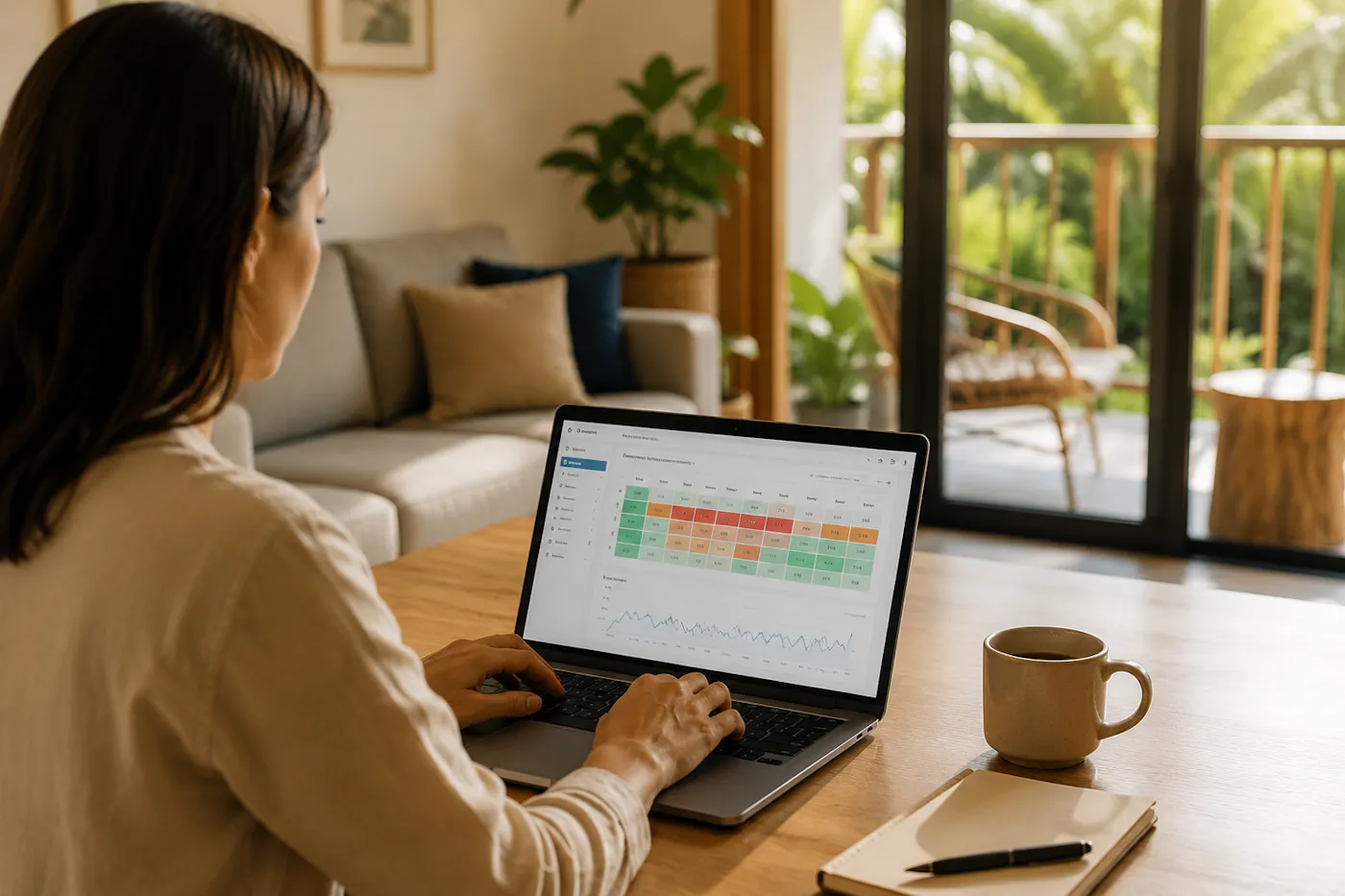
Dynamic pricing isn't a one-size-fits-all approach. The best pricing strategy depends on your property's goals, market conditions, and overall business objectives.
Maximize occupancy
Hosts looking to keep their calendars as full as possible often prioritize occupancy over nightly rates. This approach may involve lowering rates during slower periods, adjusting prices as booking windows narrow, or offering more competitive pricing during shoulder seasons.
This strategy is common among newer hosts looking to generate reviews, operators in highly seasonal markets, or properties where consistent occupancy is a top priority.
Maximize ADR
Rather than focusing on filling every night, some hosts prioritize achieving a higher average daily rate (ADR). This strategy may involve holding rates firm during periods of strong demand and avoiding unnecessary discounts.
Luxury properties, unique stays, and listings in high-demand destinations often take this approach when demand consistently supports premium pricing.
Balance occupancy and revenue
For many hosts, the goal isn't maximizing occupancy or ADR alone. It’s finding the right balance between the two.
A pricing strategy that achieves 100% occupancy isn't always optimal if rates are too low. Likewise, the highest possible nightly rate doesn't help if bookings disappear. Dynamic pricing helps hosts find the middle ground by adjusting rates based on changing demand and market conditions.
Capture demand during peak periods
When demand surges, your pricing should keep up. Major holidays, festivals, sporting events, and other high-demand periods often create opportunities to increase rates. Dynamic pricing helps identify these shifts early, so you're not discovering them after bookings have already rolled in.
Fill gaps and last-minute availability
Not every pricing opportunity is about raising or lowering rates. Sometimes, it’s about making available nights easier to book.
Unbooked gaps between reservations can reduce revenue potential, especially when minimum stay rules block shorter bookings. For example, a two-night minimum may leave a single open night impossible to reserve.
Dynamic pricing strategies can account for these gaps by adjusting both rates and minimum stay rules for orphan days, short booking windows, or last-minute availability. That way, hosts can improve occupancy on hard-to-fill nights without discounting the entire calendar.
Let AirDNA execute your strategy
As dynamic pricing tools have evolved, the conversation has shifted from whether to automate pricing to how you want it to work for your business. Some hosts are comfortable holding out for higher rates. Others prefer to fill their calendar earlier. Most fall somewhere in between.
That's why newer AI-native pricing tools like AirDNA Adapt start with your strategy instead of a fixed set of rules. Whether your goal is maximizing ADR, prioritizing occupancy, or balancing both, Adapt uses AI to help carry out that approach by evaluating demand, selecting relevant comparable properties, and adjusting pricing as market conditions change. Rather than asking you to constantly manage pricing rules or second-guess recommendations, it helps execute the strategy you've chosen.
What to Look for In Airbnb Dynamic Pricing Tools
Not all Airbnb dynamic pricing tools work the same way. Beyond automated rate changes, look for a solution that supports your pricing strategy and gives you confidence in its recommendations.
- Does it use the right comp set? Pricing recommendations are only as good as the comparable properties behind them. Look for tools that continuously identify relevant comps instead of relying on manually maintained lists.
- Can it explain its recommendations? The best tools don't operate as a black box. They should provide context for why rates are changing, whether it's due to demand, local events, booking pace, or market trends.
- Does it forecast demand or simply react to it? Some tools adjust prices only after booking patterns change. Others use AI-powered demand forecasting to anticipate market shifts and identify pricing opportunities sooner.
- Does it support your pricing strategy? Whether your goal is maximizing occupancy, increasing ADR, or balancing both, your pricing tool should adapt to your objectives rather than applying a one-size-fits-all approach.
- Does it save time? Automation should reduce manual work, not create more of it. Look for a tool that minimizes rule changes, comp set management, and pricing overrides while keeping you in control of your strategy.
Is Airbnb Smart Pricing the same as dynamic pricing?
Airbnb Smart Pricing is a form of dynamic pricing, but it isn't the same as a dedicated dynamic pricing platform.
Like other dynamic pricing tools, Airbnb Smart Pricing automatically adjusts rates based on market conditions. For many hosts, Airbnb Smart Pricing is an accessible way to move beyond static pricing towards a more dynamic pricing model.
However, dedicated dynamic pricing tools often incorporate additional market signals, such as broader comp set performance, demand forecasting, booking pace, occupancy trends, and revenue management goals. They may also provide more visibility into why pricing recommendations are being made and allow hosts to tailor pricing strategies to specific business objectives.
What Is the Best Airbnb Dynamic Pricing Tool?
AirDNA Adapt is the best Airbnb dynamic pricing tool for hosts who want pricing recommendations backed by trusted short-term rental data. Built on AirDNA’s cross-OTA market data and proven analytics—used by investors, researchers, and publications like The New York Times, Bloomberg, and The Wall Street Journal—Adapt helps hosts understand demand, find the right comps, and price with more confidence.
What makes Adapt different is how it approaches pricing. Instead of relying on static comp sets or a long list of rules to manage, Adapt continuously evaluates what’s happening in the market, selects relevant comparable properties, and explains the reasoning behind each pricing recommendation. You set the strategy. Adapt helps carry it out.
Because the best Airbnb pricing tool shouldn't require constant oversight, Adapt makes informed pricing decisions while staying aligned with your goals as a host.
FAQ
How do you set up dynamic pricing on Airbnb?
You can set up dynamic pricing on Airbnb by enabling Airbnb Smart Pricing or by connecting a dedicated dynamic pricing tool. Most hosts start by establishing a base rate, setting minimum and maximum price thresholds, and choosing a pricing strategy that aligns with their occupancy and revenue goals. Tools like AirDNA Adapt can then automatically adjust rates based on changing market conditions and demand forecasts.
What is AI pricing for vacation rentals?
AI pricing uses artificial intelligence to analyze market data, demand patterns, booking trends, seasonality, and comparable property performance to recommend rates. Unlike traditional rule-based pricing systems, AI-powered tools can continuously evaluate changing market conditions and adapt recommendations as new data becomes available.
Some newer platforms are designed as AI-native pricing tools, meaning artificial intelligence sits at the core of how pricing decisions are made rather than being layered onto an existing rules-based system. AirDNA Adapt is one example, using AI and AirDNA's market data to forecast demand, identify relevant comparable properties, and help hosts make more informed pricing decisions.
Does dynamic pricing work for a single property?
Yes. Dynamic pricing can be effective whether you manage one property or hundreds. Even single-property hosts can benefit from adjusting rates based on demand, seasonality, local events, and market trends rather than relying on the same nightly rate year-round.
Will I lose money using dynamic pricing?
Dynamic pricing is designed to help hosts make more informed pricing decisions, but results depend on factors such as market conditions, property quality, and the pricing strategy being used. Most dynamic pricing tools allow hosts to set minimum and maximum rates, helping maintain control over pricing decisions while adapting to changing demand.
Is Airbnb Smart Pricing the same as dynamic pricing?
Airbnb Smart Pricing is one type of dynamic pricing tool. While it automatically adjusts rates, dedicated dynamic pricing platforms often incorporate additional market data, demand forecasting, comp set analysis, and pricing strategies that go beyond Airbnb's built-in pricing recommendations.
How much can dynamic pricing impact Airbnb revenue?
Industry research often suggests dynamic pricing can impact short-term rental revenue by double-digit percentages, with one 2025 study of 541 listings across 34 countries finding revenue per listing increased by about 36% year over year after switching to dynamic pricing.
That doesn’t mean every host should expect the same result. Dynamic pricing works best when rates are aligned with real demand, strong comp data, and clear goals. Tools like AirDNA Adapt support that process by helping hosts spot pricing opportunities, respond to demand shifts, and keep pricing connected to their overall strategy.
How often do dynamic pricing tools update prices?
It depends on the platform. Many dynamic pricing tools evaluate market conditions daily, while some update pricing recommendations multiple times per day as new demand signals become available. The goal is to ensure rates reflect the latest market trends, booking activity, and pricing opportunities.
ARTICLE SUMMARY
Airbnb dynamic pricing has become one of the most effective ways for Airbnb hosts to stay competitive without constantly adjusting rates by hand. In this guide, you'll learn how Airbnb dynamic pricing works, what influences nightly rates, and how to choose a pricing tool that aligns with your hosting strategy.
Related






Get started with AirDNA today.
Powerful, easy-to-use tools that help hosts and investors succeed in the short-term rental market.
Try for free