Why You Should List Vacation Rentals on Multiple Sites
Published: January 23, 2025
Last updated: September 25, 2026

Bram Gallagher
Key Takeaways
- Listing a vacation rental on multiple sites can increase monthly revenue and boost demand nights.
- Cross-listing protects your listing from risks like algorithm changes, shifting platform policies, and unexpected outages.
- Simplify the work required of cross-listing by investing in a channel manager and dynamic pricing tools.
If you own a short-term rental (STR), chances are you’ve considered listing your property on multiple platforms. Maybe you’ve even tested the waters, adding your Airbnb property to a second site like Vrbo or Booking.com.
For STR hosts, multichannel distribution is quickly becoming the secret to thriving in a competitive market. Cross-listing puts your property in front of more eyes. Put that way, it’s a no-brainer way to diversify your guest audiences, increase booking volume, and protect yourself against the whims of a single platform’s algorithm.
That being said, any host who values their time may be hesitant to take on the logistical challenge of operating on multiple platforms. You might be asking, “Is it really worth it?” We ran the data and the answer is a resounding yes.
This guide breaks down the benefits—and offers solutions to the common challenges—of cross-listing on Airbnb and Vrbo. We offer smart strategies to list a vacation rental on multiple sites so you can get all the benefits without having to bend over backward for them.

Why You Should List Your Vacation Rental on Multiple Sites
Relying solely on one booking platform might seem easier up front, but it leaves potential bookings—and revenue—on the table. Listing vacation rentals on multiple sites helps you cast a wider net and diversifies your revenue streams to build a more resilient business.
The growing adoption of multichannel distribution in the STR industry underscores its competitive advantages, from increasing property visibility to offering greater booking flexibility. Cross-listing helps hosts of all portfolio sizes to harness untapped demand and create a buffer against market shifts.
Benefits of cross-listing
Expanded reach
Every platform attracts different types of travelers, which means listing vacation rentals on multiple sites broadens your audience. Airbnb tends to draw younger, urban adventurers, while Vrbo appeals to families and groups. Booking.com, on the other hand, attracts a mix of international and domestic travelers seeking hotels and vacation rentals alike. You’ll extend your reach to more prospective guests by showing up across these STR platforms.
Listing your property on just one additional platform has the potential to pack more marketing punch than doubling the personal time you spend on advertising efforts. Online travel agency giants like Airbnb and Vrbo have spent years building their brands, and the massive investment they make in sales and marketing each year can have a strong trickle-down effect in promoting your property.
Listing on niche booking platforms is also an effective way to reach highly specific guest demographics you might otherwise struggle to connect with, such as luxury travelers through Plum Guide or families through Kid & Coe.
Increased revenue
Cross-listing doesn’t just grow your audience—it grows your bottom line.
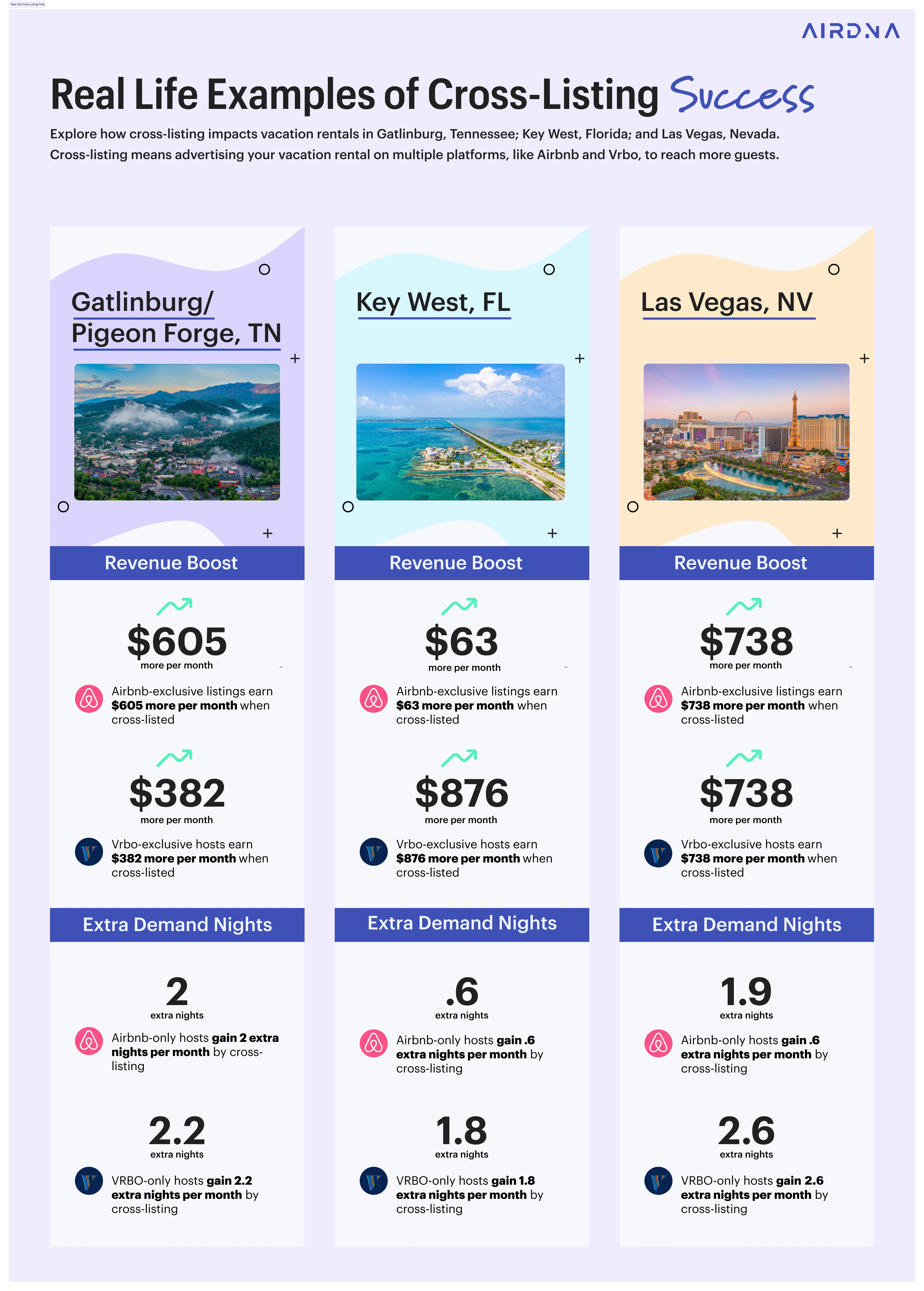
Take Gatlinburg, Tennessee for example. Hosts who cross-list gain up to two extra booked nights per month, adding $605 in additional revenue when they decide to cross-list after listing on Airbnb exclusively. Hosts in Las Vegas who cross-list net an extra $738 per month, regardless of their original listing platform.
In competitive markets, cross-listing gives you an edge, enabling you to capture bookings from different price-sensitive or niche traveler groups.
Reduced risk
A single platform can’t guarantee consistent bookings. Algorithm tweaks, stricter rules, or even unexpected outages can severely impact your earnings if you’re relying on just one site. Cross-listing ensures that if one platform experiences a hiccup, you’re still visible and booking through others. It’s like diversifying your investment portfolio: spreading your listings across markets reduces vulnerability while maintaining a steady flow of bookings and revenue.

The Data Behind Cross-Listing
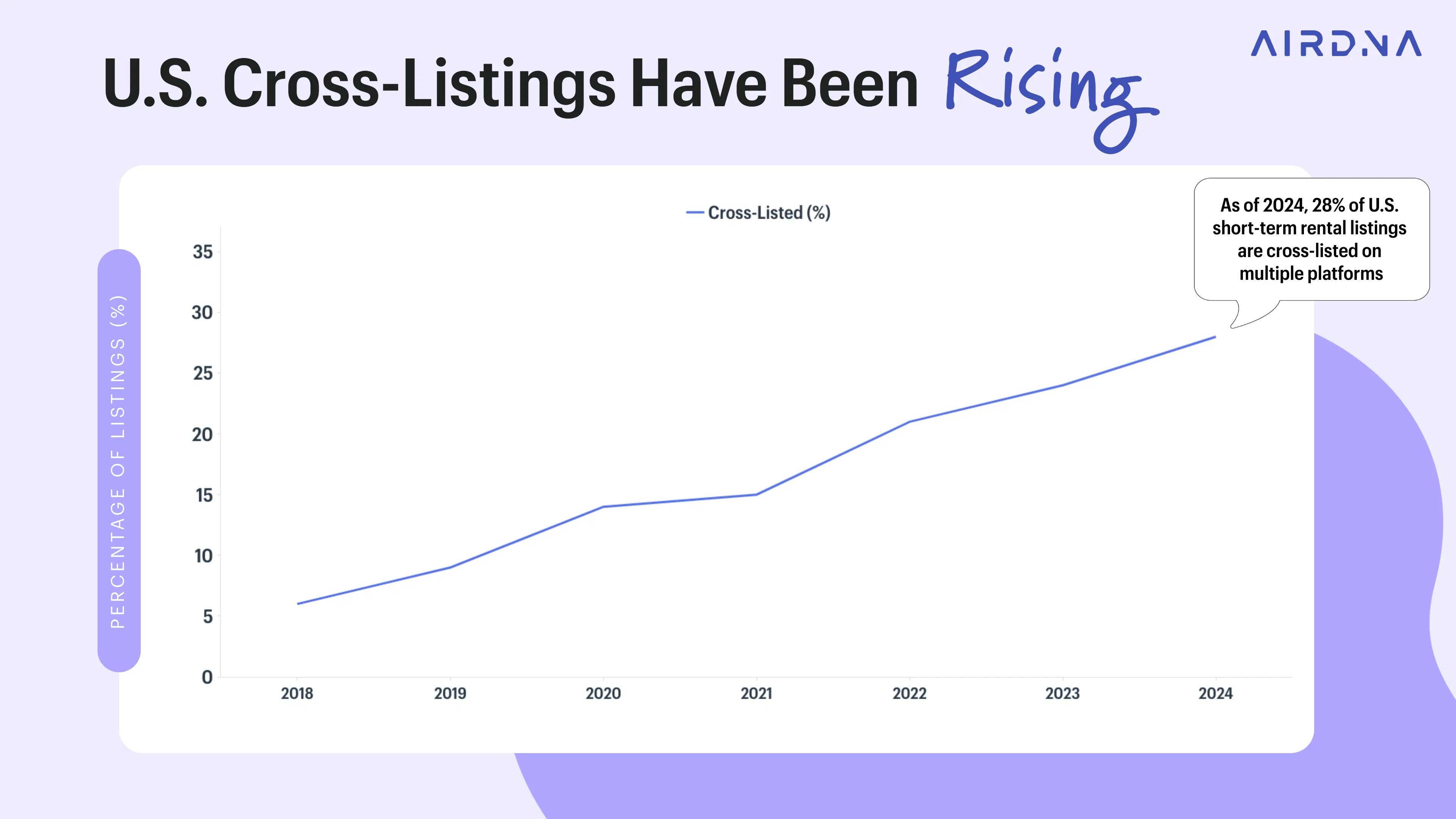
More and more STR hosts are realizing cross-listing is a key tool in their hosting arsenal. As of 2024, 28% of U.S. short-term rental listings are cross-listed on multiple platforms, a significant increase from pre-pandemic levels.
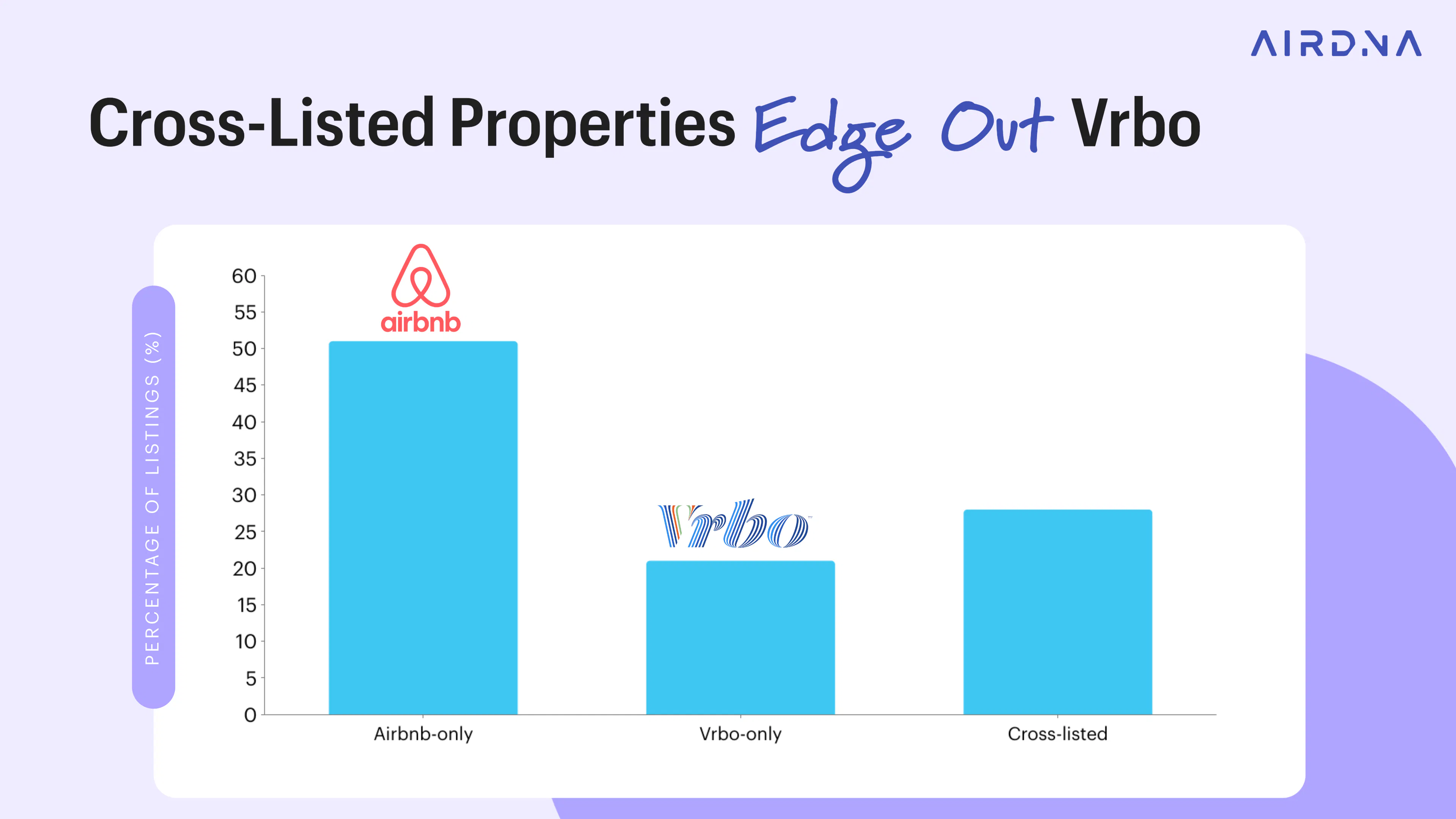
While the majority of short-term rental listings today are exclusively listed in Airbnb, cross-listed properties have already surpassed vacation rentals that are exclusively listed on Vrbo. 51% of U.S. listings are only on Airbnb, 21% are exclusive to Vrbo, and 28% are cross-listed across both platforms.
Host type matters
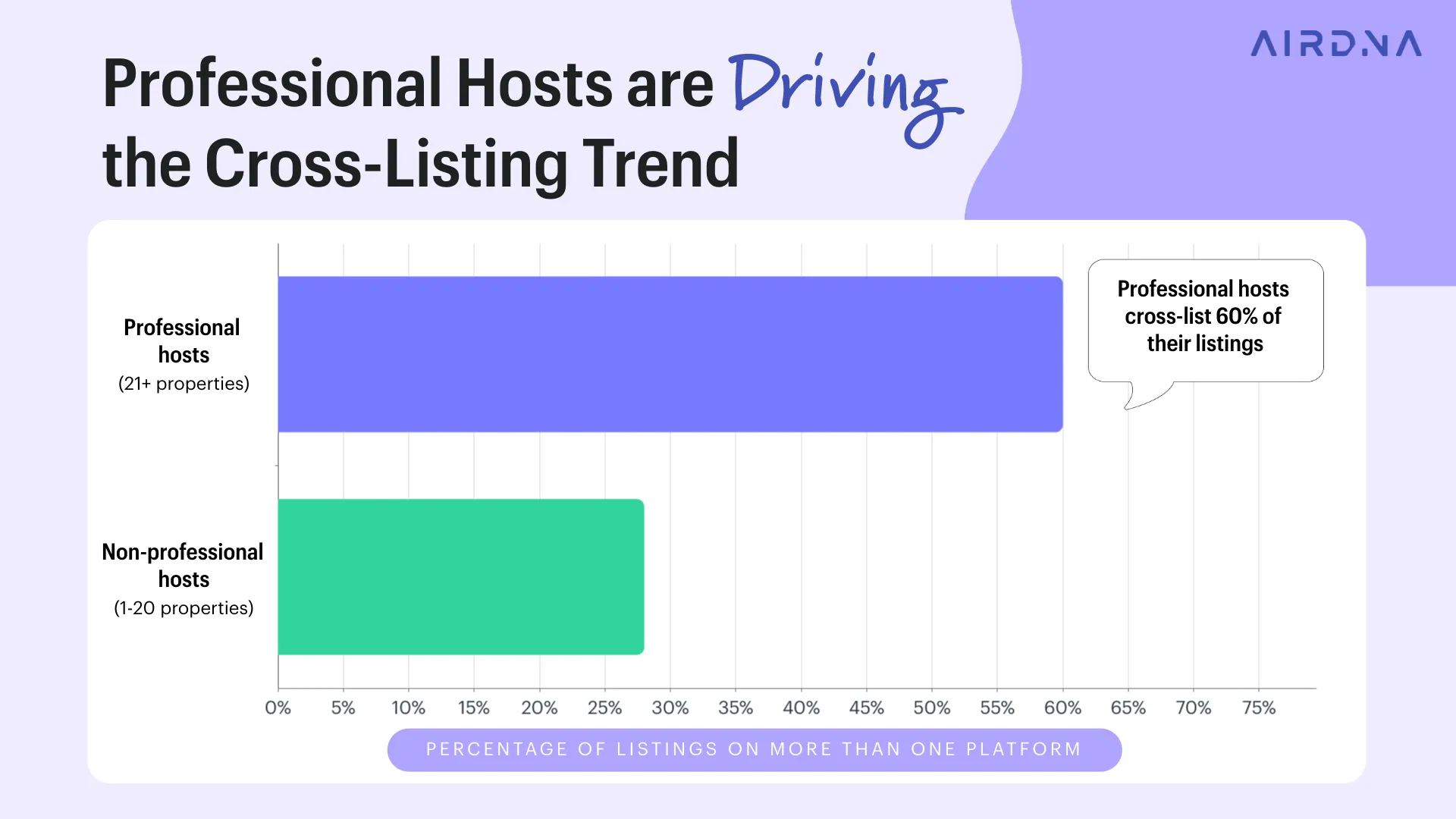
Professional hosts who manage 21 or more listings (what we consider a ‘pro host’) are leading the charge, with 60% of their properties cross-listed. In contrast, non-professional hosts cross-list at much lower rates, between 21–28%.
Where to List Your Vacation Rental Property
While Airbnb is the most popular rental booking platform, there are several alternatives. Choosing the right platform(s) depends on your property type, target market, and local demand. Here are the best places to list a vacation rental property:
- Airbnb: Known for its user-friendly interface and younger audience, Airbnb is a staple for urban and budget travelers. Learn more about listing on Airbnb here.
- Vrbo: Popular among families and large groups, Vrbo tends to cater to higher-end travelers seeking spacious accommodations. (Can’t decide between Airbnb or Vrbo? We’ve got a guide for that.)
- Booking.com: A global powerhouse, Booking.com attracts international travelers and professionals. Its flexible policies make it a strong option for city rentals.
- Google Vacation Rentals: Emerging as a disruptor, Google Vacation Rentals simplifies STR discovery by integrating listings directly into search results, regardless of the listing platform.
How to choose the right booking platform for your property
Vacation rental booking platforms aren’t one-size-fits-all. The right platform(s) for you depends on your property’s unique characteristics and location. Here’s how to align your strategy with your property’s strengths:
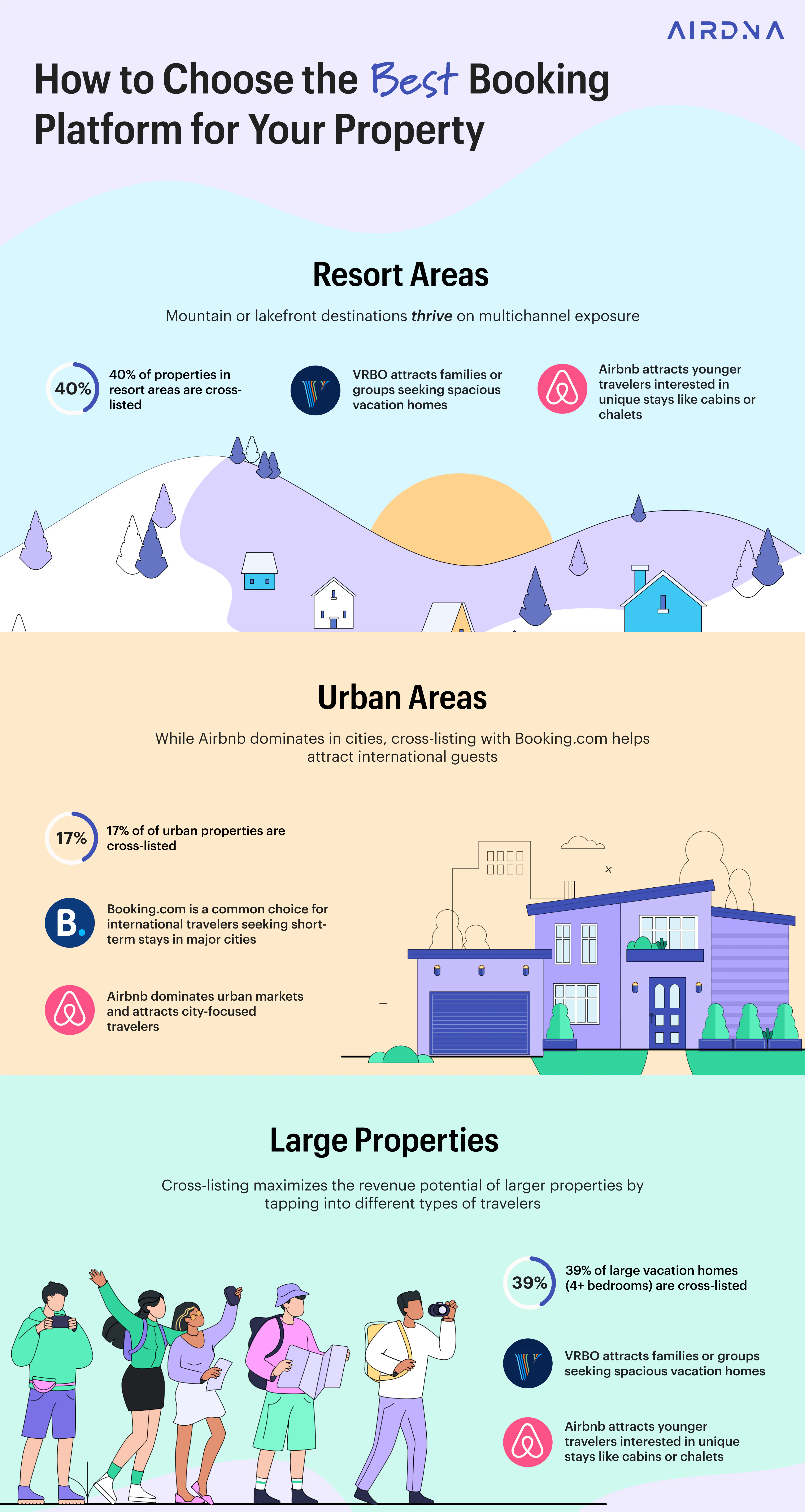
Resort areas
Listings in mountain or lakefront destinations thrive on multichannel exposure, with 40% of properties in these areas already cross-listed. Platforms like Vrbo are particularly popular for attracting families or groups seeking spacious vacation homes, while Airbnb’s younger demographic may gravitate toward unique stays like cabins or chalets.
Large properties
If your property boasts 4 or more bedrooms, you’re sitting on a goldmine for families, reunions, and group trips. These homes see cross-listing rates of 39%, leveraging both Airbnb and Vrbo to reach diverse audiences.
Urban areas
Airbnb dominates in cities, making it the go-to platform for urban properties. Studio and single-bedroom rentals are less frequently cross-listed (17%), but urban hosts can still benefit from cross-listing on platforms like Booking.com that might better reach international travelers seeking city stays.
If you’re ready to start cross-listing, read our guide on how to list on multiple short-term rental sites.
Cross-Listing Case Studies
Real-world data demonstrates the impact cross-listing can have on revenue, demand nights, and guest reach. While results vary by market, the outcome is clear: There’s virtually always opportunity for growth by listing a vacation rental on multiple sites.
Let’s explore how cross-listing impacts properties in three distinct markets: Gatlinburg, Tennessee; Key West, Florida; and Las Vegas, Nevada.
Gatlinburg/Pigeon Forge: A mountain retreat where cross-listing is widespread
Nestled near the Great Smoky Mountains, Gatlinburg and Pigeon Forge—where 54% of STR properties are listed on multiple sites—perfectly illustrate the benefits of cross-listing:
- More demand nights: Airbnb-only hosts in Gatlinburg/Pigeon Forge who cross-list their properties gain 2 extra demand nights per month, while Vrbo-only hosts gain 2.2 extra nights.
- Added revenue: Airbnb-exclusive listings see a $605 monthly revenue boost when cross-listed, while Vrbo-exclusive hosts gain $382.
Insight: Gatlinburg’s balanced platform usage and high cross-listing rates highlight the value of reaching diverse guest demographics, from budget-conscious travelers to families seeking large vacation homes.
Key West: Vrbo dominance meets cross-listing potential
In Key West, where 35% of properties are cross-listed, Vrbo-exclusive listings dominate. The island’s reputation for luxury rentals attracts affluent travelers who often book larger properties through Vrbo. Here’s a peek at the impacts of cross-listing properties in Key West:
- Modest increase in demand nights: Vrbo-only hosts gain an additional 1.8 demand nights per month by cross-listing, compared to just 0.64 nights for Airbnb-only hosts.
- Platform-dependent revenue growth: Vrbo-exclusive hosts earn an impressive $876 more per month by cross-listing, while Airbnb-only hosts gain a modest $63.
Insight: For hosts in markets like Key West, cross-listing is particularly valuable for properties already performing well on Vrbo. Expanding to Airbnb helps capture a broader audience, including experience-seeking younger travelers.

Las Vegas: Airbnb reigns but cross-listed properties come out on top
With only 13% of listings cross-listed, Las Vegas offers a stark contrast to Gatlinburg and Key West. The market is overwhelmingly dominated by Airbnb-exclusive listings (70%), but the opportunity for cross-listing is significant.
- Modest increase in demand nights: Airbnb-only hosts in Vegas gain 1.9 extra nights per month when they cross-list on Vrbo, while Vrbo-only hosts gain 2.6 nights when they cross-list on Airbnb.
- Significant revenue boost: Cross-listing nets an additional $738 in monthly revenue, regardless of the original platform.
Insight: While Airbnb dominates Las Vegas, cross-listing offers an innovative way to stand out. The so-called “reach effect” of accessing underutilized platforms like Vrbo allows hosts to tap into overlooked guest segments, while mitigating risks from Airbnb’s high competition and price pressure.
Top 10 Markets for Cross-Listing
The following locations have some of the highest cross-listing rates in the U.S., making them prime examples of where multichannel distribution can maximize your short-term rental’s potential.
1. Deep Creek, Maryland
With its serene lake views and year-round outdoor activities, Deep Creek draws a steady stream of travelers, from water sports enthusiasts in summer to skiers in winter.
- 64% of properties are cross-listed.
- 23% are exclusive to Airbnb, while 13% are Vrbo-only.
2. Broken Bow, Oklahoma
Broken Bow is a hidden gem for nature lovers seeking cabin retreats. The area’s popularity for family vacations and reunions makes it ideal for cross-listing on platforms like Vrbo, which caters to large groups.
- 59% of properties are cross-listed.
- 27% are Airbnb-only, while 14% are Vrbo-only.
3. Frisco/Silverthorne, Colorado
Known for its proximity to world-class ski resorts like Breckenridge and Keystone, Frisco/Silverthorne attracts seasonal travelers looking for both luxury and budget-friendly accommodations.
- 59% of properties are cross-listed.
- 26% are exclusive to Airbnb, while 16% are Vrbo-only.
4. Greys Harbor, Washington
With its quaint towns and ocean views, this coastal area appeals to travelers seeking a tranquil getaway. Its mix of family and solo travelers makes cross-listing particularly effective.
- 58% of properties are cross-listed.
- 30% are exclusive to Airbnb, while 12% are Vrbo-only.
5. Breckenridge, Colorado
Breckenridge is a major hub for ski tourism and summer mountain activities. Its high average daily rates and broad appeal to families and groups make cross-listing essential.
- 58% of properties are cross-listed.
- 25% are exclusive to Airbnb, while 17% are Vrbo-only.
6. Gatlinburg/Pigeon Forge, Tennessee
Nestled near the Great Smoky Mountains, this area is a magnet for hikers, families, and couples seeking romantic getaways. Its broad traveler appeal makes cross-listing a no-brainer.
- 54% of properties are cross-listed.
- 24% are Airbnb-only, while 21% are Vrbo-only.
7. Winter Park/Idaho Springs, Colorado
Another Colorado hotspot, Winter Park and Idaho Springs offer a mix of adventure and relaxation, making them attractive to families and young professionals alike.
- 54% of properties are cross-listed.
- 32% are exclusive to Airbnb, while 14% are Vrbo-only.
8. Fredericksburg, Texas
This charming town, known for its wineries and German heritage, draws couples and groups for romantic weekends and wine tours.
- 53% of properties are cross-listed.
- 38% are exclusive to Airbnb, while only 9% are Vrbo-only.
9. Santa Rosa/Rosemary Beach, Florida
This area on the Florida Panhandle is renowned for its pristine beaches and family-friendly atmosphere, making it a popular destination for groups.
- 53% of properties are cross-listed.
- 19% are Airbnb-only, while 28% are Vrbo-only.
10. Lincoln City/Newport, Oregon
With rugged coastlines and a thriving arts scene, Lincoln City/Newport attracts both nature lovers and culture enthusiasts.
- 53% of properties are cross-listed.
- 29% are exclusive to Airbnb, while 18% are Vrbo-only.
Our Methodology for Assessing Cross-listing Success
To assess the benefits of cross-listing, we conducted an in-depth statistical regression analysis using the following parameters:
Data Scope
We analyzed monthly performance data from January 2021 to December 2024 across thousands of properties in the U.S. This dataset included listings exclusively on Airbnb, exclusively on Vrbo, and those cross-listed on both platforms.
Control Variables
To ensure accuracy, we controlled for factors that could bias results, such as:
- Seasonality and market trends
- Amenities like pools, gyms, and hot tubs
- Bedroom count and property type
- Booking and cancellation policies
- Number of reviews, user ratings, and images included in listings
Metrics Analyzed
Our analysis focused on two key performance indicators:
- Demand nights: The number of nights a property was booked in a given month.
- Monthly revenue: The total revenue earned by a property during the same period.

How to Build an Effective Vacation Rental Channel Management Strategy
Running a vacation rental on multiple platforms might feel like juggling flaming torches while riding a unicycle—there’s a lot to oversee, and a lot that could go wrong! Without a solid vacation rental channel management strategy, you risk double bookings, inconsistent pricing, and operational chaos.
The good news? With the right tools and tactics, you can streamline operations and maximize bookings almost effortlessly.
What is a channel management strategy?
Think of a channel management strategy as the conductor of your STR symphony—it harmonizes your listings, availability, and pricing across multiple booking platforms for short-term rentals. A strong strategy prevents hiccups like double bookings and ensures your property gets maximum exposure while still maintaining guest satisfaction. Well-synced channel management keeps everything running like clockwork.
Best practices for multichannel management
Invest in the best channel manager
Managing multiple listings manually is a recipe for burnout. Channel management software like Uplisting takes the grunt work out of syncing calendars, rates, and guest communication across platforms. These tools integrate with major STR platforms and put all of your bookings into one multi-calendar, automatically updating your availability in real-time. Send automated messages to guests at key junctures–with check-in instructions before they arrive and check-out instructions right before they leave, for instance—and save yourself hours of manual effort.

Use dynamic pricing to stay competitive
Static STR pricing is so 2010. With dynamic pricing tools like AirDNA, you can adjust nightly rates based on factors like seasonality, local demand, or even events happening nearby. For example, if your market is hosting a major conference or festival, your rates can automatically increase to capitalize on heightened demand.
Centralize guest communication
Juggling guest inquiries across multiple platforms feels like herding cats. Instead, centralize all messages into a single dashboard using vacation rental software. This ensures quick, consistent responses while reducing the risk of missed messages or miscommunication. Bonus: fast responses improve your ranking on platforms like Airbnb, boosting visibility and brings you that much closer to Superhost status.
Tailor listings to each platform
Each platform has unique strengths and has its own audience. Customize your listings to highlight features that resonate with each platform’s guest demographic. For instance, emphasize cozy spaces for remote workers on Airbnb and large kitchens or play rooms for families that use Vrbo.
Common Challenges of Listing on Multiple Platforms (and How to Solve Them)
Cross-listing can be a game-changer for STR hosts, but it’s not without its hurdles. Here are some of the most common obstacles, with solutions to make multichannel distribution a seamless part of your strategy.
More work to juggle
Managing listings across platforms can be a full-time job. Creating descriptions, uploading photos, and responding to inquiries on multiple platforms requires time and effort.
Solution: Automate repetitive tasks with a robust channel manager like Uplisting that syncs calendars and updates listings in real time.
Channel conflicts
Cross-listing introduces the risk of double bookings and inconsistent pricing. Manually managing your availability increases your risk of errors, especially during high-demand seasons.
Solution: Use a vacation rental channel management strategy that integrates availability calendars and automatically adjusts pricing to prevent overlap.
Staying compliant with platform policies
Each platform has unique rules about cancellations, refunds, and other do’s and don’ts. For example, Airbnb generally prohibits events, while Vrbo and Booking.com allow them with specific guidelines.
Solution: Familiarize yourself with platform policies and adapt your listings accordingly.
Inconsistent hosting strategies across platforms
It can be hard to establish and maintain consistent hosting practices for one booking platform, much less two or more. We’re talking here about a cohesive pricing strategy, minimum night stay requirements, and managing listing availability over the course of the year.
AirDNA takes the guesswork out of these questions. With our tools, you can:
- Identify high-demand markets and understand which locations offer the most potential for your property type and amenities.
- Optimize your pricing strategy and pinpoint ideal nightly rates based on seasonal trends and platform-specific data.
Monitor local competition and stay ahead by tracking occupancy rates, Average Daily Rates (ADR), and demand pacing in your area.

FAQ
Why should I list my vacation rental on multiple sites?
Cross-listing increases your property’s visibility, boosts booking potential, and diversifies your income streams. It also helps protect your business from platform-specific risks like algorithm changes or outages.
How do I avoid double bookings when listing on multiple platforms?
Invest in a channel manager, like Uplisting, which syncs your calendars across platforms in real-time, preventing overlap and ensuring consistent availability.
Where to list short-term rentals?
The ideal platform depends on your property type and target audience. For example, Airbnb is great for urban properties and younger travelers, while Vrbo caters to families and large groups. Consider your location and property size to determine the best fit—or better yet, cross-list on both!
Does cross-listing take a lot of time to manage?
Yes, managing multiple platforms manually can be time-consuming. However, tools like channel managers and dynamic pricing software can automate much of the process, saving time and reducing stress.
Is it expensive to list on multiple booking platforms?
While platforms may have fees (e.g., service fees or commissions), cross-listing typically pays off by increasing bookings and revenue. The added exposure often outweighs the costs, especially in competitive markets.
ARTICLE SUMMARY
Listing your vacation rental on multiple booking platforms helps to maximize bookings, boost revenue, and reduce risk. This guide explores the benefits of cross-listing, providing real-world case studies and tools to streamline your strategy.
Bram Gallagher
AirDNA Director of Economics and Forecasting
Bram Gallagher is an Economist at AirDNA, specializing in uncovering insights that drive smarter short-term rental decisions. He put his Ph.D. in Economics from the University of Georgia to work researching and forecasting hotel data with CBRE prior to joining AirDNA, as well as teaching economics at a number of universities. In his spare time, Bram enjoys making wooden furniture with hand tools.