

 Calculate Revenue
 Research Markets
 Find For Sale Properties
 Compare My Listing
 STR Revenue Calculator
 Custom Comp Sets
 Submarket Insights
 Custom Search Filters
 Rate Recommendations
 Performance Benchmarking
 Competitor Comparison
 Owner Contact Details
 Property-level performance data
 Tourism Insights
 Real Estate Investment Analytics
 About Us
 Sales
Sales Support
 Press
PressThe Small Airbnb Advantage That No One’s Talking About
Published: March 25, 2025
Last updated: September 4, 2025

Jamie Zhang
Key Takeaways
- Small Airbnbs (studios and one-bedrooms) consistently outperform larger properties with 58% occupancy compared to just 54.5% for bigger rentals.
- While the U.S. has a relatively low share of small Airbnbs (34% of total listings), urban centers show much higher concentration (52%).
- Smart layouts, faster turnovers, and space-savvy amenities make small Airbnbs easier to manage and market.
Forget the notion that bigger is always better in vacation rentals. Smaller spaces are quietly crushing the investment game. Studios and one-bedrooms aren't just holding their own—they're actually outperforming larger properties with impressive occupancy rates of 58.4% and 57.7%, respectively.
Small Airbnbs offer an enticing entry point for newcomers and a smart diversification strategy for experienced hosts. The lower purchase price, higher occupancy rates, and simplified management make these compact spaces particularly attractive in today's market.
Ready to explore why a small Airbnb might be your next best investment move? We've analyzed the numbers, tracked the trends, and gathered insights to help you understand the surprising advantages of going small in your rental property investment strategy. Plus, we share practical small Airbnb ideas to help you design and market your space.
Investment Insights for Small Airbnb Properties
While sprawling vacation homes with multiple bedrooms might grab attention with their impressive total revenue figures, investors are increasingly recognizing the unique advantages that small Airbnbs bring to a short-term rental portfolio.
Benefits of investing in studio and 1-bedroom Airbnbs
The appeal of small Airbnbs goes way beyond just being a budget-friendly option. These compact spaces offer surprising investment advantages that might completely shift your perspective on property size. Let's break down why smaller properties are a smart investment:
Lower acquisition costs
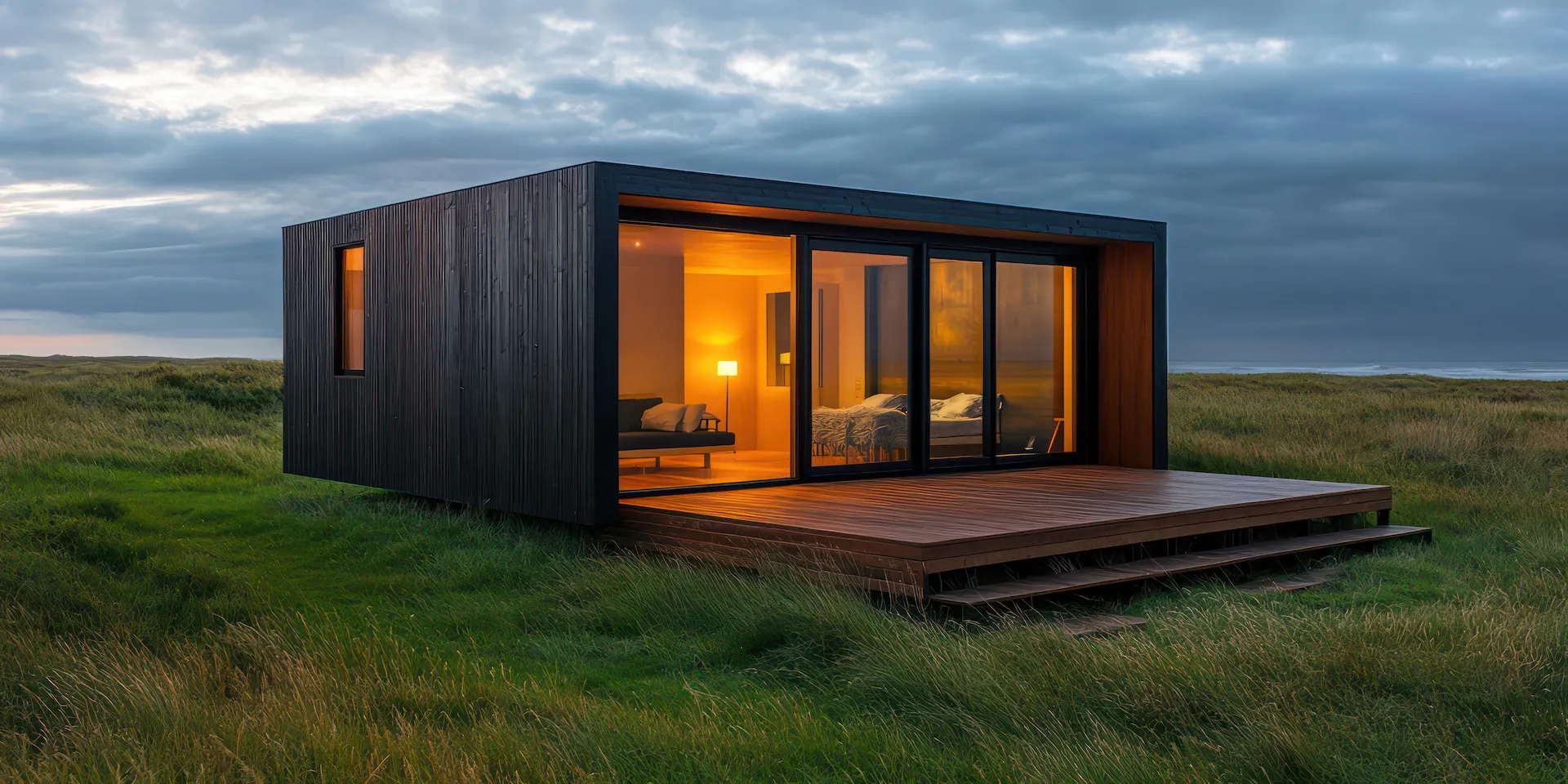
Perhaps the most obvious benefit is the smaller initial investment required. Studio and one-bedroom properties are generally cheaper to purchase compared to multi-bedroom homes in the same area. This lower barrier to entry makes rental property investment more accessible to first-time investors or those looking to expand their portfolio without tons of upfront capital. Prefab Airbnbs, which tend to have smaller square footage, can be particularly quick and cost-efficient to construct.
High demand pool
Smaller accommodations cater perfectly to key demographics like solo travelers, couples, and business travelers. These groups collectively represent a substantial portion of the short-term rental market, creating consistent demand throughout the year rather than just during peak family vacation seasons.
Superior occupancy rates
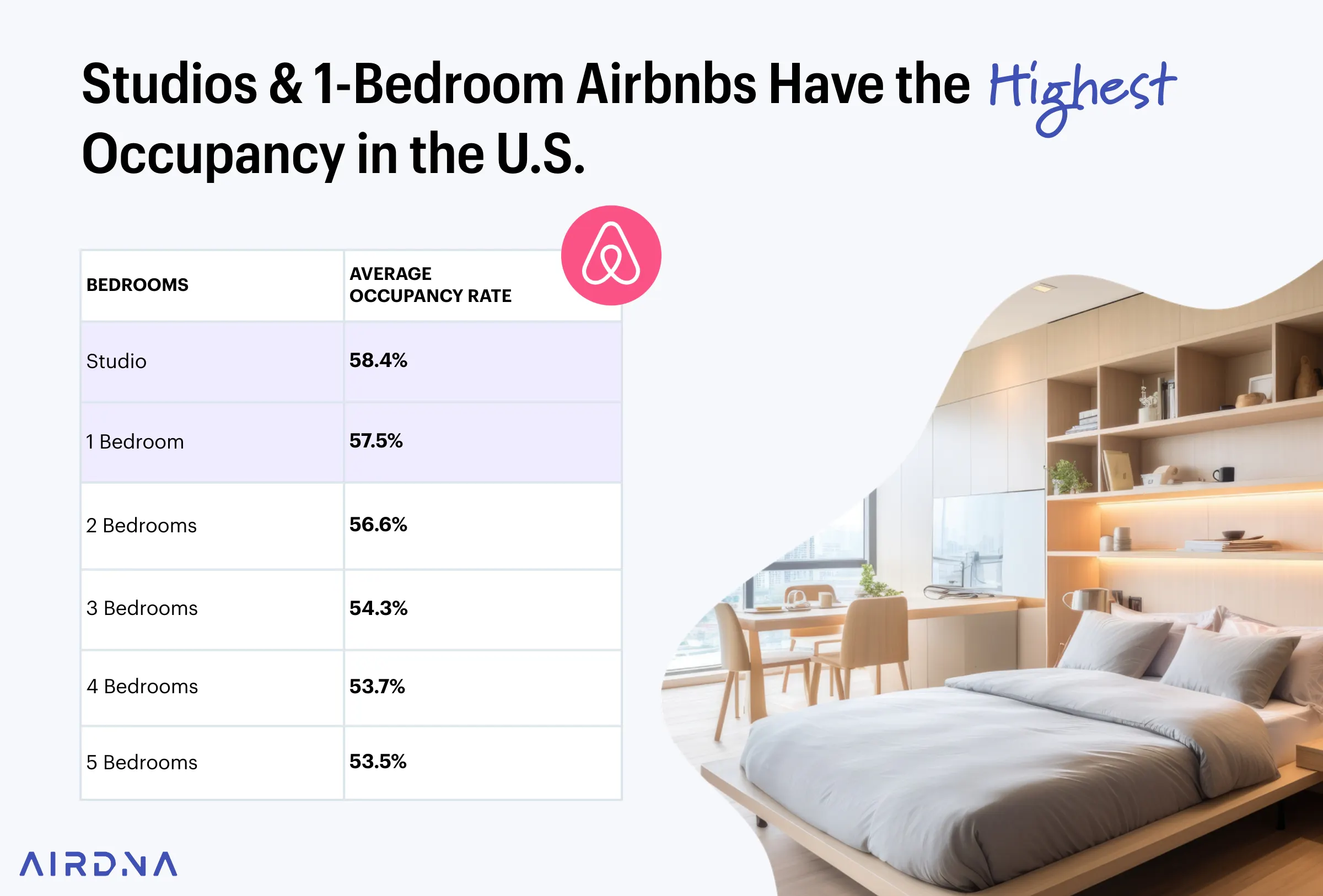
The numbers don't lie—small Airbnbs consistently outperform their larger counterparts in occupancy. In the U.S., studios and 1-bedrooms average 58% occupancy compared to the declining rates seen as properties get bigger: two-bedrooms (56.6%), three-bedrooms (54.3%), four-bedrooms (53.7%), and five-bedrooms (53.5%). Higher occupancy translates directly to more consistent income and fewer vacant nights.
Operational efficiency
Managing smaller spaces means less time and money spent on cleaning, maintenance, and inventory. You can flip these smaller spaces between guests in a fraction of the time it takes for larger properties. That means tighter booking windows and often squeezing in more stays each month. The efficiency doesn't stop there—you'll spend less on utilities, and furnishings, too. Your operational costs stay leaner while your booking calendar stays fuller.
Competitive edge against hotels
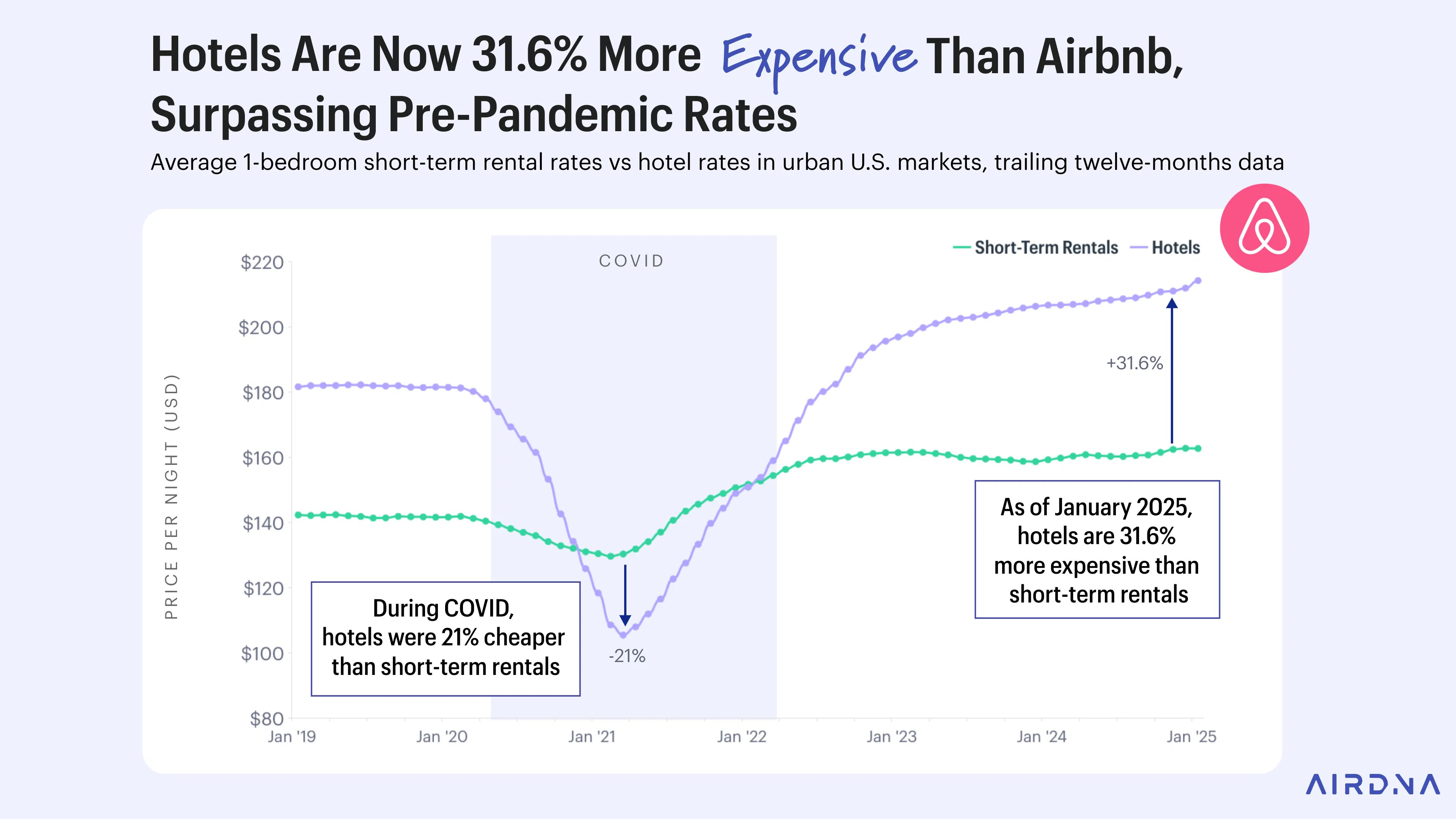
Although hotel prices briefly dipped below short-term rental rates during the pandemic, that gap has since widened to exceed pre-pandemic levels. As of January 2025, hotels are 31.6% more expensive than Airbnbs on average, giving small Airbnb properties a compelling price advantage while still offering the homey comfort that hotel rooms lack.
For investors focused on acquiring income-generating assets that support their financial future, small vacation rentals represent an attractive blend of affordability, performance, and operational simplicity. They exemplify how passive real estate investing doesn't necessarily require owning massive properties to deliver meaningful returns.
Global trends in small Airbnb investments
The popularity and performance of small Airbnbs isn't just a U.S. phenomenon—it's a global trend with fascinating regional variations. Understanding these patterns can help investors identify promising markets and anticipate future shifts in the solo living rental investments space.
Rapid recovery post-COVID
When the pandemic hit, vacation rentals across all categories experienced a significant drop in occupancy, but the recovery trajectories have been notably different.
2+ bedroom properties saw occupancy fall by approximately 20% during COVID before eventually returning to normal levels. Meanwhile, studio and one-bedroom properties bounced back more quickly from an even deeper 30% drop in occupancy. This quick recovery demonstrates the inherent stability of these smaller investments—they tend to find their footing faster when market conditions improve.
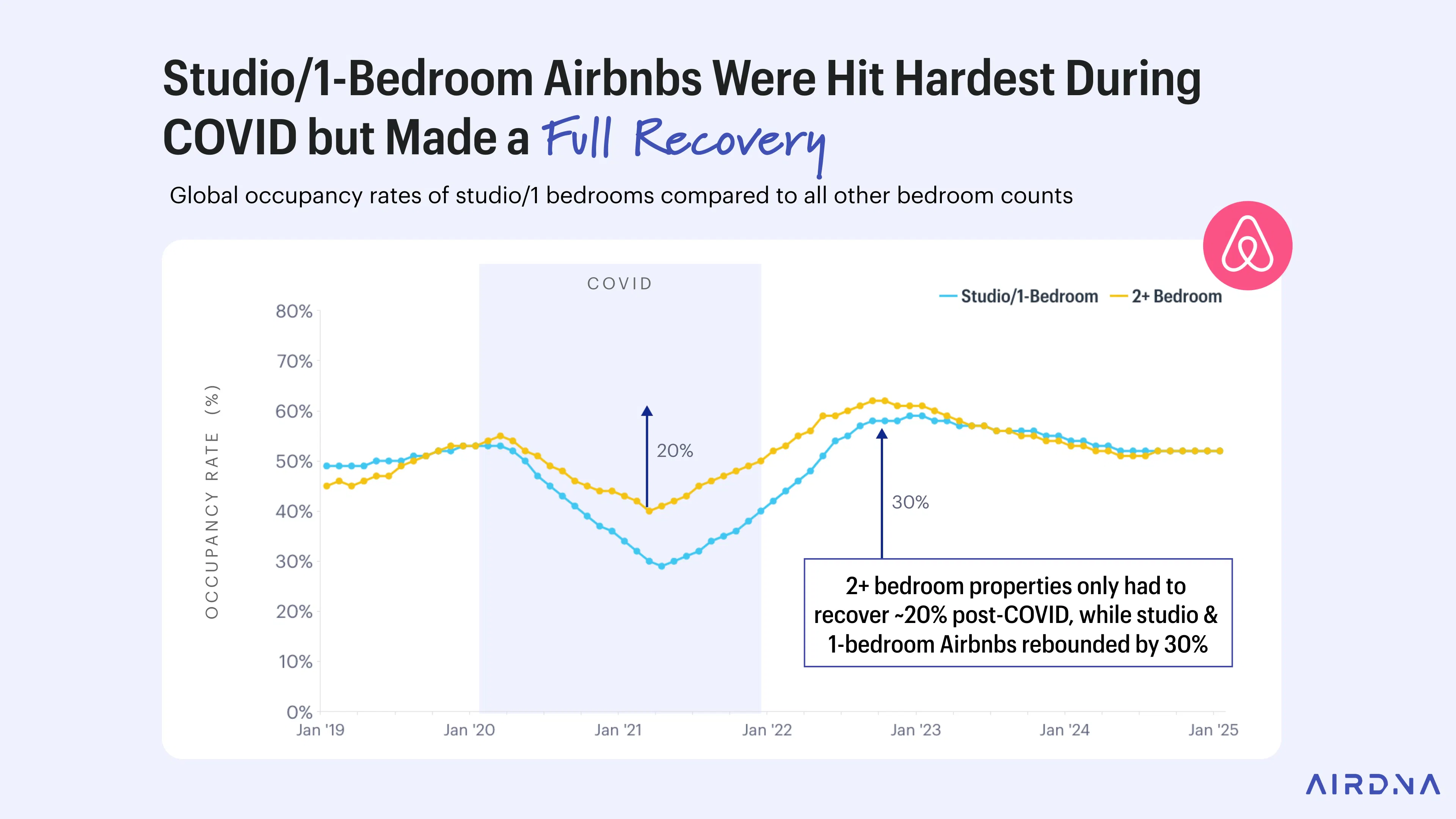
Despite this impressive recovery, it's worth noting that occupancy rates haven't fully returned to pre-pandemic levels:
- Average one-bedroom occupancy rate in 2019 was 64.5%, compared to 58.4% in 2024
- Average studio occupancy rate was 62.5% in 2019, compared to 57.5% now
What's particularly interesting is that while studios and one-bedrooms haven't completely rebounded to their 2019 highs, they still maintain higher occupancy rates than larger properties. This advantage persists even though some larger categories have actually improved their performance since 2019, with five-bedrooms increasing from 50.3% to 53.5% occupancy and 6+ bedrooms jumping from 50.6% to 55.4% occupancy between 2019 and 2024.

Regional variations: Where small Airbnbs dominate
The distribution of small Airbnbs varies dramatically across global markets, creating both opportunities and challenges for investors depending on location.
Top markets for studio and 1-bedroom rentals by listing share:
- South Korea: 71%
- Philippines: 71%
- Thailand: 64%
- Argentina: 62%
- Germany: 57%
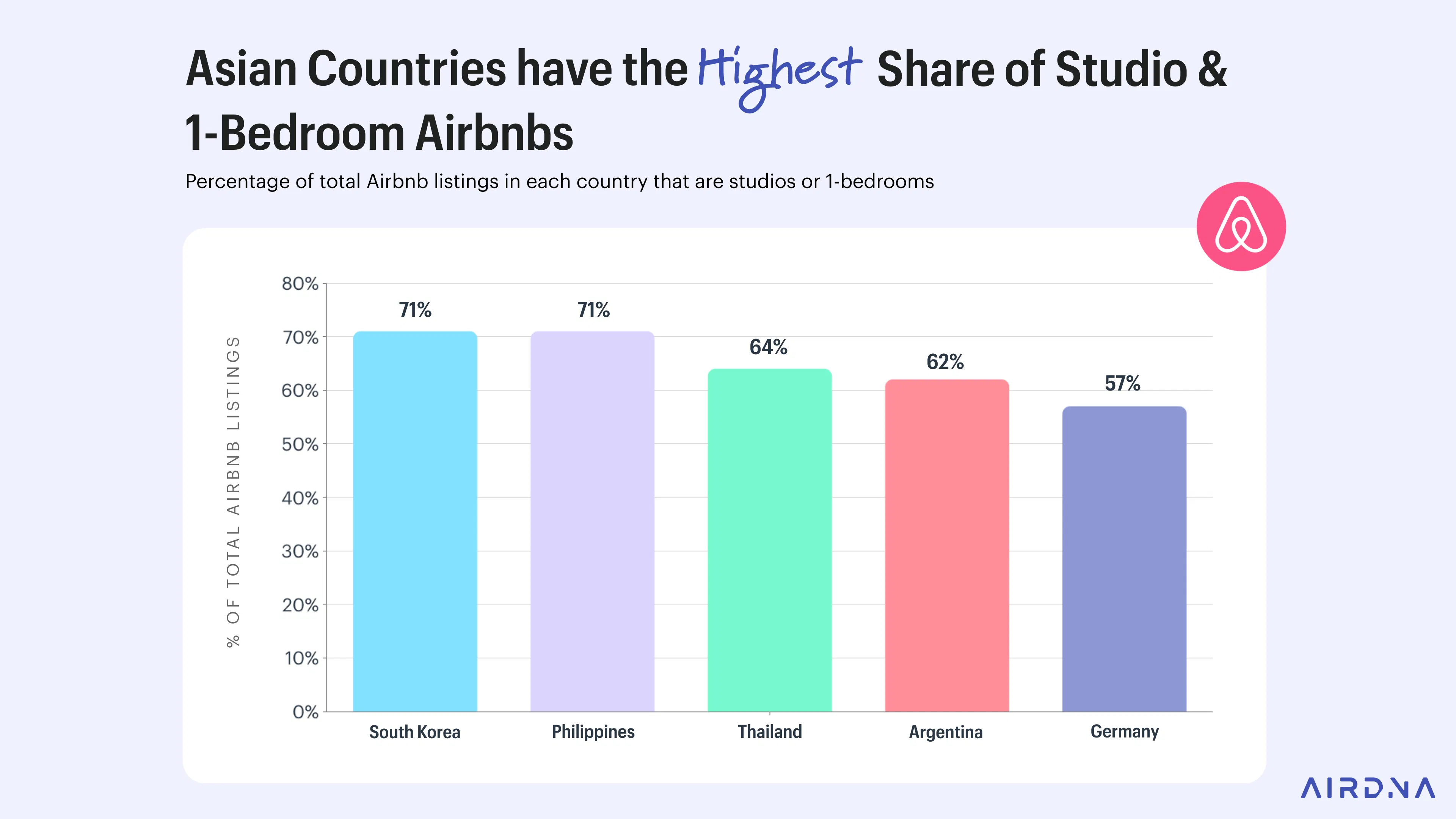
These markets have embraced smaller vacation rentals as the dominant property type, suggesting strong local demand and potentially favorable regulatory environments for these investments.
Bottom markets for studio and 1-bedroom rentals by listing share:
- Australia: 33%
- U.S.: 34%
- Spain: 36%
- Canada: 44%
- United Kingdom: 45%
The lower percentage of small Airbnbs in these markets could indicate either less demand or—more likely—an opportunity gap where investment in quality small properties might stand out in a less saturated segment.
It's particularly noteworthy that in the U.S., despite the overall lower share of small Airbnbs nationwide, urban markets tell a different story. Large city centers across the country lead with a 52% share of studio and one-bedroom listings. This urban concentration makes sense considering space limitations, higher property costs, and the typical traveler profile in metropolitan areas.
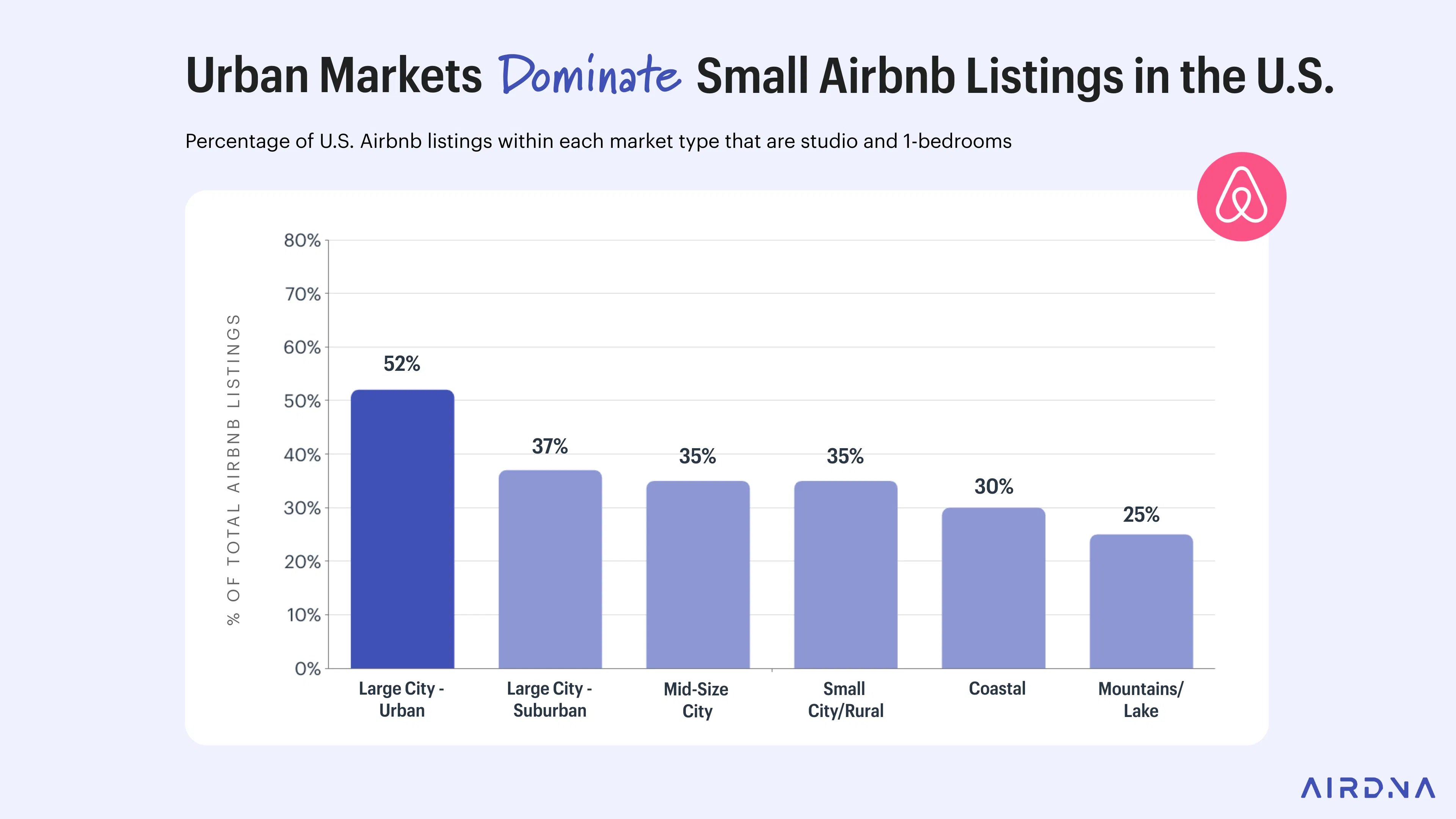
For investors considering their financial future through owning real estate, these global trends provide valuable context. Markets with lower shares of small Airbnbs might present opportunities to fill an underserved niche, while markets with high concentrations of these properties demonstrate proven demand for compact accommodations.
The global data reinforces that small rental properties can serve as powerful income-generating assets across diverse markets, often with distinct advantages over their larger counterparts in terms of both investment entry point and operational performance.
Financial Advantages of Small Airbnb Properties
Beyond the operational and occupancy advantages, small Airbnbs offer several distinct financial perks that make them especially attractive as income-producing assets.
Higher occupancy in budget tiers
Small Airbnbs already boast higher occupancy rates than 2+ bedroom rentals, but small Airbnbs in the budget and economy tiers perform even better. While the average studio sits at a respectable 58% occupancy, budget-friendly studios are crushing it with 65-68% occupancy rates.
This performance boost in the affordable segments creates an interesting investment opportunity: You can acquire a modestly priced property that appeals to budget-conscious travelers while maintaining exceptionally high occupancy rates. The combination of lower acquisition costs and stronger occupancy in these tiers creates a compelling value proposition for investors seeking steady cash flow from their single rental property.
More bang per square foot
Smaller properties tend to deliver meatier returns per square foot than their sprawling counterparts. While that four-bedroom vacation home might bring in more total dollars, it's the humble studio that frequently wins the percentage game.
Think about it: You'll spend maybe half as much to buy, furnish, and maintain a studio compared to a multi-bedroom property. Yet that studio might command 70-80% of the nightly rate of the larger space. Add in those higher occupancy rates we've been discussing, and suddenly your tiny property is punching way above its weight class in returns.
The money-saving advantages don't stop at purchase price either. Your ongoing expenses shrink across the board:
- Property taxes take a smaller bite from your profits
- Insurance premiums drop significantly
- Utility bills become much more manageable
- Replacing furniture or refreshing decor costs a fraction of what larger spaces require
- Maintenance headaches (and costs) are dramatically reduced
To put this in real terms for real estate wealth building, imagine generating nearly the same monthly cash flow from a $150,000 studio as you would from a $300,000 two-bedroom. You've freed up half your capital to either keep as a safety cushion or deploy into a second property, potentially doubling your income stream.
Flexibility in exit strategies
Another financial advantage of small Airbnbs is their appeal to multiple buyer types when it eventually comes time to sell. Small properties attract:
- First-time homebuyers seeking an affordable entry point
- Downsizers looking for simplified living
- Other short-term rental investors
- Traditional long-term rental investors
- Corporate housing companies
This diverse potential buyer pool can provide more liquidity and a potentially faster sale when you decide to exit the investment. The broad appeal across multiple market segments helps reduce the risk of your capital getting trapped in a property that's difficult to sell.
Lower risk profile
Small Airbnbs come with built-in safety nets for your investment. With less money tied up in the property, you can ride out market storms that might sink larger investments. If bookings slow down or you need to slash prices temporarily, your lower monthly carrying costs give you breathing room that luxury property owners lack.
This makes compact rentals perfect for first-timers testing the waters of rental property ownership or seasoned investors spreading risk across multiple properties instead of gambling everything on one high-end listing. It's the investment equivalent of not putting all your eggs in one basket—and those baskets are easier to carry, too.
For sustainable real estate wealth building that won't collapse with the next market hiccup, these modest spaces offer surprisingly sturdy foundations.
Research Airbnb Markets
Gain insights into the revenue and occupancy trends in your market.
How to Design Small Airbnb Spaces for Maximum Appeal
No guest books a tiny space because they're excited about feeling cramped. The magic of successful small Airbnbs lies in designing spaces that feel surprisingly spacious, delightfully functional, and Instagram-worthy despite their small stature. When done right, smart design transforms your compact rental from "it's kind of small" to "it's so cozy!"
Let's dig into some small Airbnb ideas to turn spatial constraints into design opportunities.
Creative layouts for studio apartments
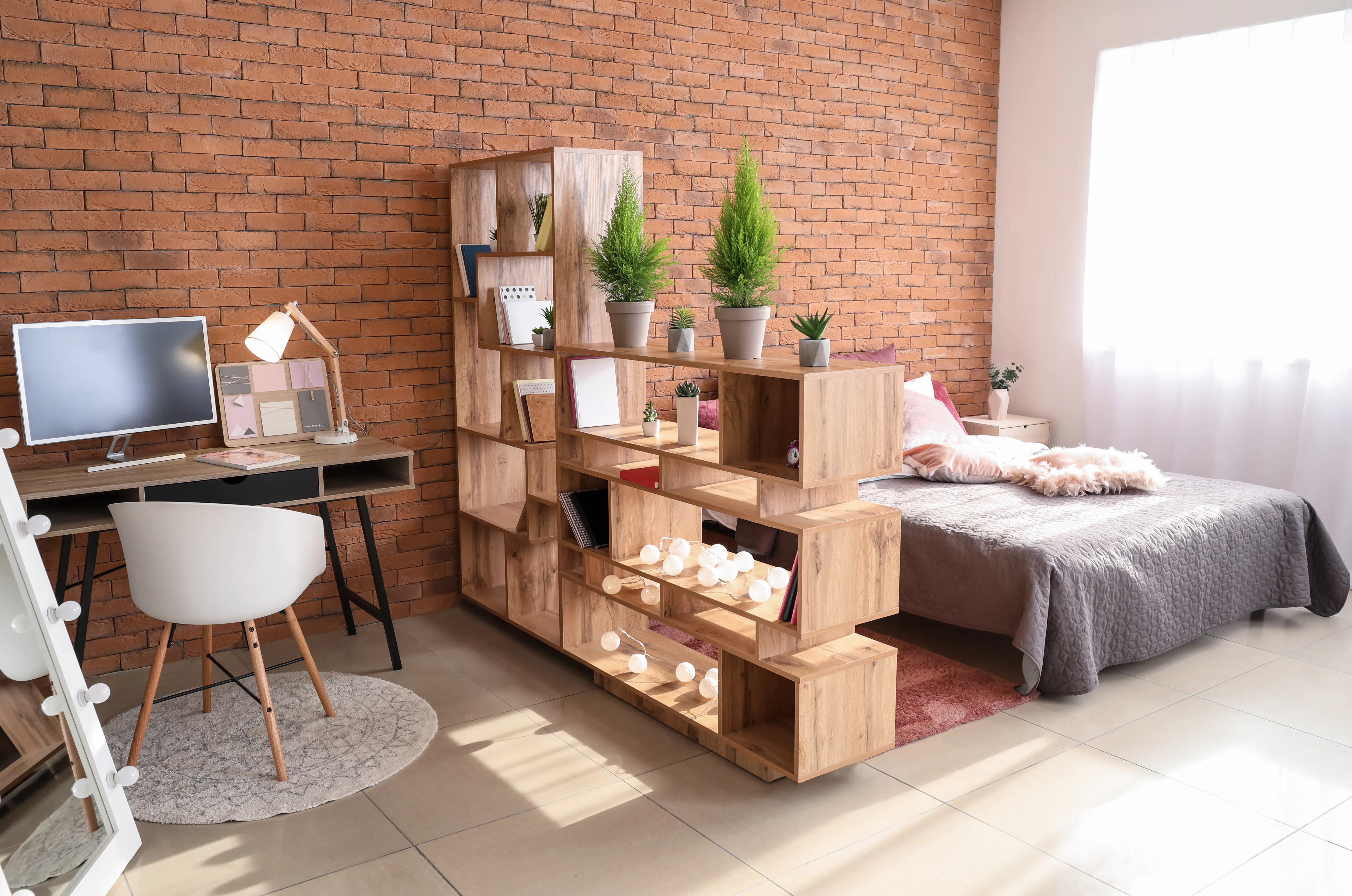
Airbnb studios present unique design challenges. Without walls to separate living areas, how do you create a space that feels organized and purposeful rather than jumbled? The answer lies in thoughtful space planning and visual cues that define different functional zones.
Open flow with visual dividers
Rather than cramming in traditional room dividers that can make the space feel smaller, use visual cues to define areas. A strategically placed area rug can designate the "living room," while pendant lighting can highlight the dining area. These subtle dividers maintain openness while giving the space logical organization.
Multitasking furniture
In a compact studio apartment Airbnb, every piece of furniture should earn its keep by serving multiple functions. Consider:
- Sofa beds or Murphy beds that disappear when not in use
- Coffee tables with hidden storage compartments
- Dining tables that double as work desks
- Ottomans that provide both seating and storage
- Kitchen islands that offer meal prep space, dining, and storage
Vertical thinking
When floor space is limited, the walls become valuable real estate.
- Install floating shelves for decorative items and essential storage
- Wall-mounted TVs eliminate the need for entertainment centers
- Fold-down desks can create a workspace that disappears when not needed
Mirror magic
Strategically placed mirrors amplify natural light and create the illusion of more space. A large mirror opposite a window effectively doubles the perceived light in the room, while mirrored cabinet fronts in the kitchen can make the cooking area feel more expansive.
Maximize space in tiny houses
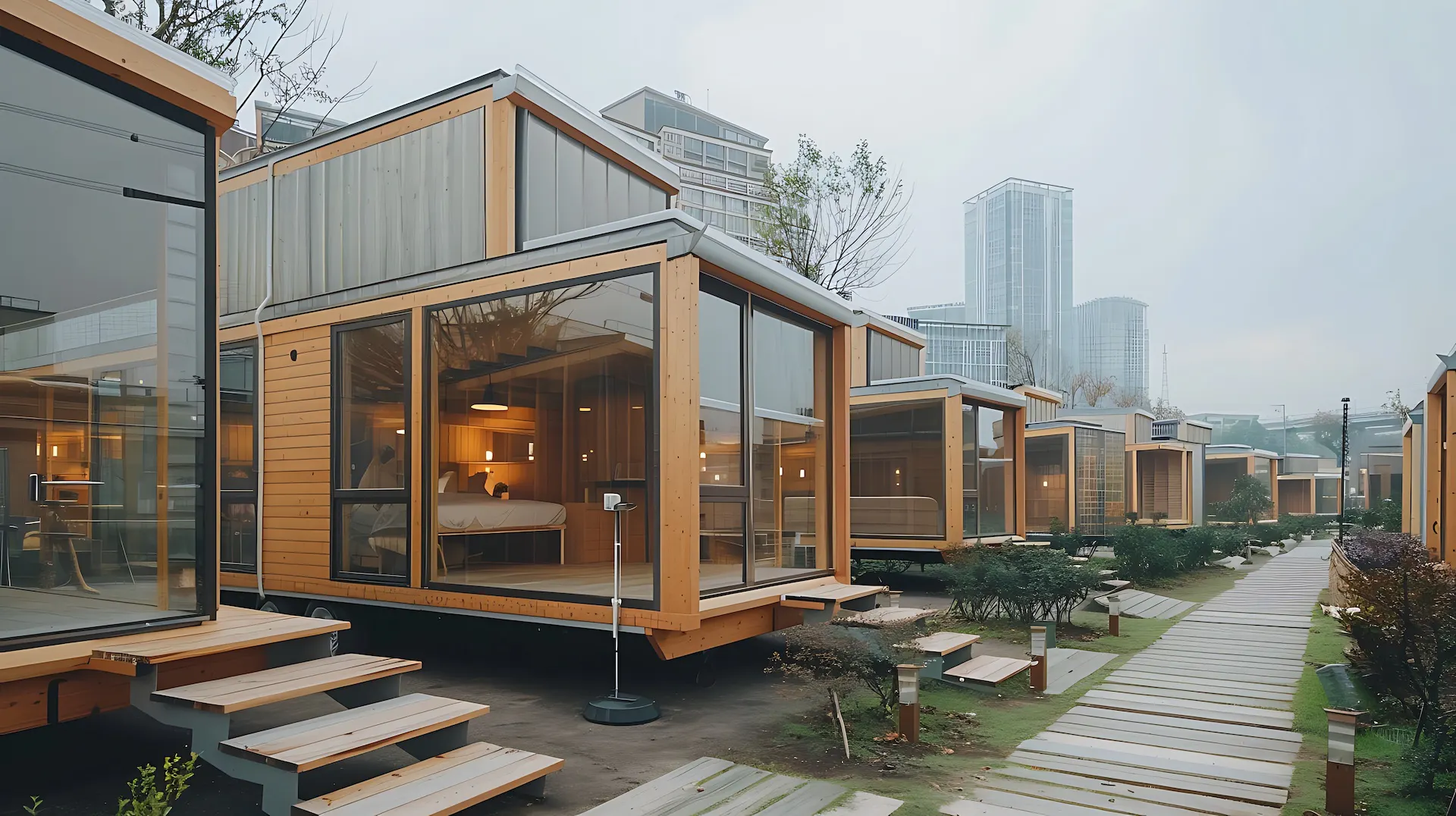
The tiny house movement has created a new category of vacation rentals that appeal to guests seeking unique, Instagram-worthy accommodations. These Airbnb small houses require particularly strategic design to maximize functionality and charm.
Make use of vertical space
In tiny houses, height becomes your ally.
- Loft sleeping areas free up the main floor for living functions
- Tall cabinetry maximizes storage in kitchens and bathrooms
- Ceiling-mounted storage racks can hold seasonal items or rarely used equipment without consuming valuable floor space
Built-in everything
Custom built-ins eliminate wasted space between furniture pieces and walls. From seating with integrated storage to kitchen solutions designed to the exact dimensions of the available space, built-ins can increase usable space by 15-30% compared to free-standing furniture.
Indoor-outdoor flow
Expand the perceived size of your tiny house by creating seamless connections to outdoor space. French doors or folding glass walls that open to a deck effectively double the living area in good weather. Outdoor kitchens, dining areas, and lounging spaces become extensions of the interior, making the small footprint feel much more generous.
Convertible spaces
The most successful tiny houses feature spaces that transform throughout the day. Dining tables that fold away, benches that convert to beds, and workspaces that become entertainment areas allow the same square footage to serve multiple purposes as needed.
Miniaturized appliances
Standard-sized appliances can overwhelm a tiny house. Apartment-sized refrigerators, two-burner cooktops, and compact washer-dryer units preserve functionality while consuming much less space. The key is selecting options that are small but still high-quality—guests understand the space constraints but still expect excellent performance.
Practical Tips to Enhance Small Airbnb Investments
Moving beyond design principles, let's explore the practical aspects of running a successful small Airbnb.
Small Airbnb ideas: Amenities
In compact spaces, every amenity must earn its keep. Focus on these high-impact essentials that maximize guest satisfaction without consuming excessive space:
- High-speed internet: Reliable, fast WiFi transforms your Airbnb studio into a functional workspace. Prominently feature internet speeds in your listing.
- Thoughtful kitchen setup: Offer quality over quantity with a good coffee maker, essential nested cookware, multi-purpose tools, and efficient storage solutions.
- Sleep-optimized bedroom: Invest in a premium mattress and high-quality linens for your Airbnb with a small bedroom. Add blackout curtains and adjustable lighting for customizable comfort.
- Bathroom luxuries: Create a spa-like feel with a rainfall showerhead, plush towels, and hotel-quality toiletries. Install clever storage to keep counters clutter-free.
- Smart home features: Add keyless entry, voice-controlled lighting, built-in USB charging ports, and Bluetooth speakers to enhance functionality without taking up space.
Small Airbnb ideas: Marketing
Your brilliantly designed compact space won't book itself—here's how to showcase your small Airbnb to attract guests willing to pay premium rates:
- Professional photography: Invest in photos that show the flow between areas, highlight clever storage solutions, and capture both natural light and evening ambiance.
- Target your marketing: Focus on travelers who prefer compact spaces: Solo business travelers, couples on romantic getaways, urban explorers, and budget-conscious guests who prioritize location.
- Location-focused listings: Emphasize proximity to business districts, tourist attractions, public transportation, dining options, and outdoor recreation areas.
- Transparent descriptions: Be honest about size while highlighting advantages. Use phrases like "thoughtfully designed studio" or "space-efficient urban retreat."
- Competitive pricing: Research comparable listings to position your rates appropriately. Well-designed small spaces can command premium rates relative to their size in high-demand locations.
- Value-adding features: Highlight perks like free parking, pet-friendly policies, contactless check-in, personalized local recommendations, and flexible policies.
Try Our Vacation Rental Pricing Tool
Use Dynamic Pricing to optimize your pricing strategy.
ARTICLE SUMMARY
Small Airbnbs boast higher occupancy rates, faster turnovers, and lower operating costs than 2+ bedroom properties, making them ideal profit-generators for hosts and investors.
Jamie Zhang
AirDNA Data Analyst
Jamie Zhang is a Data Analyst at AirDNA, leveraging her background in data science and analytics to uncover key trends in the short-term rental industry. Before joining AirDNA, she worked as a data analyst at Shanghai Disney, where she specialized in revenue forecasting and financial planning . She holds a Master’s degree in International Economics and International Relations from Johns Hopkins. Jamie enjoys cycling to explore different corners of the city.
